Inspiration
Electric Vehicle (EV) adoption in Bengaluru has been growing at an unprecedented pace over the last few years. While this transition supports sustainable mobility, it also introduces new challenges for power distribution utilities. EV charging demand is often concentrated in specific locations and time windows, particularly during evening hours when residential electricity consumption is already high. Such charging behavior can lead to localized grid stress, transformer overloading, increased waiting times at charging stations, and inefficient utilization of charging infrastructure.
We realized that the future challenge is not only building more charging stations but also managing charging demand intelligently. Inspired by BESCOM's vision of enabling a smarter and more resilient EV ecosystem, we decided to build an AI-powered decision support platform that can help predict charging demand, optimize charging schedules, and guide infrastructure planning using data-driven insights.
Our objective was to create a practical solution that could assist both utility operators and EV owners while operating as a decision-support layer without requiring modifications to the existing distribution infrastructure.
What it does
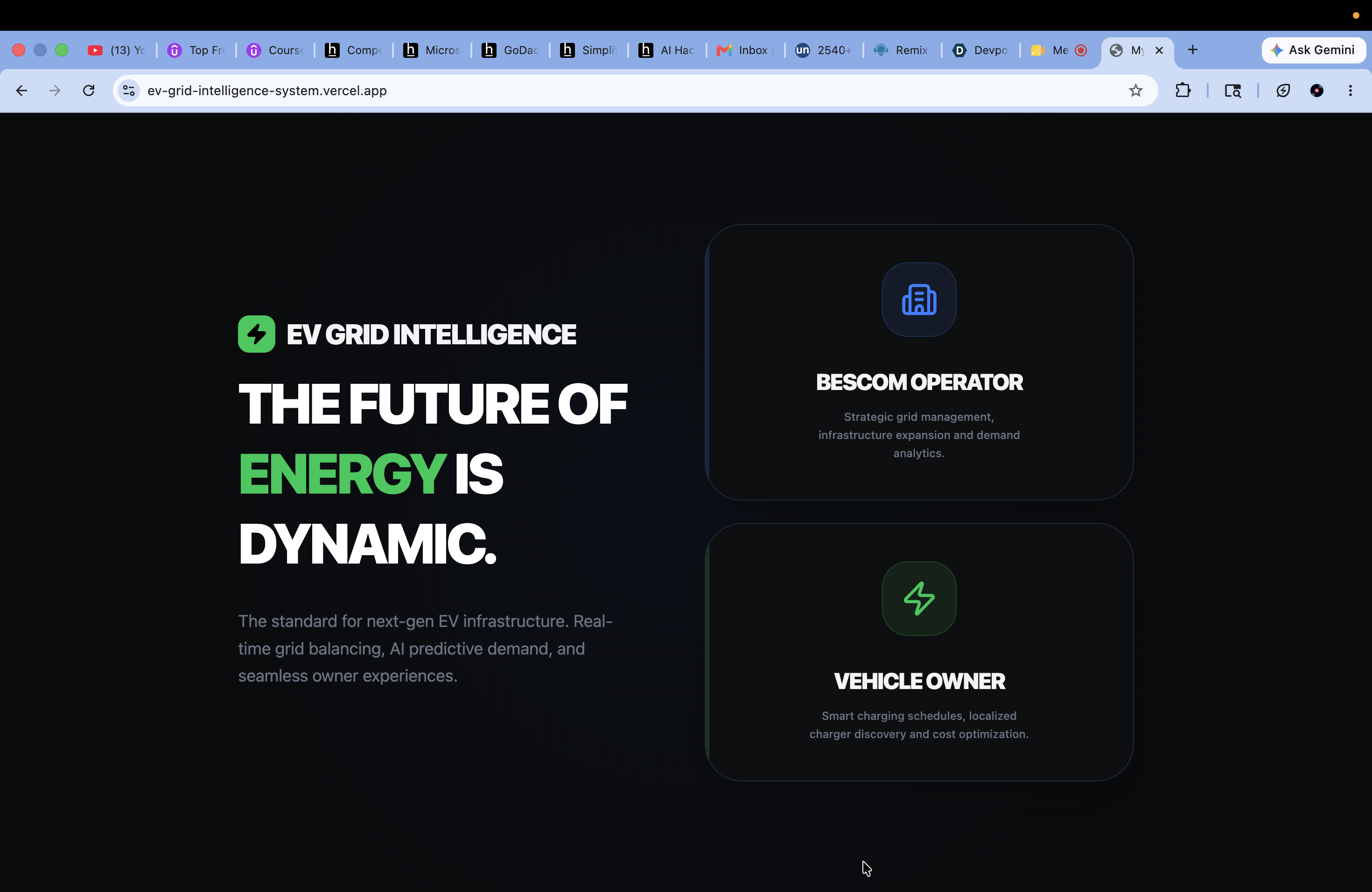
EV Grid Intelligence System is an AI-powered decision support platform designed to optimize EV charging demand and guide charging infrastructure planning.
The platform focuses on two primary objectives:
Part A – EV Charging Demand & Scheduling
The system predicts EV charging demand across different areas and time periods using factors such as:
- Historical charging behavior
- EV density
- Time of day
- Occupation-based mobility patterns
- Weather conditions
- Existing grid load
Using these insights, the platform:
- Forecasts charging demand by zone
- Identifies future peak demand periods
- Detects potential grid stress zones
- Recommends optimal charging schedules
- Encourages off-peak charging through dynamic pricing
- Provides charging recommendations to EV owners
Part B – Charging Infrastructure Planning
The system assists infrastructure planners by:
- Identifying charger-deficient regions
- Detecting high-growth EV corridors
- Recommending optimal locations for new charging stations
- Analyzing charger utilization patterns
- Evaluating grid capacity before deployment
- Estimating infrastructure impact and utilization
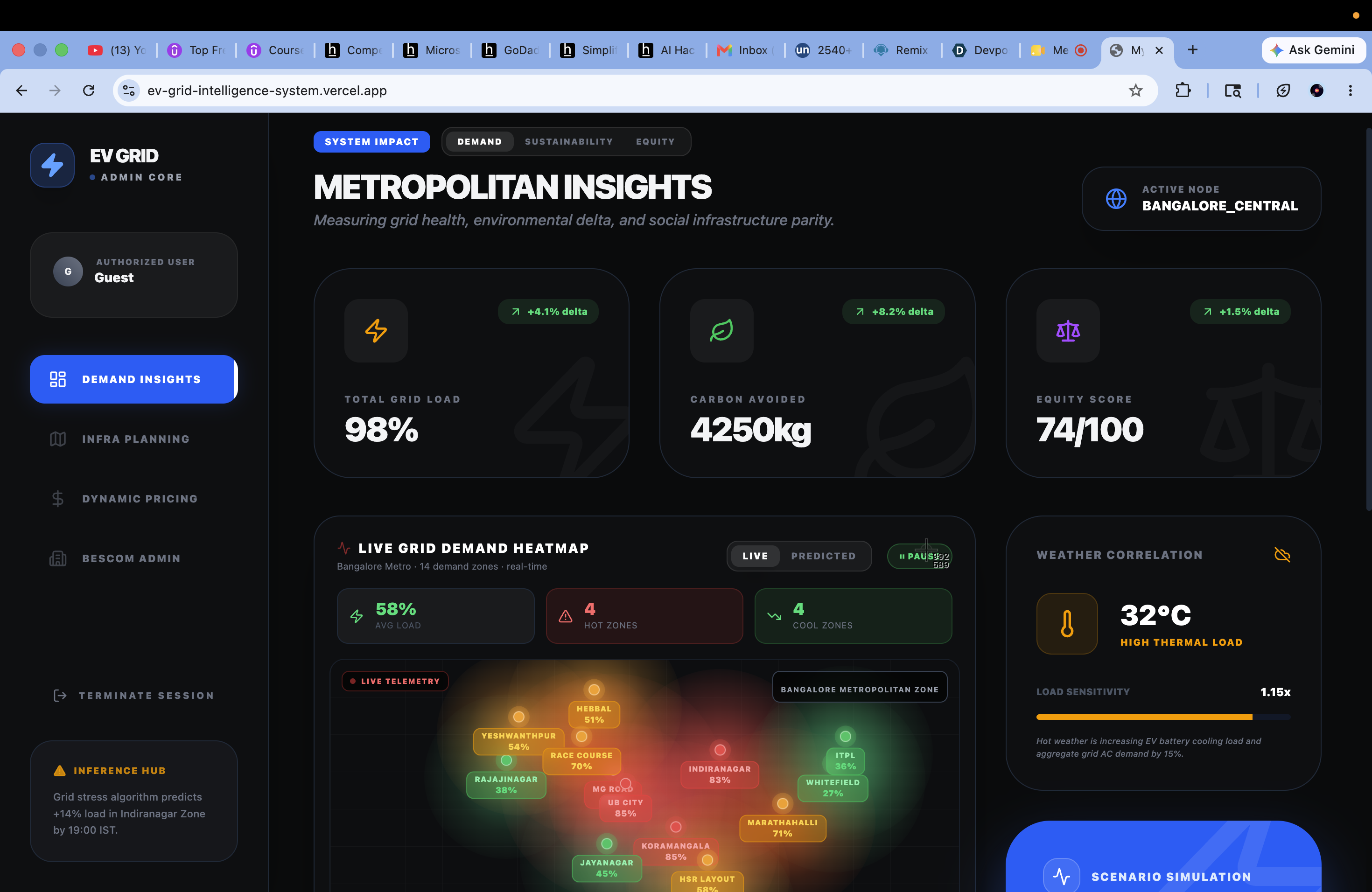
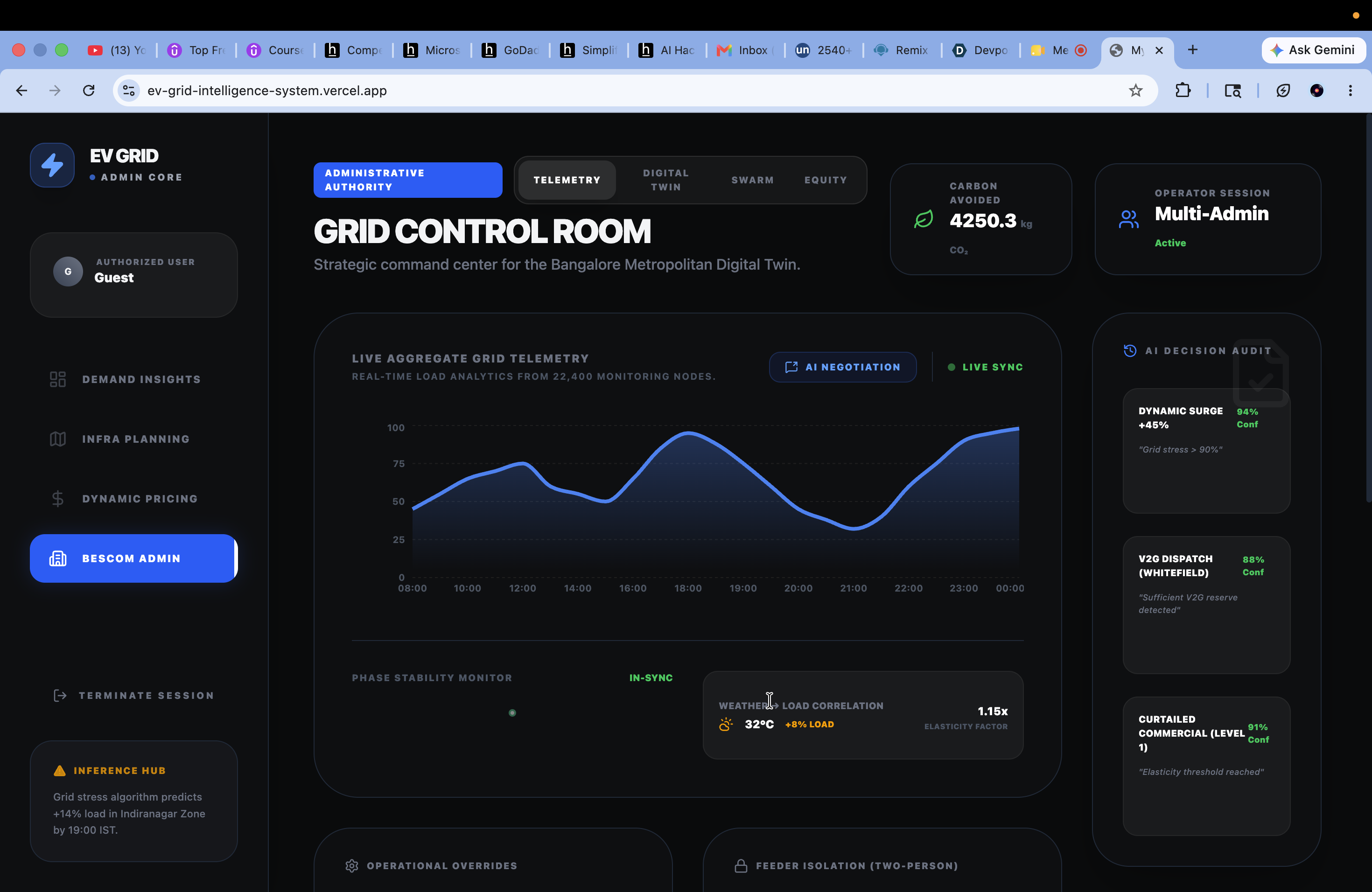
BESCOM Admin Dashboard
The platform includes a dedicated control room for operators where they can:
- Monitor charging demand across the city
- Analyze grid stress levels
- Track charger utilization
- View AI-generated recommendations
- Simulate infrastructure deployment scenarios
- Evaluate the impact of dynamic pricing strategies
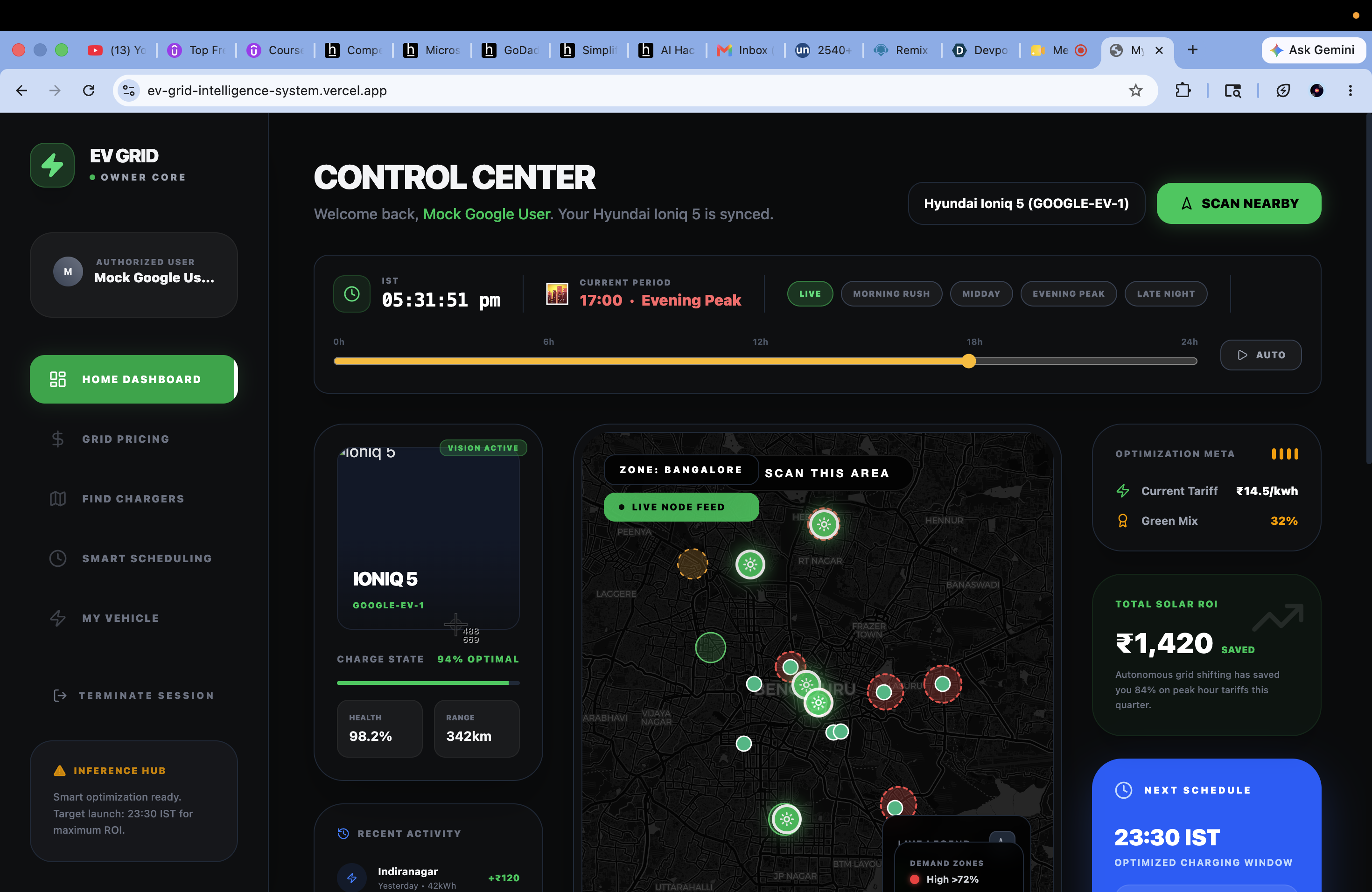
Vehicle Owner Portal
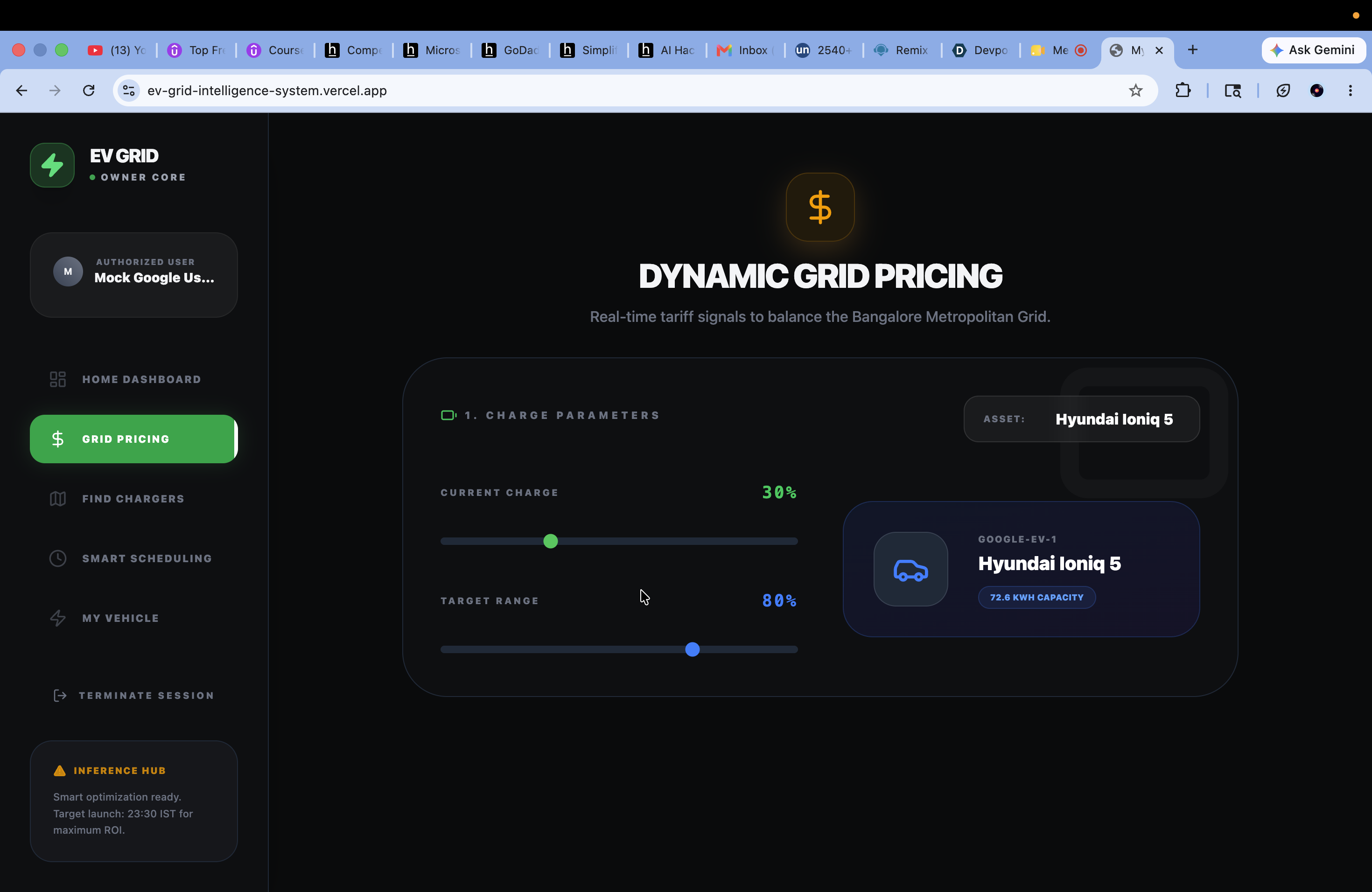
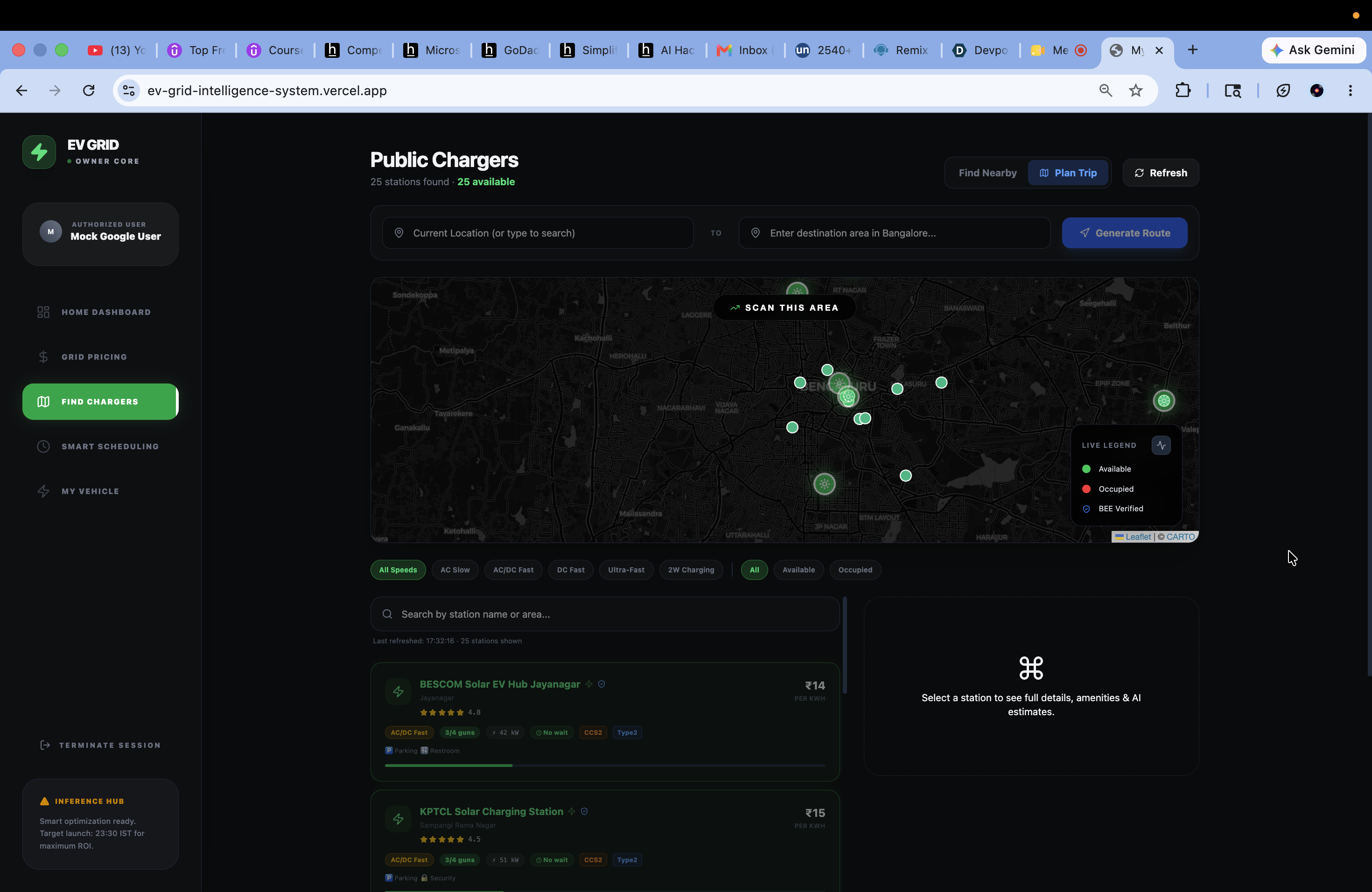
For EV owners, the platform provides:
- Nearby charger discovery
- Real-time charger availability
- Charging recommendations
- Cost-saving charging schedules
- Green charging suggestions
- Dynamic pricing transparency
How we built it
The system was developed using a modern full-stack architecture designed for scalability and real-time decision support.
Frontend
- React.js
- Tailwind CSS
- Framer Motion
- Mapbox GL
- Recharts
The frontend provides interactive dashboards, geospatial heatmaps, infrastructure planning maps, and operational insights.
Backend
- FastAPI (Python)
The backend handles:
- Data processing
- Prediction requests
- Recommendation generation
- Infrastructure analysis
- Simulation services
Database
- PostgreSQL
- MongoDB
The database stores:
- Charger information
- EV demand datasets
- Area-level statistics
- Pricing data
- Infrastructure planning outputs
AI and Analytics Layer
We used:
- XGBoost for demand forecasting
- K-Means clustering for hotspot identification
- Rule-based optimization for scheduling
- Geospatial analytics for infrastructure planning
- Dynamic pricing algorithms based on grid conditions
Data Sources
The platform uses:
- OpenStreetMap
- OpenChargeMap
- Public EV infrastructure datasets
- Synthetic EV charging datasets
- Simulated grid demand data
System Workflow
$$ Predict \rightarrow Optimize \rightarrow Recommend \rightarrow Plan \rightarrow Simulate $$
The workflow begins with demand prediction, followed by charging optimization, recommendation generation, infrastructure planning, and finally simulation-based impact analysis.
Challenges we ran into
Building a city-scale EV intelligence platform presented several challenges.
Data Availability
One of the biggest challenges was the lack of publicly available EV charging datasets and grid-level operational data specific to Bengaluru. Since such data is often private or restricted, we created realistic synthetic datasets based on publicly available trends and charging behavior patterns.
Demand Modeling
EV charging demand depends on several dynamic factors including user behavior, occupation, traffic patterns, battery levels, and weather conditions. Creating realistic demand forecasting models required careful feature engineering and simulation.
Infrastructure Planning
Infrastructure planning is not solely a demand problem. We also had to account for:
- Existing charger distribution
- Charger utilization
- Grid constraints
- Area development trends
- Accessibility
Balancing all these factors while maintaining simplicity was challenging.
Explainability
Most AI systems focus on prediction accuracy, but utility operators require transparency. Every recommendation generated by our platform had to be accompanied by a clear explanation to ensure trust and usability.
User Experience
The platform serves two different stakeholders:
- BESCOM operators
- EV owners
Designing intuitive interfaces for both user groups while maintaining consistency was another challenge.
Accomplishments that we're proud of
We are proud of developing a complete end-to-end solution that addresses both operational and planning aspects of EV charging management.
Some key accomplishments include:
- Successfully implementing EV demand prediction and scheduling modules.
- Building an interactive geospatial demand heatmap.
- Designing a dedicated BESCOM Grid Control Room dashboard.
- Implementing dynamic pricing recommendations.
- Creating AI-powered infrastructure planning workflows.
- Integrating charger discovery and recommendations for EV users.
- Developing simulation capabilities to evaluate interventions before implementation.
- Incorporating solar-aware charging recommendations and sustainability metrics.
Most importantly, the entire solution adheres to the challenge constraints and operates as a decision-support layer without requiring modifications to existing utility systems.
What we learned
This project helped us gain practical exposure to several domains.
Energy and Utilities
We learned about:
- EV charging behavior
- Grid stress management
- Distribution network constraints
- Utility operations
Artificial Intelligence
We explored:
- Demand forecasting
- Clustering techniques
- Recommendation systems
- Explainable AI
Geospatial Analytics
We learned how location intelligence can be used to:
- Identify demand hotspots
- Plan infrastructure
- Optimize charger deployment
Product Design
We also learned the importance of building systems that are:
- Practical
- Actionable
- Explainable
- User-centric
The project demonstrated that technology alone is not enough; solutions must align with operational workflows and stakeholder needs.
What's next for EV-GRID INTELLIGENCE SYSTEM
Our long-term vision is to evolve the platform into a comprehensive EV energy management ecosystem.
Future enhancements include:
Real-Time Utility Integration
- BESCOM operational data integration
- Live transformer monitoring
- Real-time load analytics
Advanced Forecasting
- Seasonal demand forecasting
- Event-based demand prediction
- Festival and holiday impact modeling
Renewable Energy Optimization
- Solar generation forecasting
- Green charging recommendations
- Renewable-aware dynamic pricing
Vehicle-to-Grid (V2G)
Future versions can support:
- Bidirectional charging
- Grid support through EV batteries
- Peak load balancing using V2G resources
Smart Infrastructure Planning
- Automated charger deployment suggestions
- Real-time ROI estimation
- Urban expansion forecasting
Multi-City Expansion
The framework can be adapted for:
- Bengaluru
- Hyderabad
- Pune
- Delhi
- Mumbai
Expected Impact
$$ \text{Peak Load Reduction} \uparrow $$
$$ \text{Charger Utilization} \uparrow $$
$$ \text{Grid Reliability} \uparrow $$
$$ \text{Carbon Emissions} \downarrow $$
$$ \text{Infrastructure Planning Efficiency} \uparrow $$
EV Grid Intelligence System aims to support the transition towards sustainable electric mobility by enabling utilities to make smarter, data-driven, and future-ready decisions for EV charging management and infrastructure planning.
Built With
- external
- fastapi
- javascript
- location-labs-spatial-storage
- mapbox
- python
- react
- rest


Log in or sign up for Devpost to join the conversation.