INSPIRATION As founders ourselves, we noticed a recurring problem: many startup ideas fail not because they’re bad, but because founders lack clarity on market potential, scalability, and differentiation. We wanted a tool that could provide realistic, evidence-based feedback on ideas before anyone writes a line of code or raises funding.
The inspiration came from seeing founders iterate blindly on concepts and spend months building products that never gain traction. We thought: “What if AI could give a startup idea a health check before you even launch?”
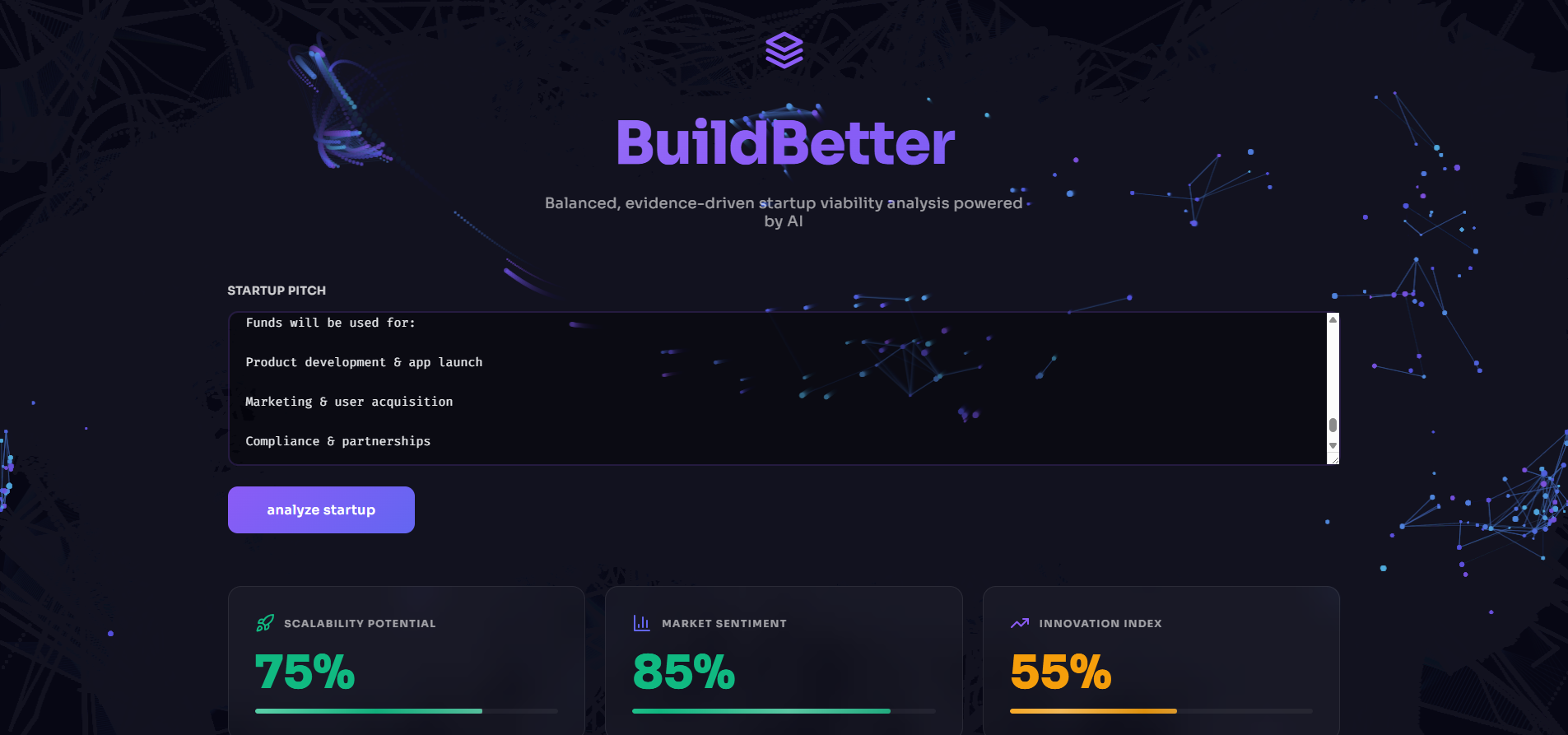
WHAT WE BUILT BuildBetter is an AI-powered validation platform for startup ideas. It evaluates your pitch across three critical dimensions:
- Scalability Potential SP – How well the idea can grow from 10 → 10,000 customers
- Market Sentiment MS – How receptive the current market is
- Innovation Index II – How unique and defensible the idea is
It also gives:
- Key risks and opportunities
- Comparisons to similar startups
- Strategic recommendations
Example of a small code snippet in the platform:
# Simple scoring logic
def calculate_score(scalability, market, innovation):
    return (scalability * 0.4 + market * 0.35 + innovation * 0.25)

HOW WE BUILT IT
1. Frontend: Next.js + TailwindCSS for a fast, responsive UI
2. Backend: Node.js + AI API for real-time pitch analysis
3. Data: Benchmarked against anonymized startup data to provide realistic scoring
4. Privacy: All pitches are processed locally; nothing is stored on our servers

We also implemented LaTeX support so users can include math in their pitches, for example revenue calculations:

Projected Revenue = Price per user × Number of users

CHALLENGE
1. Balancing realism and AI guidance: Generating actionable insights without overpromising was tricky.
2. Handling vague pitches: Users often write very short or ambiguous ideas. We built prompts that extract structure and key metrics reliably.
3. Fast response times: AI analysis had to run in under 15 seconds to be user-friendly.

WHAT WE LEARNED
- Founders love structured feedback: Even a small scoring metric and a few recommendations dramatically clarify next steps.
- Data-driven insights can highlight non-obvious risks, like low market receptivity or poor differentiation.
- Building a tool for validation forces you to deeply understand startup mechanics LIKE market sizing, unit economics, and competitive moats.

Log in or sign up for Devpost to join the conversation.