-
-
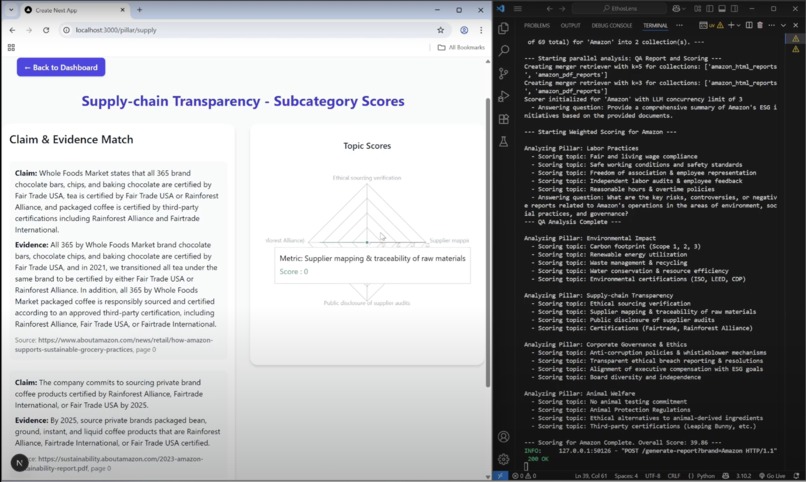
Sub Category Scoring and Evidences
-
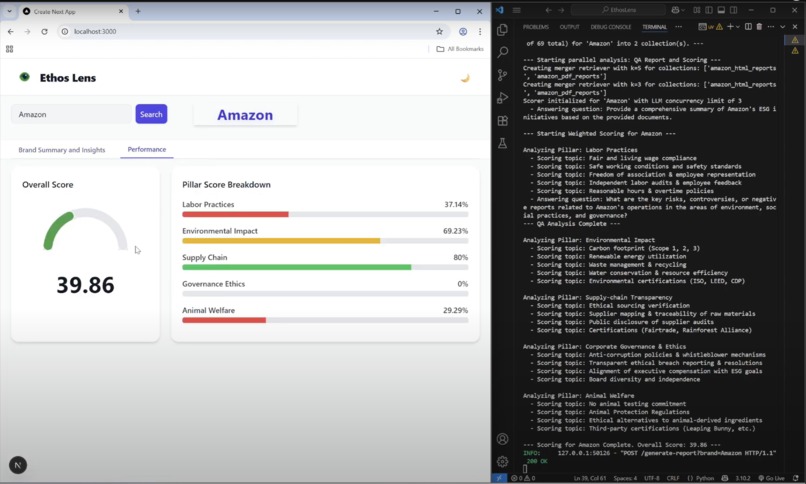
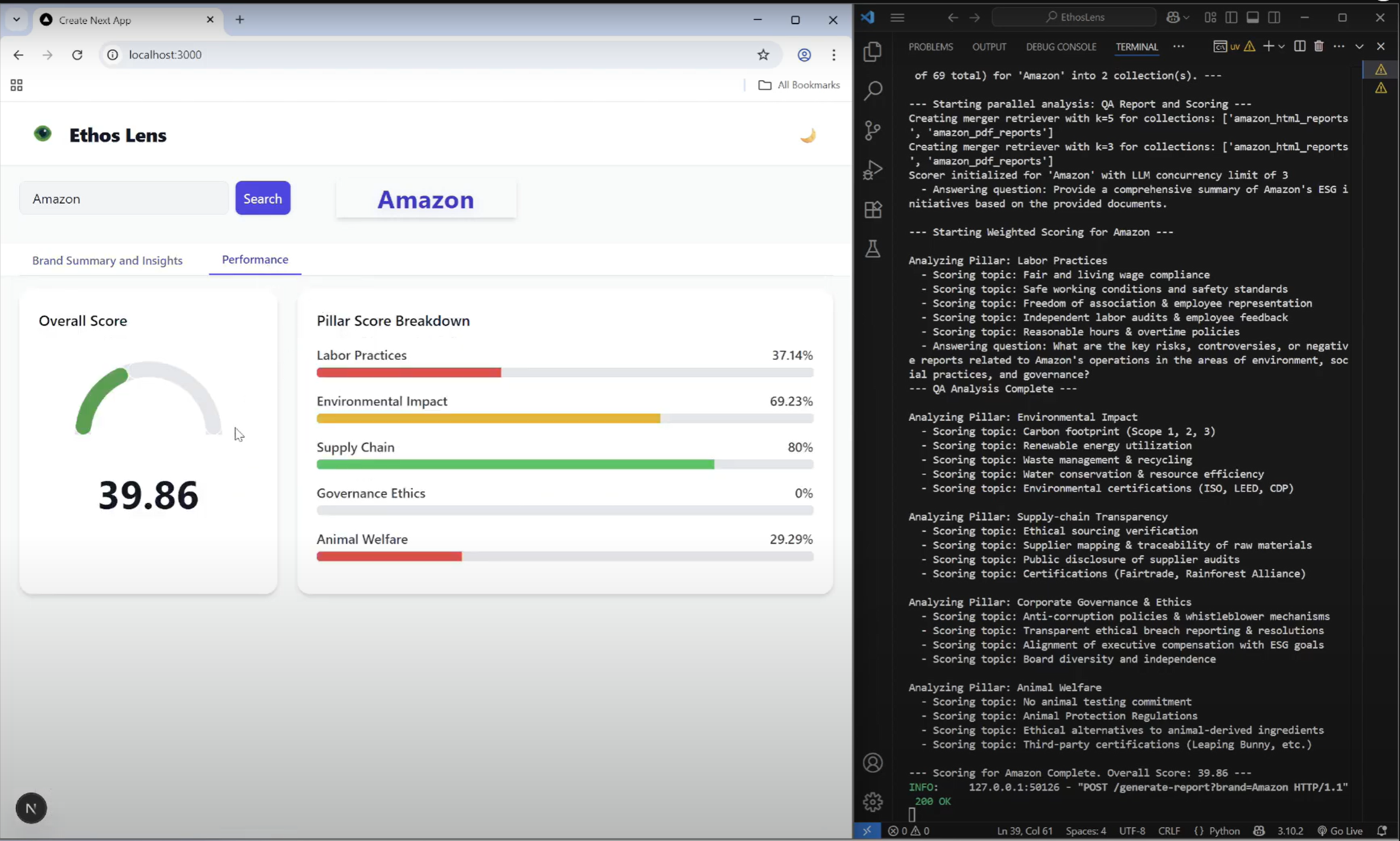
Scoring Dashboard
-
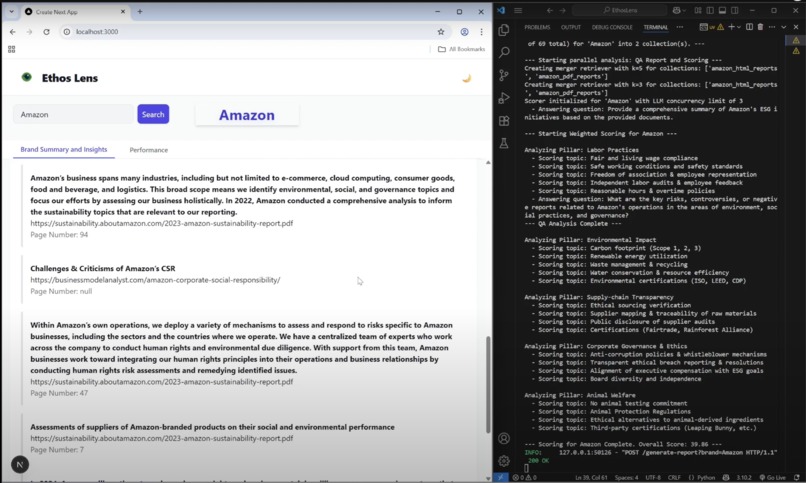
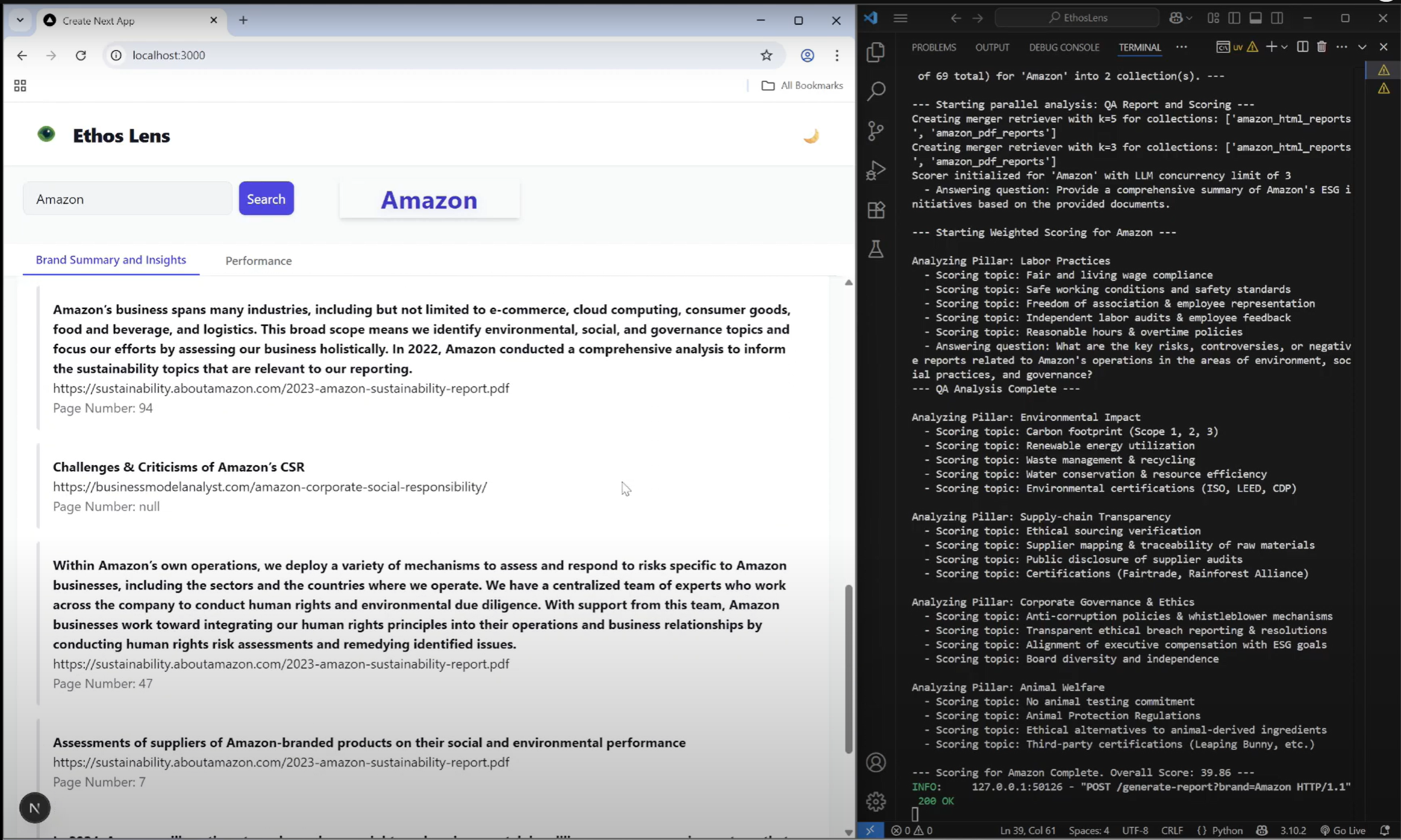
Brand Summary from Vector Store
Inspiration
We noticed a growing frustration among consumers: 74% find it incredibly difficult to get clear, trustworthy information about how ethical brands really are. People want to support companies that do good – treating workers fairly, protecting the environment, and being transparent – but the truth is often buried in long reports or hidden by confusing marketing. This inspired us to build EthosLens, a tool to make ethical information easy to understand and accessible to everyone.
What it does
EthosLens is an AI-powered research assistant that automatically investigates a brand's ethical practices. You give it a brand name, and it:
- Searches the internet for relevant documents like sustainability reports and news articles.
- Reads and understands these documents (even complex PDFs).
- Generates a simple report summarizing the brand's ethical performance.
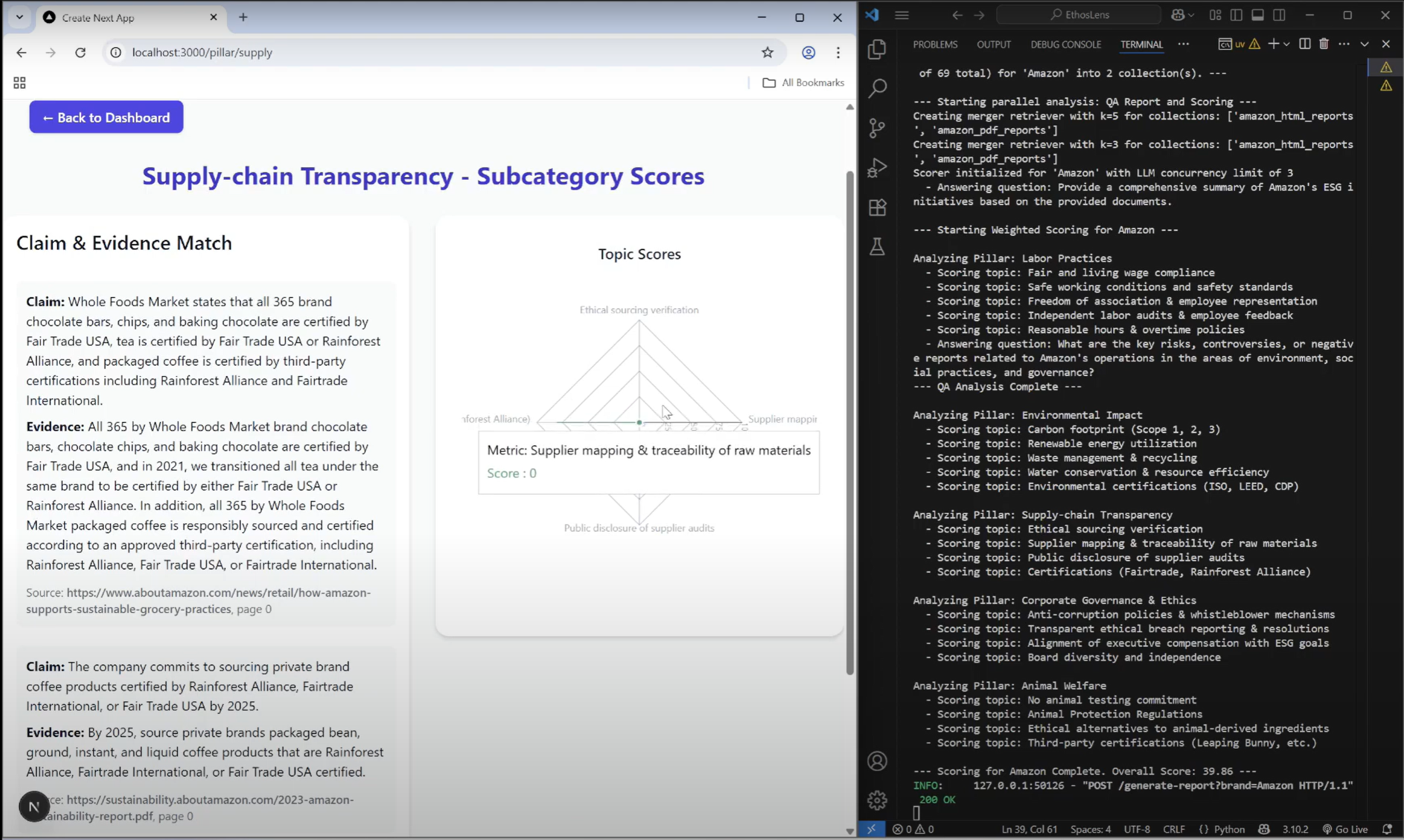
- Provides an overall ethical score, broken down into key areas like environmental impact and labor practices, with evidence from the documents.
How we built it
We used a combination of powerful tools and Python libraries:
- Python: The main programming language for the entire backend.
- Google Custom Search API: To find relevant documents online.
- Unstructured.io: To read and clean up different document types (like PDFs and web pages).
- ChromaDB: A special database to store and quickly search through the text information.
- LangChain: To manage the flow of information and communication with the AI model.
- OpenAI GPT Models: The AI "brain" that reads the text, answers questions, and helps calculate the scores.
- FastAPI: To create a web API so other applications (like a website) can use EthosLens.
- Asyncio: To make many parts of the process run at the same time, speeding things up.
Challenges we ran into
- Messy Data: Real-world company reports and web pages can be very disorganized. Getting the AI to understand them correctly was tricky.
- Information Overload: Sometimes we'd find hundreds of documents. Teaching the AI to pick out the most important information for scoring was a challenge.
- Speed: Reading and analyzing so much information can be slow. We had to work hard to make the process faster using
asynciofor parallel processing. - AI Consistency: Sometimes the AI wouldn't follow instructions perfectly for scoring. We had to carefully adjust our prompts to get reliable results.
Accomplishments that we're proud of
- Fully Automated Reporting: We built a system that can go from just a brand name to a detailed ethical report with scores, all automatically.
- Handling Complex Documents: EthosLens can process and understand complicated PDF reports and messy web pages, which is a tough problem.
- Evidence-Based Scores: Every part of the score and report is backed by direct quotes and links to the original documents, so users can trust the information.
- Fast Analysis: By making different parts of the system run at the same time (like searching, downloading, and analyzing), we made the whole process much quicker.
What we learned
- AI Needs Good Data: The quality of the AI's analysis depends heavily on the quality and relevance of the information it's given.
- Breaking Down Problems: Complex tasks, like ethical analysis, are easier to solve by breaking them into smaller, manageable steps.
- Speed Matters: Making software fast and responsive is key for a good user experience, and tools like
asyncioare very helpful for this. - Clear Instructions for AI: AI models need very specific and clear instructions (prompts) to perform tasks reliably, especially when you need structured output like scores.
What's next for EthosLens
- User-Friendly Website: Create an easy-to-use website where anyone can type in a brand and see its ethical report.
- More Data Sources: Include information from social media, news sentiment, and customer reviews to get an even broader picture.
- Track Changes Over Time: Allow users to see if a brand's ethical performance is improving or declining over months or years.
- Compare Brands: Let users easily compare the ethical scores of different brands side-by-side.
- Deeper Analysis: Improve the AI to better understand nuances in company reports and identify potential "greenwashing" more effectively.

Log in or sign up for Devpost to join the conversation.