Inspiration
We were inspired by the growing need for fair and transparent AI systems—especially as AI-driven decisions impact real lives in hiring, healthcare, and finance. Seeing how unchecked biases can perpetuate inequalities, we set out to build a tool that not only detects bias but also explains AI decisions in clear, actionable terms[3][2][1].
What it does
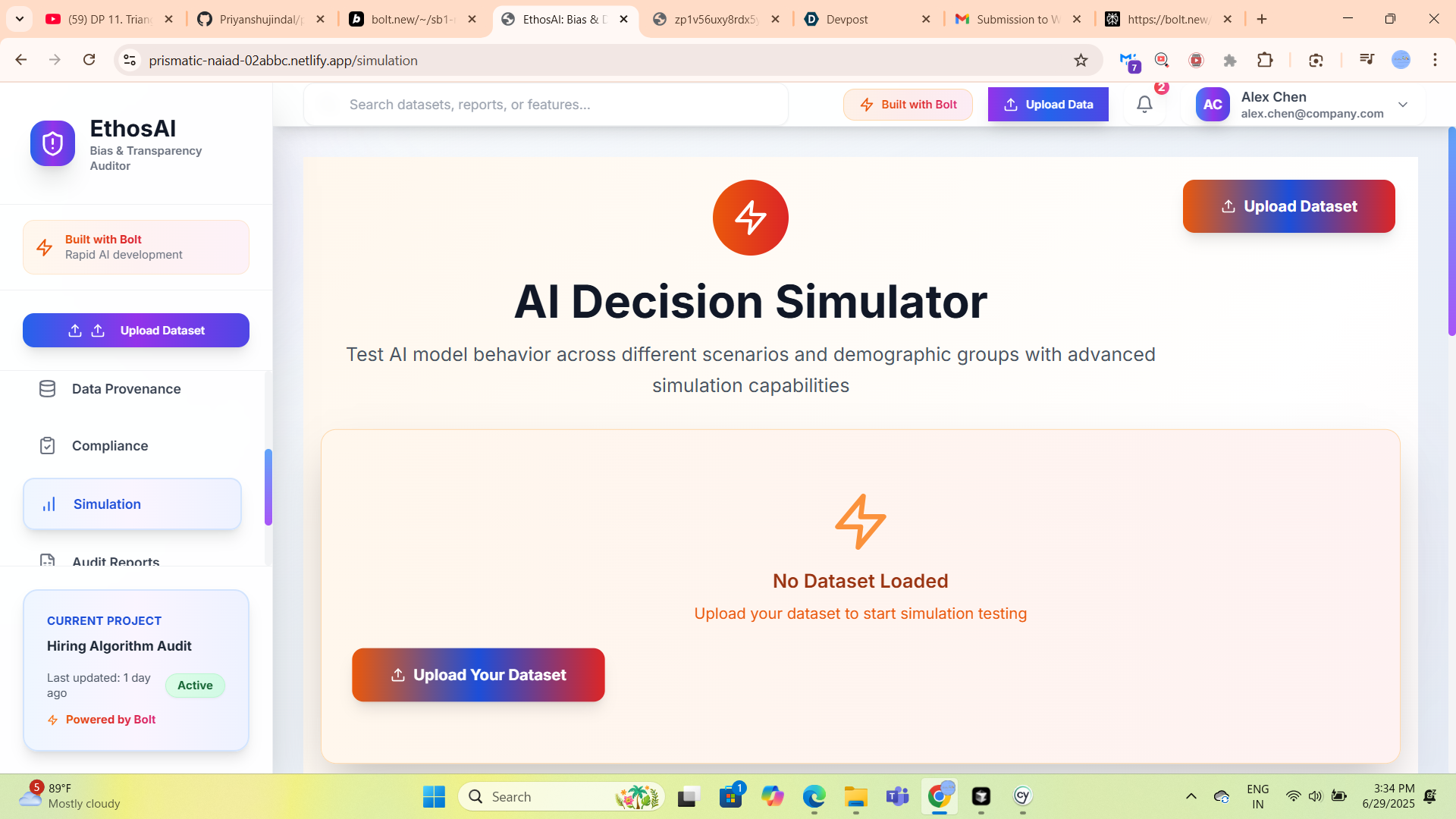
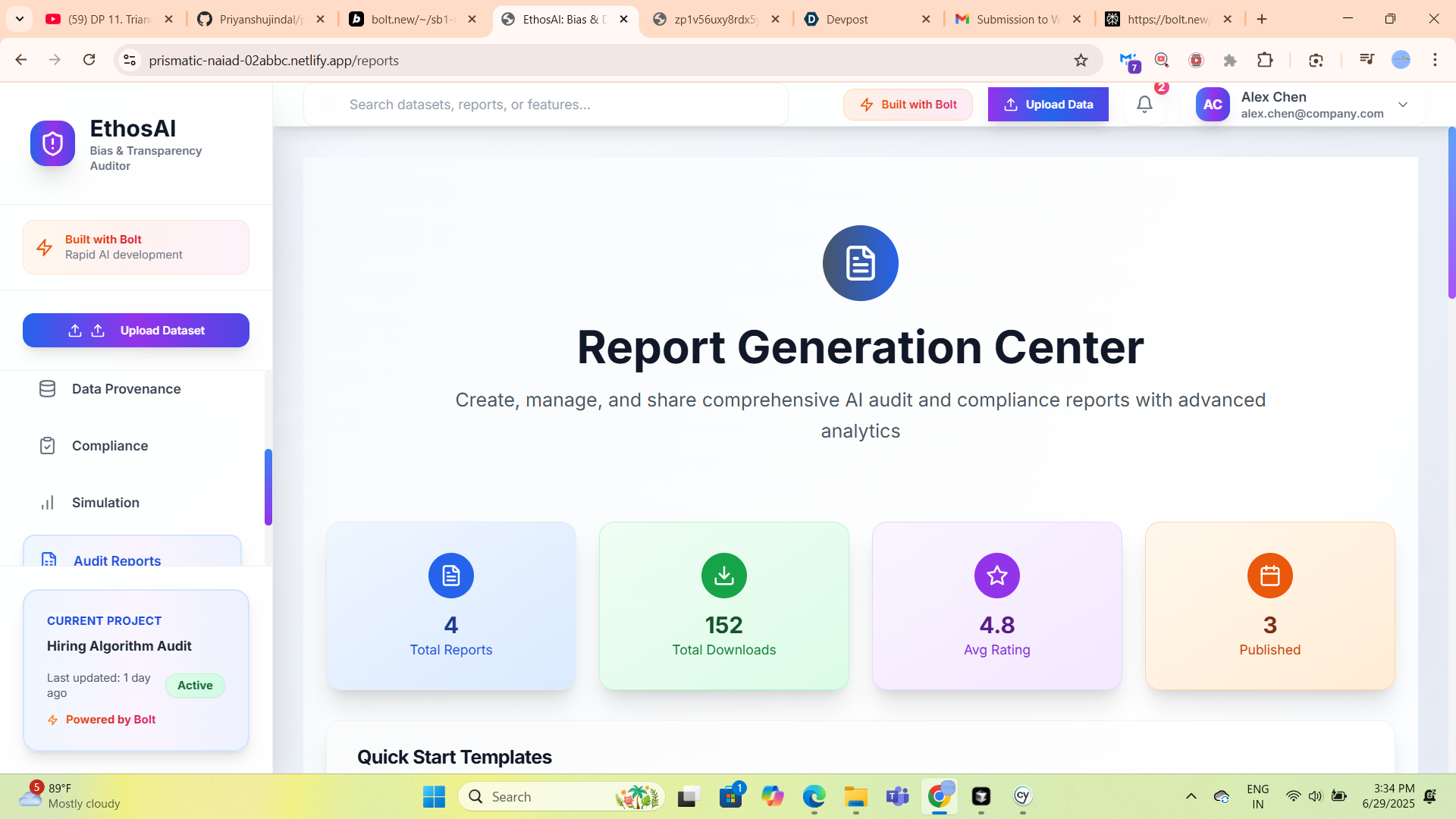
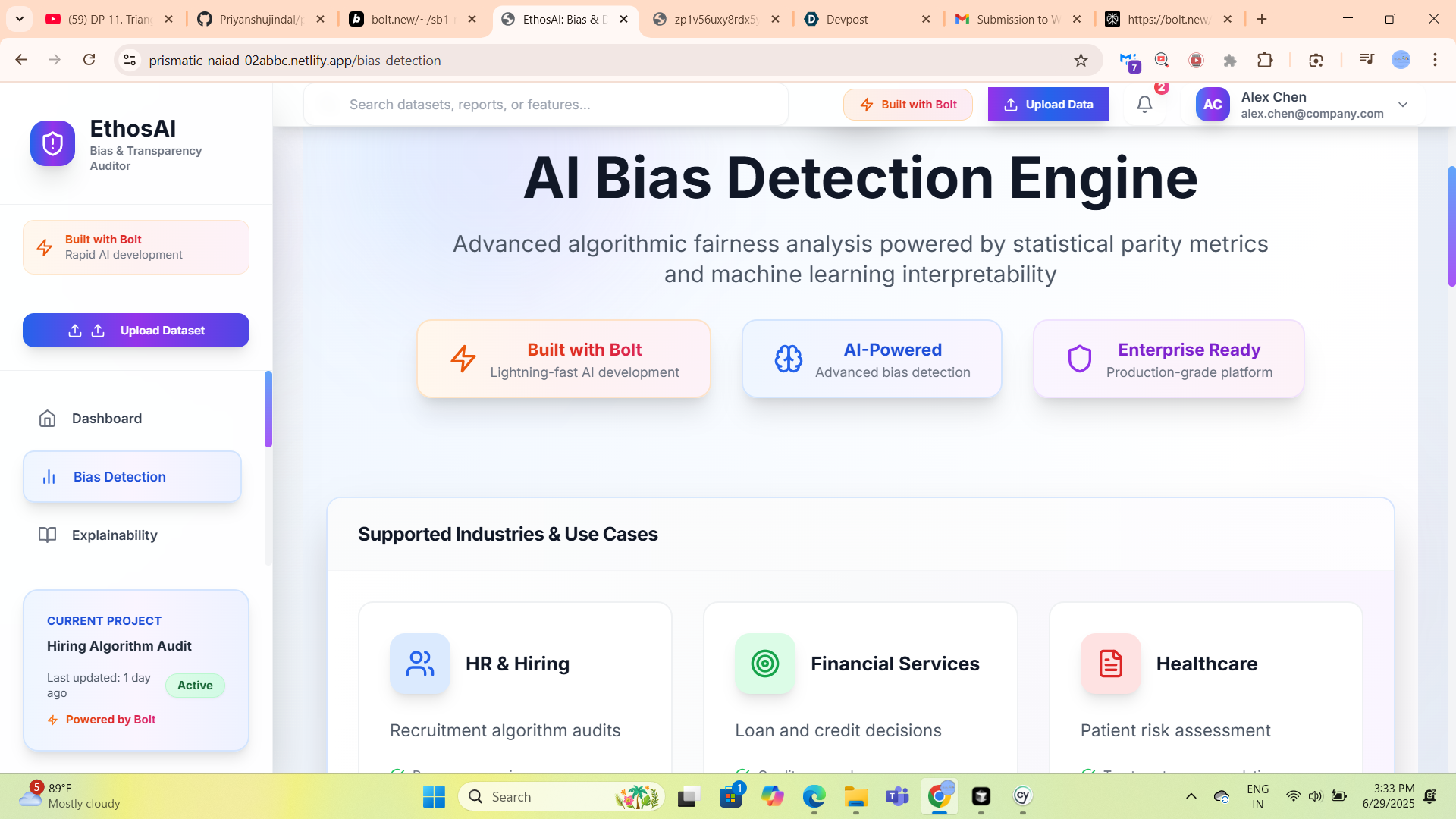
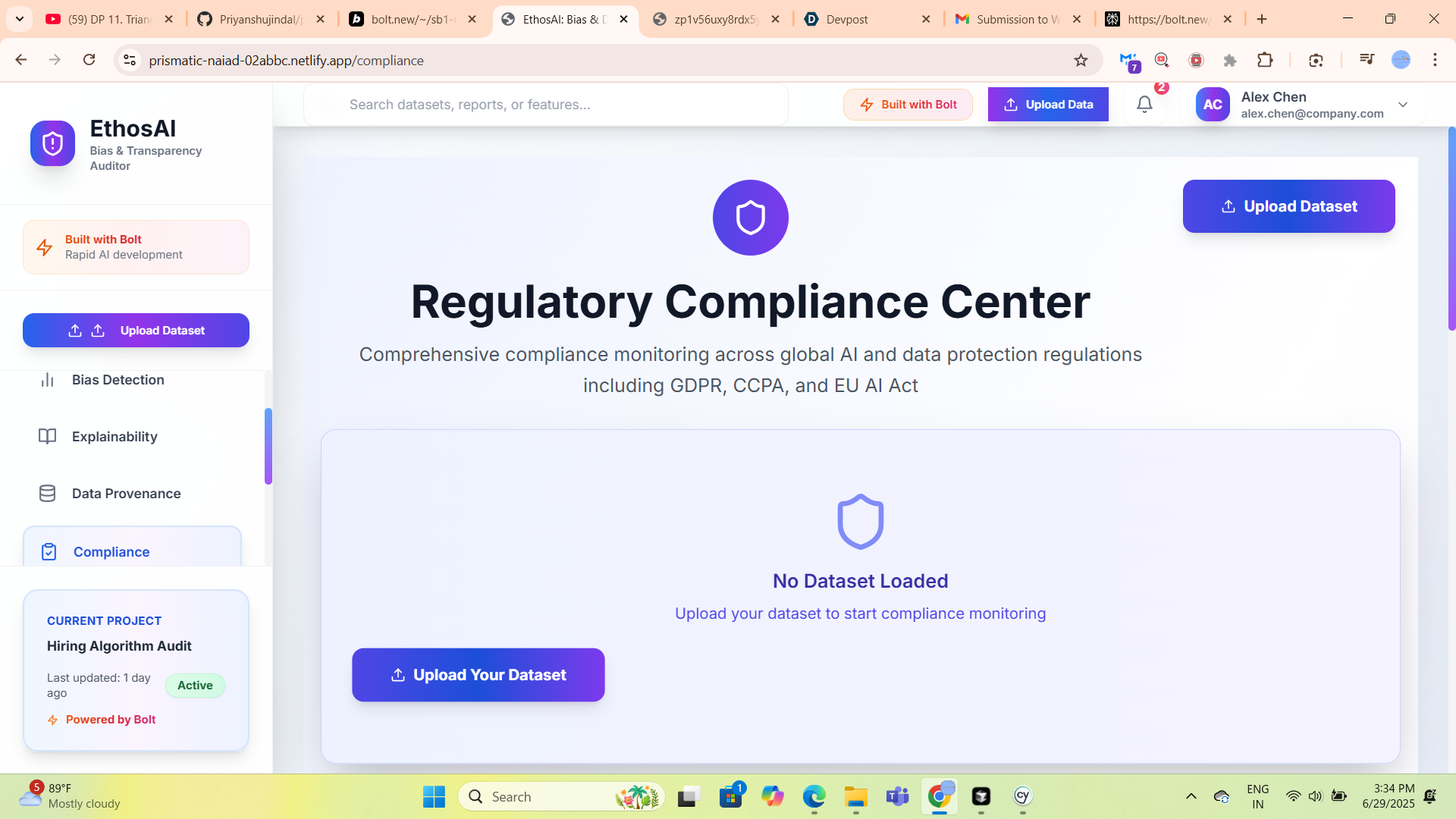
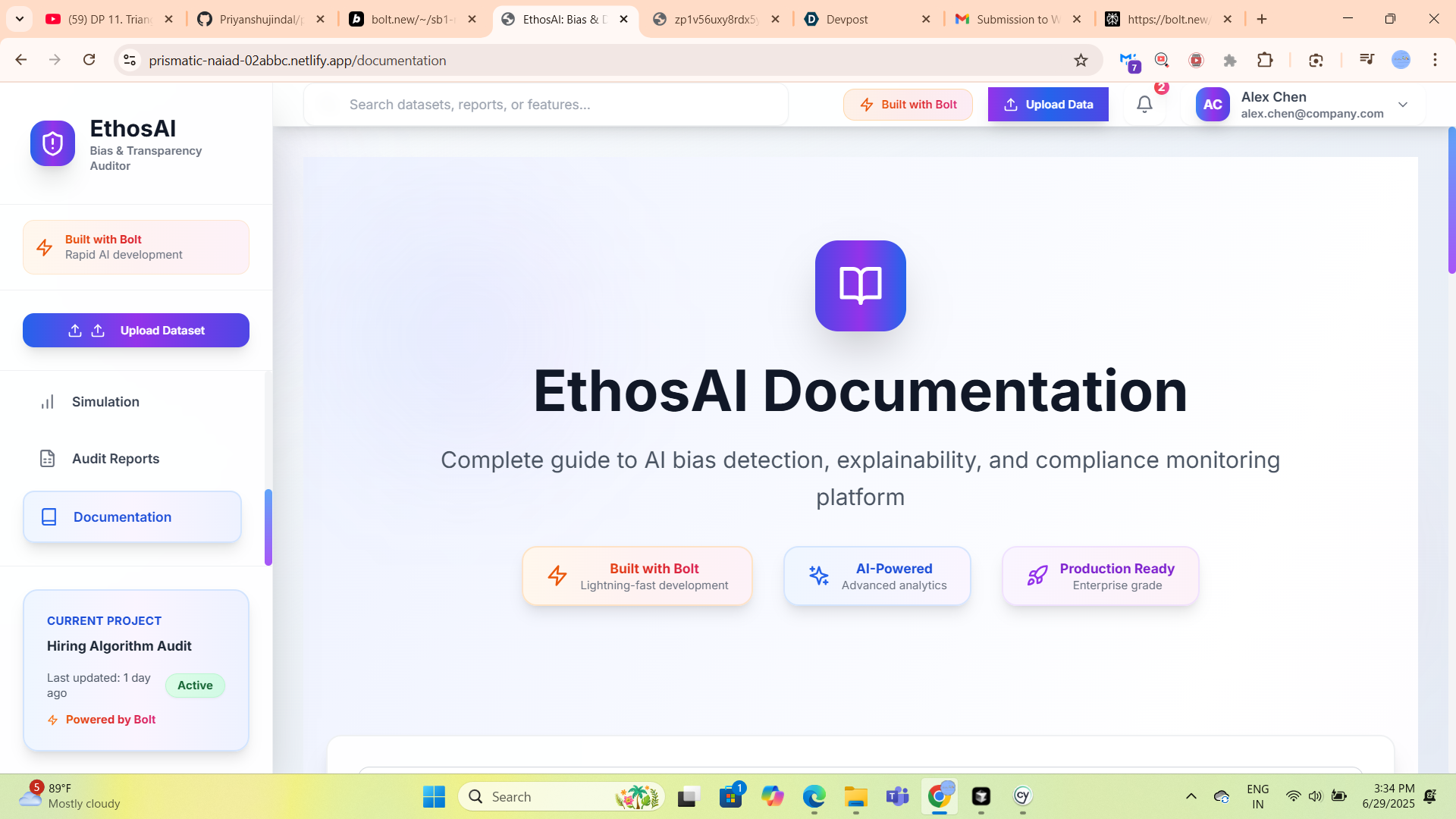
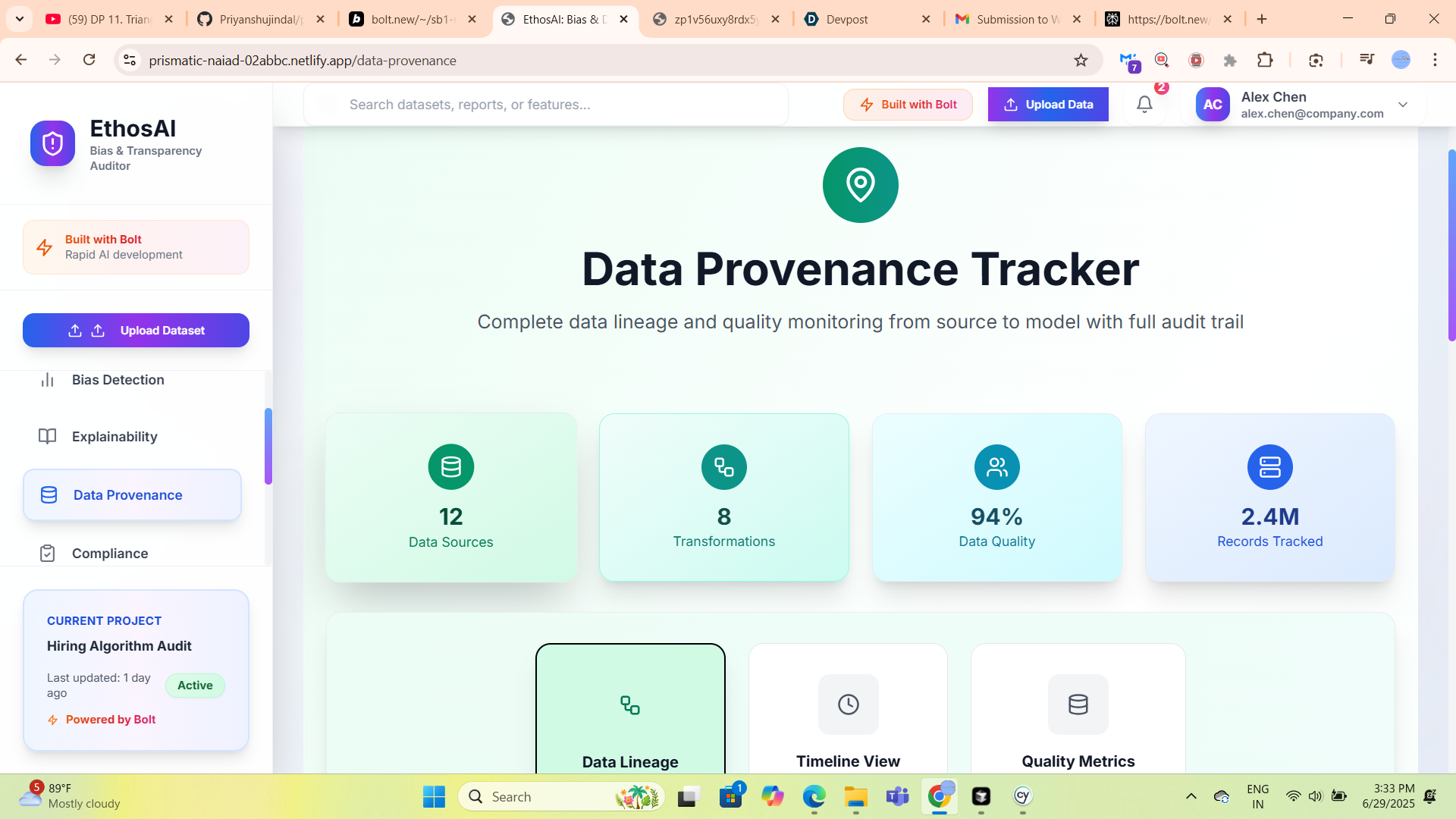
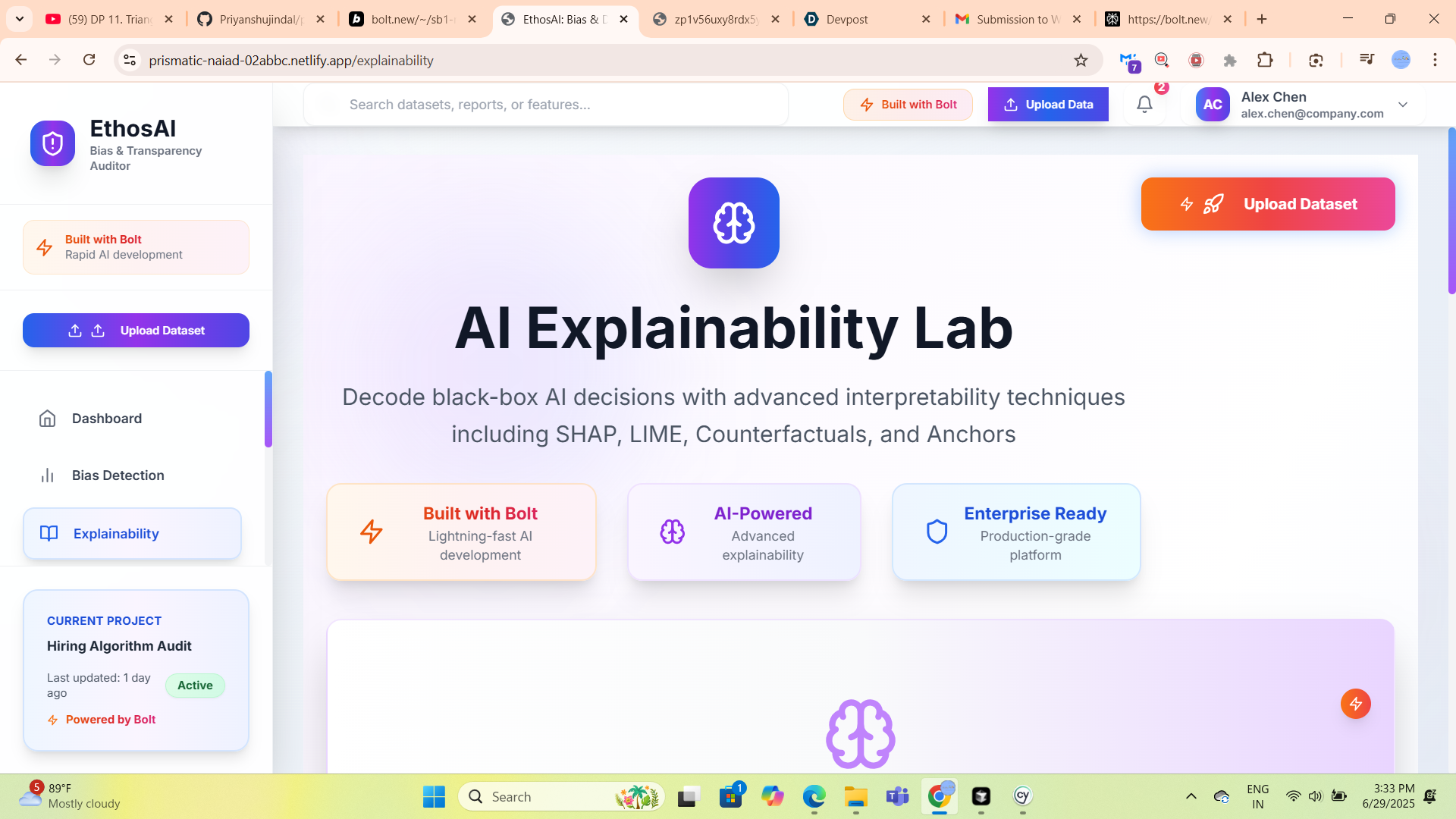
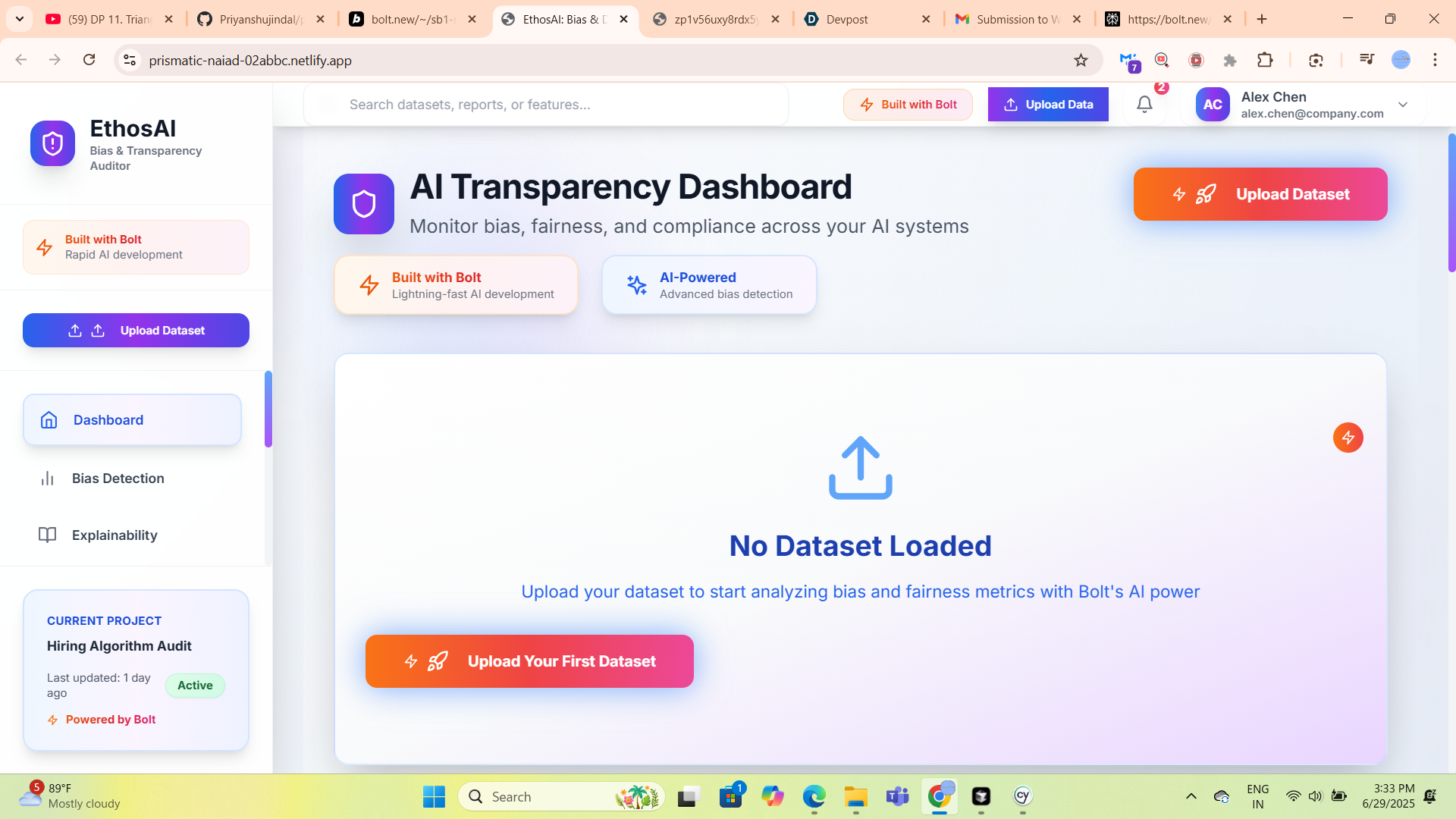
EthosAI: Bias & Decision Transparency Auditor helps organizations audit their AI models and datasets for hidden biases. It provides actionable insights, visualizes fairness metrics, and explains model decisions in plain language. Users can upload datasets or connect models, and the system identifies bias patterns, suggests mitigation strategies, and generates transparency reports—all while ensuring privacy and compliance[4][5][8].
How we built it
- Backend: Developed in Python using Flask for API endpoints, with support for PyTorch and TensorFlow models.
- Frontend: Built with React for a responsive, user-friendly interface.
- Bias Detection: Integrated fairness metrics (demographic parity, equal opportunity) from established frameworks like IBM AI Fairness 360 and Google Fairness Indicators.
- Explainability: Used SHAP and LIME for model interpretability, generating visual explanations for predictions.
- Privacy: Data processing is local and secure, with no external API calls for sensitive data.
- Deployment: Hosted on Netlify for the frontend, with backend APIs served via secure endpoints.
Challenges we ran into
- Balancing accuracy and interpretability: Ensuring that explanations were both accurate and understandable for non-technical users.
- Handling diverse data types: Supporting tabular data, images, and multiple ML frameworks required modular design.
- Integration complexity: Seamlessly connecting the frontend and backend, especially for real-time feedback and visualization.
- Regulatory compliance: Keeping up with evolving AI ethics guidelines and privacy laws[7][6][4].
Accomplishments that we’re proud of
- Open-source commitment: Released core components as FOSS, fostering community contributions and transparency.
- User-centric design: Created an intuitive interface that makes AI auditing accessible to both data scientists and business users.
- Comprehensive reports: Developed automated, visually rich reports that highlight bias and suggest mitigation strategies.
- Privacy-first approach: Ensured all sensitive data is processed locally, with no external data sharing[5][4][8].
What we learned
- Bias is everywhere: Even well-intentioned models can inherit biases from data, so continuous auditing is crucial[3][1].
- Transparency builds trust: Users are more likely to trust AI systems when they understand how decisions are made[2][4].
- Modularity matters: A flexible architecture allows for easier updates and integrations with new tools and frameworks.
- Ethics is a team effort: Diverse perspectives are essential for identifying and addressing hidden biases[3][7].
What’s next for EthosAI: Bias & Decision Transparency Auditor
- Expand model support: Add compatibility with more ML frameworks and data types.
- Enhance explainability: Integrate more advanced XAI techniques for even clearer decision explanations.
- Automated mitigation: Build features that automatically suggest and apply bias mitigation strategies.
- Community engagement: Grow the open-source community, encouraging feedback and collaboration.
- Continuous compliance: Stay updated with global AI ethics standards and regulations, ensuring the tool remains at the forefront of responsible AI[4][7][8].
Built With
- javascript
- python
- pytorch
- tensflow

Log in or sign up for Devpost to join the conversation.