Challenge track
Track 2: Natural products for drug discovery
Inspiration and problem
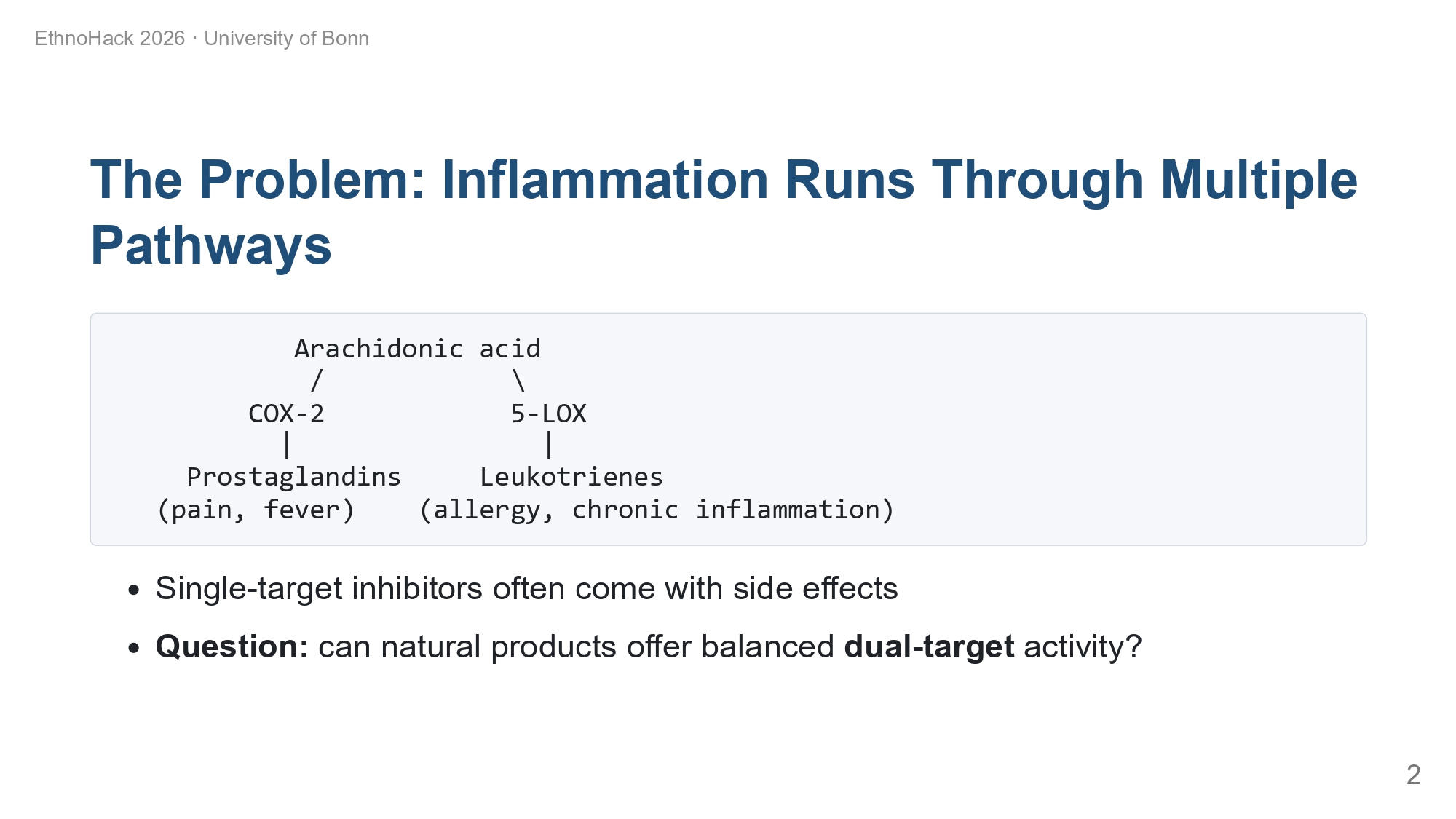
Inflammation is driven by several enzymatic pathways, and two of them start from the same molecule, arachidonic acid.
The first is the COX-2 pathway, which leads to prostaglandins. These are involved in pain and fever. The second is the 5-LOX pathway, which leads to leukotrienes, and those play a role in allergic reactions and chronic inflammation.
Most established drugs inhibit only one of these enzymes, and single-target inhibitors are often associated with side effects. Blocking one pathway can also shift the flux toward the other one.
That raises a question: could natural products offer activity against both targets at once? Our project is trying to help to answer this question by determining potential candidates for further checking.
What it does
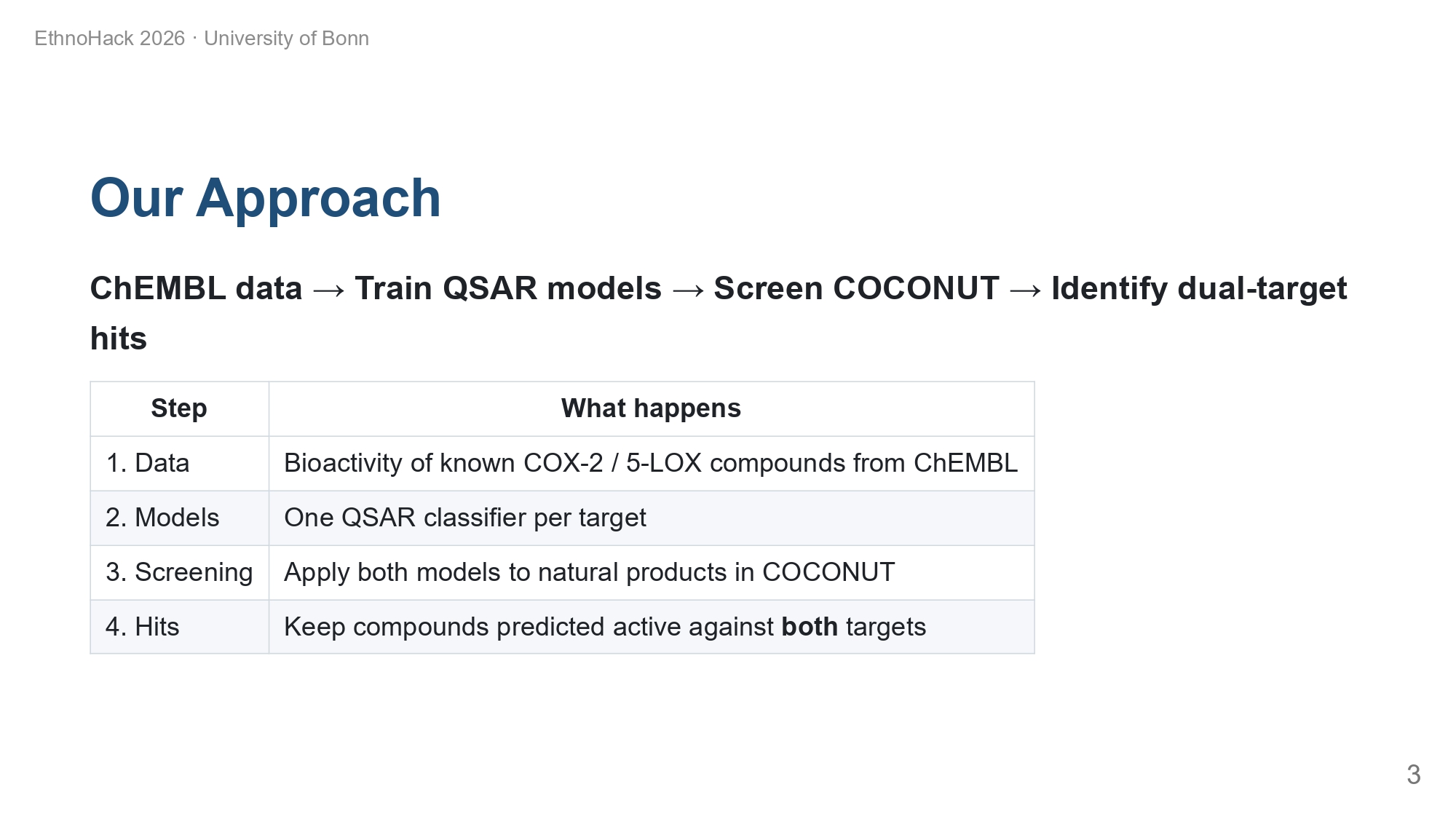
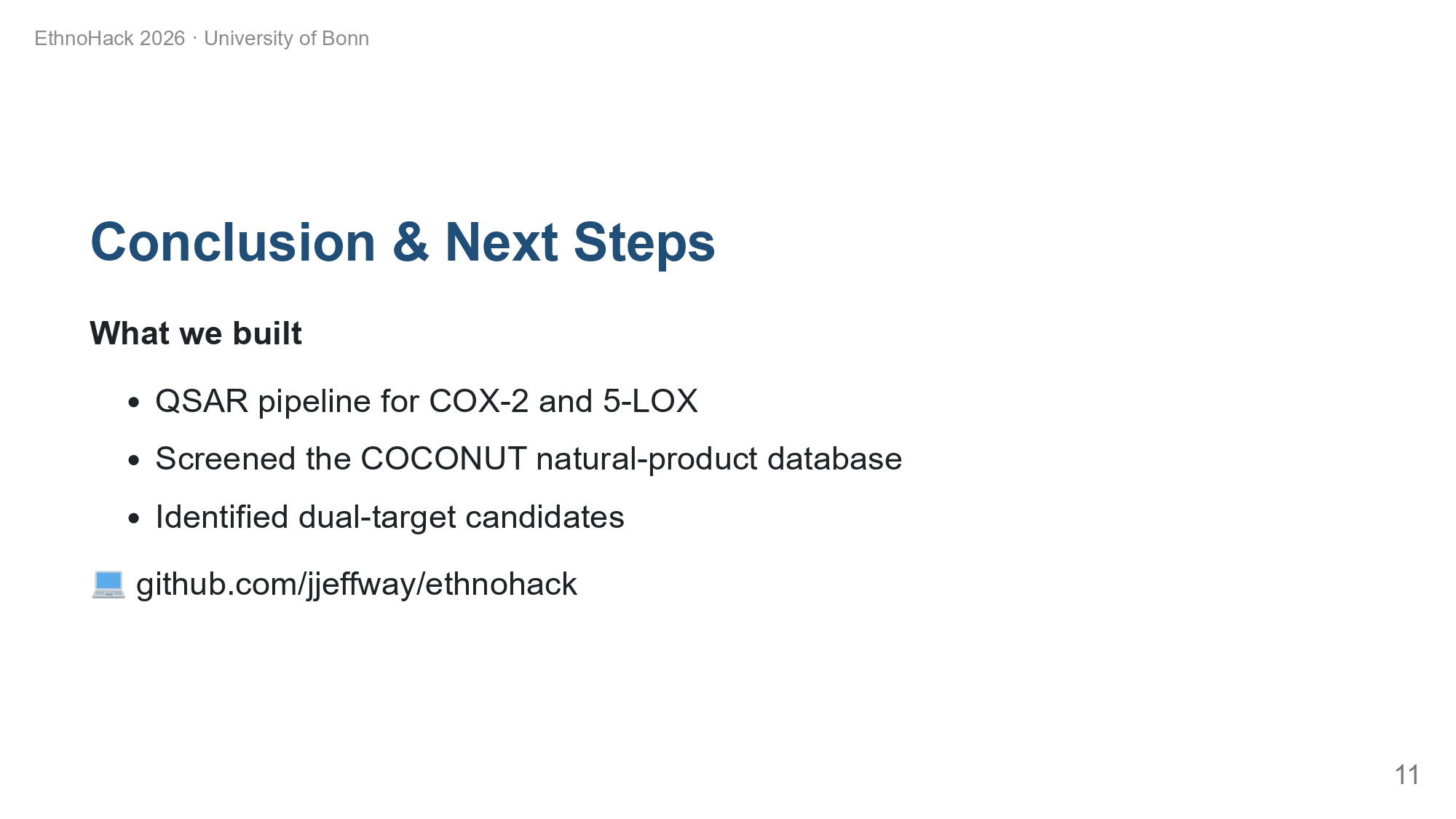
Ethno_PAIR is a computational chemistry project that builds structure-based Quantitative Structure-Activity Relationship (QSAR) models to identify natural products with synergistic anti-inflammatory activity.
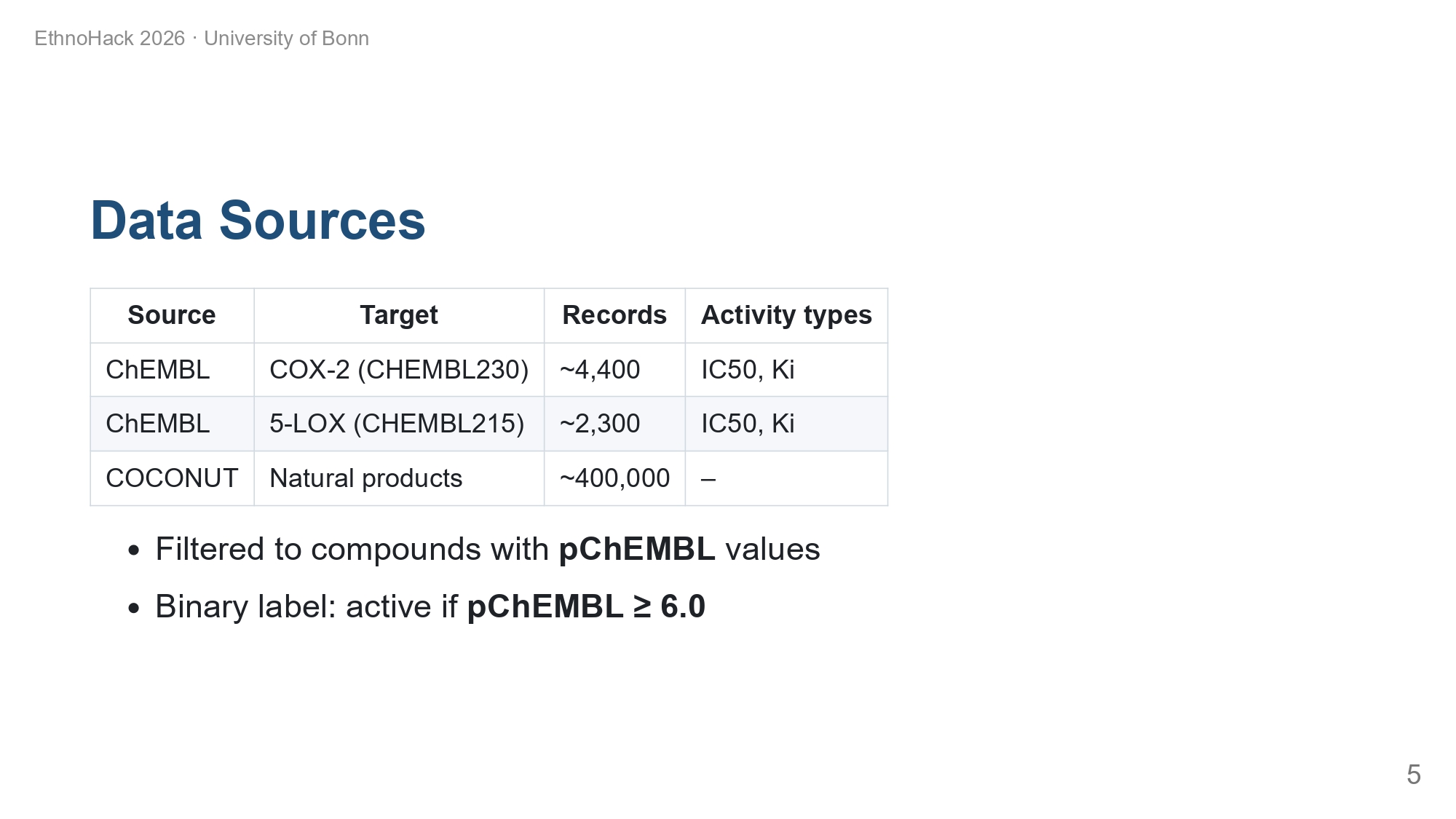
1) collect bioactivity data for known COX-2 and 5-LOX compounds from ChEMBL
2) train one QSAR classifier per target
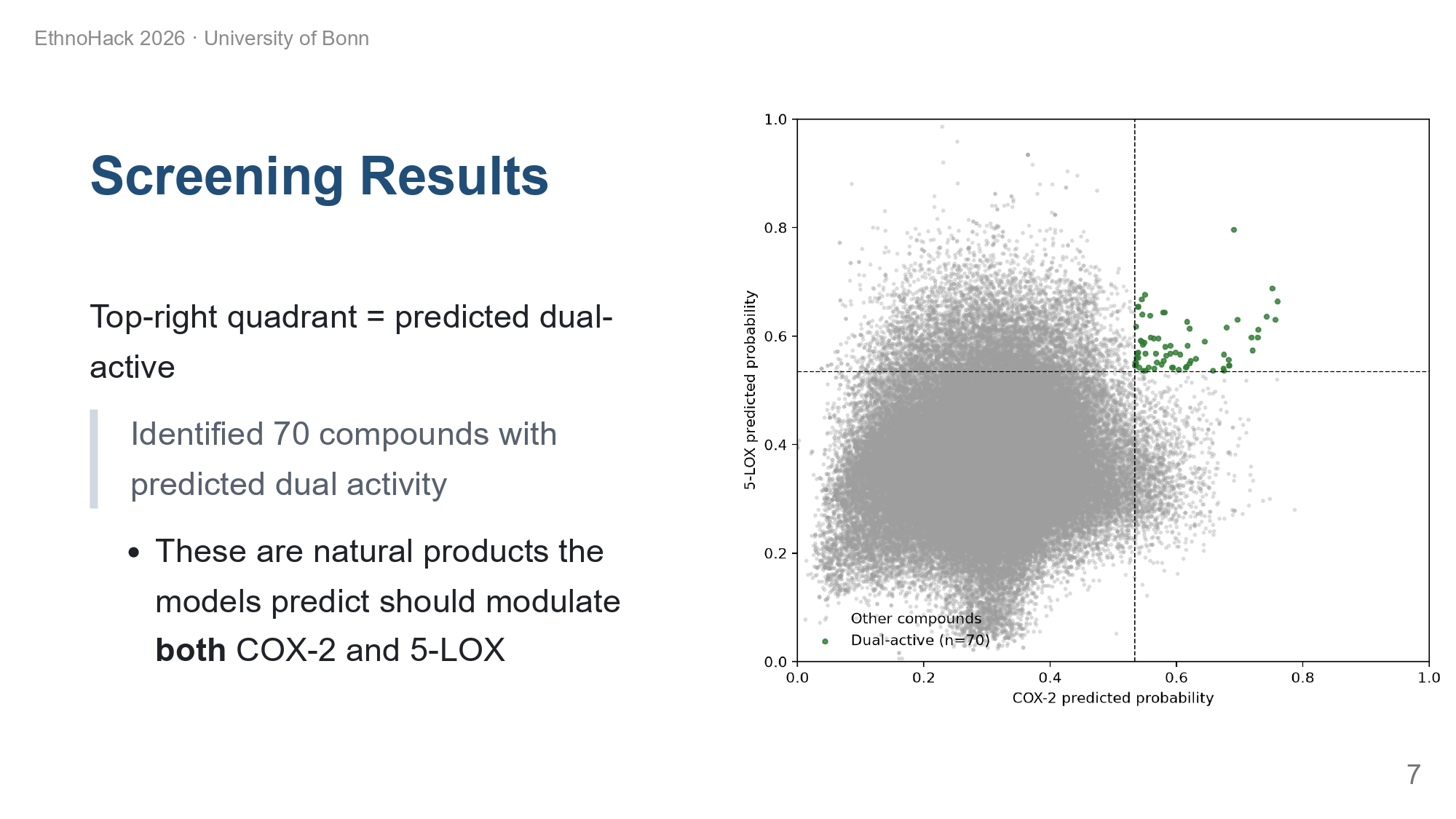
3) apply both models to natural products from the COCONUT database
4) keep the compounds that are predicted to be active against both targets.
How we built it
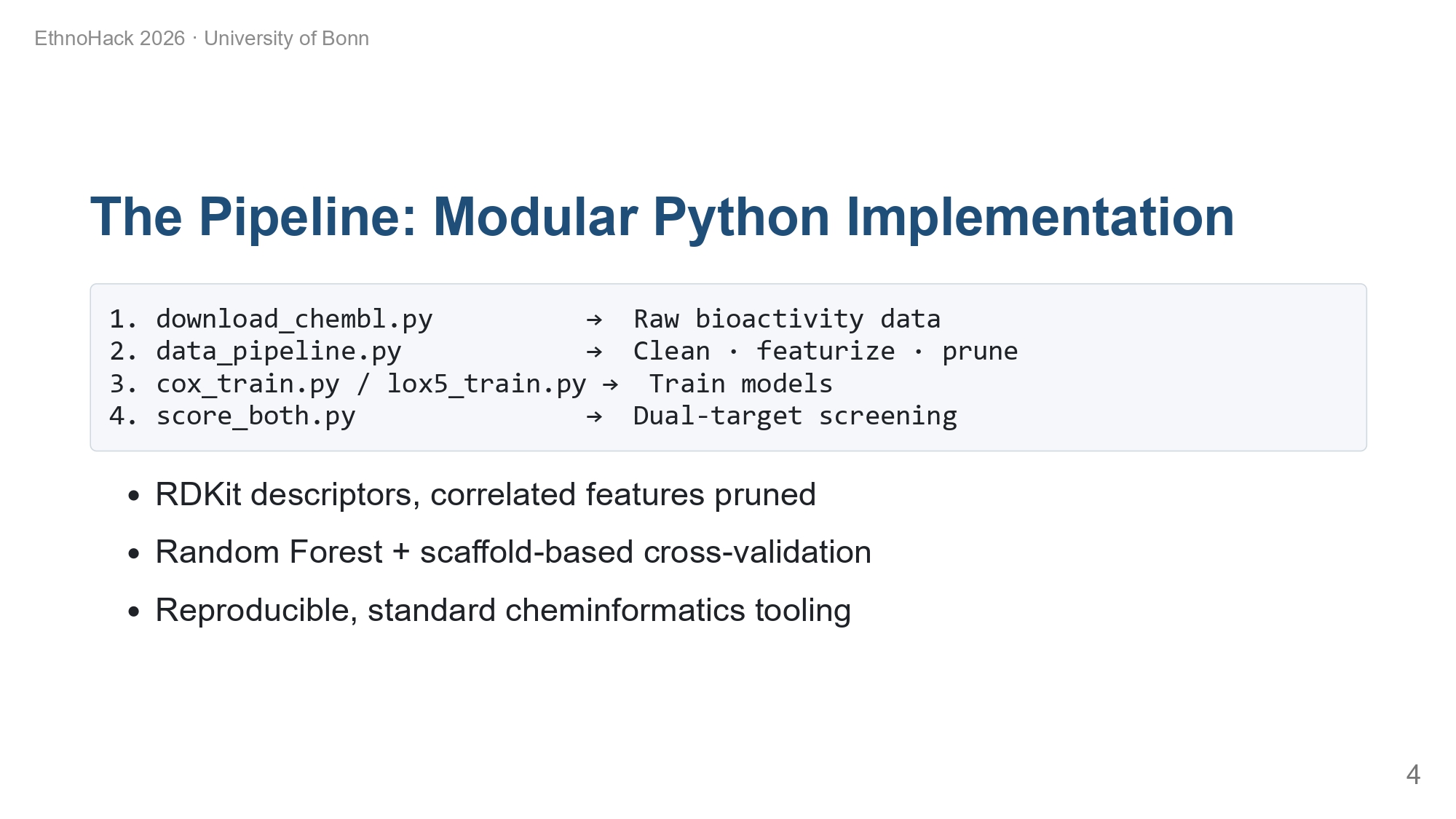
We implemented this as a small modular Python pipeline, with one script per stage.
The first script downloads the raw bioactivity data from ChEMBL. The second one cleans the data, computes molecular features, and removes redundant ones. Then there are separate training scripts for COX-2 and 5-LOX. Finally, a scoring script runs both models on the screening library and combines the results.
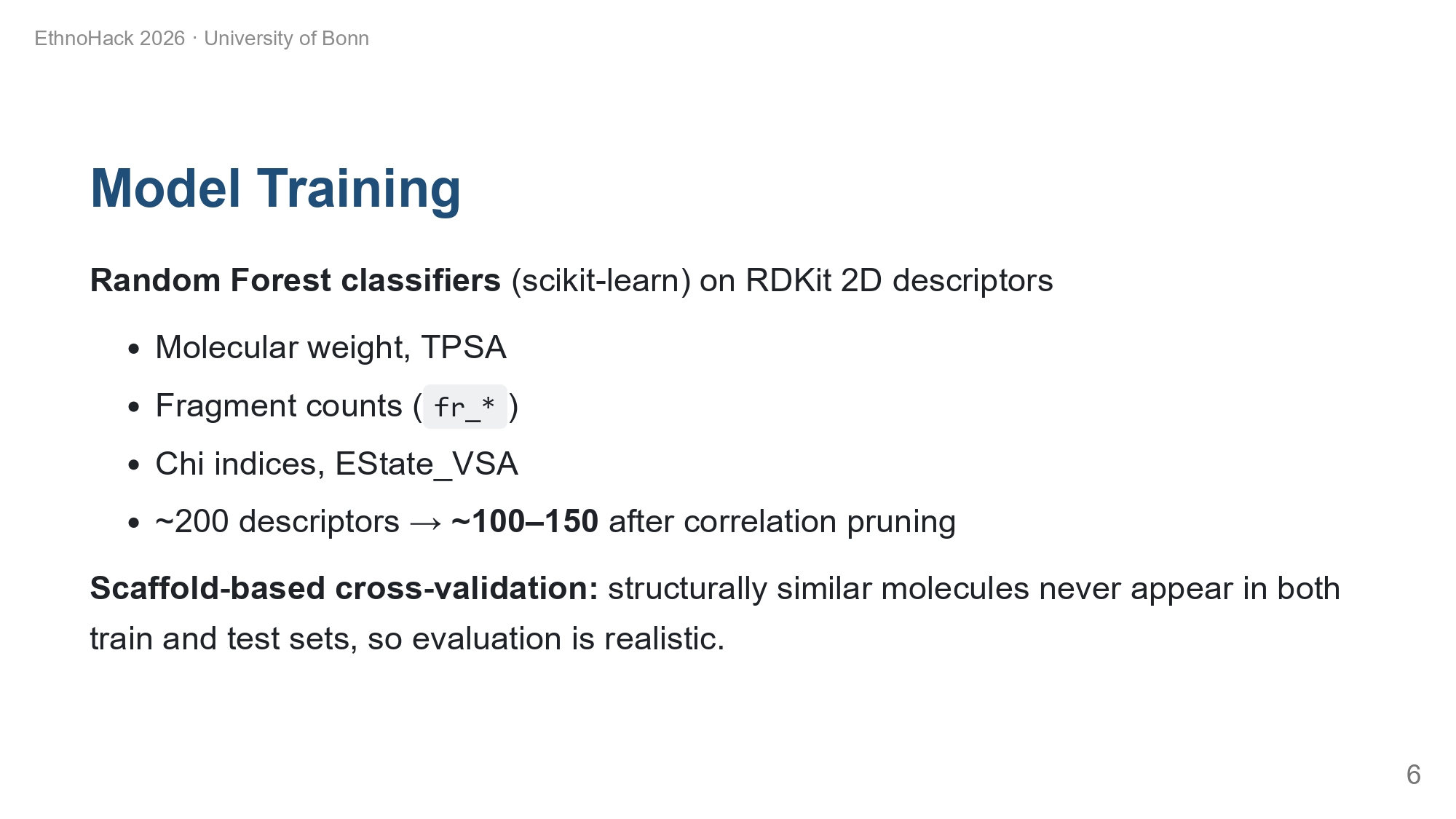
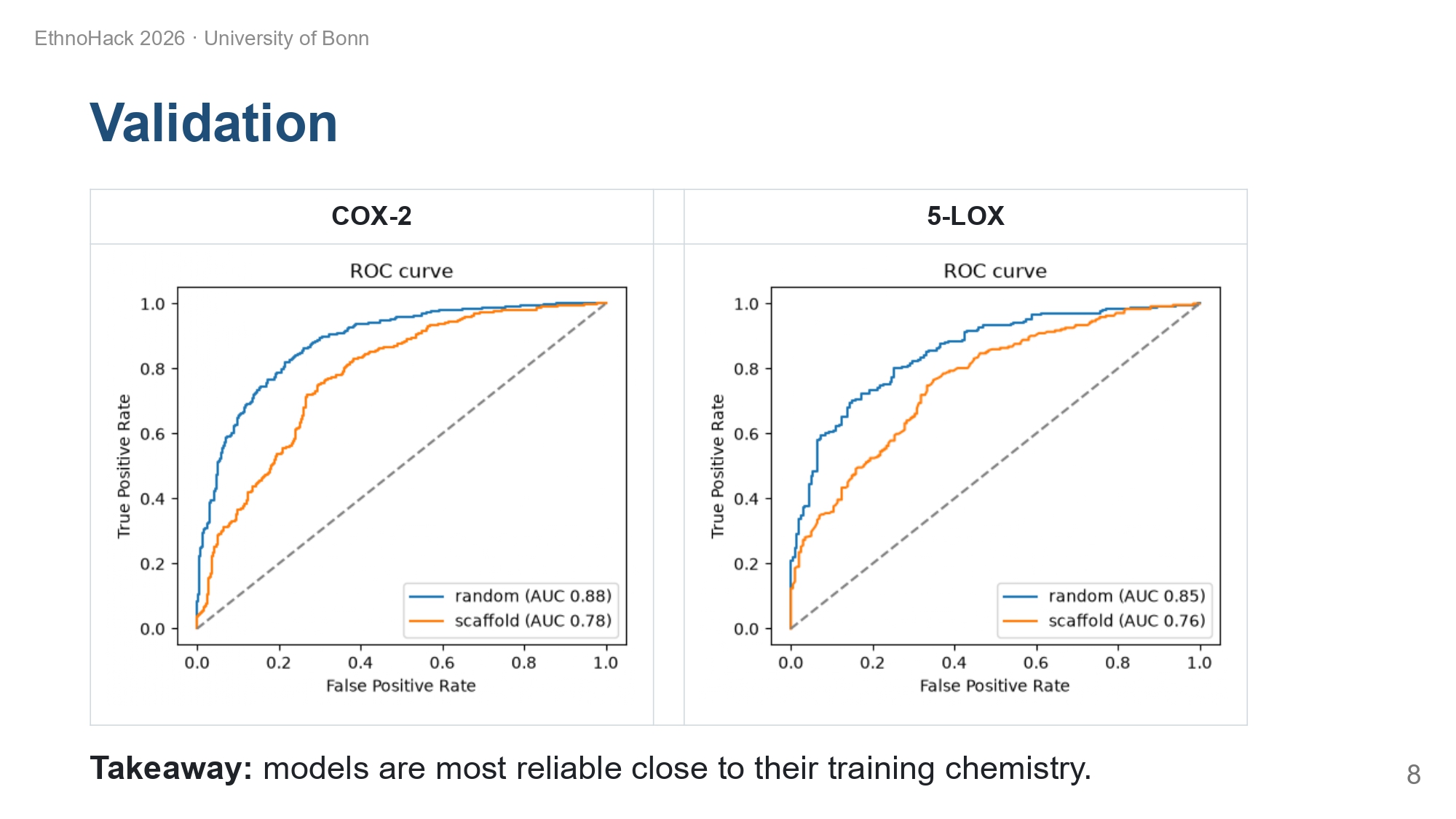
For features, we use RDKit descriptors, and we prune features that are highly correlated with each other. The models are Random Forests, evaluated with scaffold-based cross-validation, which I'll come back to in a moment. We used standard cheminformatics tools throughout, so the whole workflow can be rerun from the code.
Challenges we ran into
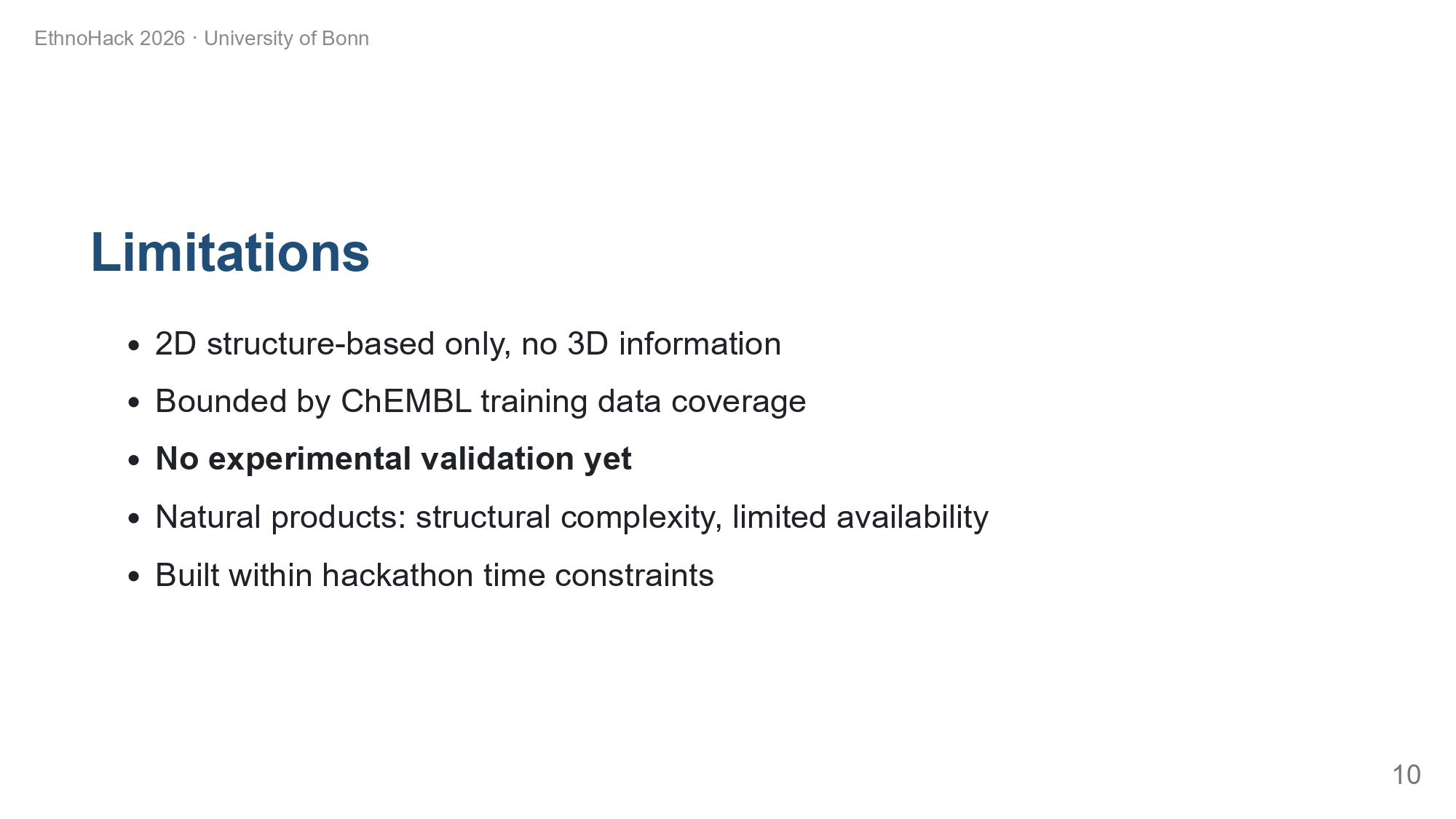
Main challenge was the characteristic problem of Life Sciences - lack of systematised sparse data for training, which would not be rooted in the structure; also validating the results is tricky without performing an experiment in a wet lab.
Accomplishments that we're proud of
In a very short time that was available we managed to:
- gather the data
- train the models
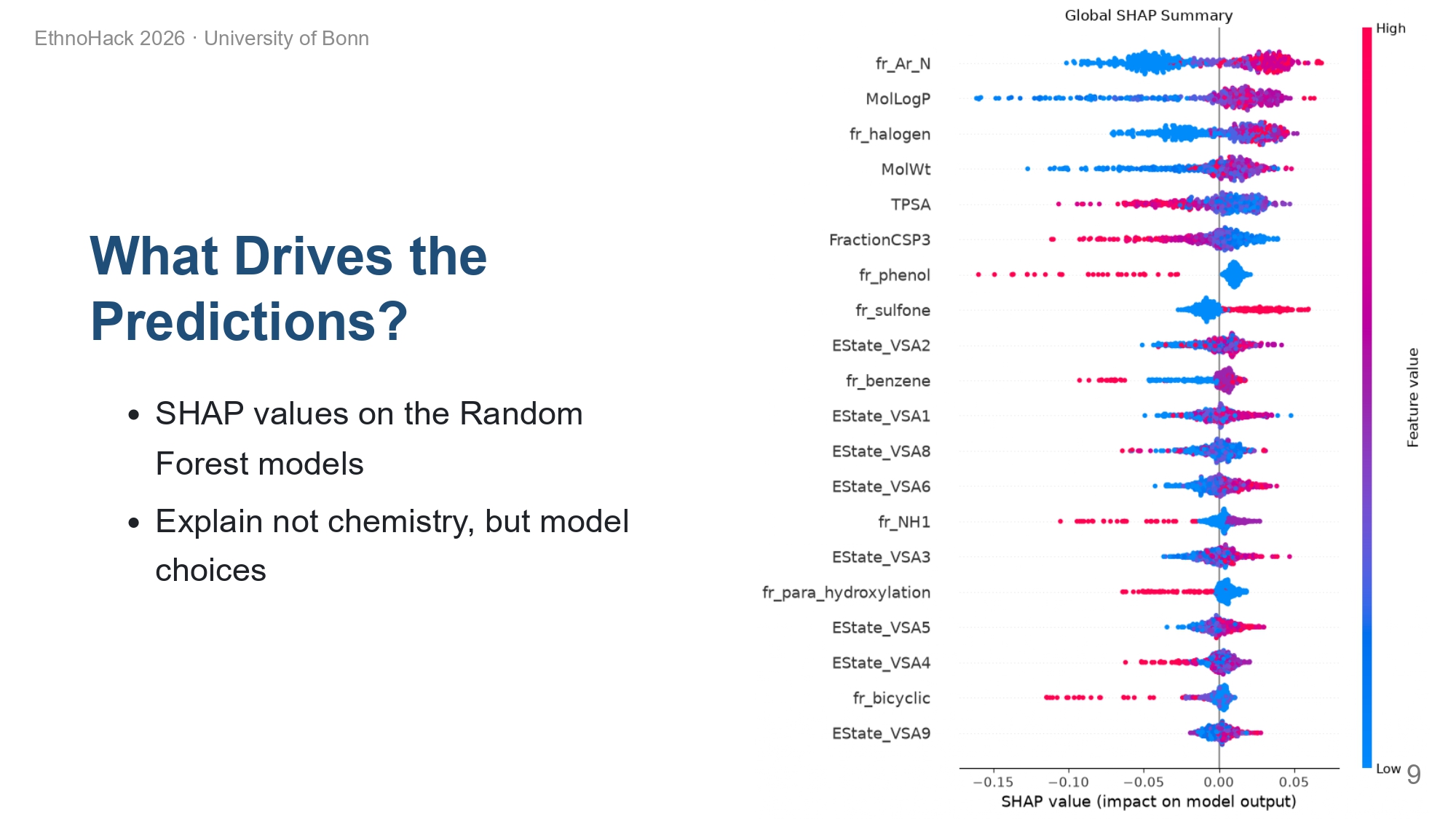
- look into models' behaviour and reasoning behind choices
- identify 70 compounds that are predicted to be dual-target candidates
- and learn something new!
Built With
- machine-learning
- natural-compounds
- pandas
- python
- qsar
- rdkit
