-
-
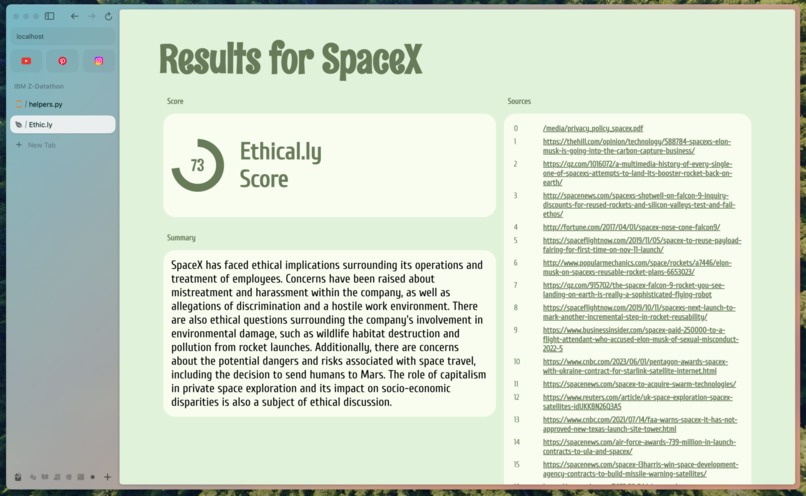
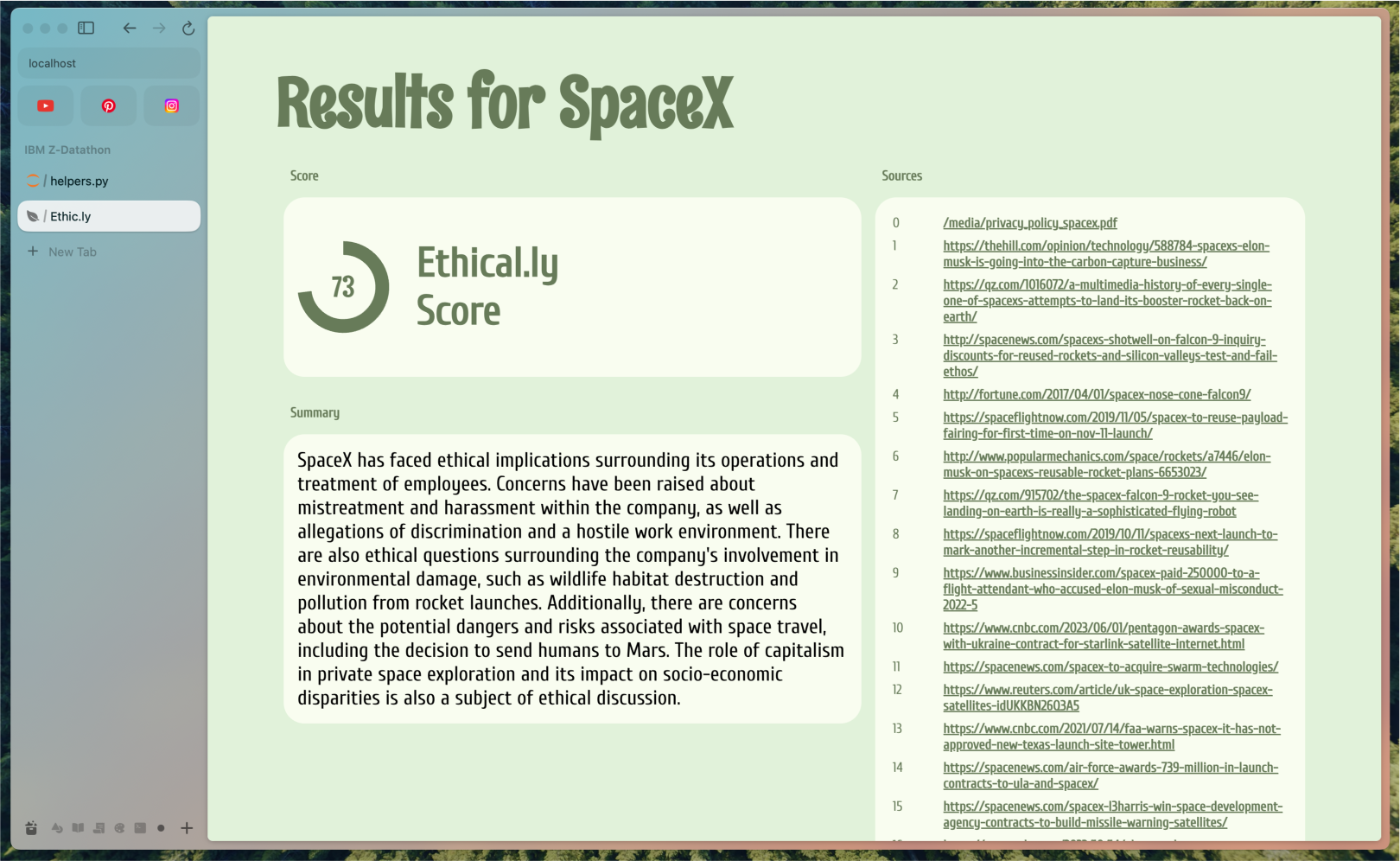
Example of Ethic.ly generating a score and summary for SpaceX
-
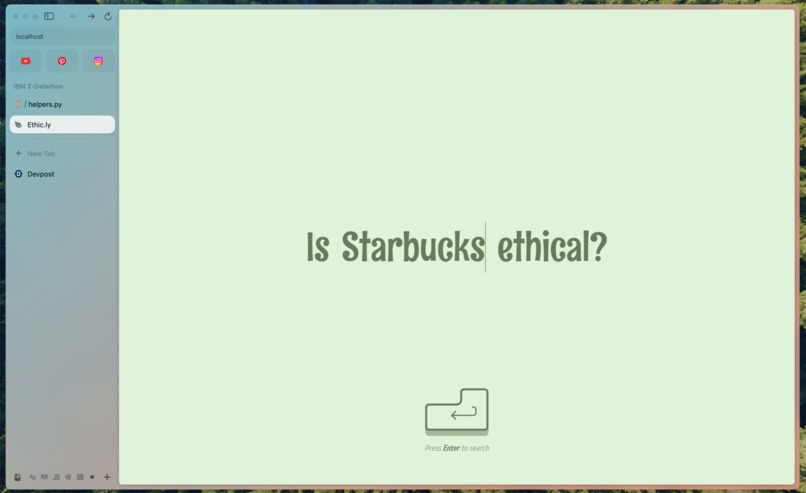
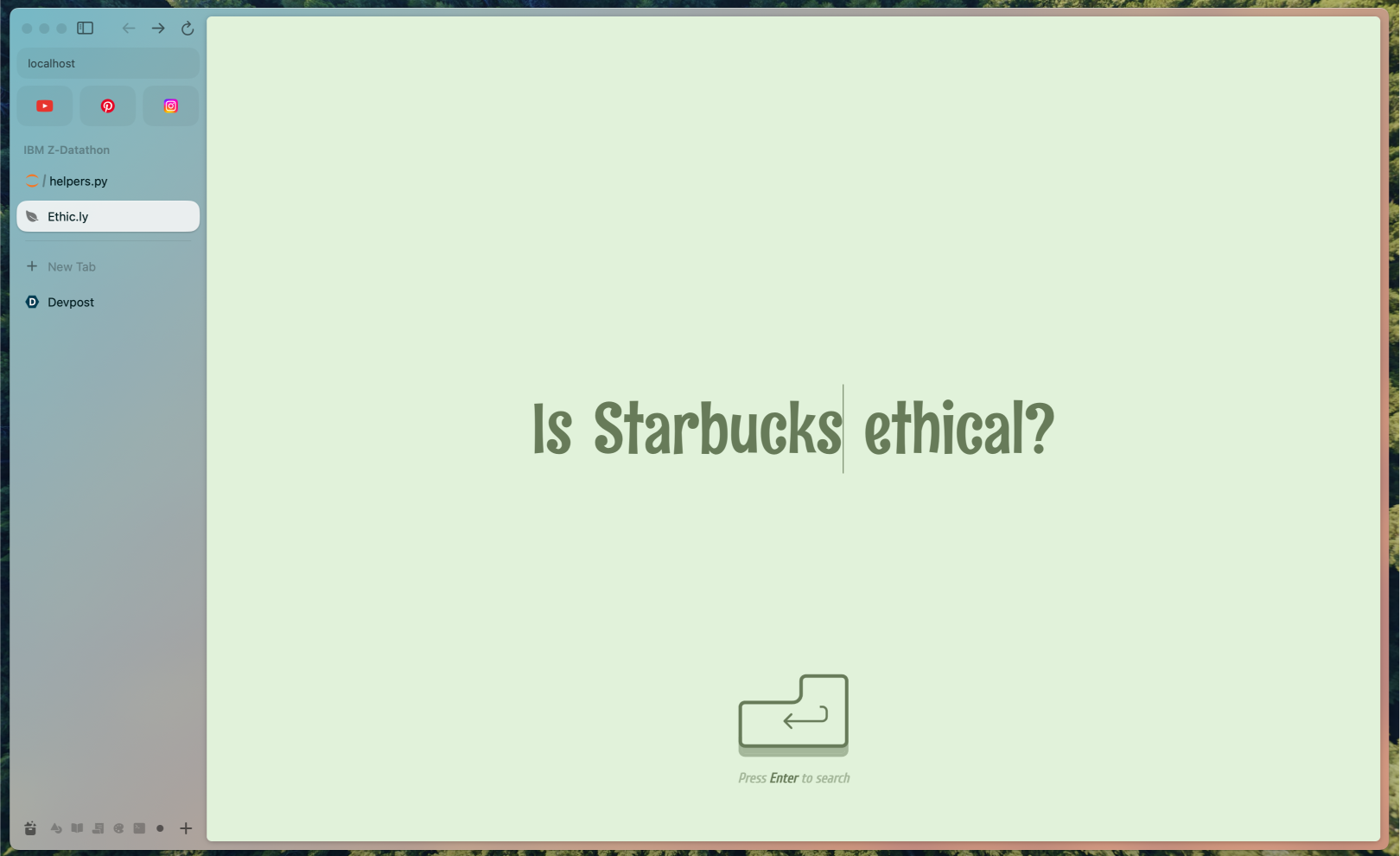
Ethic.ly homepage. A simple and elegant user journey.
Inspiration
Most people want to be more ethical, but it can be very hard to do so; consumers find it easier than ever to get lost in a sea of information before they can reach a conclusion about a company or product. With Ethic.ly, we aim to fix that.
What it does
Our product uses semantic web crawlers and open source LLMs to inform consumers about the ethical implications of supporting companies. What would take hours of personal research can be collated in minutes, and with sources supplied, you can verify information yourself.
How we used IBM Z
We used the IBM Z system to run a web crawler, obtaining large data sets, and then running LLMs on those models.
Challenges we ran into
The time constraints of the challenge meant certain models couldn't be trained in time; others were too large, or had compatibility issues.
Accomplishments that we're proud of
Ethic.ly provides a simple user journey from company to information. We are proud of the relevance of our data and our ability to concisely summarise and pleasingly present it to the user. It is a mix of ease and function, with an accessible summary and a list of sources.
What we learned
Implementing a full-stack application in such a short period of time can be a challenging endeavour, but we were able to achieve it through planning, delegation and teamwork. We were able to hone our communication skills and complement each others code to produce an end result that was truly greater than the sum of its parts.
What's next for Ethical.ly
The possibilities for expansion are endless. There is potential to improve the scrapers and models, to even further increase relevance and the conciseness of the summary. We could explore more methods of combining data, such as multiple rankings based on several criteria, or splitting the summary into several, more in-depth paragraphs, depending on the user's desires.


Log in or sign up for Devpost to join the conversation.