-
-
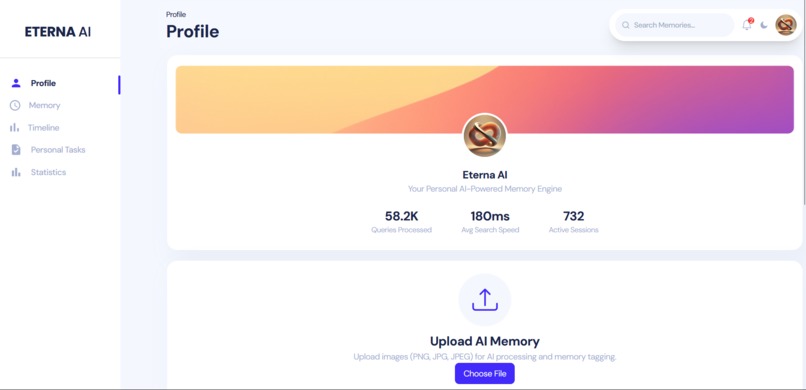
Profile
-
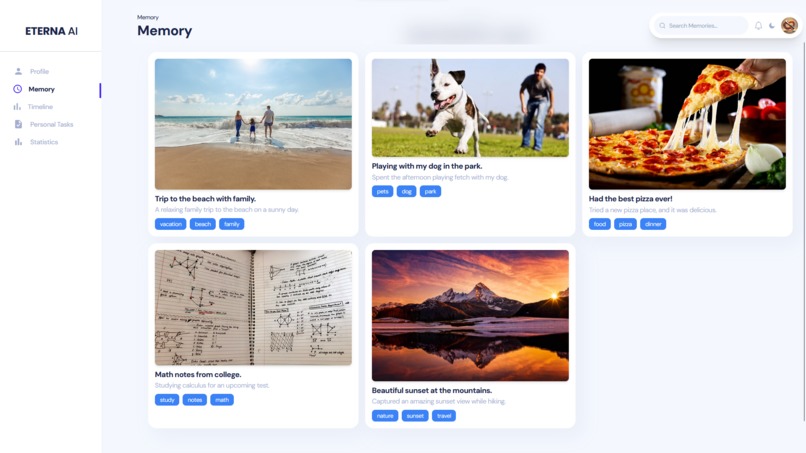
Memory Search
-
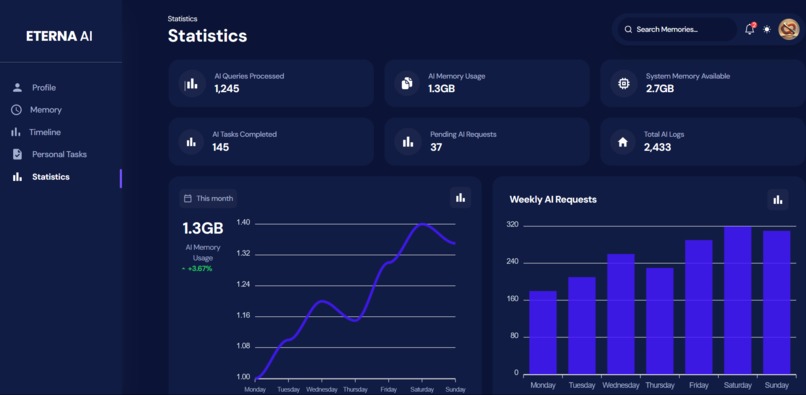
Usage Statistics
-
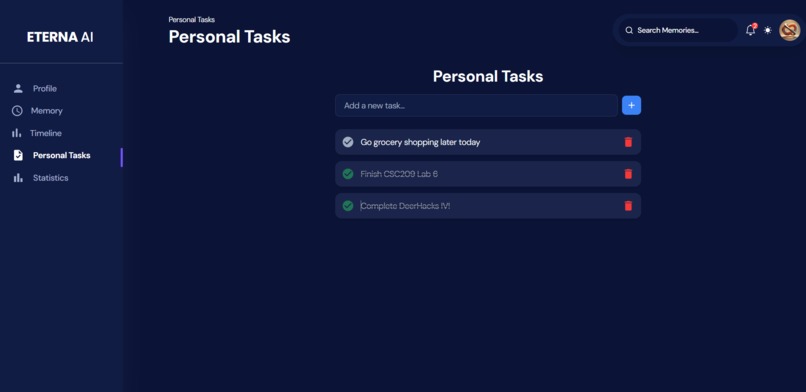
Personal Tasks
-
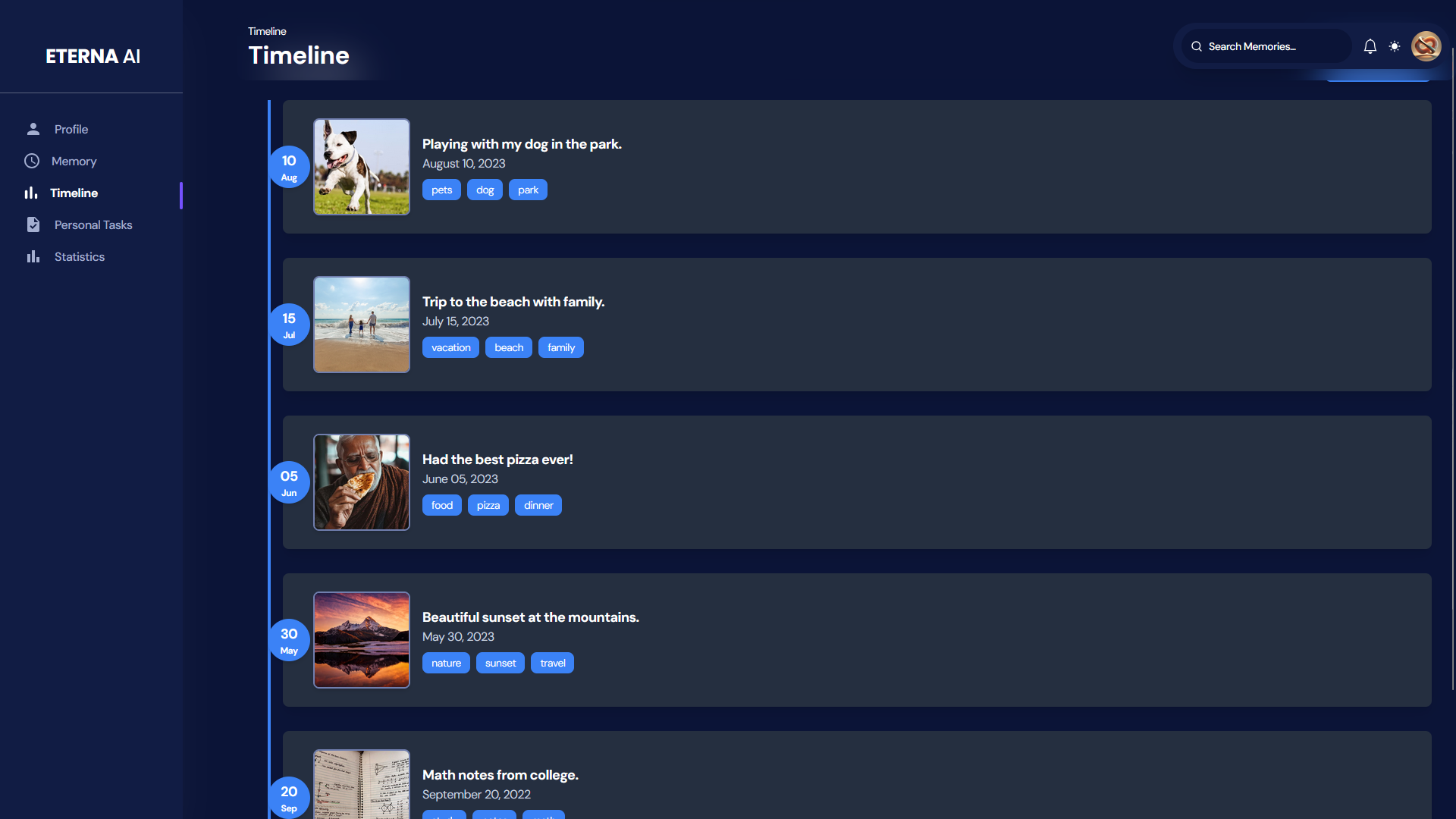
Personal Timeline
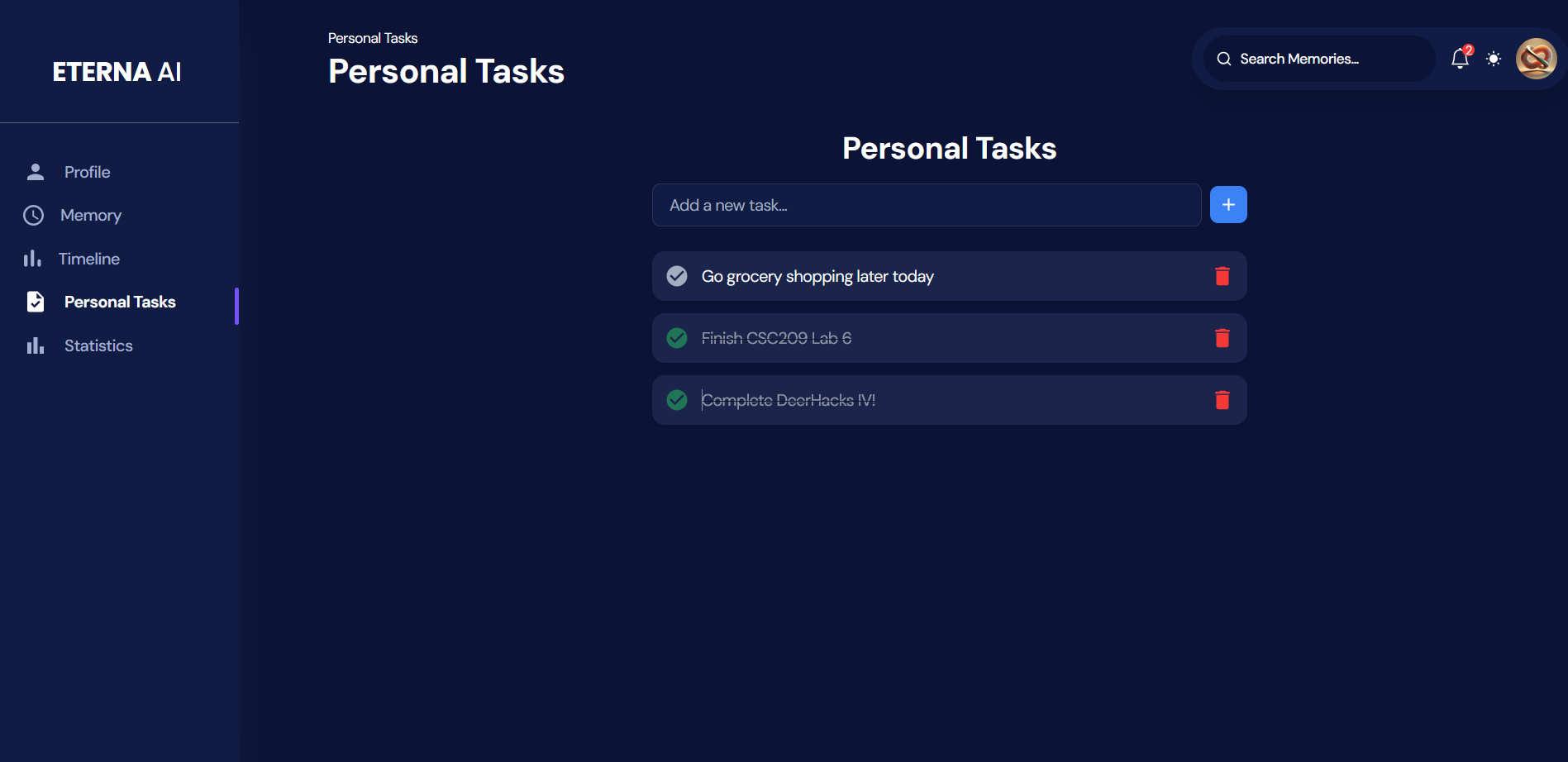
Eterna - AI-Powered Memory Search Engine
Inspiration
We started with a simple question—how often do we forget what we were thinking about last week, what we had for lunch a few days ago, or even what we were working on last month?
As we joked about memory loss, we realized that AI is already helping people find information quickly, so why not use it to help people rediscover themselves?
This year’s hackathon theme is discovery, and Eterna fits in by:
- Discovering History – Searching and summarizing past experiences.
- Discovering the Internet – Using AI to retrieve insights beyond personal data.
- Discovering Yourself – Helping users track their thoughts, habits, and routines over time.
With this, we built Eterna—an AI-powered search engine for personal memories.
What it does
Eterna is designed to help users store and retrieve their memories—whether that’s photos, notes, or past thoughts—quickly and intelligently.
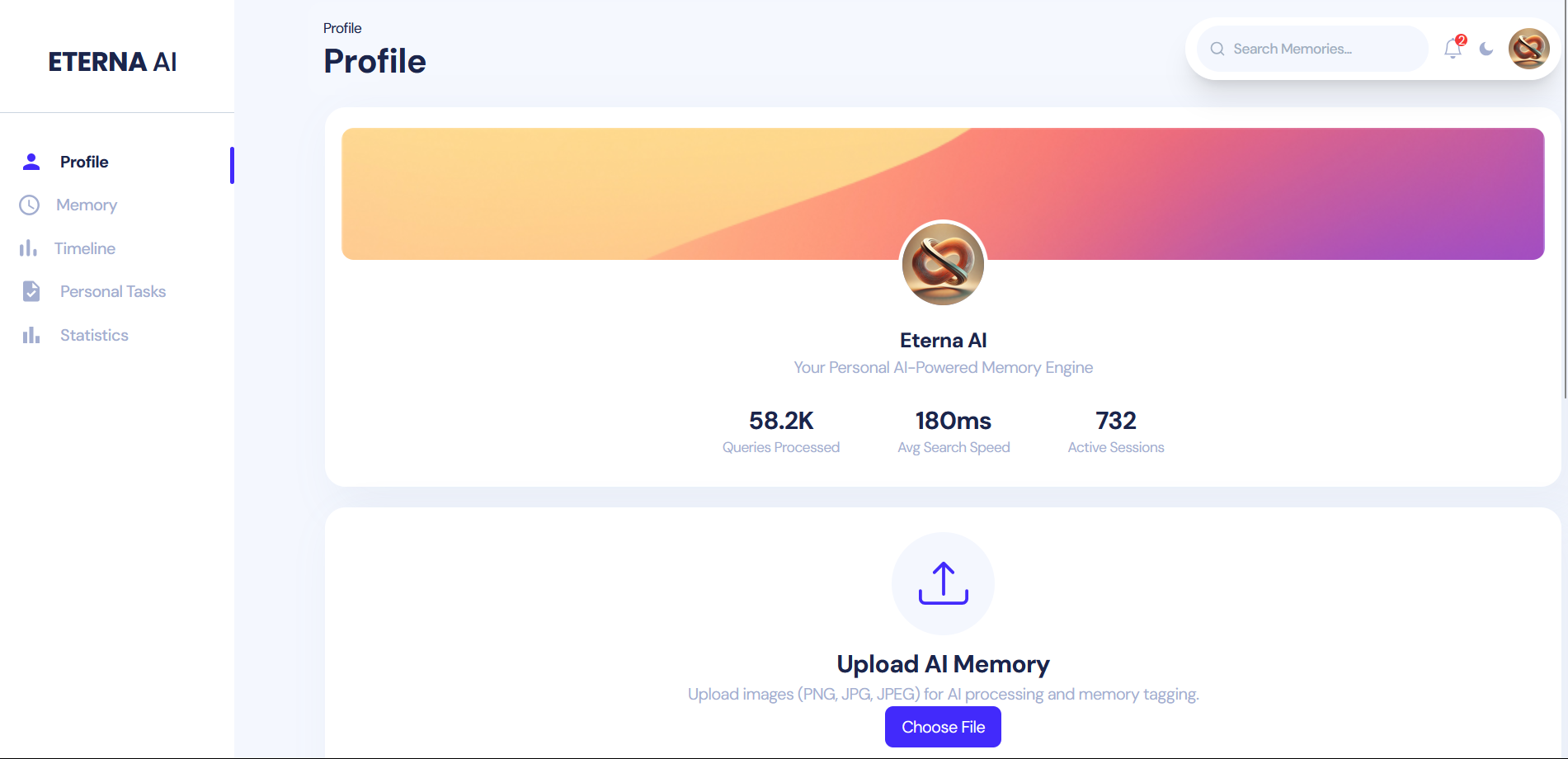
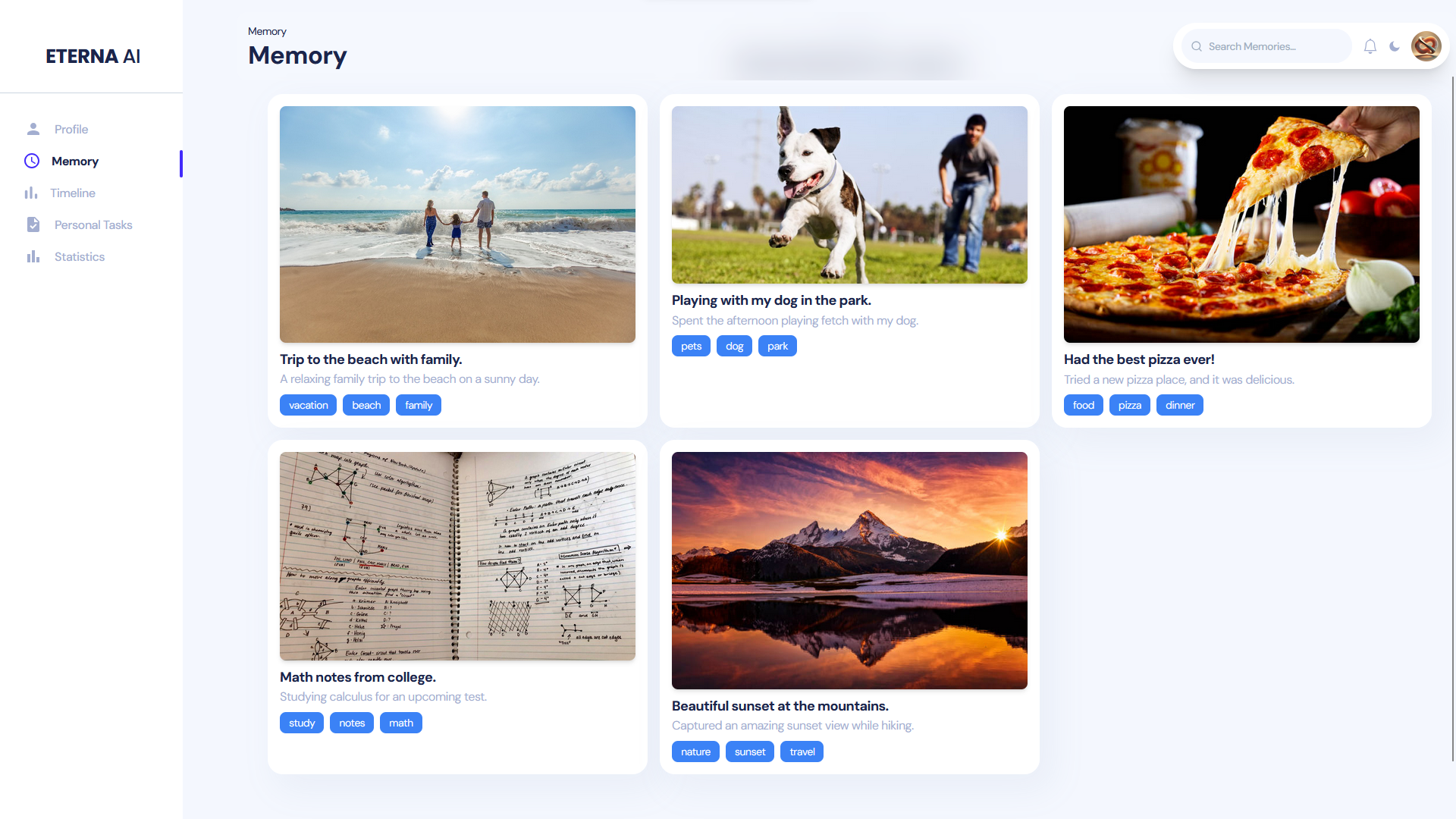
- Image Memory Retrieval – Users can upload photos, allowing Eterna to tag, sort, and retrieve them using AI.
- Smart Summarization – Lecture notes, journal entries, and documents can be summarized into concise, meaningful insights.
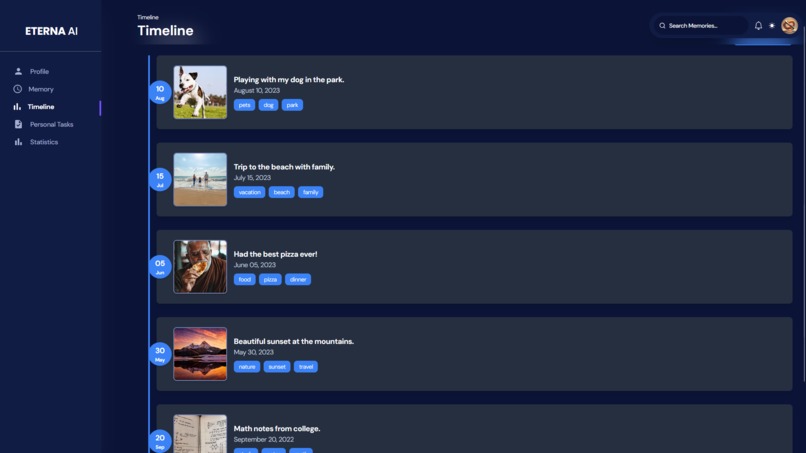
- Personal Timeline – Users can scroll through past events, thoughts, and saved data in a structured, chronological format.
- AI-Enhanced Search – Instead of just keyword searches, Eterna understands natural language queries, so users can ask things like “What was I working on last Friday?” and get relevant results.
How we built it
We followed a Scrum workflow, managing tasks through user stories and using GitHub for version control.
Tech Stack
- Frontend: React.js + Tailwind CSS
- Backend: Python (FastAPI) + Spring Boot (for API handling)
- AI Processing: Google Gemini API (for summarization, tagging, and retrieval)
Development Process
- We split into frontend and backend teams, working in parallel.
- The frontend focused on UI/UX using React.js + Tailwind, making it responsive and easy to navigate.
- The backend handled data processing, AI requests, and image storage.
- Once both parts were functional, we integrated them and optimized performance.
Challenges we ran into
- Tailwind CSS – Most of us had never used it before, so we had to learn utility-based styling quickly.
- AI Image Processing – Figuring out how to convert uploaded images into binary data for AI analysis was more complex than expected.
- React Structure – Deciding on how to organize the project for scalability took time.
Accomplishments that we're proud of
- The UI turned out clean and functional, and everything is fully responsive.
- We successfully integrated AI APIs and made Eterna retrieve and summarize data in a meaningful way.
- We built a working MVP that’s actually useful and can be expanded further.
What we learned
- How to build a full-stack AI application from the ground up.
- How to use APIs for AI-driven search and summarization.
- How to manage a project in a short time, balancing development speed with quality.
- How to structure a React.js project effectively.
What's next for Eterna?
- Expanding AI capabilities – Improving context-aware memory retrieval and adding voice memo transcription.
- Scaling the development – Bringing in more engineers to improve frontend UX and backend optimization.
- Industry Use Cases – Exploring how Eterna’s AI-powered search engine could be adapted for knowledge management in education, research, and businesses.
- Potential Startup – With additional features, Eterna could become a real product, offering premium AI-powered memory search.
- Database Upgrades — AWS DynamoDB (for scalable storage)
- Convenience and Security Upgrades — Cloud & Auth: Google OAuth (optional for user authentication)
Eterna is just the beginning. The future of AI-powered memory retrieval is possible, and this project is a step in that direction.


Log in or sign up for Devpost to join the conversation.