-
-
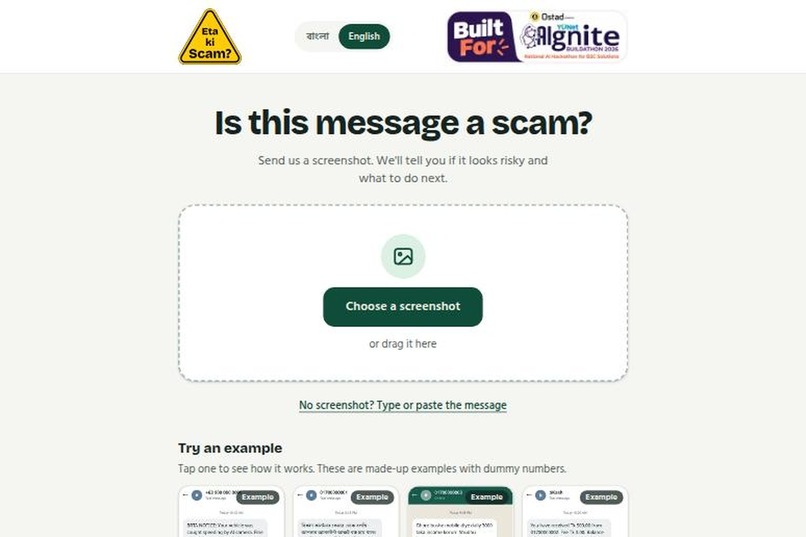
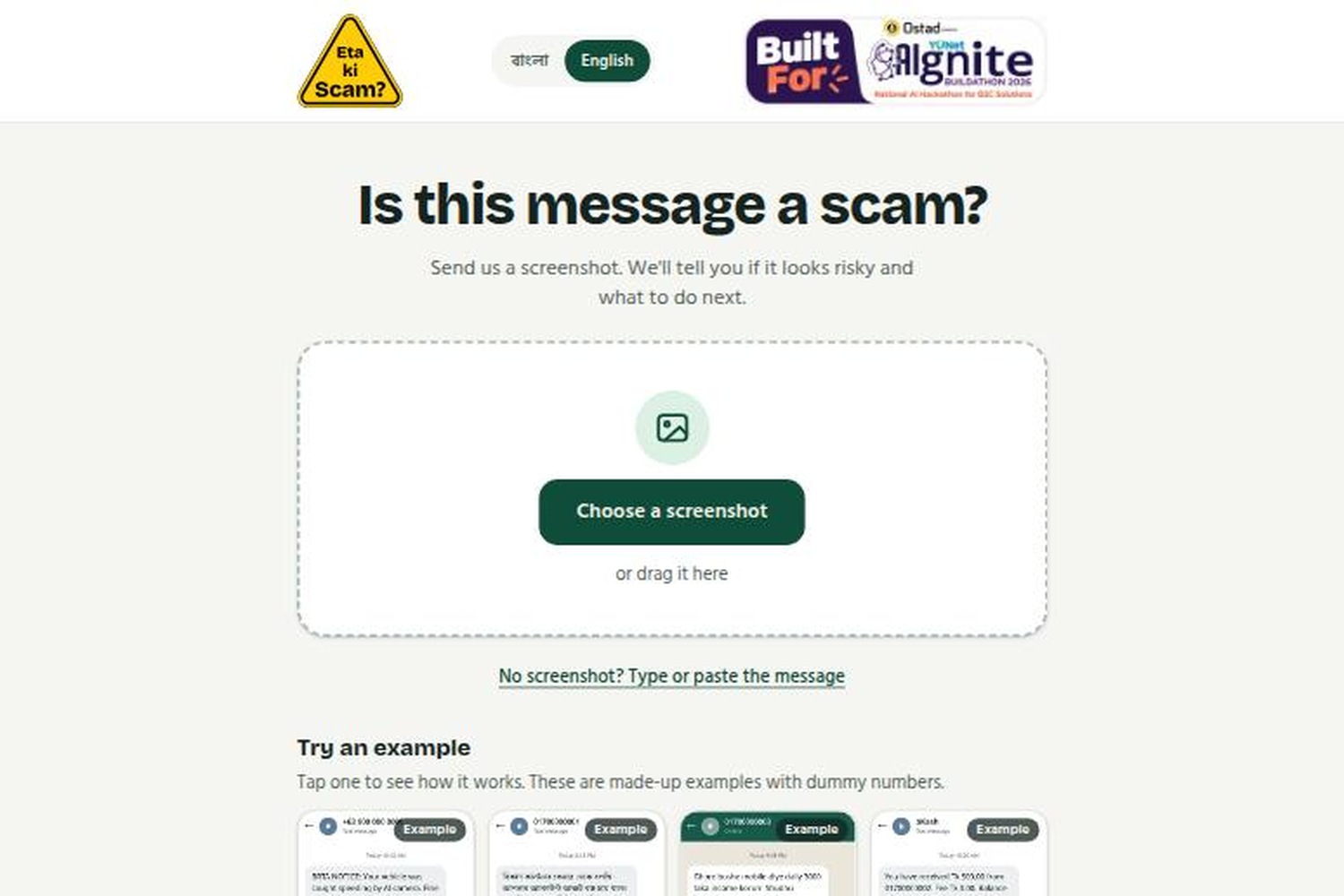
home page with the sticker and examples
-
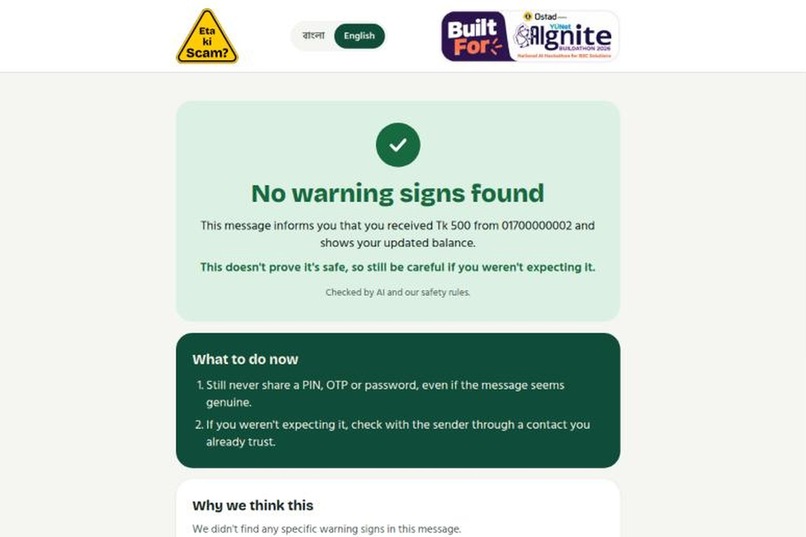
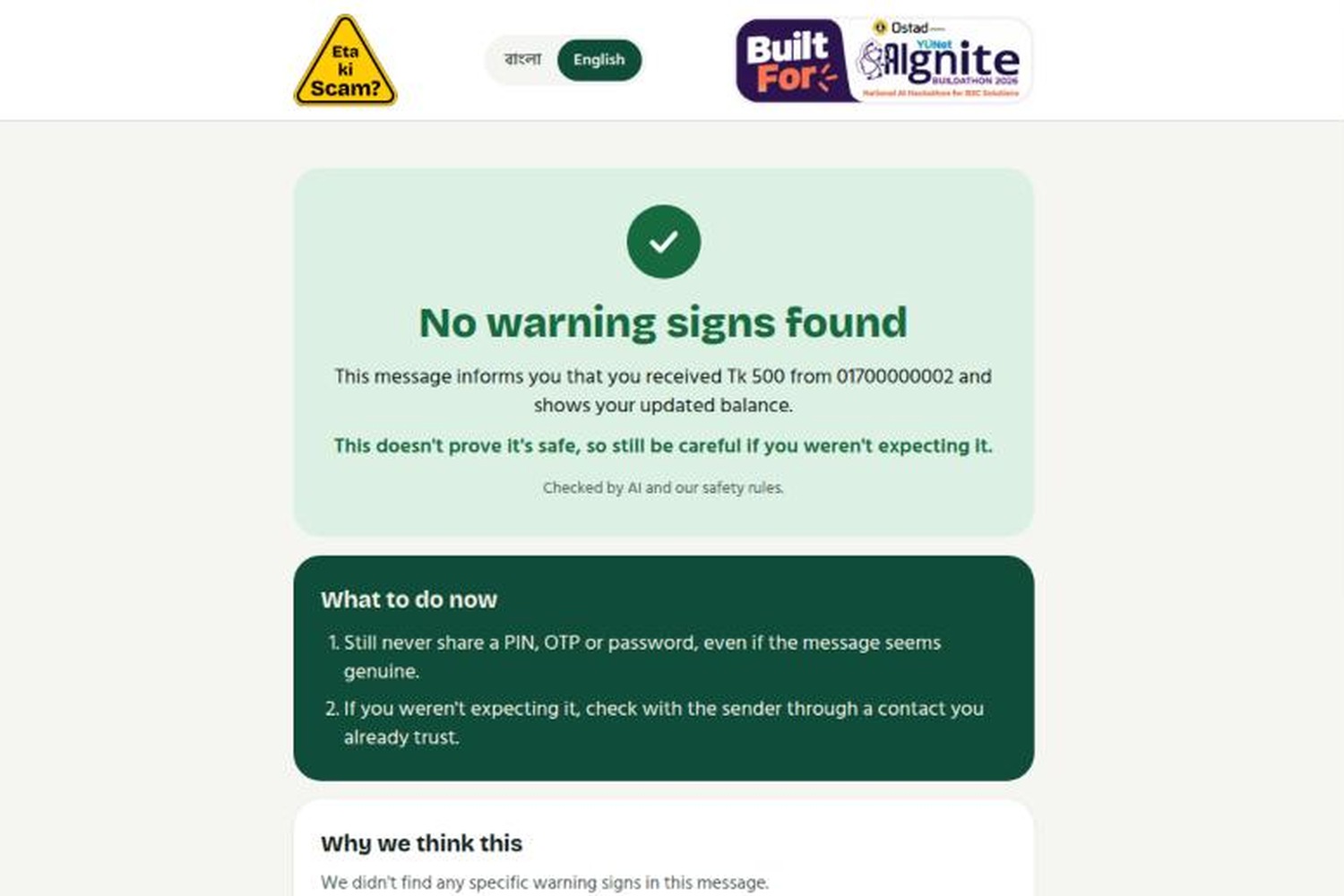
a normal bKash message with no warning signs
-
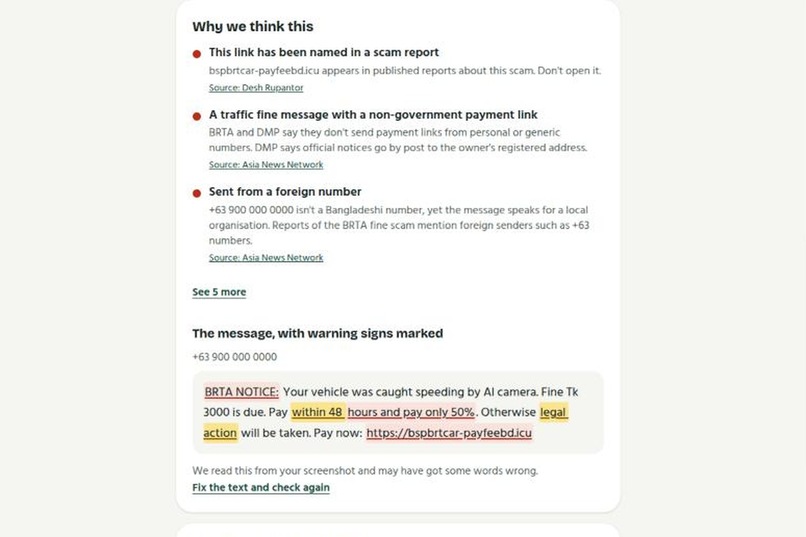
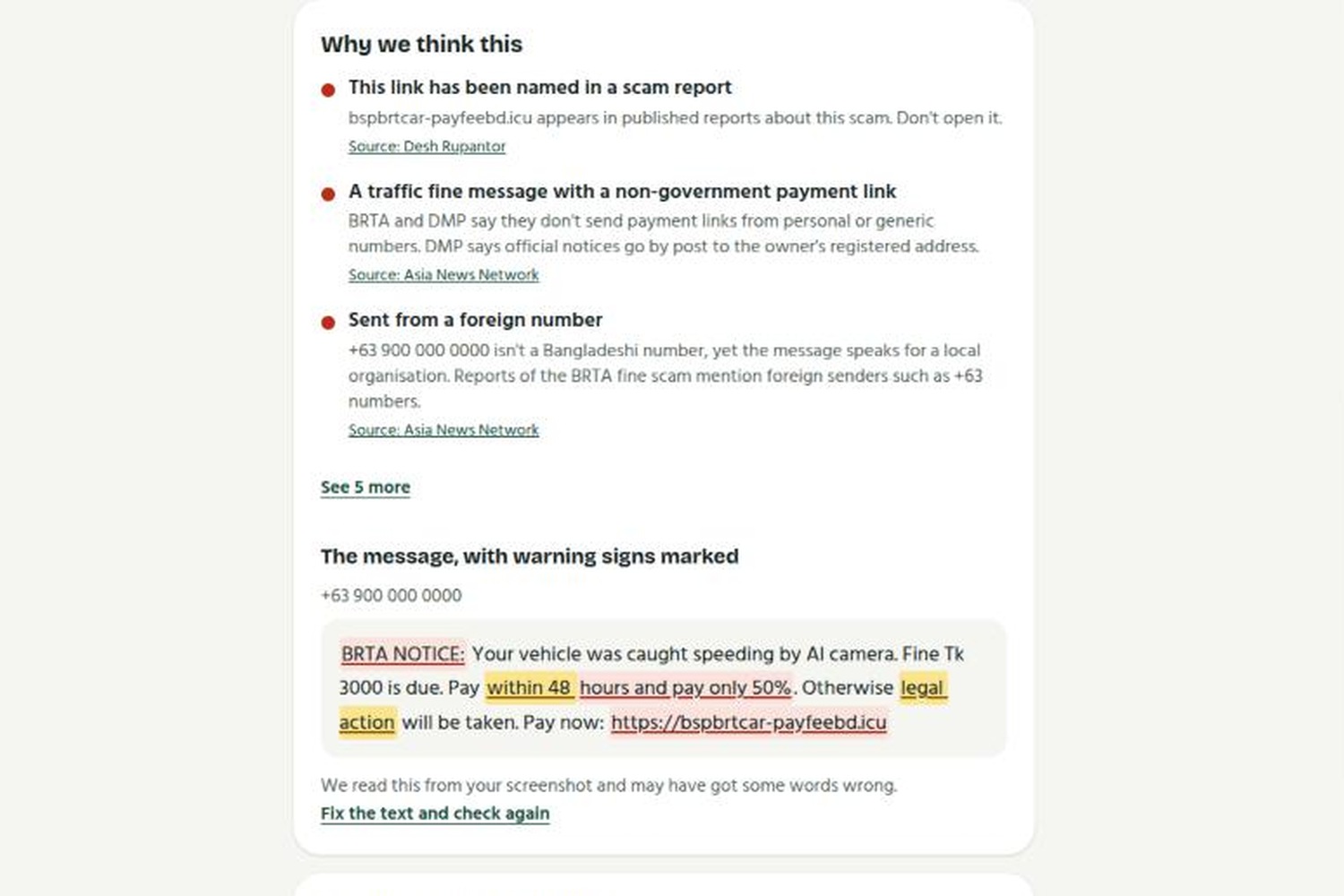
the reasons and the marked-up message
-
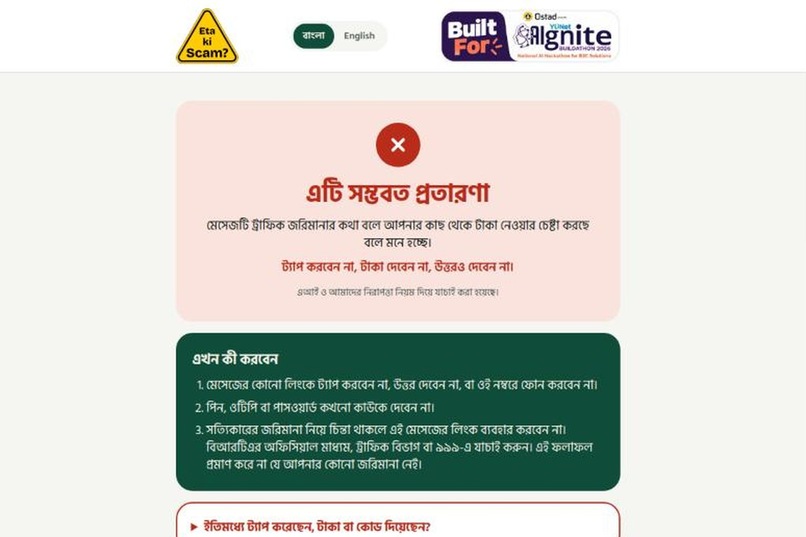
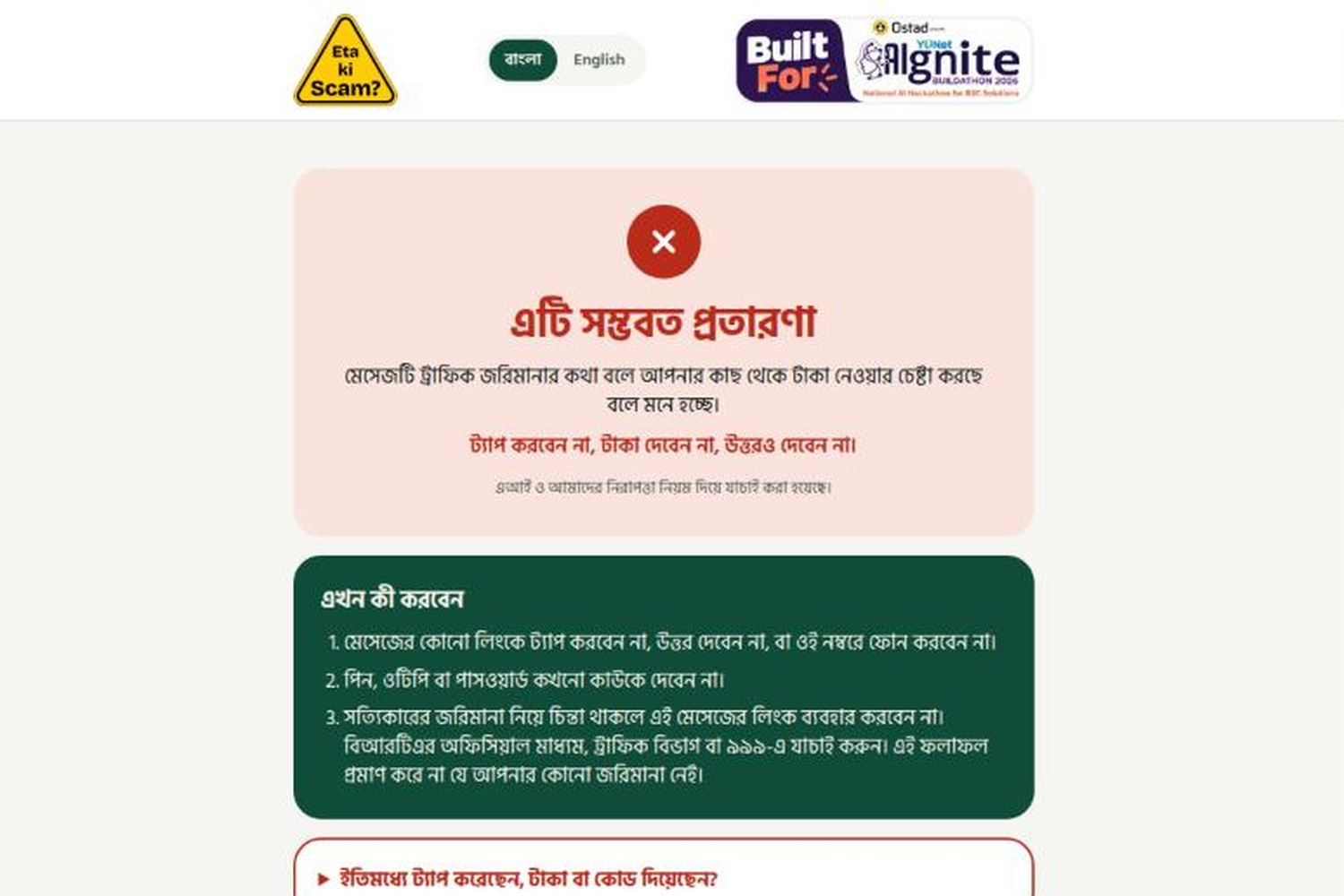
the same result in Bangla
-
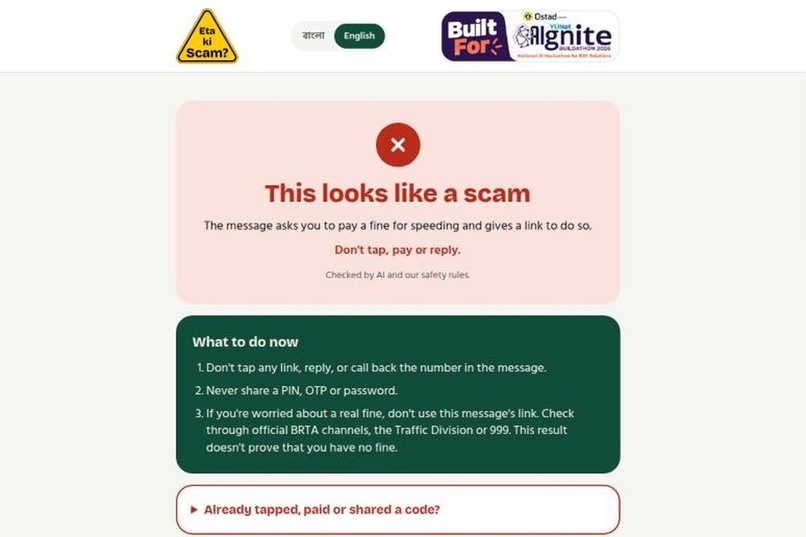
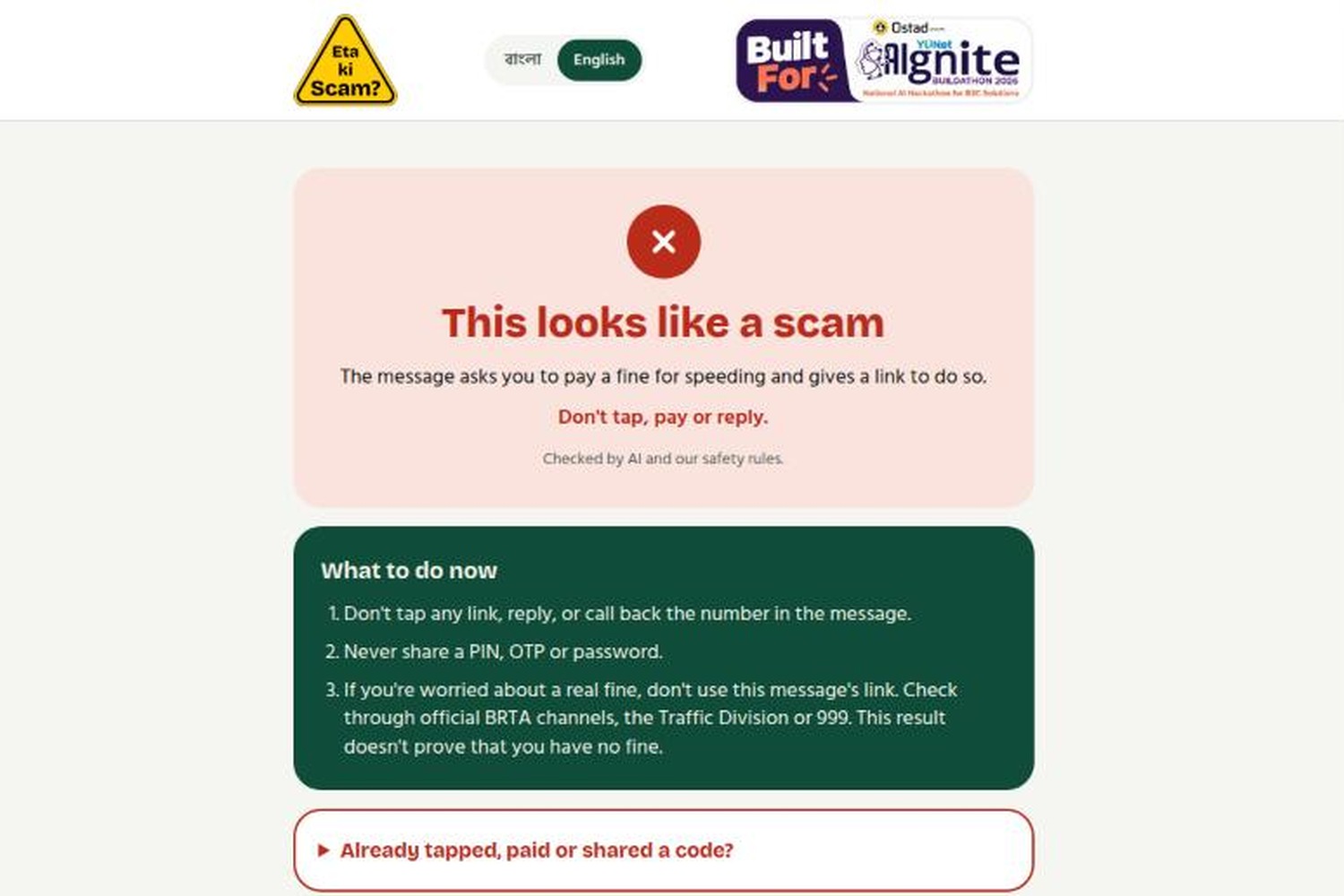
the “This looks like a scam” result
-
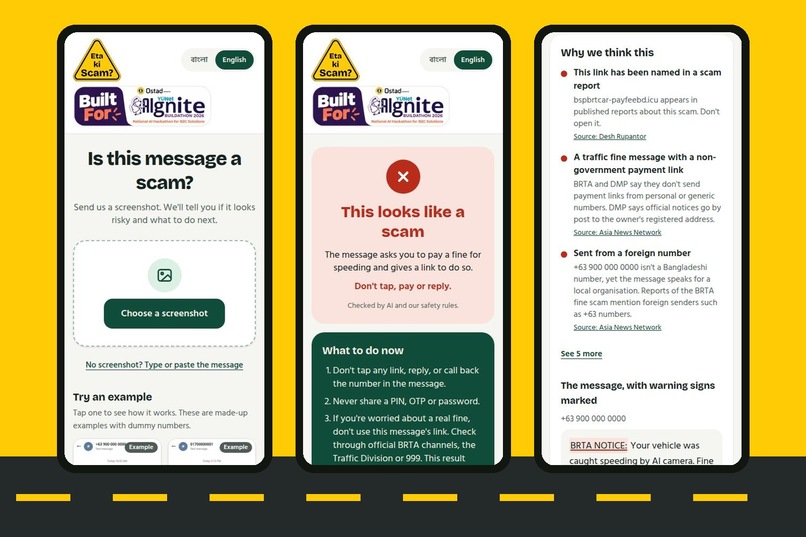
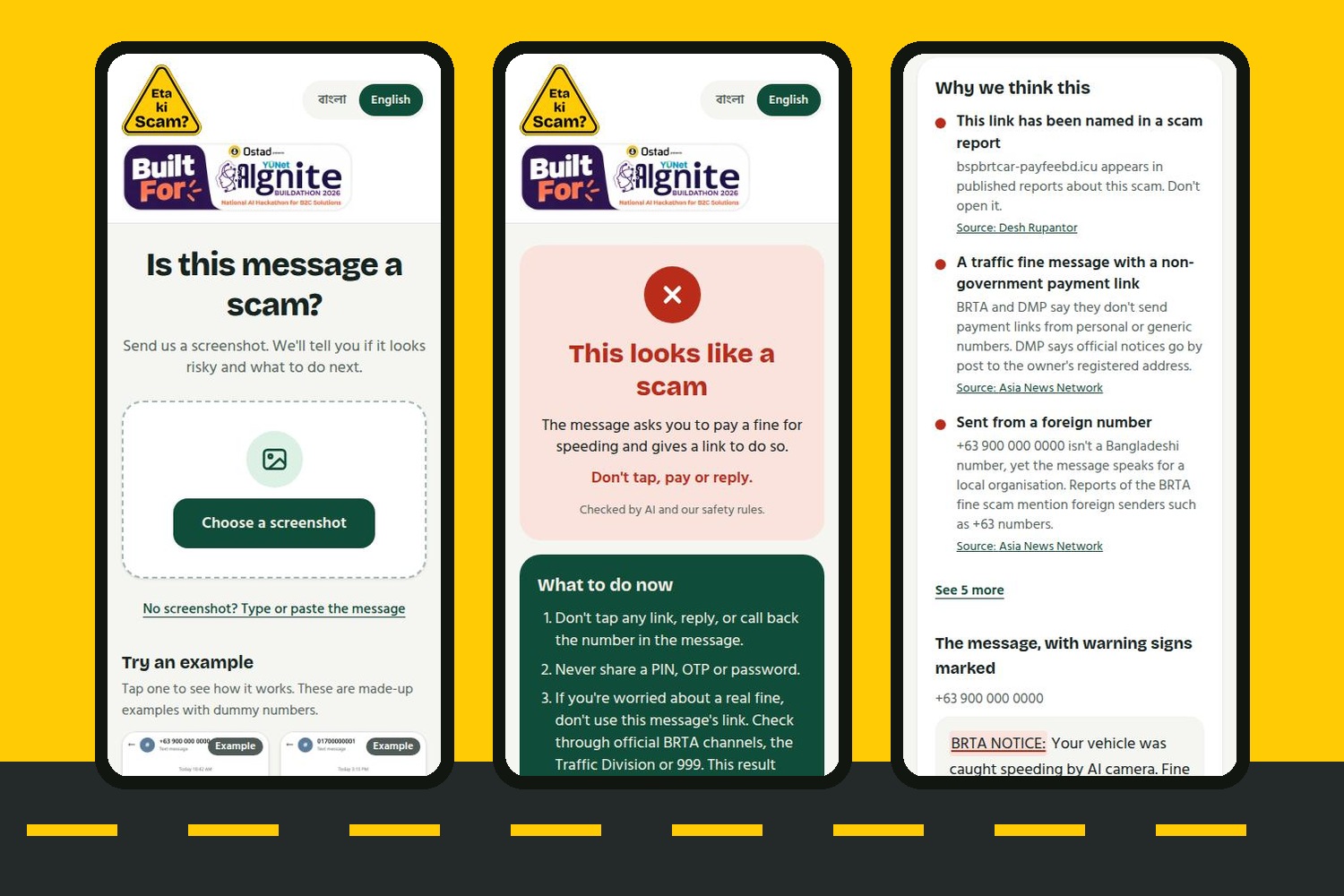
three phone screens view
Inspiration
Fake BRTA fine messages have been spreading since AI traffic cameras were introduced in Bangladesh. The SMS names a fine and a deadline, threatens legal action, and links to a copy of the BRTA website. I've seen people get scammed by these messages. CID arrested three people in one case, and the gang allegedly moved about Tk 72.6 lakh.
When people get a message like this, they often have to ask on Facebook and wait for a reply. I wanted them to be able to check it instantly.
What it does
Eta Ki Scam? ("Is this a scam?") checks suspicious messages. You upload a screenshot or paste the text, and within seconds it shows:
- A clear verdict, such as "This looks like a scam" or "No warning signs found"
- The reasons behind it, with the risky parts marked in the message
- What to do now, including helplines and steps if you've already paid or shared a code
- A warning you can share with family, which never includes your private message
It works in Bangla and English, understands Banglish, and needs no app or login. It never calls a message "safe", because nobody can promise that.
How I built it
Each message goes through four steps:
- Read: an AI vision model reads the text, link and sender from the screenshot.
- Check: safety rules look for lookalike links, PIN or OTP requests, foreign senders and common local scam patterns. A public registry also shows how new a website is, without ever opening the suspicious link.
- Understand: an AI model looks for tactics the rules can miss, using similar labelled examples for reference.
- Decide: both results become one verdict. The AI can raise the risk, but it can't clear a rule finding.
I built it with Next.js and the Vercel AI SDK, using open models on Groq with Google Gemini as a backup, and deployed it on Vercel.
Challenges I ran into
- False alarms: the AI flagged a real MyGP reward SMS as a scam. Now the AI has to name something harmful, such as a request for money or a PIN, before it can flag a message.
- Short links: testing on a public dataset of 7,005 messages showed my rules flagged 24% of promotions, because operators often use short links. After I changed them, rule-based false alarms on promotions fell to 0.2%.
- Bangla quality: one model invented Bangla words, so safety advice and most warnings use wording I control instead of AI-written text.
- Reading screenshots: the AI sometimes misreads Bangla, so the app lets people correct the text and check again.
- Free-tier limits: rate limits are tight, so the app retries and falls back to safety rules or a clear "busy" message instead of failing silently.
Accomplishments that I'm proud of
- Building and launching a working product solo during the buildathon
- Flagging a scam even when it's rewritten politely with correct spelling
- Making the app simple: one button, plain language and clear next steps in two languages
- Testing on 99 unseen messages from a public Bangla SMS dataset: 29 of 33 scams flagged, 0 of 33 promotions wrongly flagged, and 2 of 33 normal messages flagged
What I learned
- A scam detector has to be judged on how it treats normal messages too, because false alarms quickly destroy trust.
- Rules and AI work better together. Rules are consistent, while AI handles the messy language they miss.
- Testing with real messages finds problems that made-up examples don't.
- Good spelling no longer tells you a message is genuine.
What's next for Eta Ki Scam?
- Test on more real messages, shared with permission
- Cover more types of scam
- Let people check a message directly from their phone's share button
Built With
- aistudio
- groq
- next.js
- react
- tailwindcss
- typescript
- vercel
- vercel-ai-sdk
