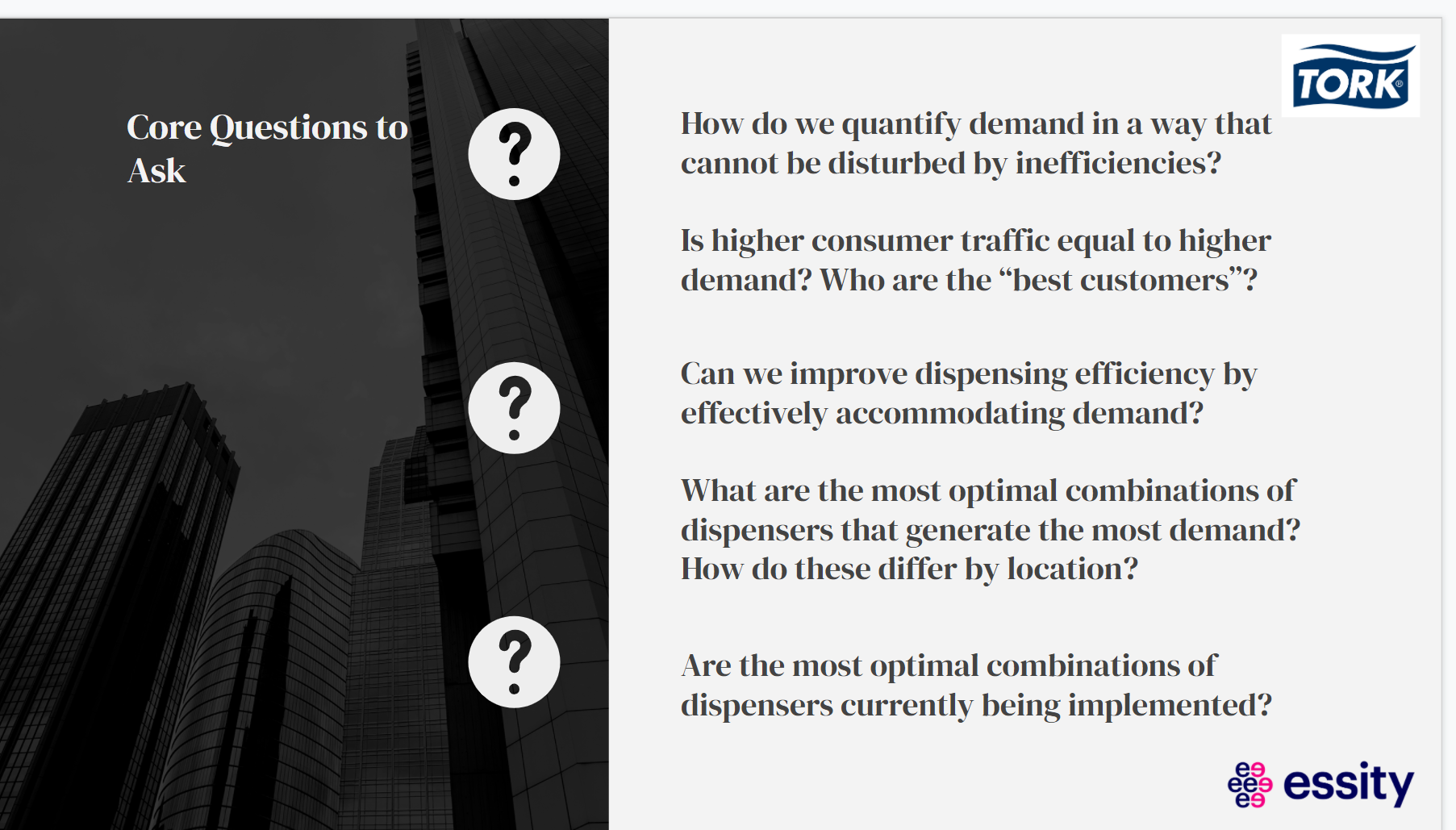
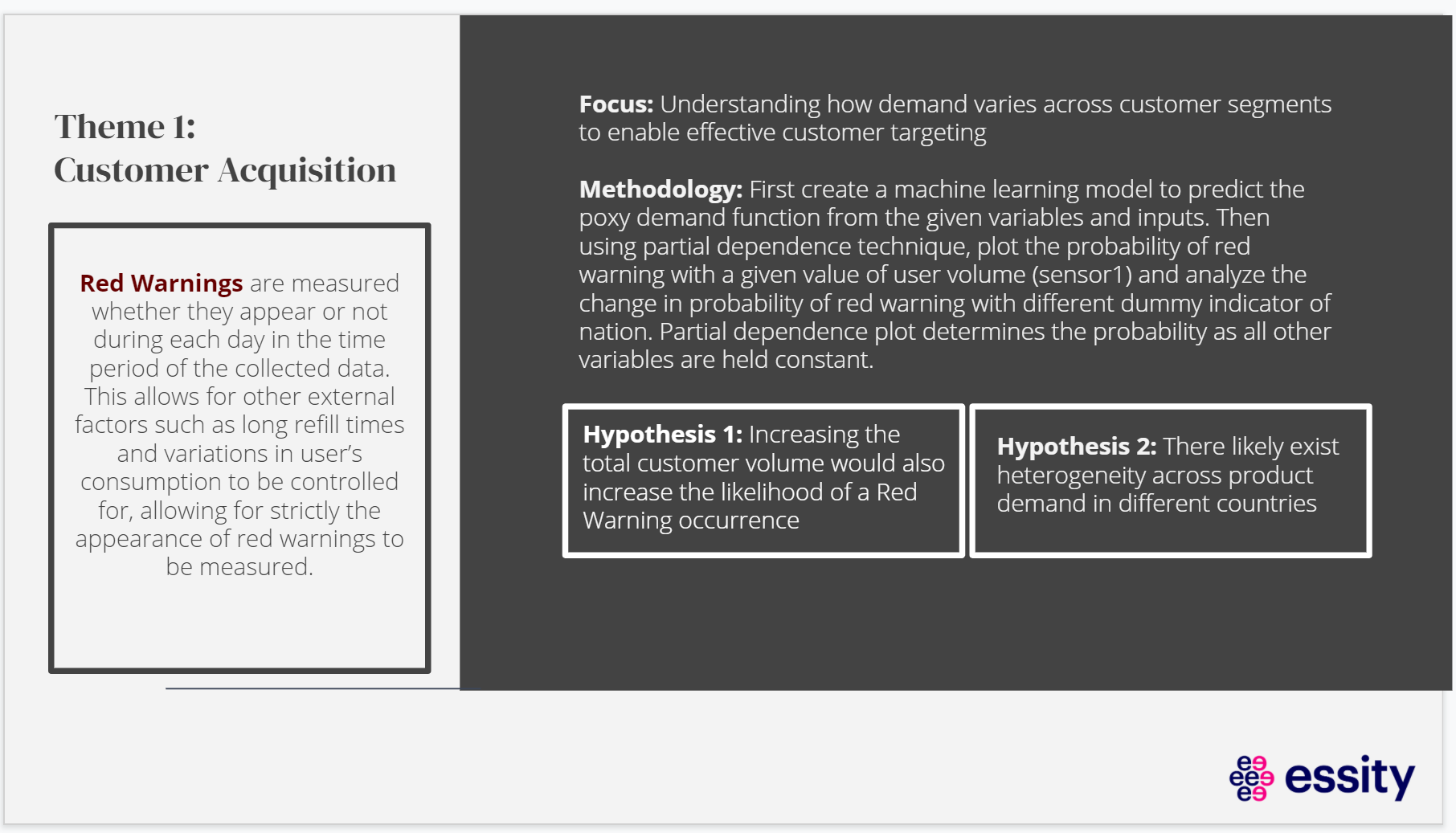
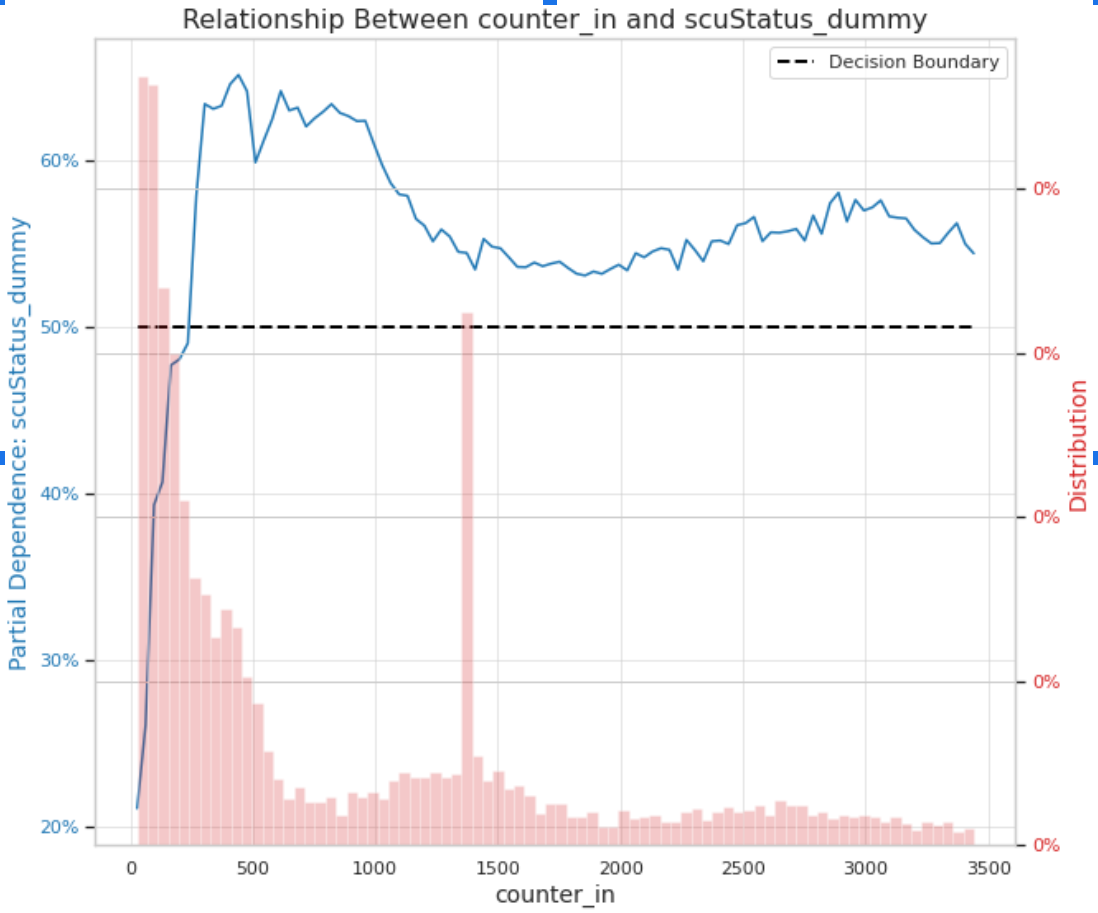
We evaluated whether or not the volume of the customer count had a linear correlation with demand/product usage. Furthermore, we measured how efficient the current placement of dispensers are across different locations, and whether or not they can be optimized to generate more demand while reducing cost.
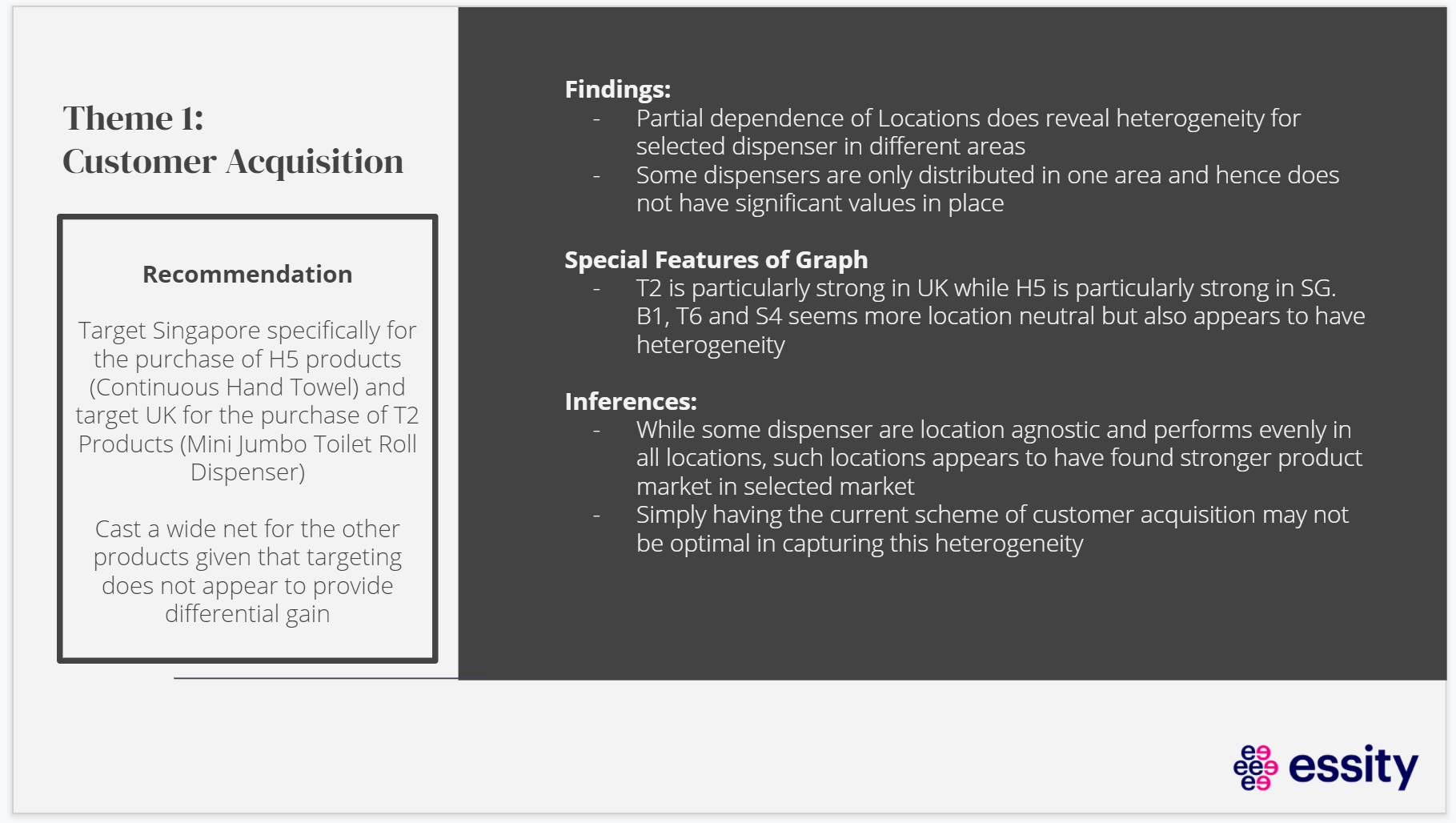
Our first model groups multiple variables and we employed various machine learning methods to effectively quantify demand. We then compared different customers with the demand to find out the "value" of a consumer, and whether it's correlated with consumer traffic. Our second model aggregates potential combinations of dispensers that maximize utilization and demand, and we compared our best combinations based on location to actual combinations currently implemented. Through our in-depth hypothesis testing algorithms and machine-learning simulations (e.g. random forest), we found ways to help Essity better evaluate their customers' performances as well as how Essity can better cater to their demand across different locations while reducing suboptimal dispenser placements.


Log in or sign up for Devpost to join the conversation.