-
-
-
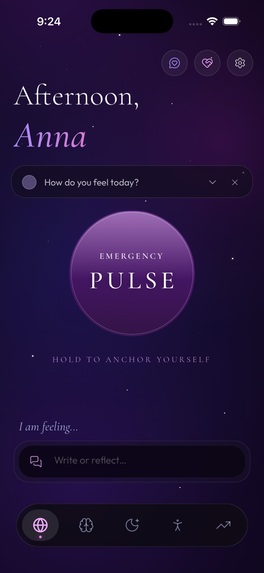
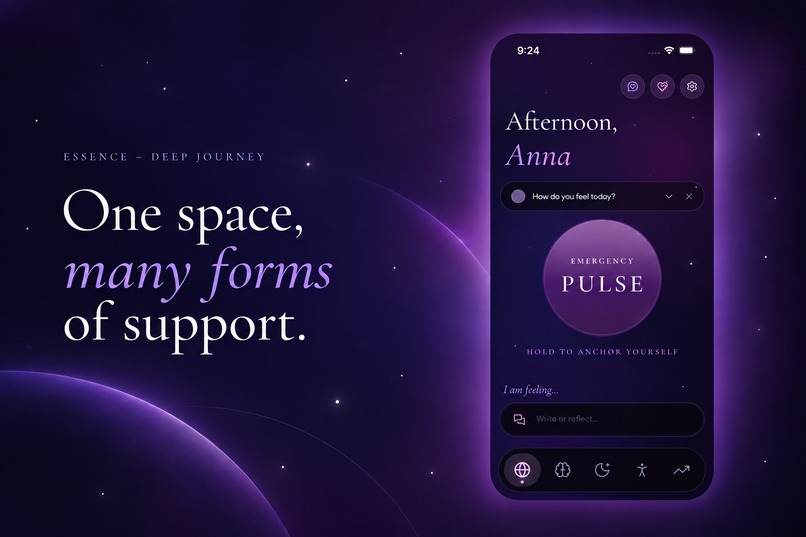
Your starting point for checking in, getting support, and reflection.
-
-
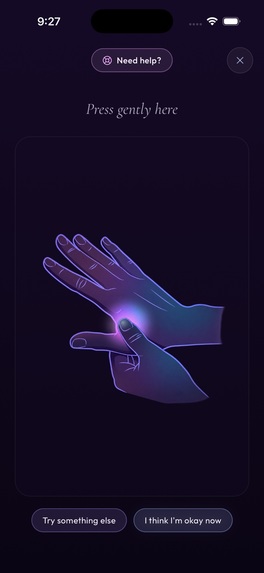
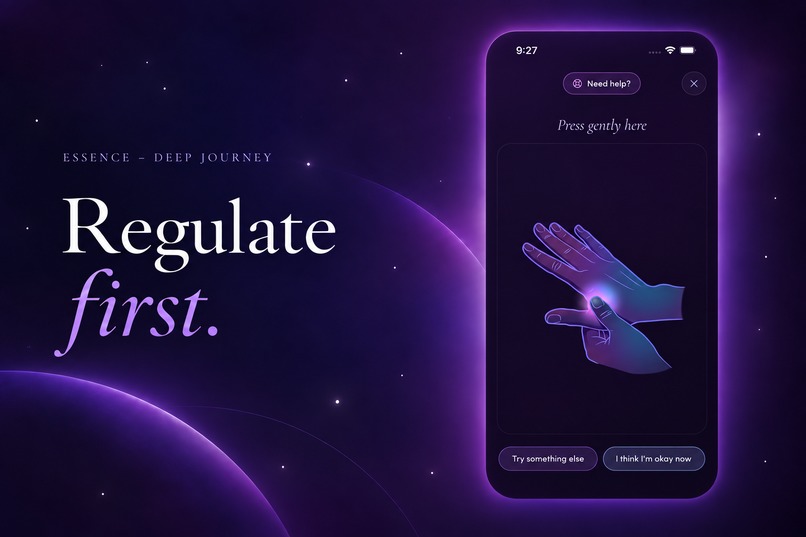
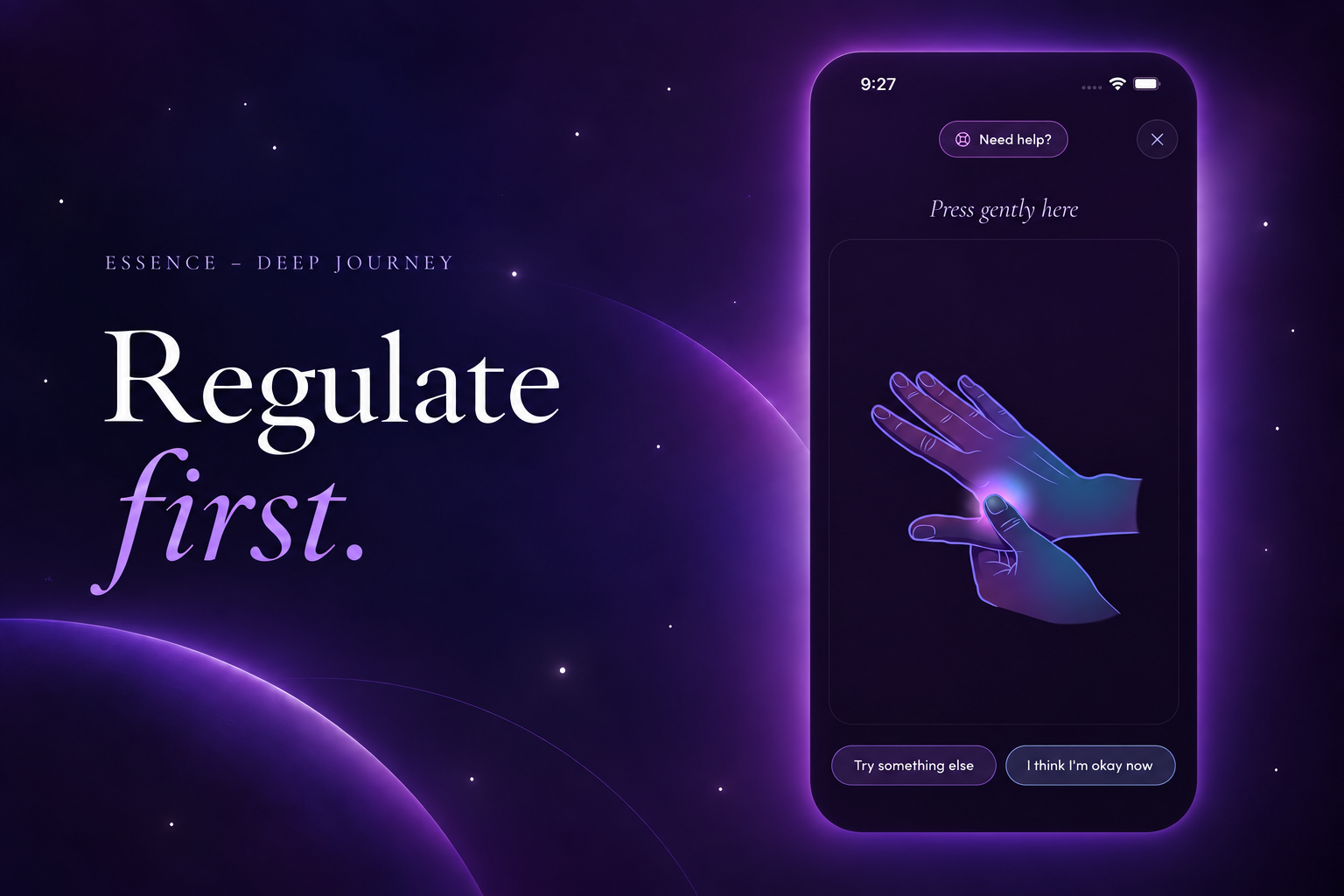
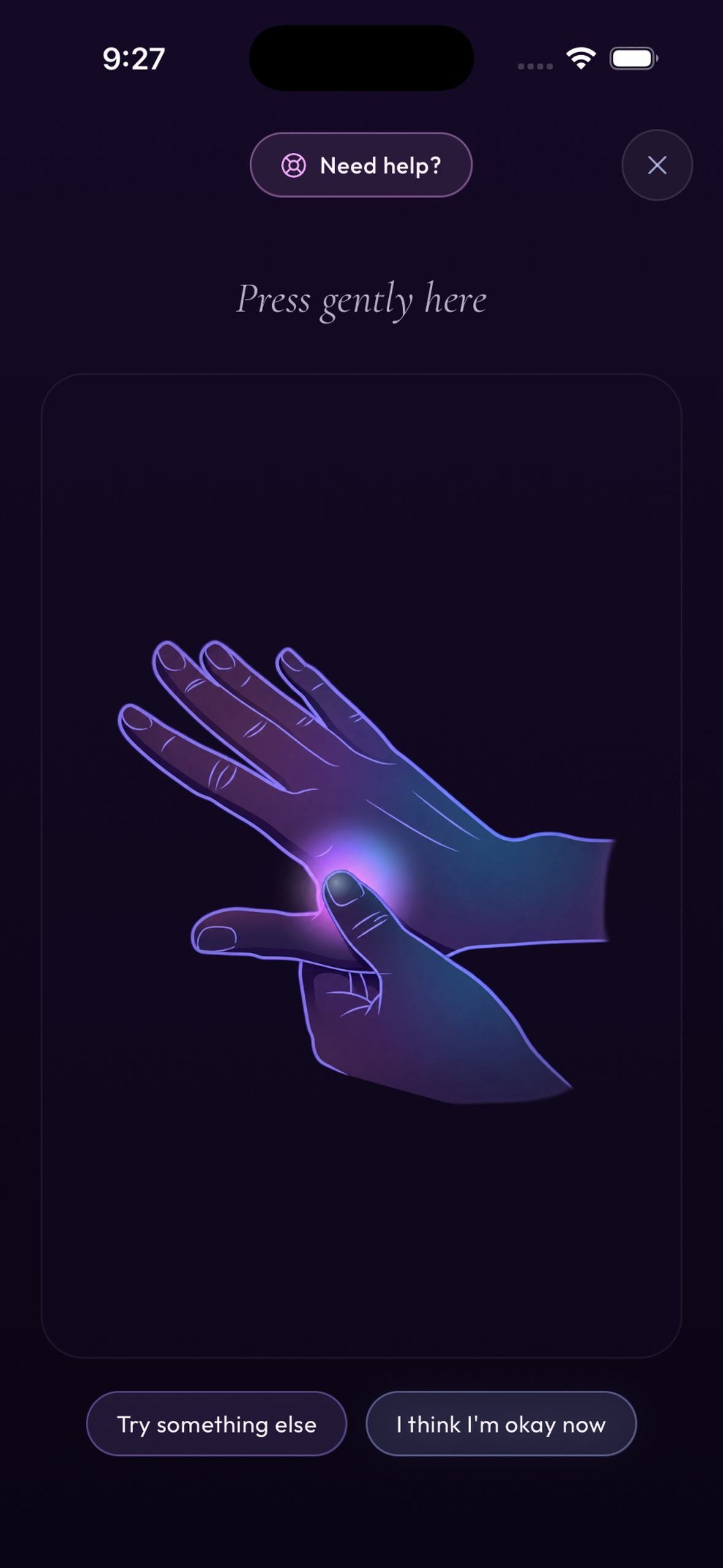
Guided regulation for moments when thinking clearly feels hard.
-
-
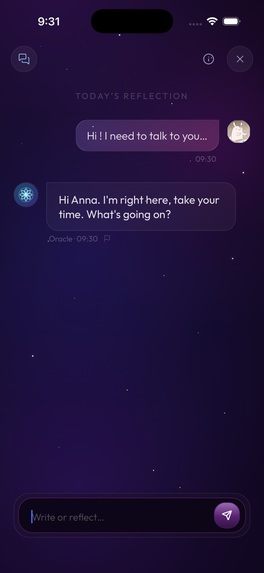
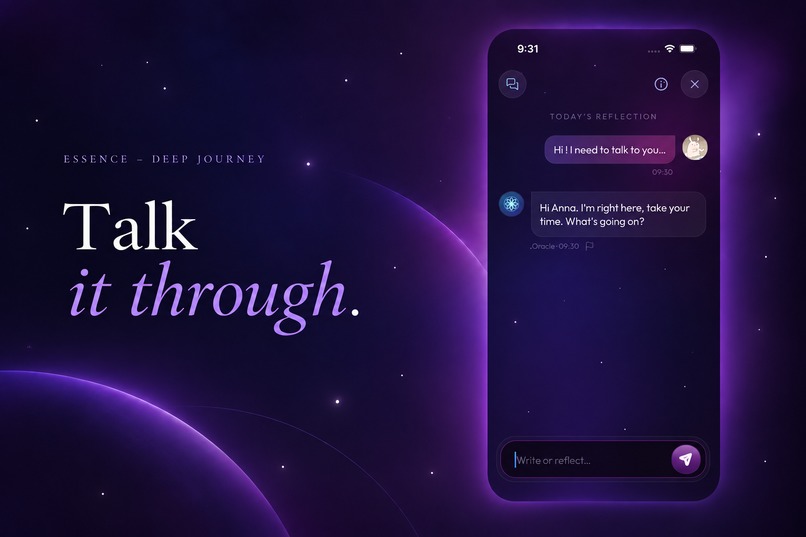
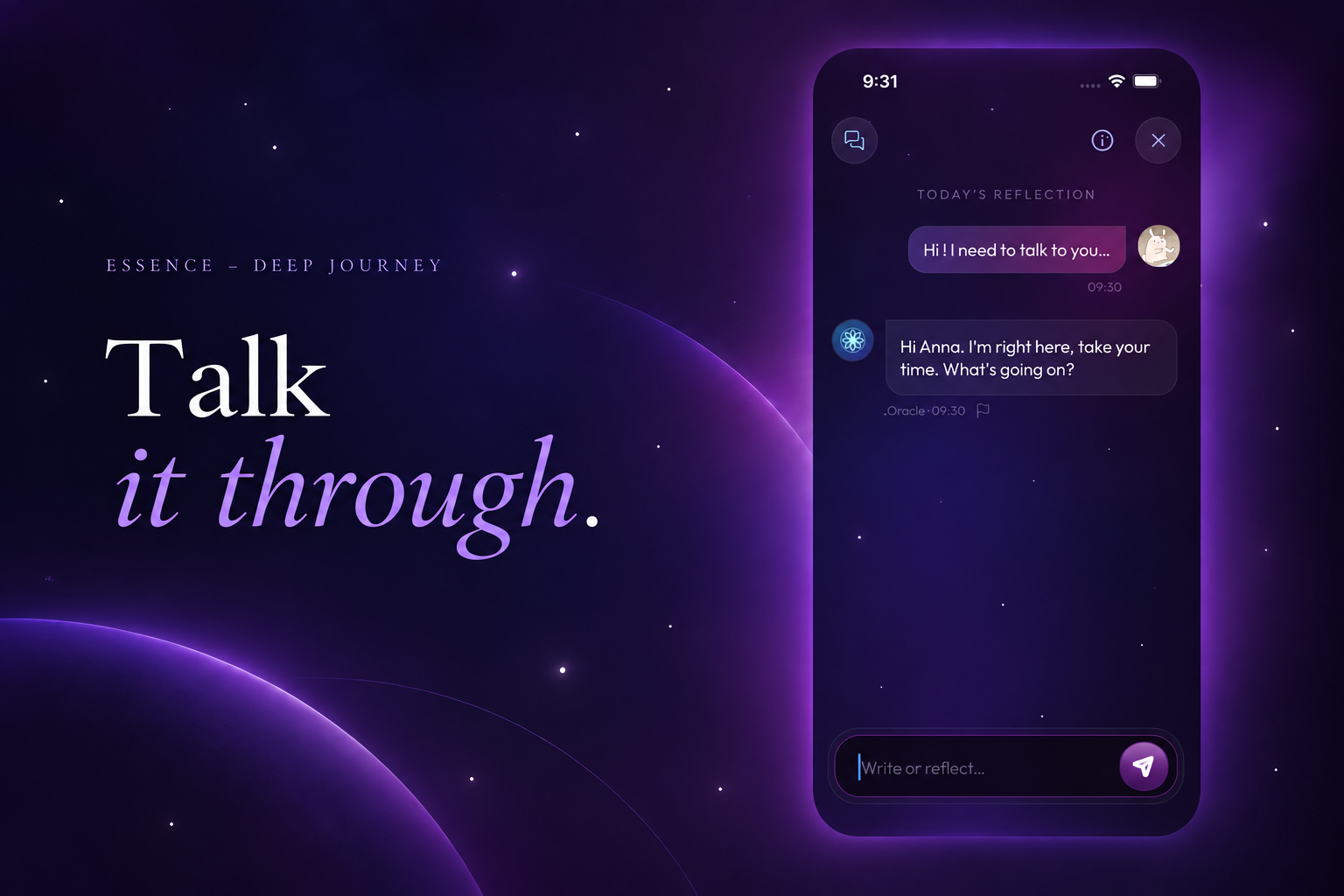
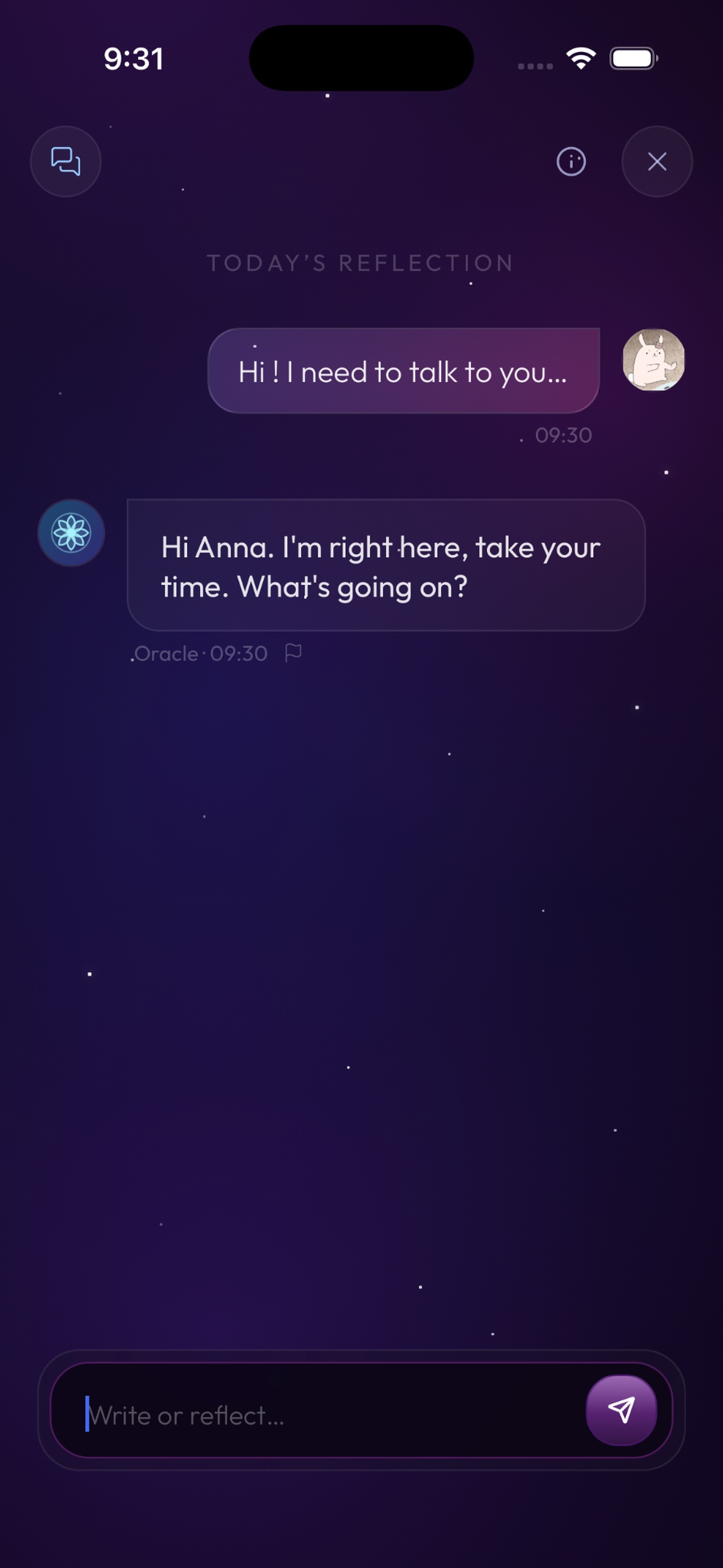
A private space to talk things through and gain perspective.
-
-
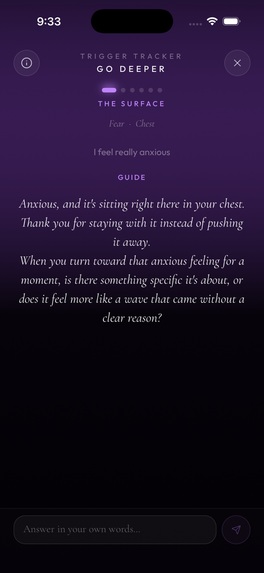
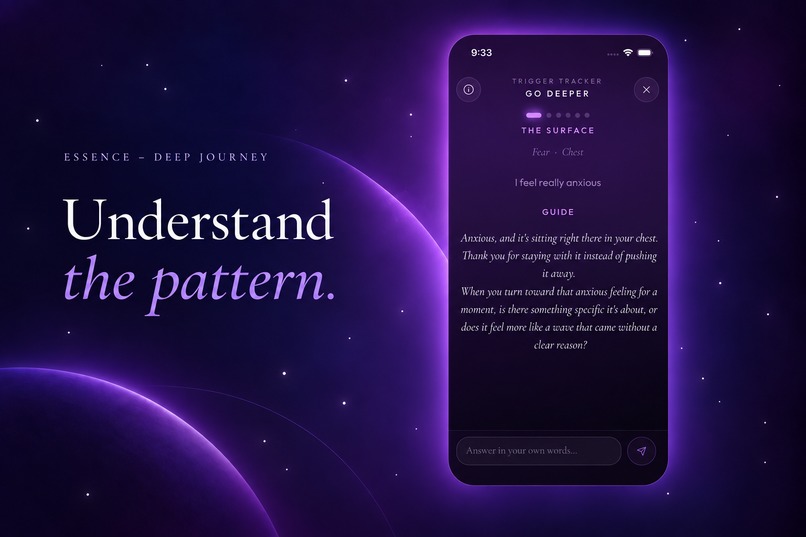
Unpack what happened and start recognizing emotional patterns.
-
-
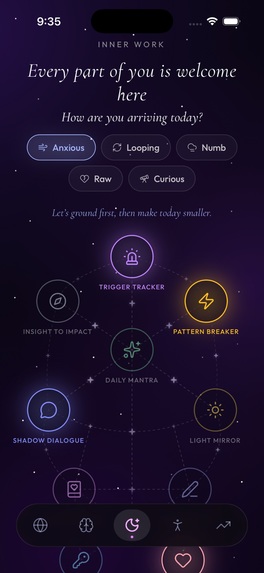
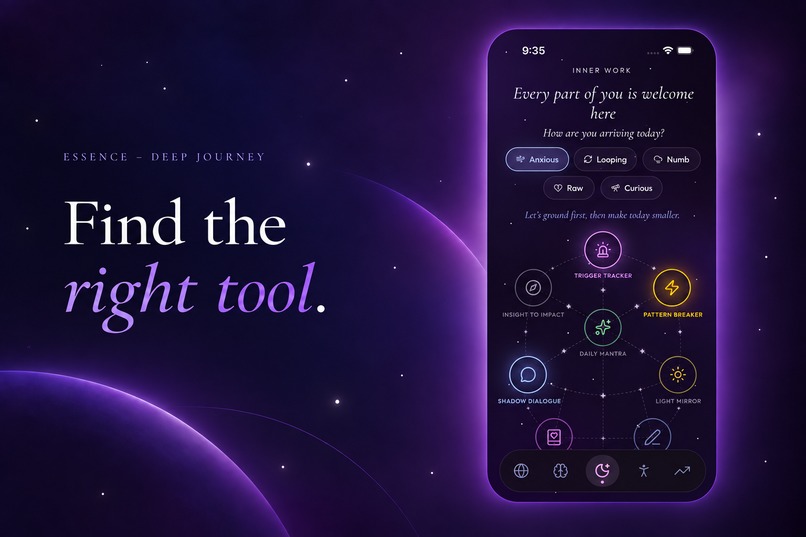
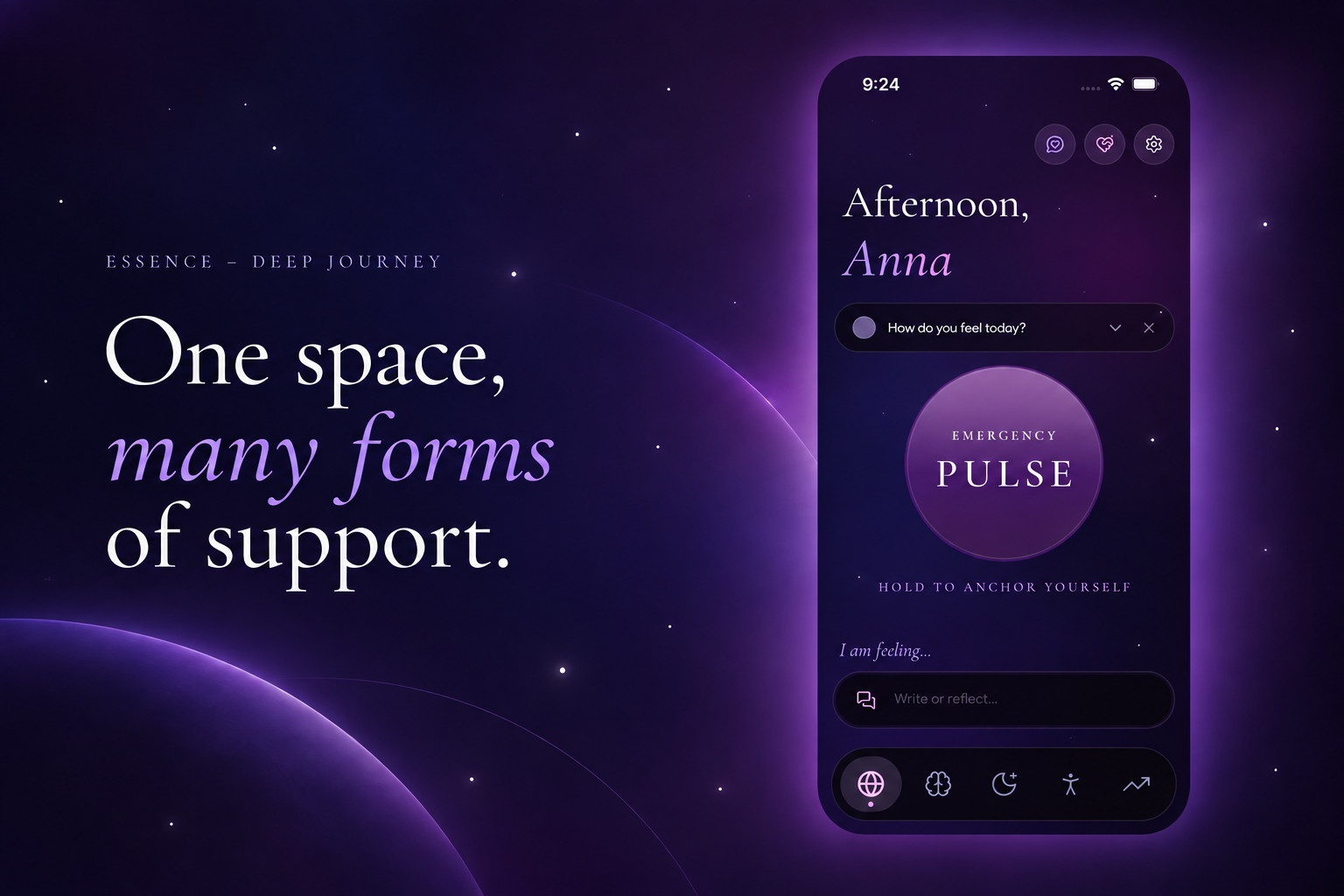
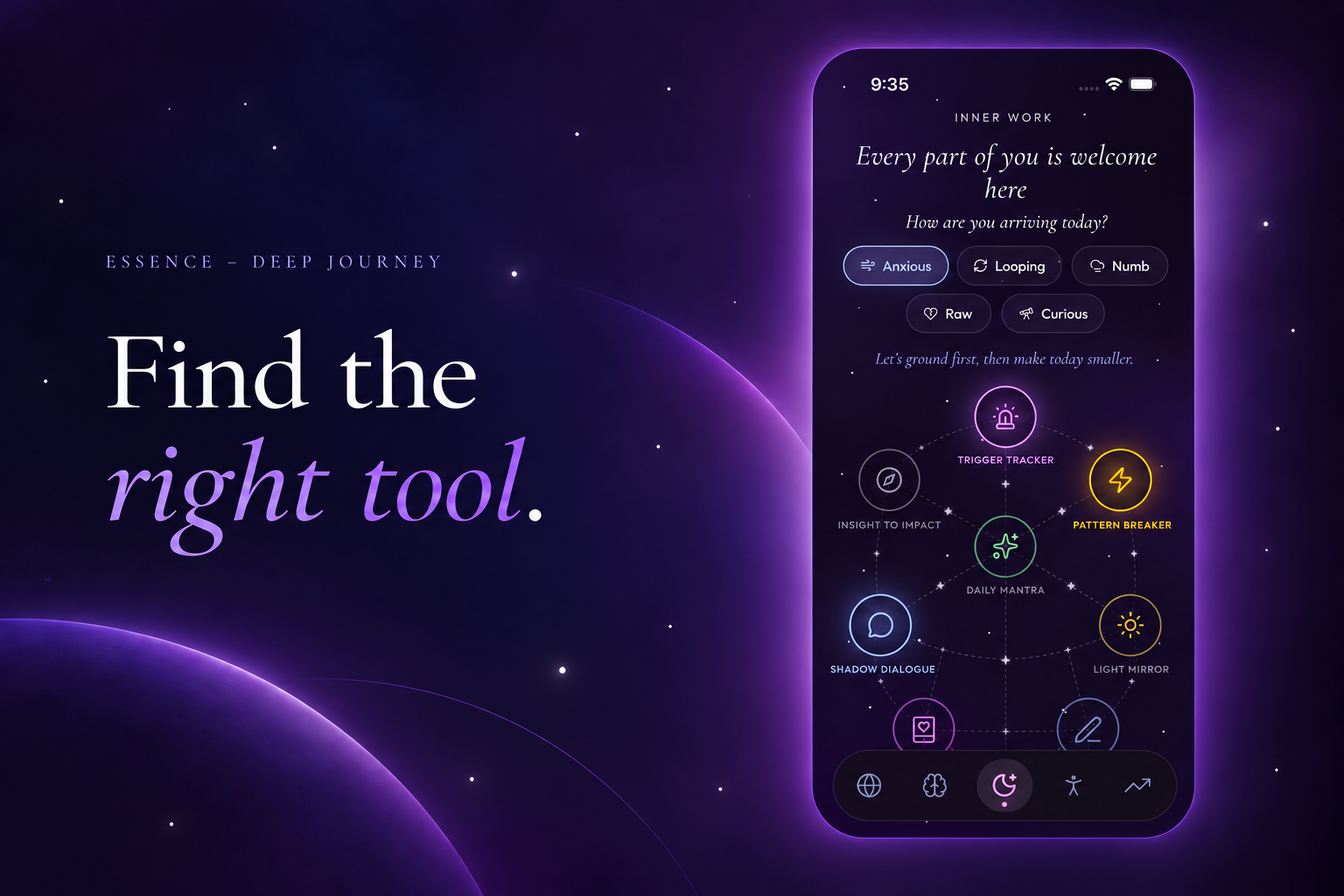
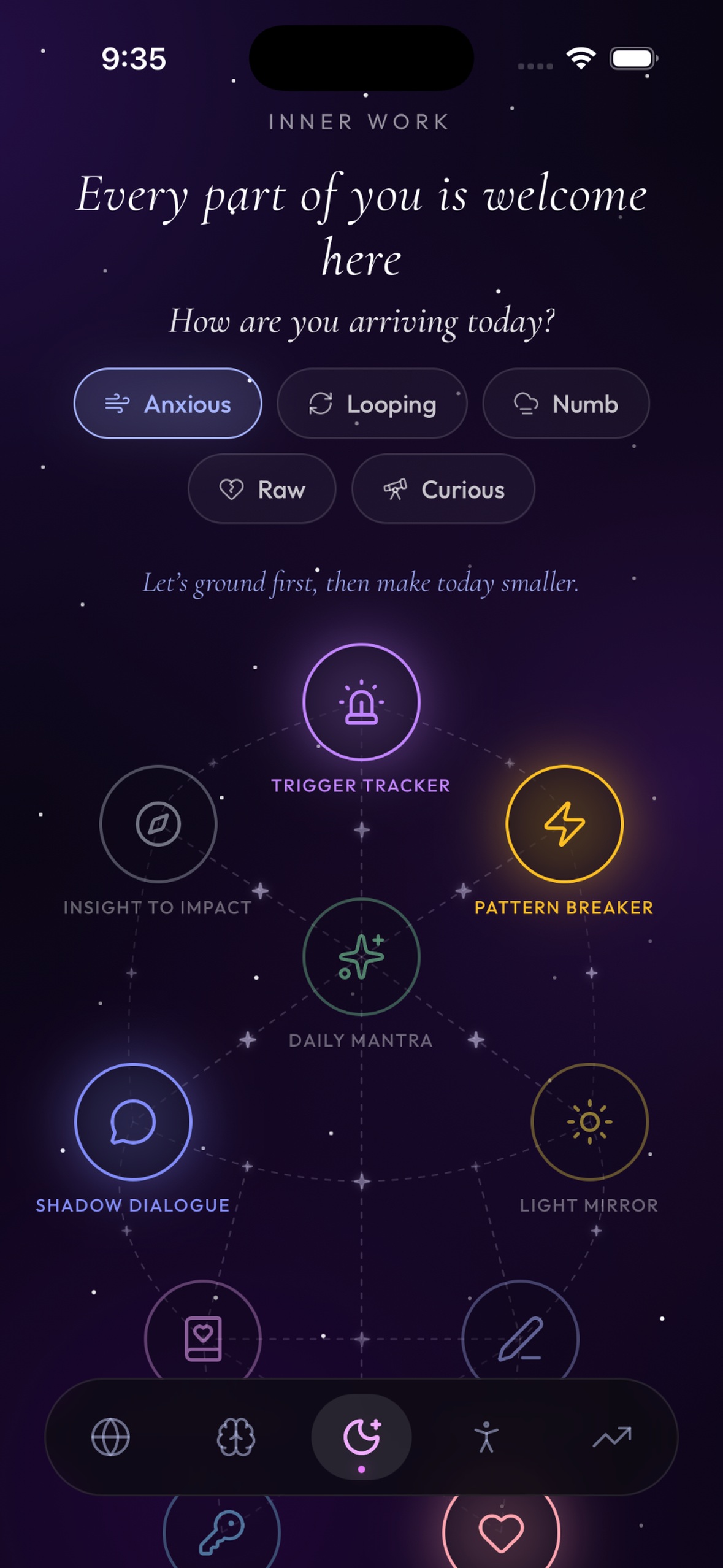
A connected constellation of tools, filtered by what you need in the moment.
-
-
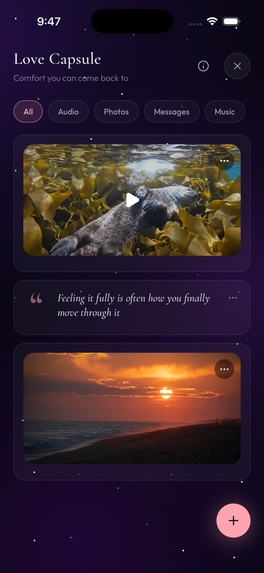
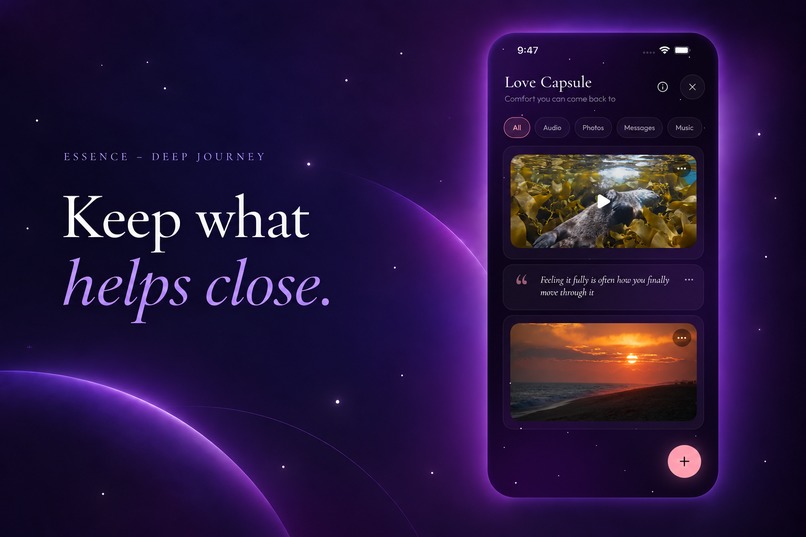
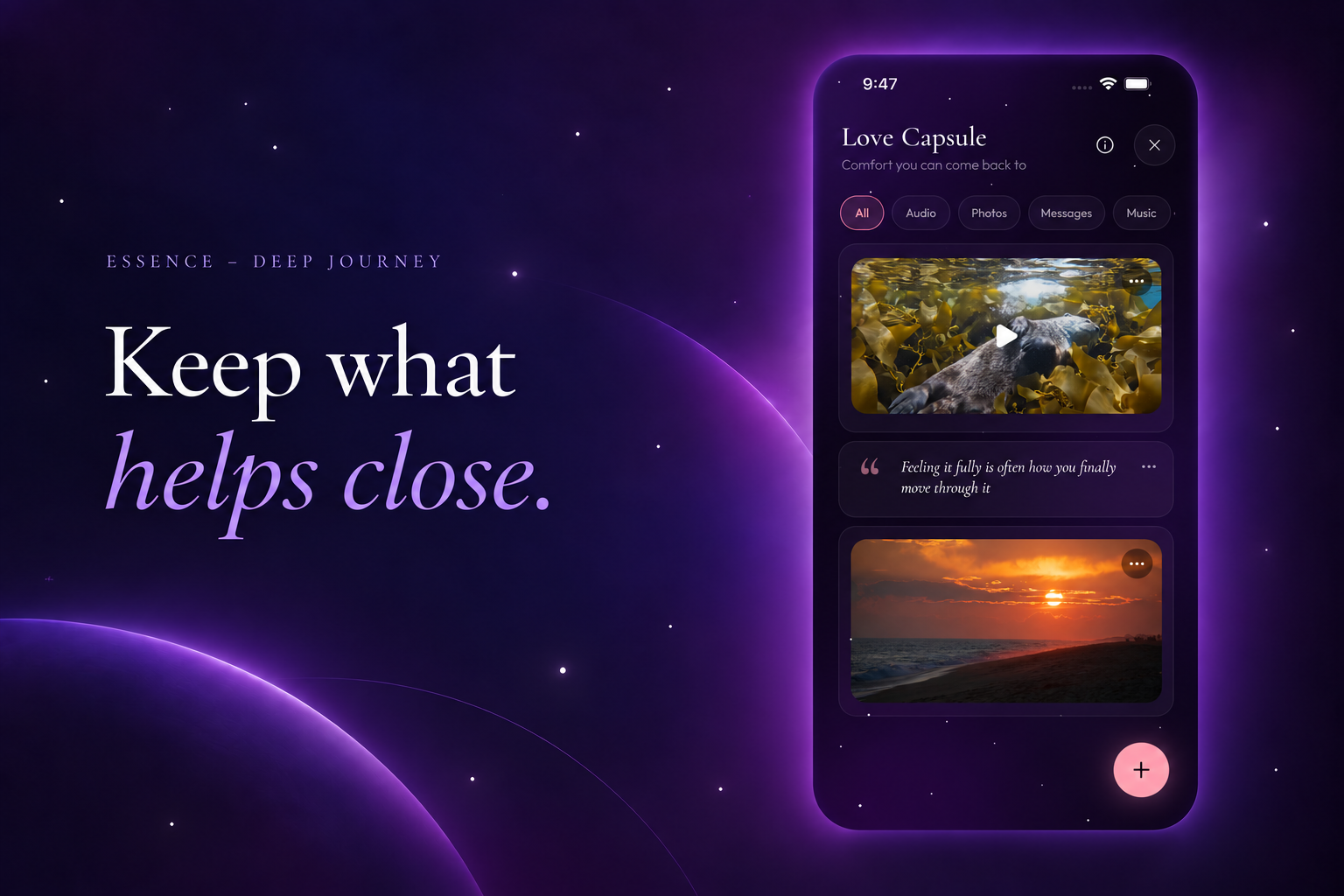
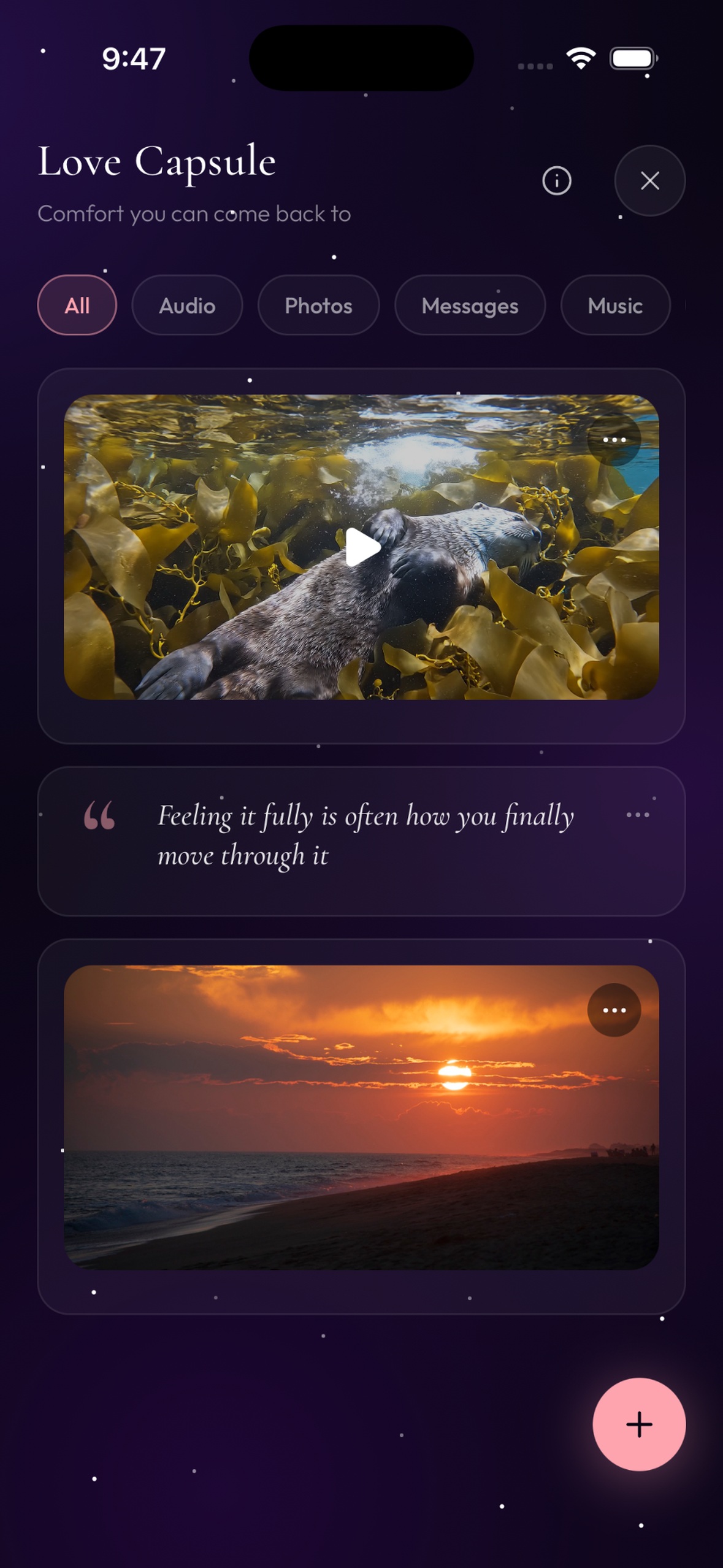
Keep comforting memories, people, sounds, and moments close when you need them.
-
-
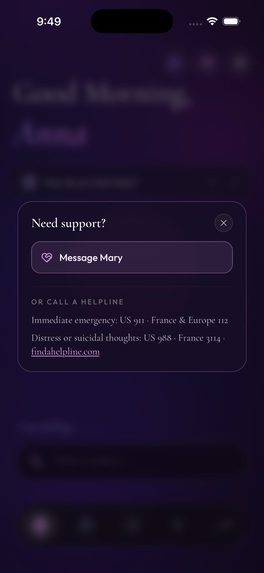
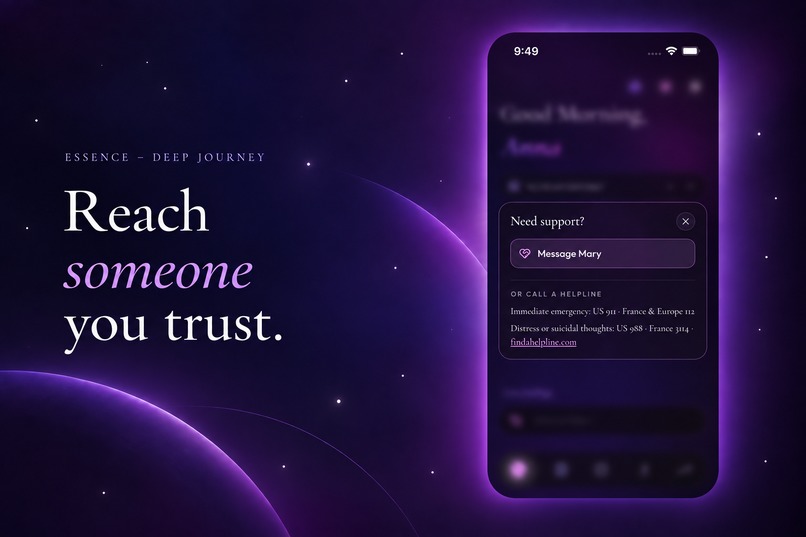
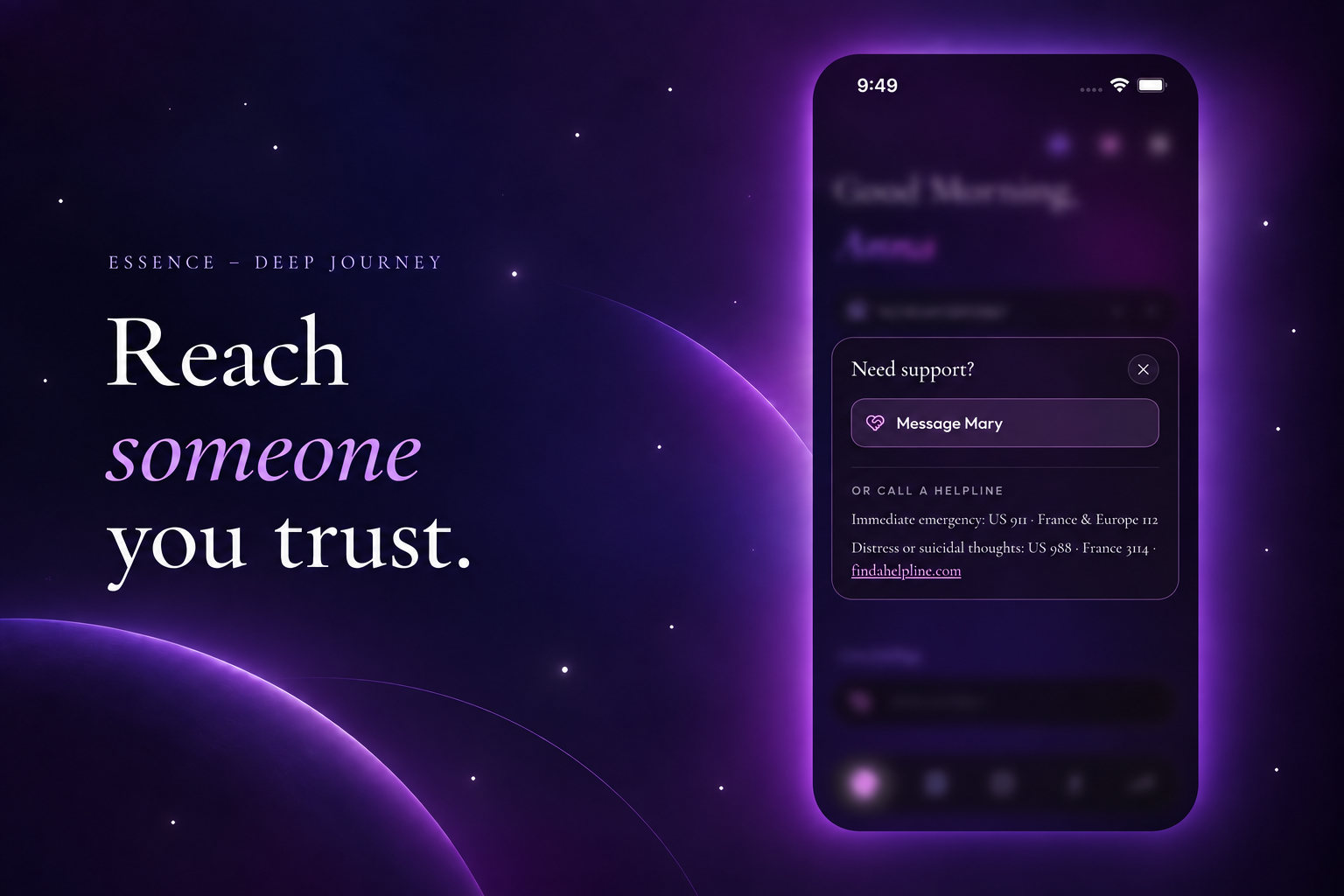
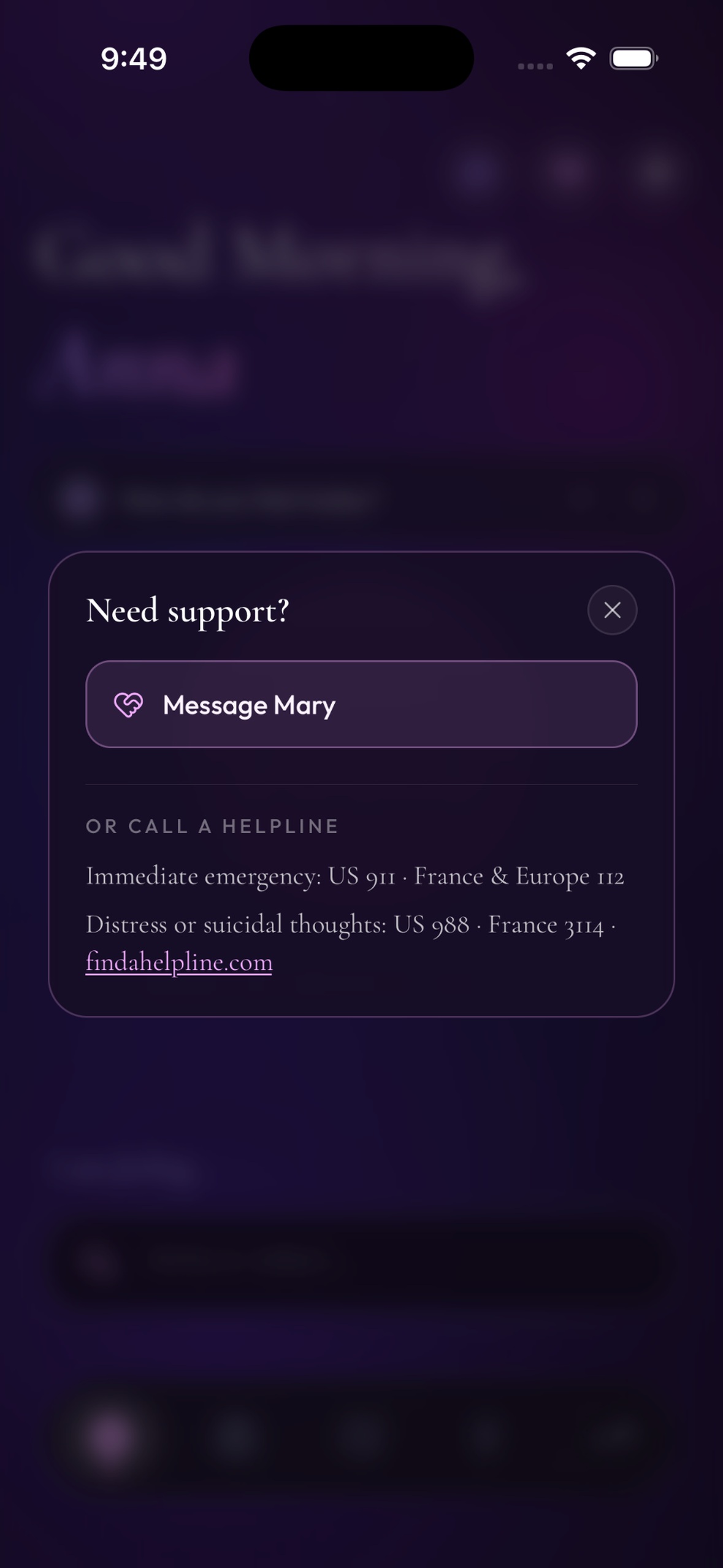
Make reaching out easier when asking for help feels difficult.
-

App Icon

Inspiration
Essence began with a problem I knew personally.
As someone who experiences emotions very intensely, learning how to understand and regulate them has been an important part of my own journey.
Over the years, I have worked on myself, received support from mental health professionals, gone to therapy, and learned many tools for navigating difficult emotions.
But I kept running into the same problem:
when I actually became overwhelmed, anxious, or triggered, I often lost access to much of what I had learned.
A therapist might teach me a grounding technique one week, but in the middle of an intense emotional moment, remembering that technique, choosing the right one, and guiding myself through it could suddenly feel incredibly difficult.
That contradiction stayed with me.
When someone is already emotionally overwhelmed, asking them to identify what they need, remember the right technique, and guide themselves through it can be a very high demand. The moment when support is most needed is often the moment when it is hardest to know what to do.
I also began noticing the same frustration among other young women around me.
We had access to therapy, self-development content, meditation apps and wellbeing tools, but there was still a gap between learning about emotional wellbeing and actually being supported in the moment when emotions became difficult to navigate.
That is where Essence started.
I wanted to create the tool I wished I could reach for in those moments: one place that does not assume I already know what I need, but helps me regulate first when necessary, understand what is happening, reconnect with support, and find the next step that fits the moment.
The idea behind Essence became simple:
When something feels emotionally overwhelming, we often know that something is wrong, but we do not always know what we need.
Essence was built to help with that moment.
Essence is also built around the idea that sensitivity is not a weakness to overcome, but a capacity to understand and use well. Our emotions can point toward our needs, boundaries, values and what feels aligned or misaligned in our lives.
By learning how to listen to them without being overtaken by them, users can reclaim sensitivity as a strength, one that can deepen intuition, connection, self-awareness and the ability to make choices that feel true to who they are.
What it does
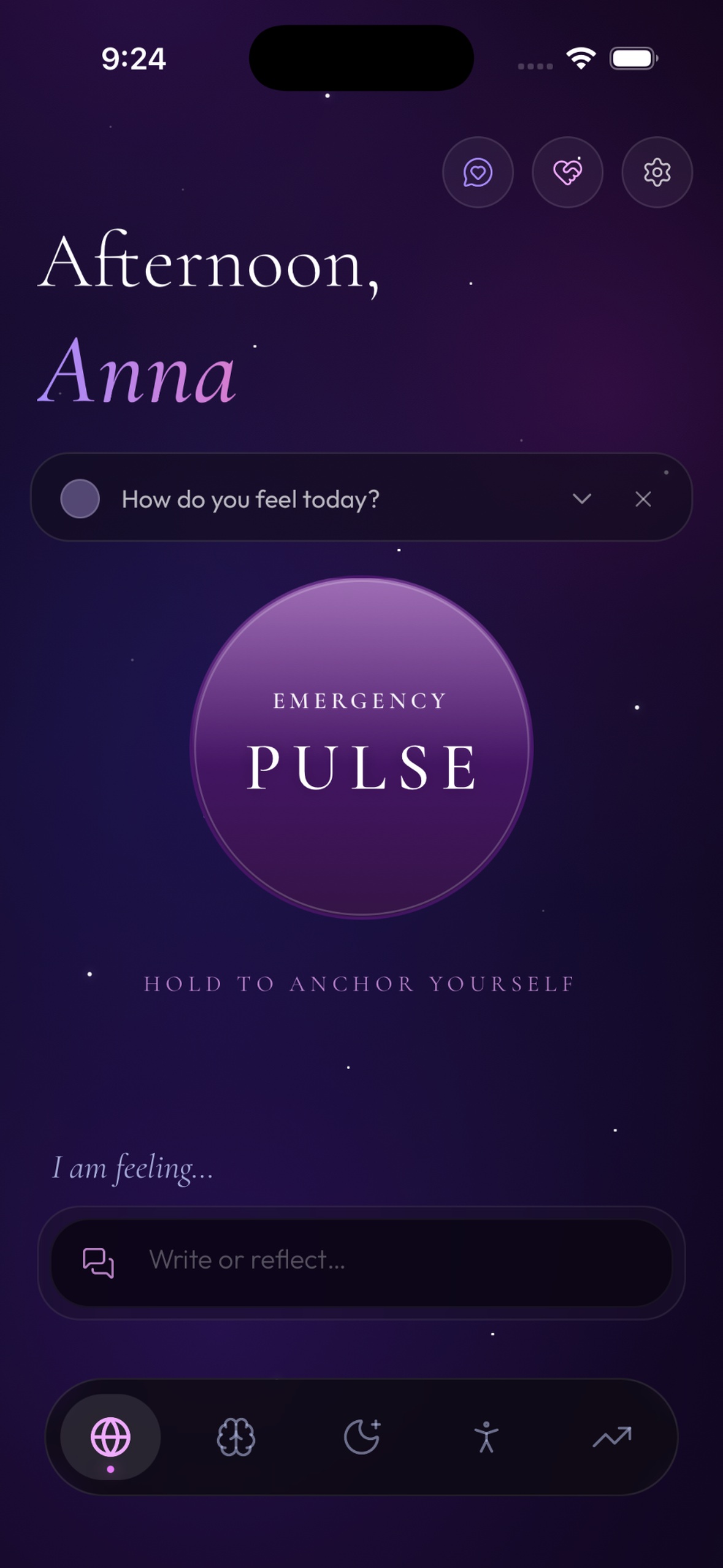
Essence is a personal emotional wellbeing app designed to support different stages of an emotional experience.
Instead of assuming that users are always ready to reflect, Essence recognizes that sometimes the first need is simply regulation.
If someone is in the middle of an anxiety episode and cannot think clearly, Pulse provides simple guided interventions designed to help calm or stimulate the nervous system before asking the user to analyze what is happening.
If they need another person, Support Contact allows them to send a pre-written message to someone they trust, making it easier to ask for help when finding the words can feel difficult.
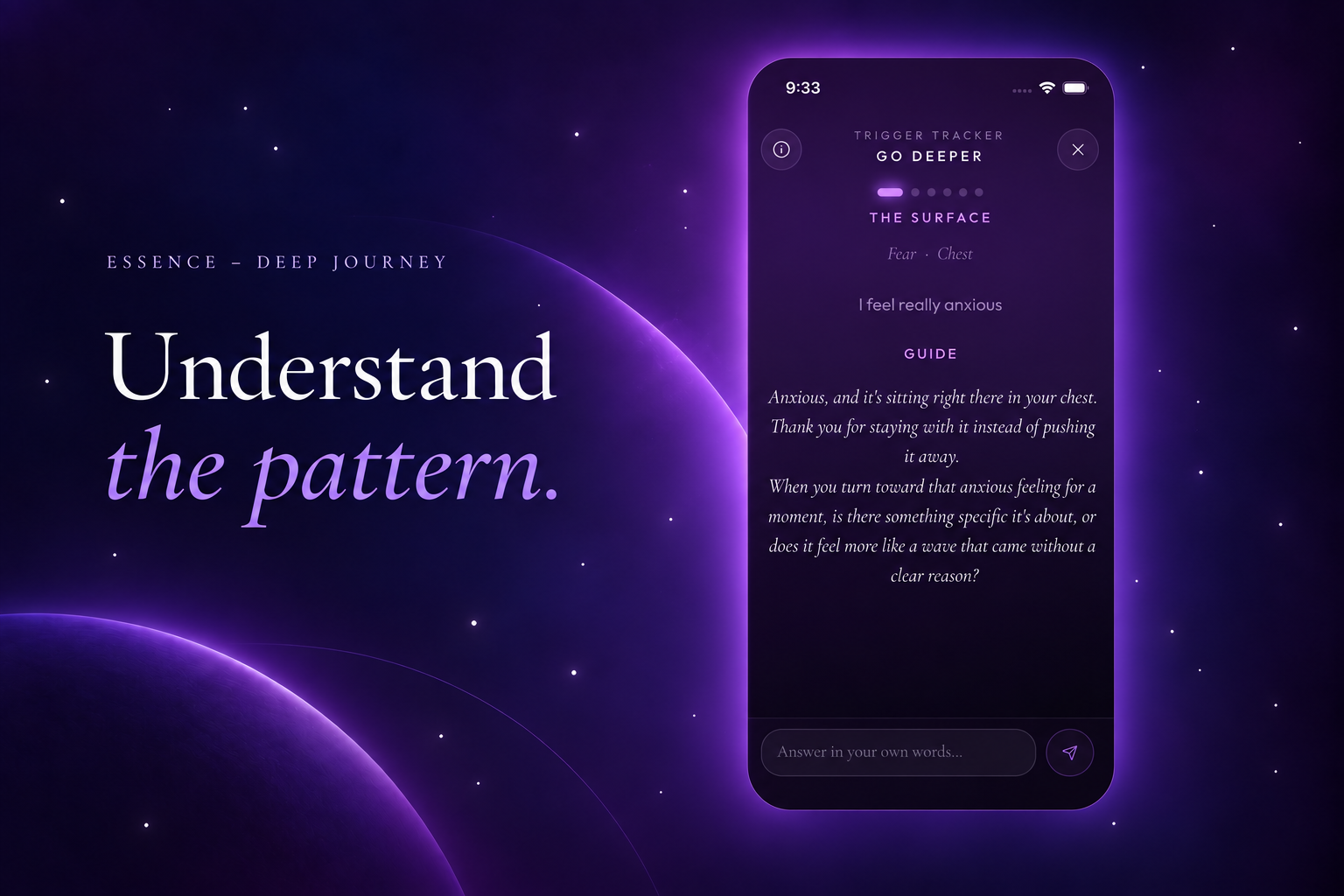
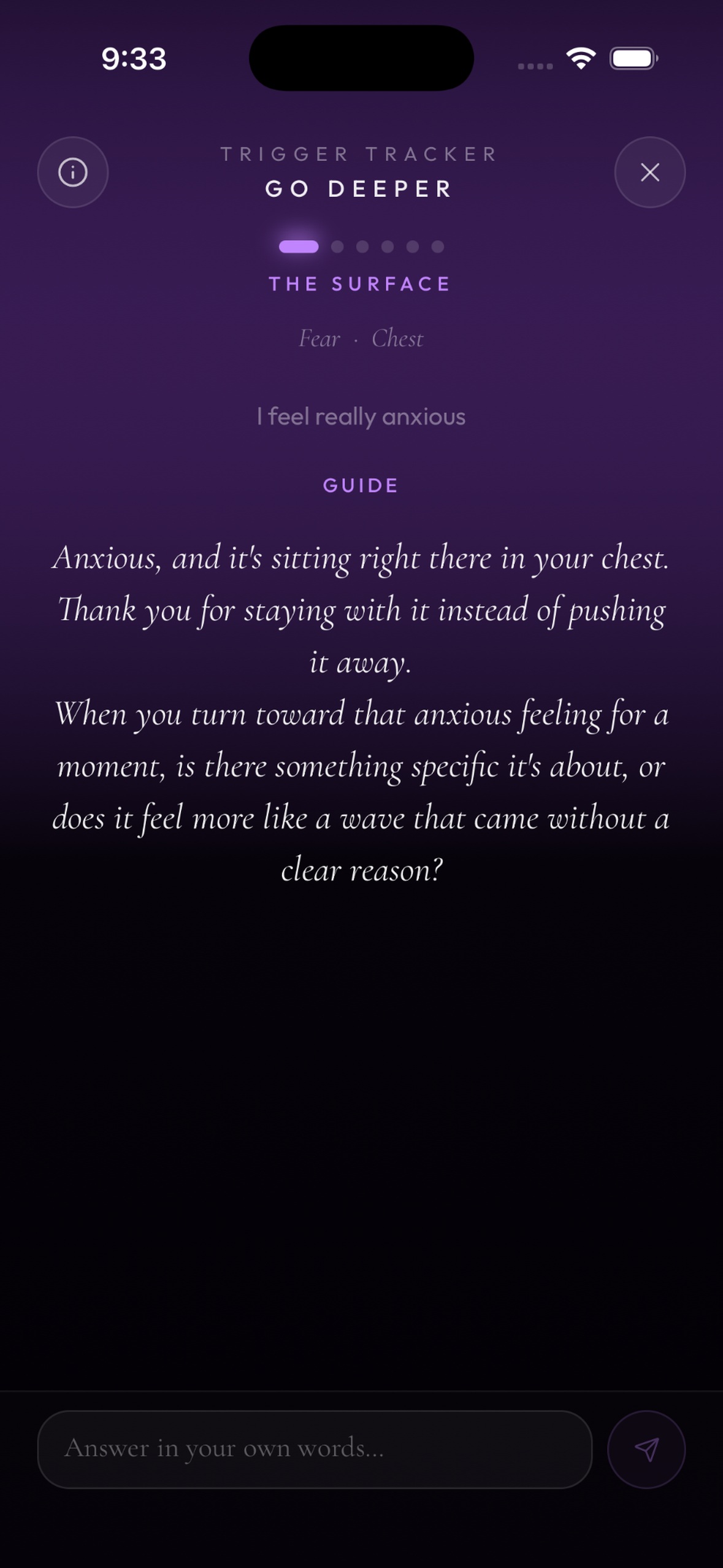
When the user is ready to understand what happened, they can talk openly with Oracle, Essence's AI companion, or use Trigger Tracker to unpack the situation and begin identifying triggers, emotions and recurring patterns.
For deeper reflection and self-work, Inner Work offers a constellation of tools that can be filtered depending on what the user is experiencing or what kind of support they need.
These tools include:
- Trigger Tracker, for understanding triggers and emotional patterns
- Echoes Journal, for reflection and journaling
- Love Capsule, for keeping personally meaningful memories, people, sounds, images and other comforting resources close at hand
- Insight to Impact, for turning reflection into practical next steps
- additional grounding and self-reflection tools!
The goal is not to give every user the same answer. It is to help someone regulate when they need to regulate, understand when they are ready to understand, reconnect with support when they need another person, and move forward in a way that fits their situation.
Essence was also designed to solve another frustration: emotional wellbeing tools are often fragmented across different apps. One app for journaling, another for affirmations, another for gratitudes notes, another for mood tracking or reflection.
Essence brings these different forms of support into one connected space, so users do not have to search across multiple products depending on what they need.
The goal is not simply to place many tools side by side, but to make them work as parts of the same emotional support system, complementary, connected, and easier to access when the user needs them.
How I built it
I built Essence as a solo founder and product builder. The app is built in React Native as a cross-platform mobile application, with the current public release available on iOS.
RevenueCat powers Essence Plus subscriptions and premium access.
The product combines mobile development, UX/UI design, AI-assisted conversation, structured self-reflection, emotional regulation tools, journaling, pattern tracking and a visual system designed to make the experience feel calm, private and intentional.
A large part of the work has been product architecture.
The challenge was not simply deciding which tools Essence should contain, but designing how those tools should relate to one another so that the app feels like one emotional support system rather than a collection of disconnected features.
That eventually led to a clearer internal logic:
regulate → understand → move forward
while still allowing users to enter the experience wherever they need to.
Challenges I ran into
One of the biggest challenges was avoiding the exact problem Essence was created to solve: overwhelming someone with too many choices when they are already overwhelmed.
Giving users many tools can be useful, but a large toolbox alone does not solve the problem. The experience also needs to help someone find the right kind of support for the state they are currently in. That is why features such as Pulse and the Inner Work filters became important.
Another challenge was balancing guidance with autonomy. Essence should provide structure without telling users what they “should” be feeling or forcing emotional experiences into a rigid process.
AI created another important design challenge. Oracle can provide a space for reflection and conversation, but I did not want Essence to become a product that encourages users to rely only on AI for emotional support.
That is why the app also includes tools such as Support Contact, which can facilitate reaching out to a trusted person, as well as Love Capsule, journaling, grounding and self-reflection tools that reconnect users with their own resources and real-world support systems.
Privacy, responsible AI use, and maintaining a clear distinction between emotional wellbeing support and professional healthcare have also been important considerations throughout the product.
Accomplishments that I'm proud of
What I am most proud of is trying to solve a problem that I know is not mine alone. Essence was born from my own experience, but many of the conversations that shaped it came from realizing how often women around me were struggling with the same thing: knowing a lot about emotional wellbeing, having access to therapy or self-development tools, and still feeling lost when emotions became overwhelming.
Being able to take that shared frustration and turn it into something that could potentially support other people is what matters most to me.
I am also proud of having turned an idea I carried for years into something real.
For a long time, Essence existed only in my head as the kind of tool I wished I could reach for when I needed support. Building it required a lot of reflection, learning, product decisions, design work, technical problem solving, iteration and persistence.
A few years ago, creating an app like this felt almost impossible to me. Today, it exists. So, I am deeply proud of the process itself.
And beyond simply making the idea real, I am proud that I was able to turn it into a solution that can actually be accessed by other people. My hope is that Essence can especially support people who experience emotions intensely, including those who have spent years feeling that their sensitivity was something they needed to hide, control or apologize for.
If Essence can help some of them feel more supported, understand themselves better, and regain a sense of agency in their emotional lives, then building it will already have been worth it.
Finally, I am proud of reaching this first concrete milestone: Essence is now a functioning product available on the App Store. Knowing that I built the app I once wished existed is something that means a lot to me.
What I learned
Building Essence has taught me that emotional support is highly contextual.
The same person may need completely different things on two different days or even within the same emotional episode.
Sometimes reflection is useful.
Sometimes thinking is not the first step at all.
Sometimes the body needs to regulate before reflection becomes possible.
Sometimes the most useful thing an app can do is help someone reach another person.
And sometimes the user already knows what helps, they simply need easier access to it in the moment.
One of the biggest things I learned was how difficult it is to design one space containing many different tools without making the experience feel fragmented or overwhelming.
Each tool has to have a clear purpose, but it also has to complement the others, connect naturally with them, and remain easy to access for users with very different needs.
That taught me to think about Essence less as a collection of features and more as a connected emotional support system.
I also learned a lot about translating therapeutic concepts and techniques into digital experiences. A technique that works well in a therapy session does not automatically work well on a phone screen.
It has to be adapted to the context, simplified when necessary, and sometimes transformed into an interaction, guided flow, animation or digital tool that preserves the intention of the original technique while making it practical and accessible in the moment.
That process taught me to think carefully about what a technique is actually trying to achieve, and then design the digital experience around that goal rather than simply reproducing the technique literally.
It also changed the way I think about product development.
Instead of asking only:
“What feature should I build next?”
I increasingly ask:
“What might a person need in this state, and how can Essence make that support easier to access?”
I have also learned that giving people more tools does not automatically create more support.
The relationship between those tools and how easily someone can reach the right one matters just as much as the individual features themselves.
What's next for Essence
The next stage of Essence is focused on making the experience even more adaptive and connected.
I want to continue improving how Essence recognizes different user needs and helps people move between regulation, reflection, connection and action.
Upcoming work includes continued refinement based on user feedback, and expanding the public release to Android.
The long-term vision is not to build a tool that tells people how to feel.
It is to build a space that helps people understand their emotions, access support more easily, and use sensitivity as a source of awareness rather than something they need to suppress.
Essence is not about helping people feel less. It is about helping them understand what they feel, regain agency, and move through emotional experiences with greater awareness, connection and self-trust.
Built With
- ios
- react-native
- revenuecat
- supabase

Log in or sign up for Devpost to join the conversation.