-
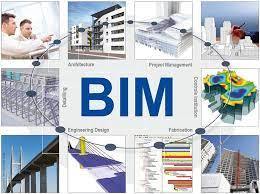
BIM
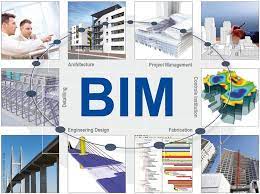
Overview of Building Information Modelling and Its Use in Project Management
Geographical information modelling or building information modelling
Background
Sketches and drawings representing the engineers' and architects' visions were left on the paper. The rapid advancement of computer technology gave the drawings a three-dimensional appearance. Since then, technology has advanced significantly from 2D to VR. A construction project involves a number of intricate sub-processes that must all be integrated. The engineers found it challenging and complicated to combine these methods. "Building Information Modelling" is a result of these technological constraints and advancements in computer software technology.
Introduction
In the civil engineering sector, building information modelling is an essential technology. The architects, design team, structural engineers, site engineers, contractors, owners, and the teams working on the project can all access the information-rich file, which contains a collection of data. BIM refers to a variety of developments and hierarchical configurations that are expected to increase disciplinary and inter organizational cooperation in the construction industry and to enhance the effectiveness and nature of the design, construction, and support of structures. Additionally, BIM is utilised to bridge the information gap that exists between the plan group, the development group, and the building owner, allowing all groups to constantly operate at the same level. Informing BIM is GIS. BIM Supports GIS. GIS encourages BIM by providing a verifiable context for a benefit's existing state, within which planners and specialists can research and evaluate plan and development. Then, rich, increasingly accurate models can be used to enhance overall operations and support benefits throughout a larger territory; in this way, BIM drives GIS.
Developing Information Modeling globally
Worldwide adoption of BIM has made it the cornerstone of aspirations for global development. Since 2016, all midway secured development tasks have been obliged to follow BIM level 2 standards, making the UK the industry leader in the use of BIM. While the Middle East, France, Germany, Spain, and Spain have all increased their BIM usage.
With an important motivation to bring task groups together at the right time, BIM is usually associated with Integrated Project Delivery (IPD) in the United States. The Canada BIM Council was established in 2008 to formalise the use of models in planning, construction, and development.
Building Information Modeling Methodology
The BIM process supports the creation of intelligent information that may be used throughout the lifecycle of a construction or infrastructure project. It is completed in four stages.
- Create setting models of the currently established and common environment by combining reality catch and accurate facts to advise project planning.
- Design - Reasonable planning, examination, specification, and documenting are carried out at this stage. The preconstruction process begins by advising booking and coordinations using BIM data.
- Build: At this point, manufacturing begins leveraging BIM information. Exchanges and temporary employees receive training in task development coordination to ensure perfect planning and competence.
- Operate - BIM data is persistent between activities and the maintenance of finished resources. BIM information can be used in the not too distant future for professional deconstruction or practical remodelling.
Project Managers and BIM
Project manager responsibilities and complications in his position
As a master's student focusing in project management, BIM is crucial in combining all resources into one that is available whenever and wherever. The project manager is the team leader and the person in charge of the entire project. It takes a lot of work to integrate several teams into a project and keep it running efficiently. The project manager is responsible for managing the tasks, resources, deadlines, finances, assuring proper communication, and foreseeing potential risks Myarticles. Dealing with so many things at once can be stressful, so it's not surprising if something escapes.
One of the biggest challenges for project managers is working with a group that is typically dispersed. In order to keep all the teams informed and to exchange their own works for better integration, a single platform needs to be established. Information sharing resulted in lost communication and the destruction of crucial instructions and data. Most often, it resulted in time loss and a difficult assignment for the project manager. In the early stages of design, the project's original cost was insurmountable. To avoid these issues, an appropriate platform needs to be built up.
The Project Manager roles will be updated by BIM
The best way to avoid any misunderstandings and issues was discovered to be BIM. BIM reduces problems by bringing together all the data from numerous teams and project stakeholders under one roof. Additionally, it enables the teams to access information at any time, and any modifications made to the design by one team are immediately visible on all the data bases of the other teams, decreasing uncertainty and information loss. These diverse software combinations relieve the project manager's workload, allowing them to focus on other tangible areas of the project. Additionally, it contributes to greater production and sustainable design. It helps with timely project delivery and provides a comprehensive picture of the project timetable.
There is pressure on project managers to complete projects faster, which changes present procedures and necessitates a better strategy in terms of quality and efficiency. One of the key tools for achieving the goals was thought to be the integration of representation with GIS and PM software. GIS-based project and management methodologies can promote successful task execution by lowering development costs, reducing time, and so ensuring increased profitability. Combining schedule plan data with GIS innovation results in a 4-dimensional model that can be used to illustrate how the work is progressing through various stages and events. One can analyse the work-in-progress in the interim using the actual structure model and the planned structure model.
Project managers face difficulties putting BIM into practise
A project manager is responsible for overseeing every aspect of the project, including team creation, initial design, and project delivery. My role may face certain technical and legal issues as a result of deploying BIM. Legal Issues: There is no guarantee of information ownership, and there is a need to ensure it through copyright laws and other legal channels. As team members provide restricted information to use in a task structure that is being paid for by the venture proprietor, there is no simple solution to the problem of information ownership. Permitting problems may arise when task team members other than the owner and architect/engineer provide information that is incorporated into the BIM. Another concern is who will monitor any errors and control the model's information part. The concept of mix hides the level of responsibility that risk and danger are likely to increase.
Technical Issues As cost and time are added to the BIM as additional measurements, authority over the legal mechanical link between multiple projects also becomes a problem. The authority for accuracy and coordination of cost and planning information must be legally cared to because the risks of using BIM are distributed among the project partners along with the rewards.
Arguments in favour of BIM as Project Manager
1) The article "BIM implementation throughout the UK construction project lifecycle" provided by Robert Eadie, Mike Browne, Henry Odeyinka, and Clare McKeown demonstrates the use of BIM throughout the project lifecycle. Confirming that BIM is used more frequently in the early stages and less frequently in the latter ones. This analysis demonstrates that teamwork viewpoints have the highest beneficial impact using 92 responses from a sample of BIM clients. The opinions on the procedures might actually be comparable to the product innovation. 2) Building Information Modelling (BIM) Application in the Malaysian Construction Industry -
In essay writing services, a review of the literature was conducted to examine previous BIM theories regarding definitions and the history of BIM, development issues, the use of BIM and BIM devices in development extensions, as well as BIM's benefits. The Malaysian government exhorts developers to use BIM because it can resolve problems with development endeavours including delay, expert rivalry over structure, and development cost overwhelm. BIM is a requirement that all businesses managing government projects must adhere to.
Conclusion
These papers are just a few successful instances of BIM applications in the construction sector. By incorporating BIM into my work, I can bring about faster, more efficient project processes, better, more creative designs, precise cost estimations, and most importantly, sustainable results. These BIM advantages motivate me to use it in my future endeavours as a project manager.

Log in or sign up for Devpost to join the conversation.