Inspiration
We wanted to make rocket flight something you can explore, not just watch. ESP connects the view from a launchpad to the physics of ascent, orbit, and returning home. We also wanted real NASA imagery and observations to make Earth feel like a recognizable place rather than a generic game world.
What it does
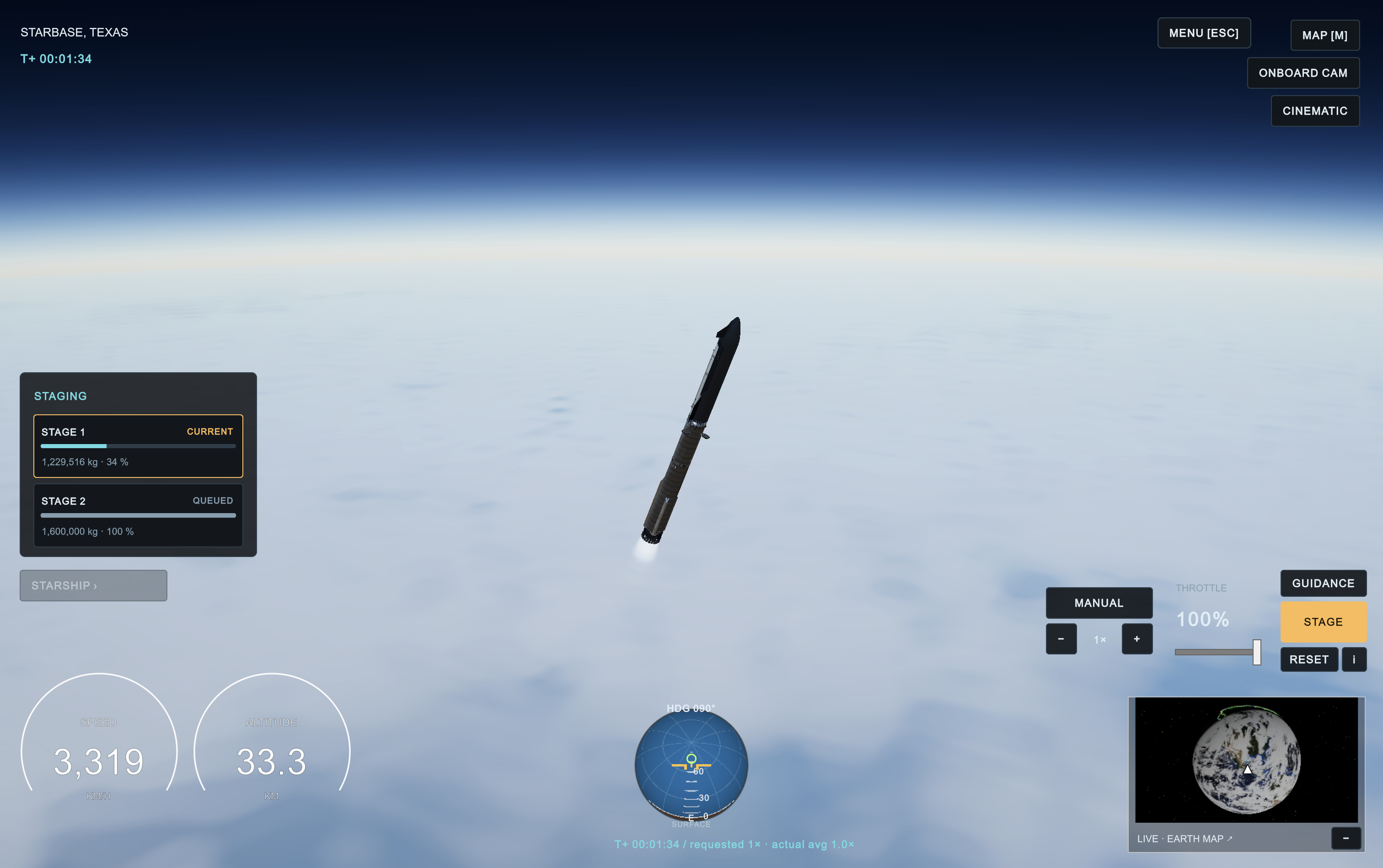
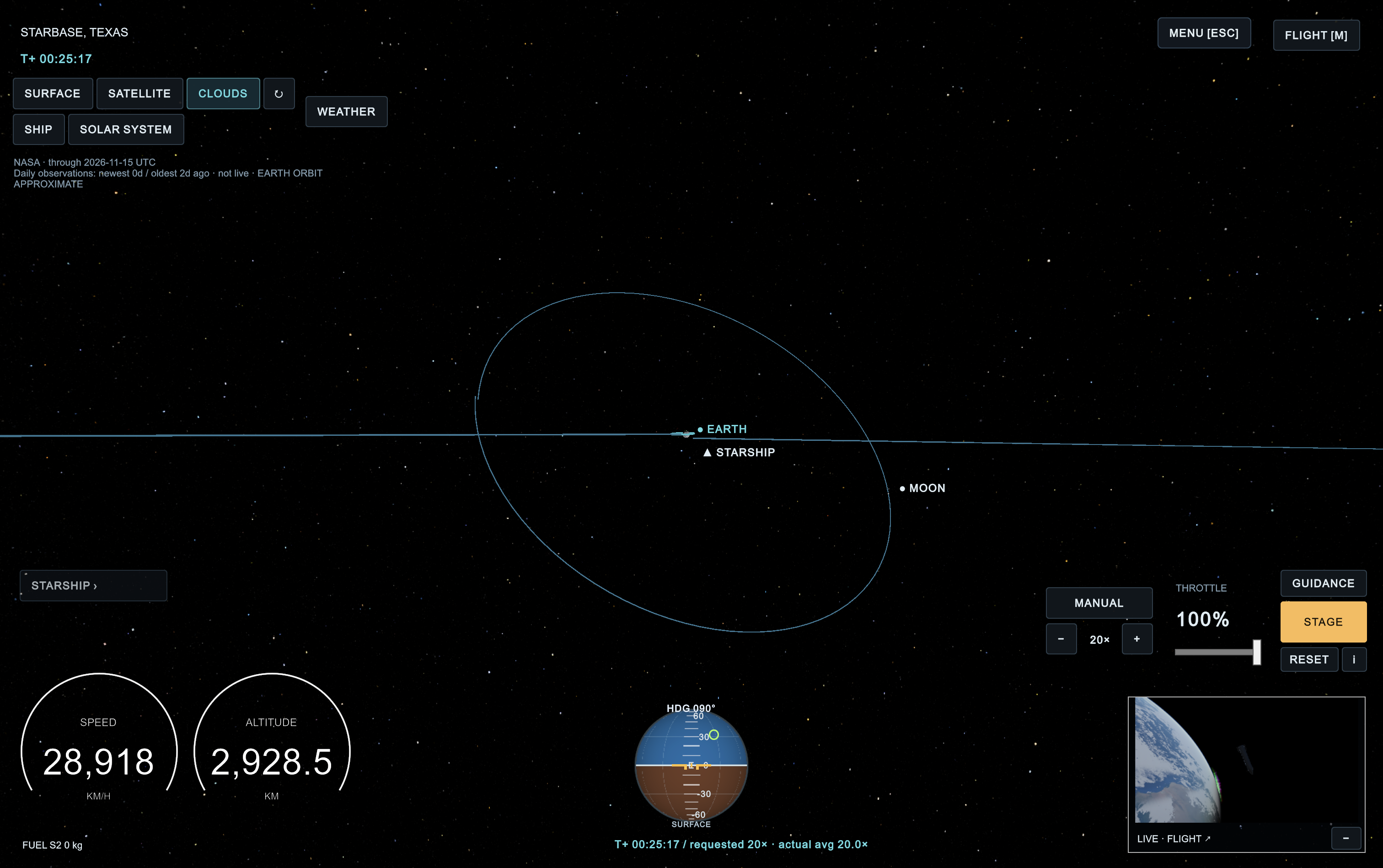
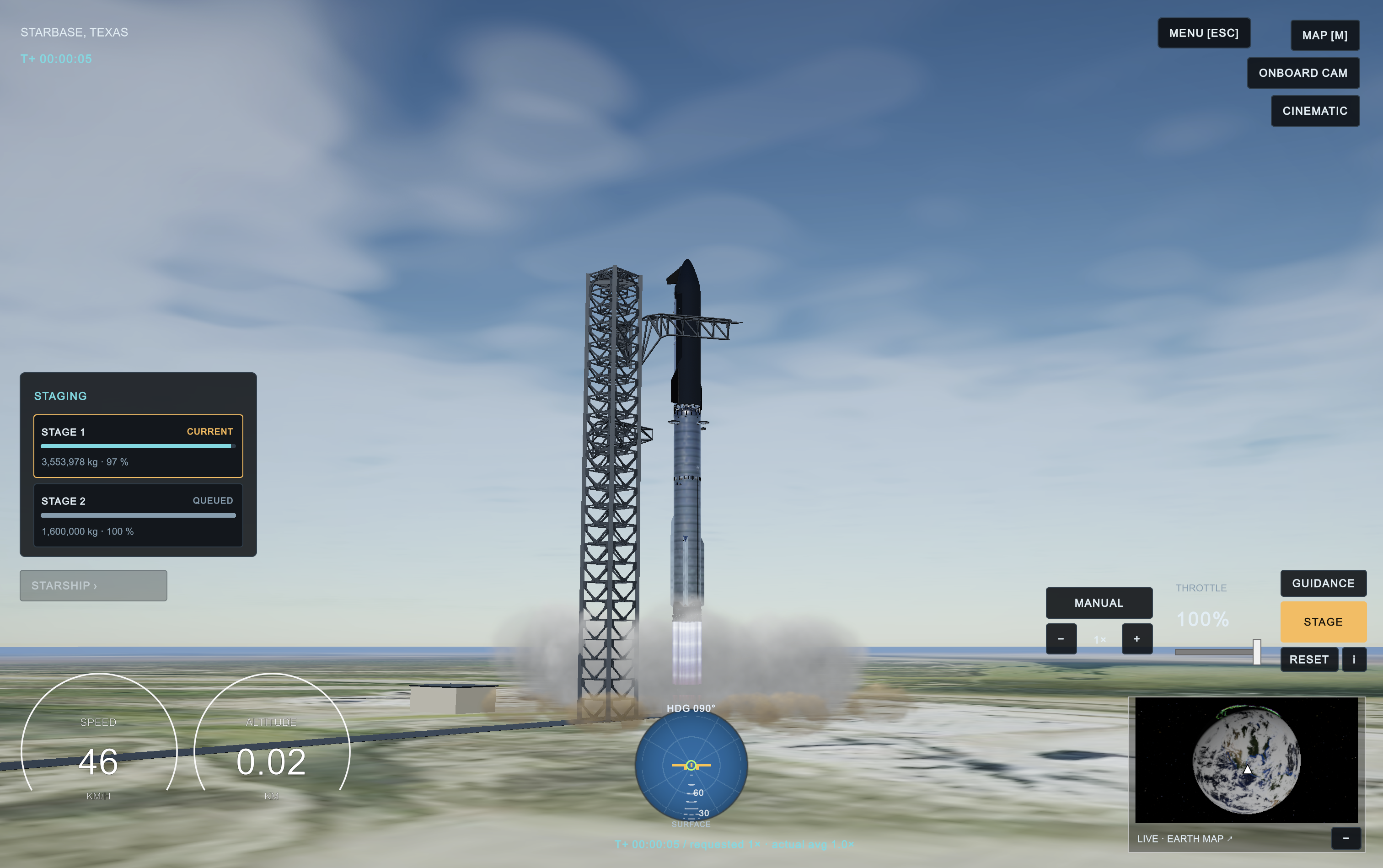
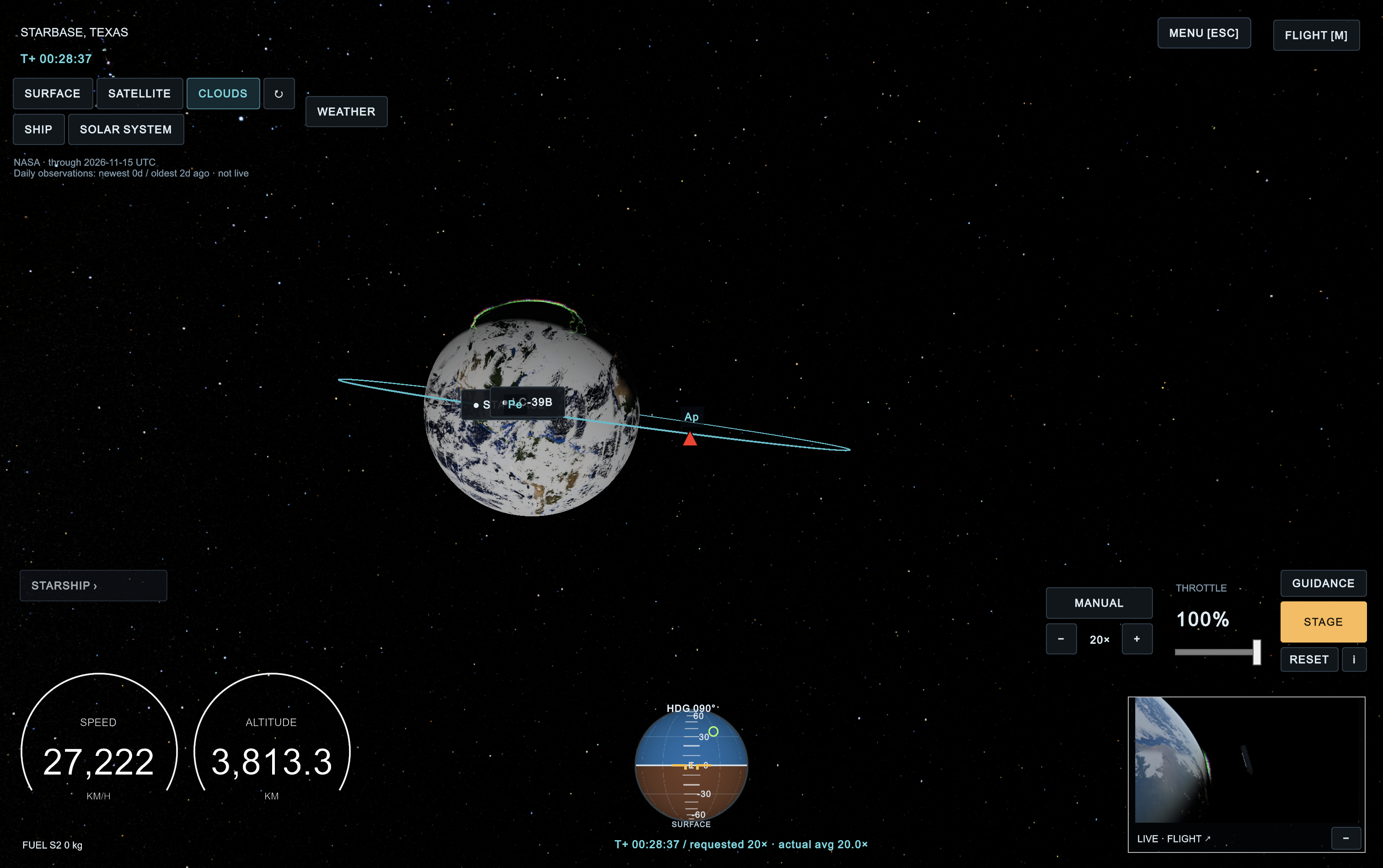
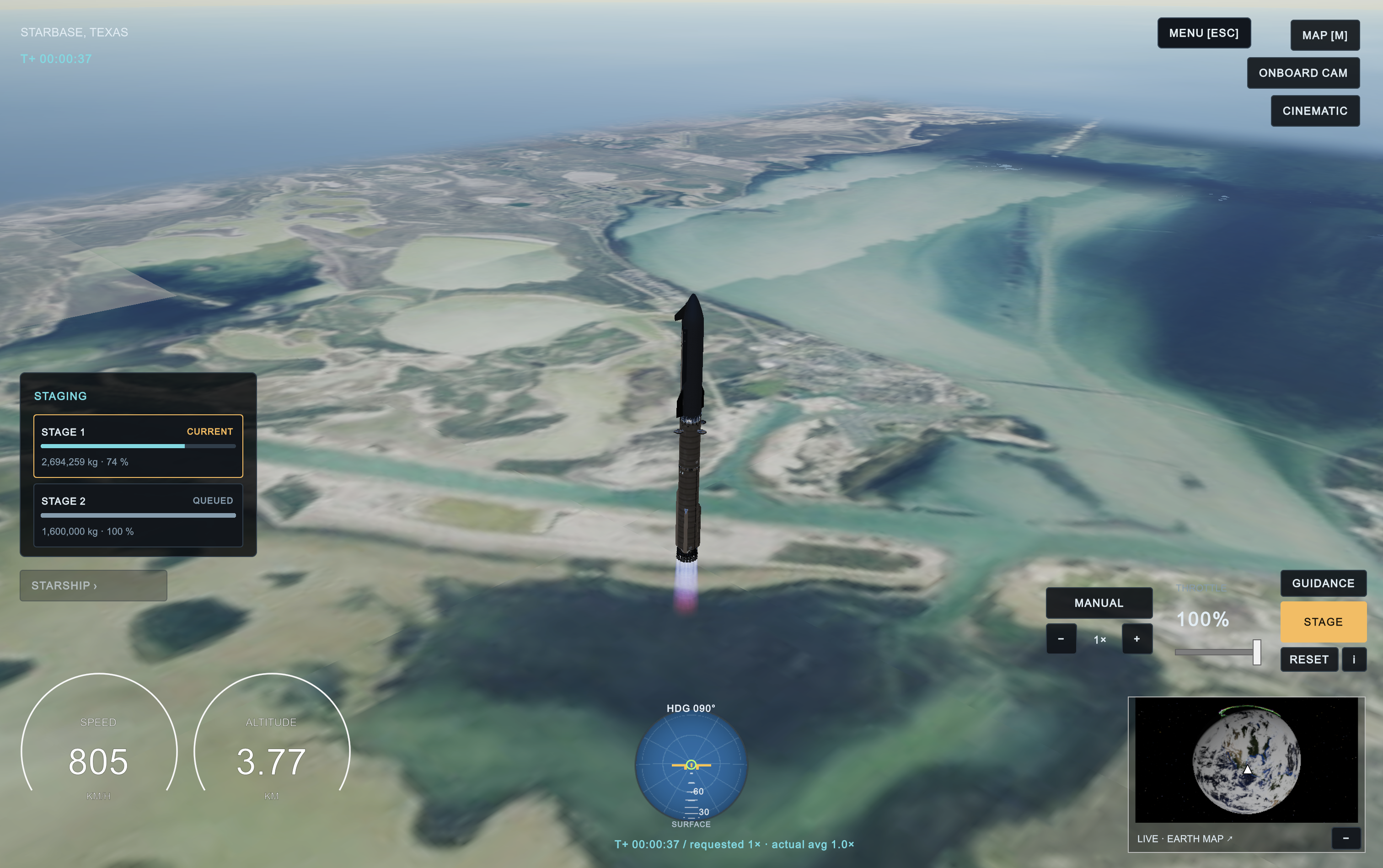
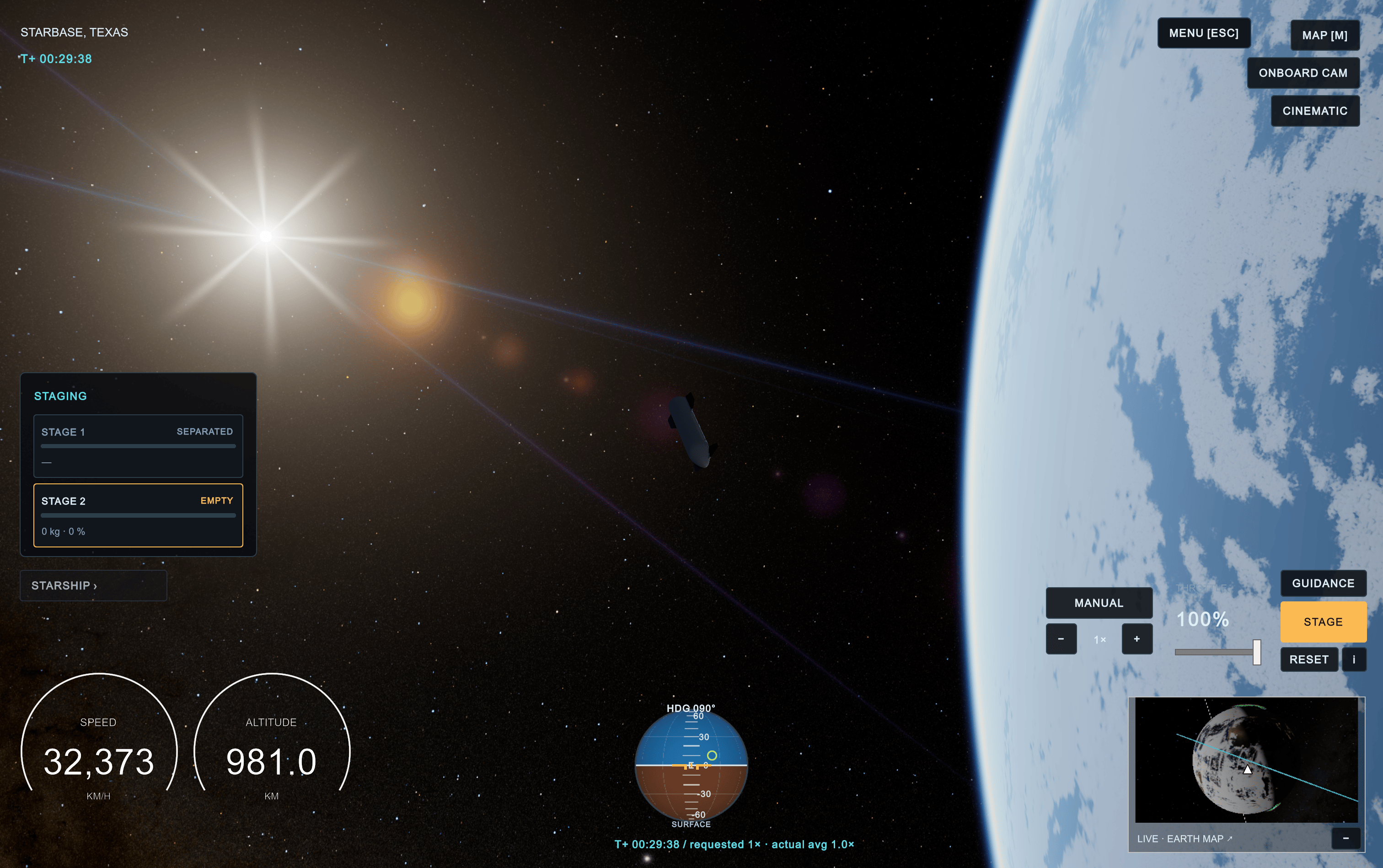
ESP is a playable rocket sandbox built around a full-scale Earth. Players can choose between vehicles including Starship and SLS, launch, stage, inspect flight telemetry, and explore Earth and the solar system through an interactive map.
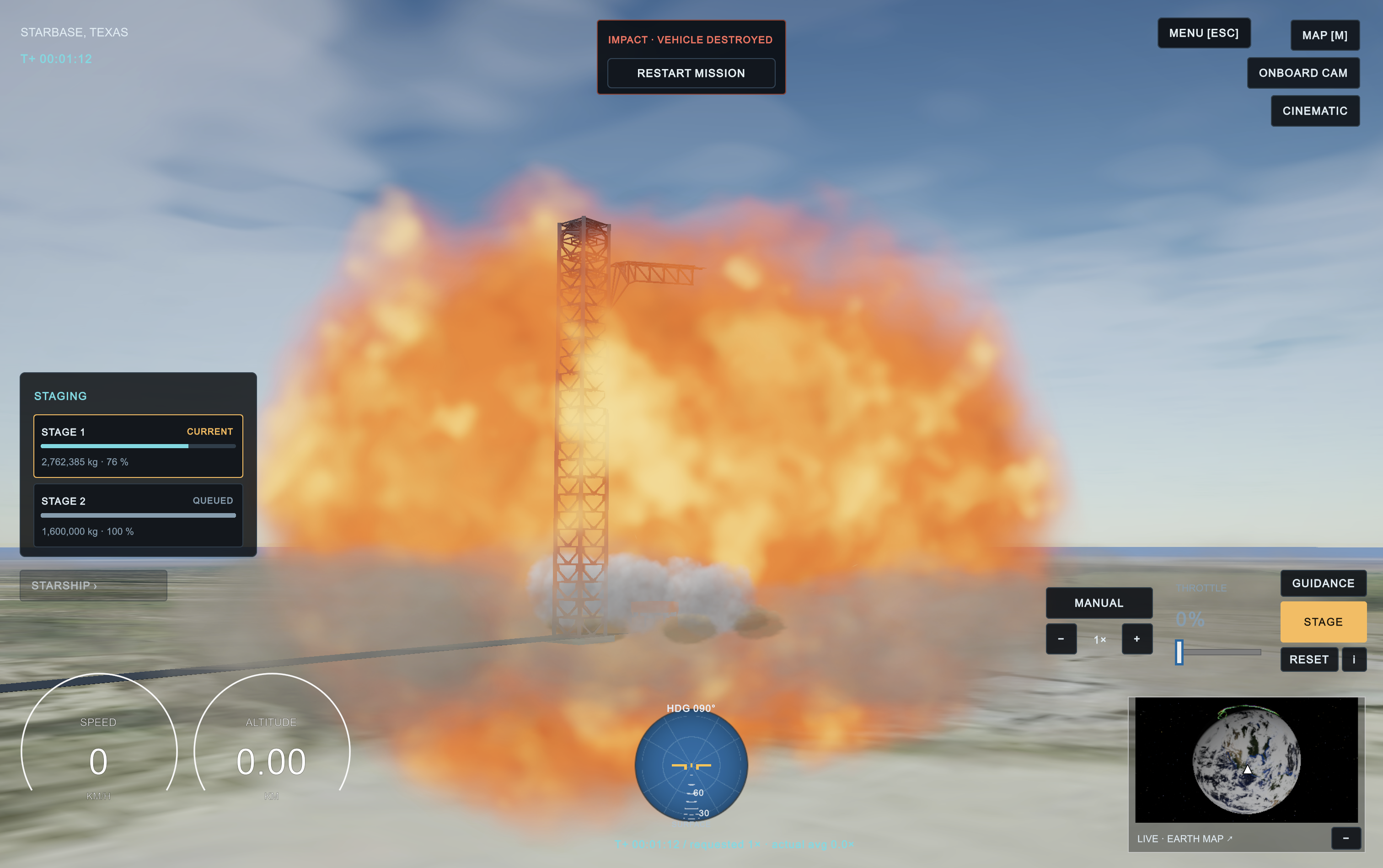
Starship can perform an automated deorbit, atmospheric reentry, powered flip, and tower-catch attempt. The approach uses simulated thrust, propellant, and attitude changes, and a catch can fail. Lunar guidance adds Moon free-return and lunar-orbit-insertion options. SLS’s lunar guidance includes a preparatory parking-orbit burn for its lower-thrust upper stage. Our successful SLS lunar test missions use infinite fuel; ordinary limited-fuel planning rejects missions the modeled vehicle cannot afford.
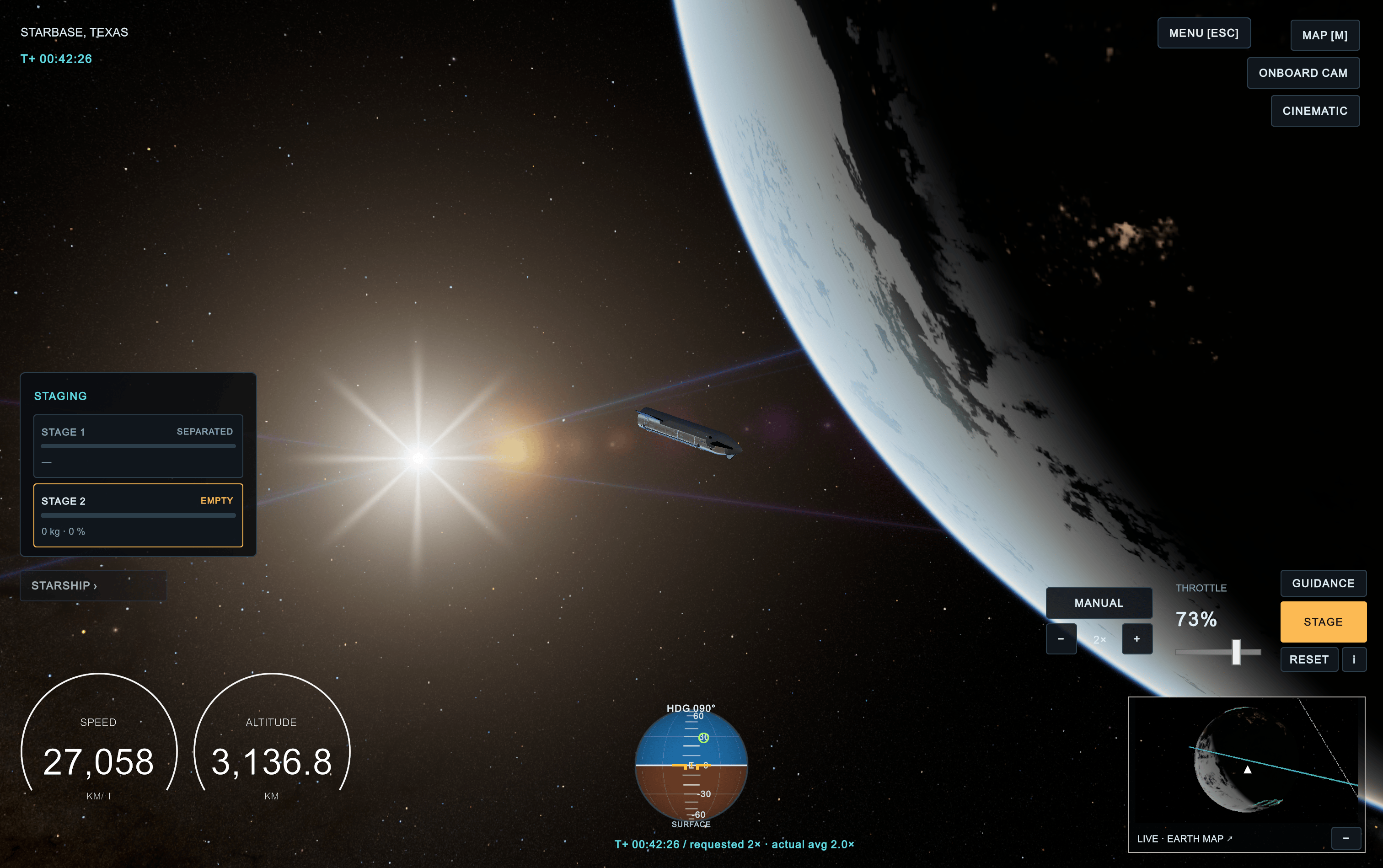
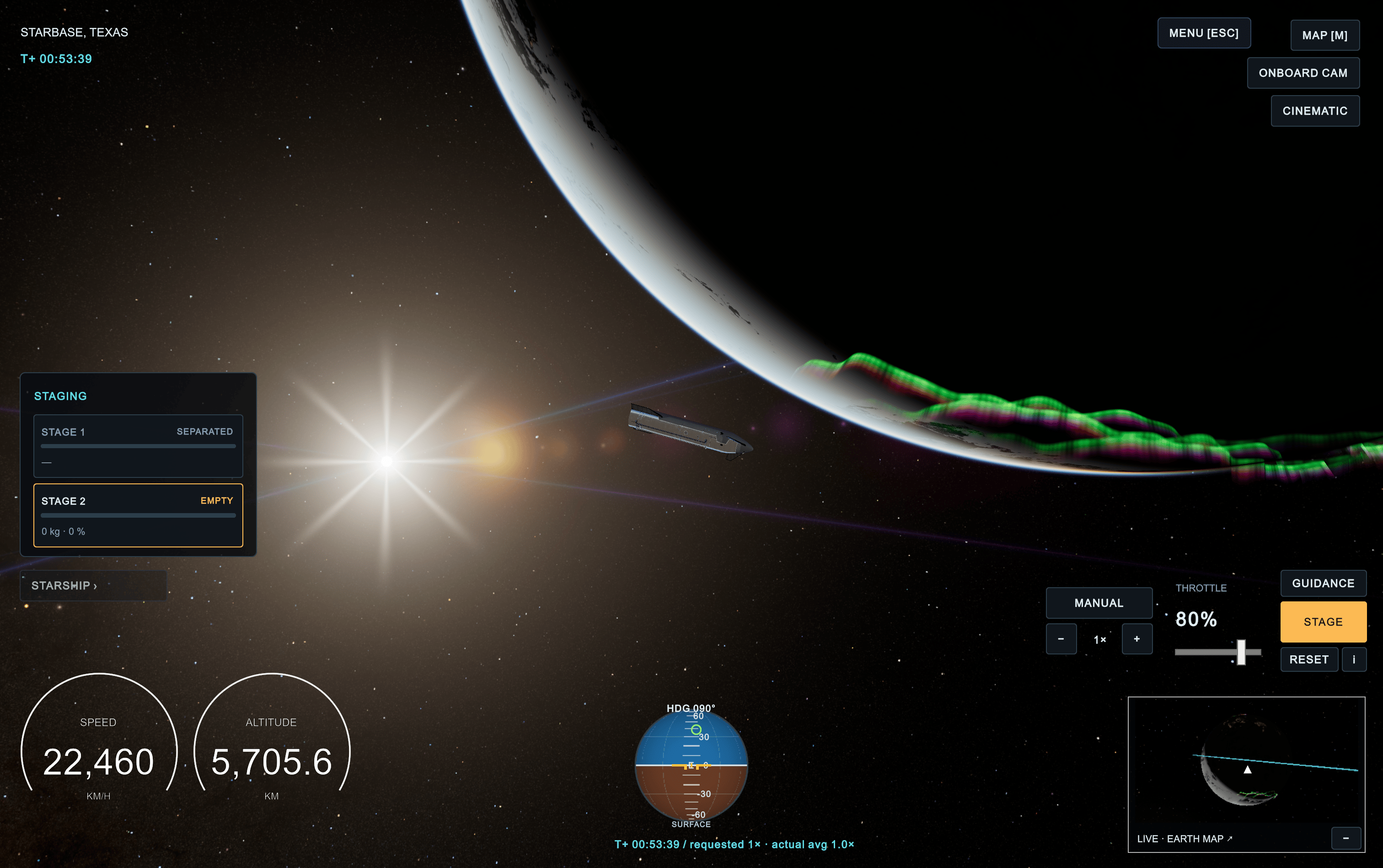
Earth includes a day/night cycle, geographically aligned city lights, NASA surface imagery, observed cloud coverage, and a real Milky Way background. Atmospheric scattering, solar glow, lens flare, and reentry plasma effects add visual detail. Cameras, a draggable telemetry panel, GUI scaling, and an in-game tutorial help players explore the simulation.
City lights use NASA’s historical Black Marble imagery. Clouds show dated observations rather than an instantaneous global weather photograph. Weather profiles can inform flight conditions, and offline visual and atmospheric fallbacks keep the game usable without network access.
How we built it
We built ESP in Unity with the Universal Render Pipeline and C#. A separate flight core maintains double-precision state in physical units, with explicit Earth-fixed and inertial reference frames. Rendering uses local, camera-relative coordinates so a planet-sized world can coexist with a detailed launch scene.
We used Blender for asset work and integrated NASA imagery with geographic alignment, compressed runtime textures, and mipmaps. Night lighting responds to the Sun’s position, while cloud coverage attenuates city lights. Weather integration uses NASA GEOS and Open-Meteo with freshness checks and fallback behavior. A shared NASA space-weather feed keeps API credentials out of downloadable builds.
Lunar guidance searches trajectories against a moving Moon, then executes finite burns through the flight simulation. Lower-thrust vehicles required additional work to account for burn duration, fuel consumption, and attitude changes.
GitHub Actions builds macOS and Windows packages in parallel, reuses Unity import caches, runs automated checks, and attaches downloadable packages to releases. We released v0.4.1 with a macOS DMG, Windows installer, portable Windows ZIP, and checksums.
Challenges we ran into
The biggest challenge was joining several scales: a rocket on a launchpad, a full-size Earth, and an astronomical sky. Coordinate precision, reference frames, texture memory, and lighting all needed careful handling.
Guidance also exposed the difference between a predicted trajectory and a flight that actually works. SLS’s long departure burn diverged from an instantaneous-burn approximation. We addressed that by raising its parking orbit and refining departure targeting with finite-thrust simulation. Starship’s final approach needed similar attention so it would brake before the tower instead of overshooting and returning.
Another challenge was distinguishing live data from the latest available observations. We added timestamps and fallback behavior so the interface could communicate what the data represents. Packaging introduced its own problems, including expensive asset imports and intermittent runner setup failures.
Accomplishments that we're proud of
We shipped downloadable desktop packages and tested the actual published macOS DMG on our Mac Studio setup, including installation, Metal rendering, ascent, reset, and map behavior.
Our automated lunar regression matrix completed eight missions across different vehicles, dates, and inclinations. Both SLS lunar maneuvers also passed with a smaller burn timestep. We checked cancellation, insufficient fuel, missed encounters, and safe return behavior, alongside the existing Starship catch regressions.
We’re also proud of bringing geographically aligned city lights, observed clouds, planetary views, and NASA sky imagery into one playable experience. After release, we fixed a coordinate-ordering issue that caused separated boosters to visibly jump and included that correction in v0.4.1.
What we learned
A convincing space simulator depends on consistency between physics, rendering, and data. Accurate units and coordinate systems matter as much as visual detail, and an attractive predicted path is not proof that a vehicle can fly it.
We learned to distinguish compilation, automated simulation tests, editor playtests, and installed-package testing. Each catches different problems. We also learned to make approximations and data limitations visible rather than implying more accuracy or freshness than we had verified.
What's next for ESP
With v0.4.1 released, our priorities are broader player testing, especially interactive Windows testing, and improving performance, terrain presentation, and mission feedback.
We want to refine vehicle and propellant models, expand lunar guidance across more starting conditions, improve weather coverage, and make longer missions easier to understand and navigate.


