-
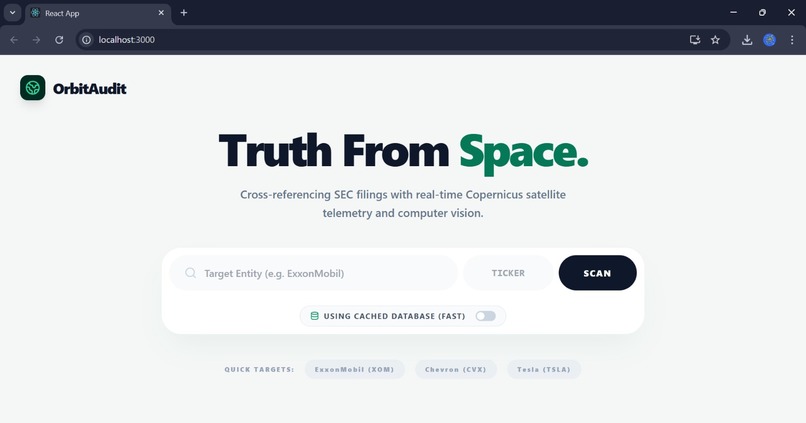
Main page
-
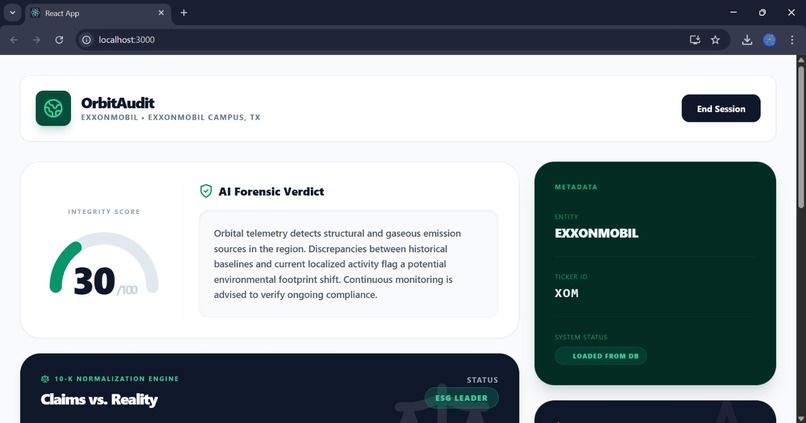
Company analytics, trust score and prediction model
-
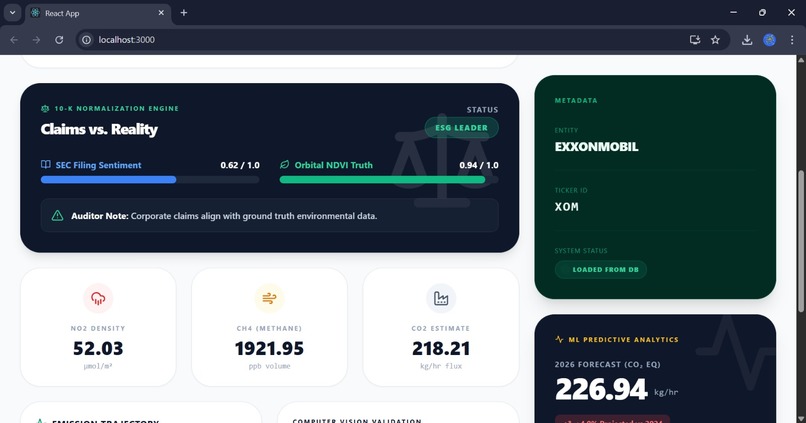
Company analytics, trust score and prediction model
-
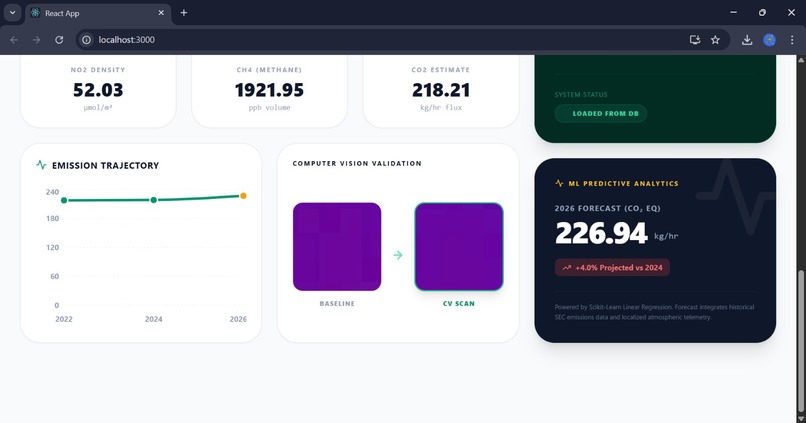
Company analytics, trust score and prediction model


Inspiration
We built OrbitAudit because, honestly, trying to figure out if a company is actually "green" is a nightmare. Most corporate sustainability reports feel like marketing fluff, and the real data is buried in messy government databases that don't talk to each other. We wanted to create a "Trust Score"—basically a credit score for the environment—so investors and regular people can see through the greenwashing and know exactly what a company’s footprint looks like before they put their money or trust into it.
What it does
OrbitAudit is a transparency engine that audits the integrity of environmental claims by comparing what a company says to what the data actually shows. The platform pulls official emissions data and financial filings to generate a 2030 forecast, then cross-references that with satellite imagery to see if the physical reality on the ground matches the numbers. It assigns every facility a "Trust Score," giving B2B partners and ESG investors a clear signal on whether a company is a safe long-term bet or an environmental liability.
How we built it
The tech stack is a mix of high-level orbital data and ground-level math. We integrated the Google Earth Engine (GEE) API and OpenCV to scan satellite imagery for physical facility verification. We then pulled official climate disclosures via the U.S. SEC to normalize local emissions against corporate-wide financial filings. All of this data is fed into the Gemini 1.5 Flash API, which acts as the "brain" to synthesize the satellite insights and mathematical trajectories into professional, one-click audit reports.
Challenges we ran into
The biggest headache was definitely "Data Silos." Getting the SEC's financial records to line up with the EPA’s emissions data and GEE's satellite pixels was a massive technical challenge because every agency names facilities differently. We had to write a ton of custom cleaning scripts just to get the databases to speak the same language. On top of that, managing API quotas for Gemini while processing these massive datasets forced us to get really efficient with our prompt engineering.
Accomplishments that we're proud of
We’re hyped that we actually managed to create a working "Trust Score" that isn't just a random number. Seeing the system successfully flag anomalies—like when a company claims to be "downsizing" while the satellite data shows their factory footprint is actually expanding—was a huge win for us. We successfully turned a mountain of boring, fragmented government data into a sleek, visual dashboard that anyone can understand in seconds.
What we learned
The main thing we learned is that data is basically useless without context. A million tons of emissions means nothing if you don't know the industry average or the company's actual physical scale. We learned how to bridge the gap between "Environmental Science" and "Financial Analysis," proving that you need a 360-degree view—combining satellite, financial, and emissions data—to actually verify if a company is telling the truth.
What's next for ESG transperency and verification platform (gemini powered)
Moving forward, we want to take this Gemini-powered verification even further by integrating real-time supply chain tracking. We’re looking at adding predictive "Risk Alerts" that notify investors the moment a facility's satellite footprint or SEC filing deviates from its stated carbon-neutral path. Ultimately, we want OrbitAudit to be the global standard for ESG verification, making greenwashing impossible by keeping every corporate claim visible from orbit.


Log in or sign up for Devpost to join the conversation.