-
-
Modernize Financial Institutions for Sustainable Lending
Inspiration
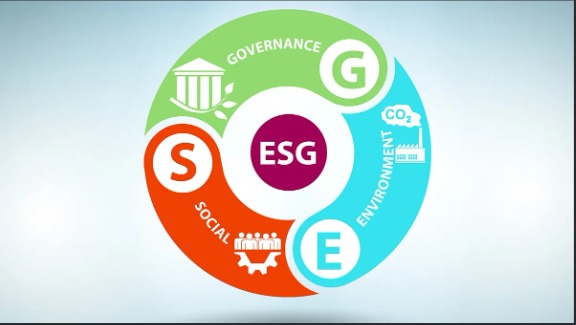
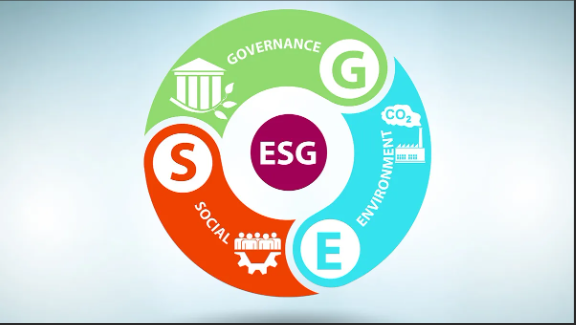
If there is a high priority corporate agenda across industries that most leaders agree upon, it is around investments in ESG (Environmental, Social and Governance). The financial services industry has a huge role to play in enabling this change. Bank’s focus in this space is being driven not only by their internal sustainability agenda but also by way of demands from their customers, regulators, industry groups, colleagues and investors. They can not only bring in the capital but also motivate their customers to adopt sustainable work practices by leveraging the all-important concept of ESG risk within banks risk management frameworks.
By 2050, the ESG financing and investment market is predicted to be at a $50 trillion or more figure as per analysis from Whiteshield based on data from Bloomberg, Sustainalytics etc." Hence it is no surprise that the globe spend on ESG data / analytics is set to increase from $2.2 billion in 2020, to $5 billion in 2025 as per a recent Burton - Taylor report"
This presents a huge opportunity for Banks and Financial Institutions, as
- Approx. €1,100 B of yearly investments needed by companies and customers to fulfill GHG targets
- Approx. 90% of European companies have a need for transition towards a more sustainable model.
- In order to address such investments, roughly €28 B per year – for the next 10 years – will be added to European banks’ revenue pool
It is important for banks and financial institutions to understand, manage and quantify ESG risks, establish framework to identify the risks, identify the exposure of their portfolios to ESG risks and develop a strong risk management framework to mitigate ESG related risk.
Unfortunately, banks are struggling to find concrete systems that can track and assess ESG risks for their customers, rate customers on the ESG risk exposure and risk management, highlight the extent of ESG risk that their portfolio are exposed to help in re-balancing of their portfolio, identify opportunities for investments and revenue generation.
What it does
Our solution enables banks to build a single risk (ESG) view of the customer by capturing customers ESG disclosures from their Annual Reports, Sustainability reports, Govt/NGO websites, Press releases and banks internal documents with help of Intelligent Document Processing and NLP solution.
The single risk (ESG) view of customer is then leverage by our AI/ML models to come up with ESG ratings of customer. The final ESG Rating, is a weighted average of individual Environmental, Social and Governance Pillar Score, that is normalized relative to ESG Rating industry peers.
This ESG rating is then fed into our Probability of Default (PD) model, to access the impact of ESG risks on the re-payment ability of the customer, identify the risks that the bank is exposed to the and help them taken appropriate mitigation plans (high interest rates to cover the risk of default, re-structure existing loan or exit the relationship if the risk is beyond threshold).
For the Hackathon, the scope is to build develop a Probability of Default (PD) model that considers the ESG rating of the customer and predicts the probability of default
How we built it
To build the project, we have utilized Azure Data Lake services where the data flow happens from various banking source systems which is then integrated with Azure ML studio (Visual Studio Code) for model build and test. Power BI has been used for creating dashboards. We tried a collation of Machine Learning models. After training and validating the models over several performance metrics, we have found the best performing model that suits the dataset and therefore used it as our probability to default model.
Challenges we ran into
- Data management is one of the key challenges. Data is captured in silos across the business or kept in spreadsheets, which makes it difficult to consolidate for reporting and decision making.
- There are no uniform requirements for reporting ESG information, and many environmental and social impacts are hard to measure. So, the data inputs that we start with are fundamentally less structured, less complete and of lower quality.
- Poor data quality, inconsistent and unreliable data leads poor reporting and wasted time and effort.
- Without access to consolidated, accurate data, it is difficult to monitor and manage performance and to track the effectiveness of improvement initiatives.
Accomplishments that we're proud of
We have identified the key problems that will be faced by banks and financial institution around ESG compliance/regulations and opportunities that the problems present.
Our point of view and solution helps banks and financial institutions to overcome key challenges around
- data management by creating a single risk (ESG) view of the customer
- leveraging unstructured data with help of Intelligent Document Processing (IDP) and RPA solution
- measuring ESG performance, through a robust ESG rating model
- accounting for ESG risks in the corporate lending process, through a Probability of Default (PD) model that considers the ESG rating, along with the usual credit rating and financial performance of the corporates, to determine the Probability of Default. It can also be extended to determine the “Loss given Default (LGD)”
What we learned
Our research and studies show that
- ESG financing and investment market is predicted to be at $50 trillion or more, by 2050.
- More than 300 global ESG regulations in place
- ESG data spend exceeded $1 billion in 2021 with 60% being in Europe
- Clear link between ESG & Financial Performance
We got our point of view and our solution validated by some of large banks that we work with and got a confirmation that we are solving the key challenges that will be faced by banks and financial institutions in complying with ESG regulations and in helping banks identifying ESG risks that they are or will be exposed to, helping the take appropriate mitigation plans and also identify opportunities for investments and revenue generation.
What's next for ESG impact on Credit Risk for a Bank
Now that we have developed of MVP1, the PD model that considers ESG rating, our MVP2 is to develop the single risk (ESG) view of customer, by capturing ESG data of customer from various reports and websites by leveraging Intelligent Document Processing capabilities using Power Platforms, RPA. Once the single risk (ESG) view of customer is established then our MVP3 is to build an ESG rating model (powered by AI/ML). For these components, we plan to use Microsoft Cloud for sustainability (#BuildFor2030 skilling library).
Built With
- azuremlstudio
- datalake
- microsoft365
- powerbi
- python
- visual-studio


Log in or sign up for Devpost to join the conversation.