Inspiration
Small and medium businesses face a critical challenge: ESG compliance costs $10K-$50K per report, requires specialized expertise, and involves navigating complex regulations across multiple jurisdictions. Most SMBs can't afford dedicated sustainability teams, leading to:
- Manual data collection taking weeks
- Missed compliance deadlines
- Incomplete or inaccurate reports
- Risk of regulatory penalties
The inspiration: What if AI agents could autonomously handle the entire ESG compliance workflow - from researching regulations to generating framework-compliant reports - making sustainability accessible to businesses of all sizes?
What it does
ESG Copilot is a multi-agent AI system that automates end-to-end ESG compliance:
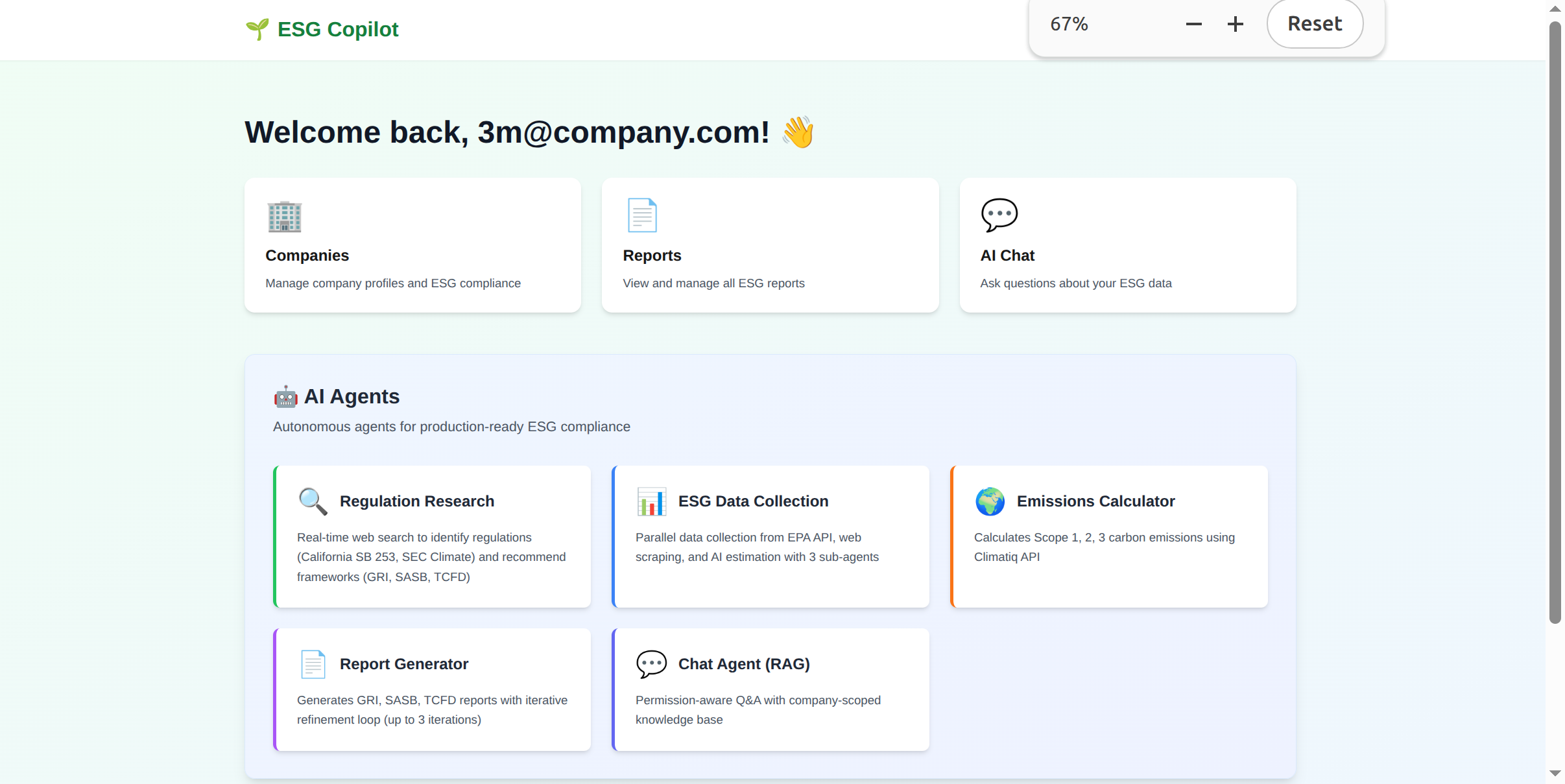
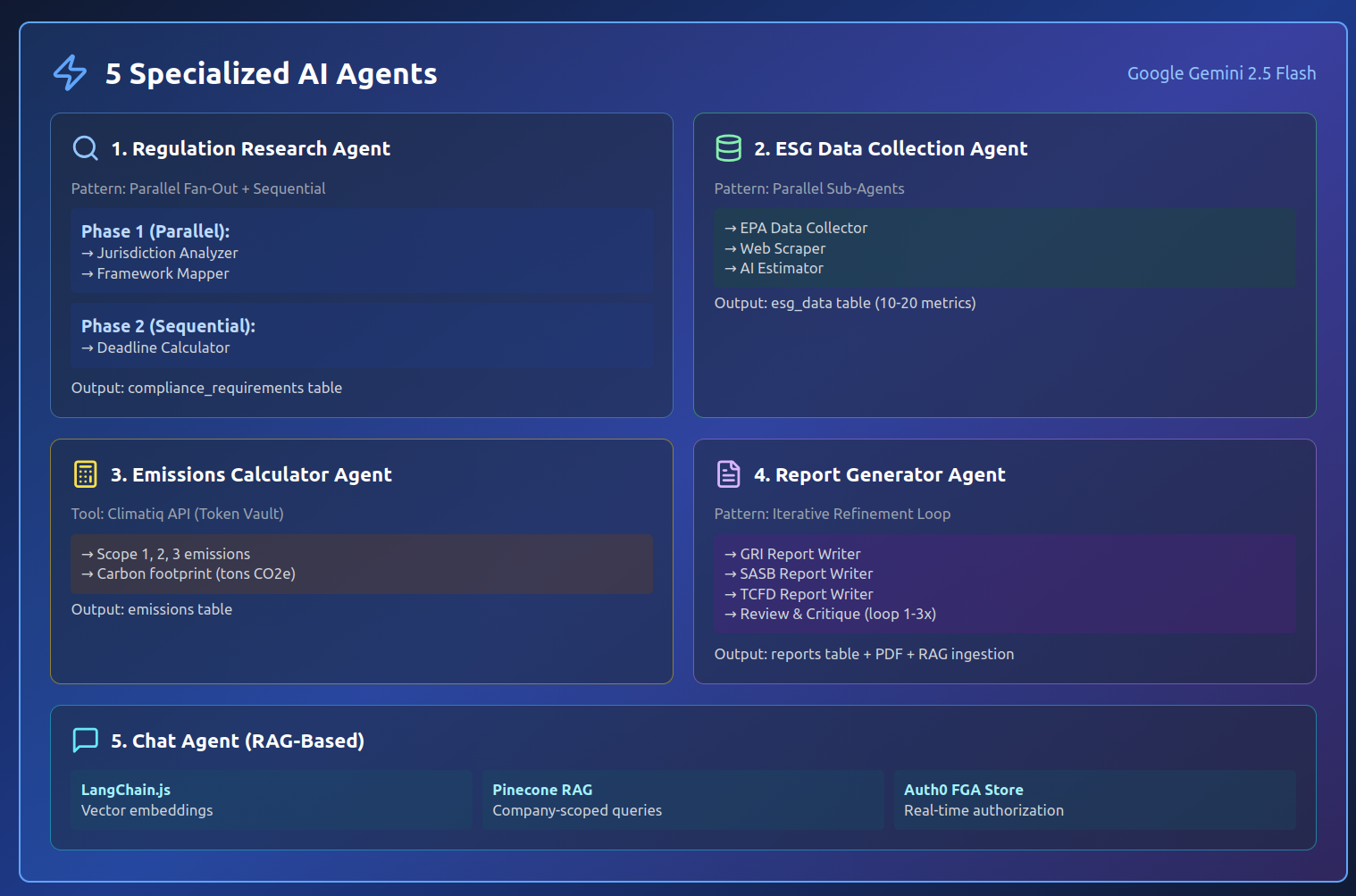
5 Specialized AI Agents:
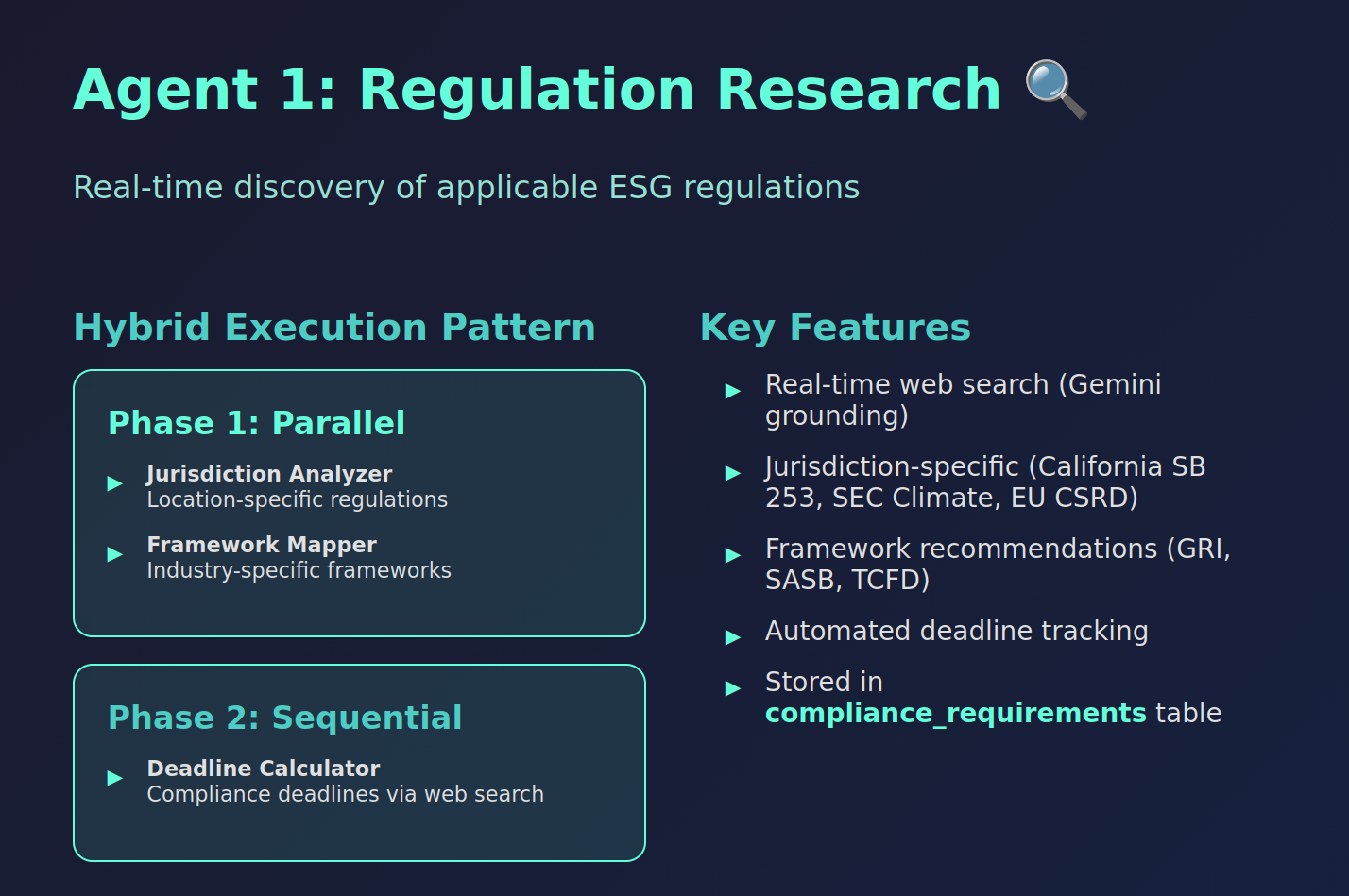
Regulation Research Agent (with 3 sub-agents)
- Analyzes company location, industry, size
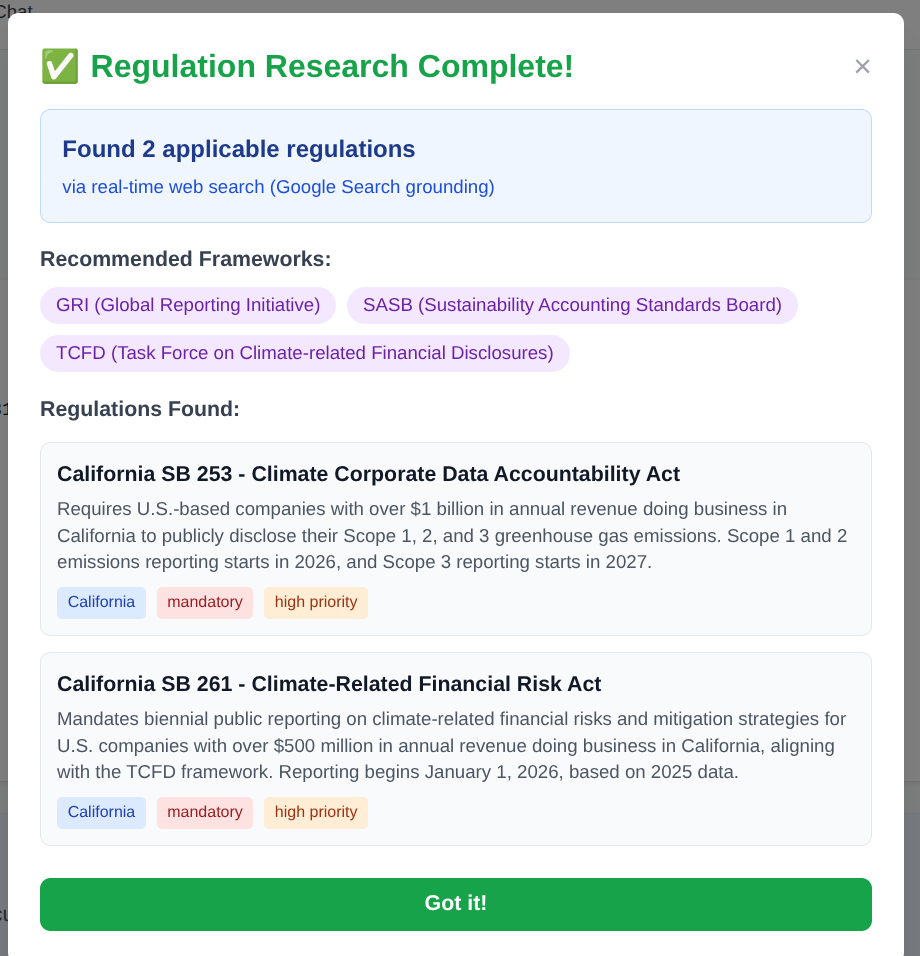
- Performs real-time web search for applicable regulations
- Identifies jurisdiction-specific requirements (California SB 253, SEC Climate, EU CSRD)
- Calculates compliance deadlines
- Sub-agents: Jurisdiction Analyzer, Framework Mapper, Deadline Calculator
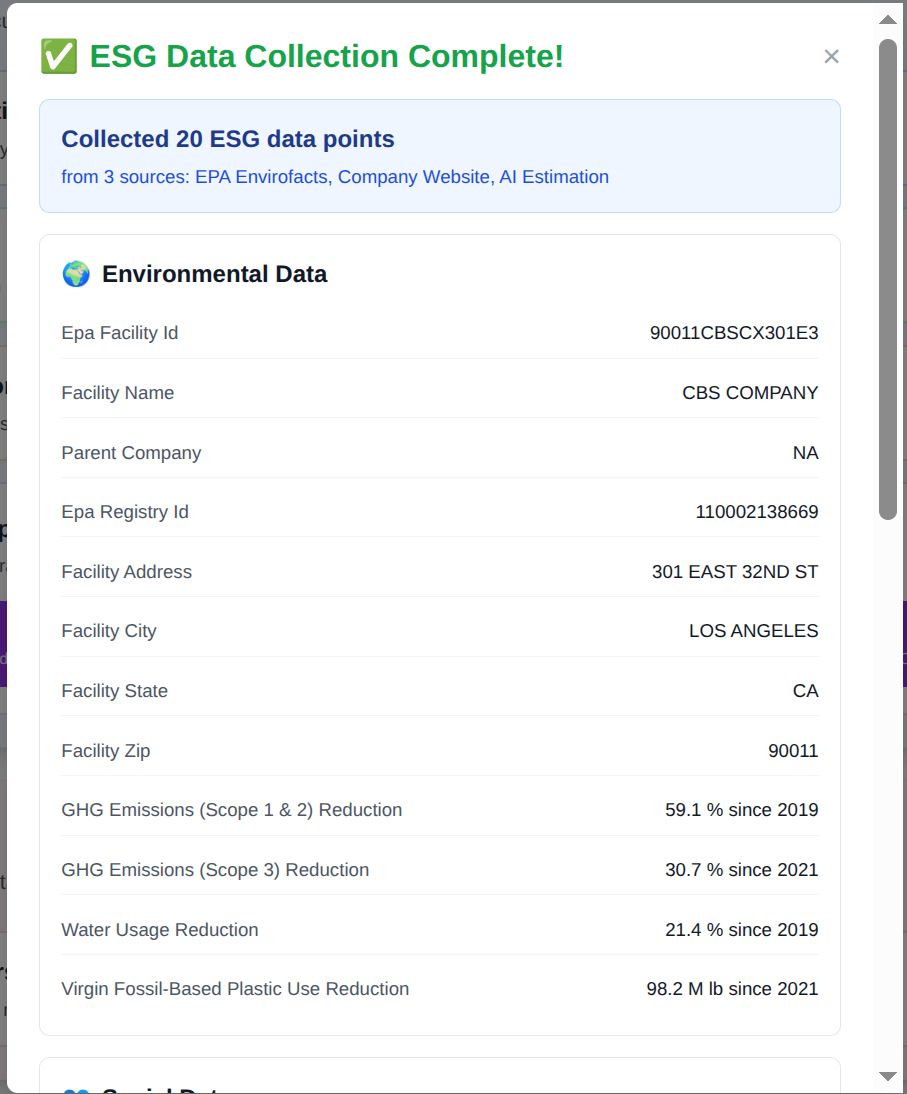
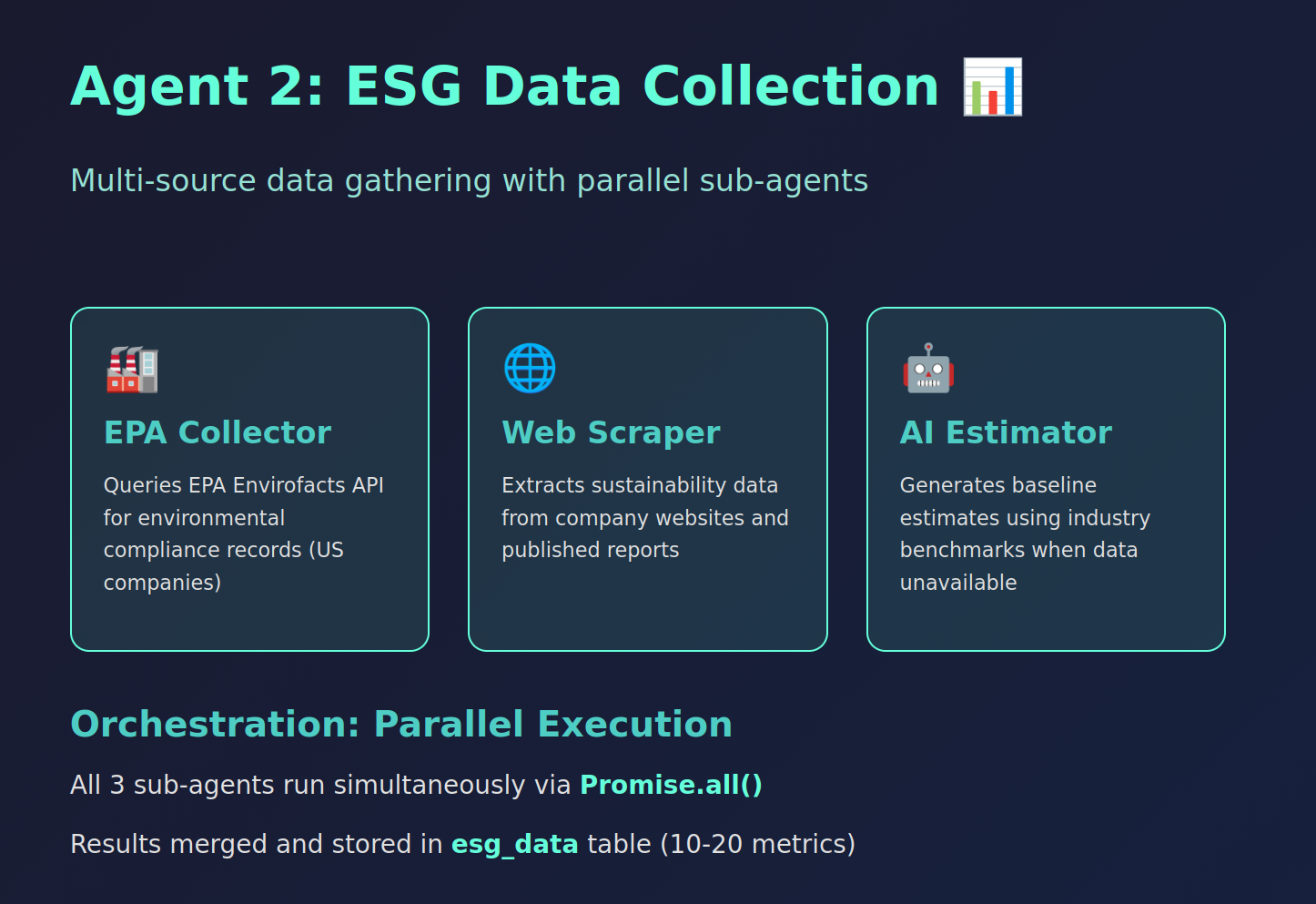
ESG Data Collection Agent (with 3 sub-agents)
- Queries EPA Envirofacts API for environmental data
- Web scrapes company sustainability pages
- AI estimates missing metrics using industry benchmarks
- Sub-agents: EPA Collector, Web Scraper, AI Estimator
- Parallel execution: All 3 sub-agents run simultaneously
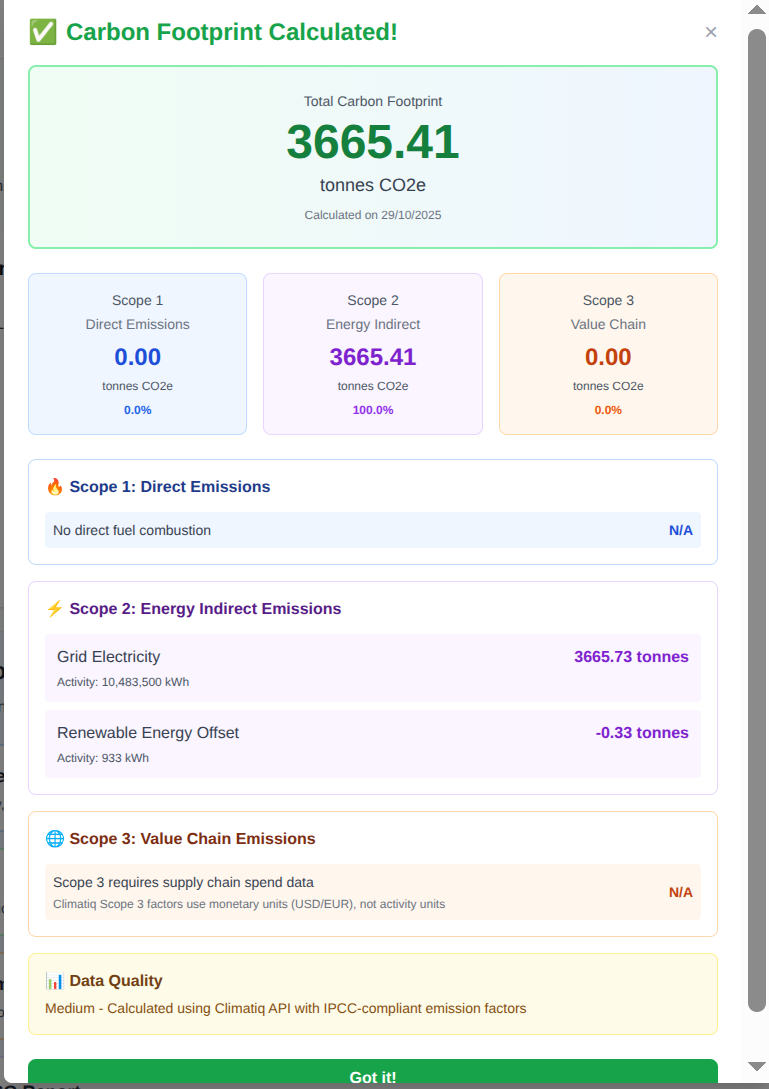
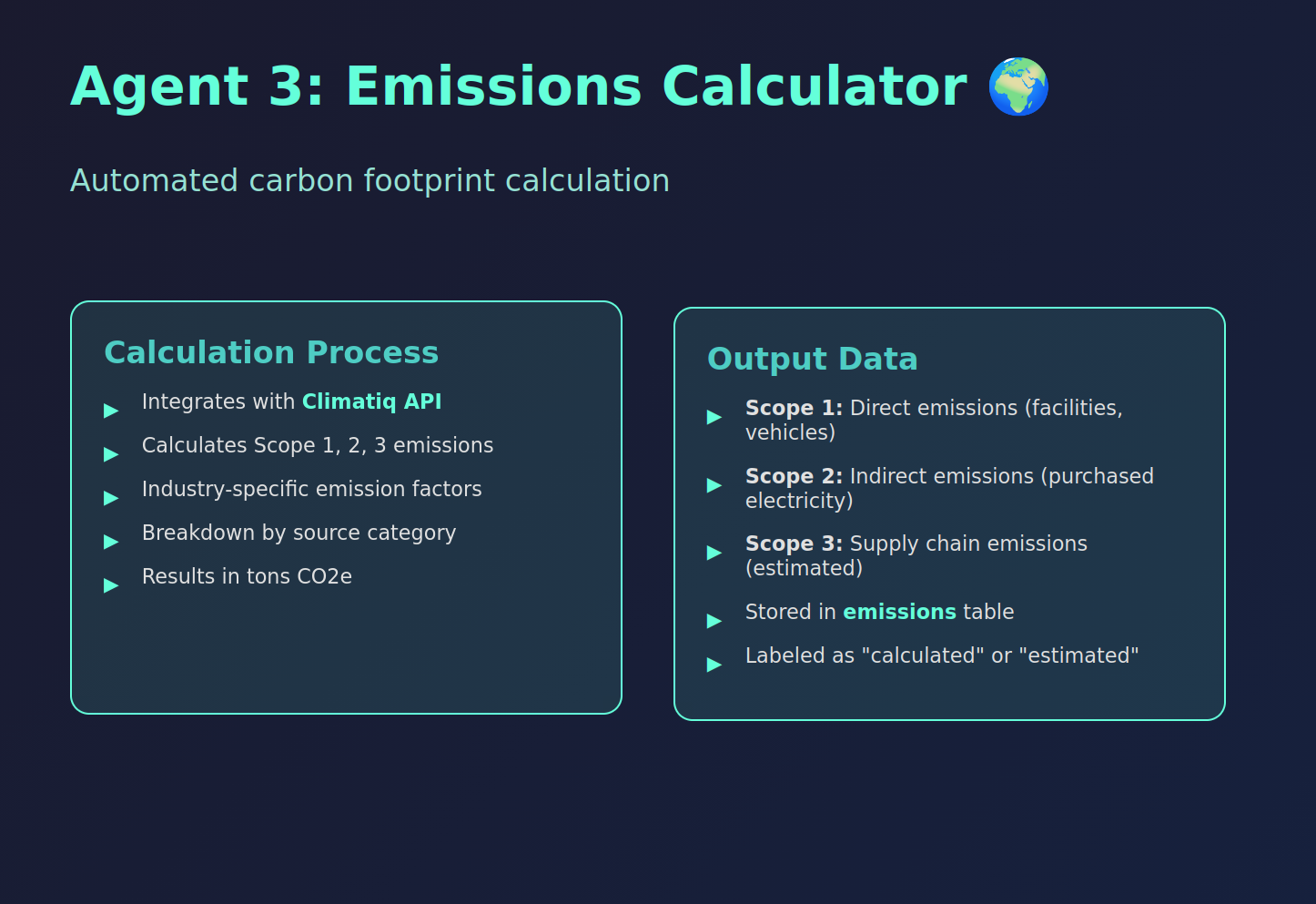
Emissions Calculator Agent
- Calculates Scope 1, 2, 3 carbon emissions
- Uses Climatiq API for emission factors
- Provides breakdown by source category
- Generates emissions trends
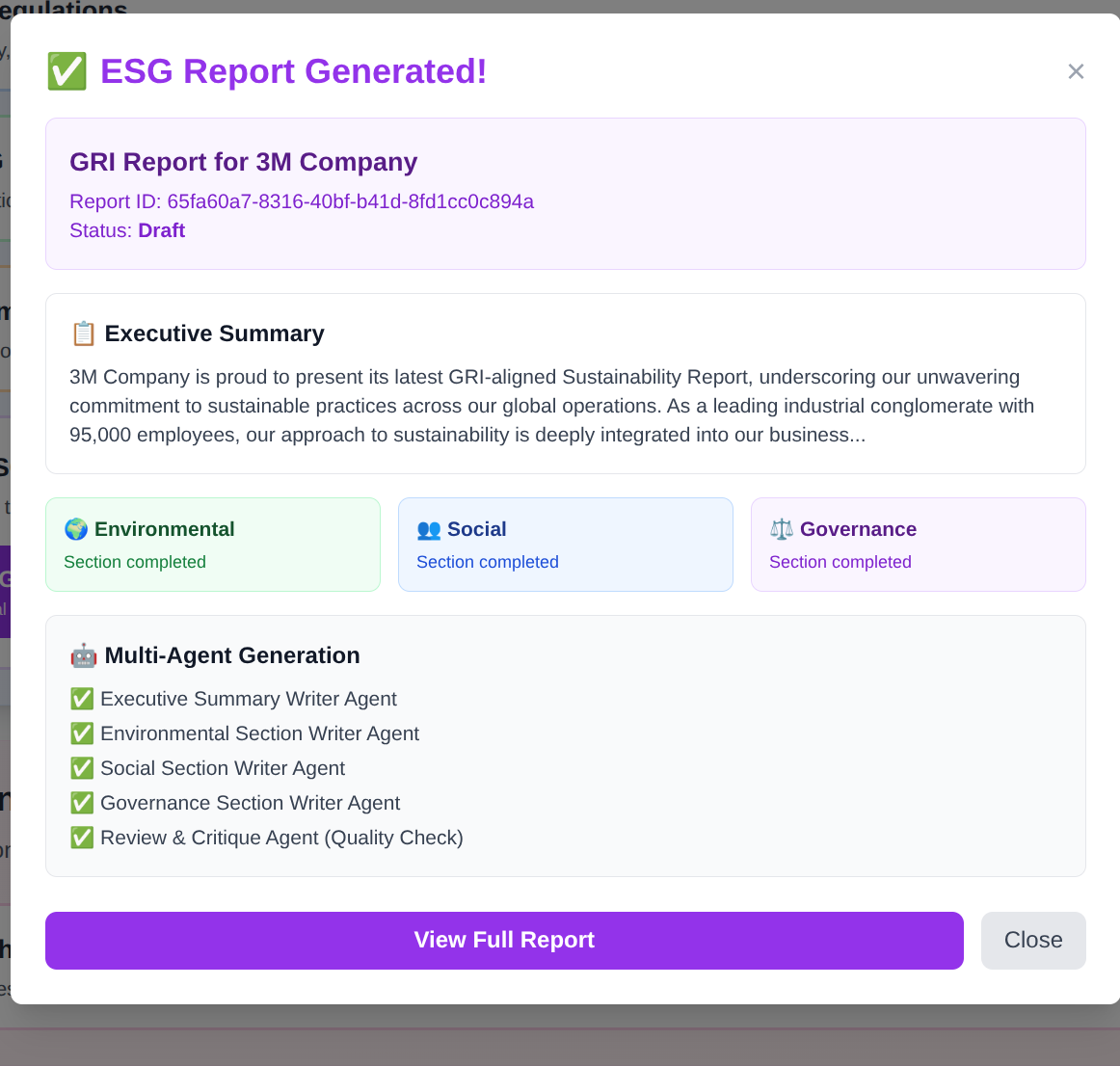
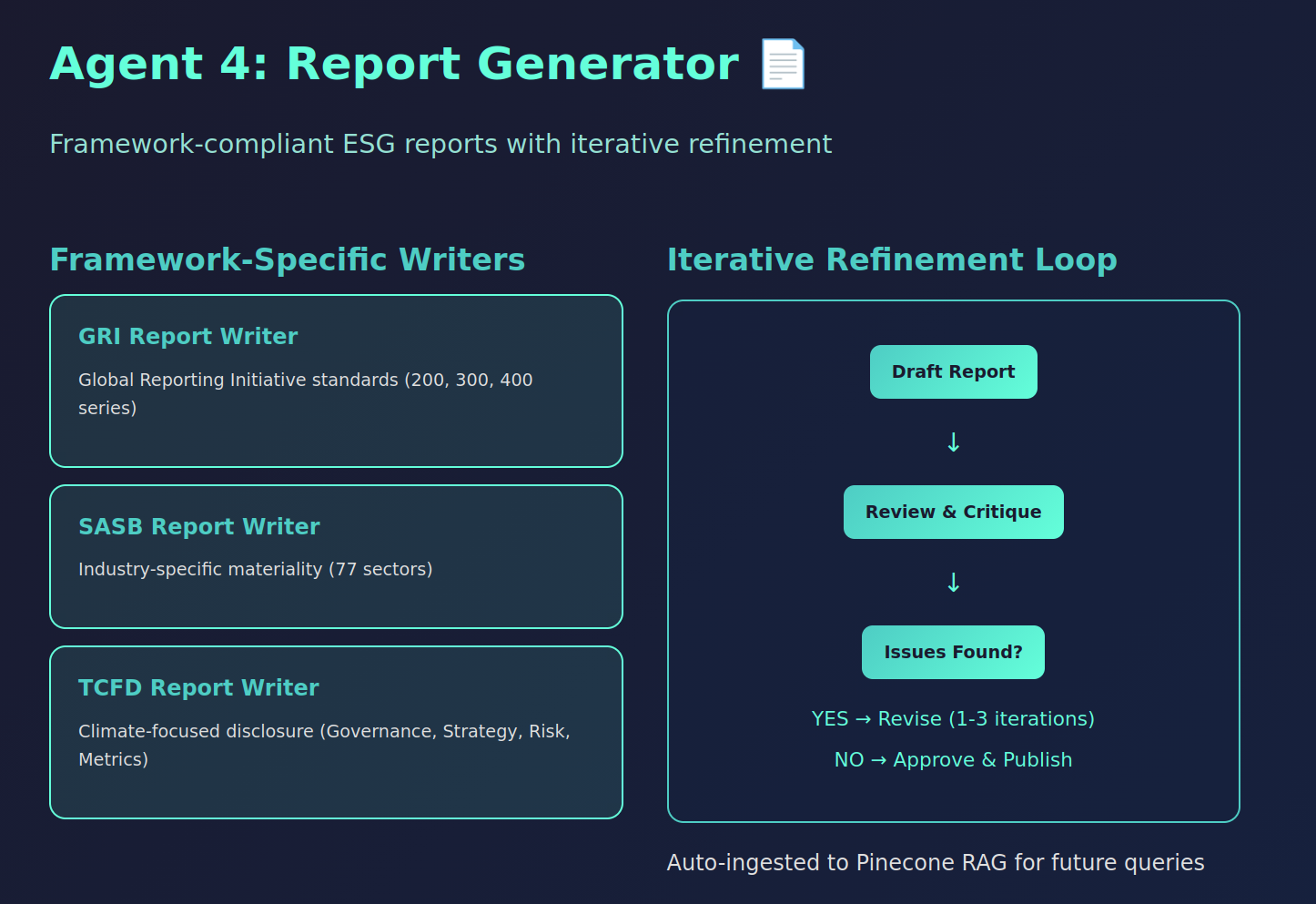
Report Generator Agent (with 4 sub-agents)
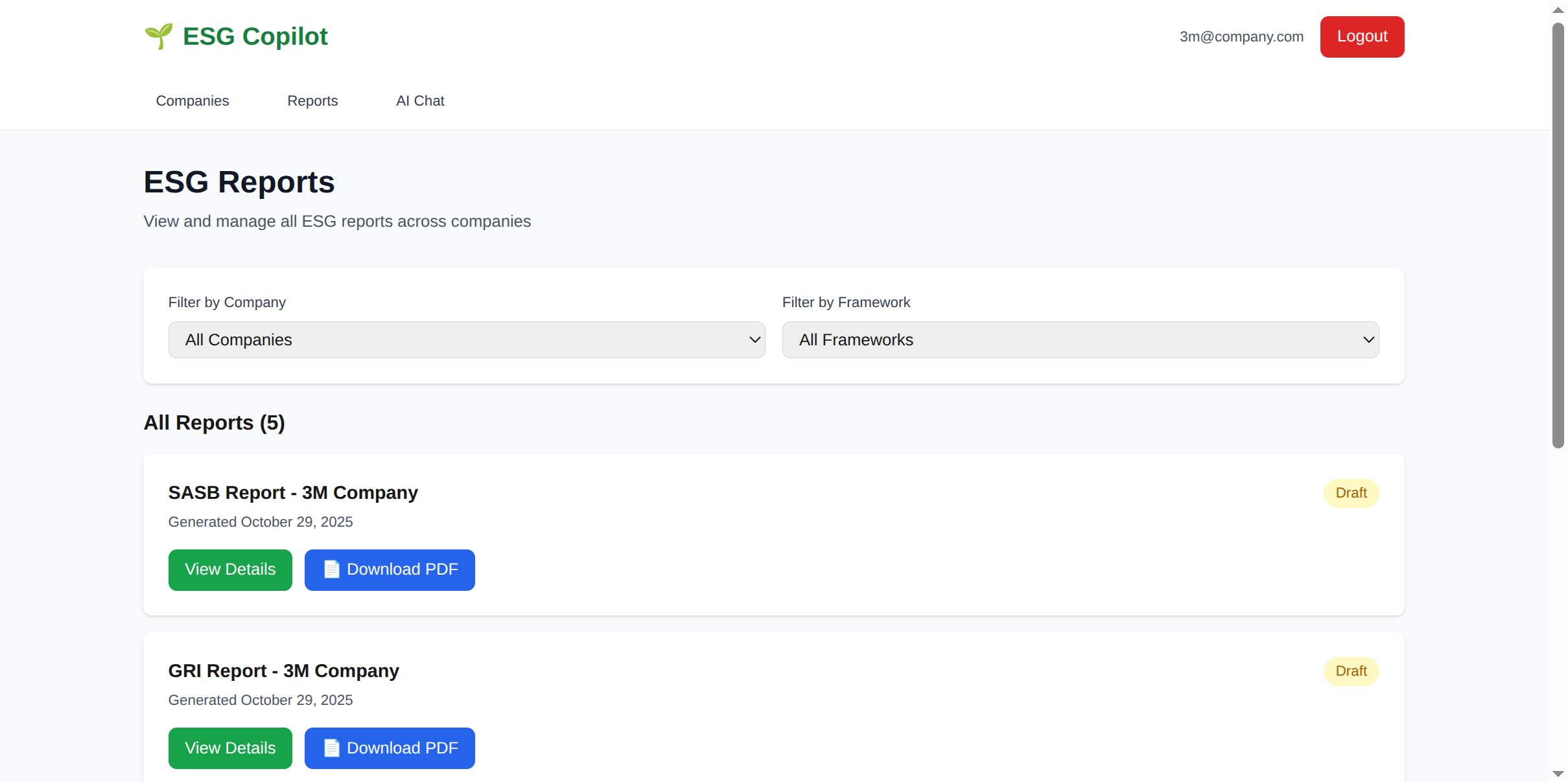
- Creates framework-compliant reports (GRI, SASB, TCFD)
- Iterative refinement: Review & Critique loop (1-3 iterations)
- Auto-generates executive summaries
- Produces downloadable PDFs
- Sub-agents: GRI Writer, SASB Writer, TCFD Writer, Review & Critique
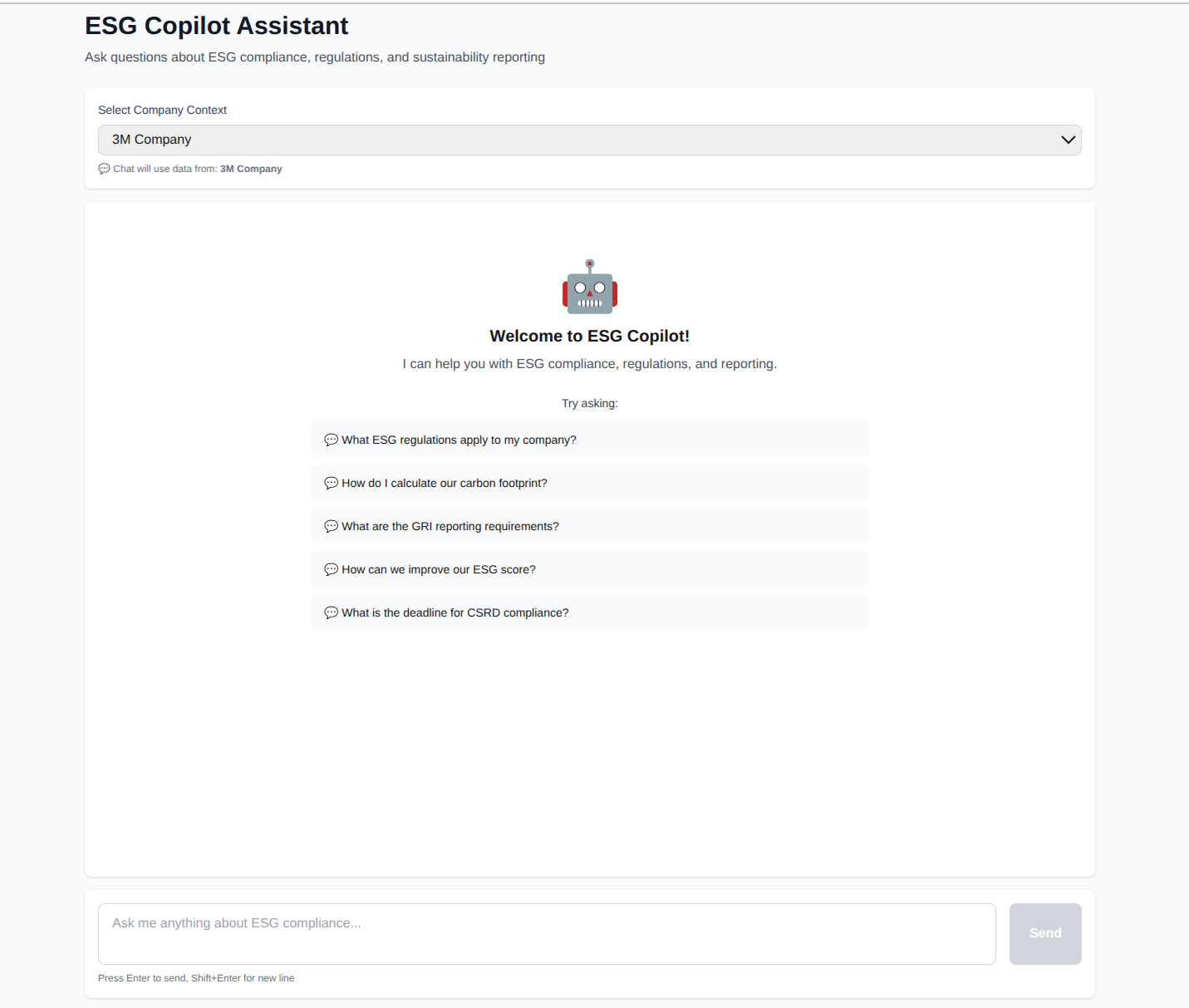
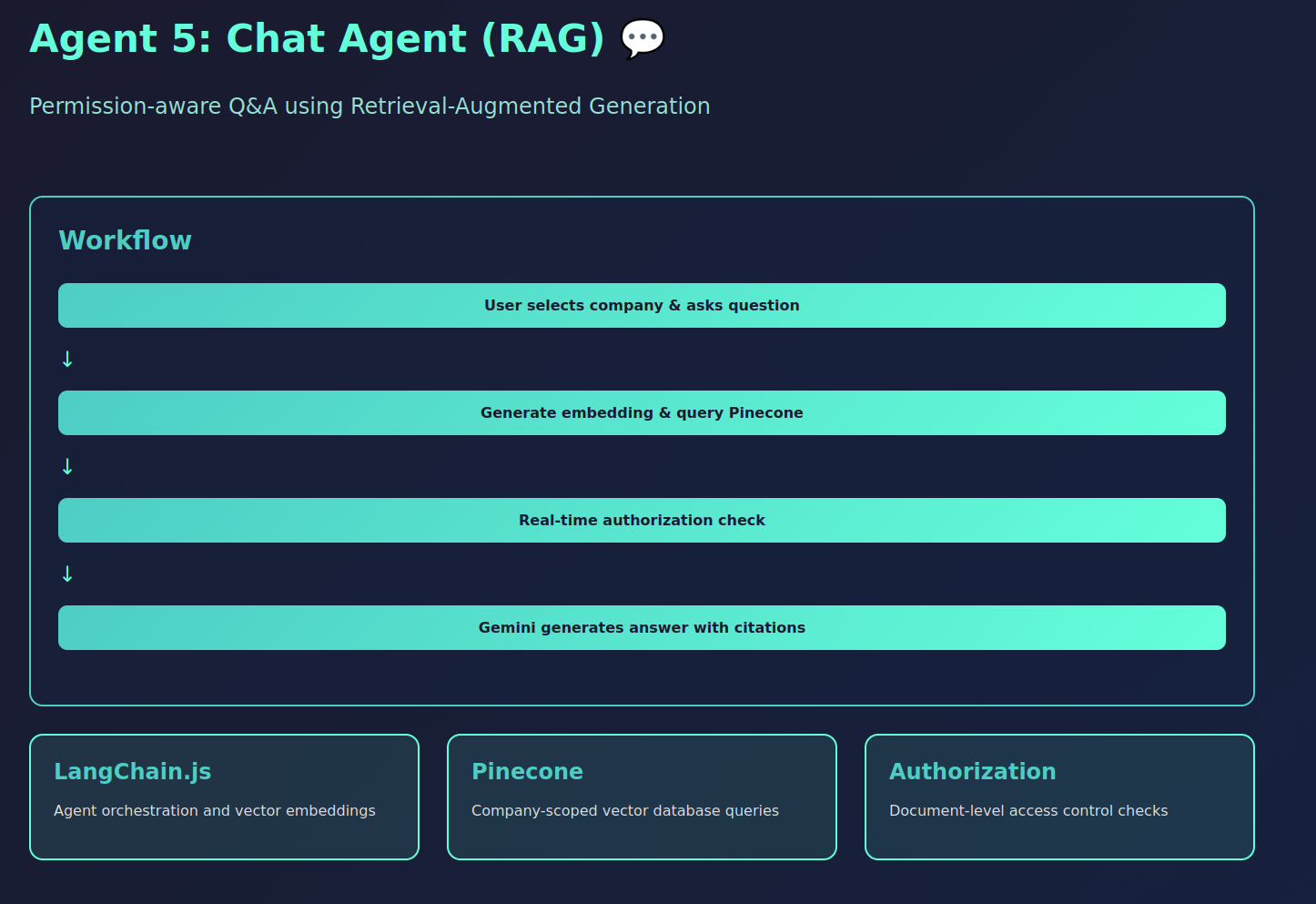
Chat Agent (RAG)
- Permission-aware Q&A using Retrieval-Augmented Generation
- Company-scoped knowledge base (Pinecone vector DB)
- Real-time authorization checks (Auth0 FGA Store)
- Answers questions about regulations, ESG data, reports
Key Features:
- ✅ Real-time web search for regulation discovery (Google Gemini grounding)
- ✅ Multi-source data collection (EPA API, web scraping, AI estimation)
- ✅ Automated emissions calculation (Climatiq API integration)
- ✅ Framework-compliant reports (GRI, SASB, TCFD standards)
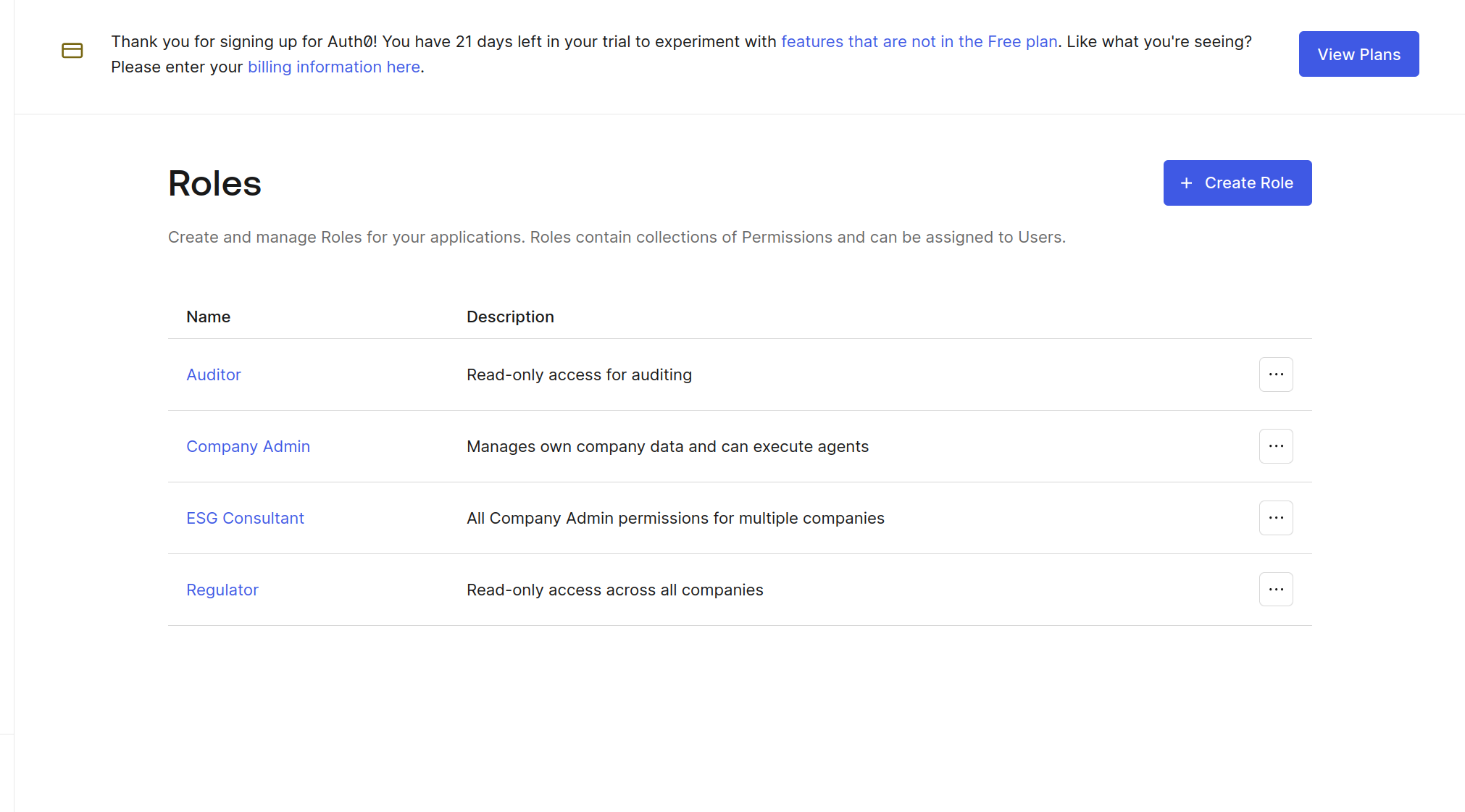
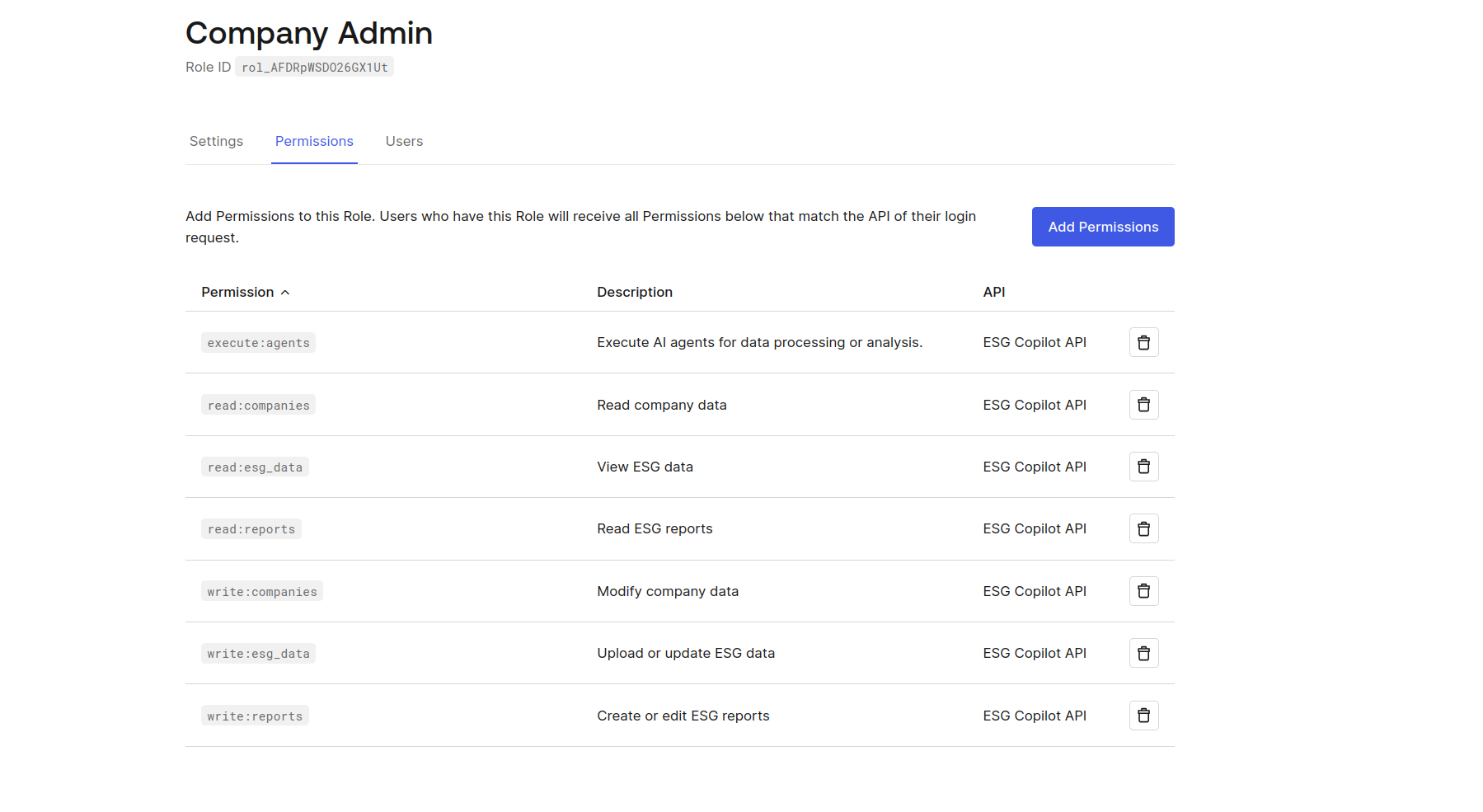
- ✅ Role-based access control (4 roles: Company Admin, ESG Consultant, Auditor, Regulator)
- ✅ Company-level data isolation (zero data leakage between companies)
- ✅ Audit logging (all agent actions tracked in BigQuery)
How we built it
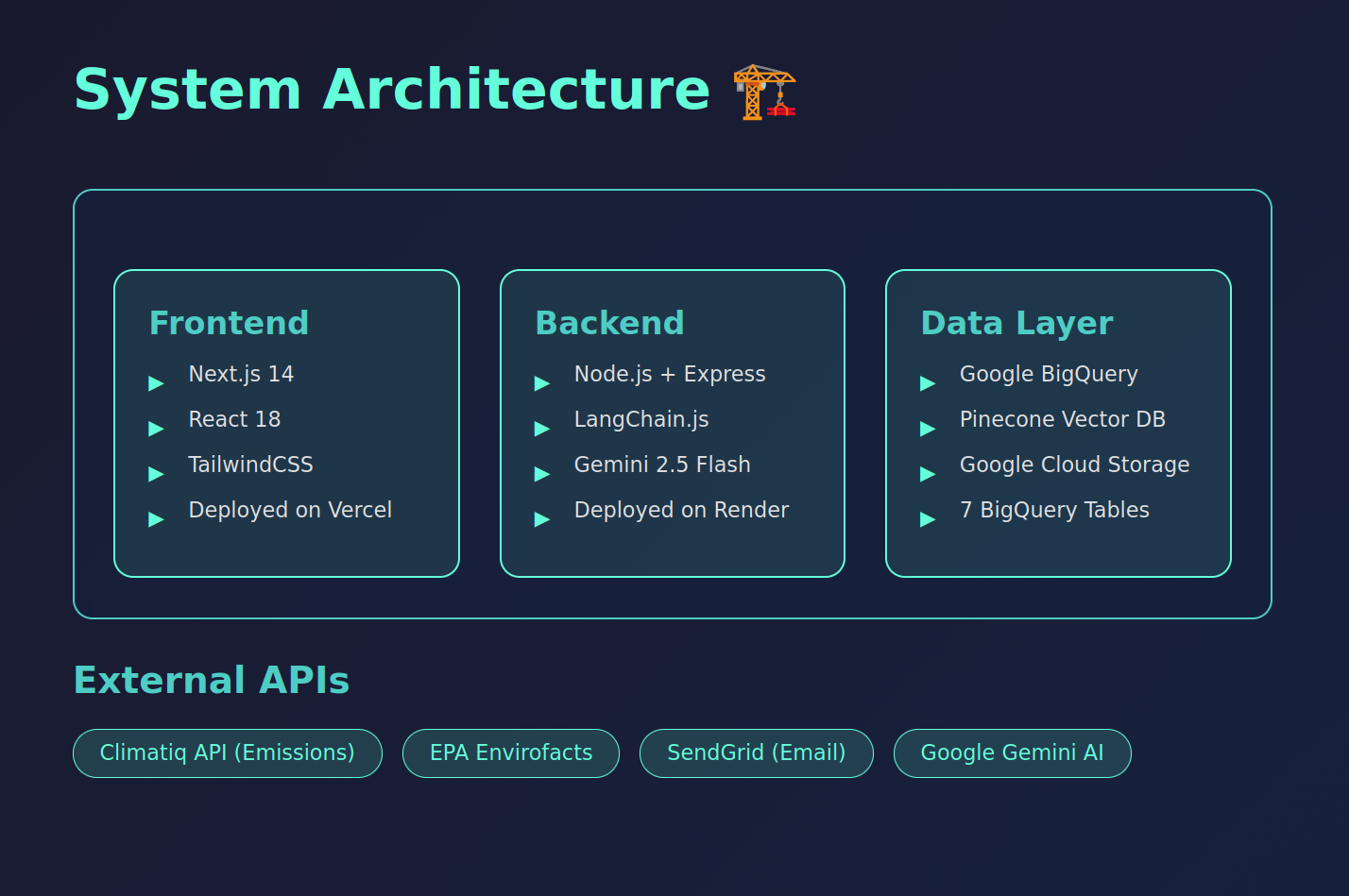
Architecture:
Frontend:
- Next.js 14 (React framework)
- TailwindCSS for styling
- Auth0 SDK for authentication
- Deployed on Vercel
Backend:
- Node.js + Express.js
- Google Gemini 2.5 Flash (LLM for agent reasoning)
- LangChain.js (agent orchestration)
- Deployed on Render
Data & Storage:
- Google BigQuery (ESG data, audit logs, reports)
- Pinecone (vector database for RAG)
- Google Cloud Storage (report PDFs)
External APIs:
- Climatiq API (emissions calculations)
- EPA Envirofacts API (environmental data)
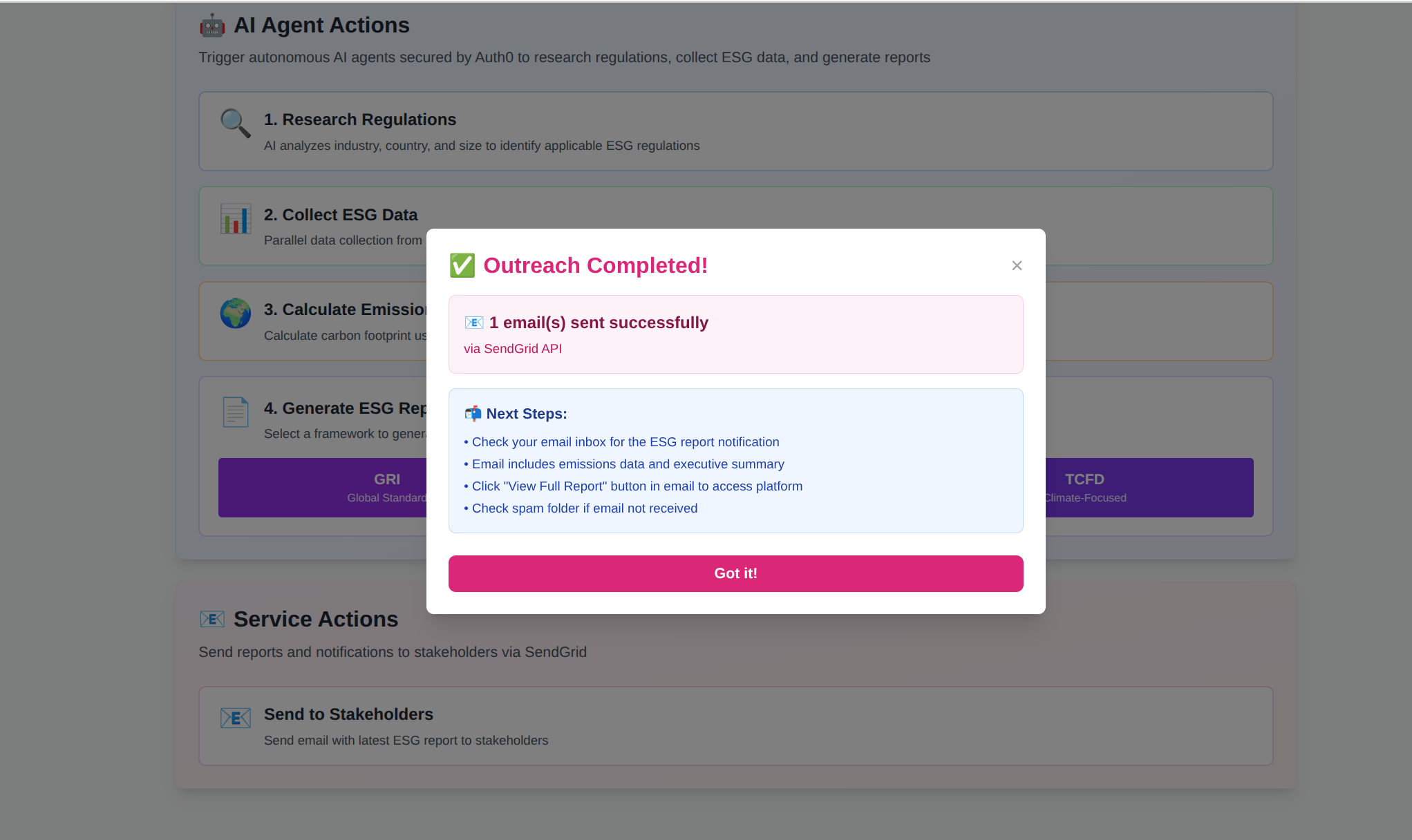
- SendGrid (email notifications)
- Auth0 (authentication, authorization, Token Vault, FGA Store)
Multi-Agent Patterns:
- Hybrid Parallel + Sequential Execution
- Regulation Research: Phase 1 runs 2 agents in parallel (Jurisdiction Analyzer + Framework Mapper), Phase 2 runs Deadline Calculator with Phase 1 results
- ESG Data Collection: 3 sub-agents execute in parallel via
Promise.all() - Results aggregated and merged
- Optimizes for both speed and data dependencies
- Iterative Refinement
- Report Generator: Review & Critique loop
- Draft → Review → Revise (1-3 iterations)
- Configurable via
MAX_REVIEW_ITERATIONSenv variable
- Service-Level Orchestration
- Main agents coordinate sub-agents
- State management via BigQuery
- Error handling with graceful degradation
Security Implementation:
- Authentication: Auth0 Universal Login with JWT tokens
- Authorization: Role-based access control (RBAC) with 9 permissions
- Token Vault: API keys injected into JWT (never hardcoded)
- FGA Store: Document-level authorization with real-time checks
- Audit Logging: Every agent action logged with user, company, timestamp
Challenges we ran into
1. Multi-Agent Coordination
Challenge: Coordinating 5 main agents + 9 sub-agents with dependencies
- Regulation Research must complete before Report Generation
- ESG Data Collection needed before Emissions Calculator
- Deadline Calculator needs regulations from Jurisdiction Analyzer
- Race conditions with parallel sub-agents
Solution:
- Service-level orchestration with clear dependency chains
- Hybrid execution:
Promise.all()for independent agents, sequential for dependent ones - Regulation Research uses 2-phase approach: Phase 1 parallel (jurisdiction + frameworks), Phase 2 sequential (deadlines)
- State management in BigQuery for tracking agent progress
- Error handling with partial success (if 2/3 sub-agents succeed, continue)
2. Real-Time Web Search Reliability
Challenge: Google Search grounding sometimes returns incomplete results
- Regulation deadlines not always available
- Jurisdiction-specific laws hard to find
- Web scraping blocked by some company websites
Solution:
- Fallback to AI estimation when web search fails
- Multiple search queries with different phrasings
- Graceful degradation (show partial results, mark as "estimated")
- Clear error messages to users
3. Company Data Isolation
Challenge: Preventing data leakage between companies in multi-tenant system
- Company Admin should only see own company data
- ESG Consultant should see all companies
- RAG must respect company boundaries
Solution:
- Auth0 FGA Store for document-level authorization
- Real-time authorization checks before every query
- Pinecone metadata filtering by company_id
- Two-layer security: Pinecone filter + FGA authorization
4. Emissions Calculation Accuracy
Challenge: Climatiq API requires specific activity data formats
- Different emission factors for different industries
- Scope 3 emissions hard to estimate
- Missing data for some emission sources
Solution:
- Industry-specific emission factor mapping
- AI estimation for missing Scope 3 data
- Clear labeling of "estimated" vs "calculated" values
- Validation against industry benchmarks
5. Report Quality & Compliance
Challenge: Ensuring reports meet GRI/SASB/TCFD standards
- Each framework has multiple disclosure requirements
- Reports must be auditable and verifiable
- Iterative refinement needed for quality
Solution:
- Framework-specific prompts for each standard
- Review & Critique sub-agent validates completeness
- Iterative refinement loop (1-3 iterations)
- Human review option before finalization
6. Deployment & Environment Variables
Challenge: Managing multiple environment variables across dev/prod
- API keys for 6 external services
- GCP service account JSON file
- Different URLs for frontend/backend
Solution:
- Auth0 Token Vault for API keys (3 keys in JWT)
- Render Secret Files for GCP credentials
- Environment-specific .env files
- Clear deployment documentation
Accomplishments that we're proud of
1. Production-Ready Multi-Agent System
- ✅ 5 main agents + 9 sub-agents working in production
- ✅ Parallel execution with fan-out/gather pattern
- ✅ Iterative refinement with review/critique loop
- ✅ Real-world use case solving actual SMB pain point
2. Zero Data Leakage
- ✅ Company-level isolation enforced by Auth0 FGA Store
- ✅ Tested with 5 test accounts across 4 roles
- ✅ Real-time authorization on every query
- ✅ Audit trail of all access attempts
3. Framework-Compliant Reports
- ✅ GRI, SASB, TCFD standards implemented
- ✅ Automated generation from raw ESG data
- ✅ PDF export with professional formatting
- ✅ Iterative quality improvement via review loop
4. Seamless Auth0 Integration
- ✅ Universal Login (no custom auth code)
- ✅ Token Vault for API key management
- ✅ FGA Store for document authorization
- ✅ RBAC with 4 roles, 9 permissions
5. Real-Time Regulation Discovery
- ✅ Web search for latest regulations
- ✅ Jurisdiction-specific (California, EU, SEC)
- ✅ Deadline calculation for compliance
- ✅ No dummy data - all real-time queries
What we learned
1. Multi-Agent Orchestration is Hard
- Coordinating multiple agents requires careful state management
- Parallel execution needs proper error handling
- Dependencies between agents must be explicit
- Service-level orchestration is cleaner than agent-to-agent communication
2. Security Must Be Built-In, Not Bolted-On
- Authorization checks at every layer (API, database, vector DB)
- Token Vault prevents API key leakage
- FGA Store enables fine-grained access control
- Audit logging is essential for production systems
3. LLM Limitations Require Fallbacks
- Web search doesn't always return complete results
- AI estimation needed for missing data
- Iterative refinement improves output quality
- Human-in-the-loop still valuable for critical decisions
4. Real-World Data is Messy
- EPA API has incomplete records
- Company websites vary widely in structure
- Emission factors differ by industry/region
- Graceful degradation is essential
5. Framework Compliance is Complex
- GRI has multiple disclosure requirements
- SASB is industry-specific (77 sectors)
- TCFD focuses on climate risks
- Each framework needs specialized prompts
What's next for ESG Copilot
- Enhanced Data Sources - Integrate CDP API, S&P Global ESG scores, ERP systems, and IoT sensors
- More Frameworks - Add ISSB, EU CSRD, BRSR, and custom framework builder
- Predictive Analytics - Forecast emissions, predict compliance risks, recommend reduction strategies
- Stakeholder Engagement - Automated surveys, sentiment analysis, materiality matrix generation
- Supply Chain ESG - Supplier risk assessment, Scope 3 tracking, vendor scorecards
- AI-Powered Recommendations - Personalized strategies, regulatory alerts, best practice recommendations
- Enterprise Features - Multi-subsidiary support, consolidated reporting, custom workflows
- Real-Time Monitoring - Redis caching, async execution, horizontal scaling, edge deployment
Try It Out
Live Demo: [Your Vercel URL]
GitHub: https://github.com/omkardongre/ESG-Copilot
Test Accounts (Password: Test@1234):
[email protected]- Company Admin (3M Company data only)[email protected]- Company Admin (Eileen Fisher data only)[email protected]- ESG Consultant (all companies)[email protected]- Auditor (read-only)[email protected]- Regulator (read-only)
Test Scenarios:
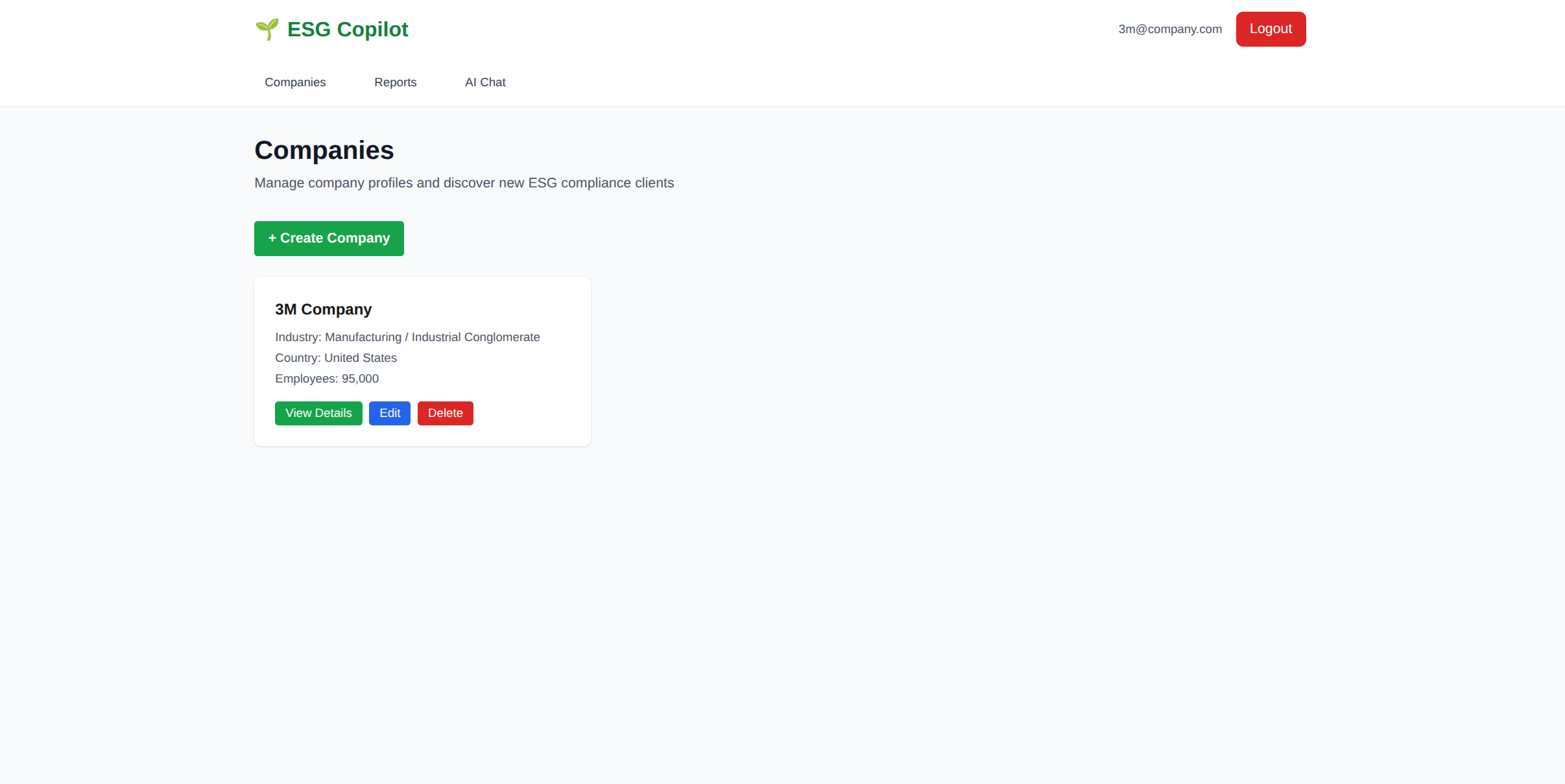
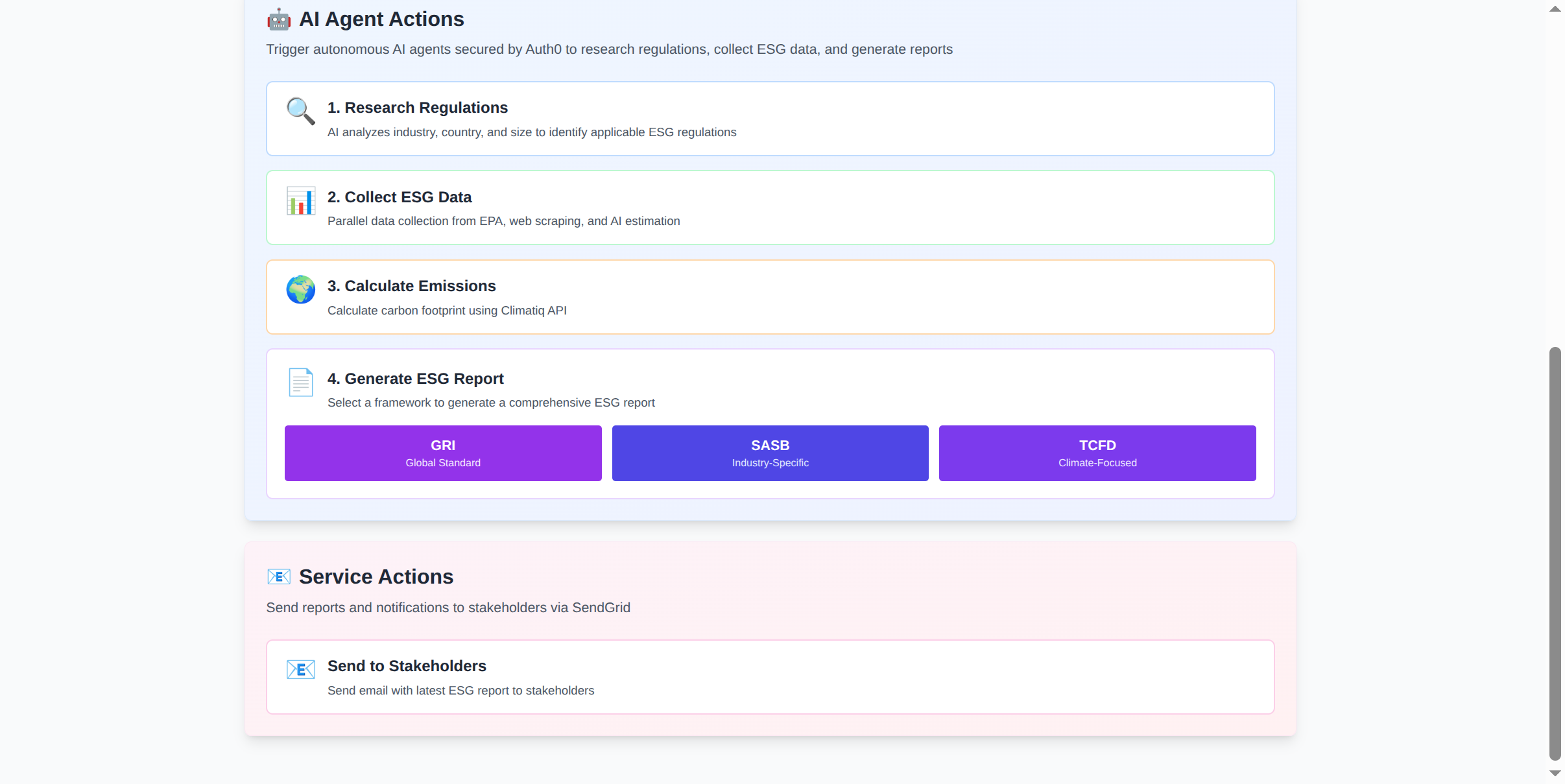
- Login as 3M Admin → Execute "Research Regulations" → See California SB 253, SEC Climate rules
- Execute "Collect ESG Data" → Watch 3 sub-agents run in parallel
- Execute "Calculate Emissions" → See Scope 1, 2, 3 breakdown
- Execute "Generate Report" → Select GRI → Download PDF
- Use Chat Agent → Ask "What are our Scope 2 emissions?" → Get company-specific answer
- Login as Eileen Fisher Admin → Try to view 3M data → Access denied (data isolation works!)
Built With
- auth0
- bigquery
- climatiq
- epa
- express.js
- gemini
- langchain.js
- next.js
- node.js
- pinecone
- react
- render
- sendgrid
- tailwindcss
- vercel

Log in or sign up for Devpost to join the conversation.