-
-

Slide 1
-
Slide 2
-
Slide 3
-
Slide 4
-
Slide 5
-
Slide 6
-
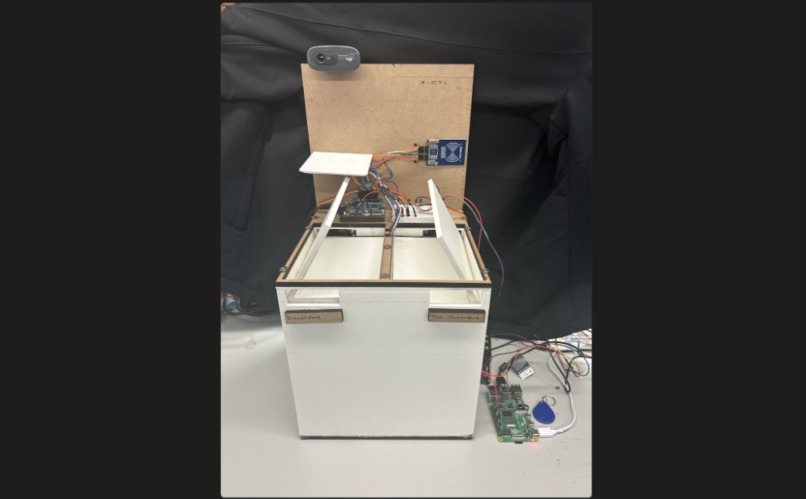
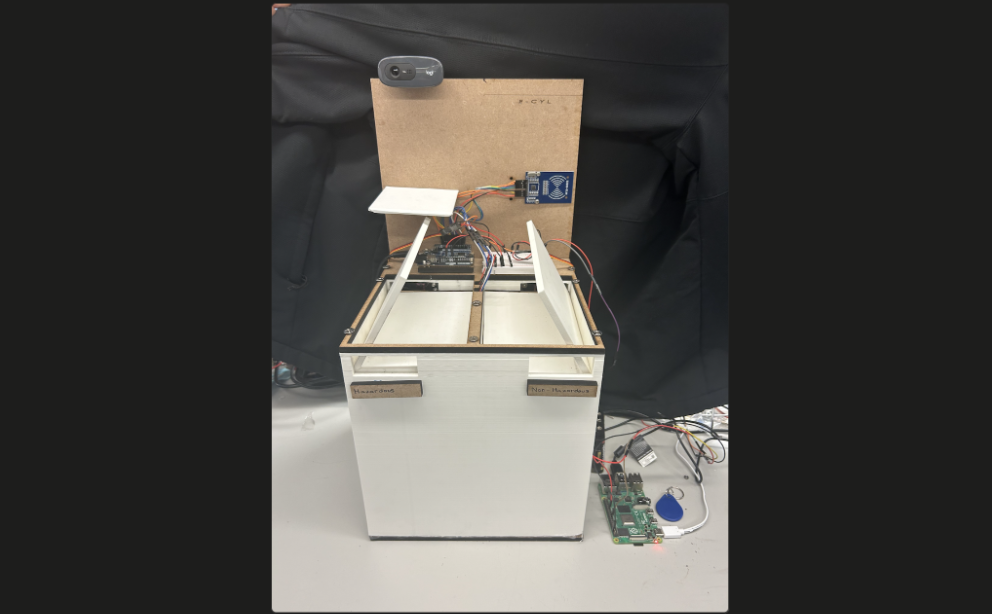
Image of prototype


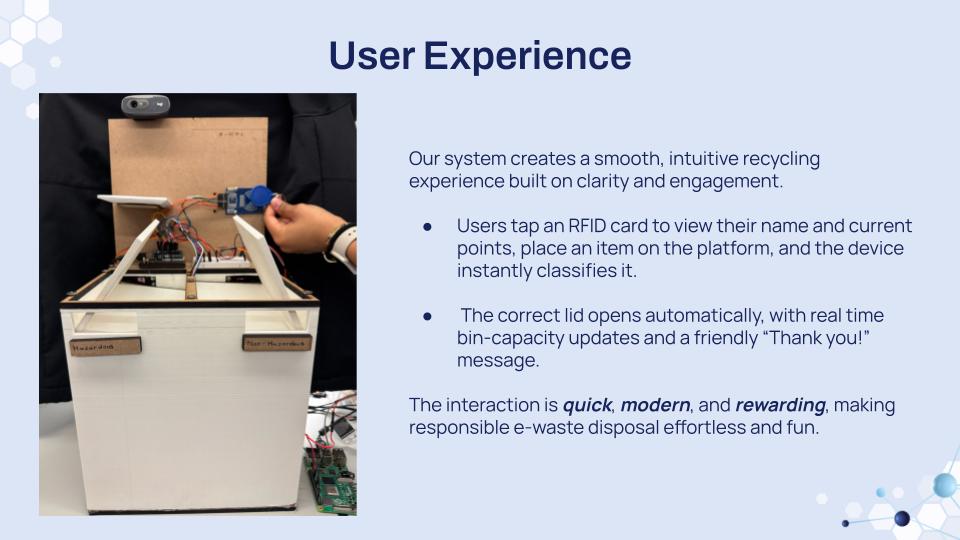
tbf ::: ECyl - E-waste Recycling Made Simple
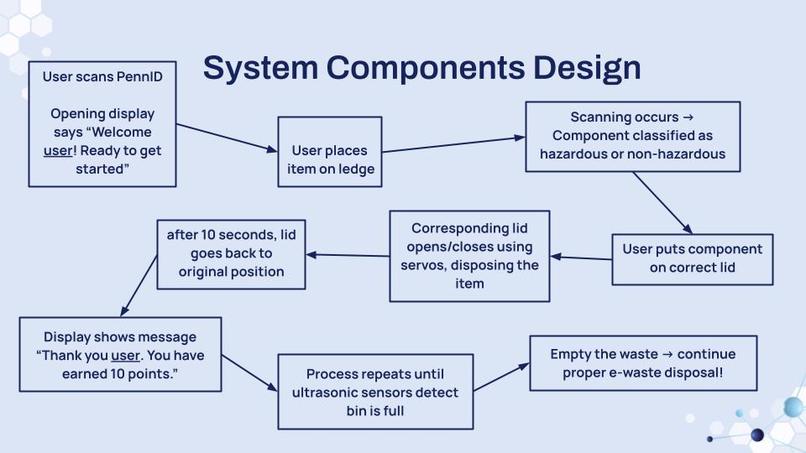
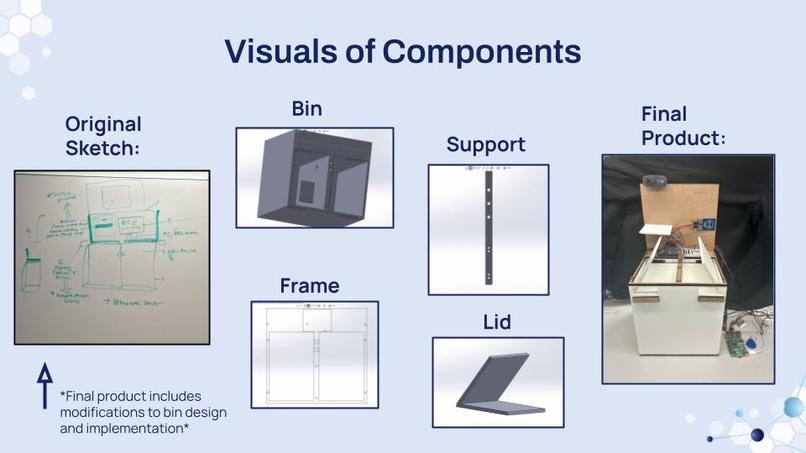
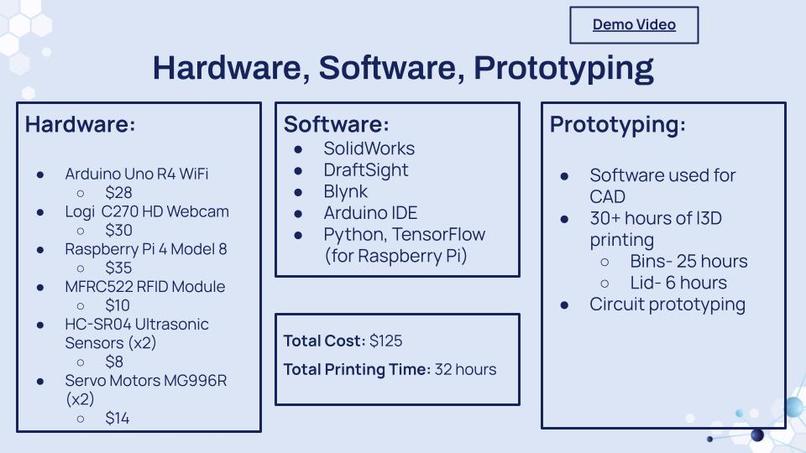
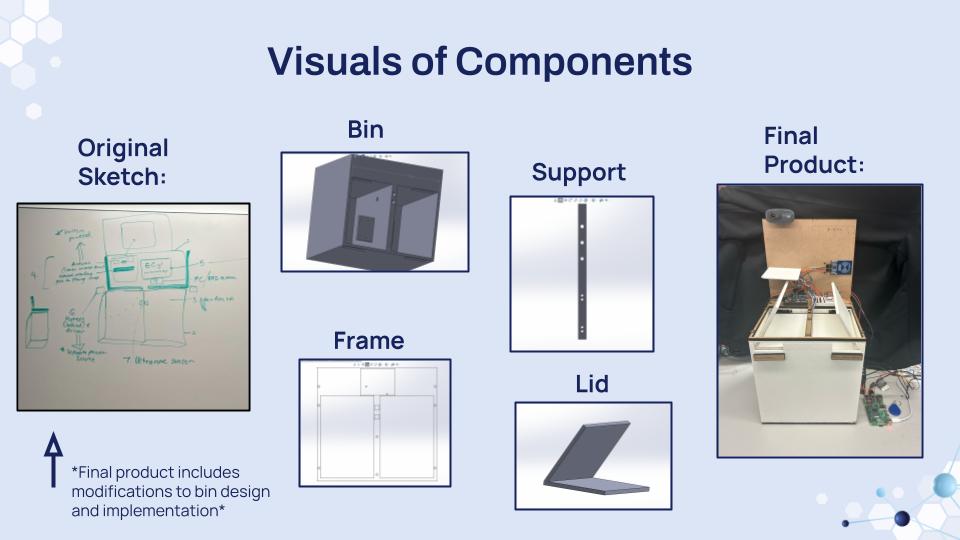
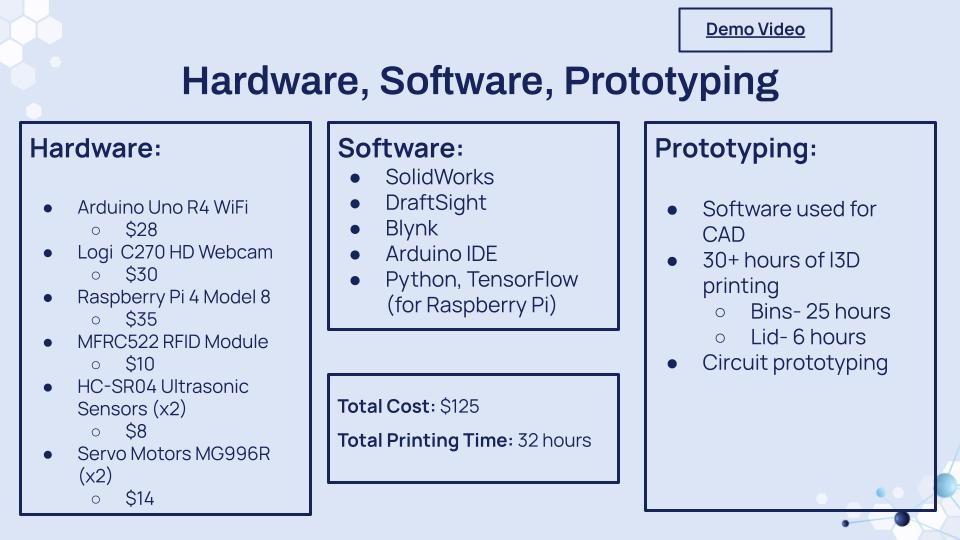
During the final project, we were able to practice and refine skills from throughout the course while also learning several new ones. One of the most valuable new skills was using a Raspberry Pi with Python and TensorFlow Lite for image recognition. We also gained experience managing IoT interactions and establishing serial communication between the Raspberry Pi and Arduino. On the mechanical side, we learned how to properly 3D-print our bins, adjust designs based on printer limitations, and integrate CAD components such as servo mounts, frames, lids, and bin structures into a functioning system.
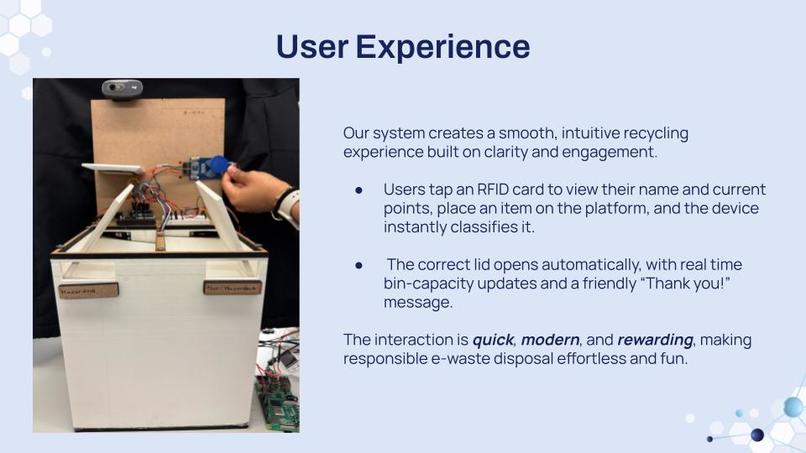
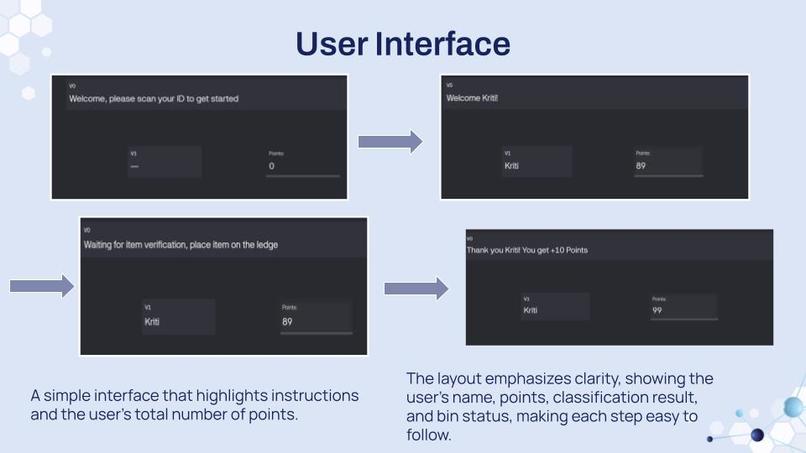
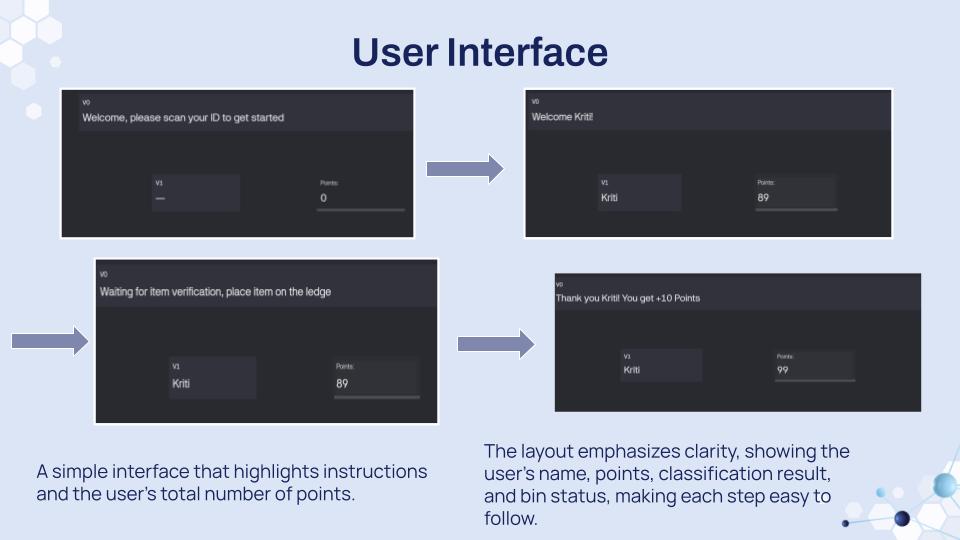
While building this project, we faced hardware and software challenges that forced frequent pivots. Our original design used an Arduino Nicla Vision, but repeated Edge Impulse failures made us switch to a Raspberry Pi 4 for model deployment. Early on we found only limited high-quality datasets of electronic components, capping accuracy at 27%. To improve results we expanded our dataset by adding more pictures that we took. We also abandoned the planned display screen after running out of Arduino pins and implemented an app-based interface instead. On the hardware side, we reprinted bin lids because the initial holes didn’t go through, and print times grew longer due to running out of filament. 3D-printing constraints forced us to shrink bin size from 20×20 to 10×10, which made us shrink the lid sizes and required reducing servos from four to two. That increase in load stressed the supports, and after repeated testing with lid movement, the supports weakened and broke. This called for constant replacement and ensuring our model was secure for demos.

Log in or sign up for Devpost to join the conversation.