-
-
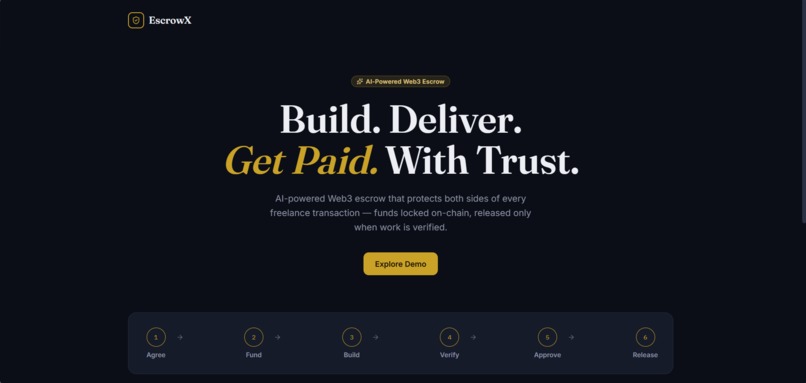
EscrowX: Building trust into every freelance transaction with AI and Web3 escrow.
Inspiration
Freelance work runs on trust that often isn't there. Clients worry about paying for work that never arrives or doesn't meet spec; freelancers worry about delivering work and never getting paid. Traditional escrow is slow, centralized and doesn't scale to cross-border freelance gigs. We wanted to build something that removes the trust gap entirely, funds locked on-chain, released only when the work itself is verified.
What it does
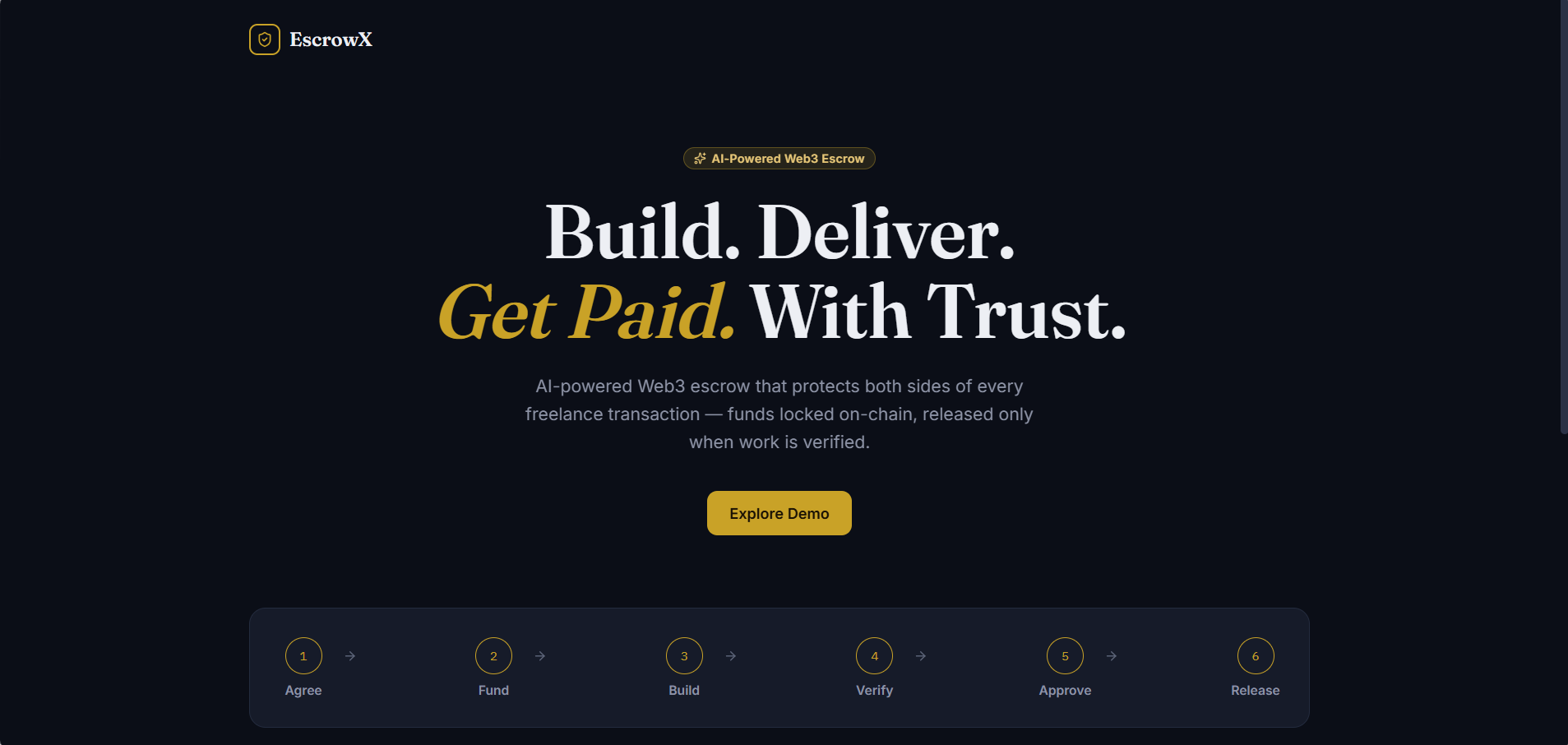
EscrowX lets a client and freelancer agree on a project broken into milestones, each with its own funded escrow. The freelancer submits deliverables per milestone, an AI assistant analyzes the submission against the agreed requirements and flags risk, the client reviews and approves release of funds — or opens a dispute if something's off. Every deposit, release and refund is logged as a transparent, verifiable transaction. The whole flow — Agree → Fund → Build → Verify → Approve → Release — is visible end to end for both sides.
How we built it
We built EscrowX using React and JavaScript, designing a complete client–freelancer workflow around milestone-based escrow. We implemented project creation, milestone tracking, deliverable submissions, approvals, refunds, disputes, transaction tracking, and AI-assisted verification and risk analysis. We also added a simulated wallet and payment layer to demonstrate how the escrow process would work in a Web3 environment.
Challenges we ran into
Simulating a trustworthy Web3 escrow experience without a live smart contract deployment was tricky, we had to make the wallet, transaction ledger and risk engine feel real and consistent across every action. We also had to design an AI risk-assessment system that's genuinely explainable rather than a black box, since trust is the whole point of the product.
Accomplishments that we're proud of
A fully working end-to-end demo, from wallet connect, to milestone creation, to deliverable submission, AI analysis, approval and dispute resolution, built and polished within the hackathon timeline.
What we learned
Building trust-based fintech products means the UX has to make every state of the money (locked, pending, released, disputed) completely legible at a glance. We also learned a lot about designing AI features that support human decisions instead of replacing them.
What's next for EscrowX
Deploying real smart contracts to a live testnet, replacing the simulated wallet with an actual Web3 wallet connector (e.g. MetaMask/WalletConnect), adding separate client and freelancer account systems, and expanding the AI assistant for more nuanced dispute mediation.


Log in or sign up for Devpost to join the conversation.