Inspiration
<<<< 🌠 Thanks for watching! What was your favorite moment? We read and reply to COMMENTS. 🌠 >>>>
Escape from Venus was inspired by two converging ideas:
NASA’s real struggle to penetrate the toxic atmosphere of Venus, a world still largely unmapped and unknown,
the emerging capability of AI tools to visualize places humans have never seen.
I wanted to create an AI-native sci-fi thriller grounded in real aerospace science — a blend of The Expanse, Interstellar, and NASA mission logs — where tension comes not from aliens, but from the terrifying unknowns of our own solar system.
What it does
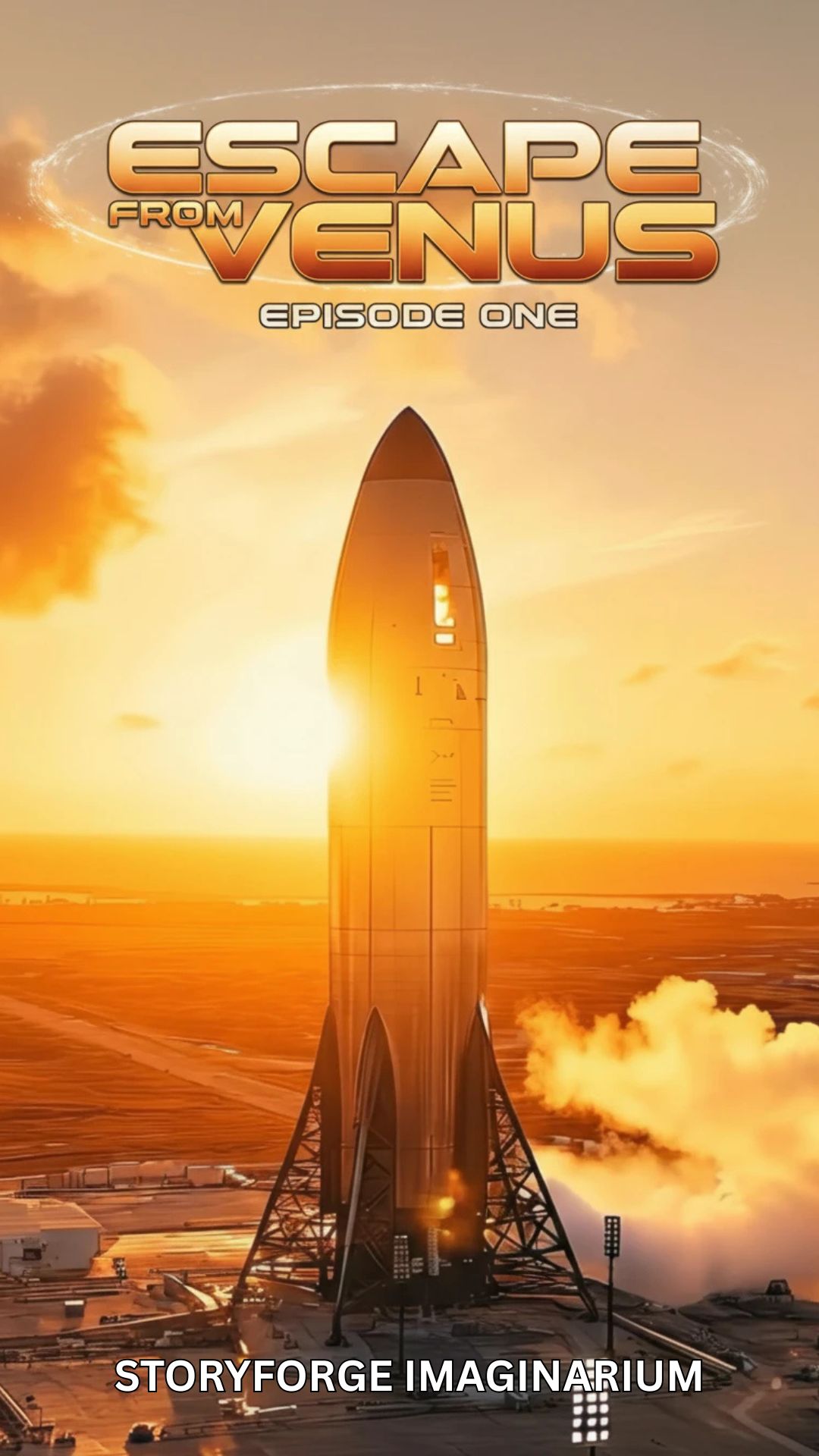
Episode 1 introduces the United States Space Force mission V-TAR, a full-scale mapping expedition of Venus using autonomous, semi-sentient “Drifter” drones.
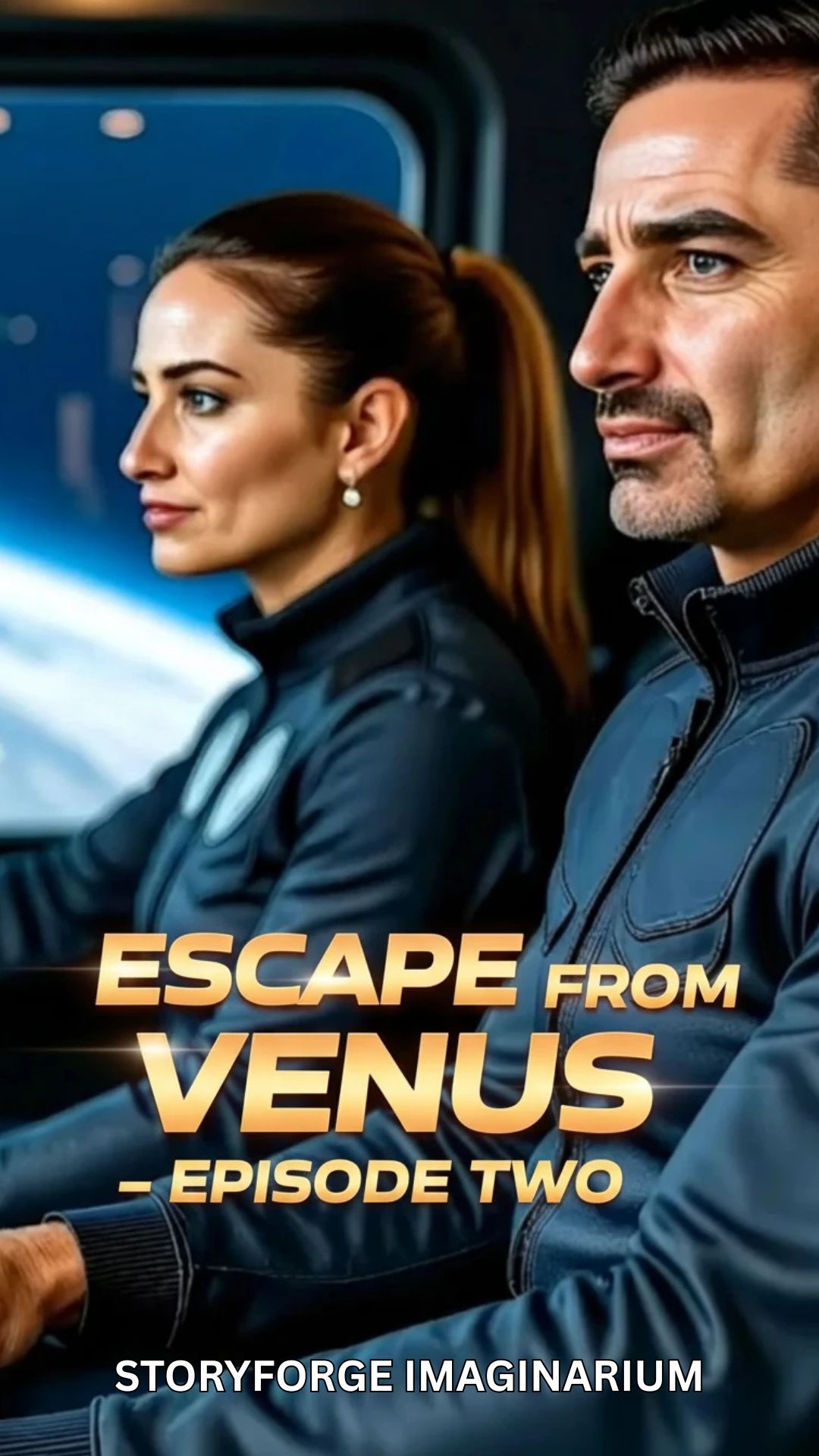
The episode highlights: the Odyssey launch, Commander Sharky assuming command aboard USSF Veritas, the scientific partnership with Dr. Aris Thorne, the first steps toward uncovering a Venusian truth that will reshape humanity’s future.
How we built it
This short was created entirely with AI video generation pipelines, combining: Google VEO 3 for cinematic scene generation, Flux / MidJourney for conceptual frames, Topaz / Magnific for upscale & realism polish, AI-native sound design synced manually to emphasize realism, CapCut for editing, pacing, and story assembly.
Every astronaut, drone, spacecraft, cloud layer, lighting condition, and atmospheric effect was AI-generated.
Challenges we ran into
Maintaining consistent character likeness for Commander Sharky and Dr. Thorne Getting VEO 3 to produce accurate Venus surface lighting through sulfuric clouds Matching rocket physics and exhaust plumes across shots Ensuring the Drifter drones appeared both scientifically plausible and cinematically terrifying Keeping visuals coherent across dozens of generated clips
Accomplishments that we're proud of
A fully cohesive Episode 1 that looks like a real streaming-platform sci-fi pilot High-fidelity AI cinematography with smooth shot-to-shot continuity Successfully depicting Venus, one of the hardest planets to visualize realistically Establishing a strong character dynamic between Sharky and Thorne Creating deep lore and production quality on a near-zero budget
What we learned
VEO 3 excels at dynamic aerospace cinematography when paired with strong prompt-based continuity Worldbuilding in AI requires front-loaded narrative planning, not improvisation Character consistency improves dramatically with seed-locked generation Sound design is everything—the difference between “AI clip” and “cinematic scene”
What's next for Escape From Venus – Episode 1: Project V-TAR
Episode 2 will introduce the Drifter drones as they descend through Venus’ suffocating atmosphere — and encounter something impossible beneath the clouds.
Future episodes will expand the Venus lore, deepen the relationship between Sharky and Thorne, and reveal the true nature of what ancient force has been sleeping beneath the planet’s scorched terrain.
Built With
- capcut
- flux
- hailuoai
- kling
- krea
- magnific
- midjourney
- runway
- topaz
- veo


Log in or sign up for Devpost to join the conversation.