Inspiration
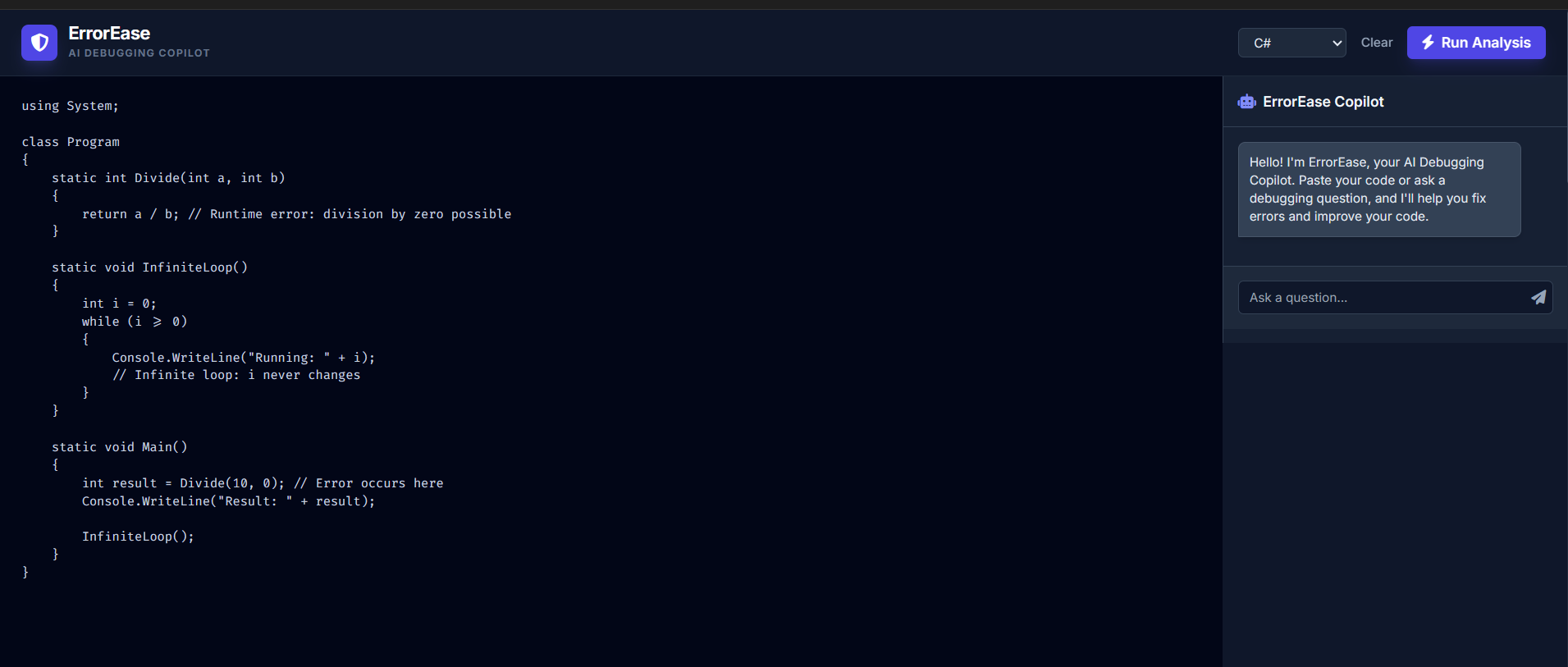
Debugging is one of the most cognitively demanding aspects of software development. While compilers and runtime environments can detect errors, they rarely explain the root cause, the reasoning behind the issue, or the procedural steps needed to resolve it. This forces developers—especially students and early-career engineers—into inefficient trial-and-error workflows.
We were inspired by the idea that debugging should be a reasoning-driven process, similar to how experienced engineers analyze problems logically. Instead of simply reporting errors, we envisioned an AI system capable of understanding code semantically, identifying root causes, and guiding users step-by-step.
At a fundamental level, debugging involves reasoning about algorithmic behavior and computational complexity. For example, when analyzing nested loops:
$$ T(n) = \sum_{i=1}^{n} \sum_{j=1}^{n} 1 = O(n^2) $$
We wanted to build a system that could perform this level of reasoning automatically. This vision led to the creation of ErrorEase, an AI-powered debugging copilot built using Gemini.
How we built it
ErrorEase is powered by Gemini 3, which serves as the core reasoning and analysis engine. We used structured prompt engineering within Google AI Studio to enable Gemini to perform deep semantic analysis of user-submitted code.
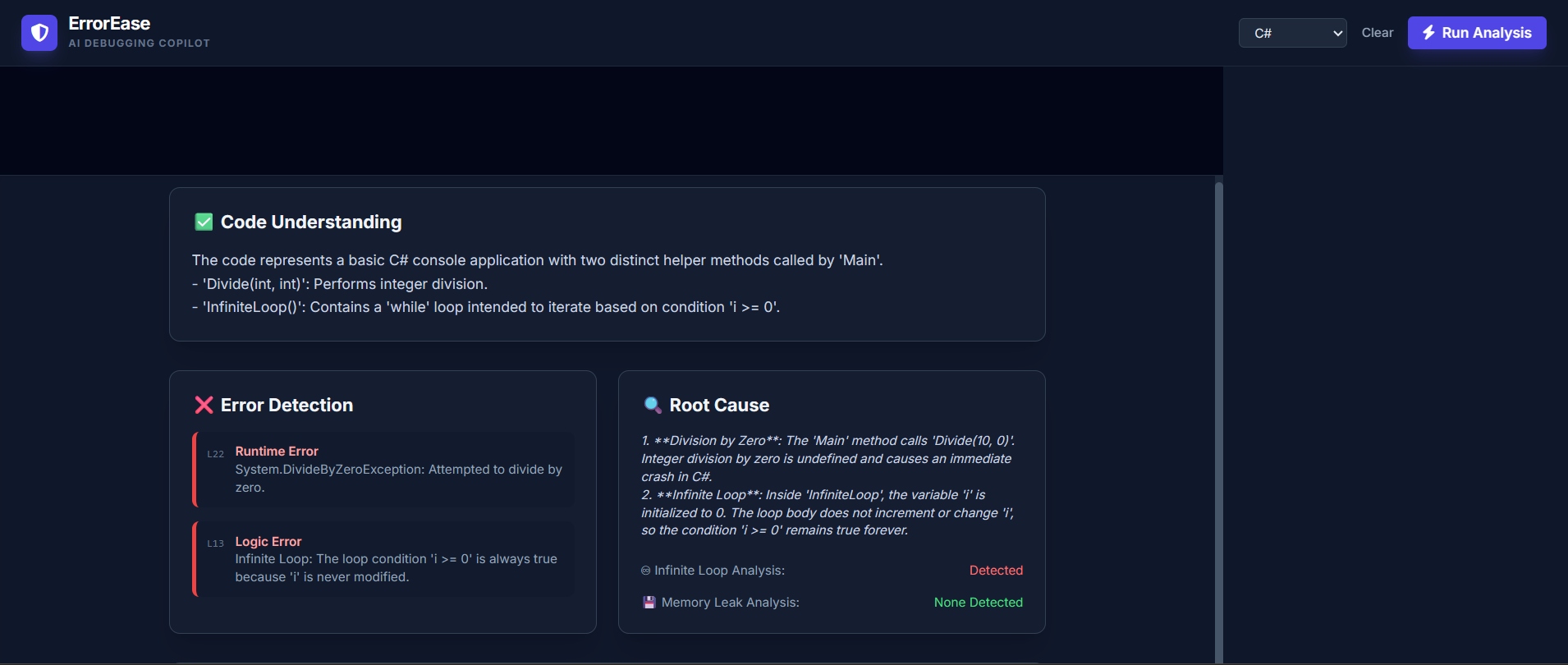
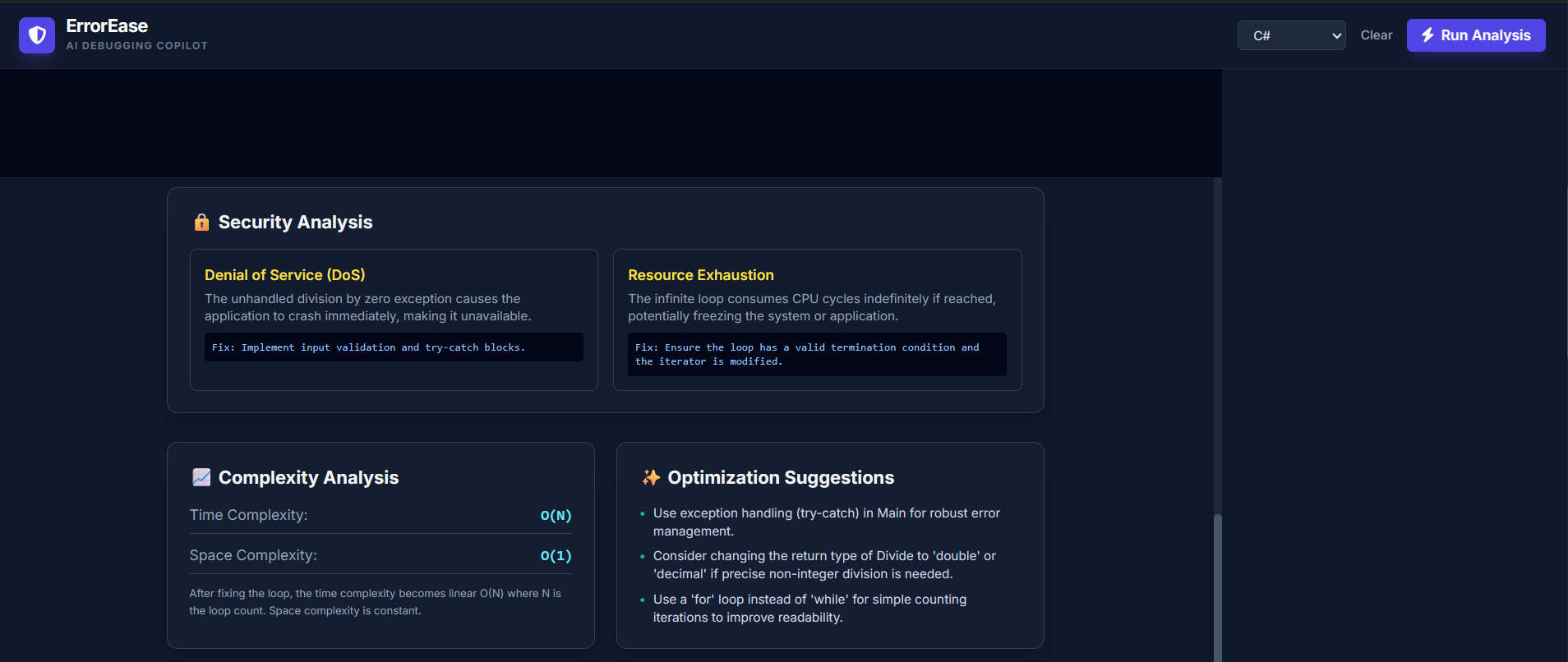
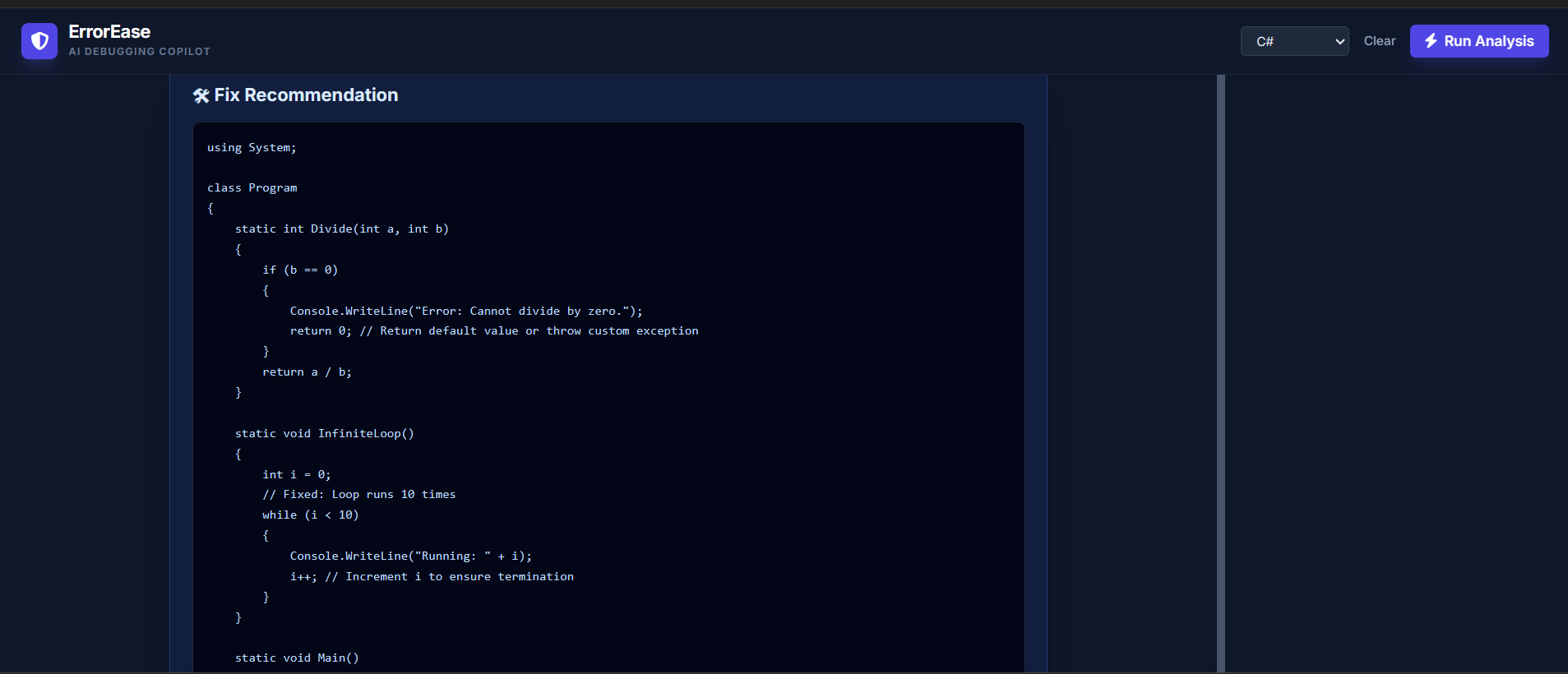
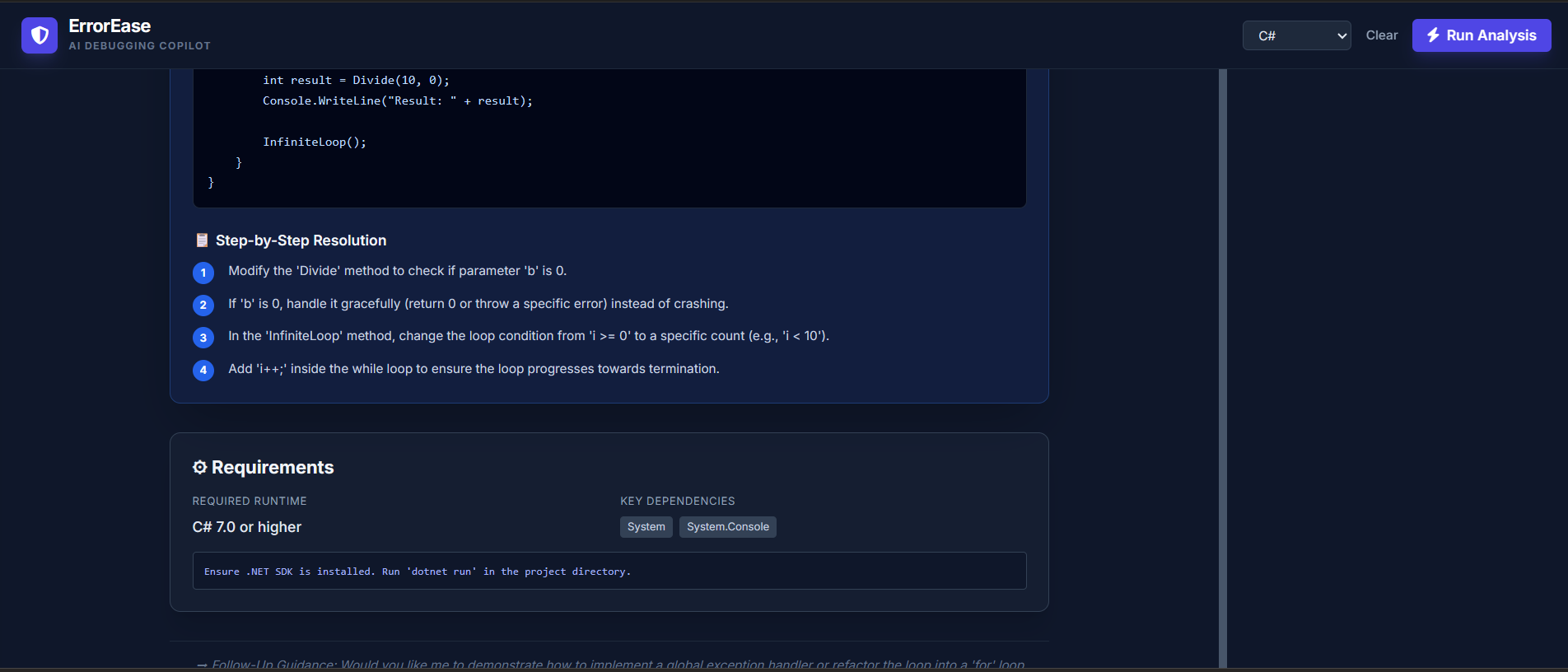
When code is provided, Gemini analyzes it to:
- Detect syntax, runtime, and logical errors
- Identify precise line numbers where errors occur
- Generate corrected versions of the code
- Provide step-by-step procedural guidance
- Analyze time and space complexity
For example, when Gemini detects a loop structure:
$$ \text{for } i = 1 \dots n $$
it correctly infers the complexity as:
$$ T(n) = O(n) $$
The frontend interface allows users to interact conversationally with the system, enabling an intelligent copilot-style debugging experience powered entirely by Gemini’s reasoning capabilities.
Challenges we faced
One of the primary challenges was ensuring that Gemini produces structured, precise, and UI-friendly debugging output rather than unstructured conversational responses. This required careful prompt engineering and strict output formatting control.
Another challenge was managing different interaction modes, including greeting mode, debugging analysis mode, and copilot chat mode, while maintaining correct context awareness.
We also needed to ensure the system does not hallucinate errors when no code is provided, and instead behaves safely and predictably. Supporting multiple programming languages while maintaining high accuracy required extensive testing and iterative refinement.
What we learned
Through this project, we learned that the true strength of modern AI systems lies in their ability to perform reasoning-driven analysis, not just pattern recognition. Gemini demonstrated the capability to understand code semantics, analyze computational complexity, and provide actionable debugging guidance.
We gained hands-on experience in:
- Prompt engineering for reasoning-focused AI systems
- Designing intelligent developer tools powered by AI
- Building interactive copilot-style debugging interfaces
Most importantly, we learned that debugging can be transformed from a reactive error-fixing process into a proactive, guided reasoning workflow, significantly improving developer productivity and learning.
Built With
- ai
- googlegemini
- interface
- prompt
- web

Log in or sign up for Devpost to join the conversation.