-
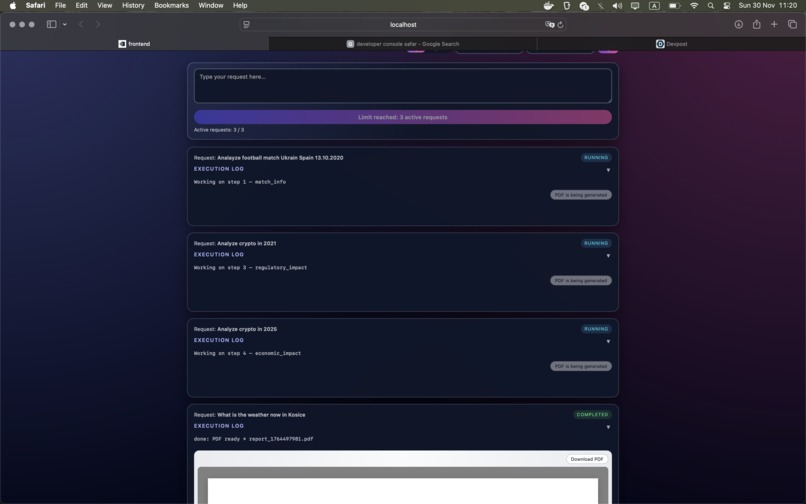
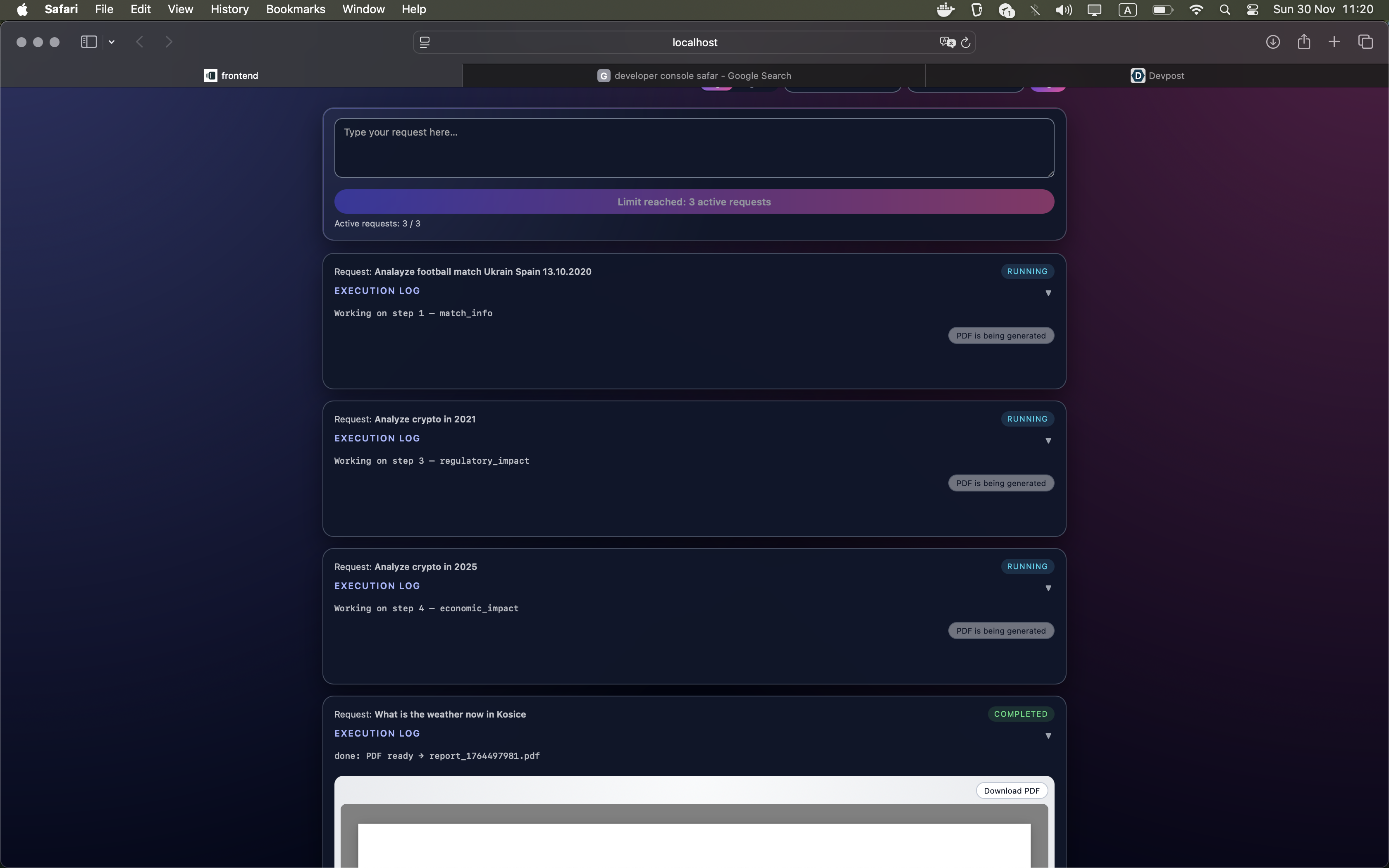
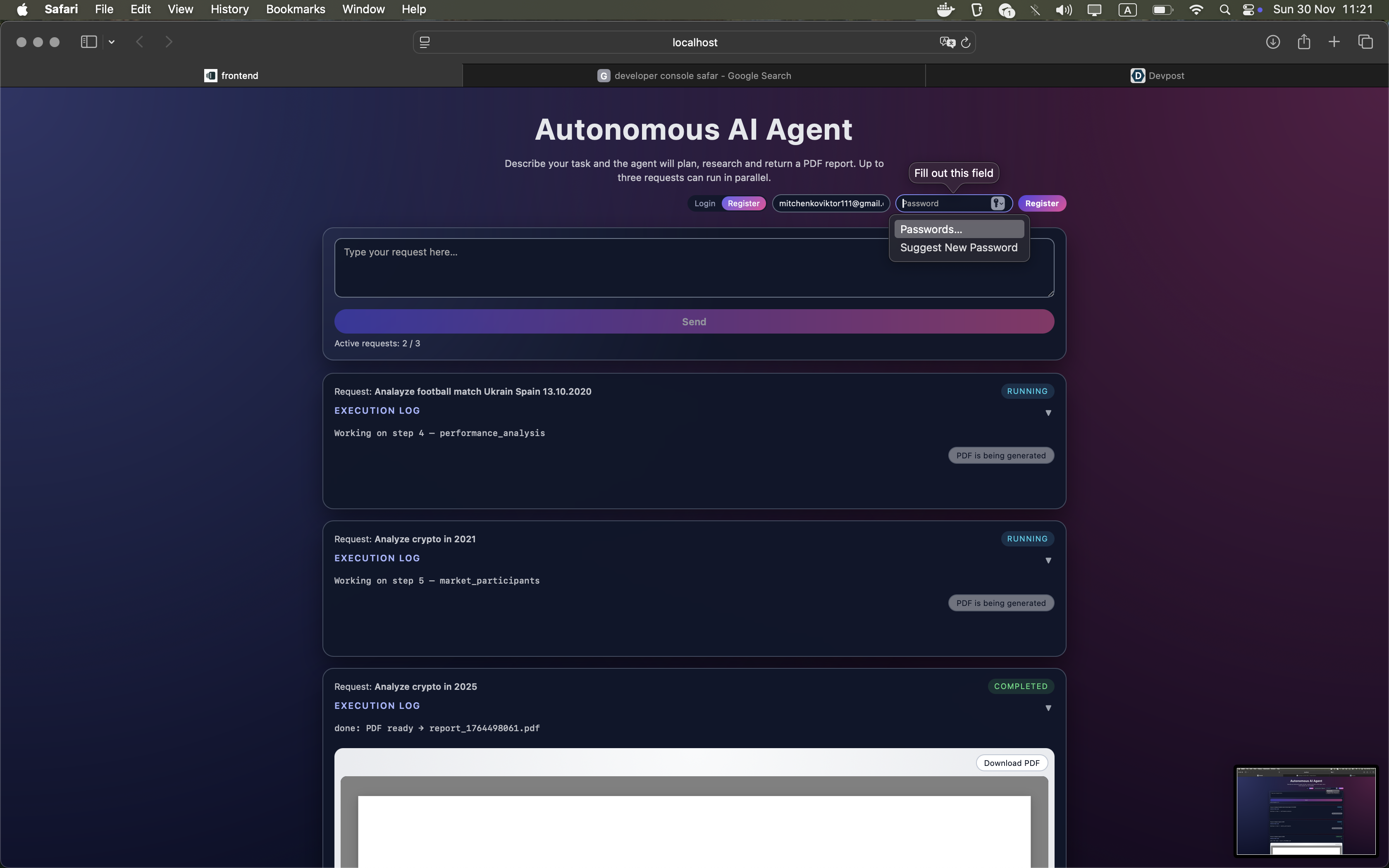
Our AI Agent can handle large quantities of requests at a time
-
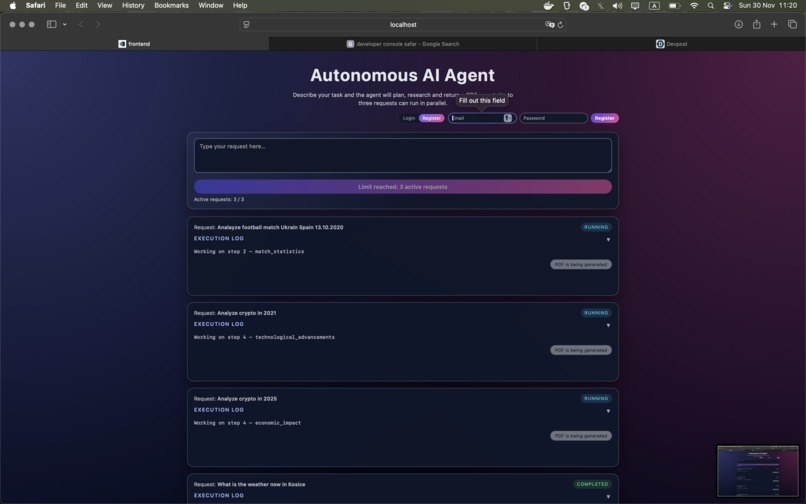
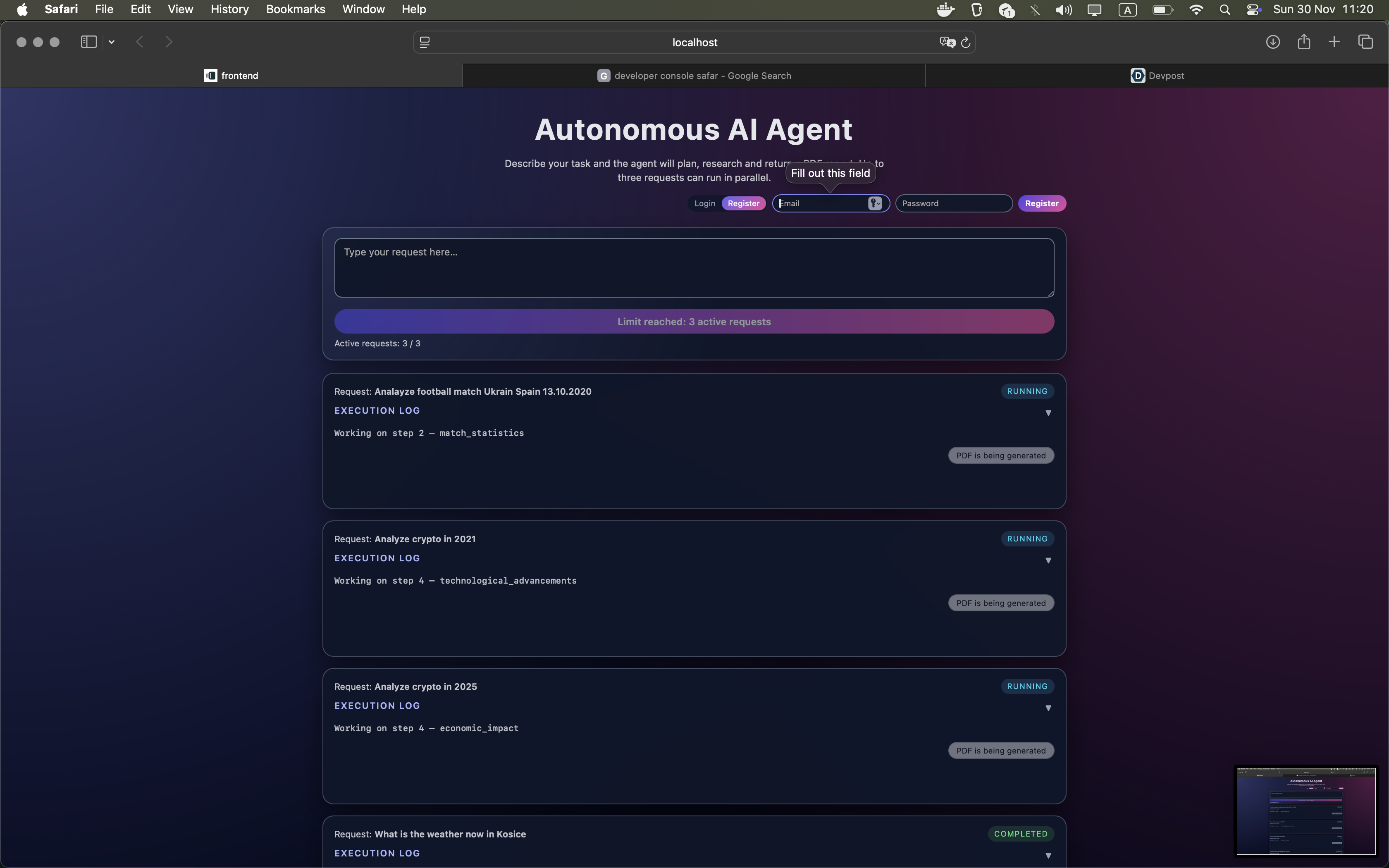
Register to save chats
-
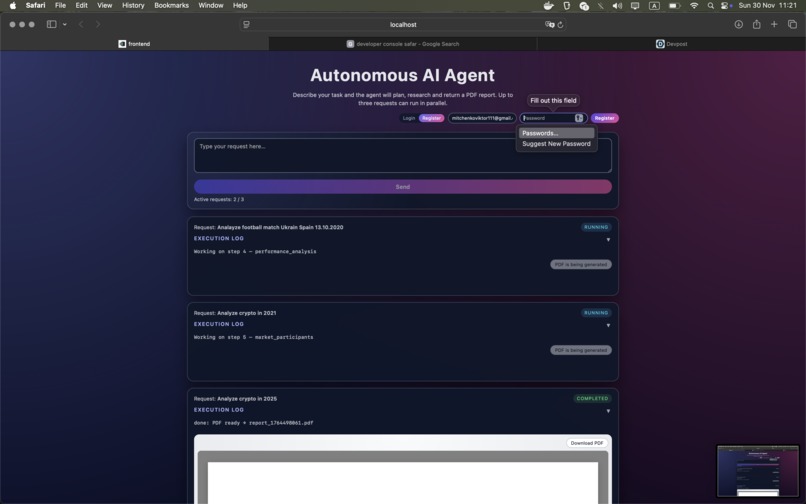
Register to save chats
-
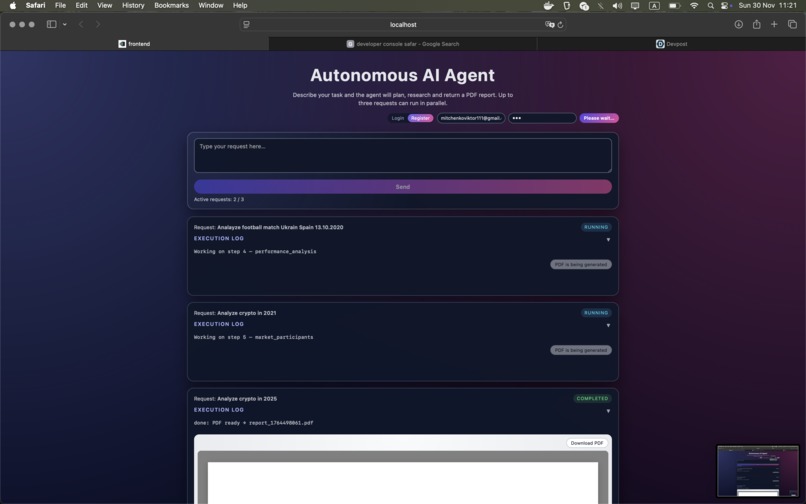
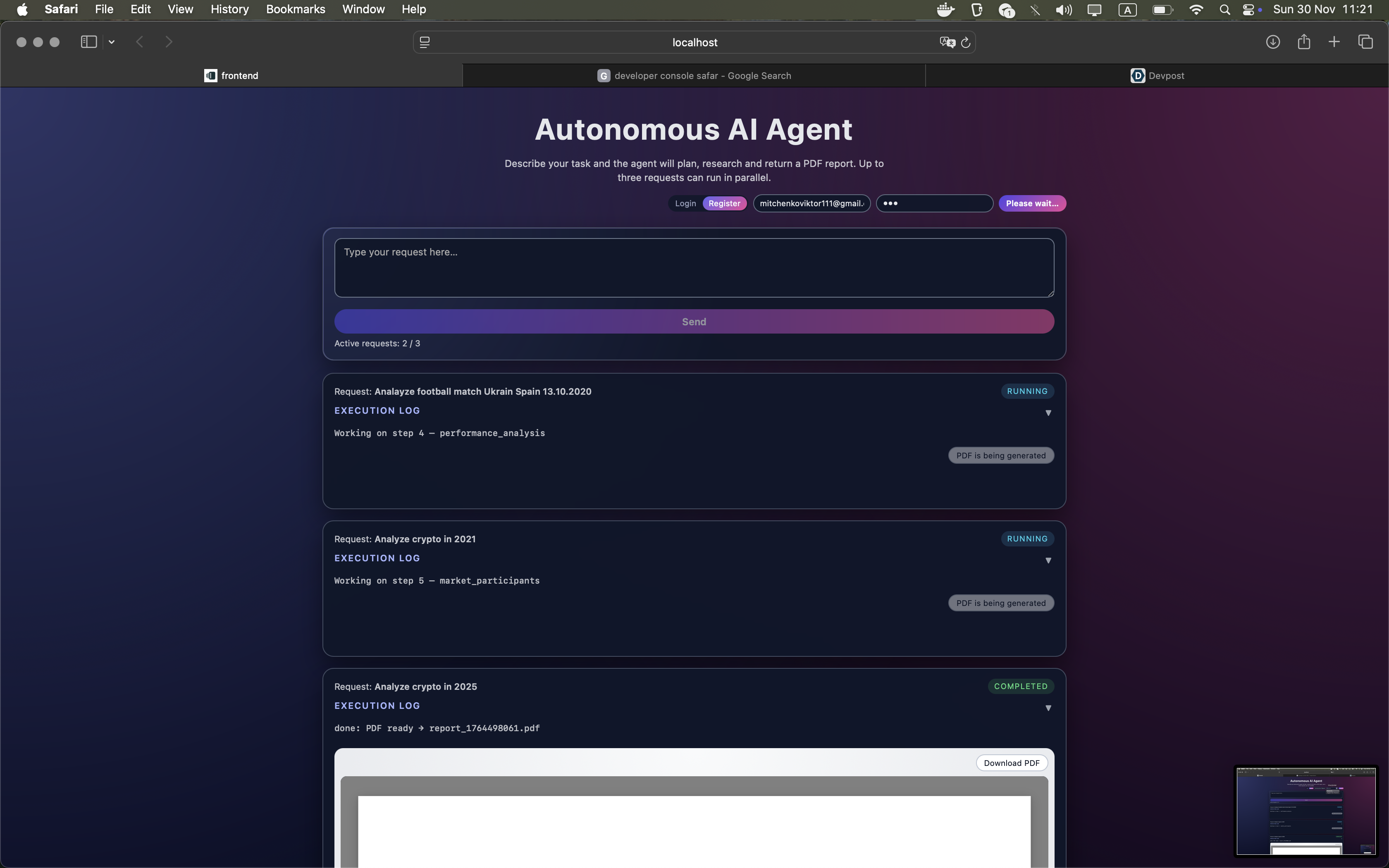
Can't register while running
-
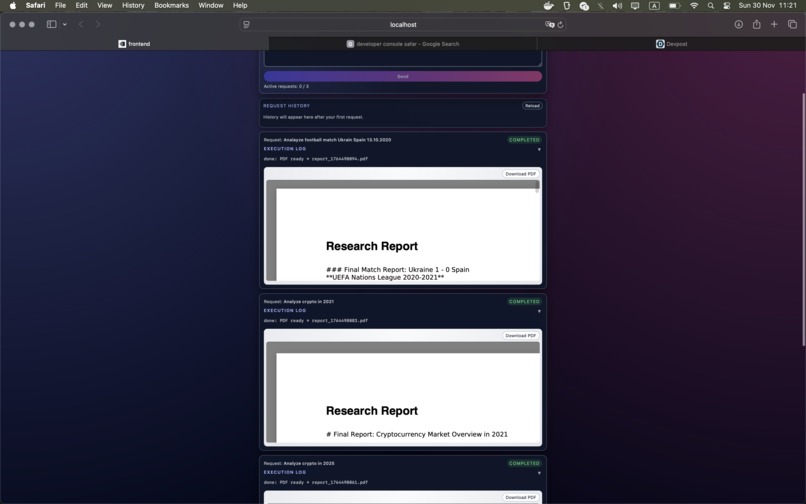
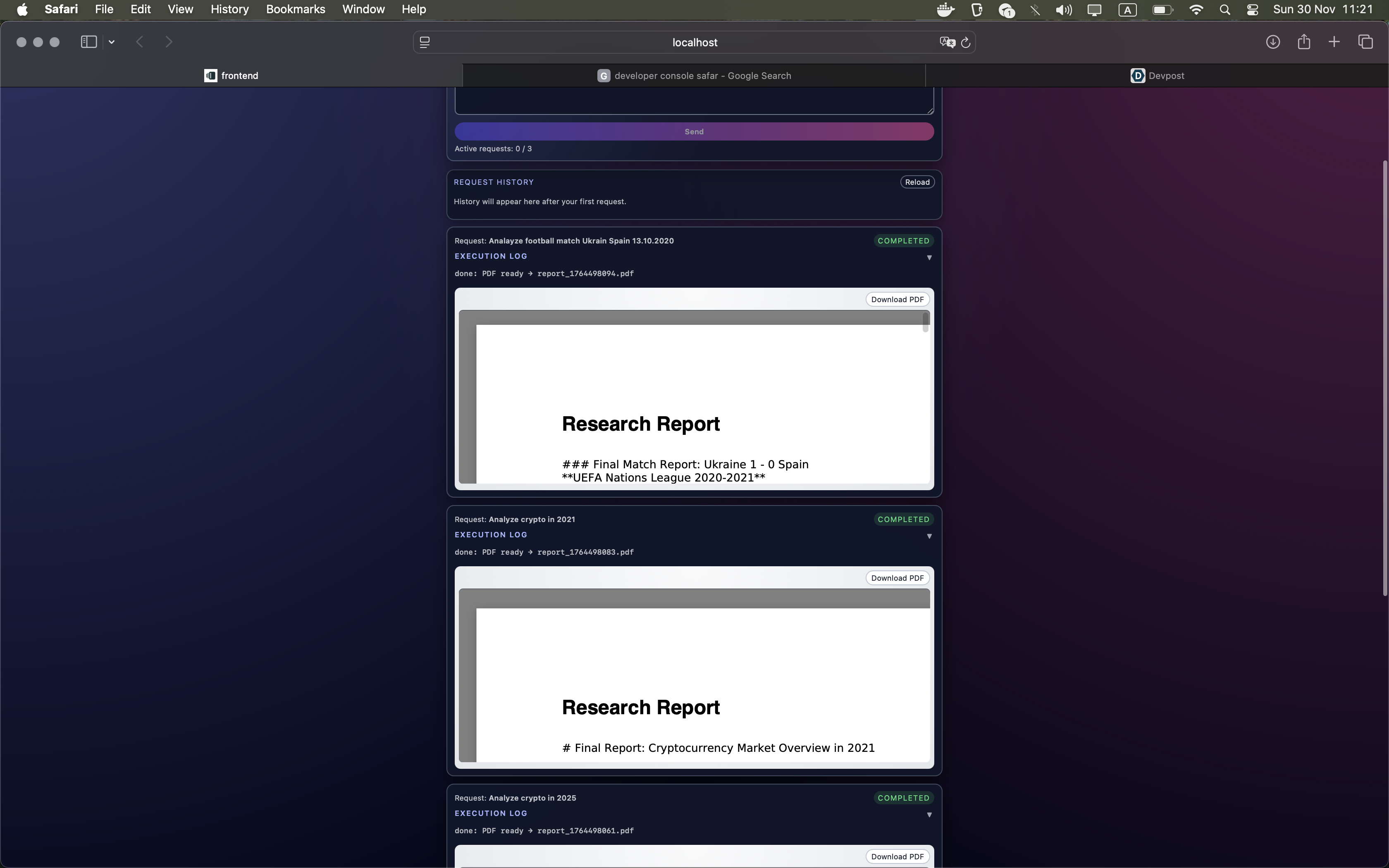
All 3 tasks completed, registered successfully
-
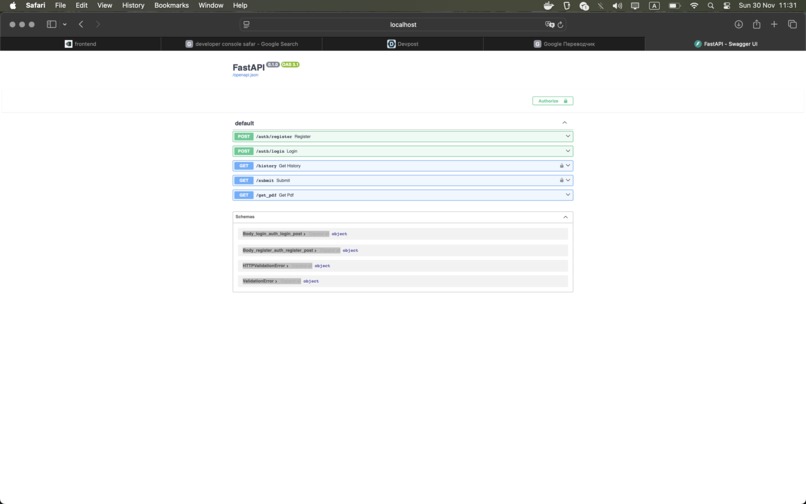
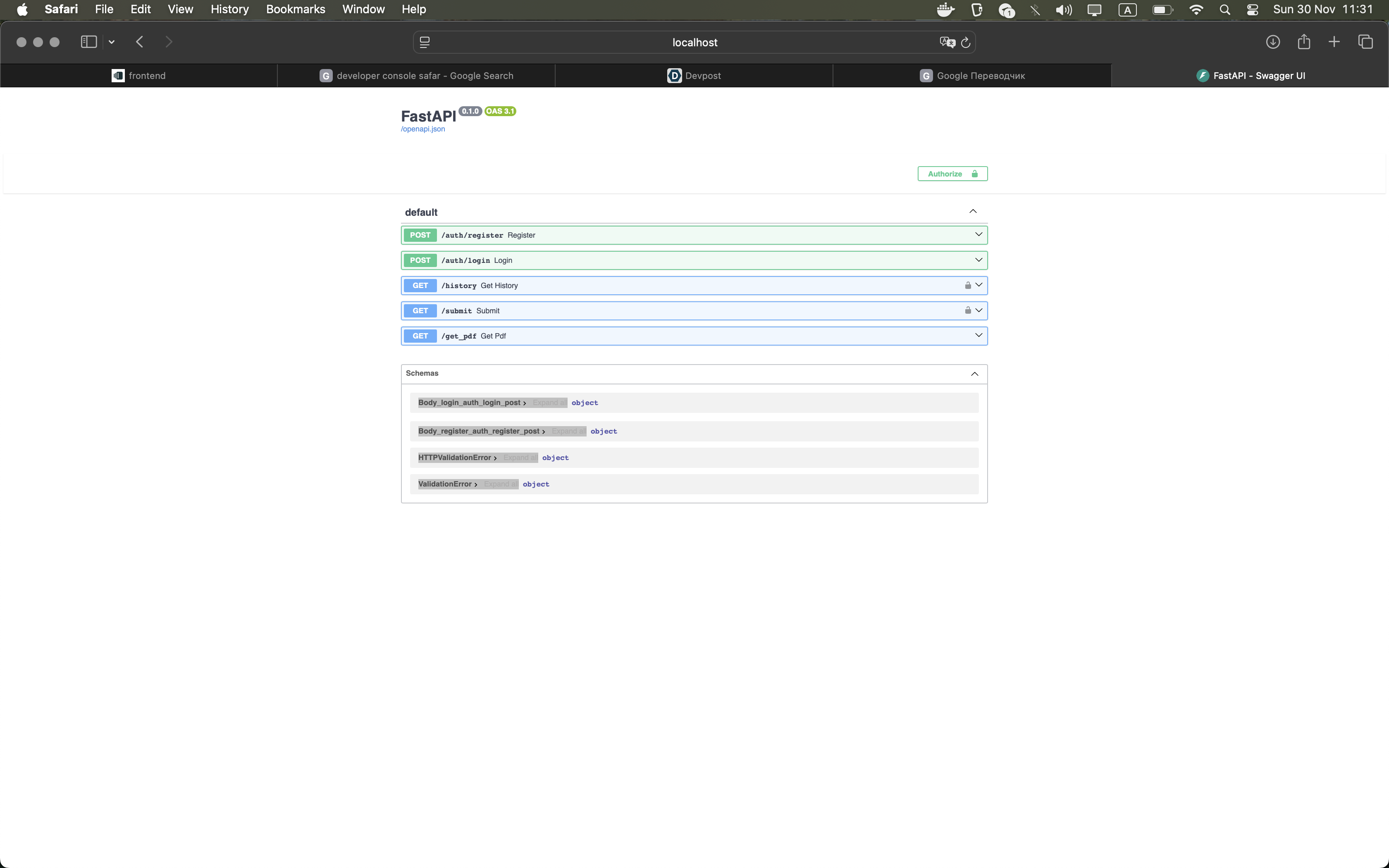
Hello from backend
Today, most AI systems work the same way: a user enters a request, and the model generates text. The model does not plan, does not fact-check, does not perform actions, and relies on knowledge that is often outdated. As a result, answers are inaccurate and require manual verification.
We built a system that performs multi-step reasoning, executes online search, and collects real-time data.
The user gives a single request, for example: “Analyze the AI startup market for 2024.”
Then the agent works like a junior analyst:
– creates a step-by-step plan; – runs a separate online search for each step; – gathers and filters sources; – extracts data; – analyzes and formats it; – builds tables if needed; – generates a PDF report.
The key technical feature is the asynchronous task queue. We can process multiple prompts in parallel without blocking. And most importantly, the agent performs its own web search asynchronously — it processes different parts of the plan at the same time.
This dramatically increases speed. Instead of sequential search “step 1 → step 2 → step 3,” it completes everything in parallel, across multiple workers. So a full analysis that normally takes 10–15 minutes of manual research is done by the agent in about one minute.
The architecture consists of four modules:
Main — builds the plan and sends tasks to the queue. Supervisor — splits the plan into blocks and assigns tasks to each block. Worker — executes tasks asynchronously,web search, data collection, analysis. Aggregator — processes the collected results and generates the final PDF.
The entire stack is fully functional: FastAPI backend, asynchronous task queue, autonomous planner, reasoning module, online web search, data analysis, PDF generation, React interface — all running in Docker.

Log in or sign up for Devpost to join the conversation.