Introduction
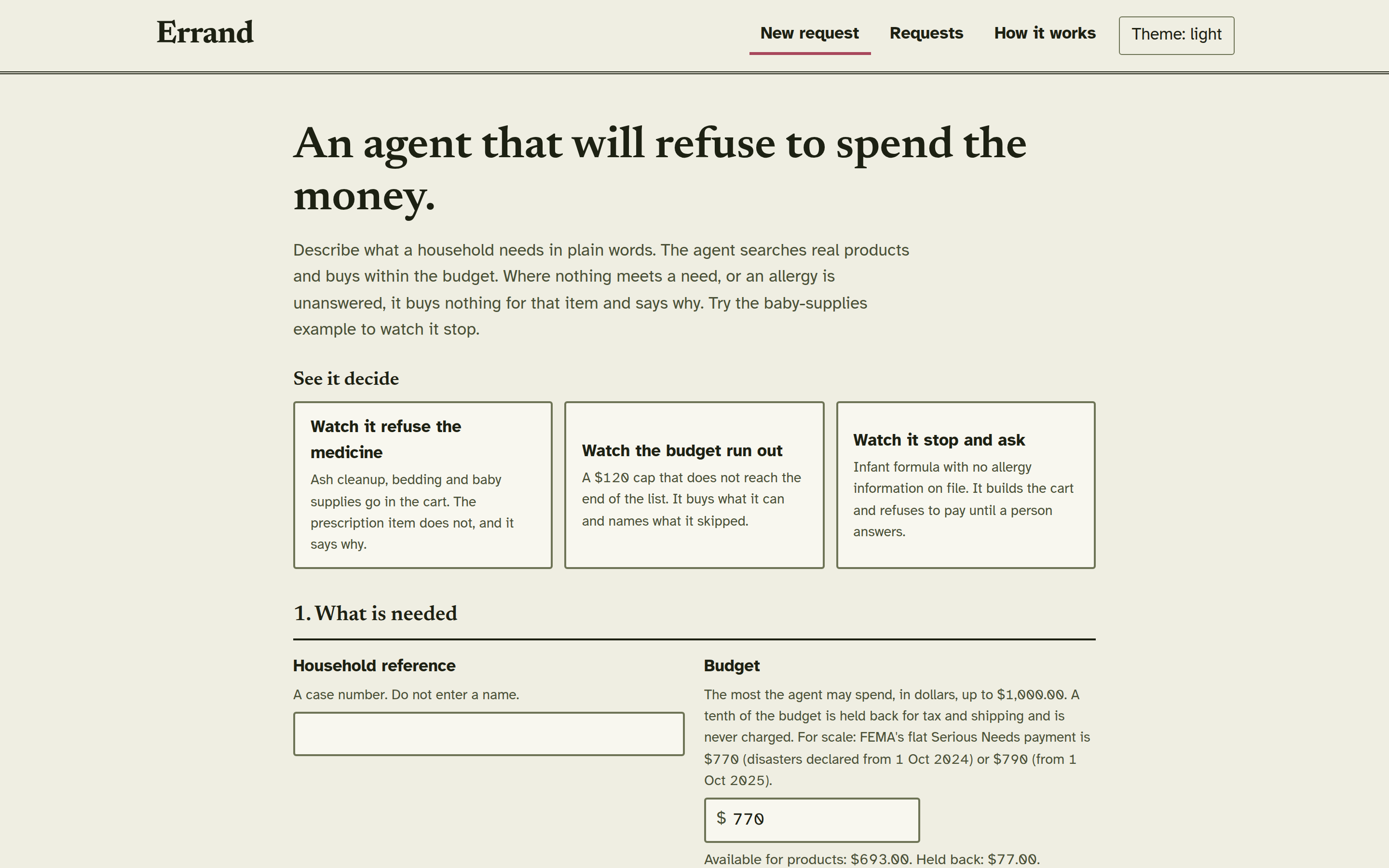
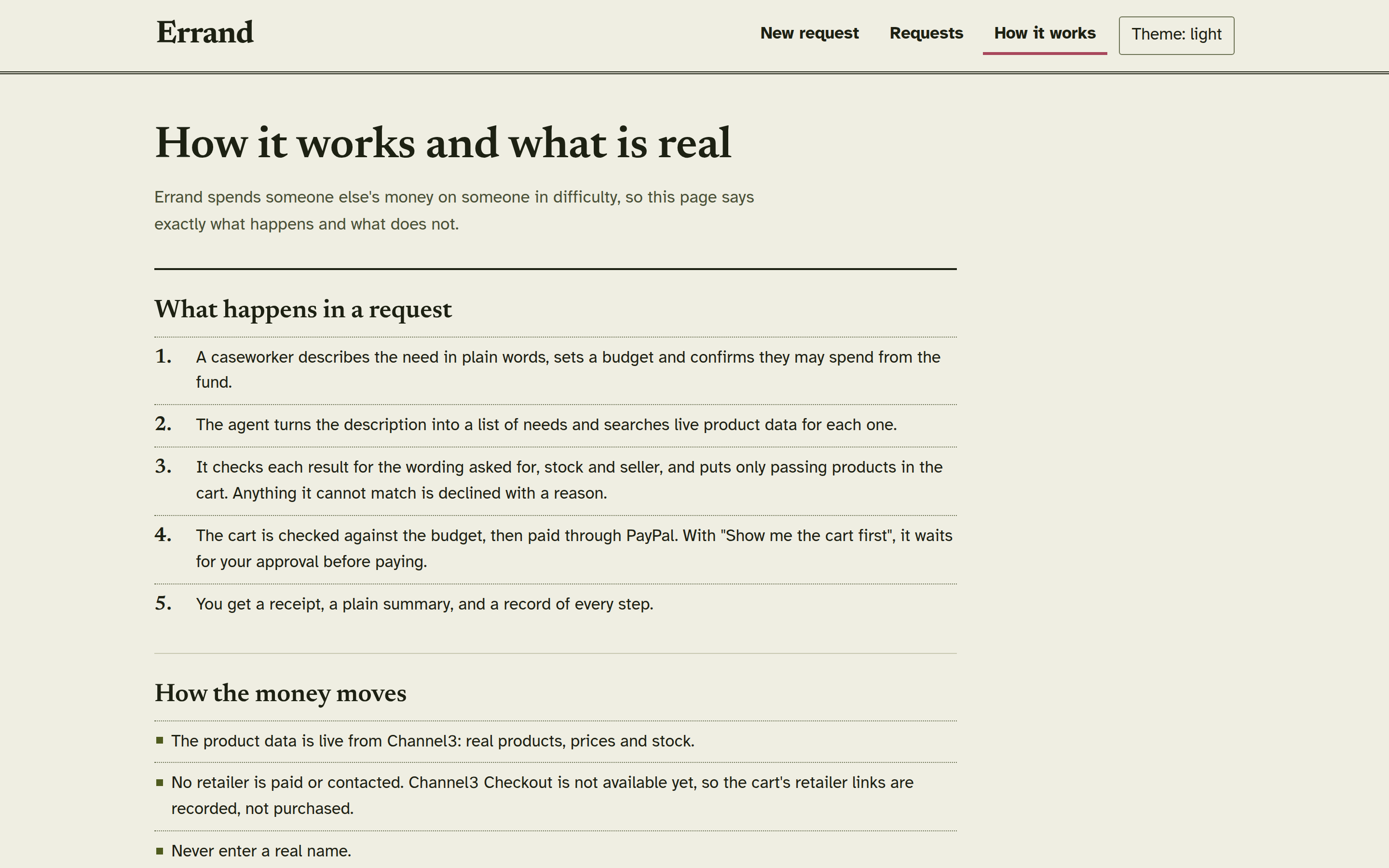
Errand turns a case worker's description of what a household needs into a cart of real products, bought within a fixed relief budget.
The part worth watching is where it stops. It will not buy prescription medicine, it refuses to pay for food or formula when allergy information is missing, and when the budget runs out it names what it skipped rather than quietly returning less.
Products come from Channel3. Payment is PayPal, authorized and held where a person still needs to approve.
$770, and nothing else
After the January 2025 Los Angeles wildfires, 261,118 households registered with FEMA.
225,953 of them — 86.5% — were awarded $0.
A further 19,690 were awarded exactly $770 and nothing more. Put together, 245,643 registrations, or 94.1%, received either nothing at all or one flat payment of $770.
That $770 is Serious Needs Assistance: a single flat sum, the same for a person who lost a bedroom and a family who lost a house. It rose to $790 for disasters declared on or after 1 October 2025.
It is not an outlier. Hurricane Milton: 87.4% got nothing or the flat payment. Helene in South Carolina: 75.4%.
And the reasons are published
FEMA codes its denials, which closes a gap we assumed would stay open. Two codes account for most of it:
| Reason | Registrations |
|---|---|
| Did not respond to FEMA outreach, or withdrew | 473,737 |
| Needed to submit documentation | 157,217 |
| Together | 630,954 — 30.9% of all coded registrations |
Nearly a third of denials are not "you do not qualify." They are paperwork. People in motels and shelters, without the documents they lost in the fire, failing to complete a process rather than failing a test of need.
So a case worker ends up holding a flat $770 for a household that needs nappies, formula, bedding and masks for clearing ash — and no time to shop for any of it.
Spending it, carefully
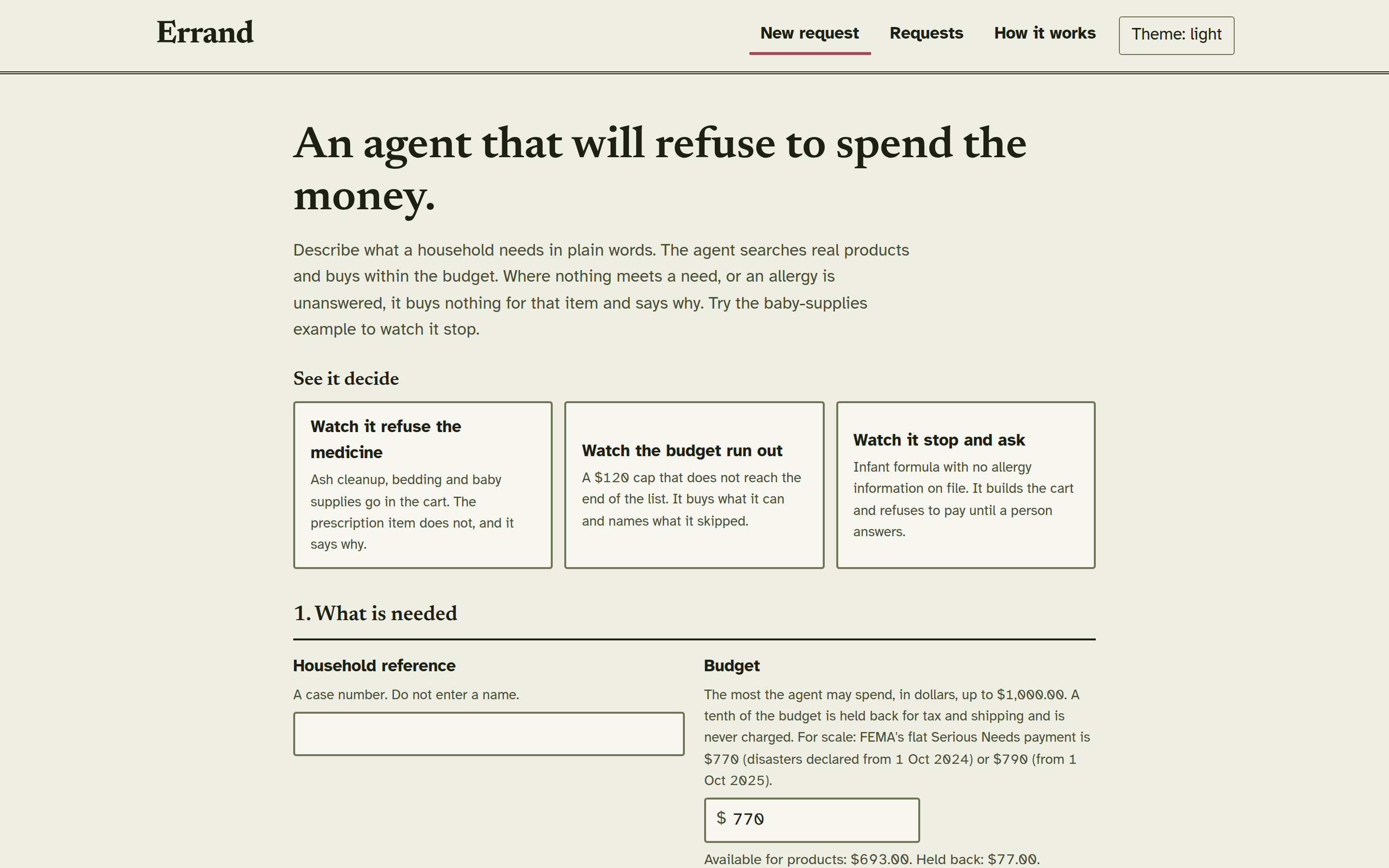
Errand takes a case worker's description in plain words, searches real products through Channel3, builds a cart inside the budget, and pays from a relief fund with PayPal.
The interesting part is not the buying. It is the not-buying.
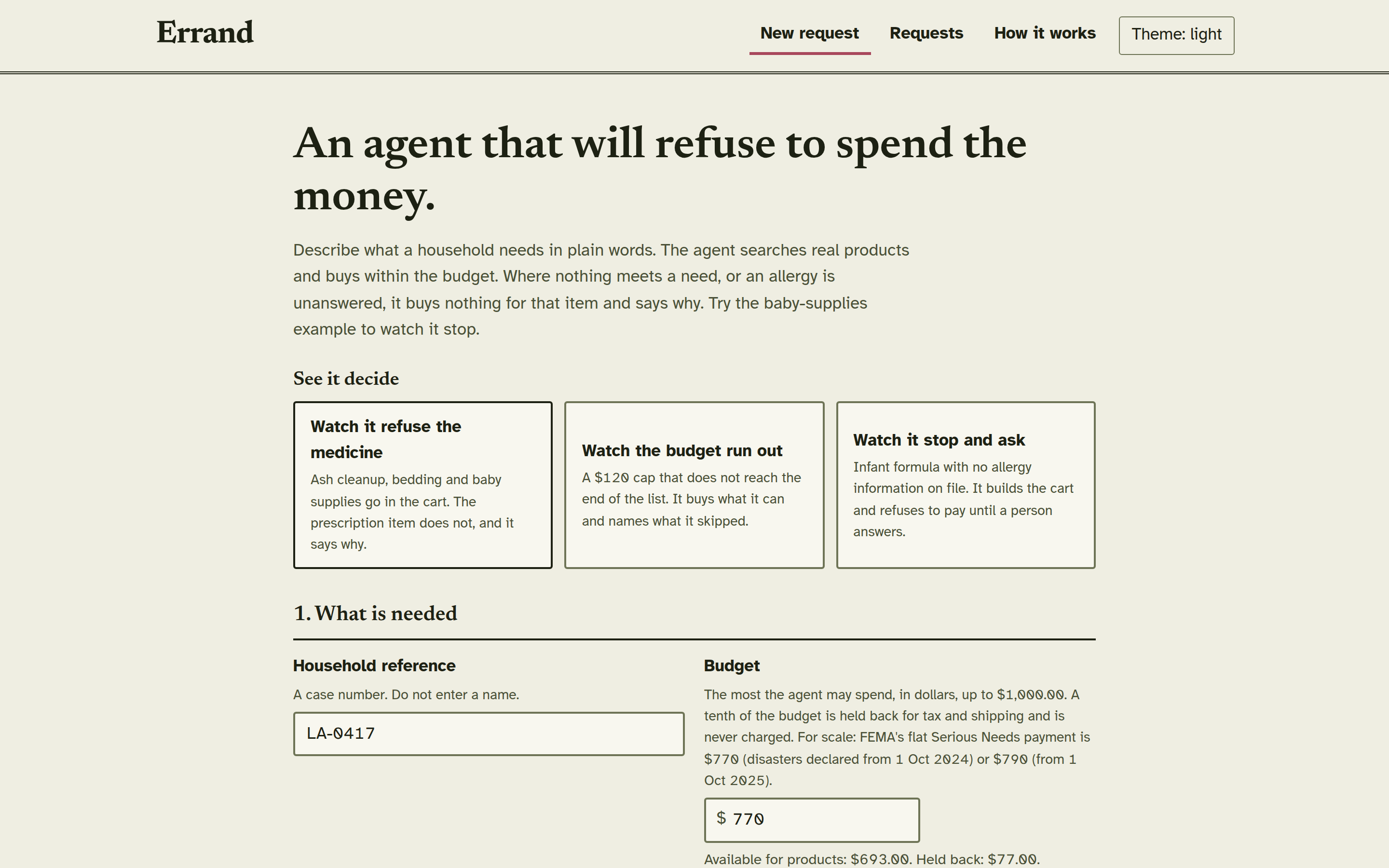
Three ways it declines
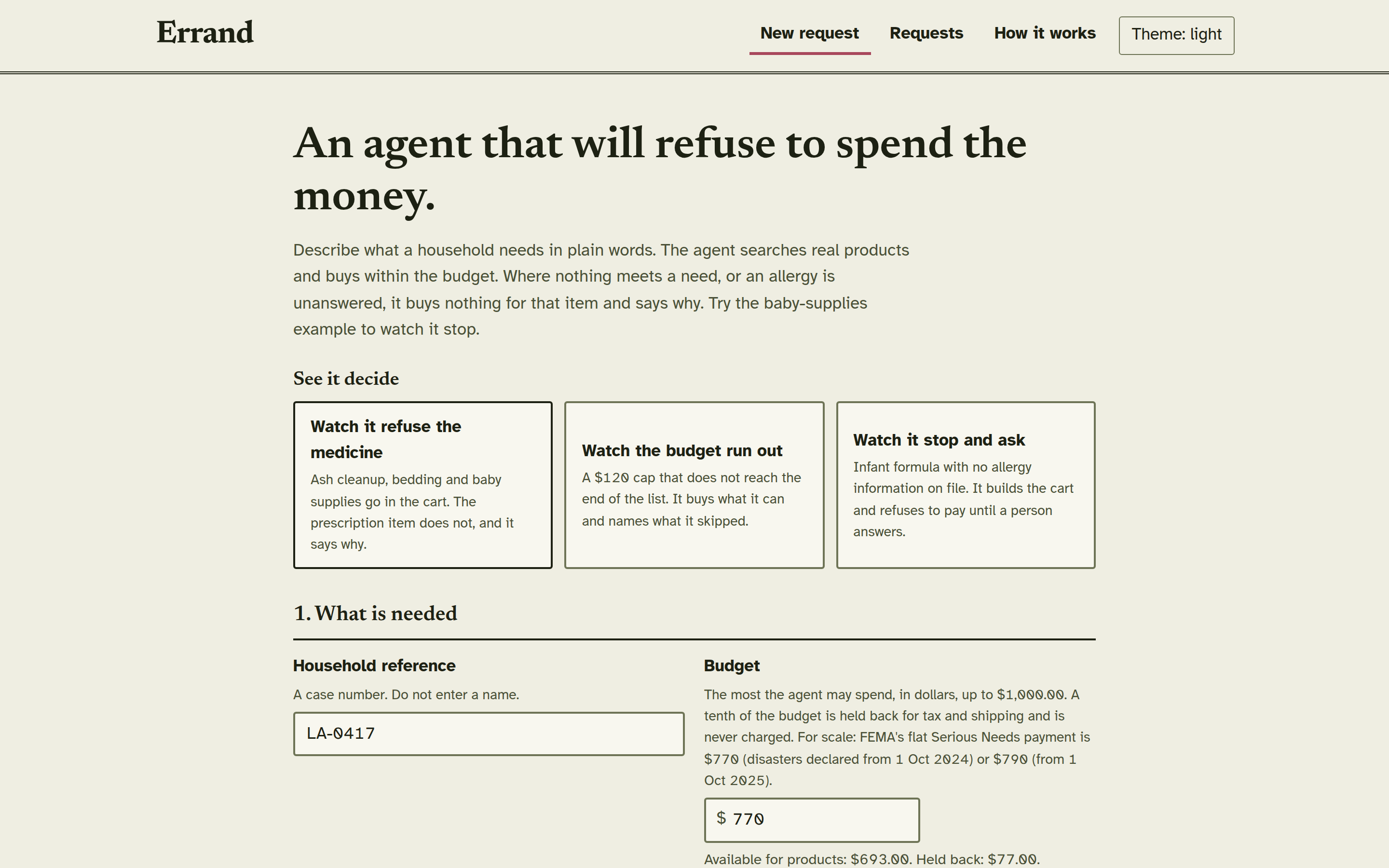
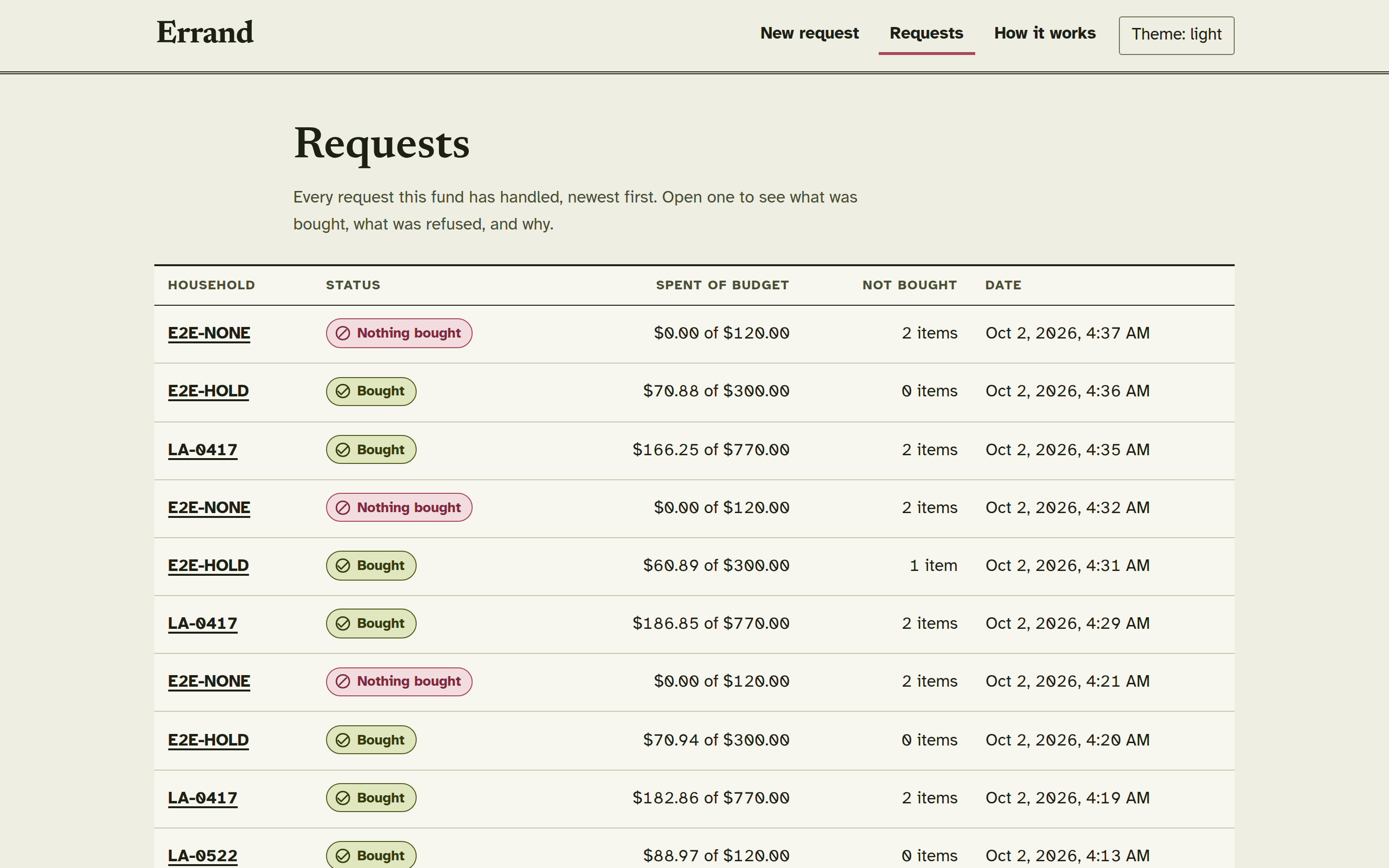
It will not buy prescription medicine. A family's list includes one, and the cart fills around it. The agent names the item and says why it will not be purchased.
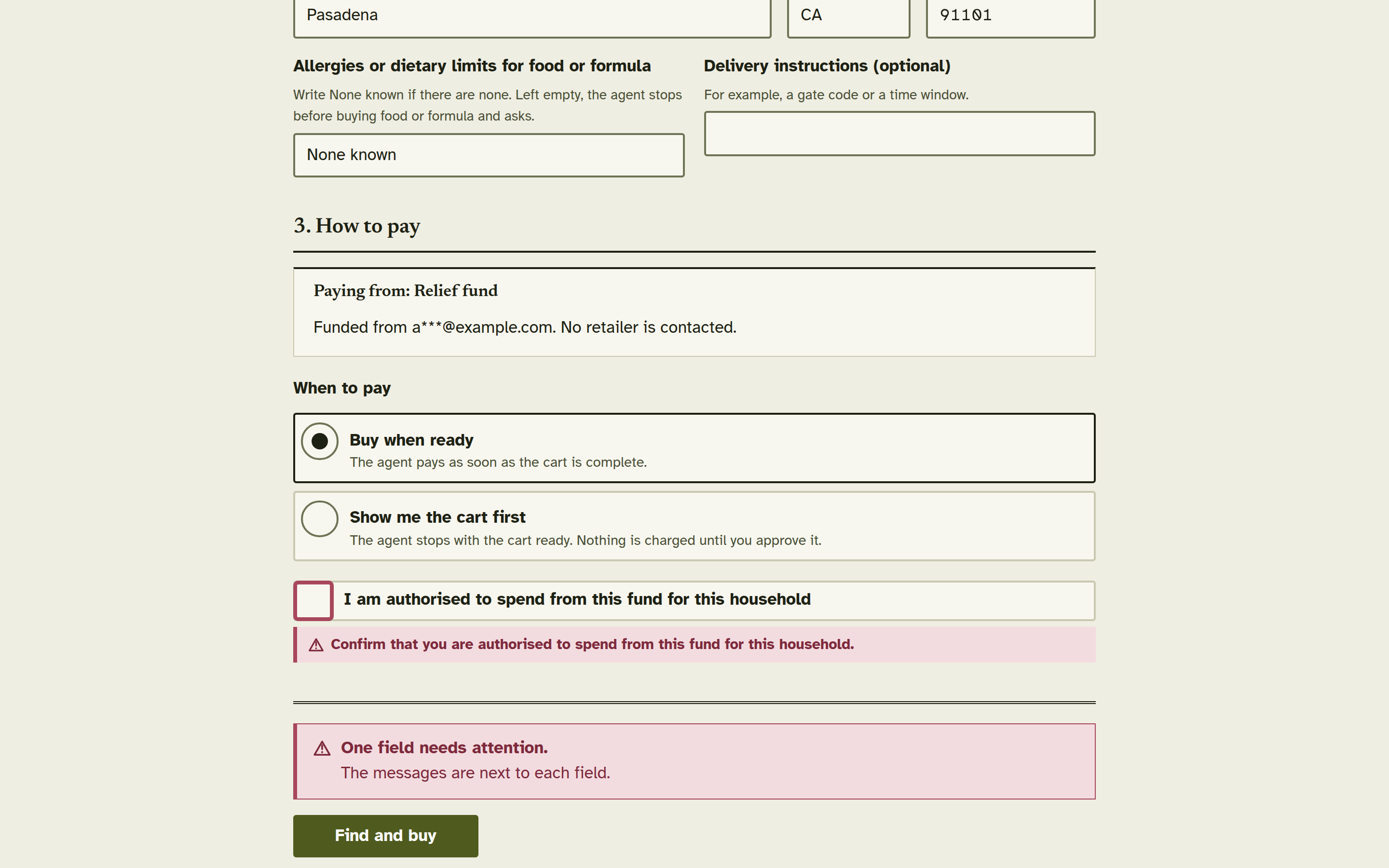
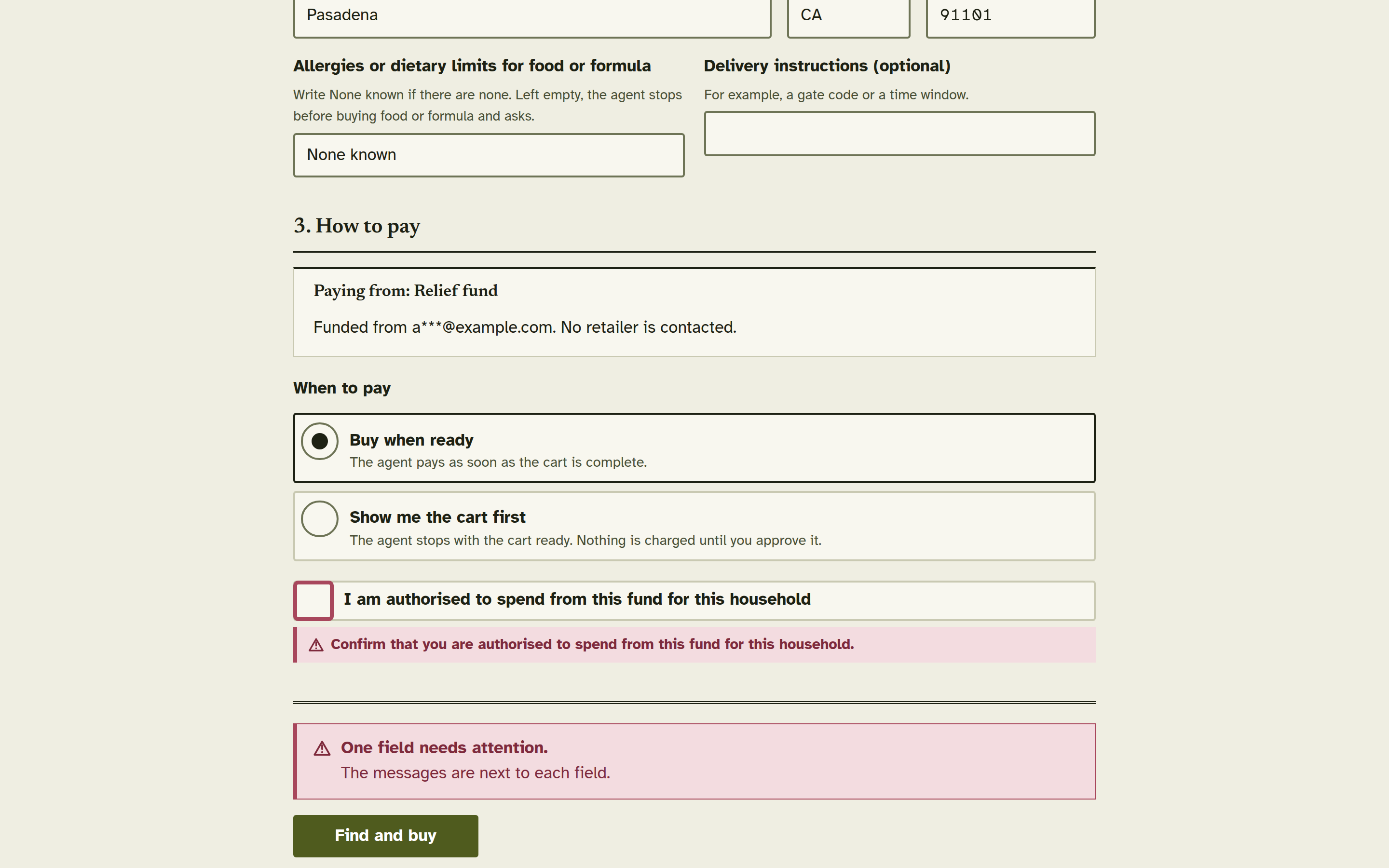
It stops when it cannot be safe. Infant formula with no allergy information on file — it assembles the cart and refuses to pay until a person answers. The money is authorized and held, not captured.
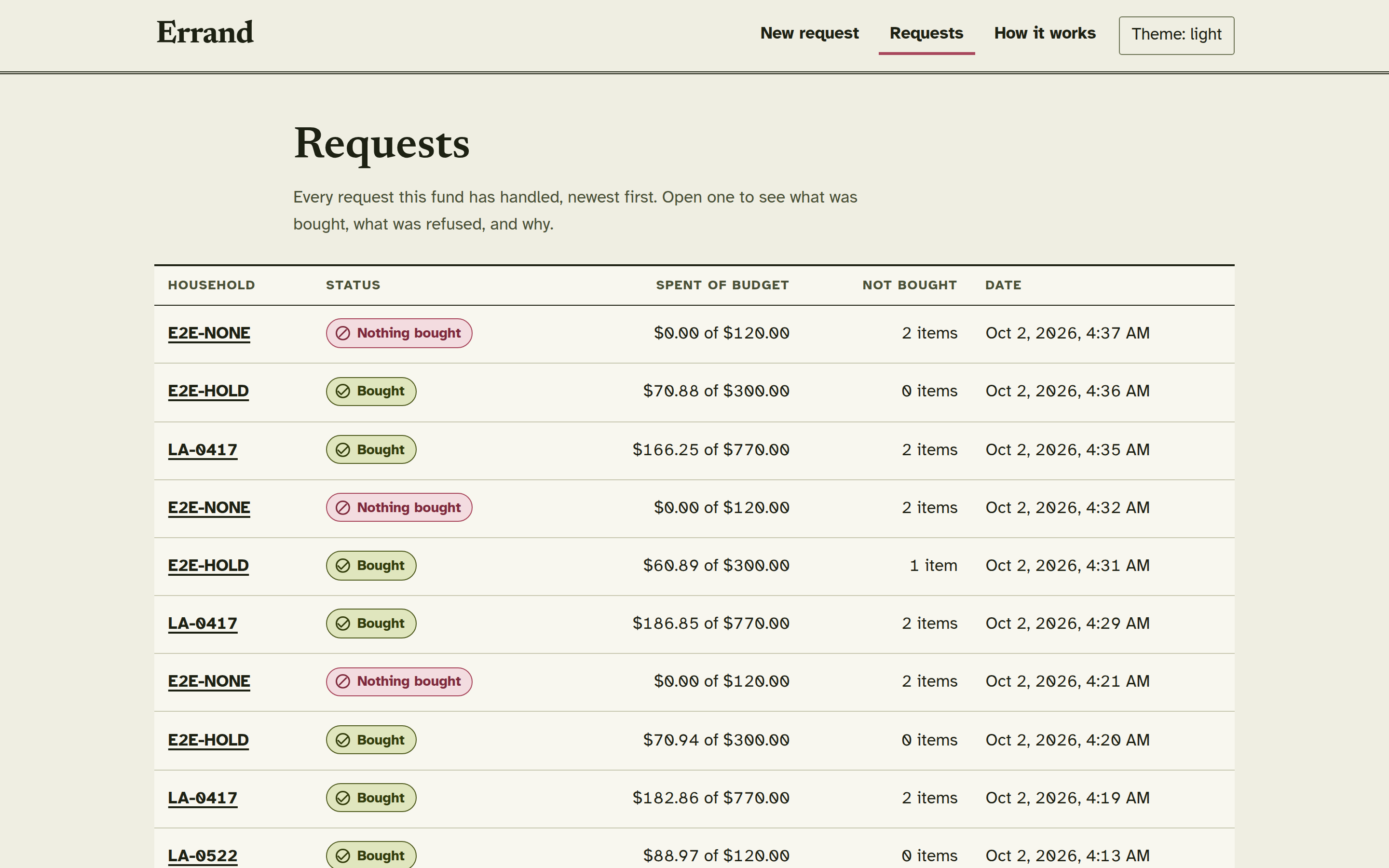
It says what it skipped. When a $120 cap does not reach the end of the list, the agent names what it dropped rather than quietly returning a shorter cart. A case worker needs to know the gap, because the gap is what the next conversation is about.
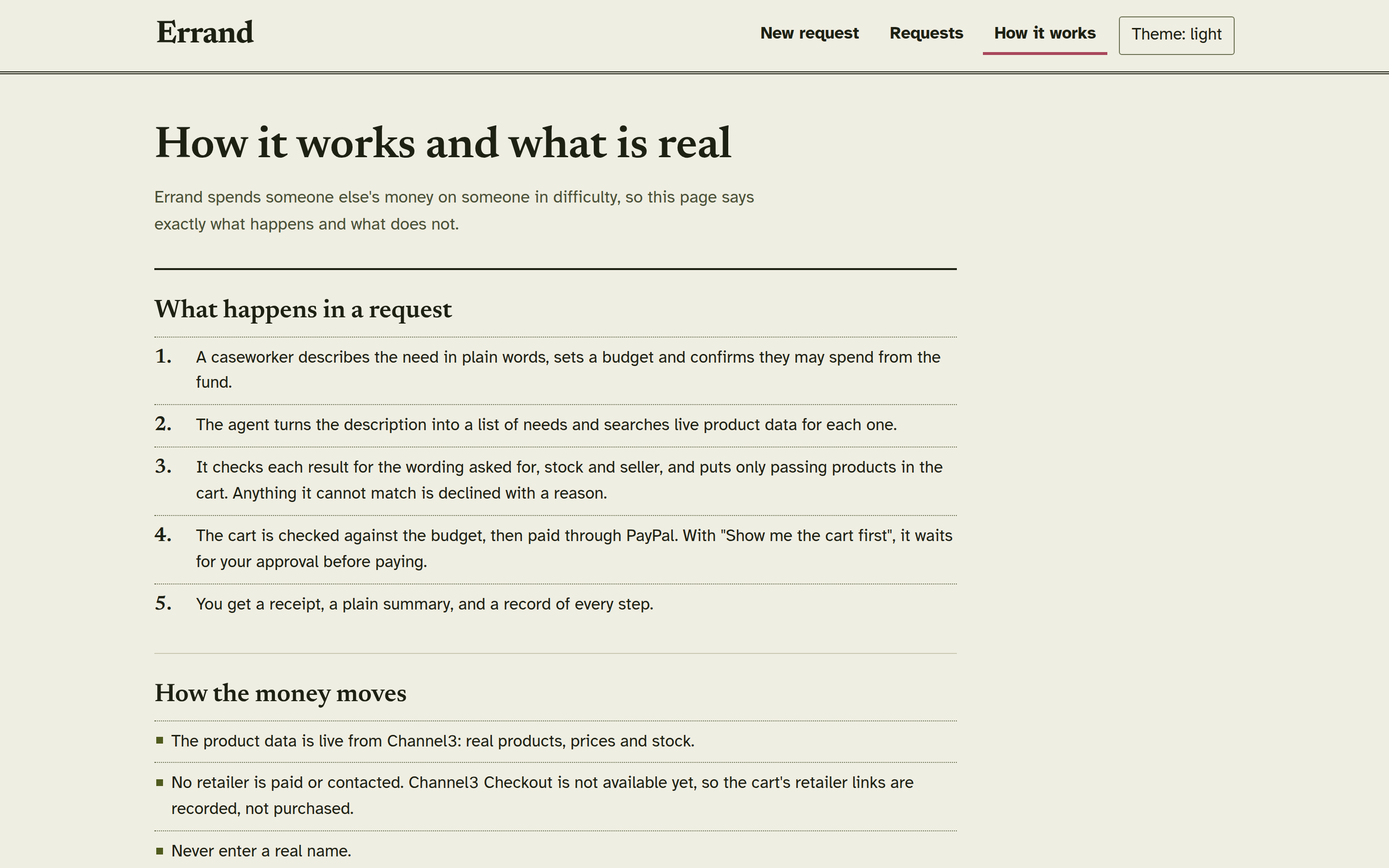
A tenth of every budget is held back for tax and shipping and is never spent on products, so a cart cannot be built that the fund cannot actually pay for.
Built With
- bedrock
- claude
- paypal
- s3
- sonnet
