Inspiration
What it does
OpenAI Hackathon Project Story
Reimagining How Organizations Operate with AI
Every organization faces the same invisible challenge.
Admissions use one system.
Finance uses another.
HR has its own software.
Learning Management lives somewhere else.
Departments work independently.
Projects, procurement, assets, inventory, websites, and reports all exist in separate silos.
The result is duplicated work, inconsistent data, delayed decisions, and countless hours spent moving information instead of creating value.
We asked ourselves one question:
What if an entire organization could run on a single intelligent platform where every department, workflow, and decision was connected?
That question became our hackathon project.
The Problem
Today's organizations don't suffer from a lack of software.
They suffer from too much disconnected software.
A typical institution manages:
- Admissions
- CRM
- Finance
- HR
- Payroll
- Learning Management
- Websites
- Procurement
- Inventory
- Projects
- Assets
- Reports
Each application stores its own version of the truth.
The same person is entered multiple times.
Approvals happen over email.
Reports are manually prepared.
Departments cannot collaborate efficiently.
Leadership never has a real-time picture of the organization.
Our Solution
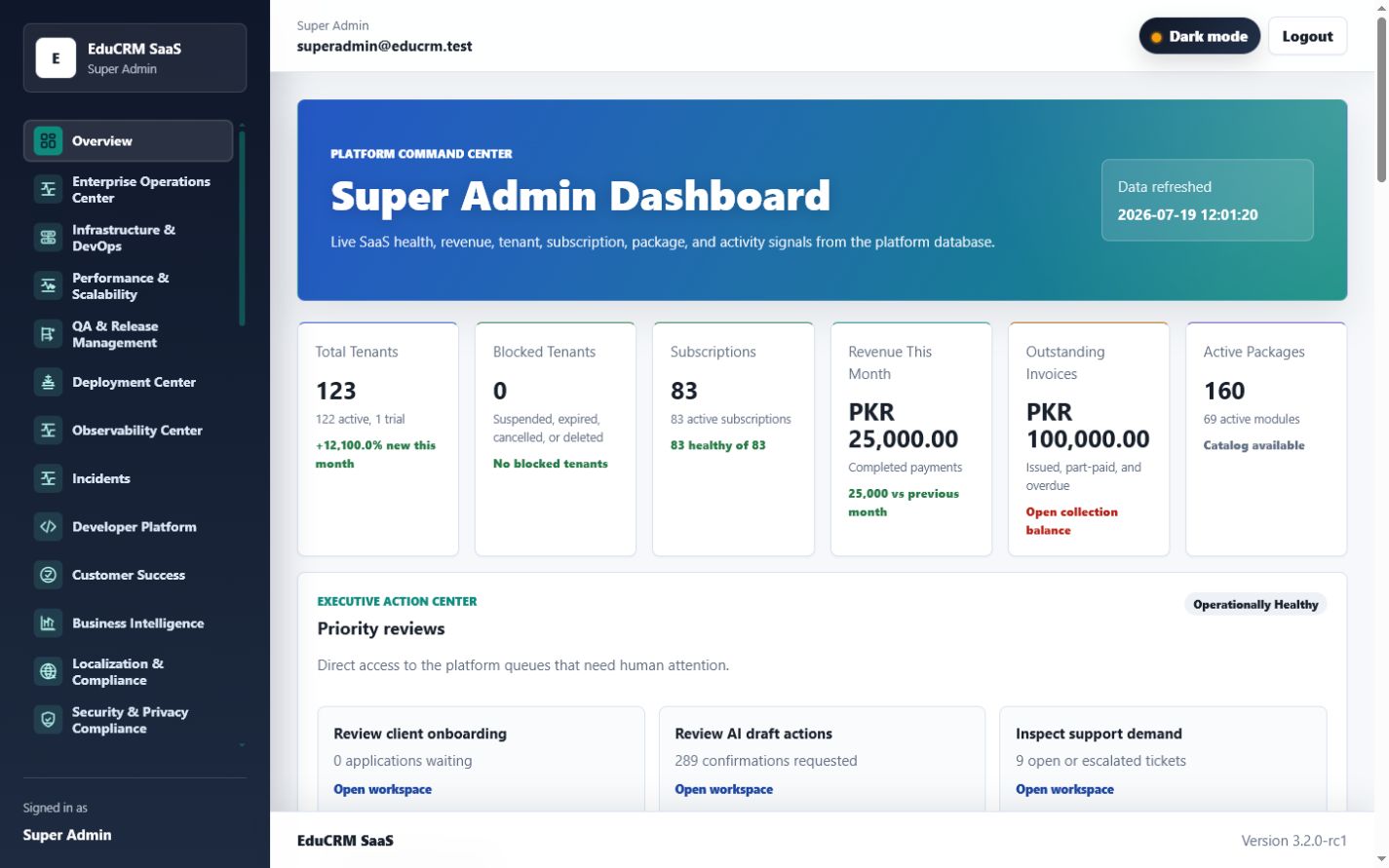
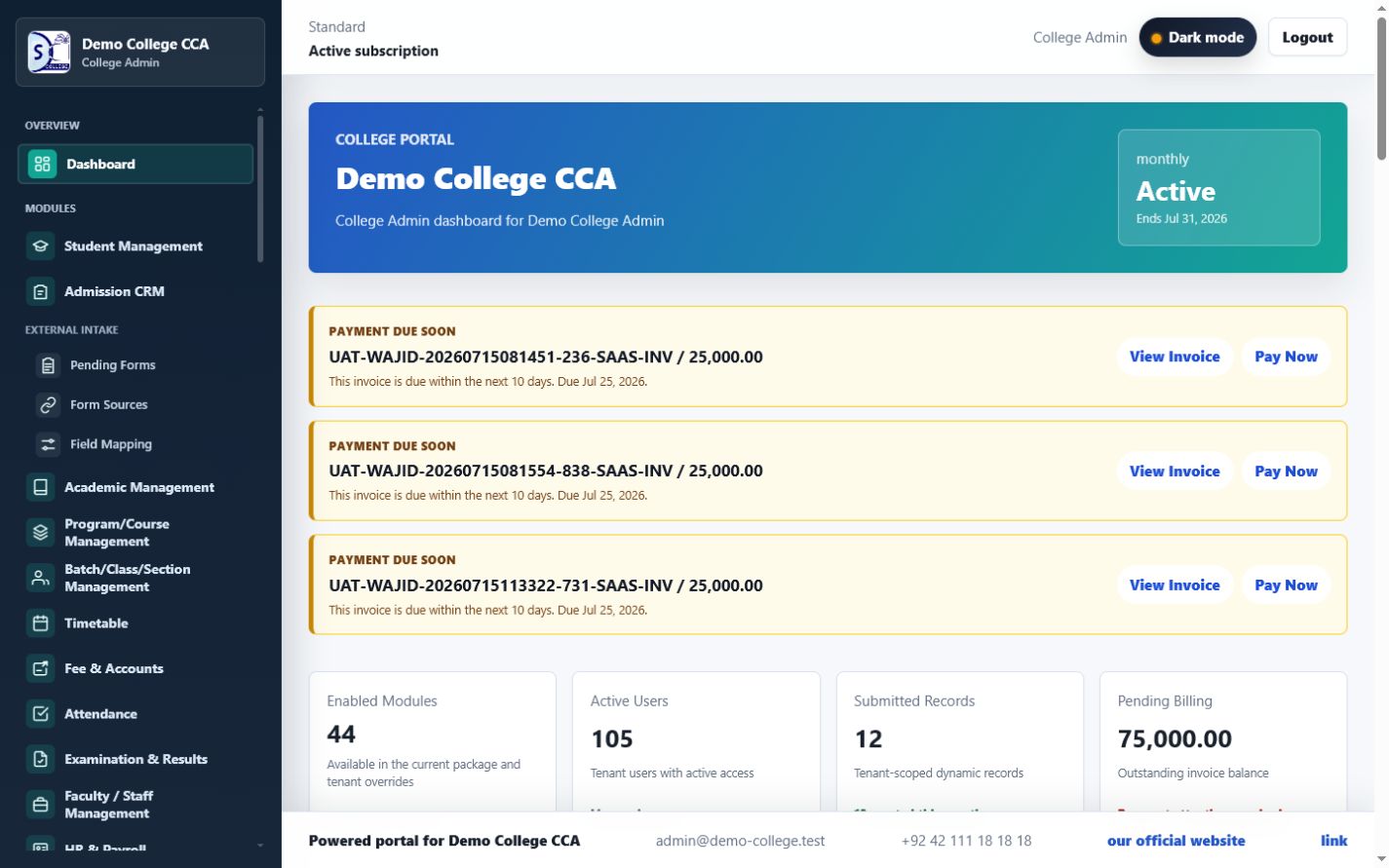
We built an AI-powered, enterprise-grade, multi-tenant ERP platform that connects every operational function into a single ecosystem.
Instead of asking organizations to purchase, integrate, and maintain many independent applications, our platform provides one unified digital operating environment.
Every module shares the same data model, permission system, workflow engine, analytics engine, and AI layer.
One login.
One database.
One workflow.
One source of truth.
Why This Project Is Different
This is not another school management system.
It is not another CRM.
It is not another LMS.
It is not another HR solution.
It is a configurable enterprise platform capable of serving educational institutions today and expanding into multiple industries tomorrow.
The architecture was designed around flexibility rather than hard-coded business rules.
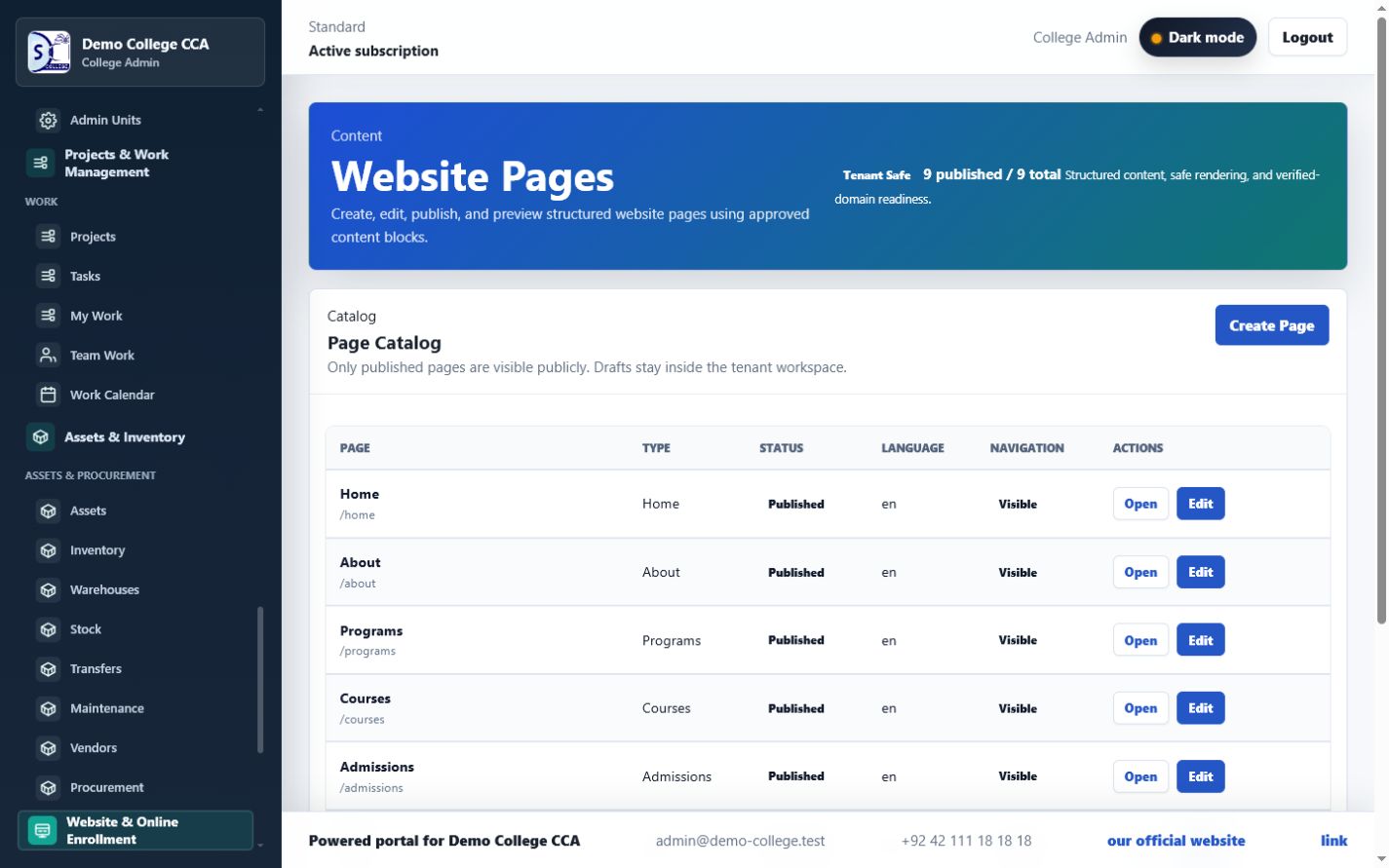
Organizations can configure workflows, forms, fields, dashboards, permissions, websites, departments, campuses, and business processes without modifying source code.
Where OpenAI Fits
Artificial Intelligence is not treated as an add-on.
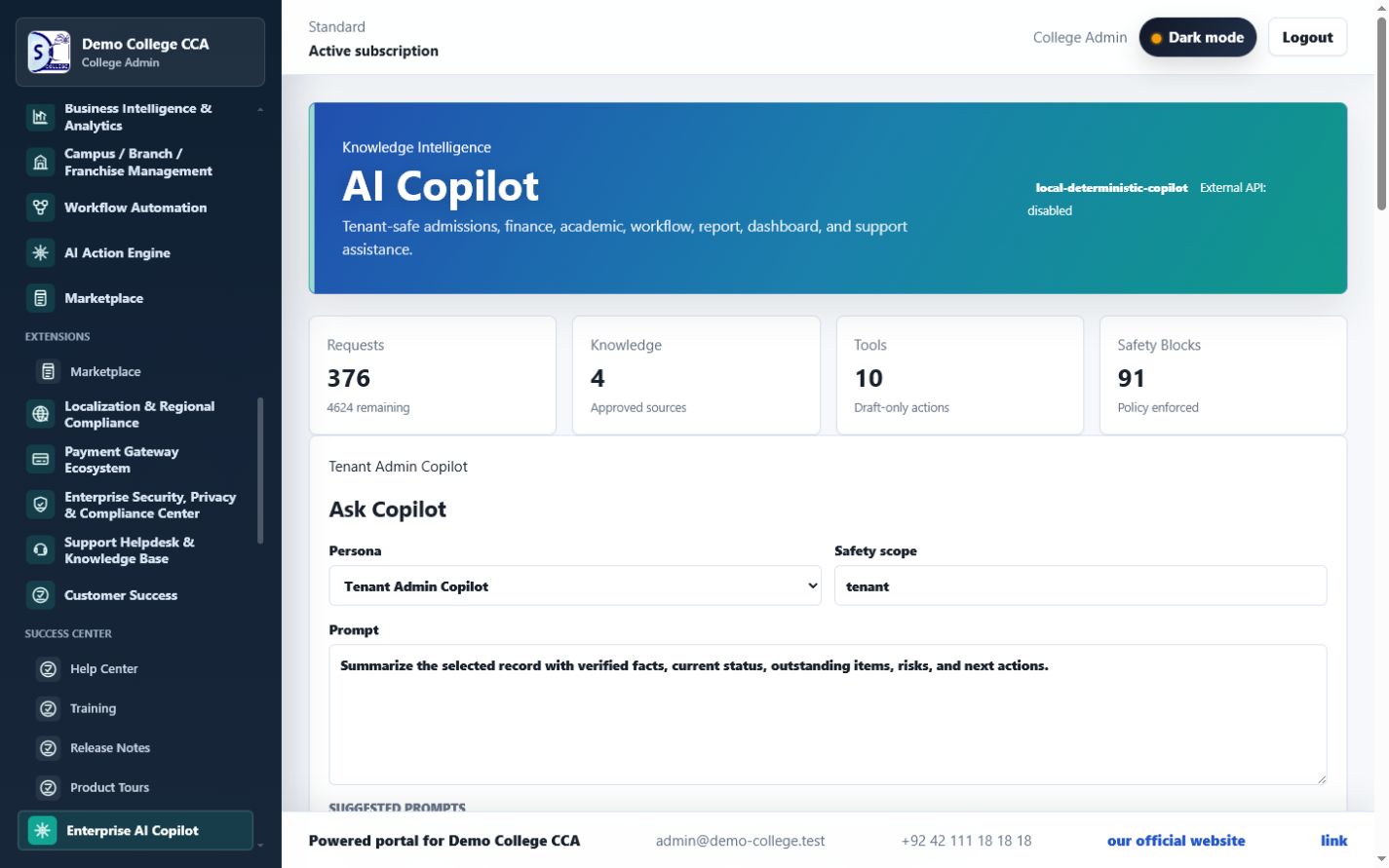
It is designed as an intelligent layer that helps people make better decisions.
Instead of replacing users, AI assists them by:
- understanding natural language,
- summarizing complex information,
- explaining reports,
- highlighting operational risks,
- identifying anomalies,
- recommending next actions,
- accelerating routine work.
Every response respects organizational boundaries, permissions, and governance rules.
A Real Business Flow
Imagine a student submits an online admission form.
Without any manual re-entry:
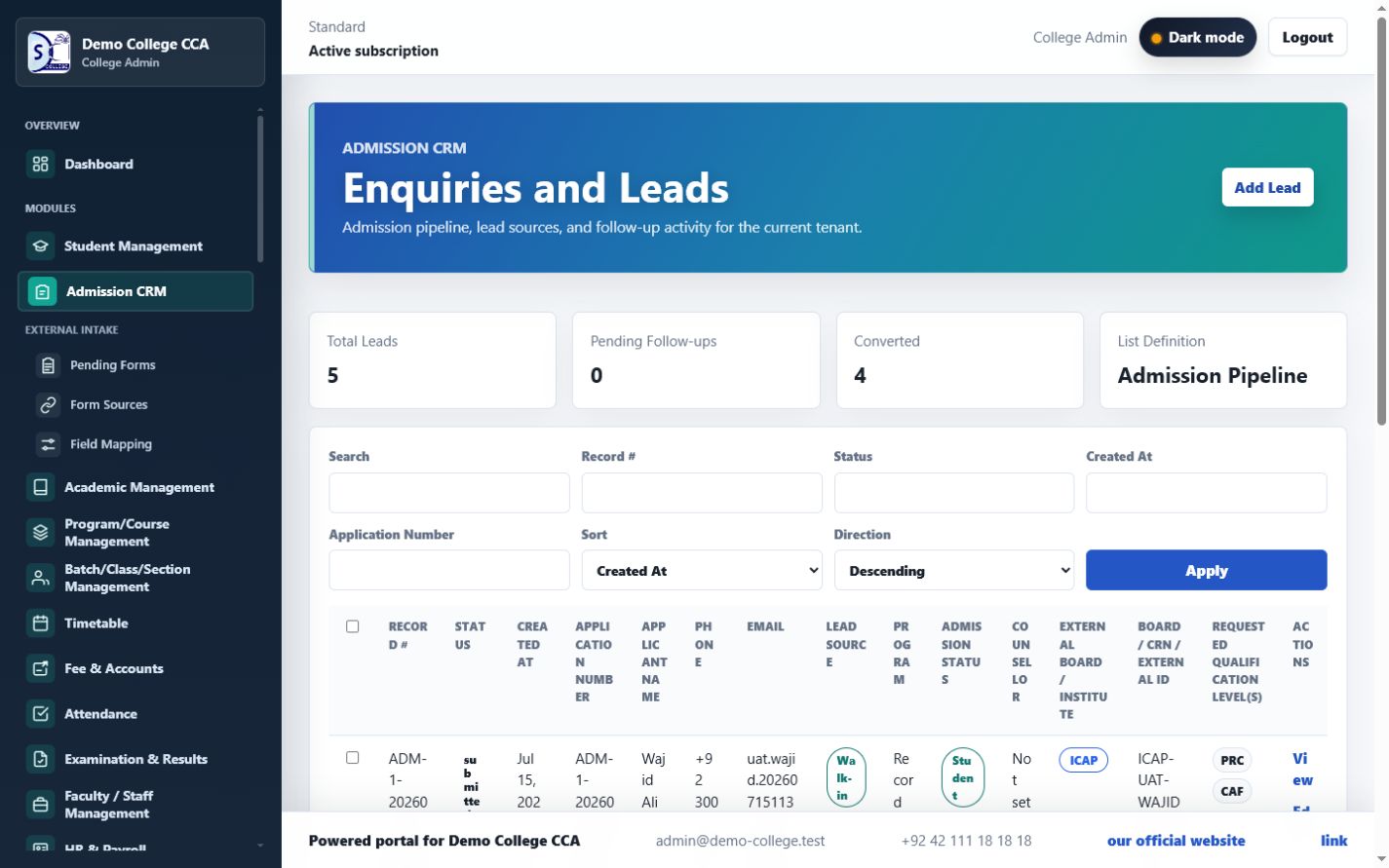
- the inquiry enters the CRM,
- admissions reviews the application,
- the applicant becomes a student,
- portal access is created,
- invoices are generated,
- payment is processed,
- learning platform access is granted,
- departments receive notifications,
- management dashboards update automatically.
One action triggers the entire business process.
No duplicate work.
No disconnected systems.
Enterprise Architecture
The platform supports:
- Multi-tenancy
- Multi-campus organizations
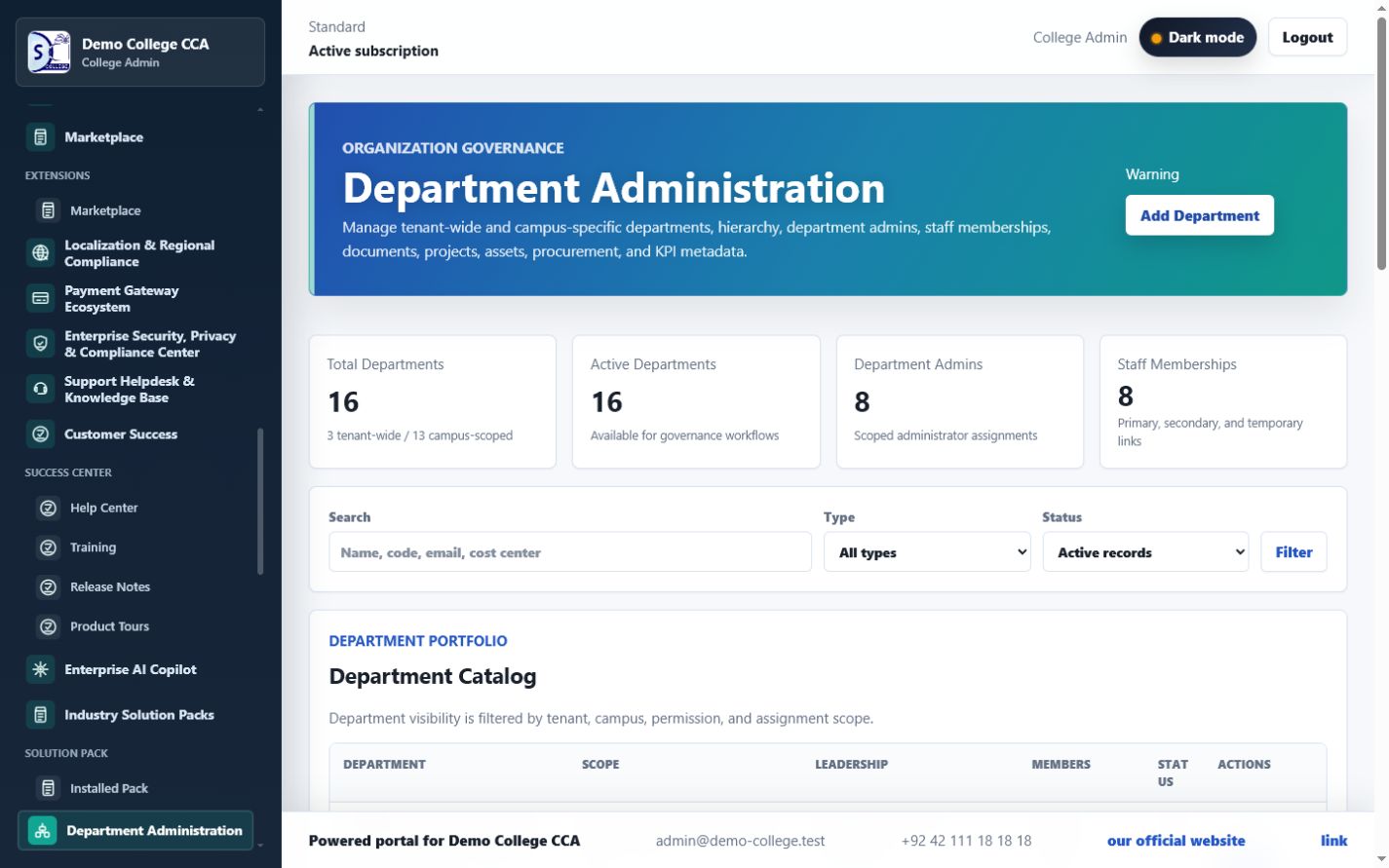
- Department governance
- Role-based security
- Dynamic workflows
- Dynamic forms
- Dynamic reports
- Public websites
- Online admissions
- AI-assisted operations
- Enterprise analytics
- Audit trails
- Configurable modules
- Package-based licensing
Every customer shares the same platform while remaining completely isolated through enterprise-grade tenancy controls.
Why It Matters
Organizations don't need another application.
They need a platform that grows with them.
A startup may begin with only CRM and website management.
As it expands, it can activate HR, finance, procurement, projects, inventory, AI assistants, and advanced analytics without migrating to another system.
The platform evolves alongside the organization.
Technical Highlights
- Enterprise multi-tenant architecture
- Metadata-driven configuration
- Dynamic workflow engine
- Dynamic form and reporting engine
- Secure role-based access control
- Tenant, campus, and department isolation
- AI-ready architecture
- Modular design
- Extensible APIs
- Scalable SaaS deployment model
The platform is designed to support organizations ranging from small institutions to large enterprises with thousands of users.
Our Vision
We believe the next generation of enterprise software will not be a collection of disconnected products.
It will be an intelligent ecosystem where every process is connected, every decision is data-driven, and AI becomes a trusted collaborator rather than just another feature.
This project is our step toward that future.
Why This Fits the OpenAI Hackathon
This project demonstrates how modern AI can move beyond chat interfaces and become an operational intelligence layer inside enterprise software.
By combining configurable workflows, unified enterprise data, and OpenAI-powered reasoning, we aim to transform how organizations operate, collaborate, and make decisions.
Rather than building AI for a single task, we built a platform where AI can continuously add value across every department and every workflow.
Our goal isn't to build smarter software.
Our goal is to help organizations make smarter decisions.

Log in or sign up for Devpost to join the conversation.