-
-
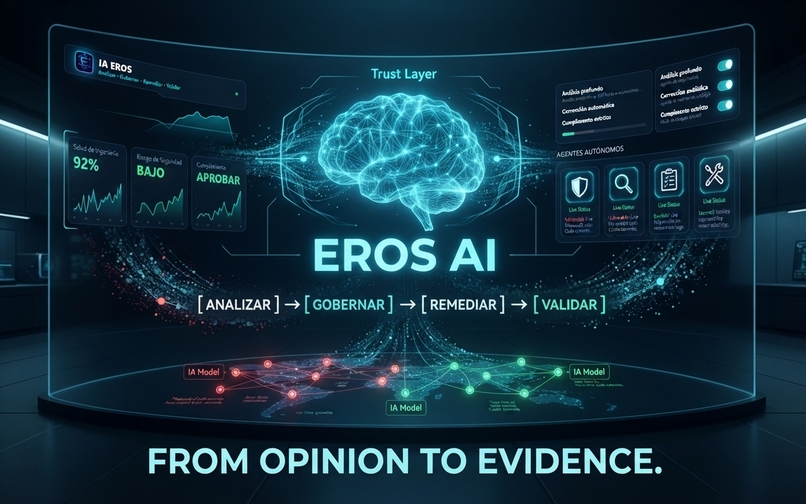
EROS AI - Trust Layer for AI-Generated Code
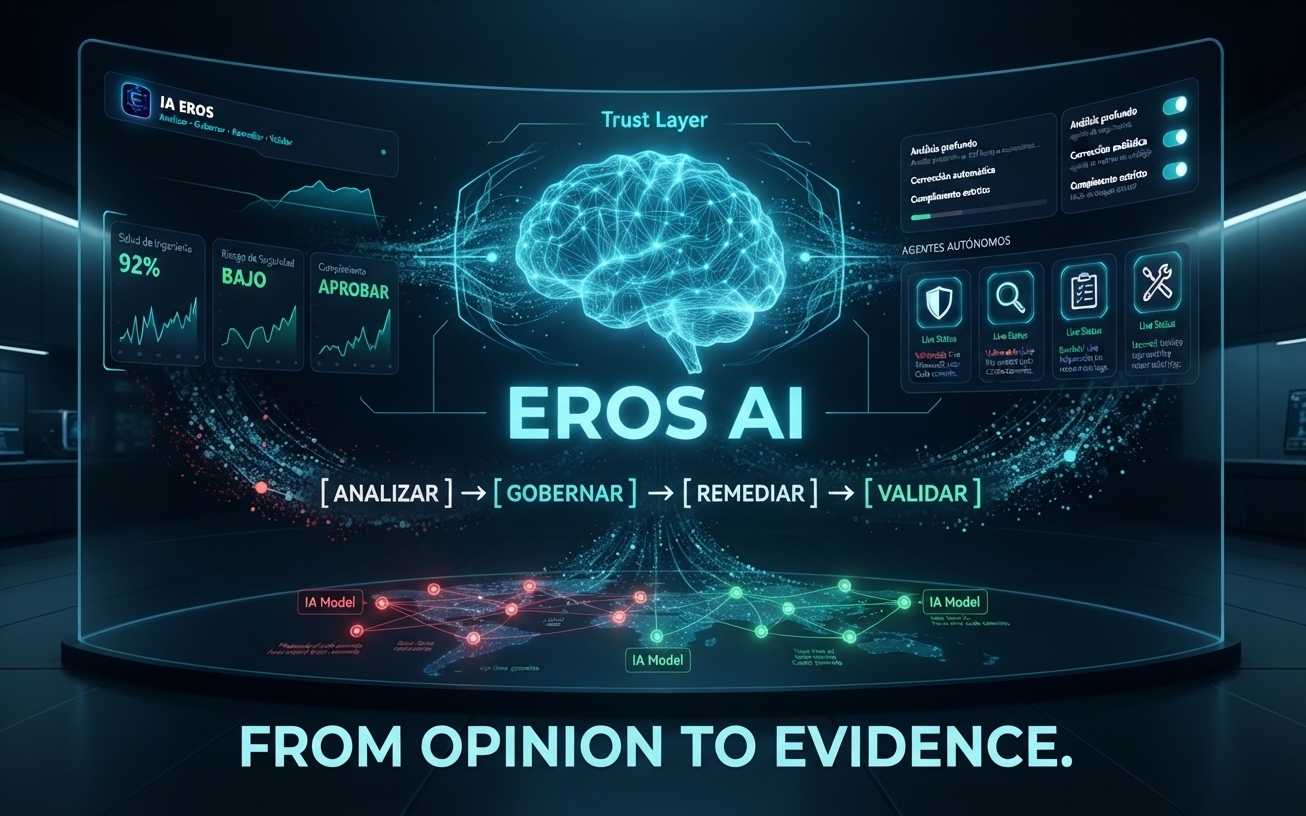
Inspiration
AI coding assistants generate production code in seconds, yet engineering teams still face a critical trust gap: exposed credentials, SQL injections, architectural drift, and unverified patches. Most AI tools merely suggest changes. EROS AI was built to move software engineering from opinion to verifiable evidence, acting as a Trust Layer for AI-Generated Code before changes reach production.
What it does
EROS AI is an Autonomous Engineering Governance Platform that analyzes, governs, remediates, and validates AI-generated code through concurrent multi-agent orchestration:
- Runtime Feature Flag Governance: Toggle deep AST analysis, automated remediation, and strict OWASP blocking policies in real time without redeploying pipelines.
- Specialized Concurrent Agents:
- Security Guardian: Isolates critical vulnerabilities (hardcoded credentials, SQL injection, unsafe execution, path traversal).
- Quality Inspector: Audits structural integrity, maintainability, and code complexity.
- Compliance Officer: Enforces regulatory and security guardrails.
- Remediation Generator: Synthesizes patches and triggers automated validation checks.
- Contextual Risk Intelligence & Evidence: Enriches findings with reachability, business impact, and confidence signals, producing auditable execution traces instead of subjective opinions.
How we built it
We built the backend and orchestration layer using Python 3.11+, FastAPI, and Pydantic v2, paired with Microsoft Foundry IQ (azure-ai-projects) and resilience mechanisms (circuit breaker, token budget controls, and local fallback), alongside an interactive dashboard built with HTML, Tailwind CSS, and Alpine.js.
Challenges we faced
Balancing autonomous remediation speed with strict determinism was the core engineering challenge. Ensuring that proposed fixes do not introduce regressions required isolating agent responsibilities and gating remediation behind automated validation before marking execution as Validation Complete.
What we learned
Governed autonomy requires runtime control planes and objective verification gates—not just stronger prompts. Shipping v1.0-hackathon-submission with 151/151 passing tests, 69.24% code coverage, and 0 linter issues reinforced how deterministic checks build real engineering trust.
Links
- Demo Video: https://youtu.be/Y5Fm0csCYQg
- Repository: https://github.com/raulrodriguezmesia-blip/eros-ai
