-
-
-
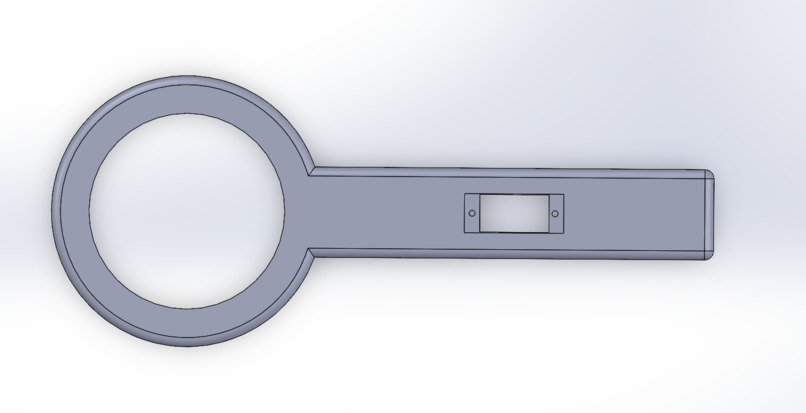
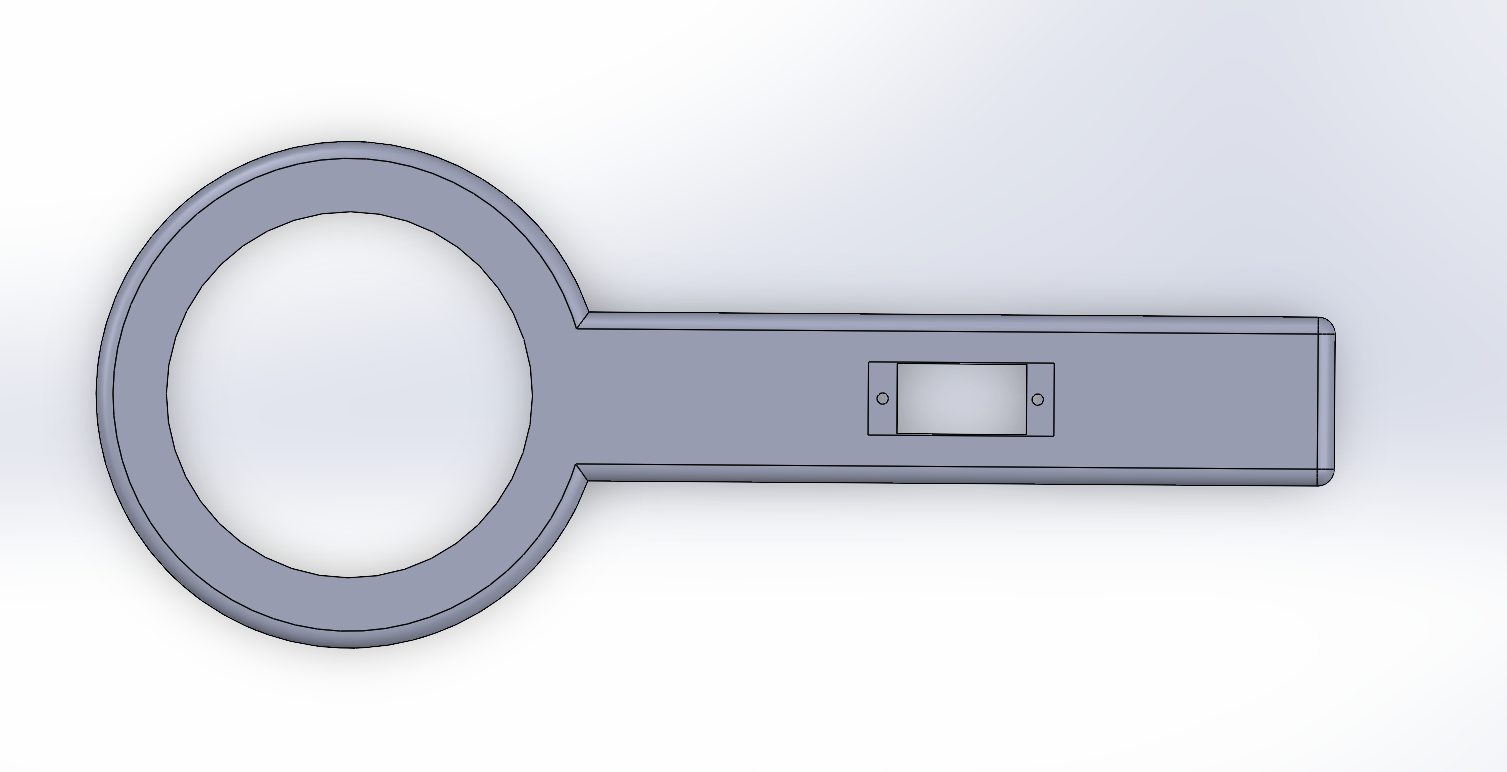
SolidWorks Model of Can Opener
The purpose behind this project is to enable those with limited hand mobility / hand strength to open jars with ease. Opening jars requires significant grip strength, wrist mobility, and coordination which can still make it difficult for individuals with reduced ability.
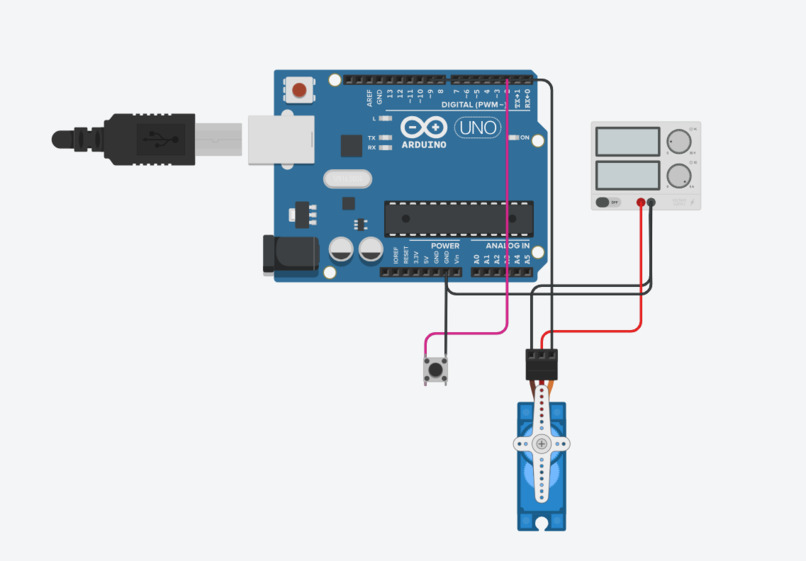
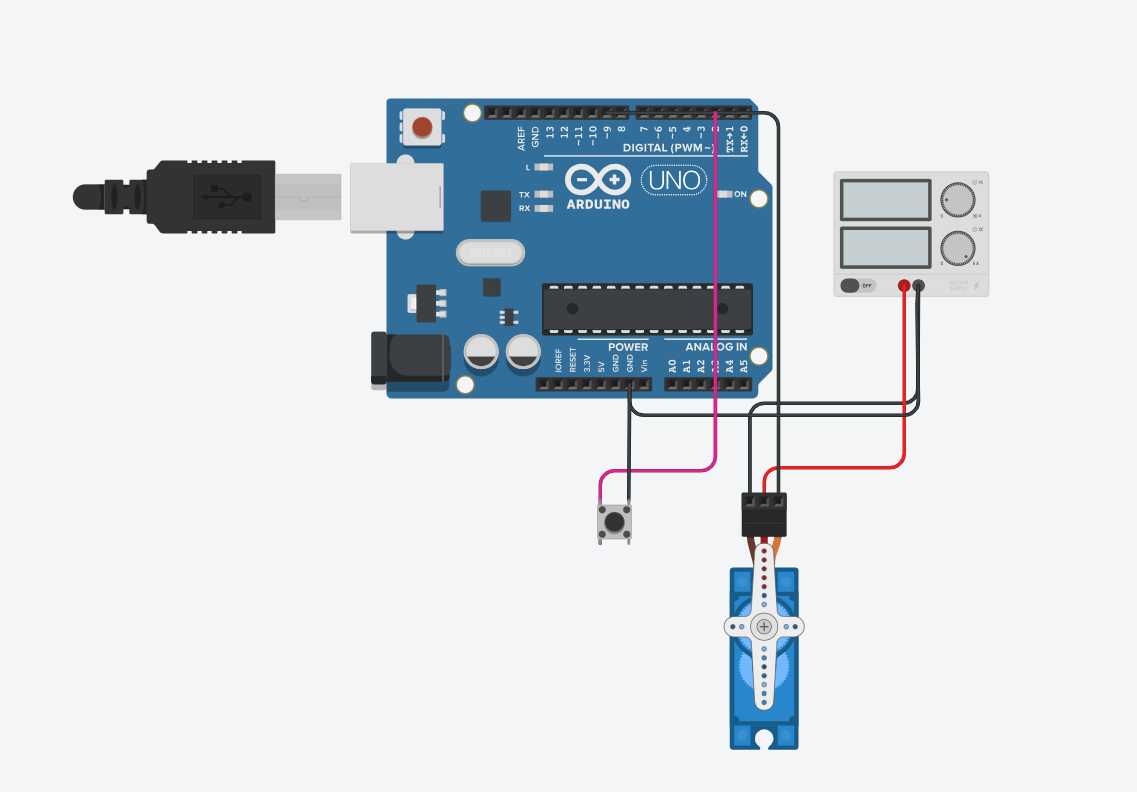
Our solution, designed in SolidWorks, features a C-shaped head which fits around the jar lid in order to simulate grip strength, and textured inner surfaces that prevent the slipping of the jar. The handle also has a mount to contain a servo motor which will be connected to a push button. When the button is pushed, the can will open or close depending on what's needed.
The can opener was modelled in SolidWorks, whereas the connections for the servo motor was modelled in TinkerCad.
PETG is an appropriate material to use for this. It is a thermoplastic commonly used in 3D printing because of its mechanical strength, impact resistance, and lightweight properties. We need our jar opener to withstand moderate loads, be able to experience loading and accidental drops, and still be light enough for those target users that have limited hand strength and could struggle with heavier tools.
PETG filament is widely available and relatively inexpensive. Using an estimated device weight of 40 grams and a price of $0.022 - $0.035 per g, the material cost floats around $0.88 - $1.40. To account for potential error and support material, the estimated cost could range from $2 - $5.
Our design does not require complex electronics or other mechanical components that can keep the cost relatively low. The usage of PETG is crucial as it provides an affordable and practical material for creating an assistive device.
The load analysis would be to determine the strength of the plastic handle and if it can withstand force during usage:
Assumptions Parameter Symbol Estimated values Arm width w 20 mm Arm thickness t 5 mm Arm length (from ring) L 80 mm Pocket start (from ring) x 15 mm Pocket width b 12.5 mm Applied load at free end P 5 N Material PLA, 3D printed Modulus E 3500 MPa Allowable stress σ_allow 30 MPa (conservative for layer direction) Stress concentration at pocket K_t 2 (typical for a cutout)
Moment at the pocket’s near edge: M = P × (L − x) = 5 × 65 = 325 N·mm
Section stiffness:
Solid arm: I = w·t³/12 = 20 × 125 / 12 = 208 mm⁴ At the pocket: I = (w − b)·t³/12 = 7.5 × 125 / 12 = 78 mm⁴
Stress (σ = M·c / I, c = t/2 = 2.5 mm):
Solid: 325 × 2.5 / 208 = 3.9 MPa At pocket: 325 × 2.5 / 78 = 10.4 MPa (2.7× higher) With K_t = 2: about 21 MPa
Factor of safety: FOS = σ_allow / σ = 30 / 21 ≈ 1.4
δ ≈ P·L³ / (3·E·I) = 5 × 80³ / (3 × 3500 × 208) ≈ 1.2 mm (using the solid section, so the real value is slightly higher).
SG90 stall torque is about 0.18 N·m (176 N·mm). If the servo’s torque is reacted through the tabs as a force couple:
F = T / spacing = 176 / 27.5 ≈ 6.4 N per screw
Built With
- solidworks
- tinkercad
