-
-
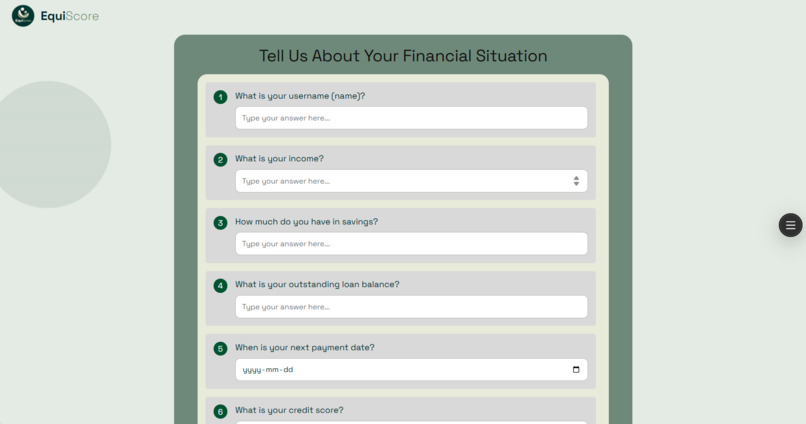
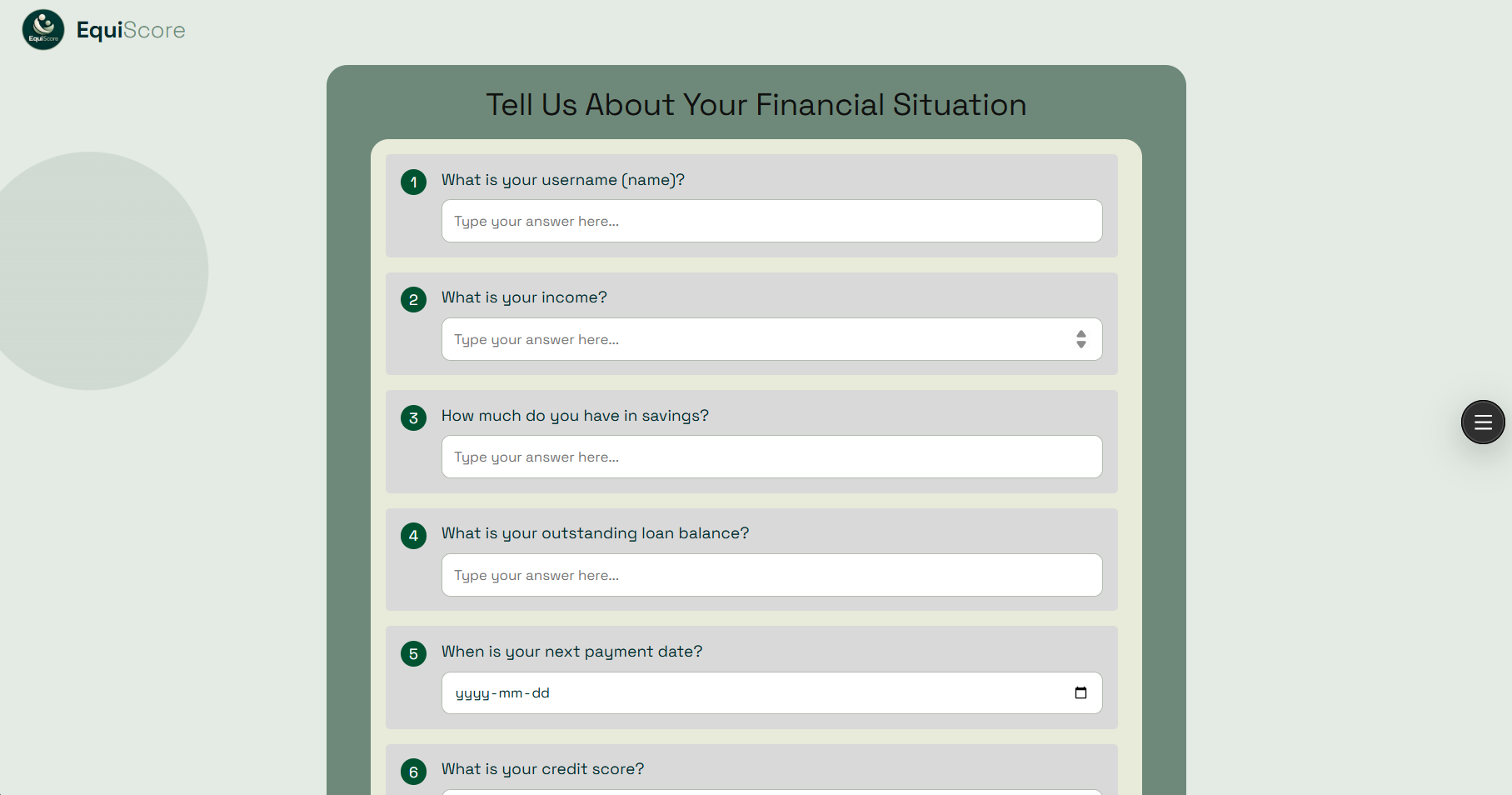
Personal Profile Details
-
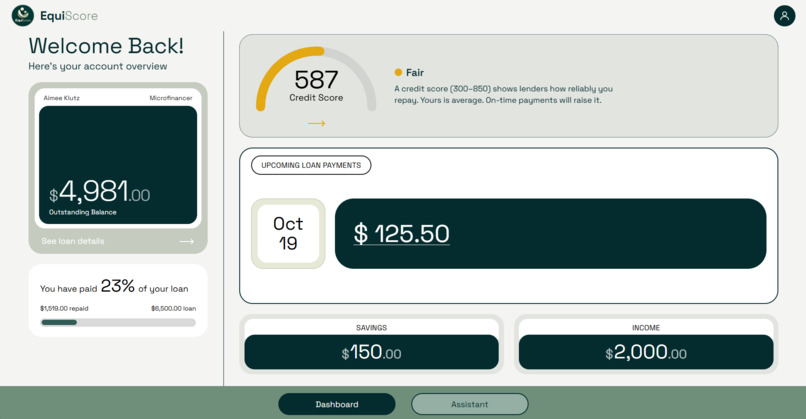
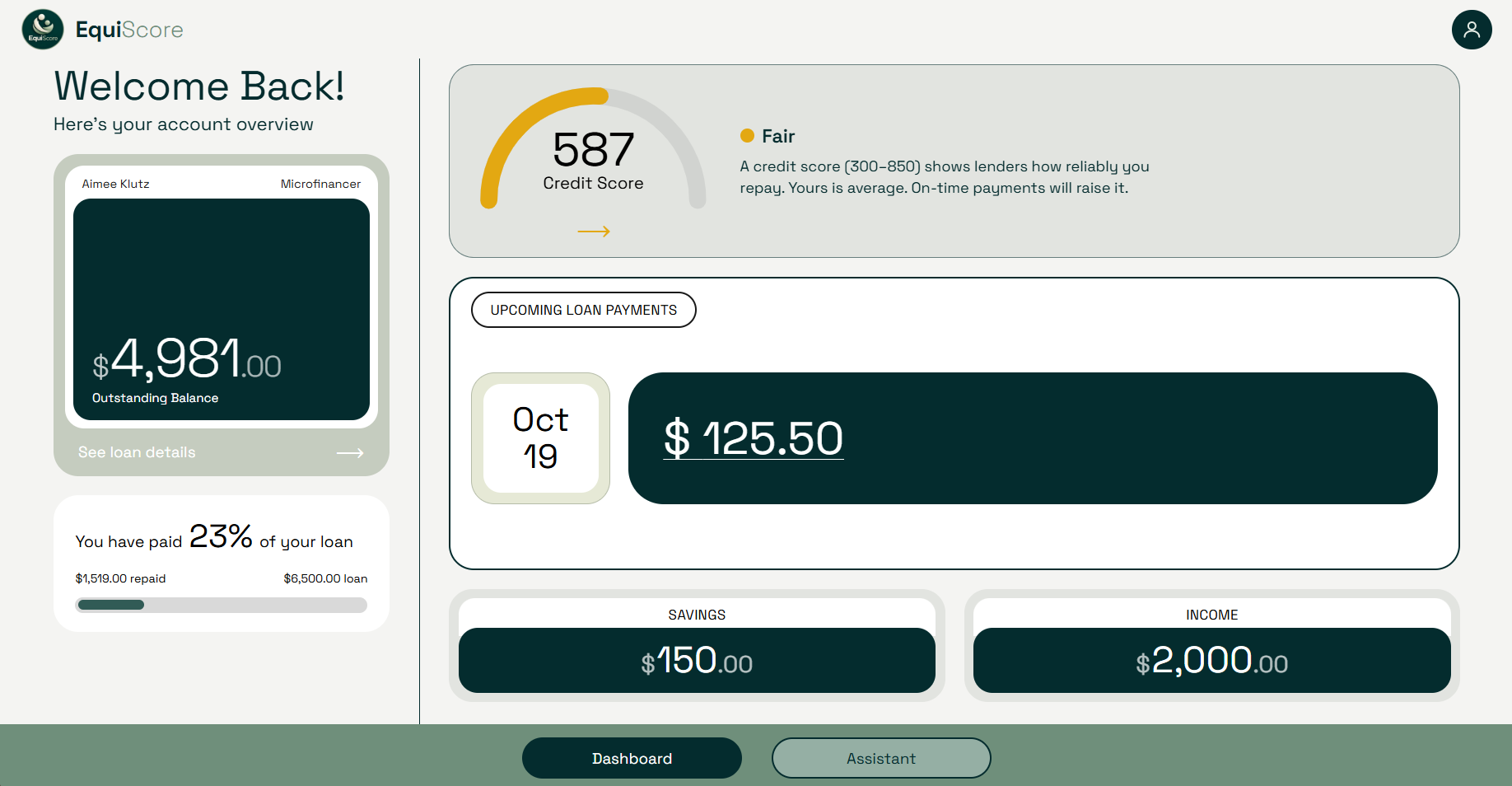
Dashboard
-
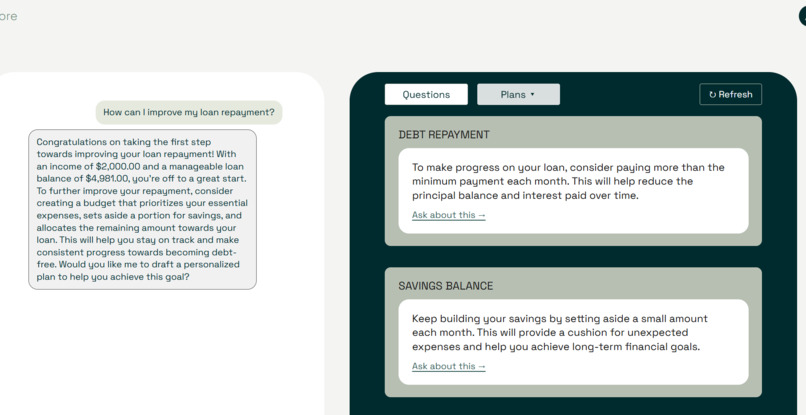
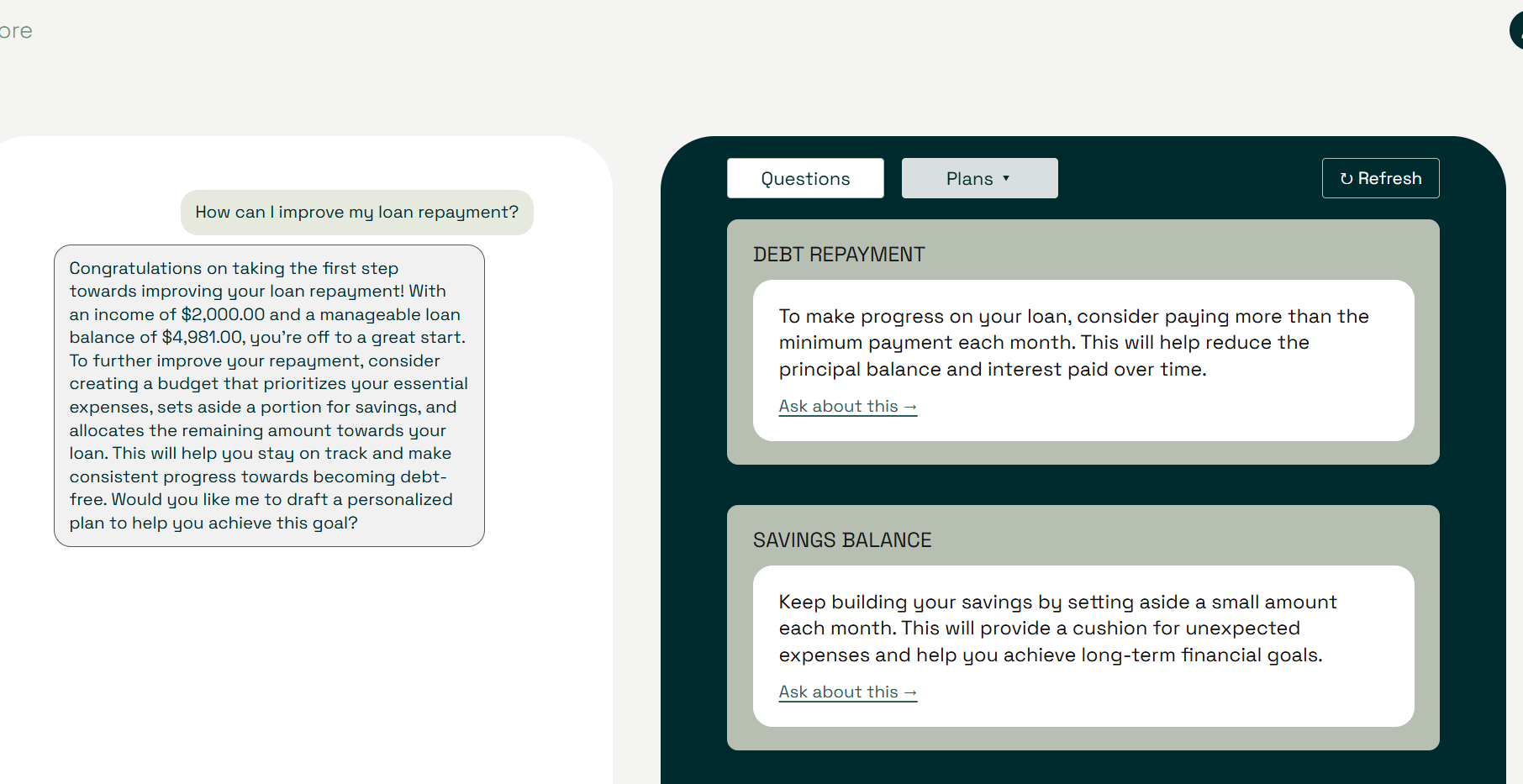
Questions and Chatbot
-
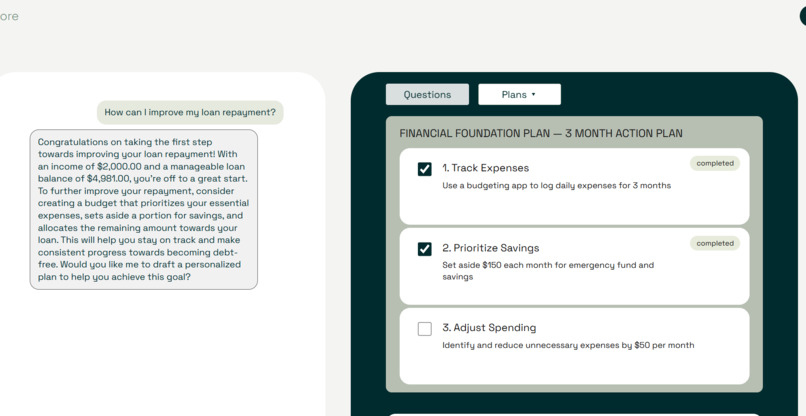
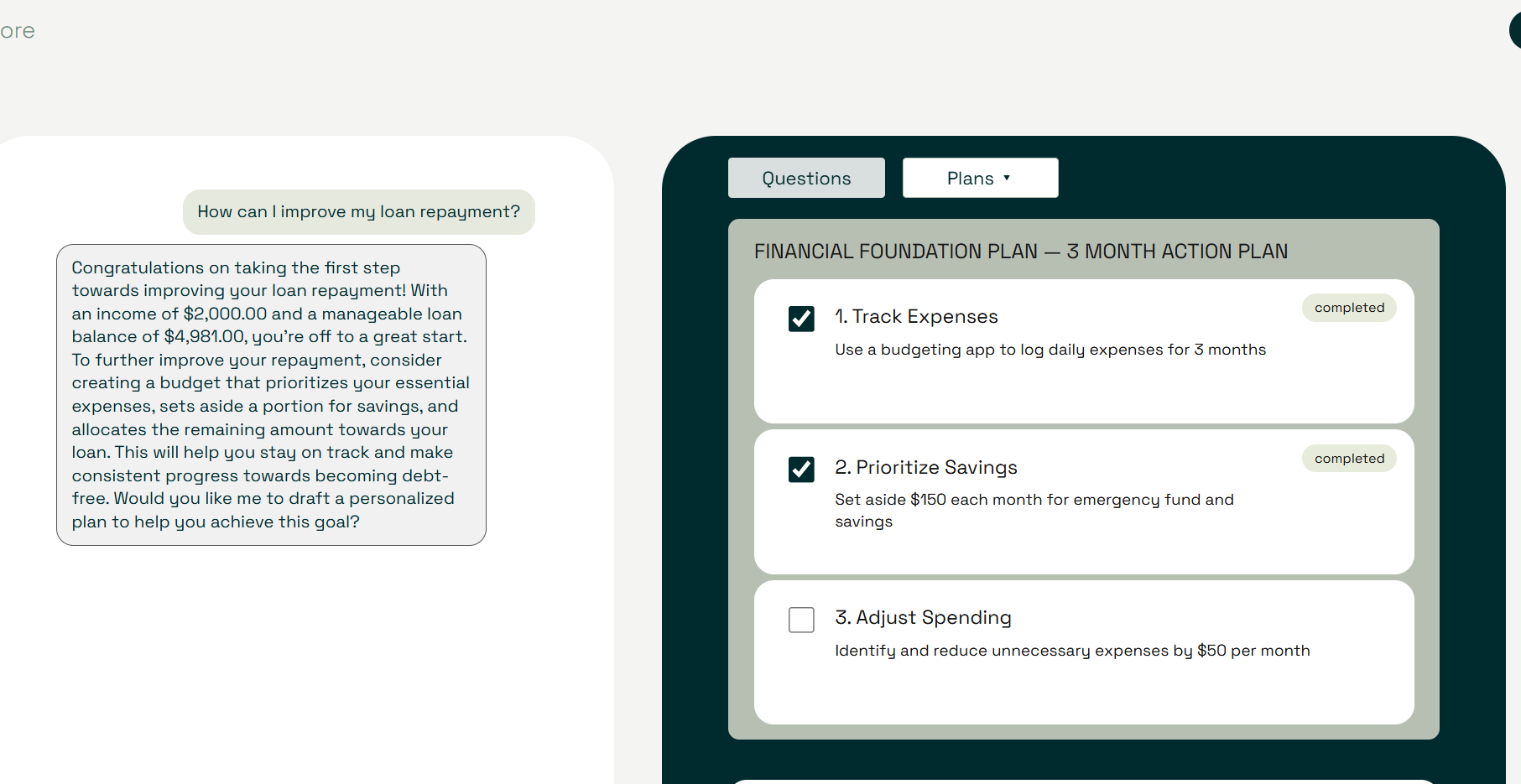
Plan Generation
-
This image is currently processing. Please be patient...

Inspiration
Traditional credit scoring models like FICO (The Fair Isaac Corporation) are built on a paradox: you need credit to get credit. This structural limitation systematically locks out the world's most vulnerable micro-entrepreneurs. We were profoundly inspired by the pioneering work of institutions like the Grameen Bank, which proved that prioritizing women—who make up 68% to 90% of microfinance borrowers—leads to exceptionally high repayment rates because they consistently channel capital back into driving household and community welfare. EquiScore was built to serve the "active poor" and rural populations across Africa, the Pacific, and Latin America. These individuals face four systemic conditions: complete exclusion from brick-and-mortar traditional banks due to a lack of traditional credit history, zero access to standard collateral, an inability to meet steep minimum balance thresholds, and a vital dependence on microloans to buy basic tools to create immediate revenue. Our app targets individuals with low or non-existent credit scores who need access to microloans to launch or scale micro-enterprises.
What it does
Our solution is EquiScore, an AI-powered microfinance platform designed to address both problems. The platform has three main components. First, our AI credit scoring model explores how alternative financial indicators can help assess repayment risk for people with limited credit histories. Second, our loan management dashboard allows users to track their outstanding balances, repayment schedules, income, and savings. Third, an AI financial assistant provides personalized budgeting suggestions, repayment reminders, and guidance to help borrowers manage their finances. What differentiates EquiScore is that we don’t want to focus solely on whether someone is likely to default. We want to explore how AI can support borrowers throughout the entire lending process, from credit assessment to repayment.
How we built it
- The Machine Learning Pipeline: Built using Python and LightGBM to ingest tabular financial datasets. Our pipeline sanitizes inputs by stripping out demographic proxy data to shield against systemic bias, processing rolling income-to-debt velocities instead.
- The REST API Router: Powered by FastAPI. It exposes lightning-fast POST routes that accept JSON payloads of user metrics (savings, profit margins, active loan terms) and maps out custom alternative credit wellness vectors.
- The User Interface: A responsive, interactive frontend built using Vite, React, and Tailwind CSS. We specifically optimized the UX for low-friction, readable layout blocks suitable for mobile microfinance tracking.
Challenges we ran into
Contextualizing AI Advice Safely: Standard Large Language Models often give advice suited for high-income corporate users. It was highly challenging to fine-tune our AI Chatbot's prompt parameters to give highly practical, localized, and empathetic guidance tailored explicitly for a rural entrepreneur trying to buy agricultural tools or sewing inventory without falling into high-interest debt cycles.
Accomplishments that we're proud of
We designed a solution that has real-world applications and could actually solve small part of a bigger problem!
What we learned
• Financial Inclusion is an Architectural Choice: We discovered that algorithmic bias isn't an accident; it happens when engineers omit the contextual daily realities of the end-user. By designing features around profit velocity and utility consistency rather than static bank accounts, we can create incredibly accurate risk profiles safely. • Gamifying Literacy Works: We realized that combining tracking metrics with active conversational AI chat support significantly lowers the cognitive stress of managing microfinance debts.
What's next for EquiScore
Next, we want to scale EquiScore into an infrastructure that supports Offline USSD/SMS Interactivity, allowing women in deep rural areas without smartphones or data access to query the accountability bot and log repayments via simple text messages. We also plan to integrate decentralized peer-to-peer village lending networks to lower interest overheads even further, maximizing local community sovereignty.

Log in or sign up for Devpost to join the conversation.