
Inspiration
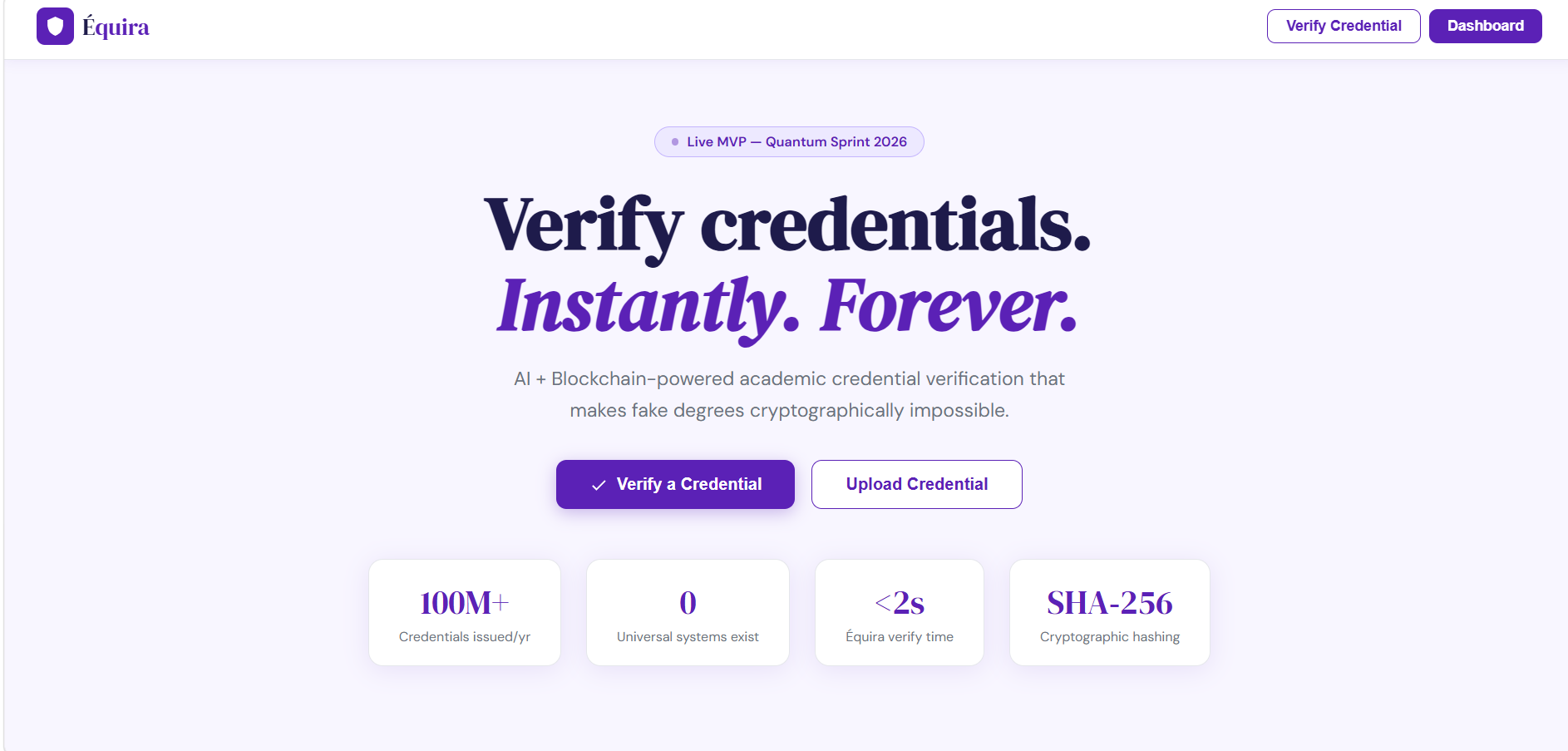
Every year, millions of academic credentials are issued globally, yet verification is still slow, fragmented, and vulnerable to fraud. We wanted to build a system that could make credential verification instant, secure, and globally accessible using AI and blockchain technology.
What it does
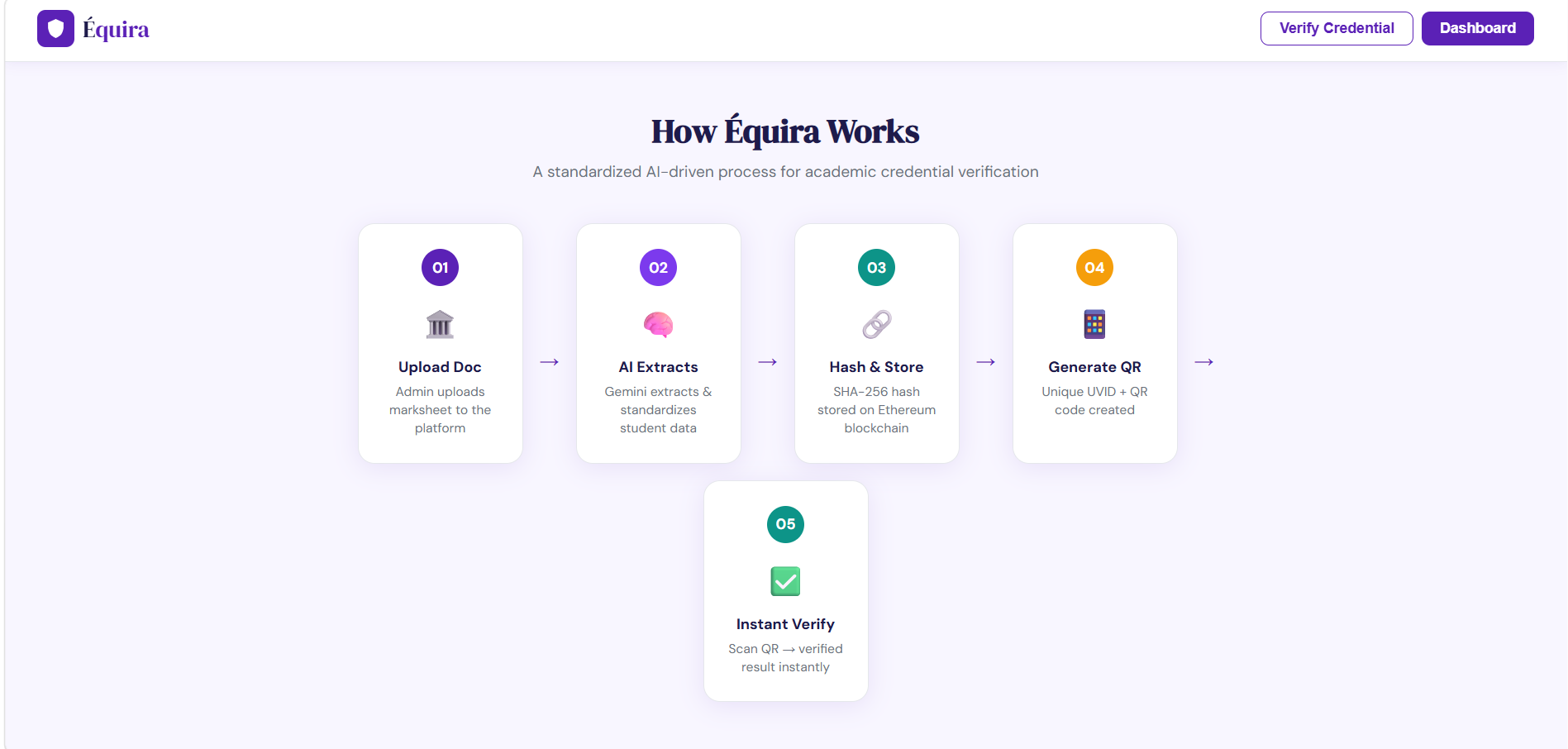
Équira is an AI and blockchain powered platform for instant academic credential verification. Institutions upload credentials once, our AI extracts and standardizes the data, and the system generates tamper proof digital credentials secured using cryptographic hashing and blockchain verification. Users can verify credentials globally within seconds using a QR code or unique UVID.
How we built it
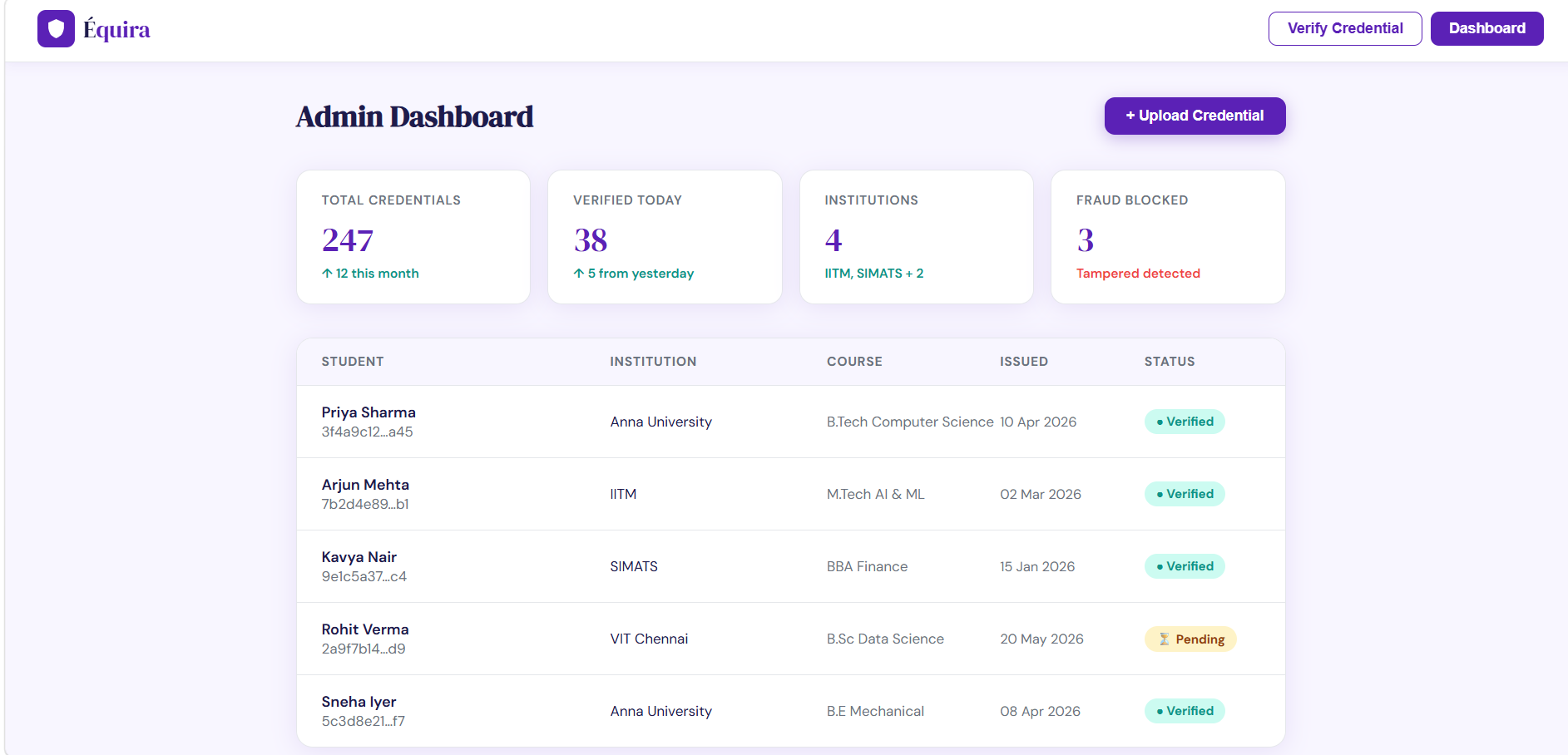
We built Équira using HTML, CSS, JavaScript, blockchain based verification workflows, SHA 256 hashing, and AI driven document extraction concepts. The platform includes credential upload, instant verification, blockchain backed validation, and an institutional dashboard.
Challenges we ran into
One of the biggest challenges was designing a workflow that remained simple and intuitive while still demonstrating secure verification infrastructure. We also worked under a tight hackathon timeline while integrating AI driven workflows and blockchain concepts into a functional MVP.
Accomplishments that we're proud of
We successfully developed and deployed a live MVP with a working verification flow, admin dashboard, credential upload system, and blockchain inspired verification architecture. We are also proud of building a polished product experience within the hackathon timeline.
What we learned
Through Équira, we learned more about AI powered document workflows, blockchain based trust systems, cryptographic verification, and designing scalable infrastructure for real world educational use cases.
What's next for Équira
Our next goal is to expand Équira into a scalable credential infrastructure platform for universities and organizations globally. We also plan to enhance blockchain integration, improve AI extraction accuracy, and explore pilot programs with educational institutions.
Built With
- 256
- ai
- blockchain
- css
- ethereum
- gemini
- github
- html
- javascript
- sha

Log in or sign up for Devpost to join the conversation.