-
-
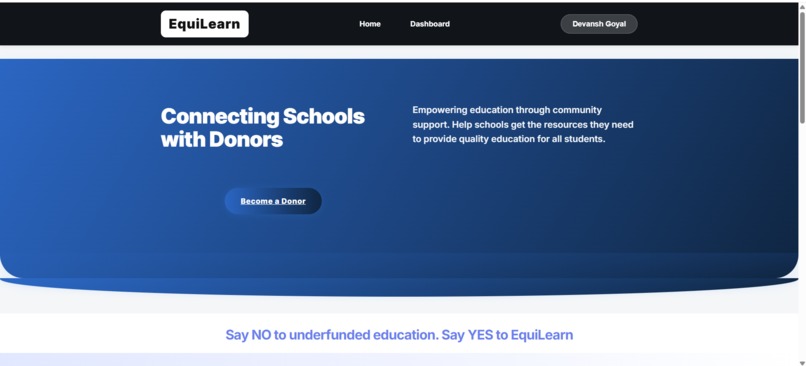
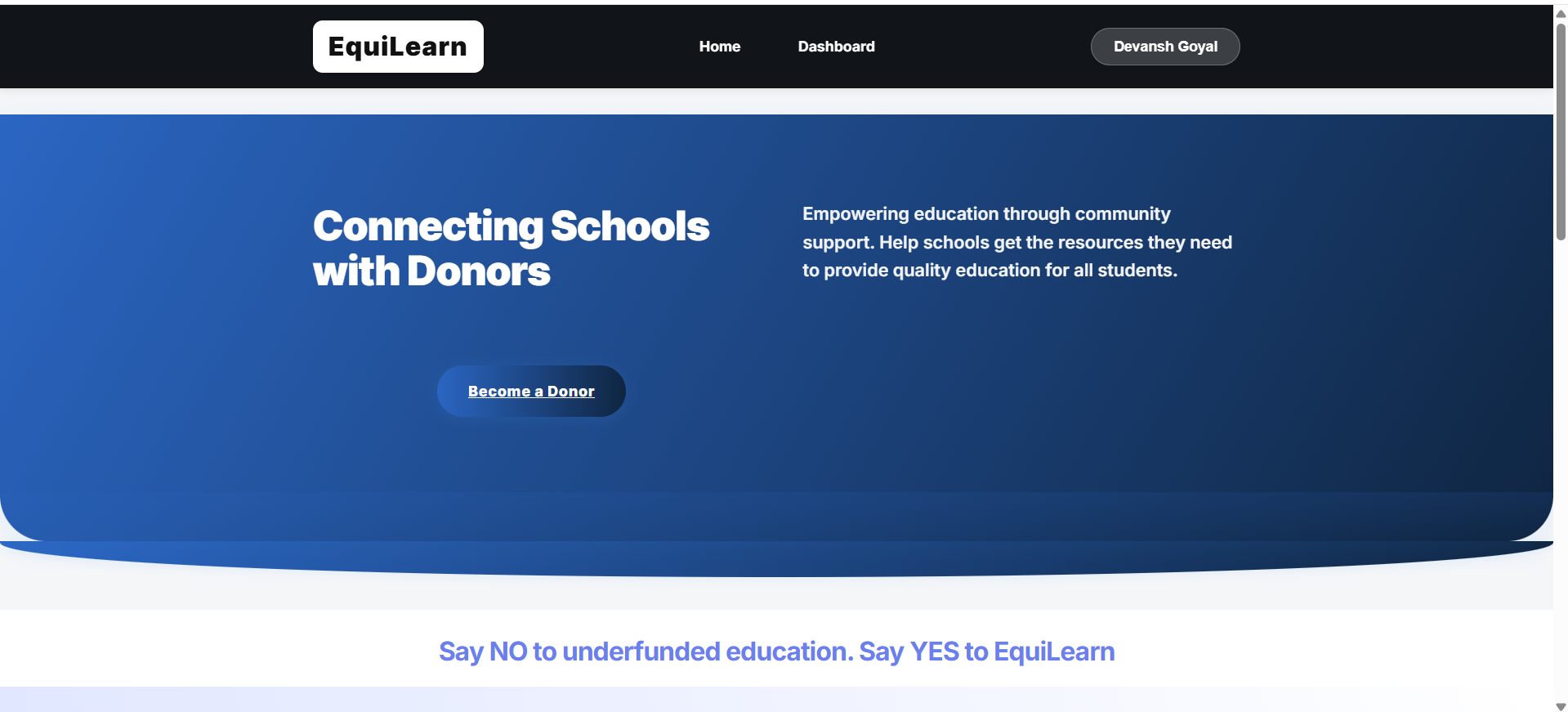
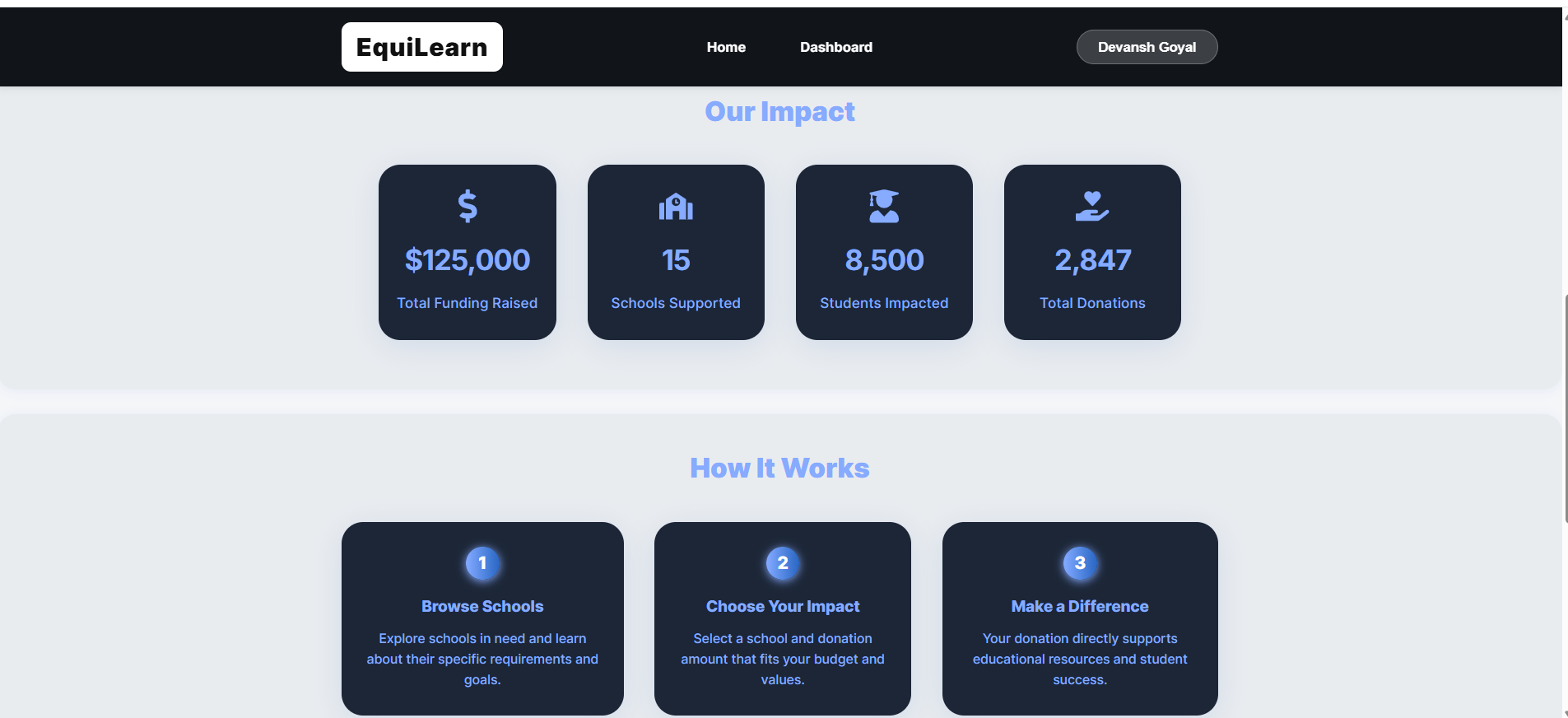
Home UI
-
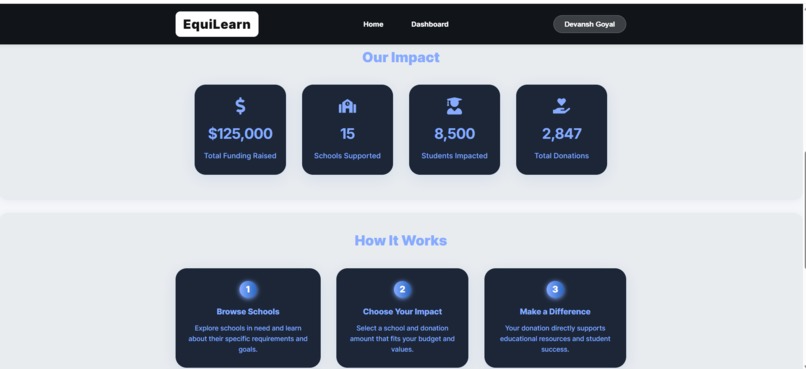
Explanation of How and Why
-
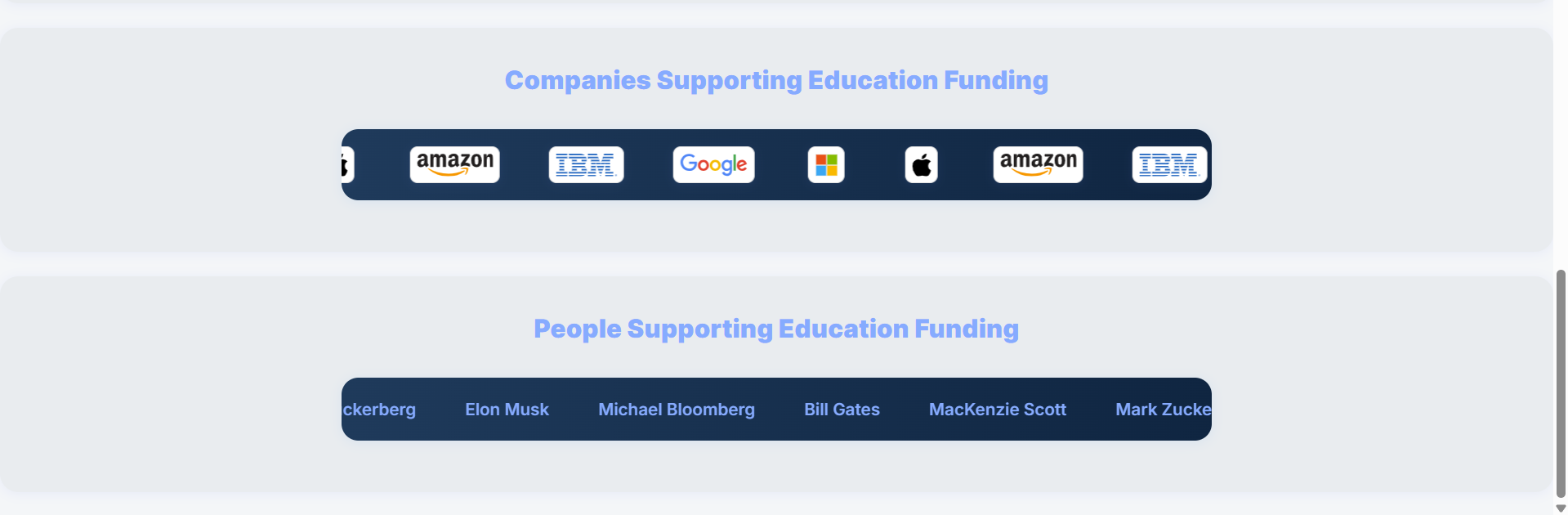
Industry Leaders We Work With
-
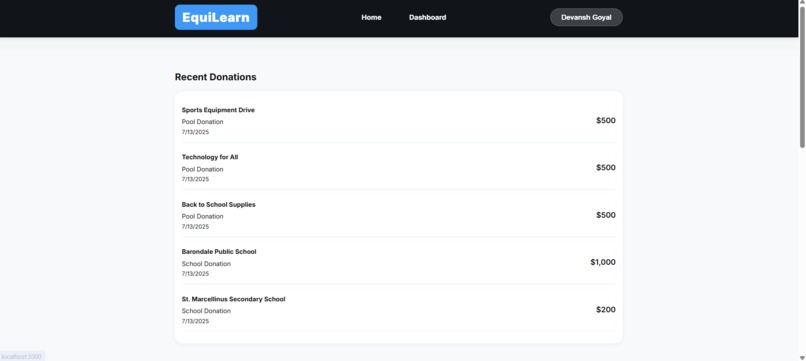
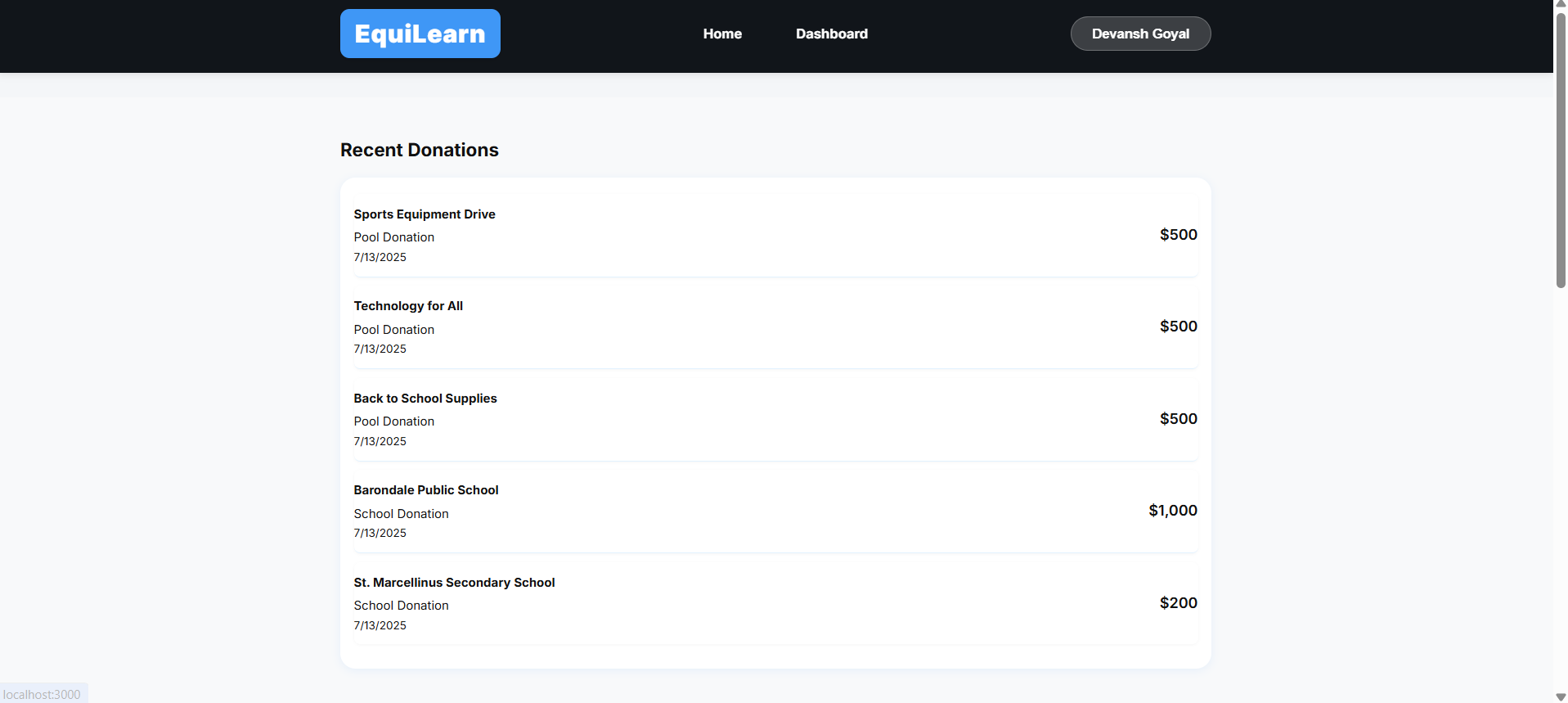
Donation Documentation
-
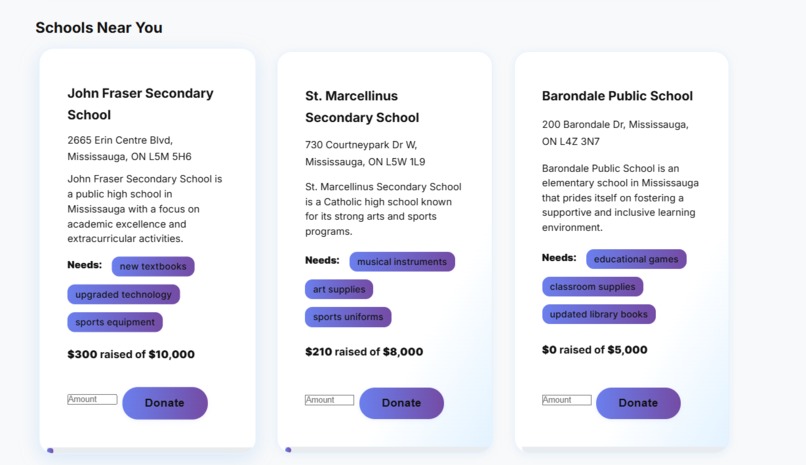
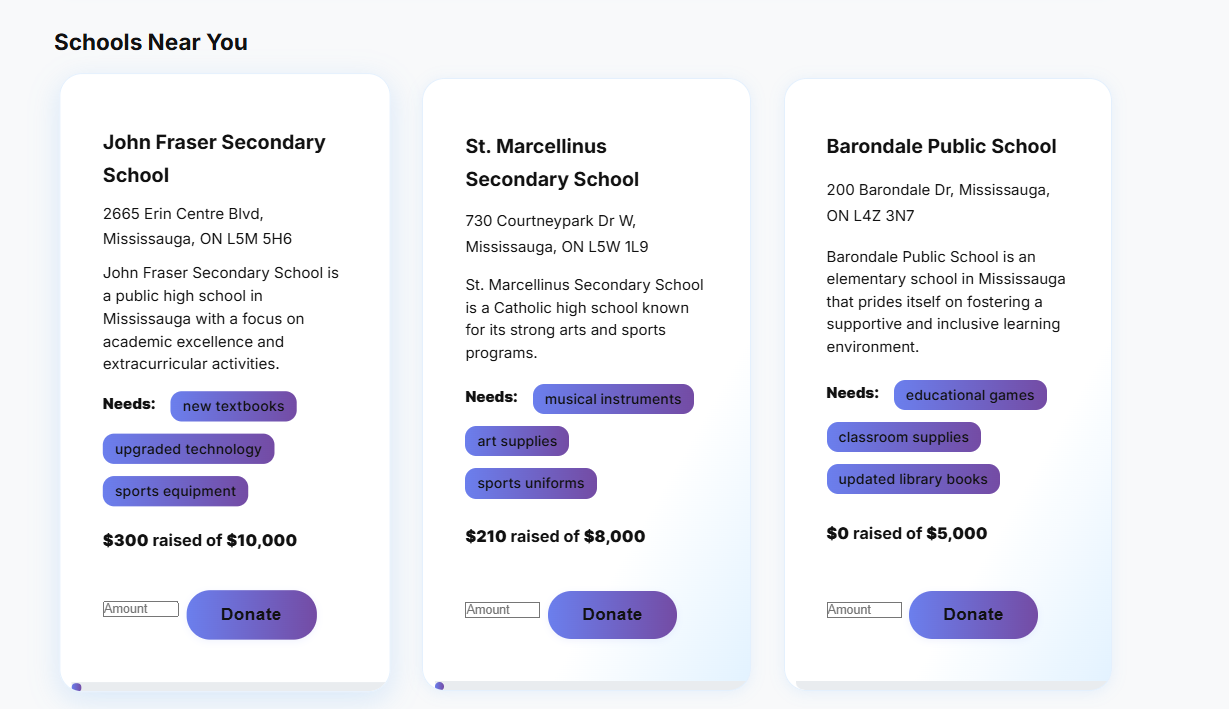
Schools Near Me
-
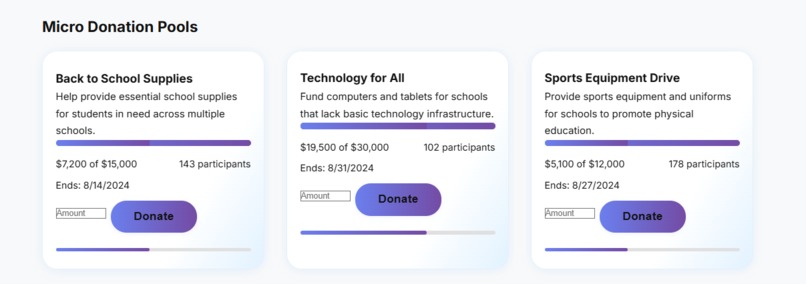
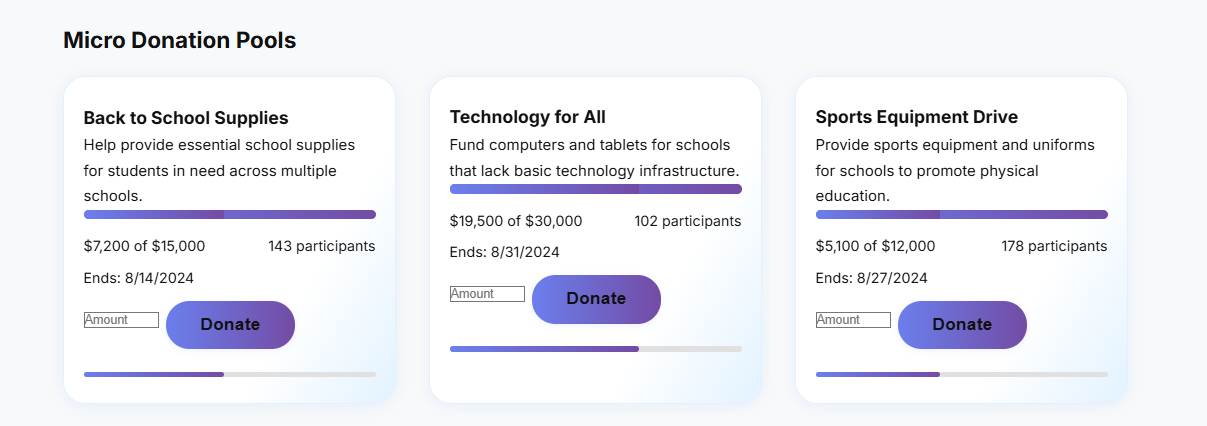
MicroDonation Charities in My Area
-
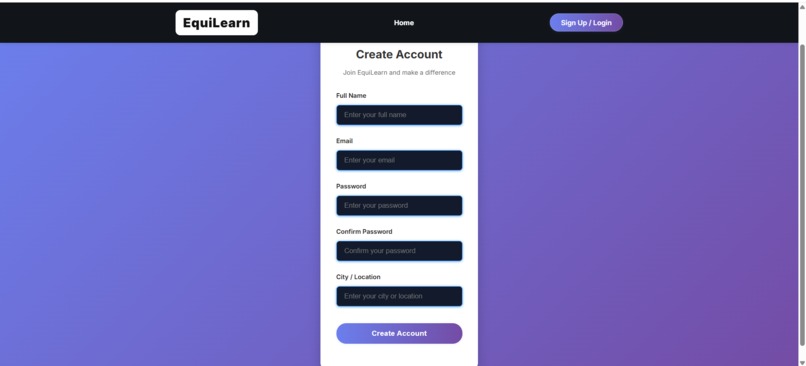
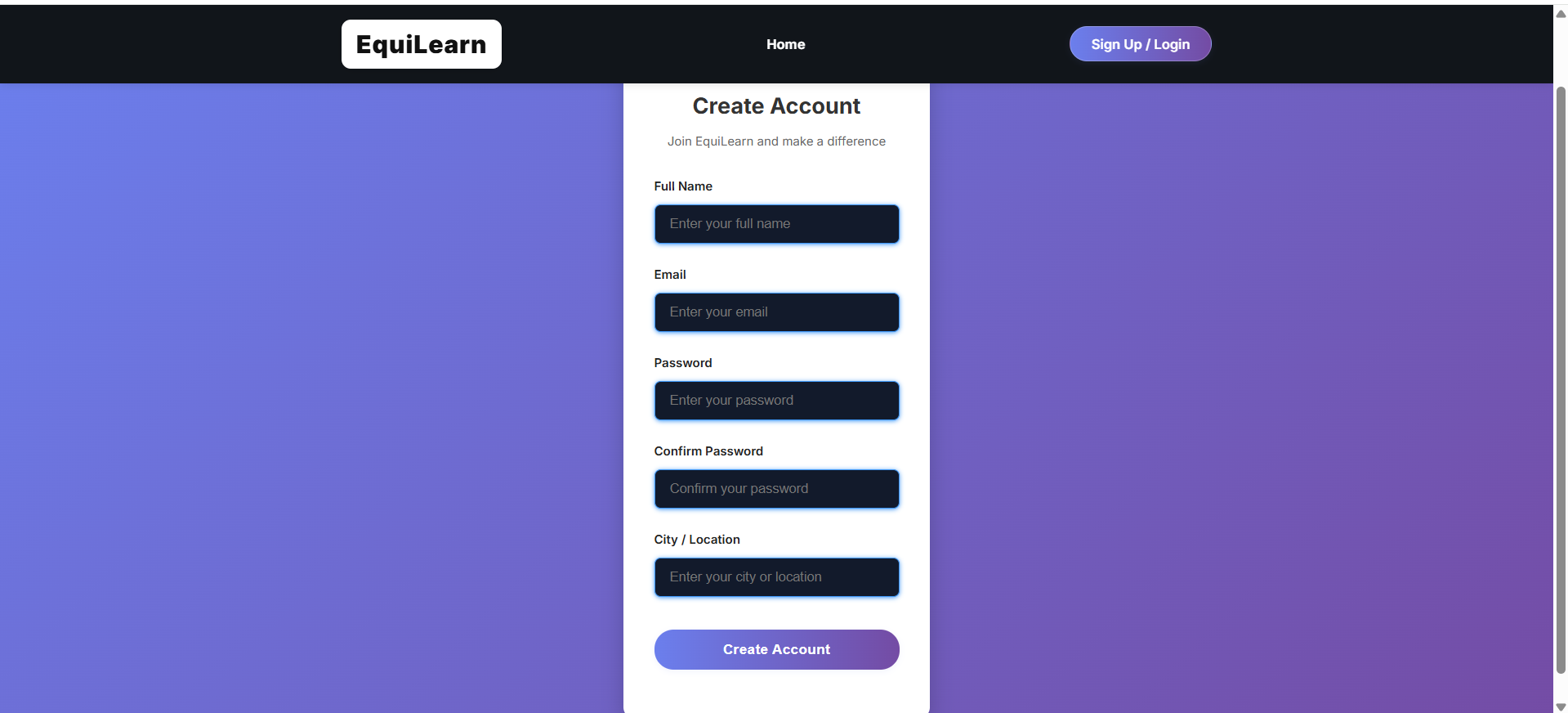
SignUp Page
Inspiration
Having just graduated from high school a few weeks ago, one problem I noticed in my school was a lack of budget. We had fewer Chromebooks, fewer textbooks, and fewer supply teachers, all of which were less than other schools in my area. I viewed my school's lack of budget as a limiting factor to our educational potential, taking into consideration how willful and hardworking our staff was. Regarding budgeting, however, this is something we as civilians do have control over; after all, it's our decision-making outcome. Hence why I decided to create EquiLearn, a software designed to bridge the gap between the lack of educational budget and the financial decisions of our community.
What it does
EquiLearn is designed to connect donors with educational institutions in their areas, requesting donations for various purposes disclosed on the website. Once a donor creates a user account and heads over to the dashboard, they are directed to a list of schools and educational charities in that area. Once the donor donates a quantity of money, the donation goals change and are added to the user's impact profile, which they can view at any point in time. With EquiLearn in place, donors now have the opportunity to donate to educational causes near them and reduce the lack of educational funding problems in the area.
How we built it
Usually, I use HTML/CSS and JS Frontend; however, this time I was up for a challenge and decided to build my front end with React.js. I got a fully running HTML/CSS and JS Frontend built rather quickly, therefore, in an attempt to elevate my skillset, I built a new frontend using Typescript in the React Framework. For the backend, I stuck with things the way I typically do them: Python. I used Flask to build a Rest API, and it handled user input as well. Overall, the front end was different as I used React, but the backend was not.
Challenges we ran into
I challenged myself by using React.js for the frontend, and in doing so, I faced a lot of difficulty. After struggling with React.js, I had many second thoughts, but I stuck to my will. Using React.js, I had a lot of difficulty when it came to changing colors and making the frontend look the way I wanted. I also had difficulty in integrating the backend and the frontend together, as I'm more used to HTML/CSS, yet using tutorials, I managed to figure out how to get it done.
Accomplishments that we're proud of
- Getting it done! I haven't used React.js nearly as much as I have used HTML/CSS in the past, and using React.js for a change really challenged me, and I'm proud to have beaten that challenge and made a fully functioning frontend using React.
- Using the openai effectively! One thing I commonly struggle with currently is using API Keys from an environment file. However, I was forced to learn how to get this done, as I had to publish this project on GitHub and not have my api key terminated. I used the OpenAI key to generate schools and educational charities in the area, and in doing so, I effectively used the API key from the .env file, and I managed to beat my struggle this time around. ## What we learned The most important takeaway from this hackathon was that I used React.js, and I learned a lot. I learned how to develop an aesthetically pleasing frontend using React.js and not my typical HTML/CSS. I also learned to integrate a backend from Python with a React frontend, something I have not done before.
Overall, I learned how to use React in the frontend and integrate it with a Python backend.
What's next for EquiLearn
- Deployment: The first step for EquiLearn is deploying it for the real world to see, and one way I forsee this is by using Vercel.
- Improve: Although I am satisfied with this prototype, this project still needs a lot of construction. One way to improve is to find a team of committed software engineers and develop many more features, including a map, finding more school and adding real financial interactions.
- Market: Once the project is fully finished is functioning, the goal is to consult social leaders such as famous businessmen and firms that abide with our educational funding philosophy. We want to make use of their status, and use it as a tool to market our project to raise awareness to find a larger userbase.

Log in or sign up for Devpost to join the conversation.