-
-
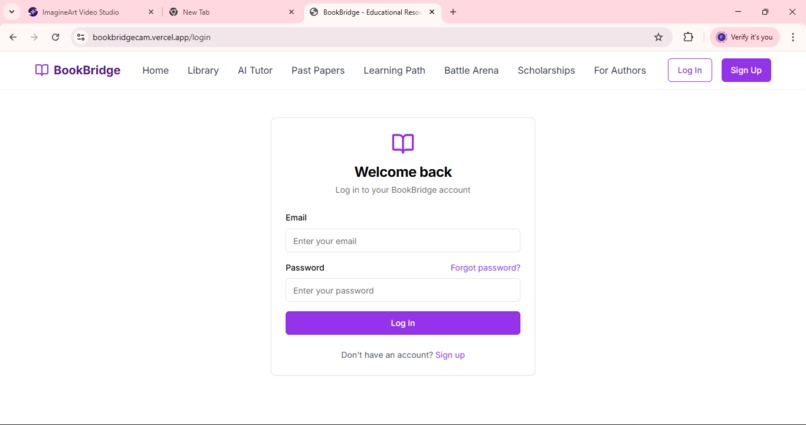
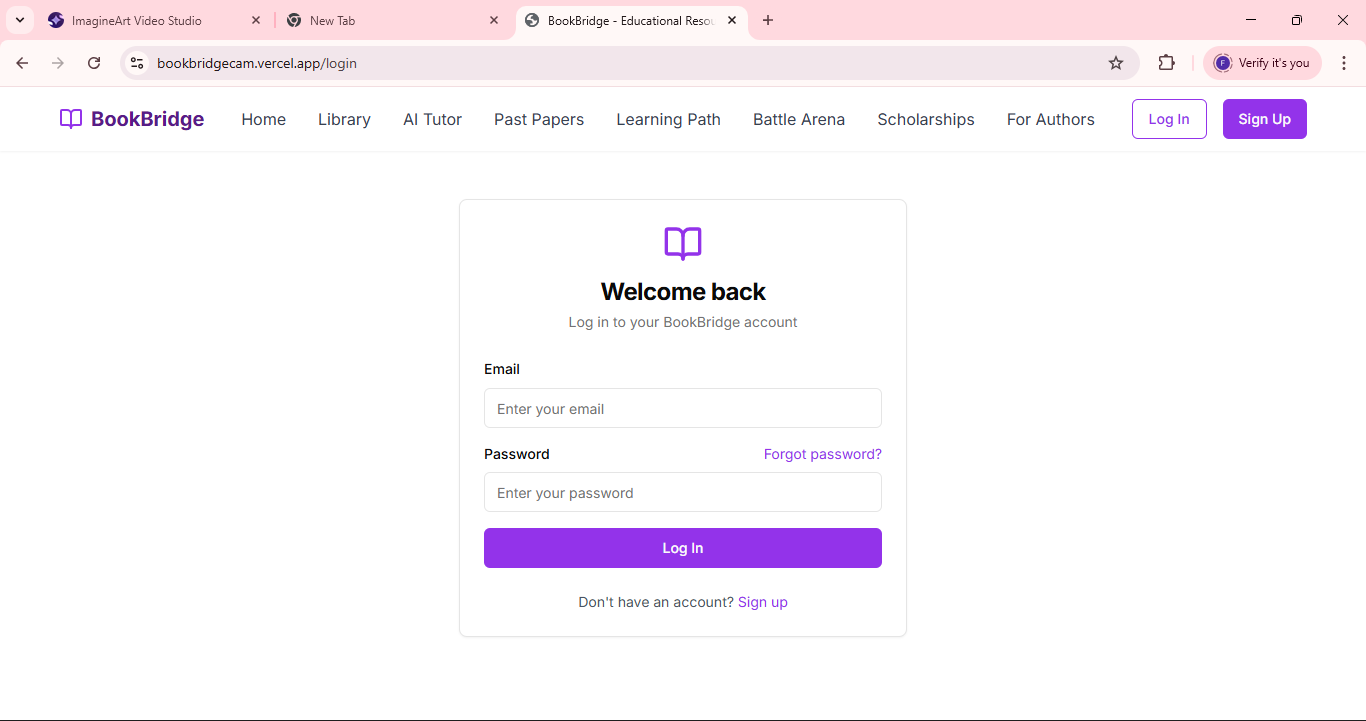
LOGIN
-
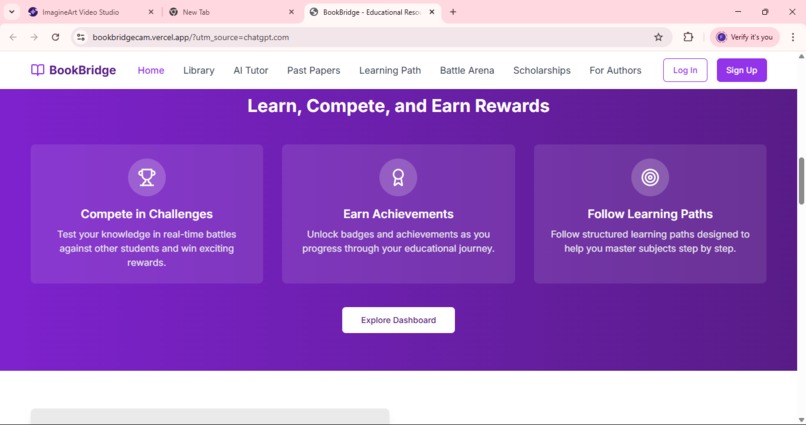
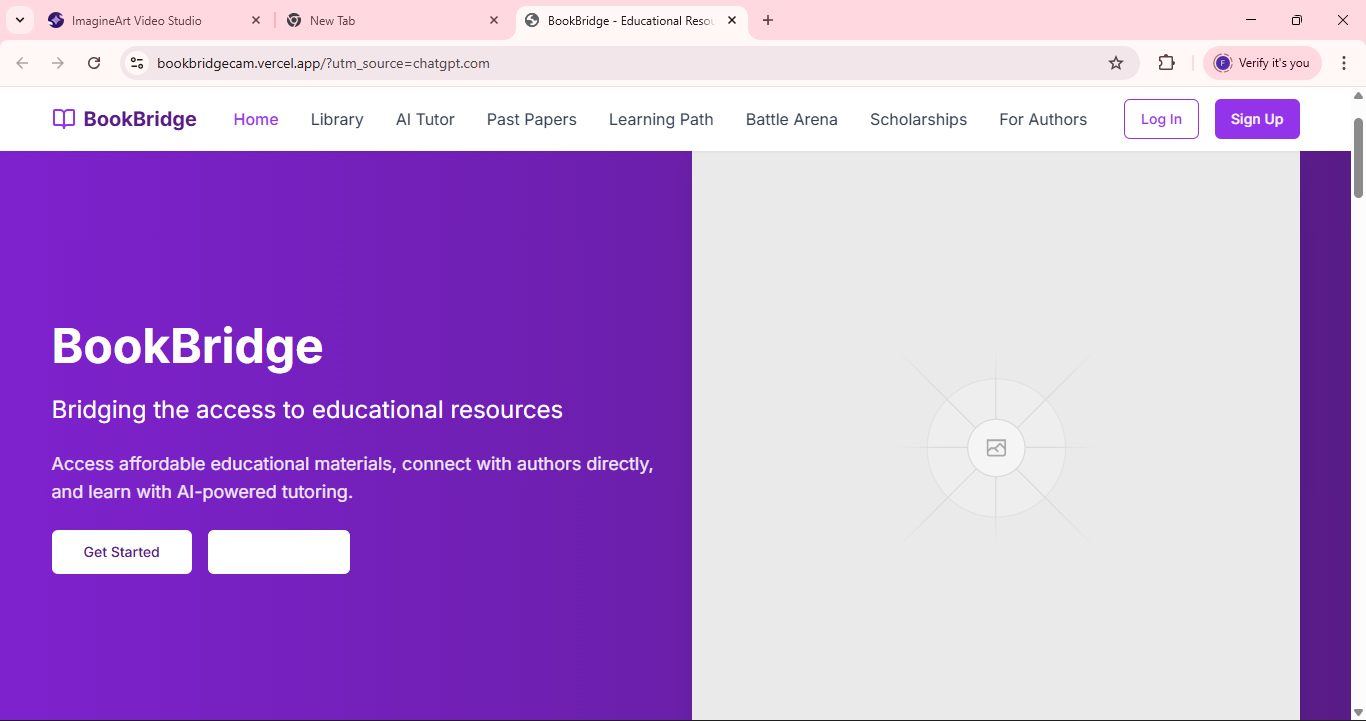
HOME(3)
-
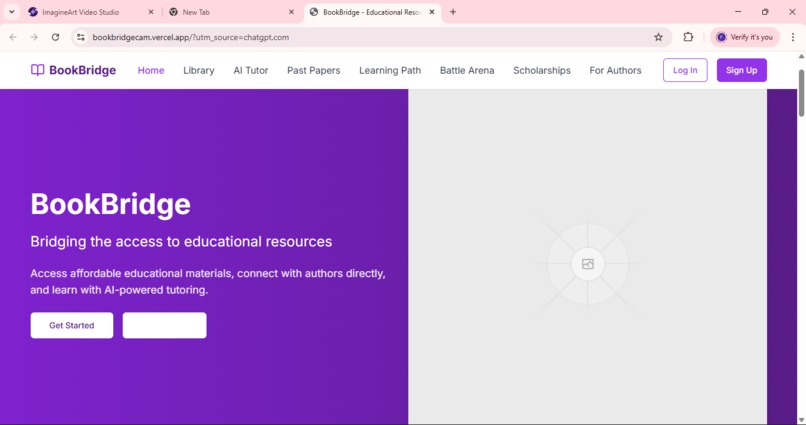
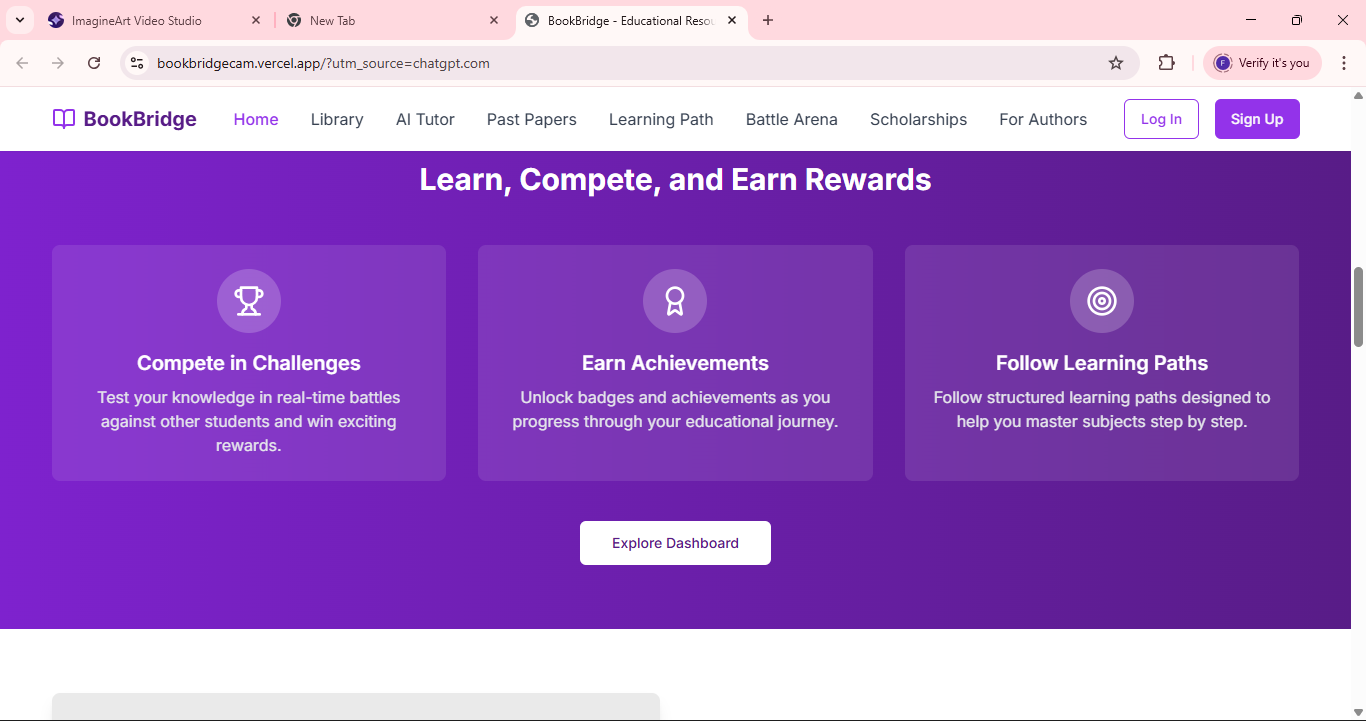
HOME
-
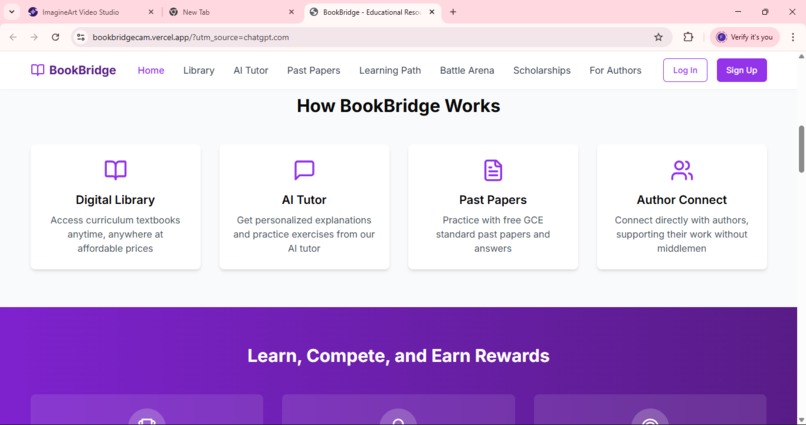
HOME2
-
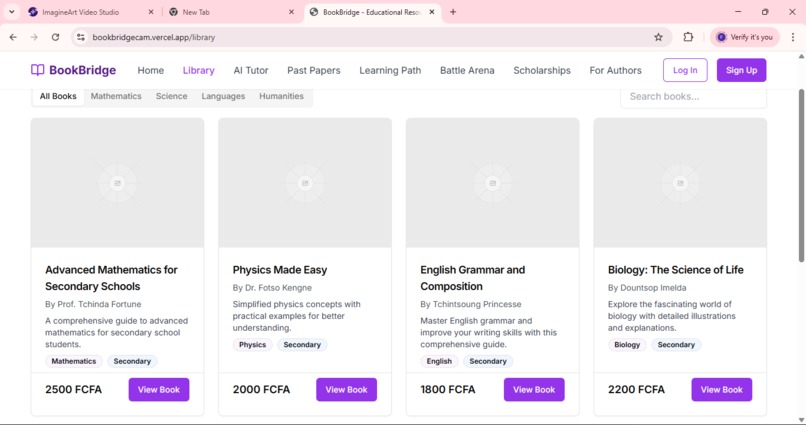
DIGITAL LIBRARY
-
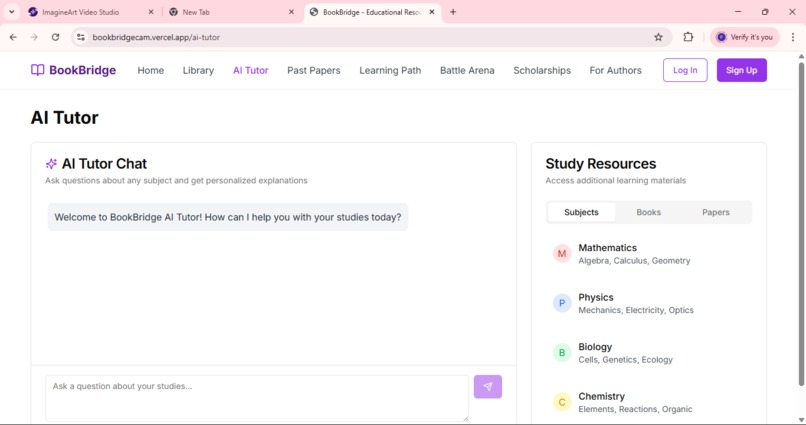
AI TUTOR
-
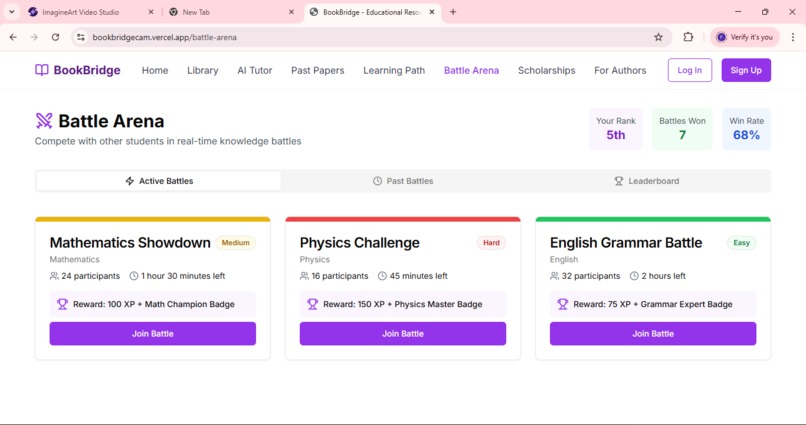
BATTLE ARENAOM
-
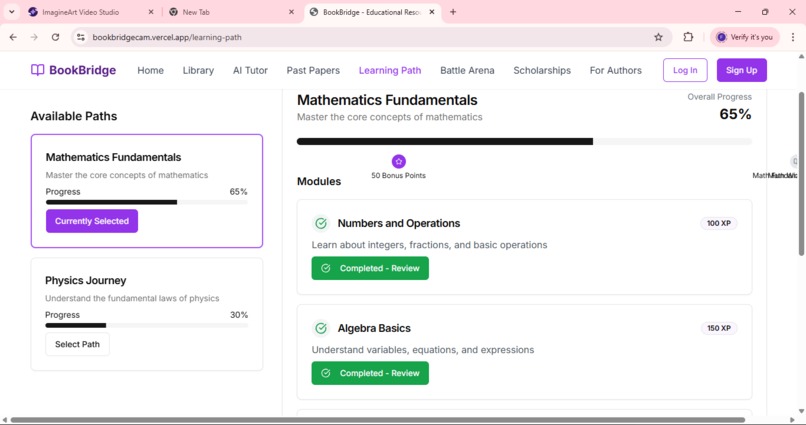
LEARNING PATH
-
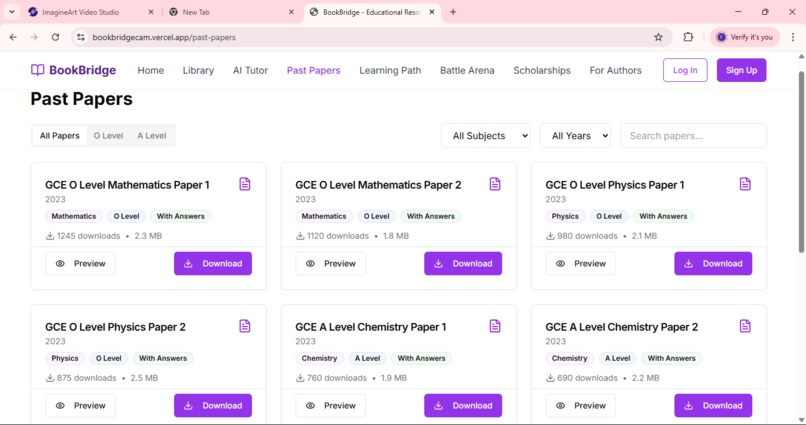
PAST PAPERS
-
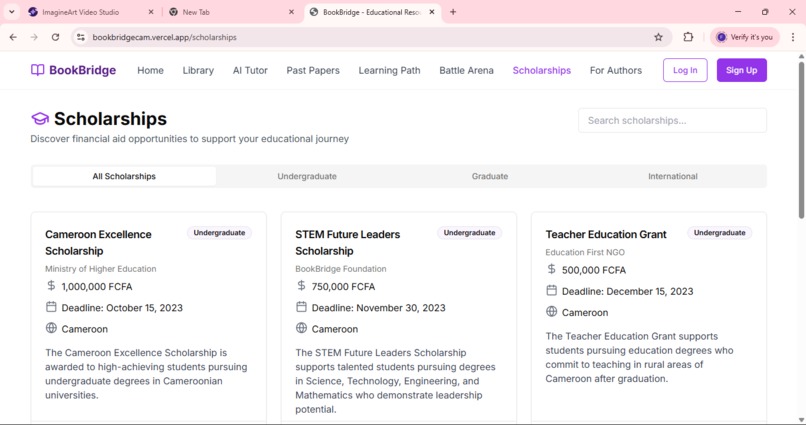
SCHOLARSHIPS OPPORTUNITIES
-
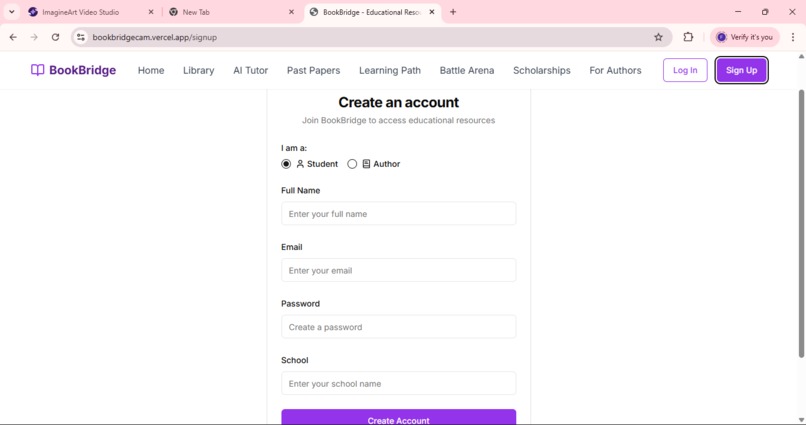
SIGNUP
-
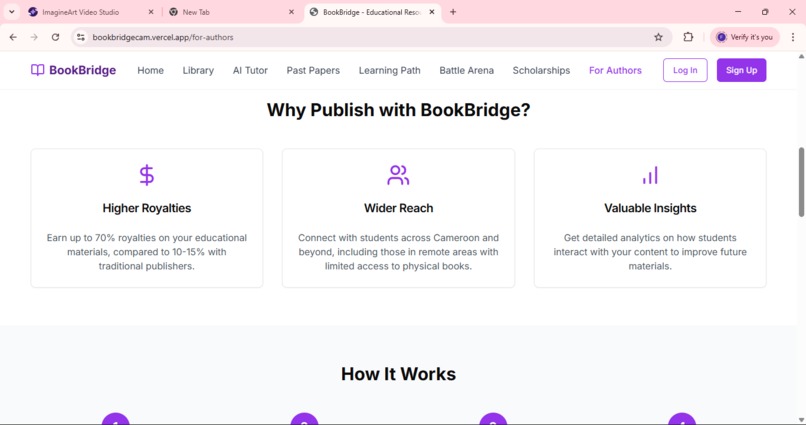
AUTHORS(2)
-
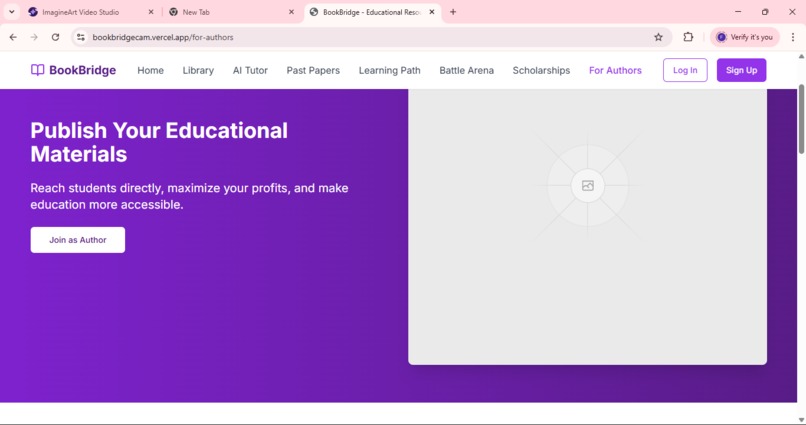
AUTHORS (1)
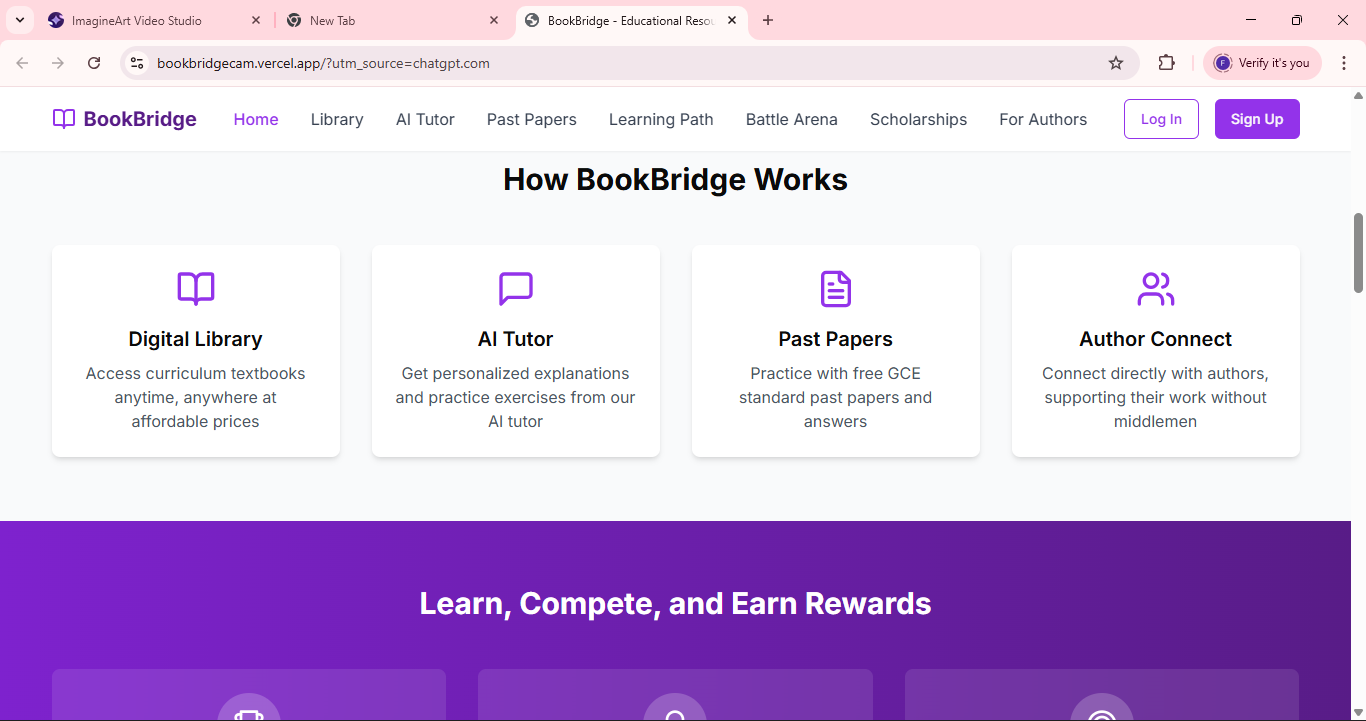
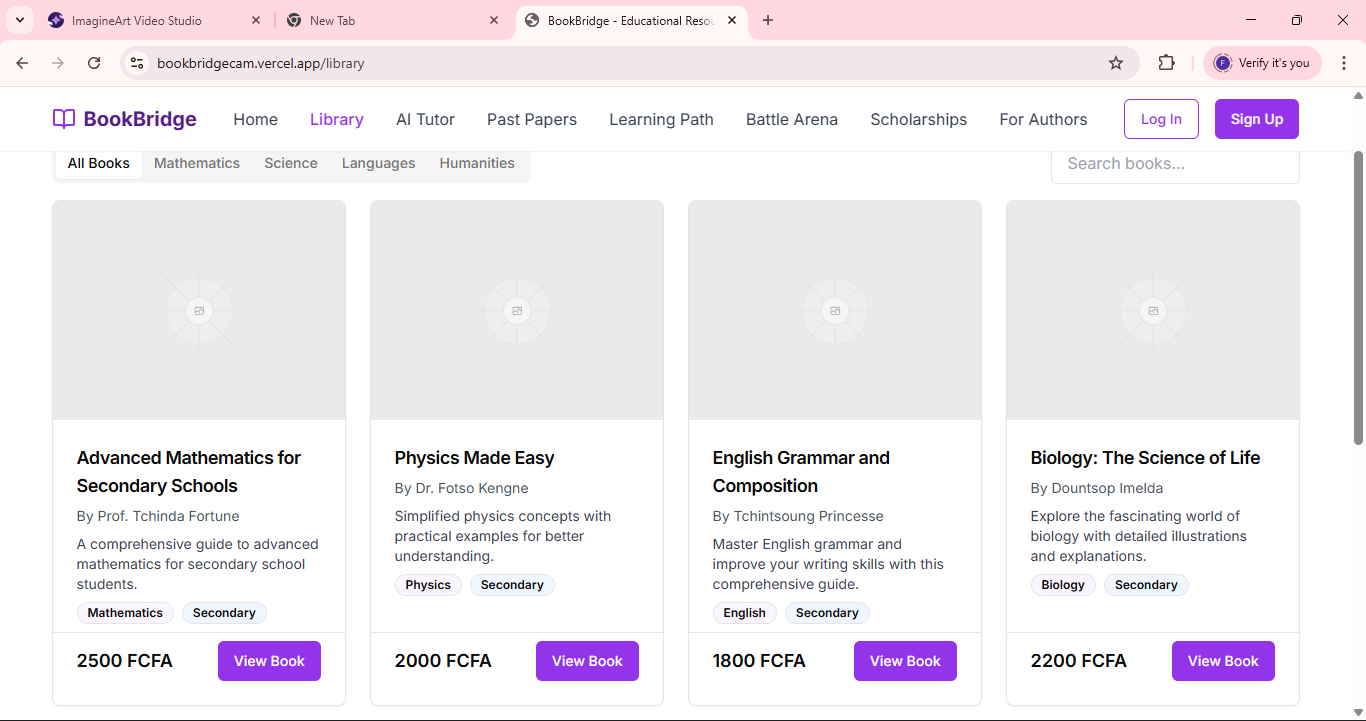

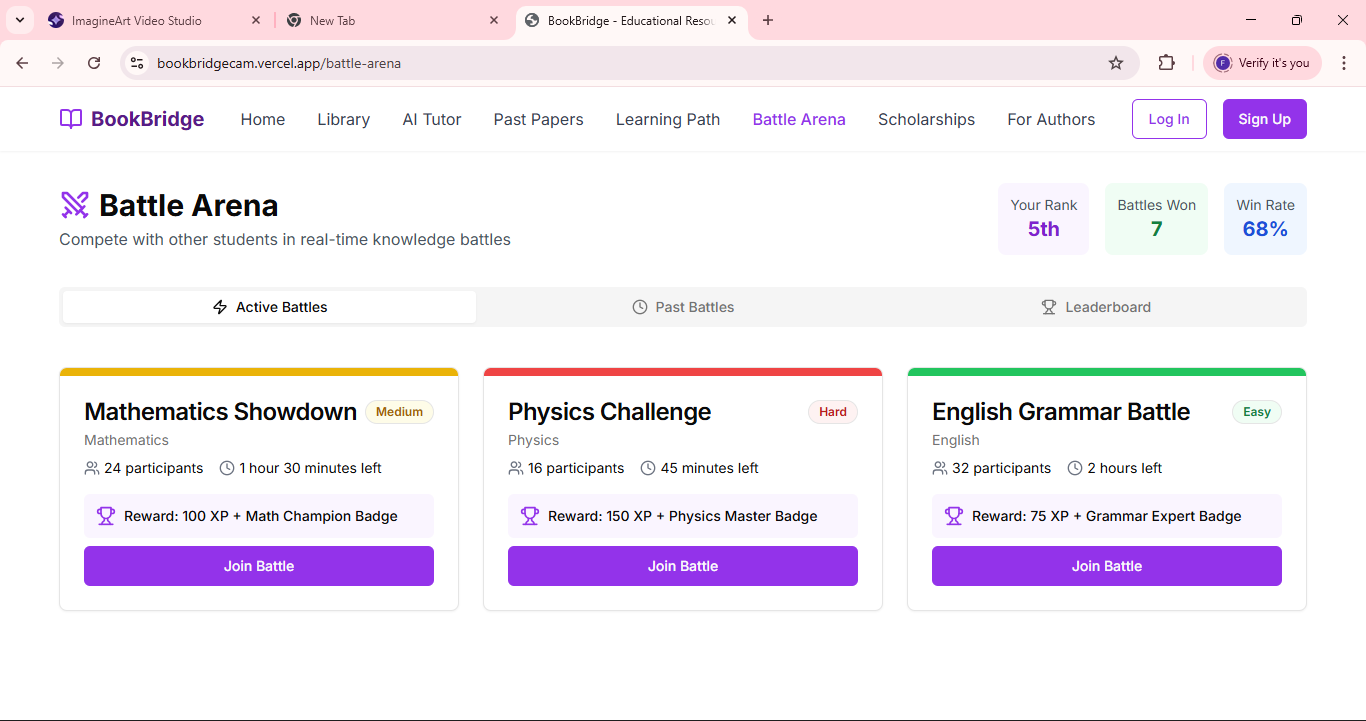
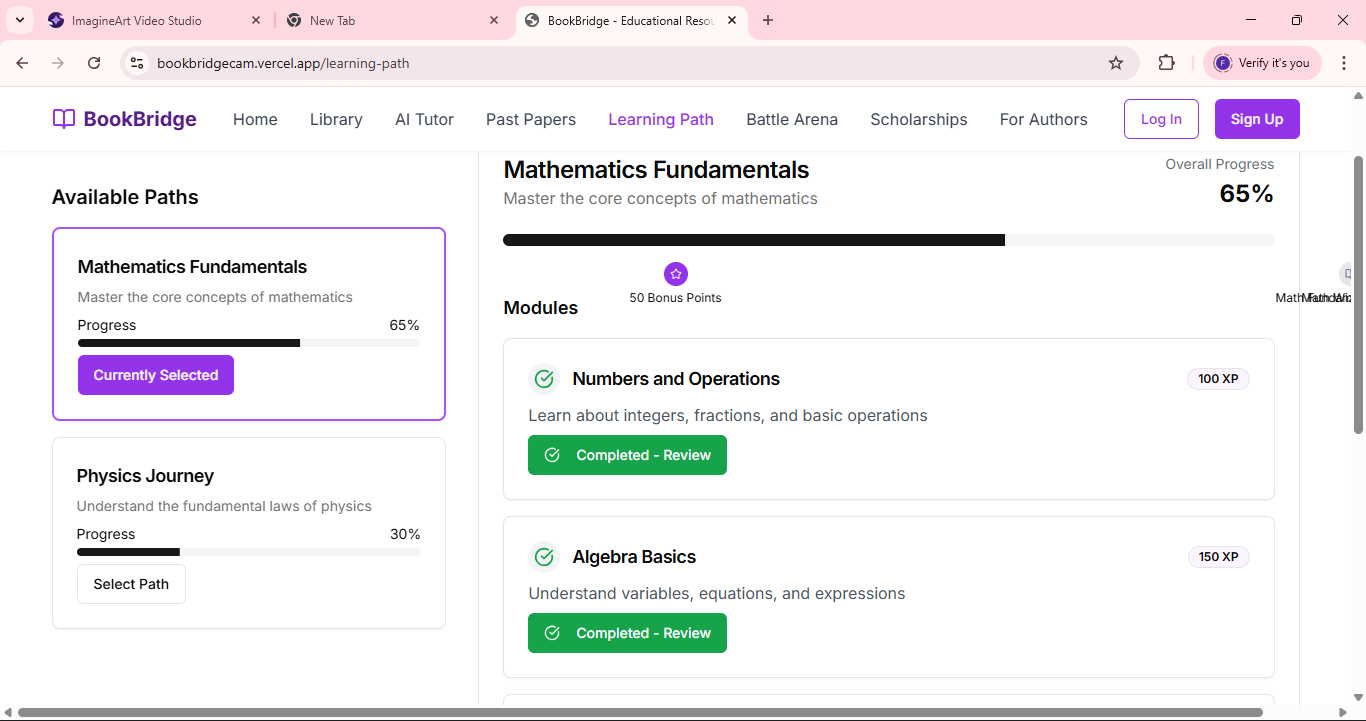

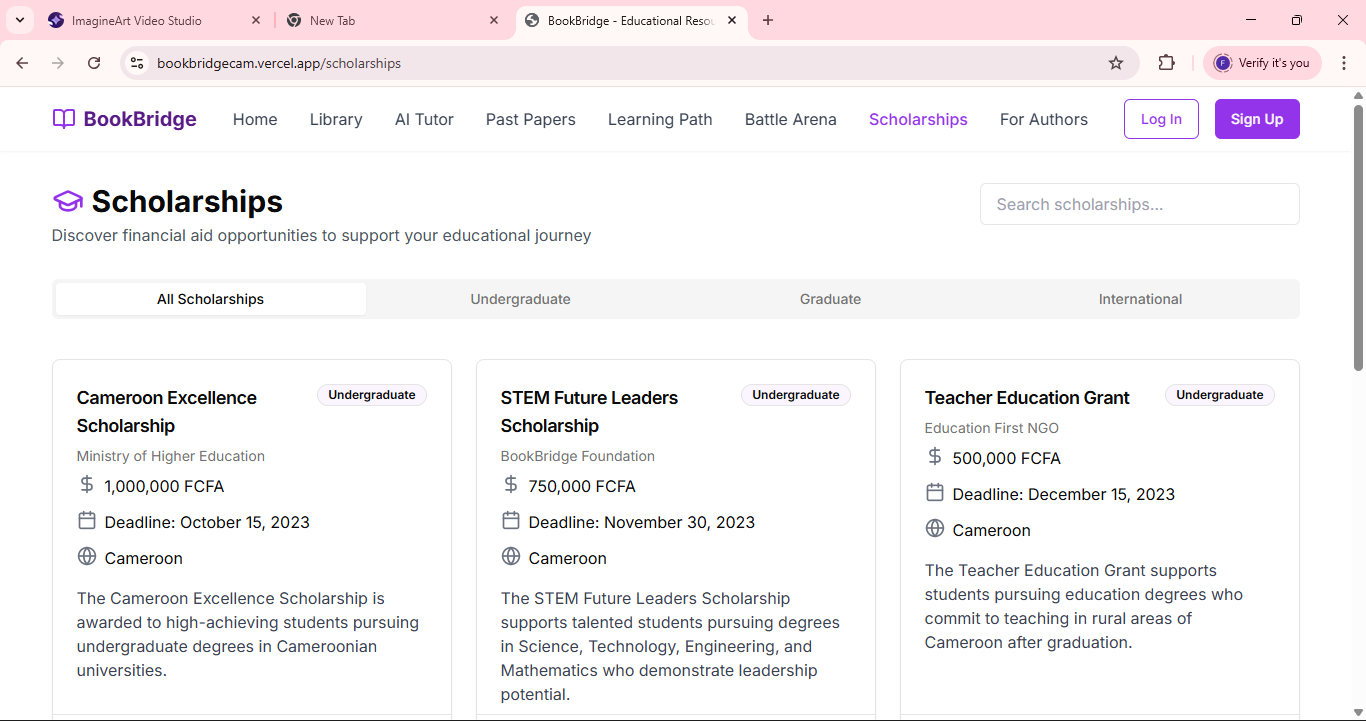
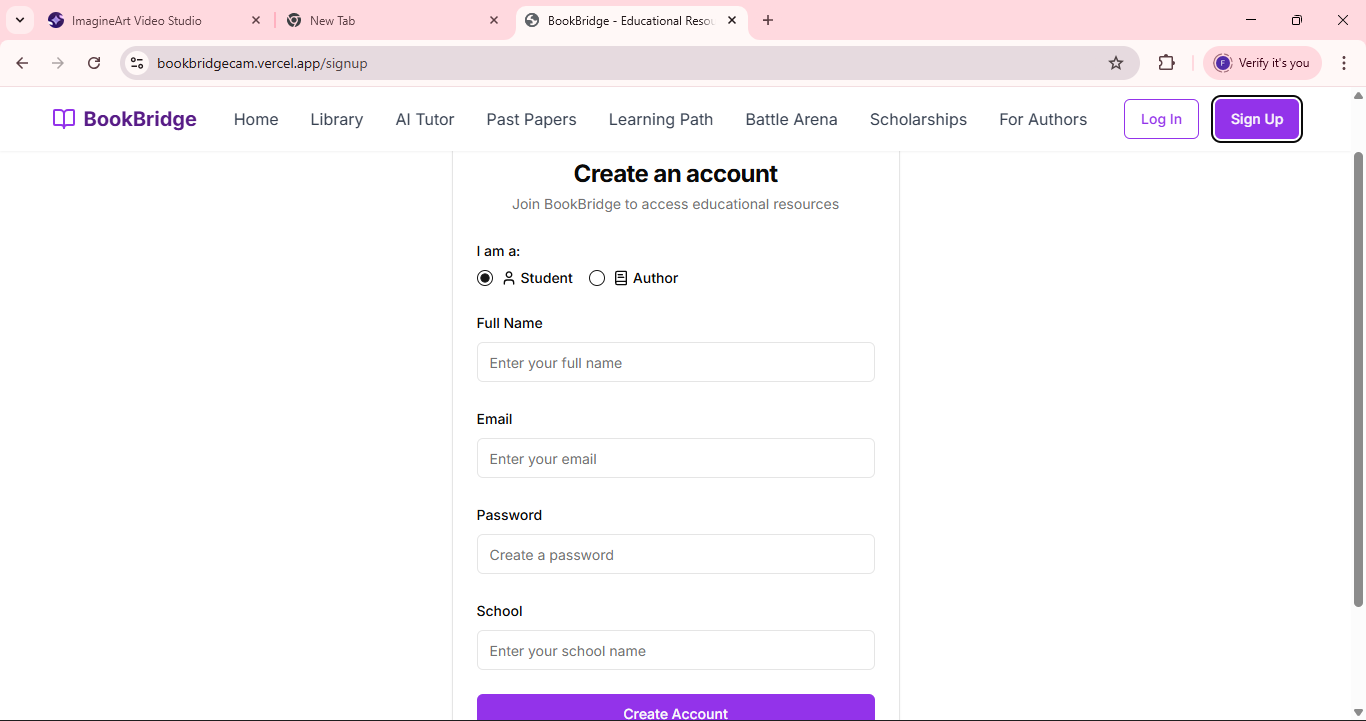
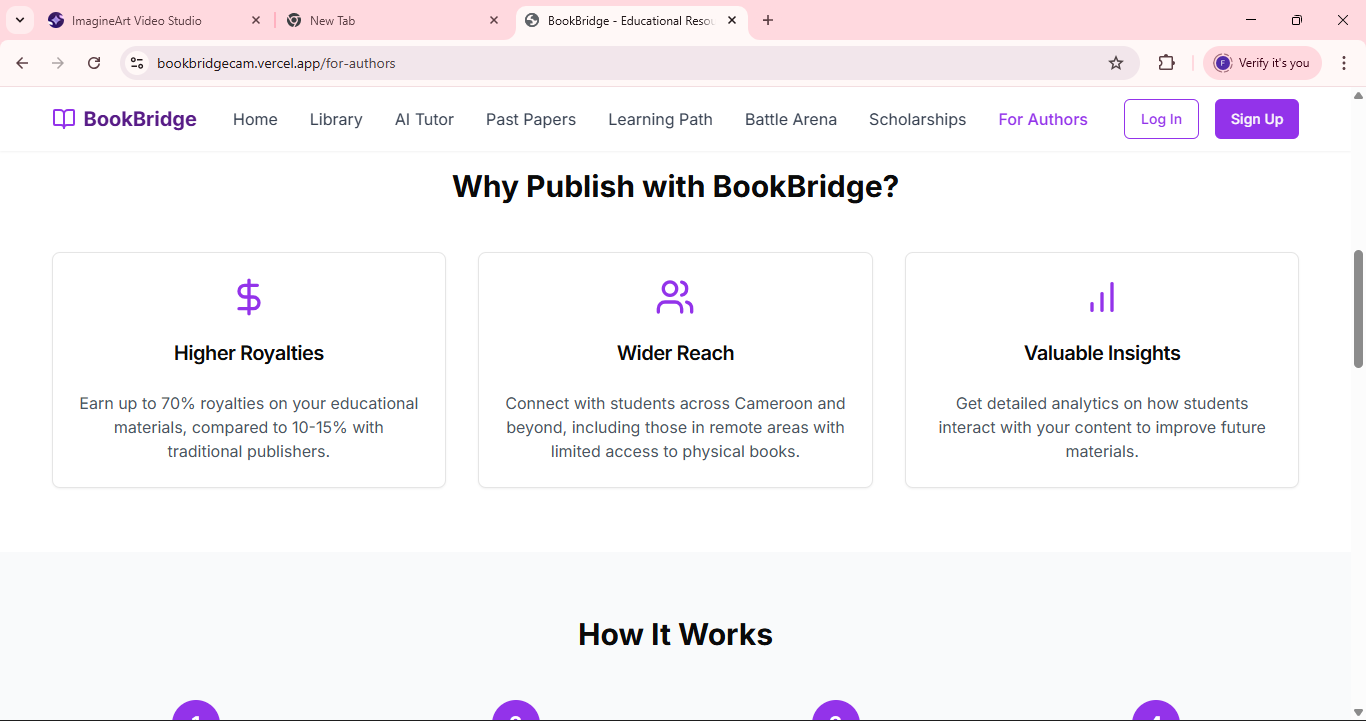
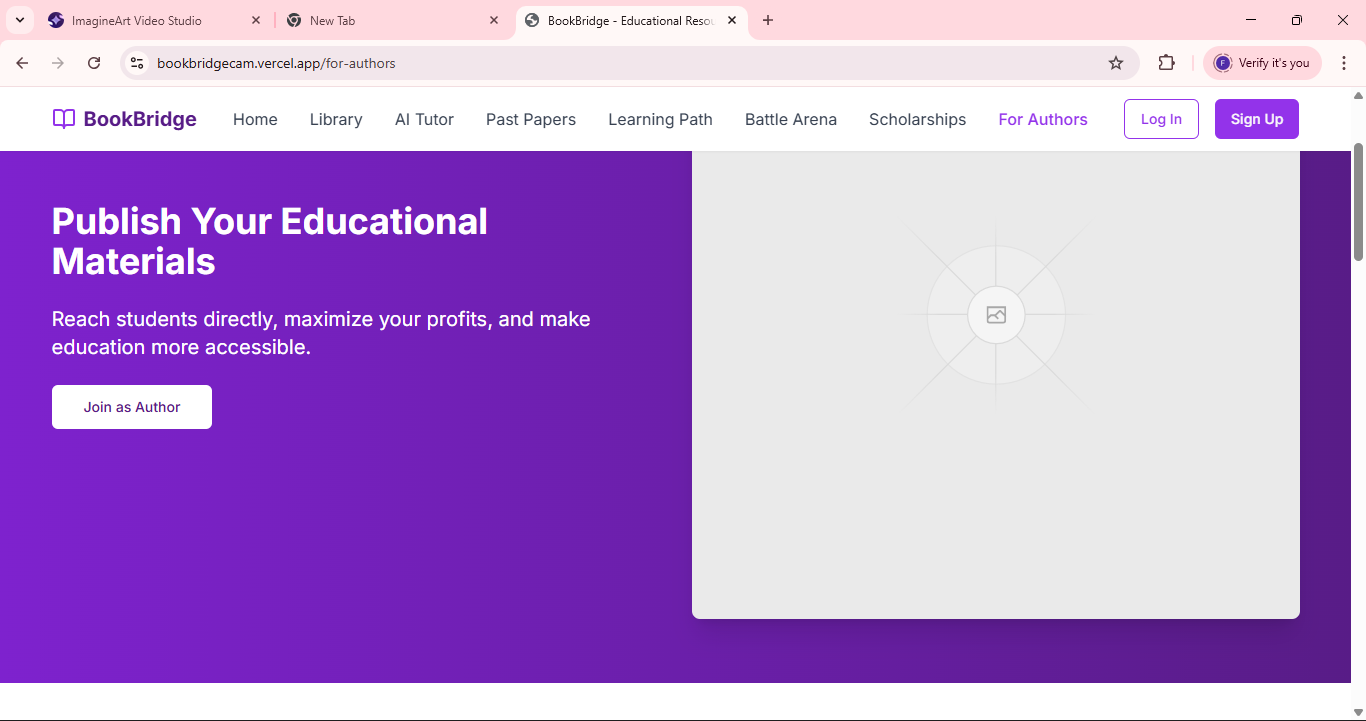
What truly inspired us to create BookBridge came from a very personal and difficult experience as students in Cameroon. After going through one of the most challenging phases of our education, we felt genuinely hopeless. Despite our efforts, the lack of proper learning resources had serious consequences on our academic performance. In our case, this led to failing Computer Science. One of us received an E, and another had a very low score. It was frustrating because we knew the problem was not a lack of effort, but a lack of support and understanding. That experience showed us how damaging an education system can be when students are expected to succeed without access to clear explanations, past papers, or quality learning materials. A turning point During the summer, we were fortunate to be accepted into the African Science Academy in Ghana. There, we had the opportunity to complete a two-year program in just Ten months, with a strong focus on Further Mathematics , Mathematics, and Physics. This experience completely changed our perspective on education. For the first time, learning was built around understanding, not memorization. We discovered how easy it was to find curriculum-aligned resources for the Cambridge A-Level system. Past papers were everywhere and freely accessible. Marking schemes were available. Textbooks were abundant. On platforms like YouTube, we could find clear video explanations and worked solutions that actually matched the curriculum. What we realized This contrast was shocking. In Cameroon, we spent two years trying to complete a curriculum with very limited resources, outdated materials, and paid access to answers. Some platforms offered past papers, but the questions were often too easy, off-curriculum, or did not test real understanding. To access correct solutions, students usually had to pay. In Ghana, following the Cambridge system, resources were designed to help students understand deeply. Everything—from textbooks to past papers—was aligned with the curriculum and focused on building competence. That difference made one thing clear to us: students do not fail because they are incapable; they fail because the system does not support understanding. Why we built BookBridge BookBridge was created to bring that same level of access, clarity, and support to students in Cameroon. We wanted to build a platform where students can easily find affordable textbooks, free and relevant past papers, and explanations that help them truly understand what they are learning. Our goal is to make understanding—not money, location, or extra classes—the foundation of academic success. What we learned Through this project, we learned how to clearly define a real-world problem and design a solution around the people affected by it. We learned how technology, especially AI, can support learning when used responsibly. We also learned the importance of feasibility—designing something that can realistically work in low-connectivity and low-income environments, not just in ideal conditions. How we built the project We designed BookBridge as a web-based platform that provides digital textbooks, free GCE past papers with worked solutions, and an AI tutor that explains lessons step by step. We built the prototype using modern web tools and deployed it online so it could be easily accessed. Our focus was not on building a complex system, but on creating a clear, simple experience that supports understanding and works even with limited internet access. Challenges we faced One major challenge was designing for students with poor or unstable internet access. Another challenge was balancing the use of AI so that it helps students learn without encouraging over-dependence. We also had to think carefully about content protection and fairness to local authors. These challenges pushed us to think more deeply about ethics, accessibility, and realistic implementation.
Built With
- ai
- next.js
- openai
- react
- tailwind
- vercel


Log in or sign up for Devpost to join the conversation.