Inspiration
As students that study machine learning and artificial intelligence, we have practiced a lot using datasets of diseases, doing things like predicting different conditions and diagnosing diseases based on that data. It is a fact that our current healthcare system is very biased, often to the detriment of minority groups. Many studies disproportionately focus on men and white populations, and we noticed that many of the datasets that we worked with had limited information on the demographics of whom they were sourced. we wanted to bring light to this fact, and to the importance of questioning our data and looking for ways we may be perpetuating these biases.
What it does
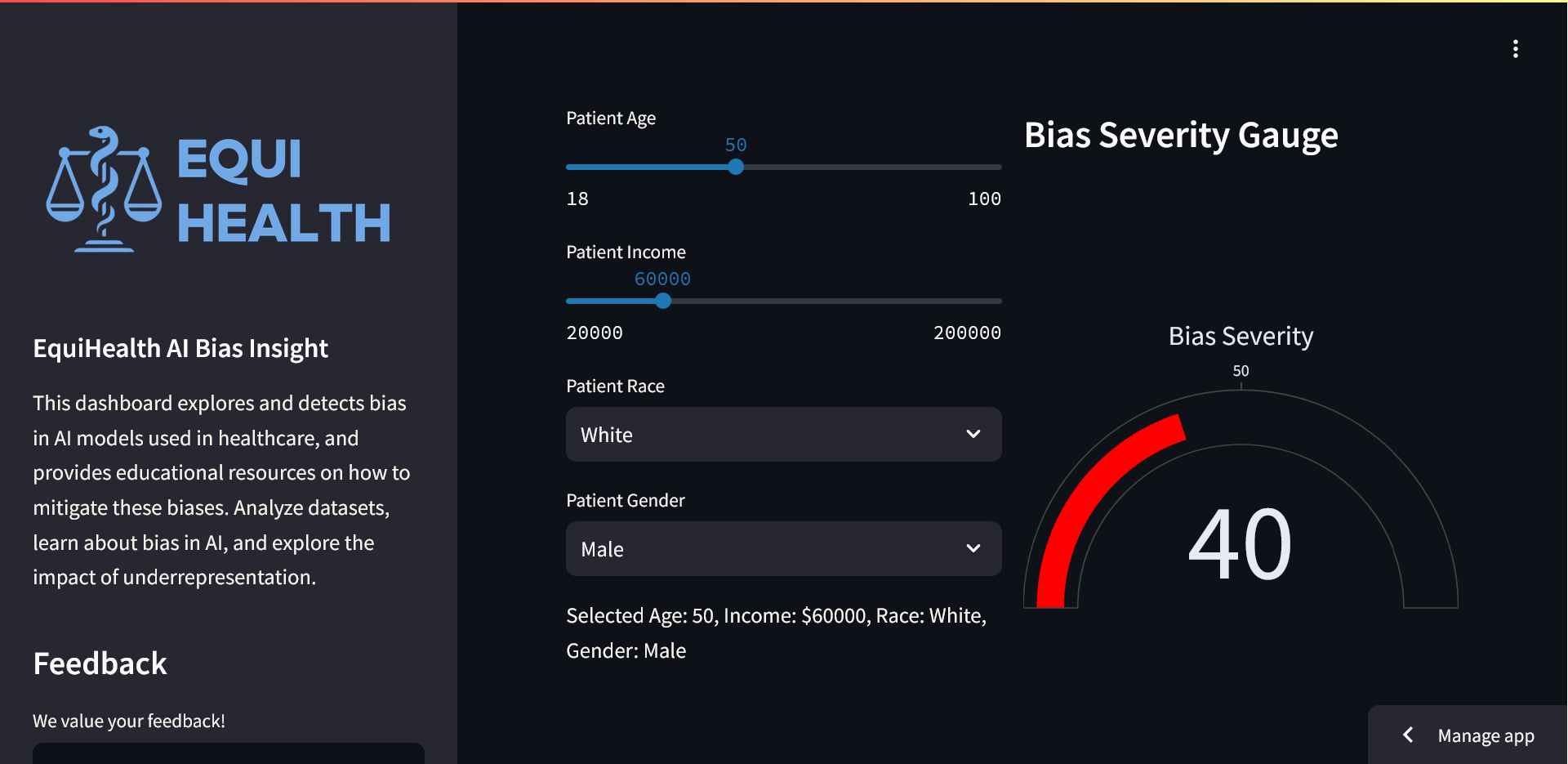
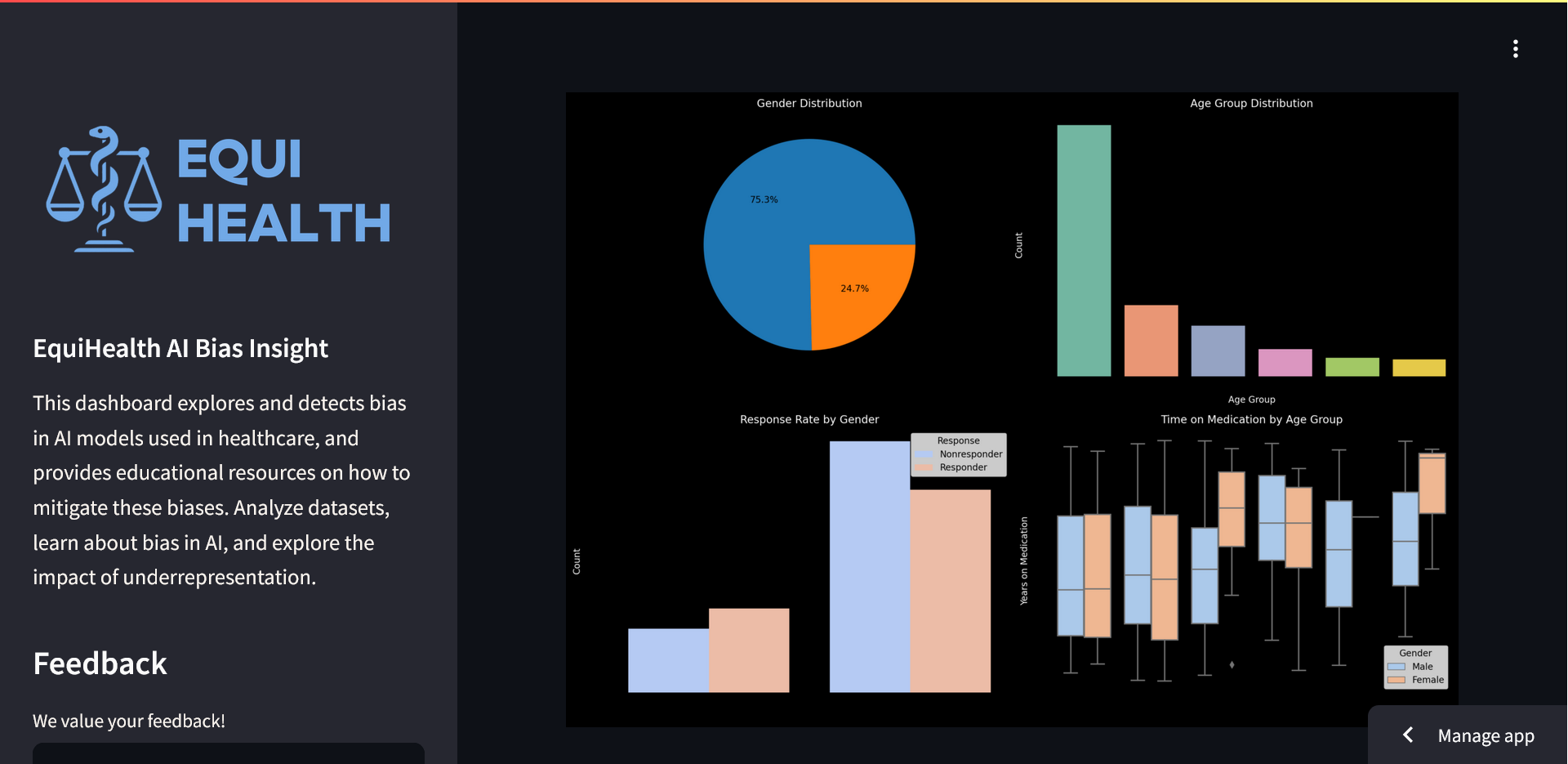
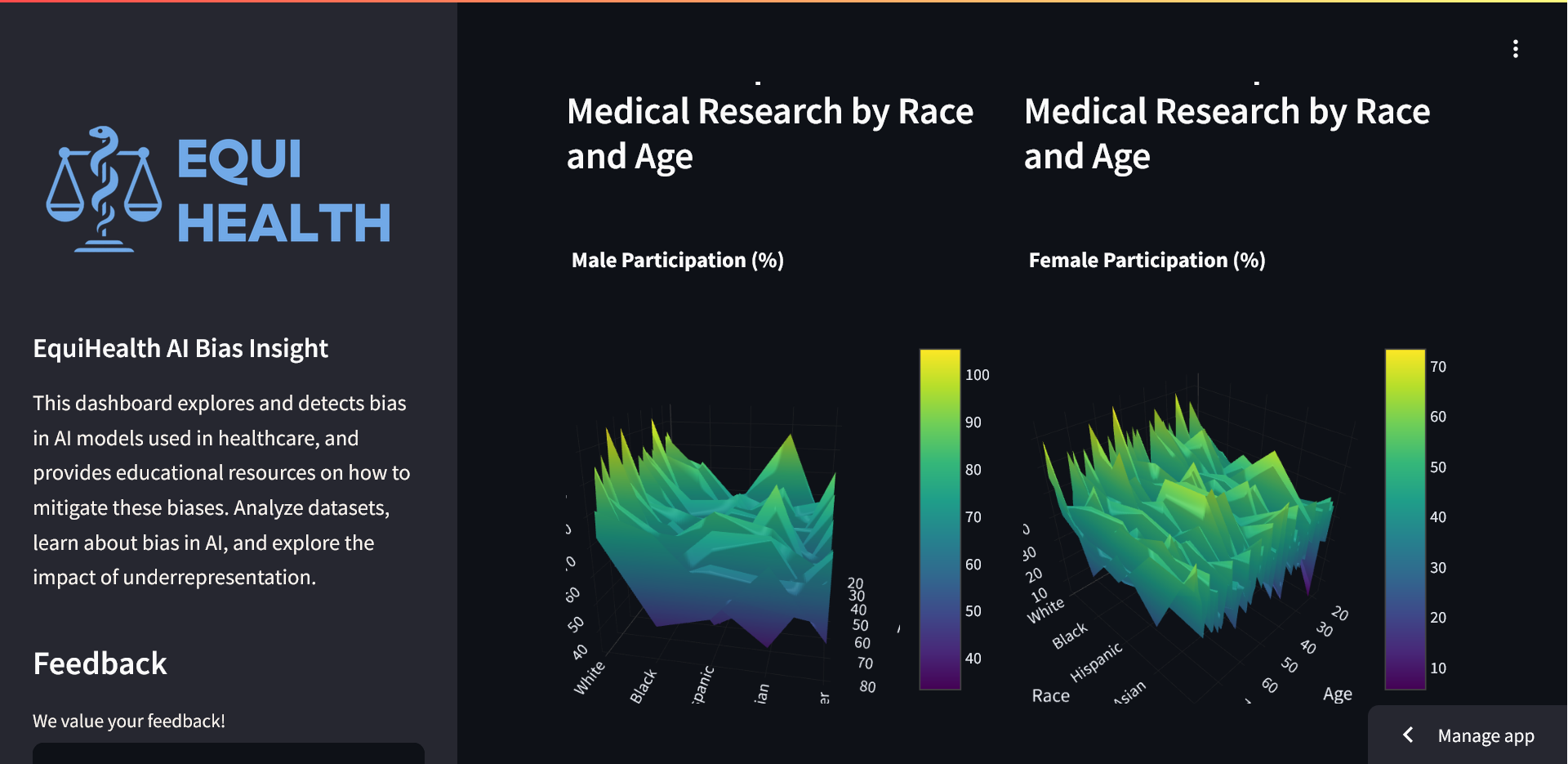
Our platform allows users to upload a medical dataset, and using an AI-powered algorithm, it identifies potential biases within the data, such as underrepresentation of minority groups or disparate treatment outcomes based on demographics. In addition to detecting biases, our platform is educational. It features interactive graphs, infographics, and quizzes that aim to educate users on the significance of equality in medical research and the real-world consequences of these disparities.
How we built it
We developed EquiHealth using a combination of Python, machine learning libraries, and OpenAI's API for natural language processing. Streamlit was used to create the web interface, allowing users to interact with the platform by uploading datasets and viewing visualizations. The core algorithm analyzes datasets for representation and disparate impact biases by comparing the demographic distribution of the data with real-world population statistics and outcomes. We also integrated educational elements, including infographics and quizzes, to enhance user learning.
Challenges we ran into
One of the main challenges we faced was developing an algorithm that could accurately detect and flag biases across different types of medical datasets. Each dataset had unique issues, especially when the demographic information was incomplete or poorly structured. Making sure that the educational content was both informative and engaging also required a balance between how fun and interactive they were and how much depth we wanted to go into.
Accomplishments that we're proud of
We’re particularly proud of creating a tool that not only identifies biases in medical datasets but also educates users on why these biases matter. By combining bias detection with an interactive learning experience, we’ve created a platform that could make a real impact in raising awareness about inequality in healthcare datasets, and our healthcare system in general.
What we learned
We learned a lot about using Streamlit, a platform we had only limited experience with before, and we were able to produce a nice looking website that included nearly all of our desired features. We also learned a lot about the prevalence and impact of biases in healthcare data while doing research for the educational aspect of our project.
What's next for EquiHealth
In the future we hope to expand the bias detection algorithm to apply to more different types of data, and incorporate more advanced machine learning models that can detect more nuanced forms of bias. Due to the time constraints, our model can only analyze clean data that fits the format it is expecting, and so it is not as useful as it could potentially be for day-to-day use.
Built With
- gpt
- python
- streamlit

Log in or sign up for Devpost to join the conversation.