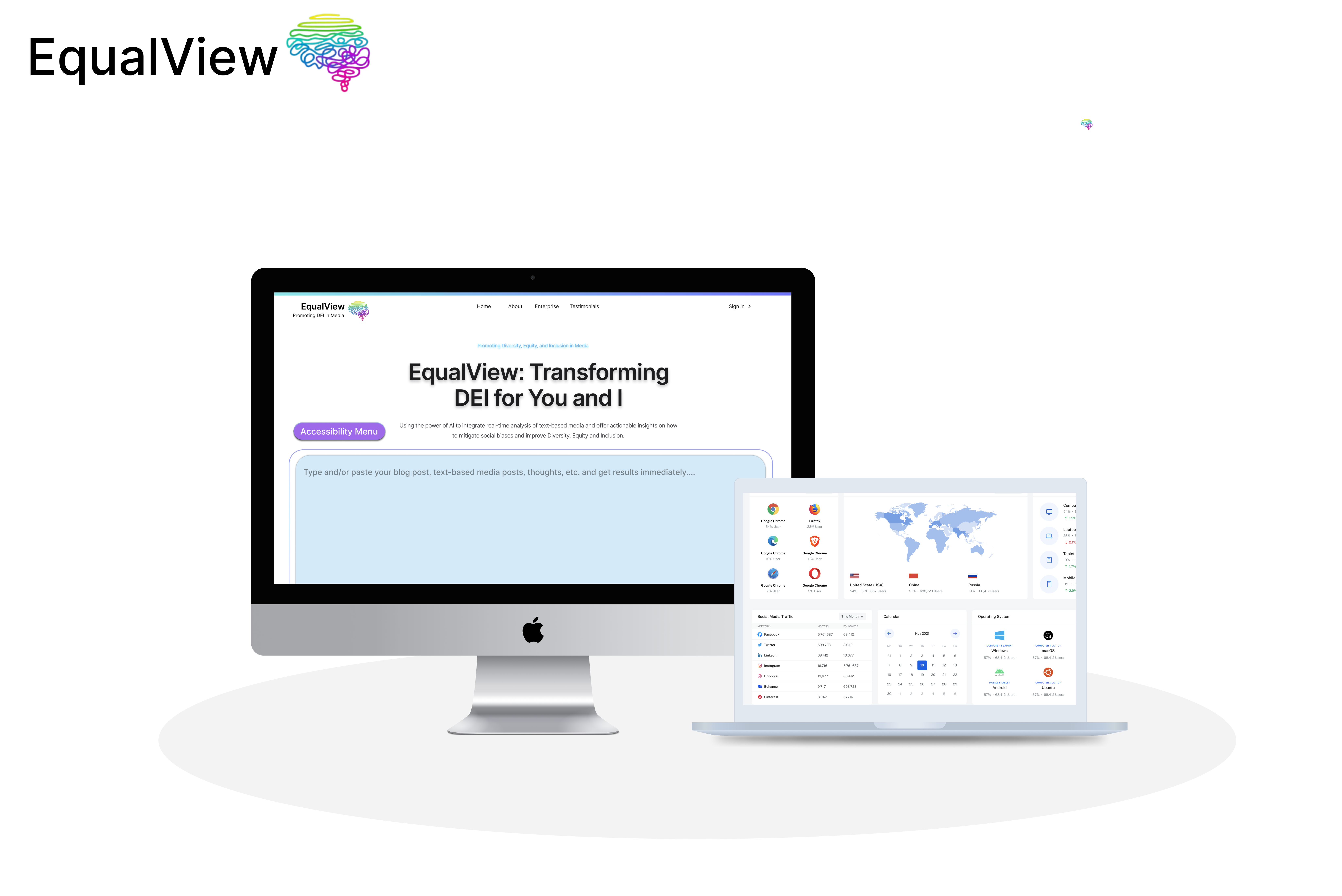
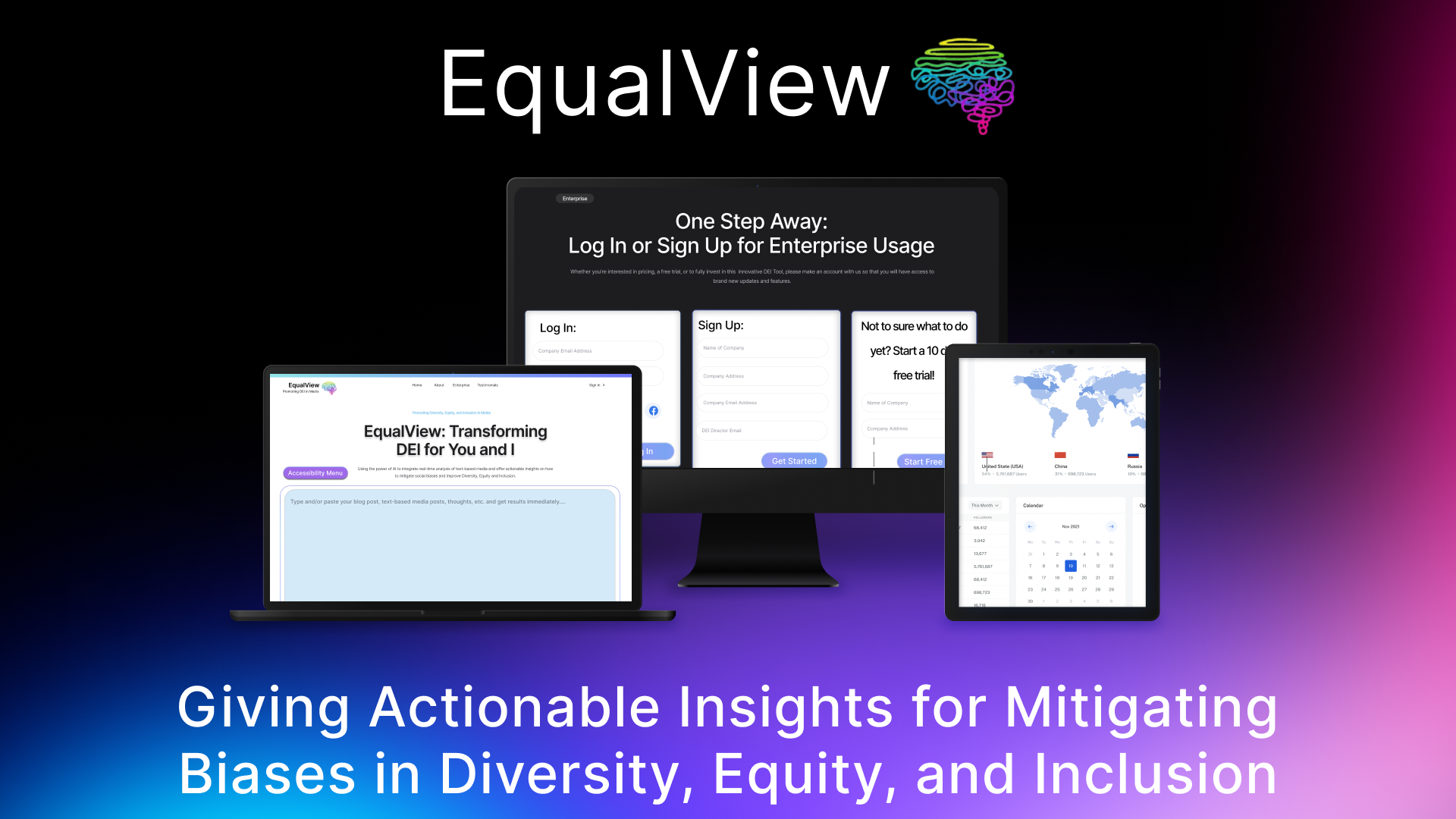
EqualView: Transforming DEI for You and I
Overview
EqualView Insights is a DEI-Analysis Tool dedicated to exploring and evaluating Diversity, Equity, and Inclusion (DEI) aspects within social media content. Using advanced Natural Language Processing (NLP) techniques and integrating FairLens, the tool aims to provide insights into the inclusivity, representation, and overall fairness of various forms of written media content by giving prompts as suggestions to enhance representation.
Inspiration
Driven by our collective passion for fostering inclusivity and promoting social good, our team embarked on a journey to create a platform. It began as a forum for exchanging helpful resources and organizing community meetups, focusing on volunteer activities like trash pickup and food distribution. However, when the theme of 'Social Good' was unveiled, we seized the opportunity to align our project with the core values of RTC (Rewriting the Code).
RTC's commitment to representation- 'Creating Mirrors and Breaking Glass Ceilings' resonated deeply with us. We envisioned our project as a powerful AI tool designed to ' transcend biases, enhance fairness, and shatter prejudices and discrimination' prevalent in media against various ethnic groups, the LGBTQ community, different age groups, genders, and more. In essence, we aspire to mirror RTC's values by creating a tool that not only reflects diversity but actively contributes to dismantling barriers by additionally prioritizing accessibilty.
Our ultimate goal is to cultivate an inclusive community that goes beyond conventional boundaries and serves as a catalyst for positive change. By leveraging technology to challenge stereotypes and promote equity, we strive to embody the principles of social good and representation in every aspect of our project. Together, we aim to build a future where fairness and inclusivity prevail, fostering a society that embraces diversity in all its forms.
What it does
Using state-of-the-art Natural Language Processing (NLP) techniques, our tool detects stereotypes and social biases related to race, gender, ability, and more.
At the core of our analysis, we integrate FairLens, a specialized open-source Python module that enhances our capability to evaluate content for fairness. FairLens utilizes sophisticated algorithms to identify potential biases, contributing to the depth and accuracy of our insights. The primary function of EqualView Insights is to provide actionable feedback to content creators, empowering them to mitigate biases and enhance inclusivity in their text-based media. So far, we have only been effective in analysing biases with respect to various demographic factors and conducting data analysis on open-source datasets.
Architecture
Building our project involved a strategic combination of design, data, and machine learning elements, underscoring our commitment to transparency and robust methodology.
Front-End Design: We kickstarted the process by crafting intuitive front-end mockups using Figma. This phase allowed us to visualize the user interface and establish a foundation for a seamless user experience.
Accessibility-Centric UI Design: Our user interface prioritizes accessibility, featuring special design considerations for diverse needs. With a focus on inclusivity, we implemented dyslexia-friendly fonts, colour saturation adjustments for enhanced UI interaction, larger text sizes, and seamless voice navigation. Moreover, our UI is compatible with screen readers, ensuring that all users, regardless of ability, can engage with our platform effortlessly.
Data Analysis and Infographics: To substantiate the rationale for our project, we utilized the Diversity, Equity, and Inclusion Measures Dataset curated by Karem Kurt. Employing Tableau, we transformed this dataset into compelling infographics that provided insights into the critical issues surrounding diversity and inclusion in media.
Machine Learning Model Training: Our machine learning model, the backbone of our project, was trained using datasets from reputable sources such as Propublica and Kaggle. These datasets specifically addressed 'DEI aspects in media,' serving as a robust foundation for our model to comprehend and analyze biases in the content.
Bias Detection with FairLens: To delve deeper into the hidden biases within our dataset, we employed FairLens, an open-source Python library. FairLens played a pivotal role in highlighting correlations and biases by allowing us to select multiple target variables, including LGBTQ, gender, age, ethnicity, and more. This step not only enhanced the transparency of our analysis but also allowed us to fine-tune our approach towards mitigating biases and promoting fairness.
Challenges Encountered:
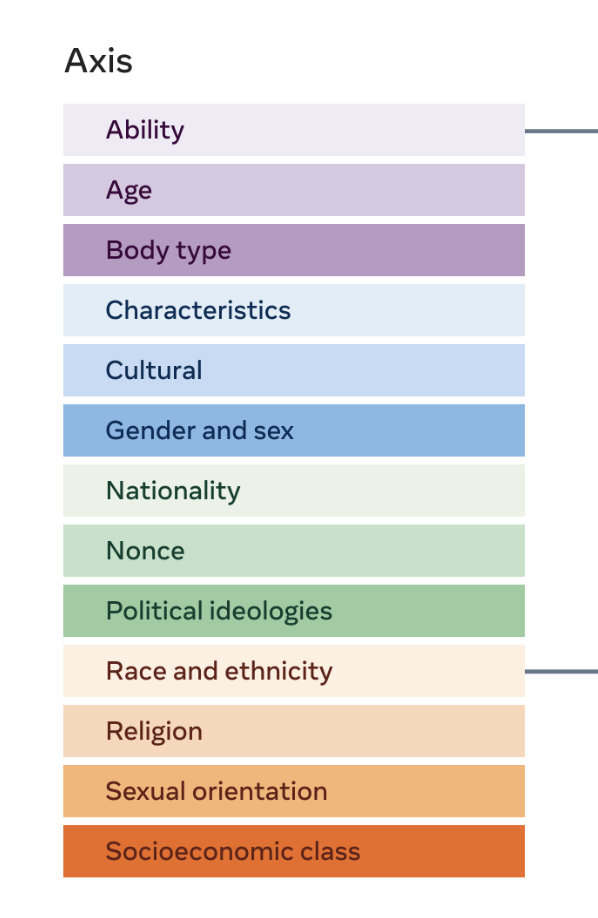
Dataset Selection and Accuracy: Ensuring the suitability of the selected datasets for our project required thorough exploration and scrutiny. We wanted to integrate Meta AI's dataset (https://ai.meta.com/blog/measure-fairness-and-mitigate-ai-bias/), but we're facing issues generating the dataset. The emphasis on this particular dataset is because it has over 500 demographic factors, which will aid in better optimization and higher accuracy.
Algorithm Development: Crafting models capable of effectively addressing the nuances of DEI aspects in media content required a meticulous approach involving iterative testing and refinement.
AI Understanding: One team member faced the challenge of grasping the intricacies of AI with no prior exposure to the field. Overcoming this learning curve required dedicated efforts in knowledge acquisition and collaborative learning within the team.
UI Design and Graph Implementation: Ensuring that the UI not only met aesthetic standards but also served the functional needs of diverse users required careful consideration.
Handling Large Datasets: Managing and narrowing down a vast dataset posed logistical challenges. The sheer volume of data required efficient strategies for selection, filtration, and optimization to ensure that our analysis remained focused and relevant.
Accomplishments We're Proud Of:
Project Submission: Successfully submitting our project is a noteworthy achievement, marking the culmination of our collective efforts and dedication throughout the hackathon.
AI Understanding: Gaining a deeper understanding of how AI works, particularly for team members with no prior exposure to the field. This newfound knowledge laid the foundation for future endeavours.
Bias Visualization: Visualizing the spectrum of biases within a dataset concerning various demographic indicators showcased our analytical prowess.
First Hackathon Participation: For team members participating in their first hackathon, this experience represents a major milestone. Overcoming challenges and contributing to a project within a limited timeframe is a testament to our adaptability and collaborative spirit.
UI Design Debut: Designing the front-end UI for the first time is a commendable achievement. Crafting an interface that is not only visually appealing but also aligns with the project's goals reflects our creativity and ability to venture into new domains.
Real-World Contribution: Contributing to real-world impact and prioritizing inclusivity through our project, fostering a more inclusive digital space reaffirms our commitment to positive change.
What we learned
- AI Comprehension : Marked a significant learning curve, demystifying fundamental concepts and opening avenues for further exploration.
- Hackathon Dynamics : Participating in a hackathon fostered time-sensitive collaborative coding and quick decision-making.
- Bias Mitigation : The project's focus highlighted AI's potential for positive change, reinforcing our responsibility as technologists to contribute to an inclusive digital landscape.
- Leveraging Current Skill Set : Learned to leverage our existing skill set effectively within the project.
Next Steps for EqualView: Promoting DEI in Media
Backend Enhancement: Strengthening backend infrastructure for optimized data processing and improved tool efficiency.
Media Analysis Expansion: Incorporating analysis of diverse media types beyond text to provide a comprehensive perspective on DEI representation.
Social Media Integration: Integrating EqualView directly into social media platforms facilitates real-time analysis within post boxes for immediate impact.
Team
We are a team of four diverse background students skilled in data science, data analytics, computer science, and user interface (UI) design. This interdisciplinary collaboration has led us to explore the possibilities offered by emerging technologies. 'Black Wing Hacks' hackathon provided us with the ideal platform to create a tool contributing to the community that brought us together.
Potential Impact
As our members come from diverse social backgrounds, we understand the need for representation of one's community to feel connected and valued. True representation fosters deep connections and empowers communities by validating their stories. We believe in shaping perceptions and emphasise that every voice matters. It envisions a world where everyone feels seen, valued, and heard.


Log in or sign up for Devpost to join the conversation.