-
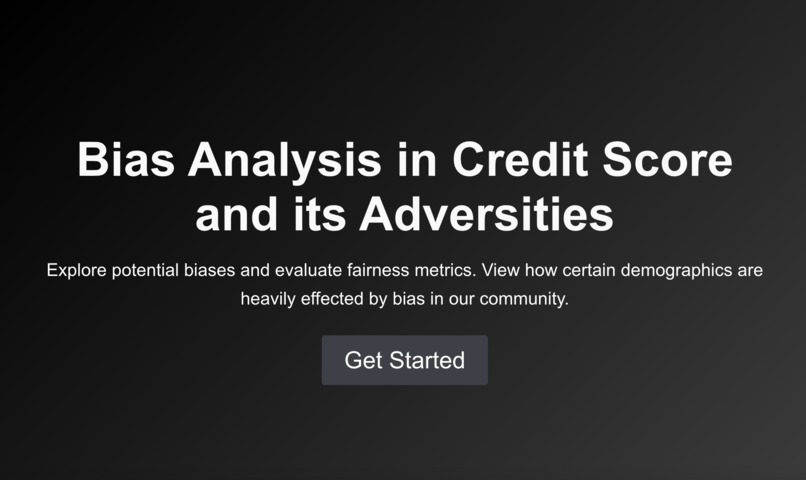
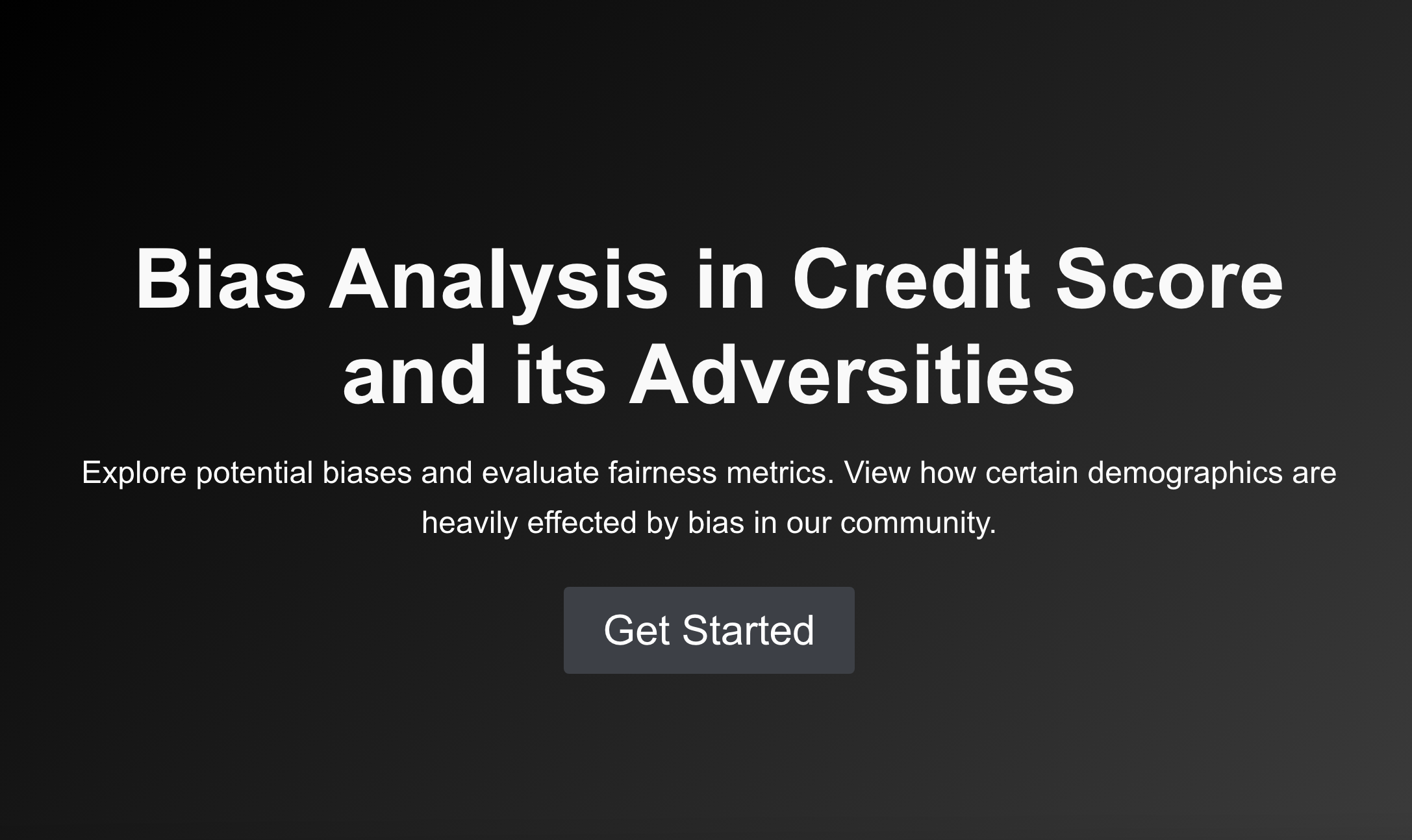
Landing Page
-
Log In Page
-
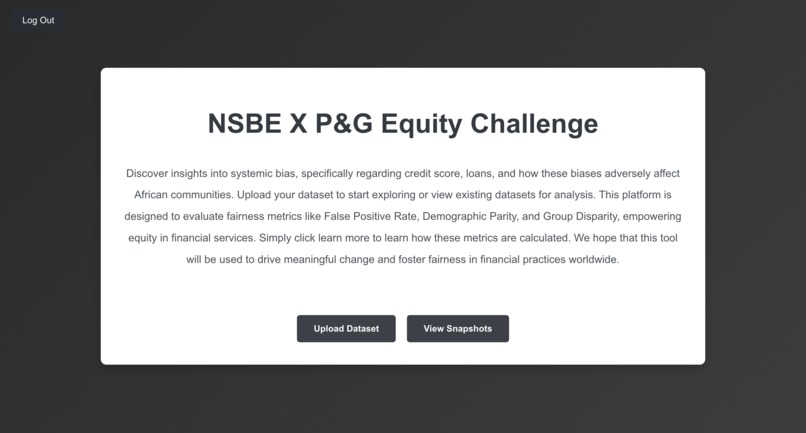
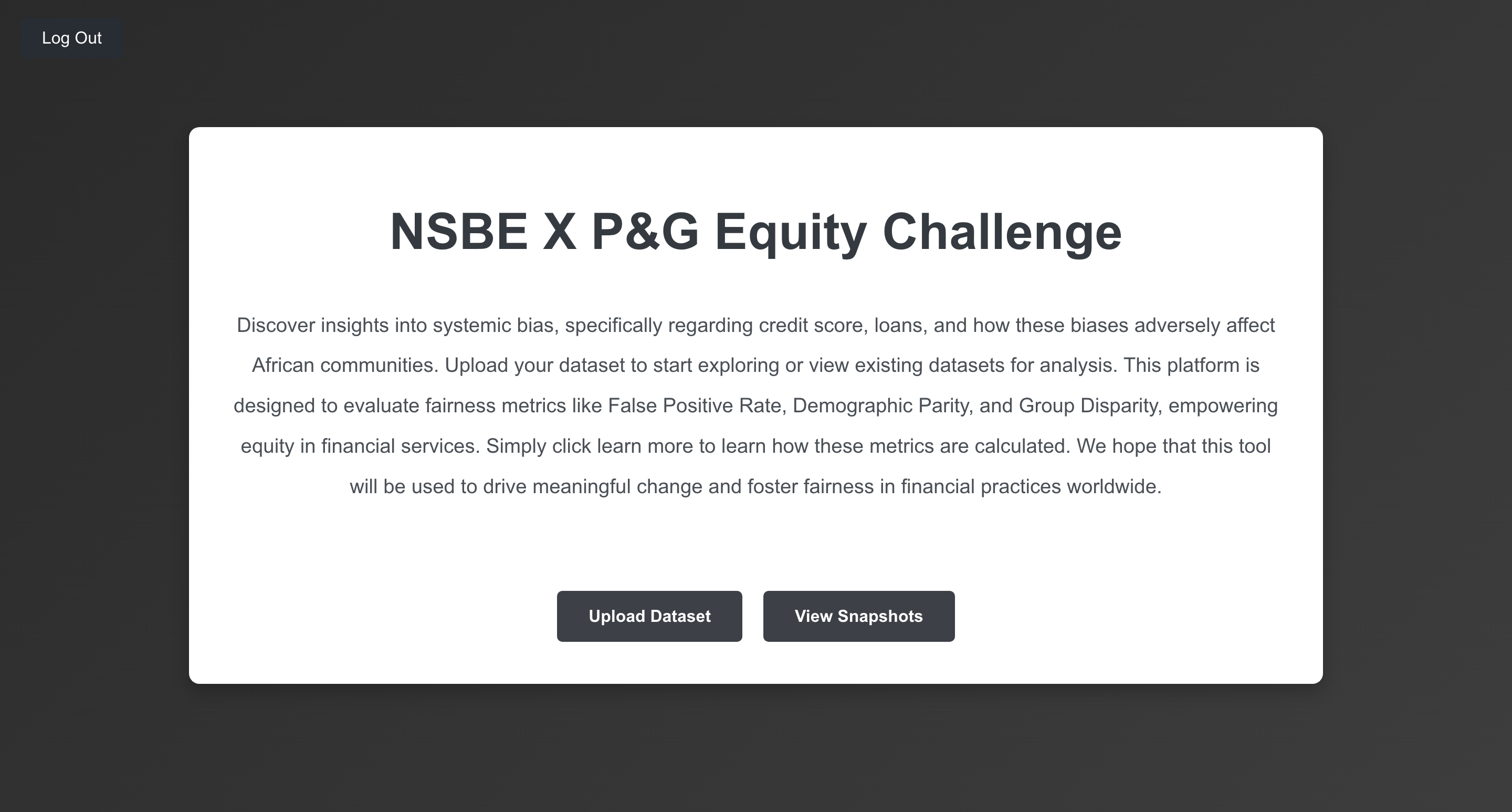
Home Page
-
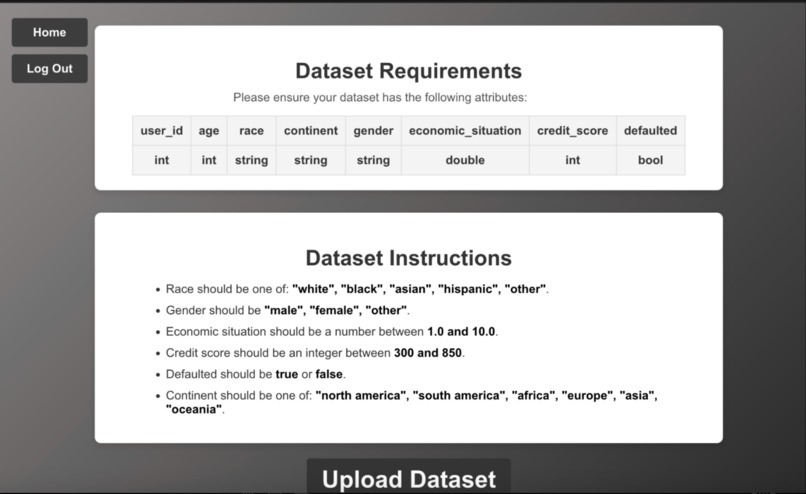
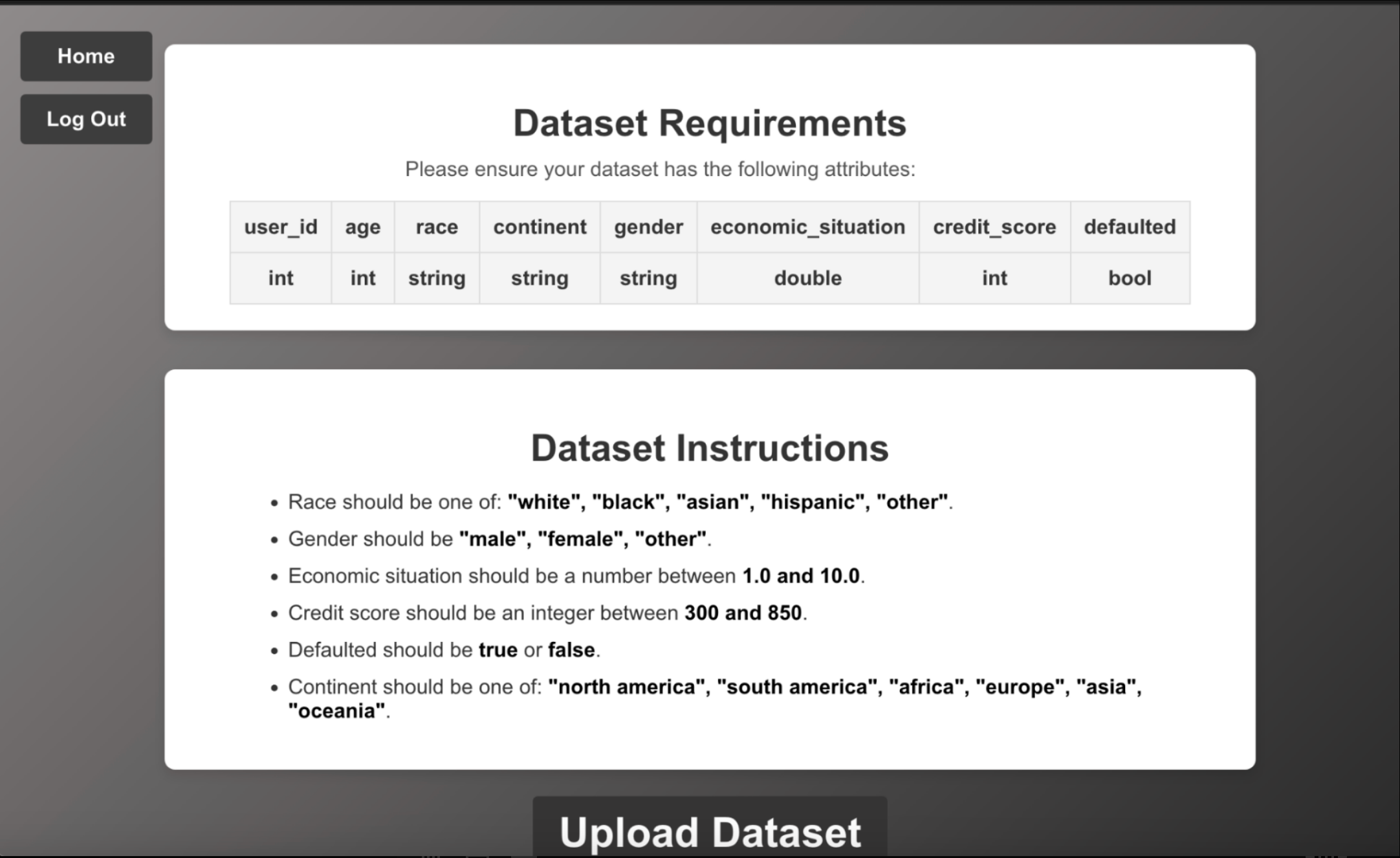
Data Constraints
Inspiration
What inspired us to make this project was the problem the NSBE X P&G Equity challenge was aiming to address. Bias is not always apparent and we wanted to create a tool to highlight that oftentimes people are put at a disadvantage due to things outside of their control such as race, age and gender. The fact that we could use our own knowledge and tools to be able to document such situations and help others was inspiring in itself.
What it does
Our project is a tool for businesses and companies to detect bias. We take in a dataset and analyze it for bias by checking for false positives, demographic parity, and group disparity using python algorithms in regards to credit score and financial information. There are options to filter by attributes such as race and gender, the data is then visualized, statistics such as the false positive rate are shown, and a report is generated. Each dataset is graded by a threshold depending on the combined statistics, and a performance summary can be stored on a user's account. Users and companies are then able to store numerous past results or "snapshots" on their account in order to assess how much their bias changes over time, and users can upload as many different datasets as they please.
How we built it
We built this project using React.js, Python, and Flask for integration between the frontend and backend. React takes in the dataset which is then sent to the backend. The Python functions then calculate the desired statistics and filter inputs based on what the users selected in the GUI. These results are then passed back to react to be visualized, a report is generated, and snapshots can be saved to our Firebase database. Users can log in and out of the site using auth0, our site was hosted with PythonAnywhere, and our domain name was created using Porkbun.
Challenges we ran into
This Hackathon being only 24 hours long was challenging, as we only had a day to develop a finished product. Additionally, we encountered unexpected challenges with some of the technologies we chose to use. Limited familiarity with certain tools caused delays as we had to troubleshoot and learn on the fly. Despite these obstacles, our team’s adaptability and collaboration allowed us to push through and deliver a functional project
Accomplishments that We're Proud Of
We are incredibly proud of embracing new technologies that challenged us to grow as developers and problem solvers. This project pushed us to step out of our comfort zones and delve into tools and frameworks we had not used before. By doing so, we gained valuable experience and a deeper understanding of modern development practices.
One of our key accomplishments was successfully integrating various APIs and third-party services into our solution. Navigating documentation, resolving integration challenges, and ensuring seamless communication between these services taught us a lot about designing systems that are both robust and scalable.
We are particularly proud of the user interface and experience we built, ensuring that it is not only functional but also intuitive and visually appealing. Crafting an application that prioritizes the end-user experience was a rewarding challenge, and we are excited about the positive feedback we've received so far.
Another significant accomplishment was overcoming unexpected roadblocks, such as debugging complex errors, adapting to technology limitations, and learning to optimize performance under real-world constraints. These obstacles tested our resilience and ability to learn quickly, ultimately making us more confident developers.
This project represents not only a successful implementation of an idea but also a journey of growth, innovation, and teamwork. We’re thrilled with what we accomplished and look forward to applying these lessons to future endeavors.
What we learned:
With the limited timeframe we were forced to learn how to produce a finished product as a collective even with the difficulties that arose. We spent lots of time learning and understanding how to use online databases to better the user experience. Although we struggled a bit with deployable instances, in the end it allowed us to understand the things we need to take into consideration when choosing a specific program.
What's Next for Equalizer
The journey of Equalizer doesn’t end here; we have several exciting features and enhancements planned for the future to further its impact and usability.
- Option to Share Database Results One of our primary next steps is to enable users to share their database results seamlessly. This feature will allow individuals and teams to collaborate more effectively by sharing insights, analyses, and visualizations derived from the data. Whether it’s through generating sharable links, exporting results in various formats (like CSV or PDF), or directly integrating with email or messaging platforms, we aim to make sharing simple and efficient. This functionality will be particularly beneficial for teams working on diversity and inclusion projects, enabling them to communicate findings across departments or organizations effortlessly.
- Improved Visualizations We’re also planning to enhance the data visualization aspect of Equalizer, introducing more interactive and dynamic charts. Features like drill-downs, tooltips, and customizable graphs will enable users to explore their data in more meaningful ways and present their findings effectively to stakeholders.
- Enhanced Analytics and Reporting We plan to expand our analytical capabilities to include deeper insights and more customizable reporting options. Users will be able to apply advanced filters, compare datasets, and generate comprehensive reports tailored to their specific needs. These features will empower organizations to track their progress and identify actionable steps toward creating more equitable environments.

Log in or sign up for Devpost to join the conversation.