-
-
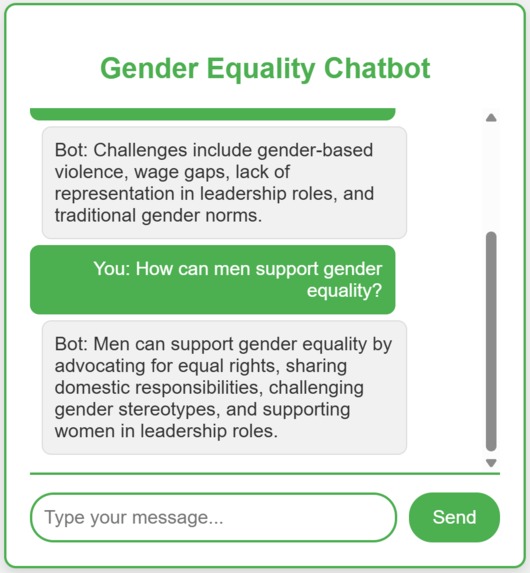
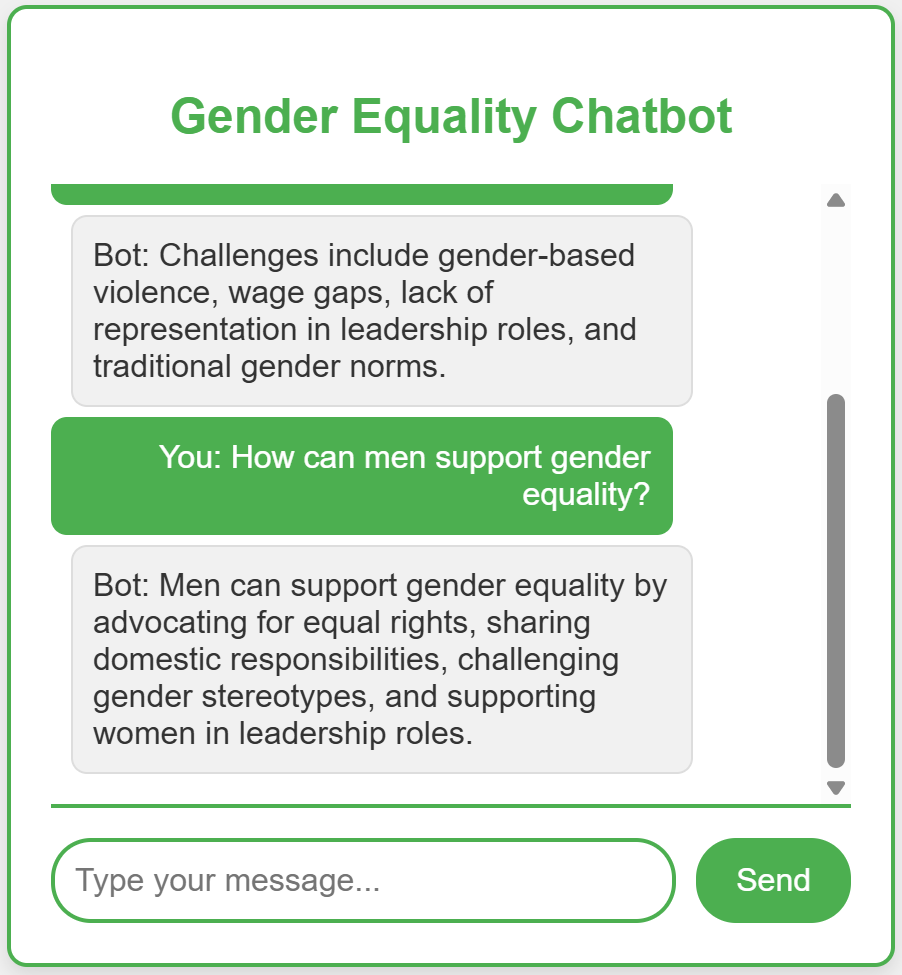
More close up view of chatbot_2
-
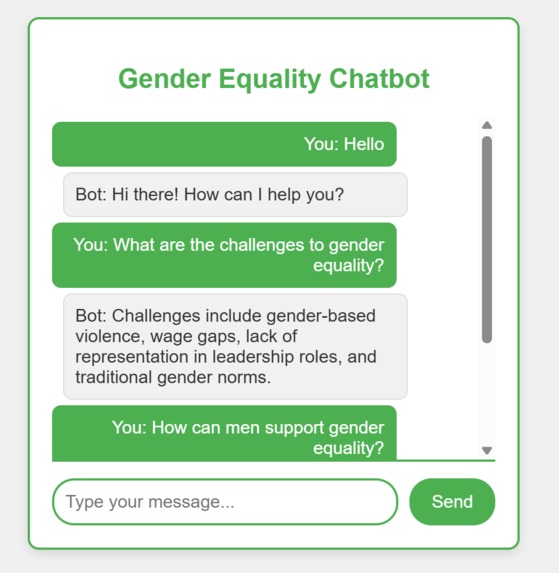
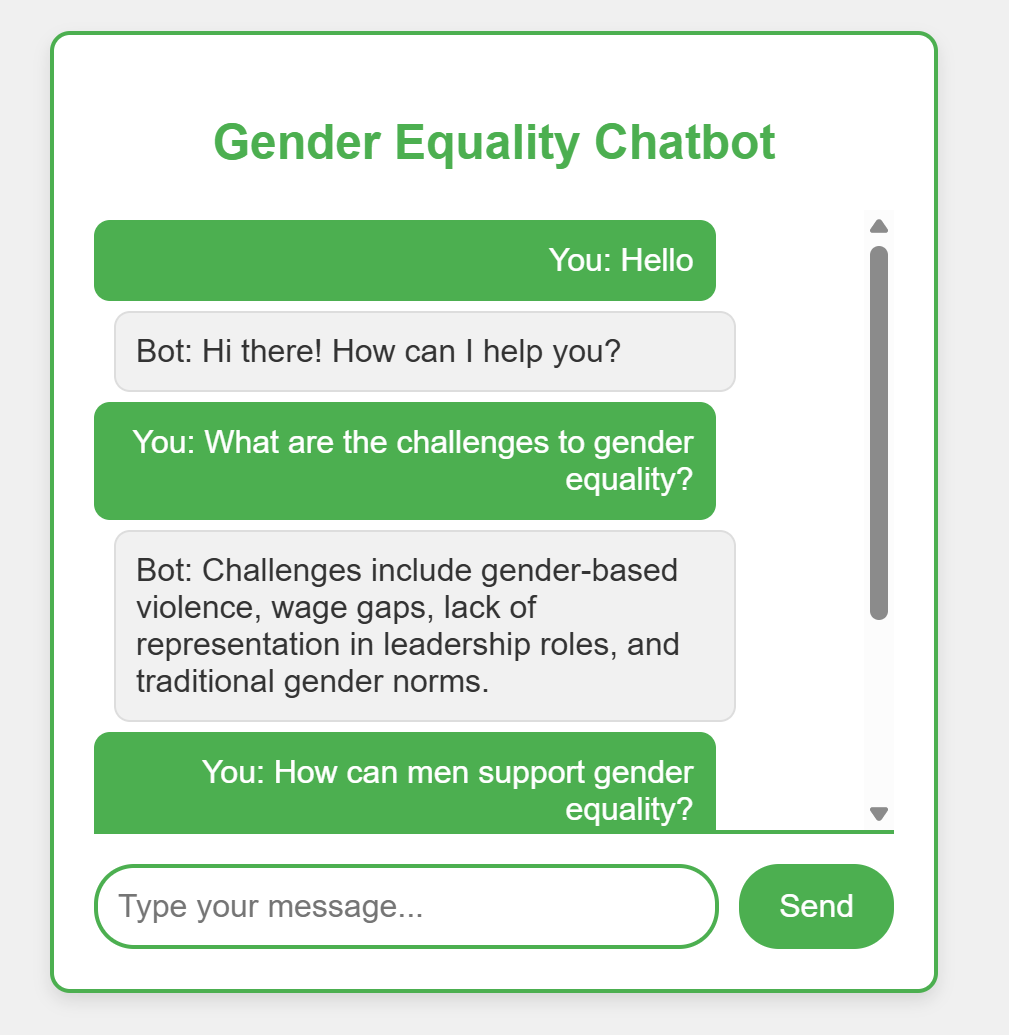
More close up view of chatbot_1
-
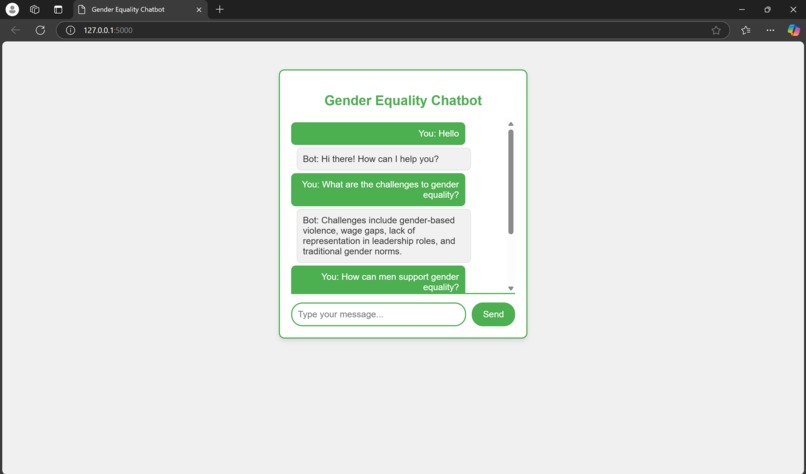
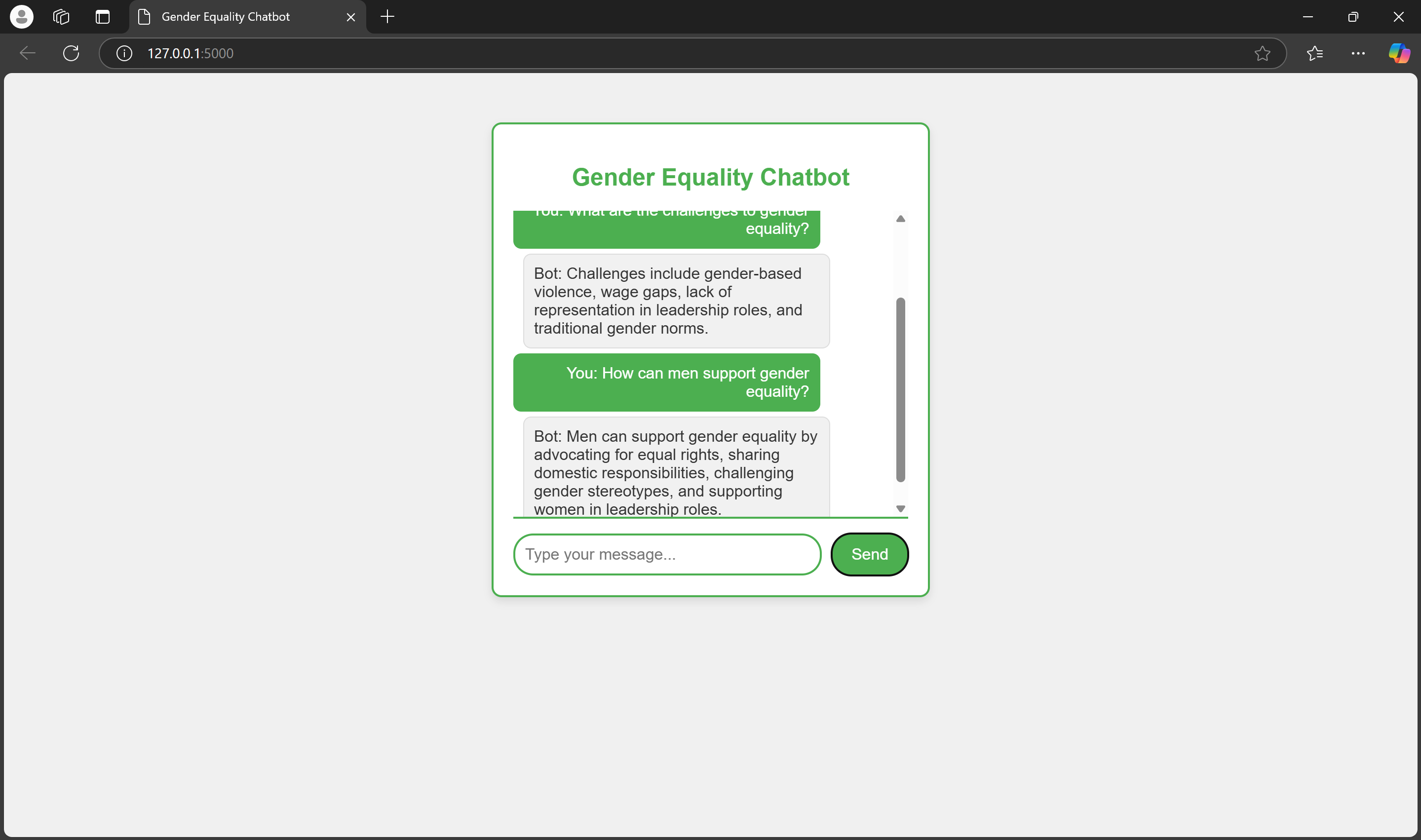
Chatbot complete webpage_2
-
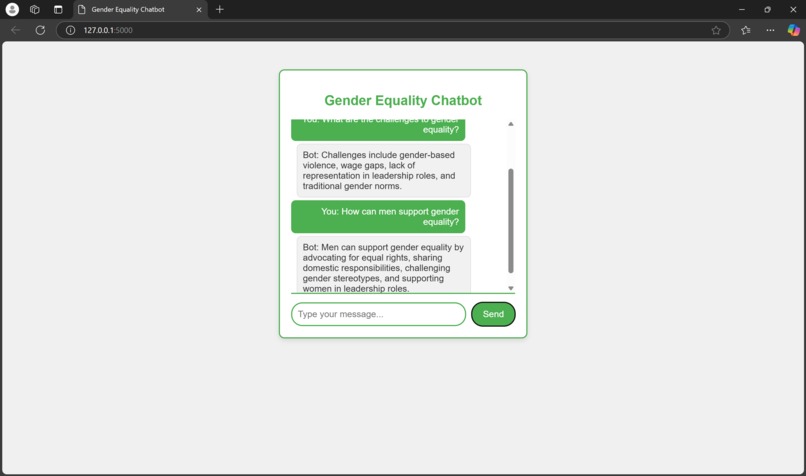
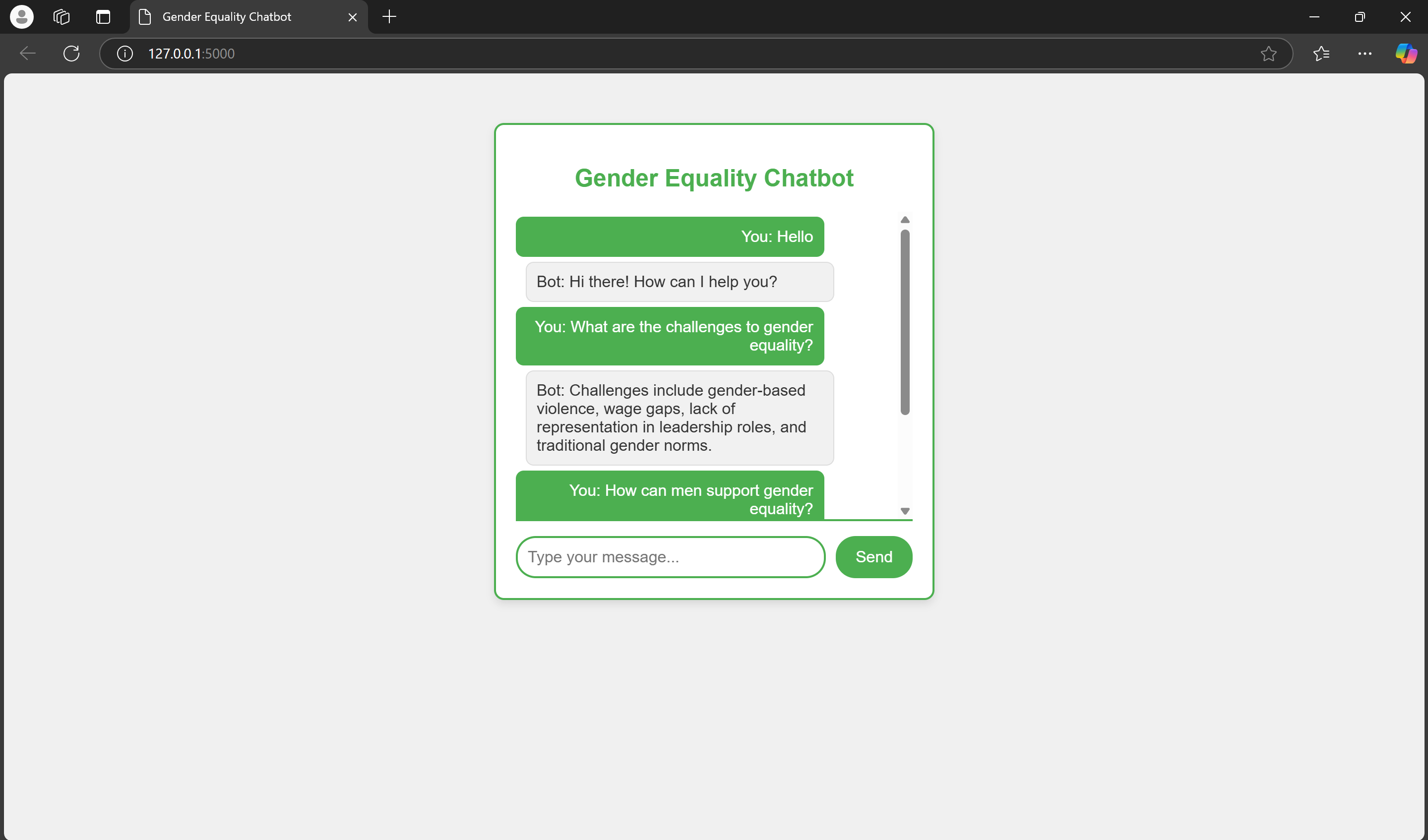
Chatbot complete webpage_1
About the Project
Inspiration
The inspiration behind this project came from a desire to foster meaningful conversations around gender equality. In a world that is constantly evolving, raising awareness about gender issues is critical for promoting fairness and inclusivity. I wanted to create a chatbot that can easily provide informative responses, educate users about gender equality, and address common misconceptions, all while being engaging and accessible.
What I Learned
Throughout the development of this project, I learned valuable skills in both web development and chatbot creation. The project allowed me to deepen my understanding of:
Flask Framework: I utilized Flask to create a simple backend that serves responses to user inputs. This helped me learn about RESTful APIs and how to handle HTTP requests in a Python-based web framework.
JavaScript: I learned more about asynchronous functions using
fetch()to communicate with the backend and dynamically update the web page without a full reload. This enhanced the user experience.Frontend Design: I worked on improving the UI and user experience by styling the chatbot interface with CSS, focusing on making the conversation flow visually appealing and easy to follow.
How I Built the Project
The project was built with the following technologies:
Backend: Flask was used to handle incoming requests, match user queries with predefined responses, and send back the appropriate response to the user.
Frontend: The frontend is a simple HTML page with a chatbox interface where users can type messages. CSS was used to style the chatbot and make the conversation visually distinct by using different colors for the bot and user messages.
JavaScript: I used JavaScript to handle the interaction with the user. When a user sends a message, it triggers an asynchronous request to the Flask backend, which then returns a response that is dynamically inserted into the conversation.
Challenges Faced
Handling Multiple User Inputs: One of the challenges was ensuring that the chatbot could handle a wide range of user inputs and return appropriate responses. Creating a robust system that could handle variations of questions and still return relevant answers was a key focus.
Ensuring Fluid User Experience: Achieving a smooth user experience where the conversation feels natural, with real-time updates, took some effort. I used CSS to design a neat interface and JavaScript for asynchronous behavior, making sure that the user’s message appeared immediately, followed by the chatbot's response.
Improving Chatbot Intelligence: While the chatbot currently responds based on a fixed set of questions, one of the challenges moving forward is expanding its capabilities. Integrating more sophisticated NLP (Natural Language Processing) features could help the bot understand a wider array of queries and respond more accurately.
Moving Forward
Looking ahead, I plan to:
Expand the Chatbot’s Knowledge Base: Add more responses and perhaps integrate a database or API to fetch information dynamically.
Improve NLP Capabilities: Exploring machine learning models to give the chatbot a better understanding of natural language queries.
Enhance the User Interface: I aim to make the chatbot more interactive with features like buttons, quick replies, or even voice-based input.
This project has been an exciting journey in web development and social awareness application. By combining technology with social issues, it has reinforced the importance of using accessible platforms to promote education and equality.
Built With
- backend
- css3
- flask
- frontend
- html5
- javascript
- python
- webdevlopment

Log in or sign up for Devpost to join the conversation.