EqualGround — A Safer Space for Every Voice
Inspiration
EqualGround was inspired by the idea that every person deserves dignity, safety, equality, and the freedom to make choices about their own life. People from different backgrounds may experience discrimination, unfair social expectations, gender inequality, or difficulty finding understandable information about their rights. Some may also feel uncomfortable sharing their experiences publicly because of privacy concerns or fear of judgment.
I wanted to explore how a digital platform could make learning about human rights and finding supportive resources feel more approachable, respectful, and accessible.
What It Does
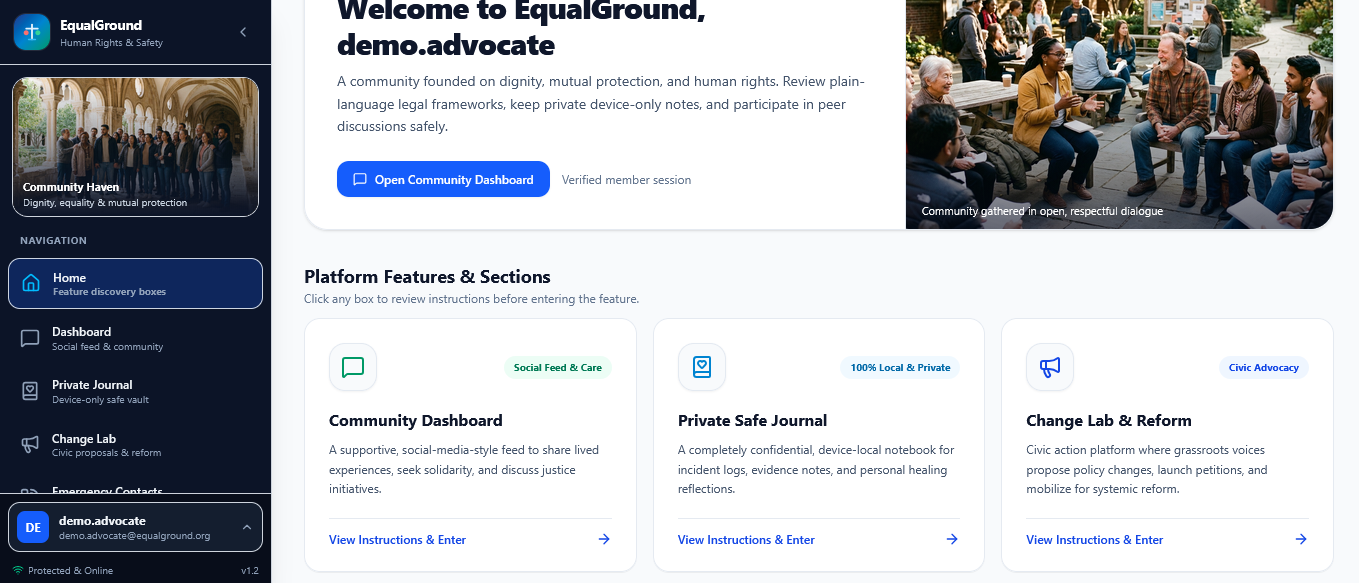
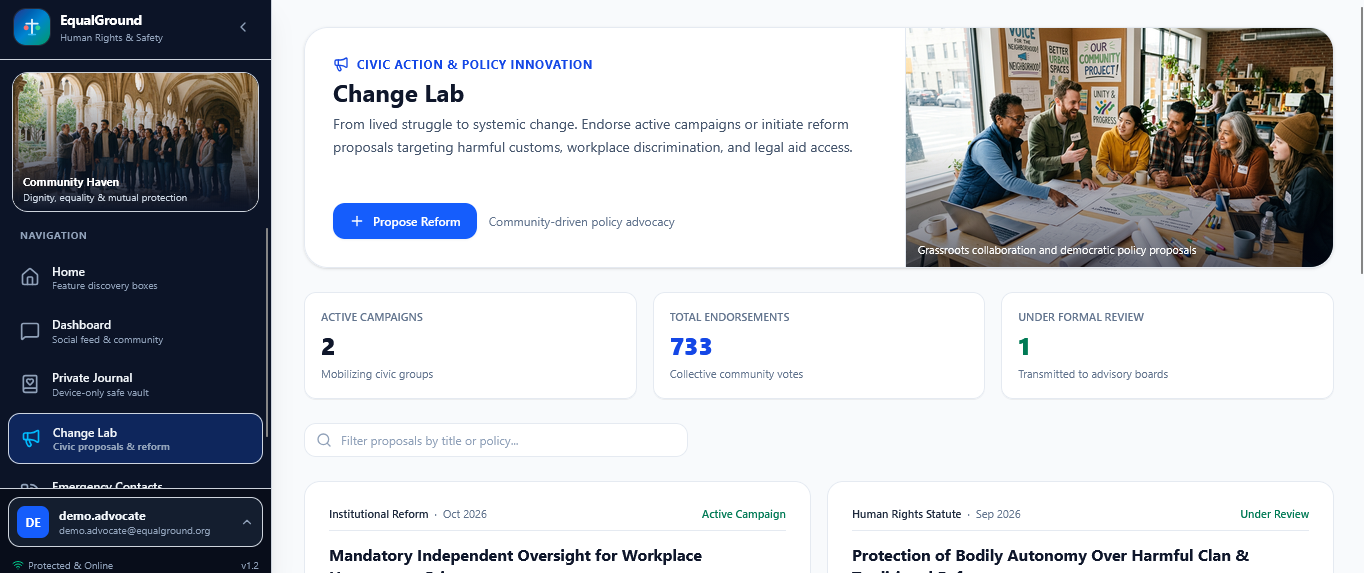
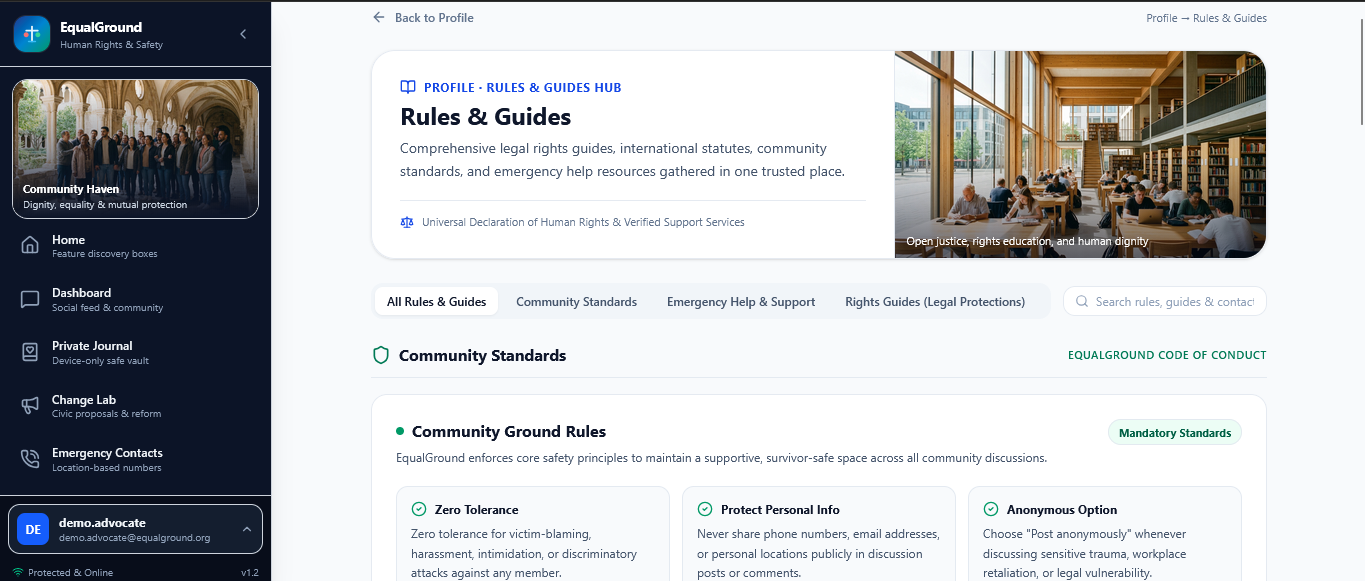
EqualGround is a human-rights website prototype designed around safety, privacy, personal choice, and inclusive participation. It brings several related experiences together in one place: rights and educational guides, a private journal, community discussions, and a Change Lab where users can develop constructive ideas for social improvement.
The goal is to help users explore information at their own pace, reflect on their thoughts, and participate in conversations without feeling pressured to share personal details. Its design emphasizes a calm interface, clear navigation, and simple interactions so that people with different levels of technical experience can use it more comfortably.
How I Built It
I built EqualGround as a web-based prototype using HTML, CSS, and JavaScript. HTML provides the page structure, CSS creates the visual design and responsive layouts, and JavaScript powers interactions such as navigating between sections, saving journal entries, creating discussion posts, filtering guides, and managing proposals.
I also designed the prototype to demonstrate guest access, privacy preferences, and the concept of optional data synchronization in a future version. The current version uses browser-local storage for demo content and does not have real authentication, secure server storage, or cross-device synchronization.
Challenges I Faced
One of my main challenges was bringing several sensitive topics together without making the website feel overwhelming. I needed to balance useful information with a clean interface and make the different features easy to understand.
Another challenge was thinking carefully about privacy and safety. A platform that discusses human rights and personal experiences should not encourage people to reveal identifying information or make promises about security that the technology cannot support. I addressed this by including privacy notices, educational disclaimers, and clear explanations of the prototype's limitations.
As a developing designer, I also had to consider how layout, colors, navigation, and interaction design work together to create a consistent user experience.
What I Learned
Through this project, I learned that meaningful UI/UX design involves more than making a website look attractive. It requires understanding users' needs, reducing unnecessary complexity, communicating clearly, and considering accessibility and privacy from the beginning.
I also gained practical experience combining HTML, CSS, and JavaScript into an interactive prototype. Most importantly, EqualGround helped me explore how thoughtful design can support human dignity and make important information easier to approach.
What's Next
Future improvements could include secure authentication, carefully designed anonymous participation, accessible multilingual content, verified country-specific legal and support resources, stronger moderation tools, and encrypted storage with user-controlled synchronization.
EqualGround is an early prototype, but its central idea is simple: everyone deserves a space where their voice matters, their choices are respected, and their dignity comes first.
Built With
- accessibility
- css3
- html5
- human-centered
- javascript
- local-storage
- responsive-web-design
- ui/ux-design

Log in or sign up for Devpost to join the conversation.