-
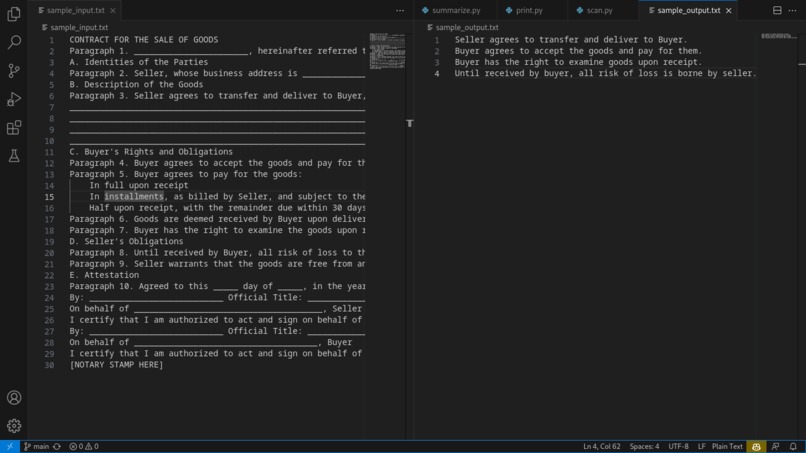
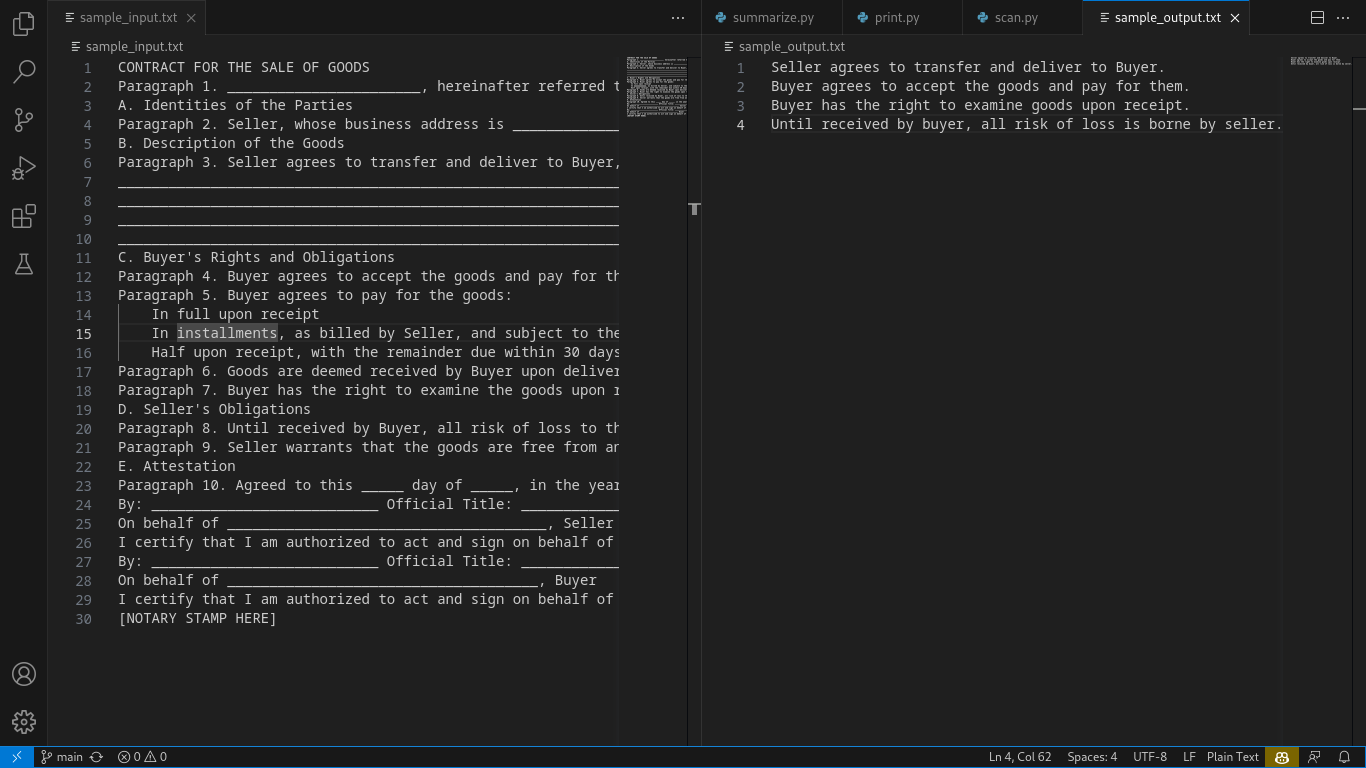
On the left is a sample input document, and on the right is Tabulate's printer output for said document
-
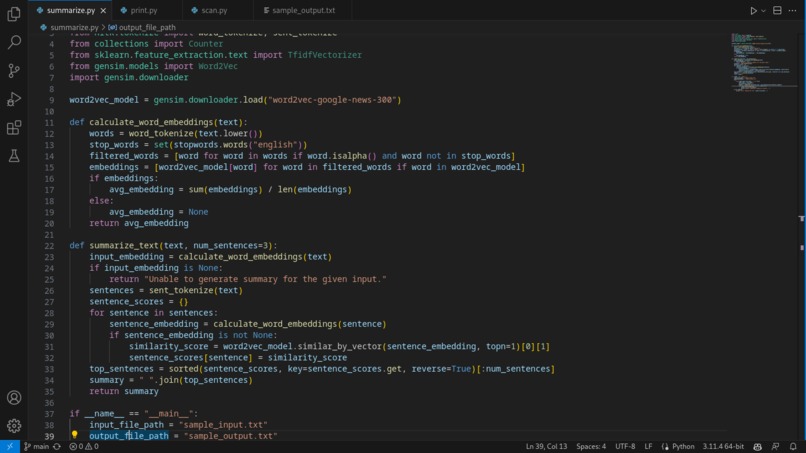
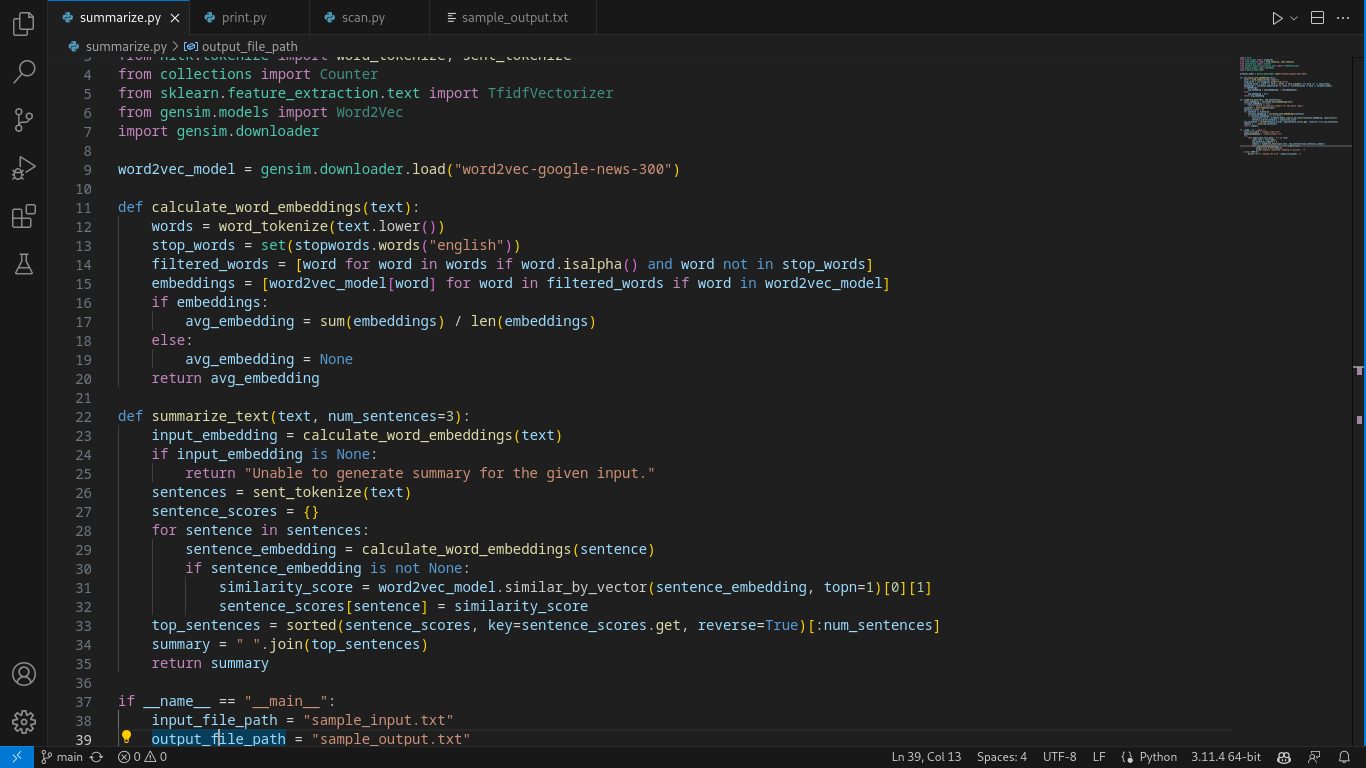
Code from the NLP summarization file, summary.py
Using Epson's Scan API to import physical documents into an NLP interface, it runs a summary script, then using Epson's Print API to create a new document of the summary. This extends the range of NLP summary into paper-based documents such as contracts, legal documentation, and paper receipts, opening up new worlds of potential for transparency and accountability in these fields. Too often, parties engaged in contracts and agreements simply skim the clauses, paying a lack of attention into terms that could affect them for years or decades of their lives. Tabulate changes the game, offering an end-to-end simplification of these documents, empowering the involved parties to make better-informed decisions.
Within its backend, Tabulate uses a term frequency–inverse document frequency (TI-IDF) algorithm to identify the most important words and phrases in the contract, weighting their relevance to the parties based on relative frequencies. It then uses Word2Vec Word Embeddings to capture the semantic relationships between words within the contract, seeking to represent the most relevant connections to the end-user. It then scores these sentences by relevance before removing any arbitrary terms via sentence compression.
Through this, Tabulate transforms its scanned documents from complex terms, legal jargon, and/or walls of text, into statements that the reader can easily follow. Via the Epson API's scanning and printing functions, the paper itself remains the medium of communication, greatly reducing friction and allowing the interactions facilitated by such papers to proceed uninterrupted.
Ready to try it out?


Log in or sign up for Devpost to join the conversation.