-
-
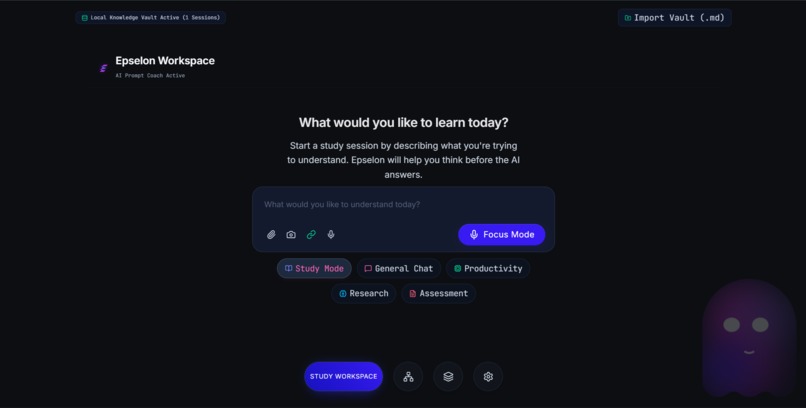
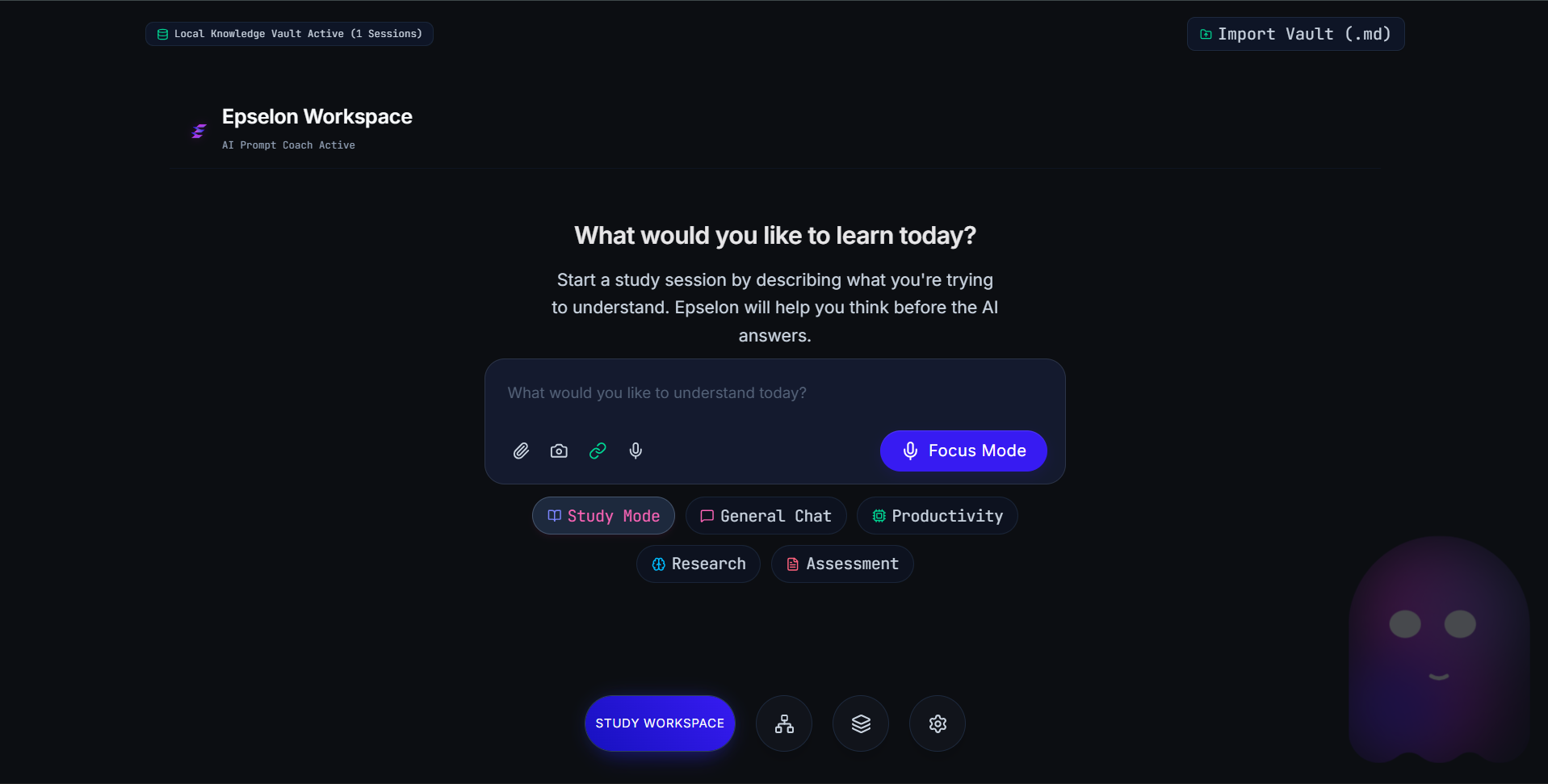
Ai workspace
-
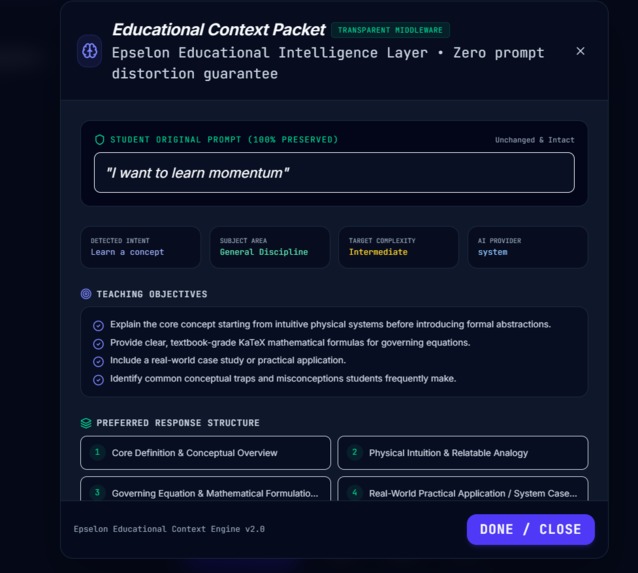
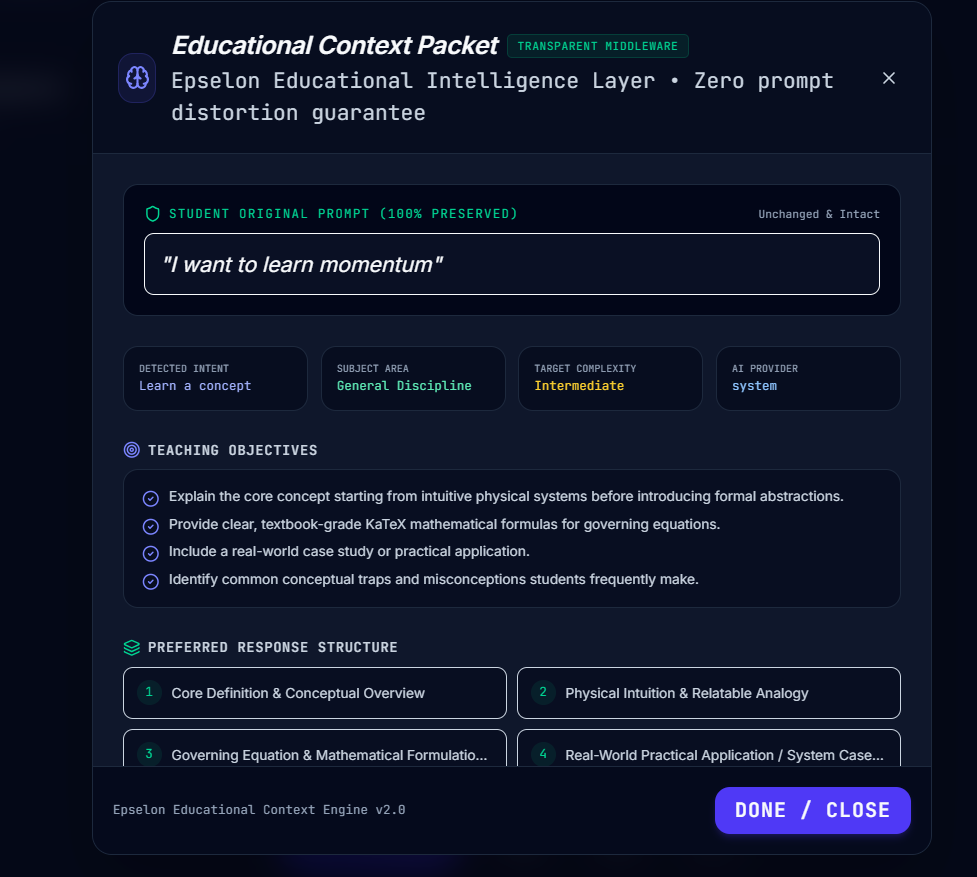
Structured response gotten form the ai
-
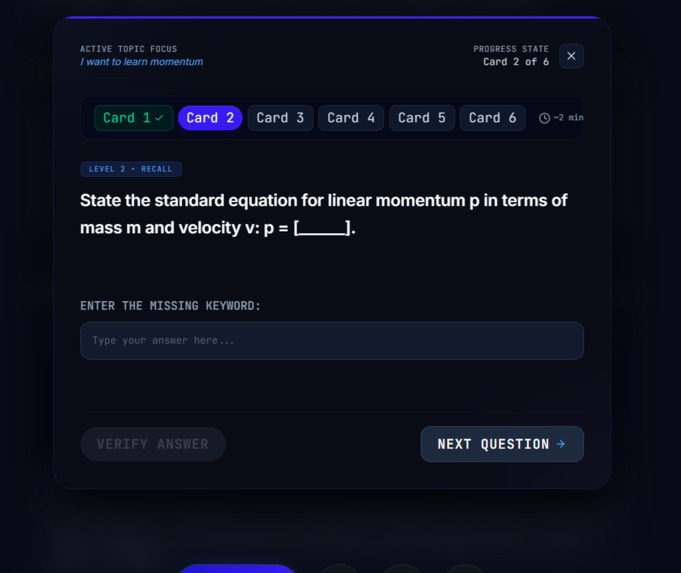
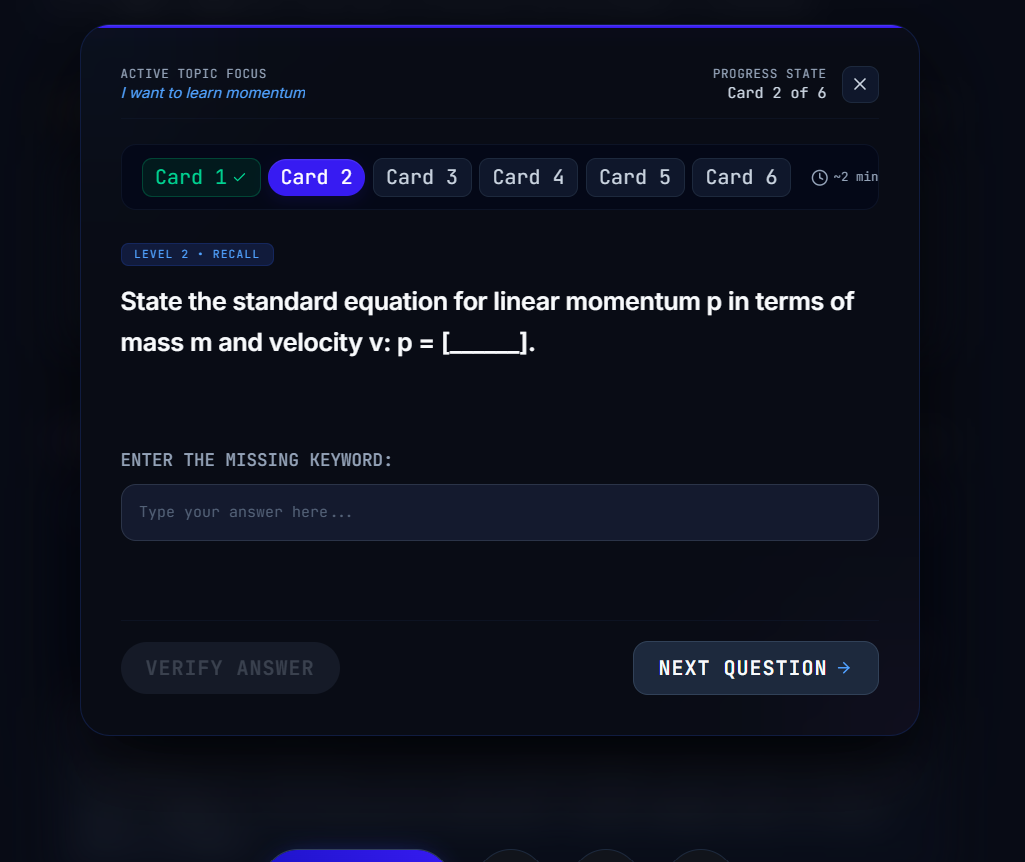
Question Flashcard
-
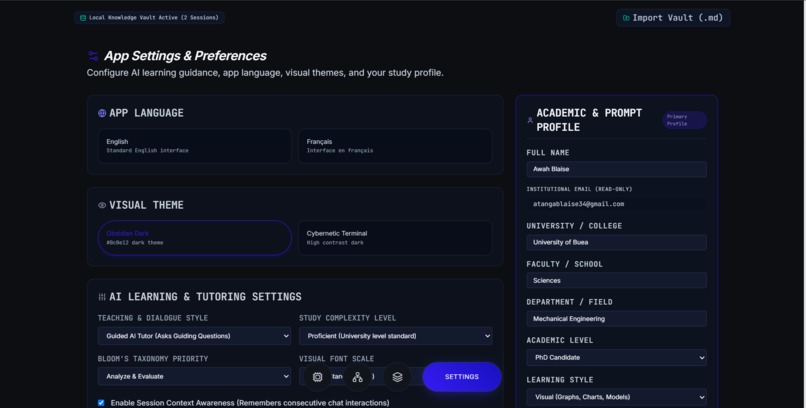
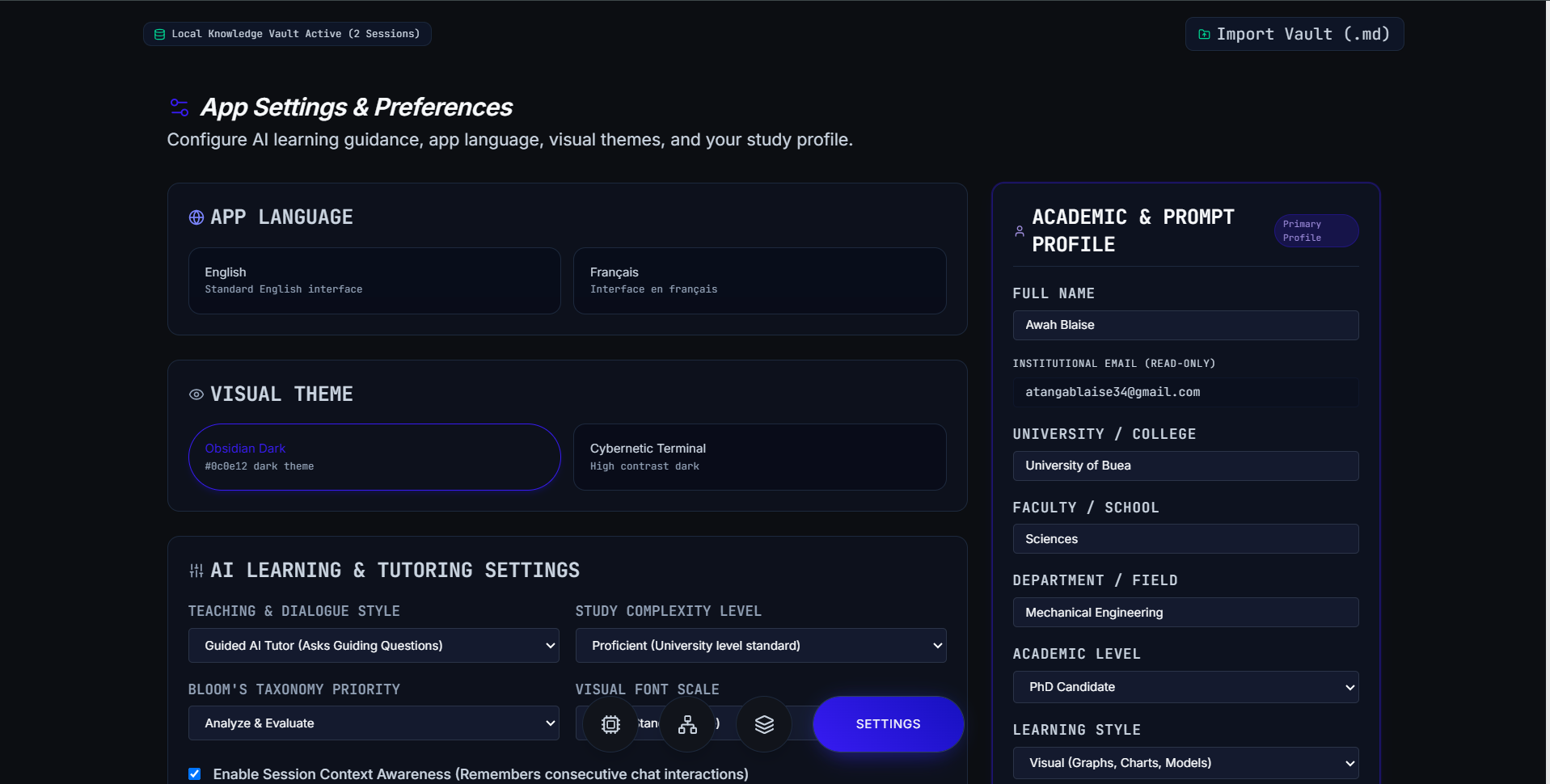
Settings page
-
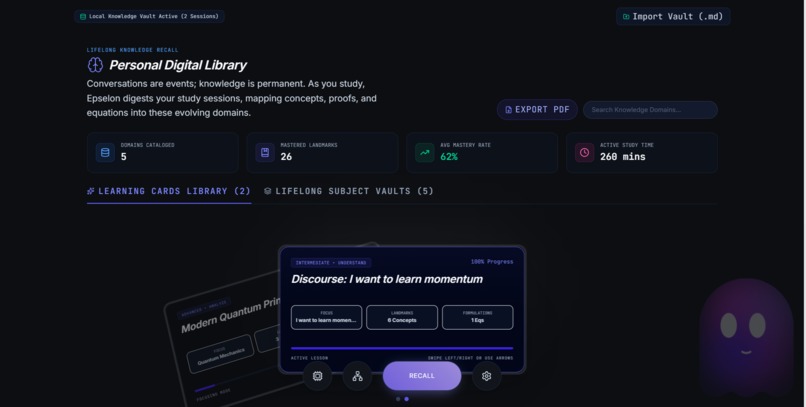
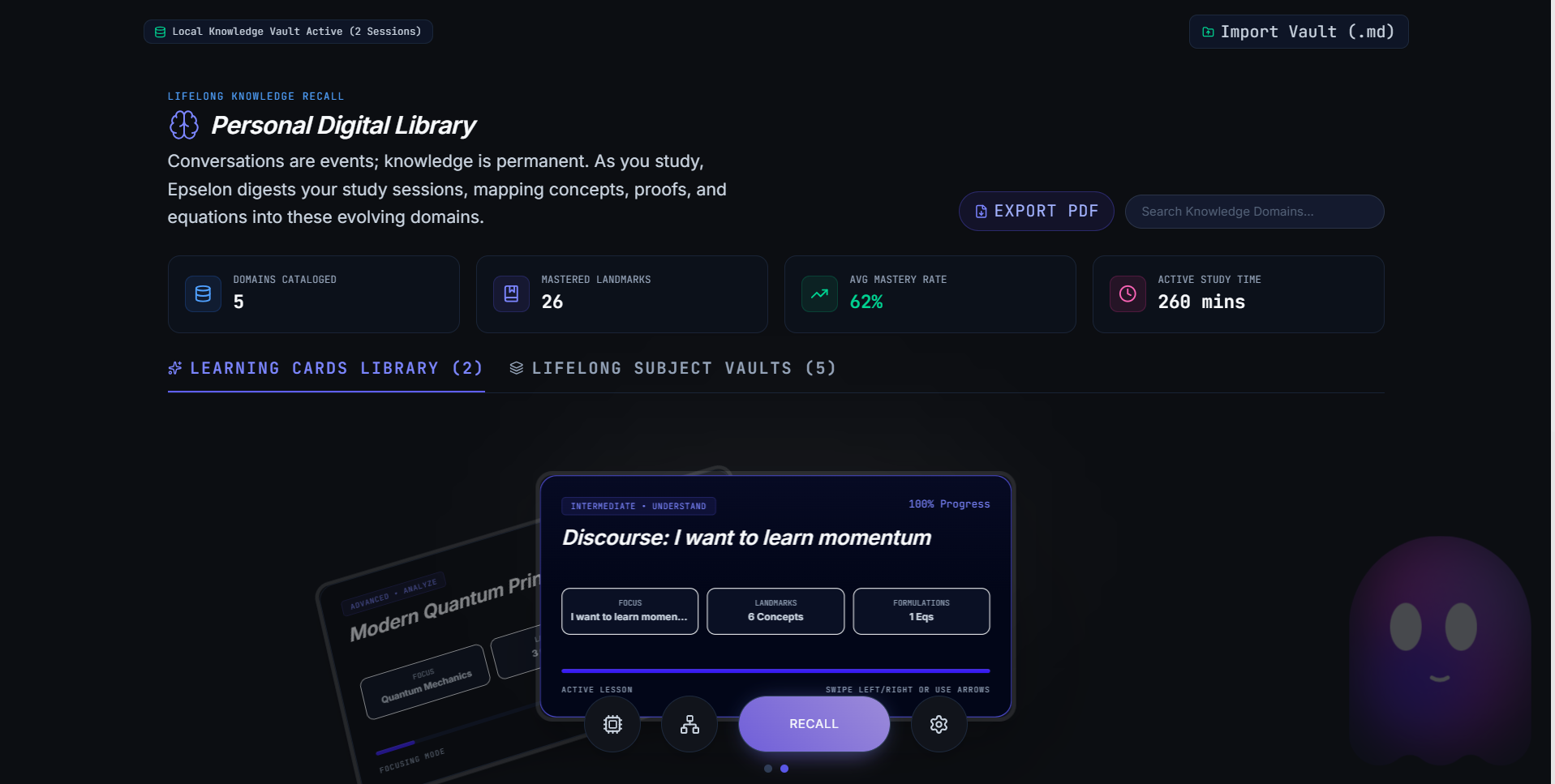
Recalls page with flashcards
Epselon
Inspiration
Artificial Intelligence has become one of the most powerful educational tools available to students today. Whether it is ChatGPT, Gemini, Claude, or any other large language model, millions of students now use AI as part of their daily learning process.
But while these models are excellent at answering questions, we noticed something important:
They are optimized to answer---not to teach.
A student can ask an AI to explain momentum, calculus, inflation, or programming and receive an excellent response. Yet a few hours later, many students struggle to remember what they just learned.
The learning process often ends the moment the AI finishes generating its answer.
As engineering students ourselves, we experienced this repeatedly. We realized that AI had become incredibly good at providing information, but very little attention had been given to what happens after the answer is generated.
That became the foundation of Epselon.
Our question became:
"What if AI conversations were transformed into complete learning experiences instead of ending as simple chat responses?"
What it does
Rather than building another AI chatbot, we wanted to build an Educational Intelligence Layer that sits between students and their favorite AI models.
Instead of replacing ChatGPT, Gemini, Claude, or other models, Epselon enhances how students learn with them.
Students continue using the AI they already trust, but Epselon restructures the entire learning journey around those conversations.
Our goal is simple:
Turn AI from an answer machine into a learning companion.
From the beginning, we deliberately avoided designing Epselon as another chat interface.
Instead, we designed an educational workflow.
A study session now follows a complete learning pipeline:
Student Prompt → Prompt Coach → AI Model → Structured Lesson → Reflection → Assessment → Knowledge Organization → Long-Term Recall
Every stage exists because educational research consistently shows that understanding improves when learners actively engage with information instead of passively consuming it.
One of our first innovations was the Prompt Coach.
Many students ask AI questions like:
"Explain momentum."
Instead of sending this directly to the AI, Epselon analyzes the request and refines it in real time.
Rather than rewriting the student's intent, Prompt Coach enriches it by adding educational context such as:
- appropriate explanation depth,
- preferred teaching style,
- learning objectives,
- reasoning-first instruction,
- and structured pedagogical guidance.
Most importantly, students can see how their prompt was improved before sending it.
This transforms prompt engineering into a learning opportunity rather than a hidden process.
Traditional AI interfaces return one large response.
We found that this often overwhelms students.
Epselon instead restructures AI responses into progressive learning cards.
Rather than presenting everything at once, information is revealed gradually.
Students move through ideas one concept at a time, making complex topics much easier to digest.
The goal is not to reduce information.
The goal is to improve understanding.
Once students finish studying, Epselon transitions into a Reflection Gateway.
Instead of immediately ending the session, students answer carefully designed questions that encourage them to explain concepts in their own words.
This reinforces understanding while helping identify misconceptions before they become long-term habits.
Rather than generating generic quizzes, Epselon builds assessments directly from the concepts discussed during the study session.
Questions are generated only after analyzing learning objectives, concepts, relationships, misconceptions, applications, and examples.
Every completed study session becomes part of a permanent personal knowledge base.
Students can revisit previous lessons, search concepts, reconnect related topics, and continue learning over time rather than starting from scratch.
Our long-term vision is for Epselon to become each student's personal academic memory.
We also explored a different way of interacting with AI through Focus Mode.
When activated, the interface transforms into a conversational learning environment.
Students interact naturally using voice while Epselon's animated companion becomes the center of the experience.
Rather than feeling like a chatbot, Focus Mode creates the feeling of speaking with an attentive study companion.
How we built it
Throughout development we focused heavily on interaction design.
Some of our design principles included:
- progressive disclosure instead of information overload,
- glassmorphism and calm visual hierarchy,
- adaptive study cards,
- knowledge graph visualization,
- personalized Recall library,
- smooth educational transitions instead of abrupt page changes,
- and an animated companion that responds naturally during Focus Mode.
Every interaction was designed to reinforce learning rather than distract from it.
Epselon combines several modern technologies into a single educational platform.
The project is built using a modern web stack with AI providers integrated through user-owned accounts.
Key architectural components include:
- AI routing layer supporting multiple providers
- Prompt Coach pipeline
- Structured response transformation engine
- Adaptive assessment engine
- Knowledge graph generation
- Recall library
- Local-first study session architecture
- Markdown export for portable study history
- Progressive educational workflow
Rather than treating AI responses as final output, Epselon treats them as raw educational material that is transformed into structured learning experiences.
Challenges we ran into
One of the biggest challenges was resisting the temptation to add features simply because AI made them possible.
Early versions behaved too much like traditional chatbots.
Responses were large, assessments were generic, and conversations ended too quickly.
We repeatedly simplified the experience until every feature answered one question:
Does this genuinely improve learning?
We also learned that architecture matters just as much as interface design.
Many of our improvements came not from changing how the app looked, but from redesigning the underlying educational pipeline.
Building reliable local storage, designing structured study sessions, organizing Recall, and creating adaptive assessments required careful architectural thinking rather than simply calling an LLM.
Accomplishments that we're proud of
Rather than replacing existing AI models, we successfully built an educational layer that transforms ordinary AI conversations into structured learning experiences.
We are particularly proud of creating an end-to-end learning workflow that includes Prompt Coach, structured lesson delivery, Reflection Gateway, adaptive assessments, Focus Mode, a Knowledge Graph, and a Recall system that preserves a student's learning journey over time.
Most importantly, we built Epselon around one central philosophy:
AI should help students learn, not simply provide answers.
What we learned
This project fundamentally changed how we think about AI in education.
We learned that:
- AI should guide learning rather than replace it.
- Better interfaces create better learning habits.
- Reflection is as important as explanation.
- Long-term memory requires organization, not just conversation.
- Students need educational workflows, not simply better chatbots.
Perhaps our biggest lesson was realizing that the future of educational AI may not be about building larger models.
It may be about building better learning experiences around the models that already exist.
What's next for Epselon
Epselon is only the beginning.
Our long-term vision is to build an educational operating system that helps students learn with any AI model while preserving ownership of their learning journey.
We imagine a future where every AI conversation becomes a permanent building block in a student's knowledge, where understanding grows over time, and where AI is remembered not as a shortcut to answers but as a catalyst for genuine learning.
That is the future we hope Epselon helps create.

Log in or sign up for Devpost to join the conversation.