-
-
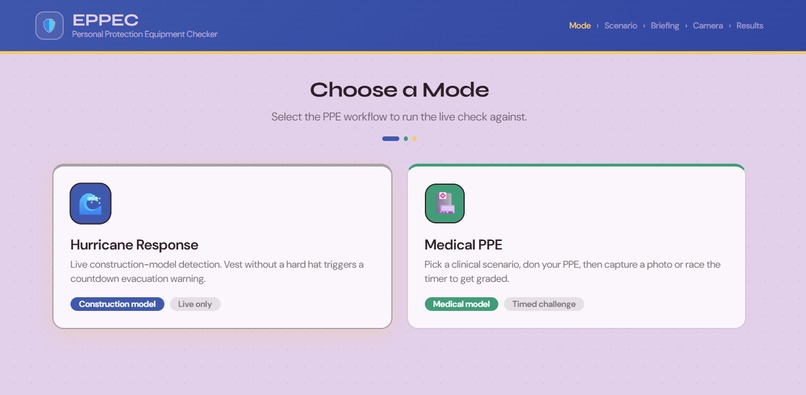
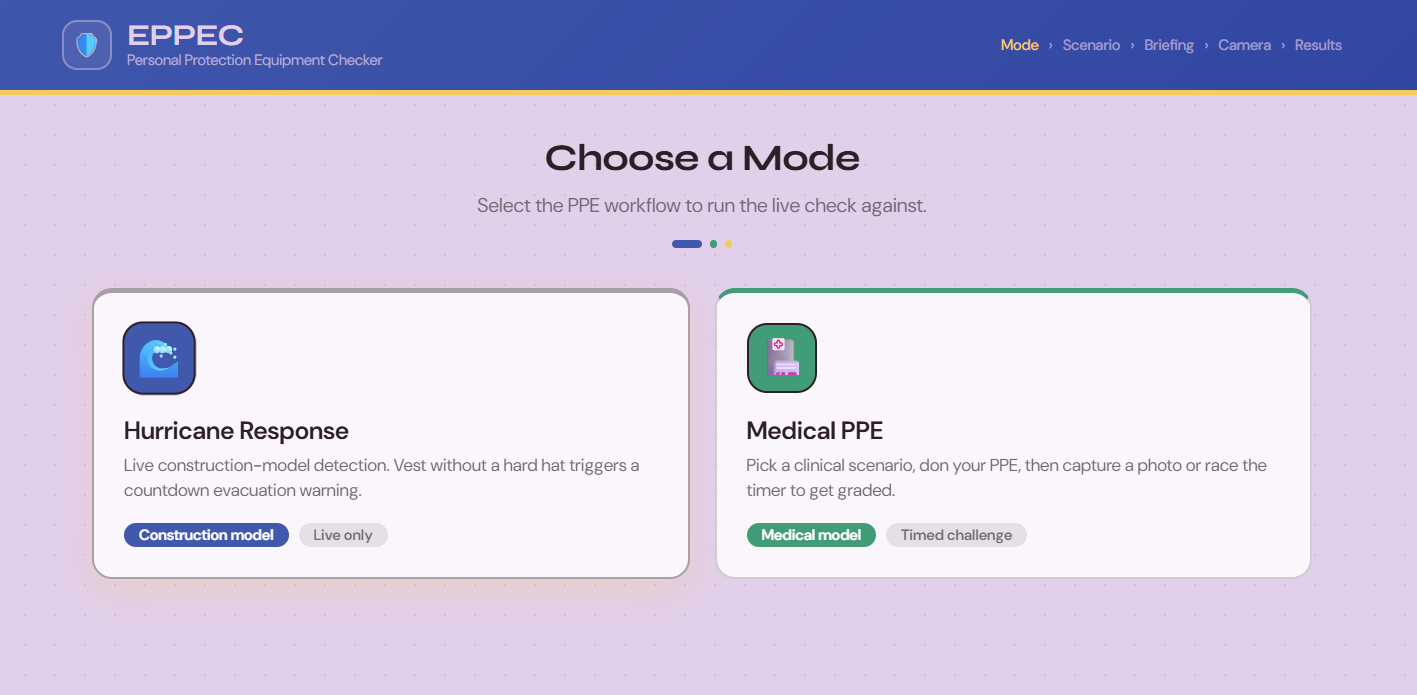
Landing Page with choice for two modes
-
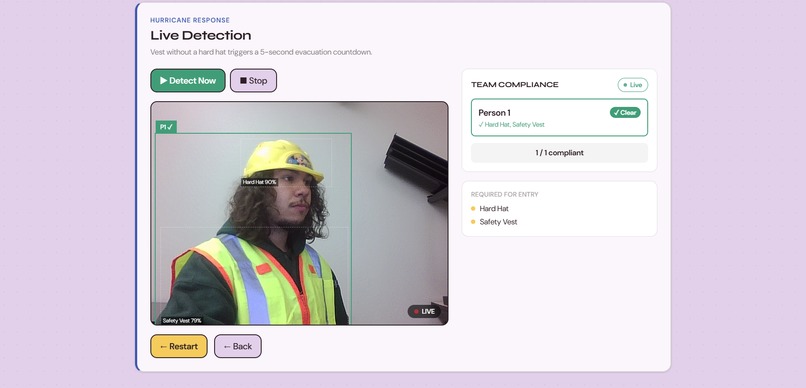
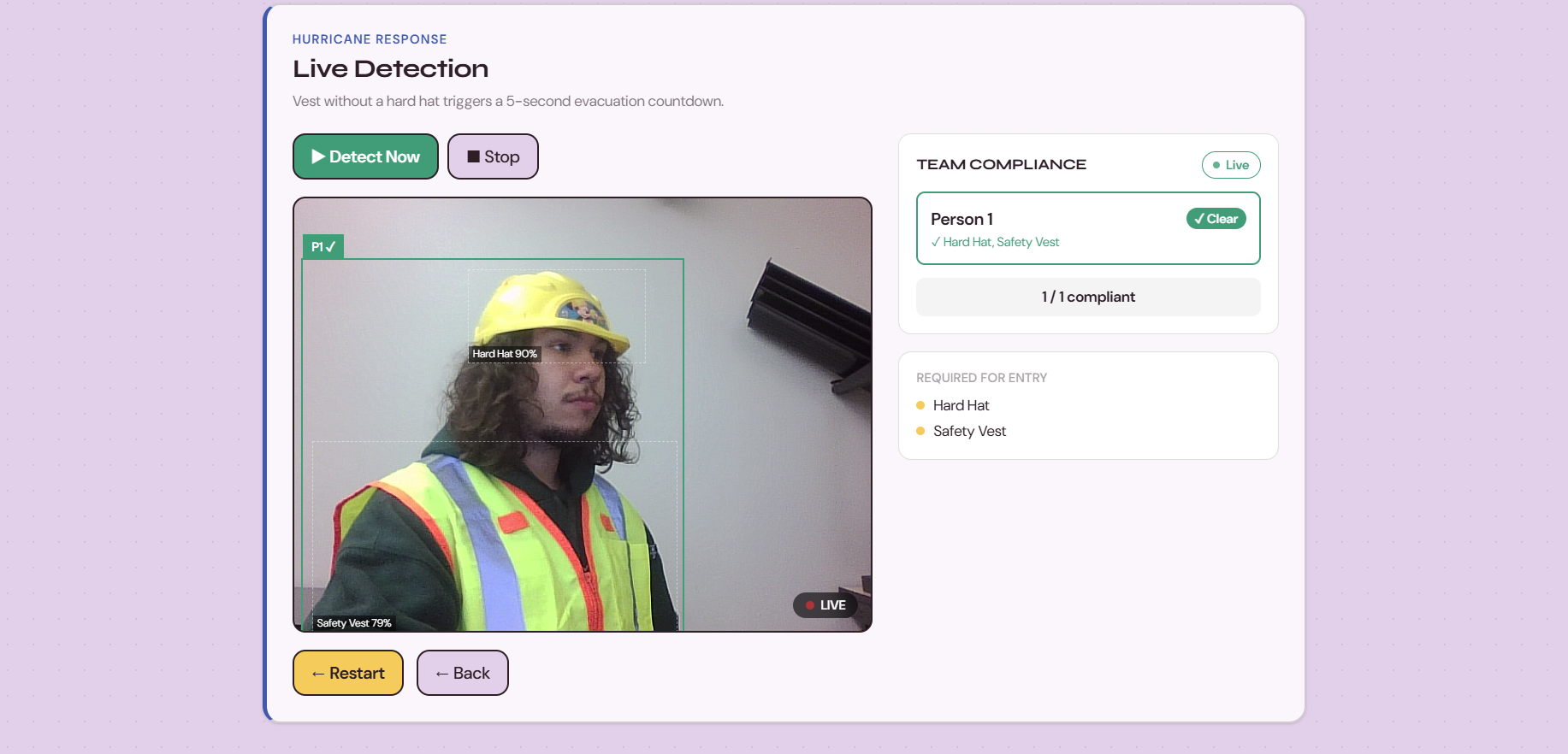
Live Detection for Flood Response PPE
-
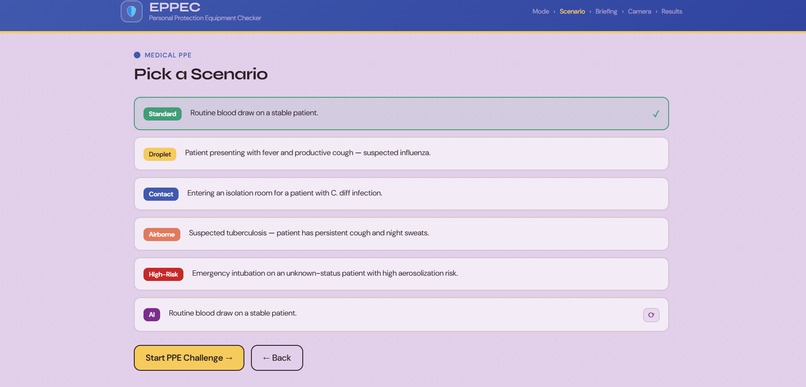
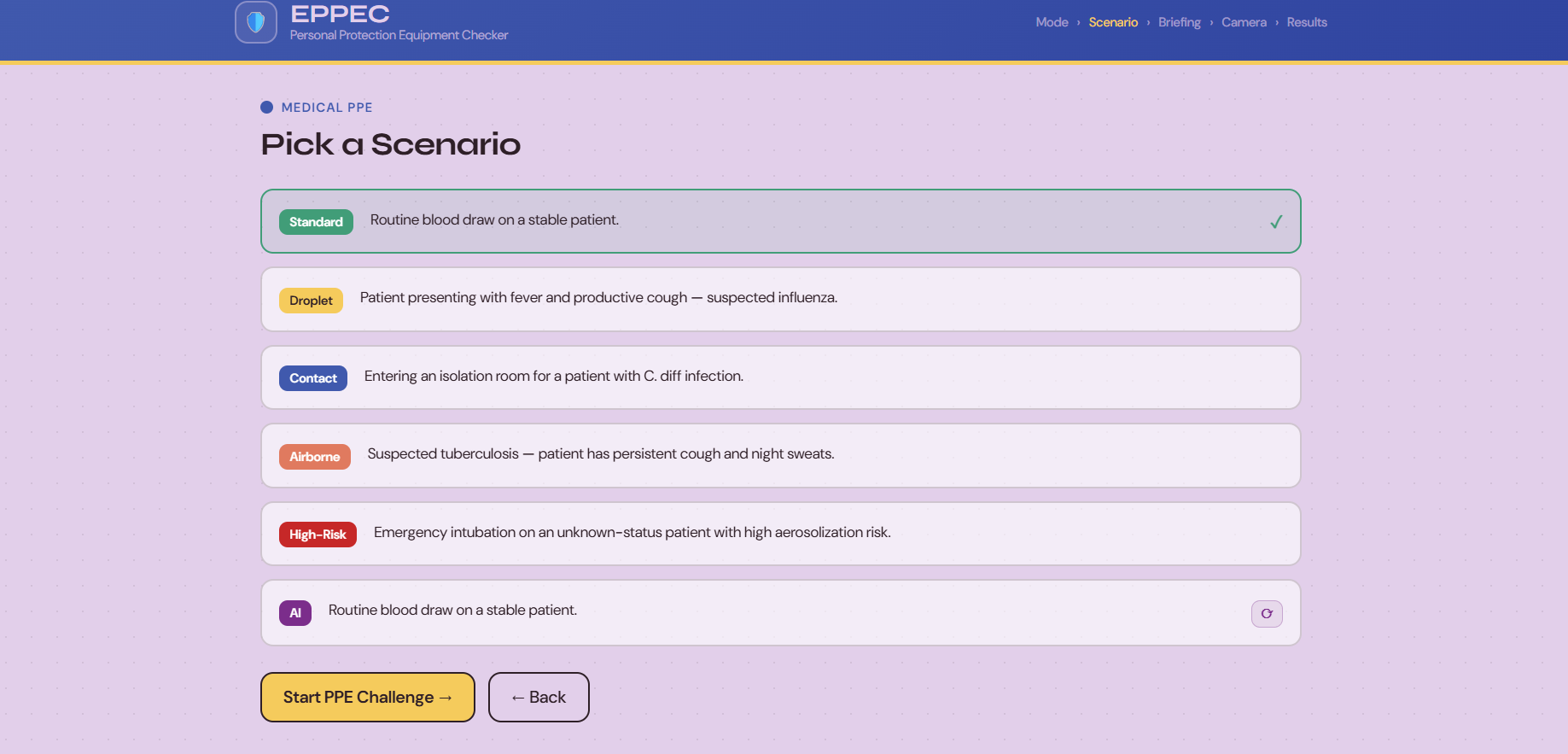
Medical PPE categories and scenario as well as an AI generated scenario with undisclosed category of protection
-
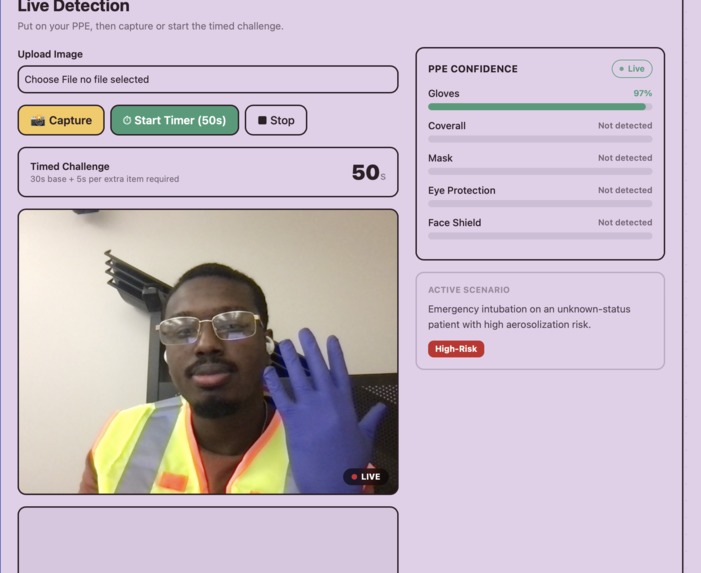
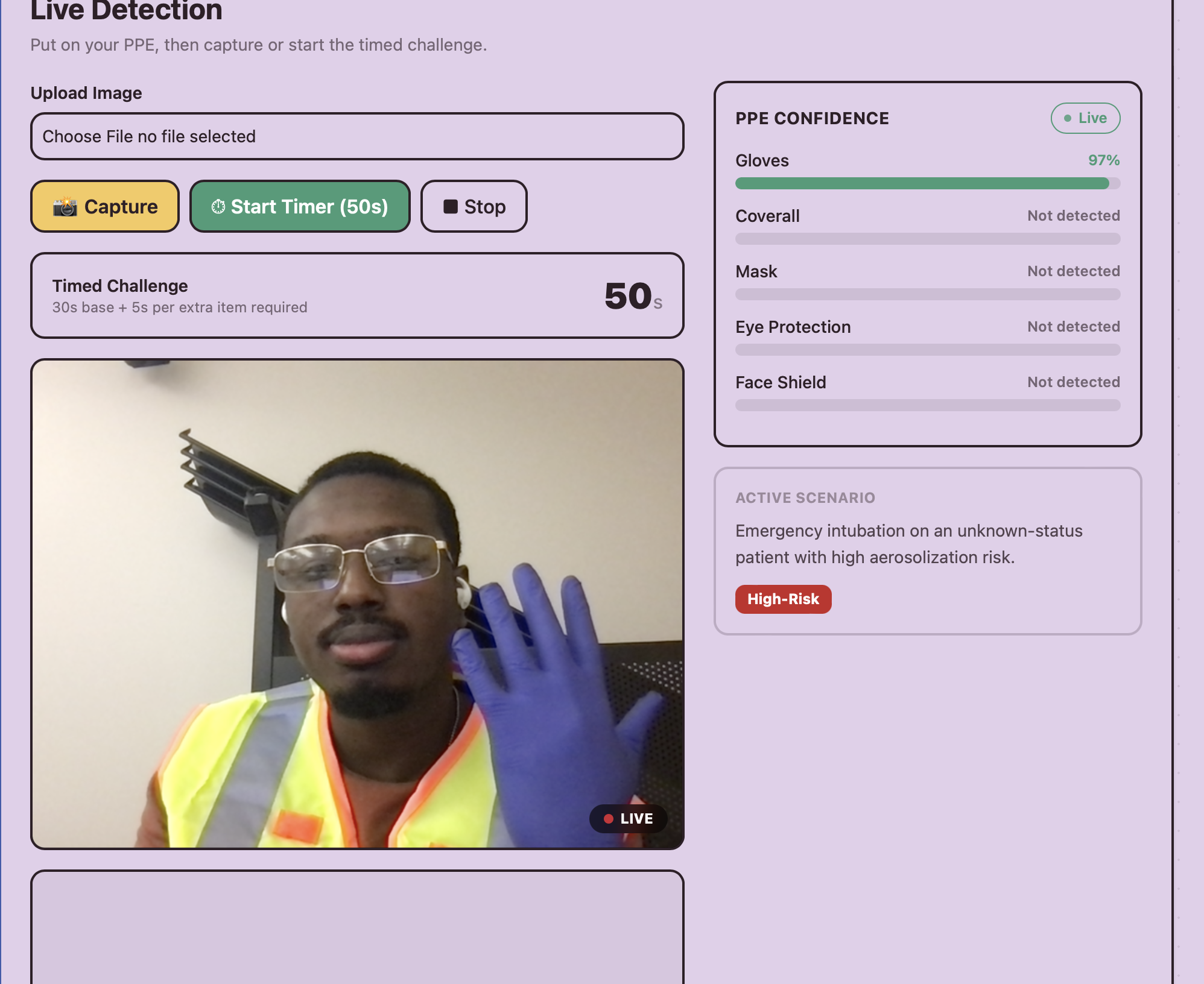
Live Detection for Medical PPE
Inspiration
Emergency responders and healthcare workers operate in high-risk environments where proper Personal Protective Equipment (PPE) is critical. However, mistakes still happen—especially in high-stress scenarios like hurricanes, medical emergencies, or disaster response.
Training is often static, slow, and disconnected from real-world conditions. There is no immediate feedback loop to verify whether someone is properly equipped in real time.
We built EPPEC (Emergency PPE Compliance Checker) to solve this problem: → Provide real-time PPE verification + training using AI and computer vision.
What it does
EPPEC is an AI-powered system that ensures responders are wearing the correct PPE for a given scenario.
📡 System Flow
Camera Feed → YOLO PPE Detection → Confidence Scores → Scenario Rule Engine → Instant Feedback (Correct / Incomplete / Incorrect)
It supports two core modes:
🏥 Medical Mode
- Select or generate clinical scenarios
- Identify required PPE (Standard, Droplet, Airborne, etc.)
- Verify correctness using AI + rule-based grading
🌊 Hurricane / Disaster Mode
- Ensures responders wear appropriate protective gear
- Alerts those in view to leave if they do not have a hard hat on
📸 Core Features
- Live camera PPE detection
- Confidence scoring for each PPE item
- Scenario-based training workflow
- Instant feedback (correct / incomplete / incorrect)
How we built it
EPPEC is a full-stack application combining computer vision, AI, and web technologies.
Backend
- Built with FastAPI to handle classification, detection, and grading
- Implements GeminiAPI for generation of alternative scenarios
- REST endpoints for scenarios, detection, and submissions
Computer Vision
- Real-time PPE detection using a YOLO11n model
- Produces bounding boxes, class labels, and confidence scores per frame
- Achieves ~0.87–0.90 mAP50 and ~0.59–0.61 mAP50-95 on validation data
- Runs with sub-second latency for live camera feedback
- Supports multiple PPE classes including masks, gloves, goggles, and coveralls
AI Integration
- Generates realistic training scenarios dynamically
- Classifies PPE requirements based on scenario text
Frontend
- Built with React + TypeScript + Vite with TailwindCSS
- Live camera feed + real-time confidence indicators
- Interactive PPE selection and feedback UI
Challenges we ran into
- Balancing model size (YOLO11n vs YOLO11s) to maintain real-time performance while improving detection accuracy
- Normalizing inconsistent labels from datasets for the vision model
- Synchronizing live camera input with backend processing
- Designing an intuitive UI for high-pressure environments
Accomplishments that we're proud of
- Built a fully functional end-to-end AI detection system in a short timeframe
- Achieved real-time PPE detection with high confidence scoring
- Integrated AI-generated scenarios into training workflows
- Created a system usable in both medical and disaster response settings
What we learned
- How to integrate computer vision into web applications
- Designing real-time feedback systems
- Combining AI models with rule-based validation
- Building scalable training tools for safety-critical environments
What's next for EPPEC (Employee Personal Protection Equipment Checker)
- Improve detection accuracy with larger datasets
- Deploy on mobile devices for field use
- Expand to other domains (firefighters, industrial safety, military)
- Integrate with real-world emergency response systems
Why this matters...
EPPEC reduces human error in safety-critical environments by introducing an automated, real-time feedback loop, something traditional training systems lack.
In high-pressure scenarios like medical emergencies or disaster responses, even a single missing piece of PPE can lead to serious consequences. EPPEC ensures responders receive immediate, objective feedback, helping prevent mistakes before they happen, not after.
References
Built With
- elevenlabs
- fastapi
- geminiapi
- googlecolab
- python
- react
- tailwind
- typescript
- vite
- yolo11n


Log in or sign up for Devpost to join the conversation.