-
-
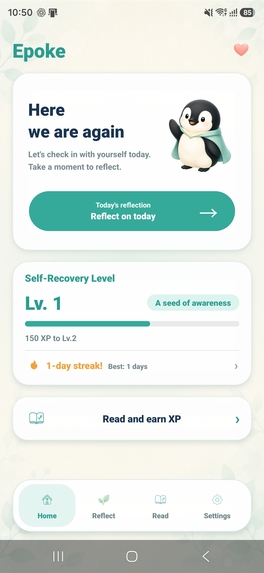
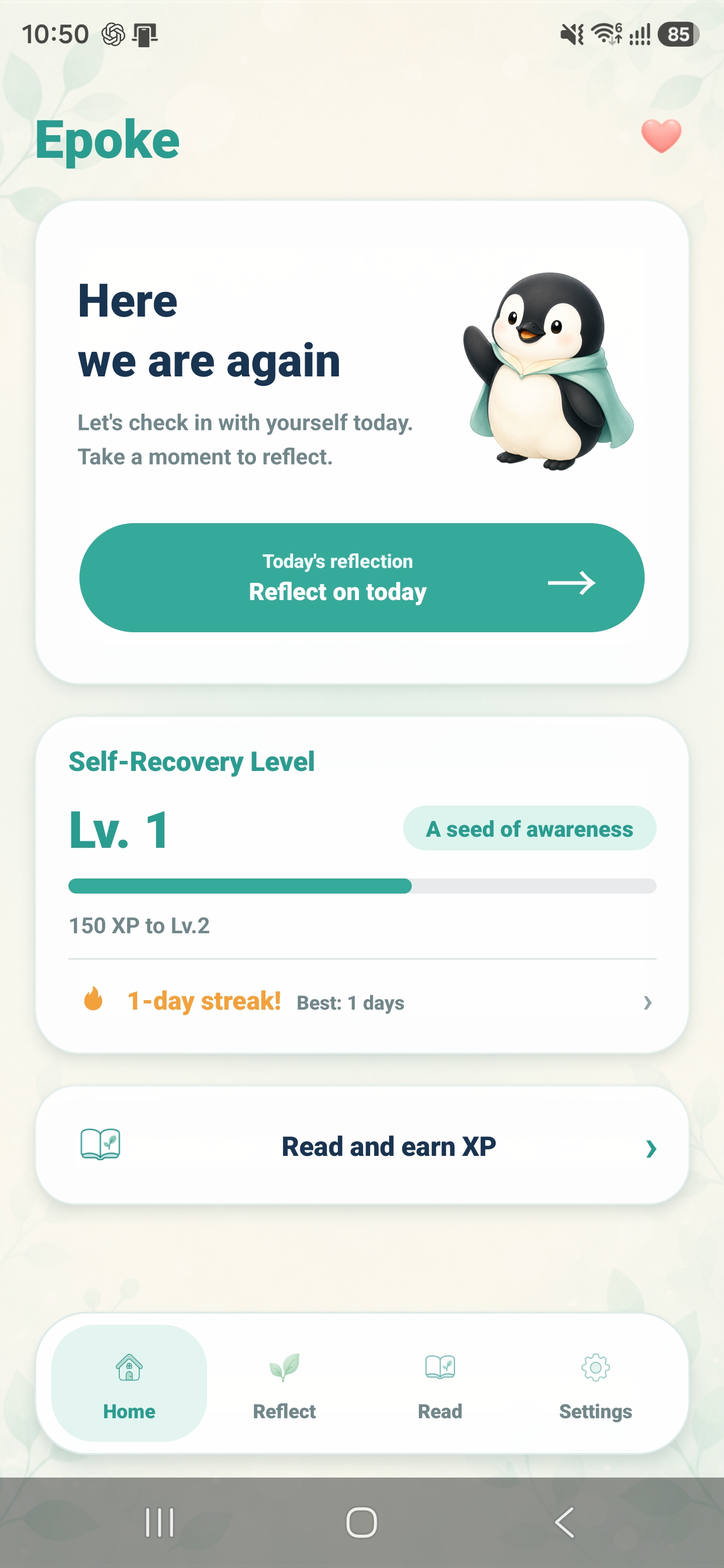
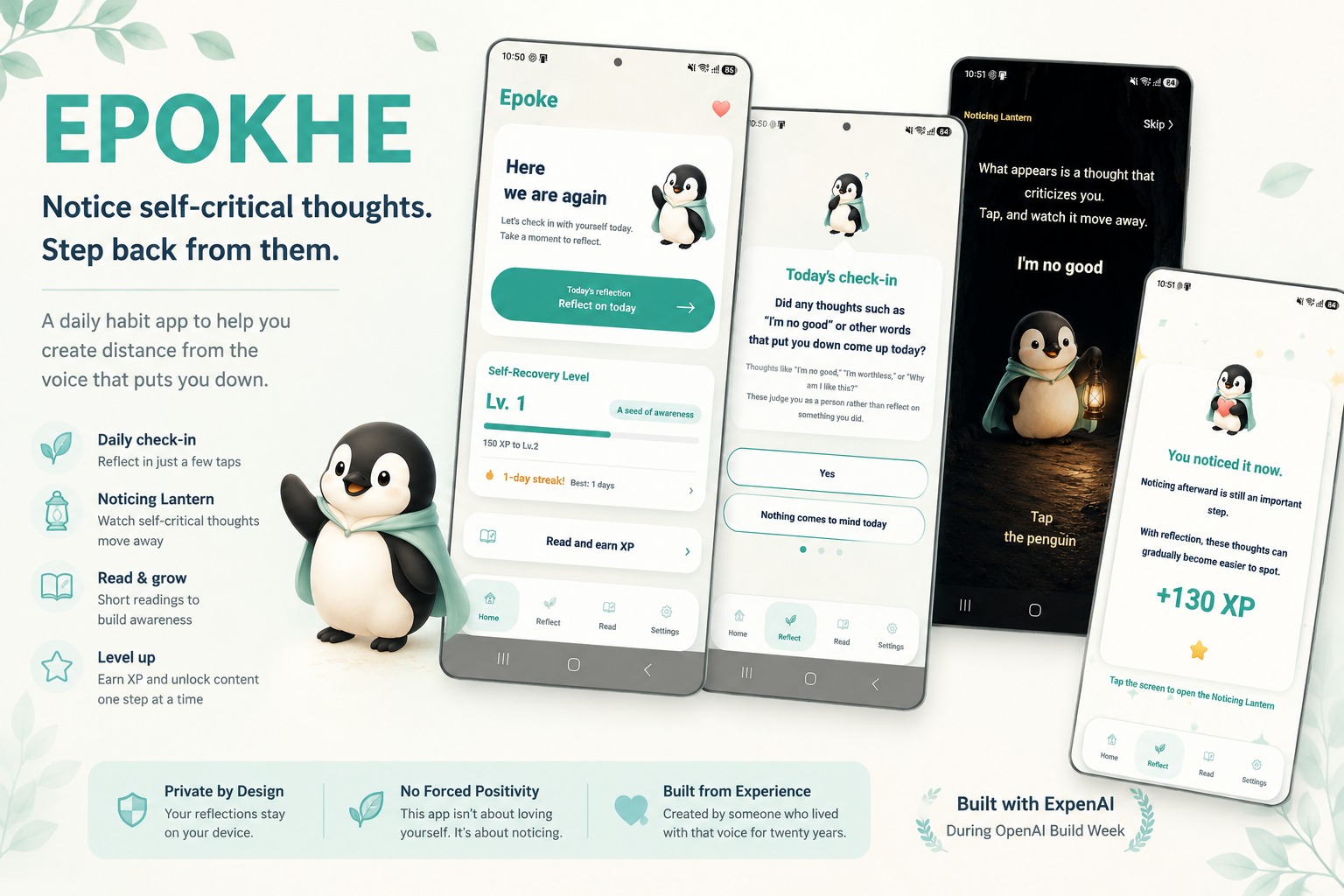
The home screen brings together daily reflection, XP, streaks, levels, and unlockable readings.
-
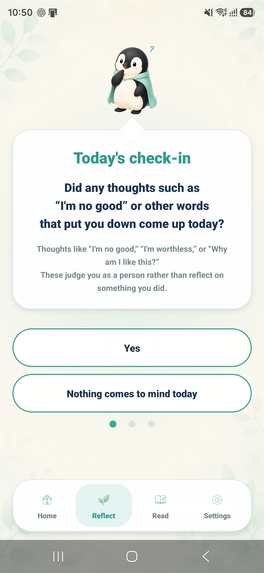
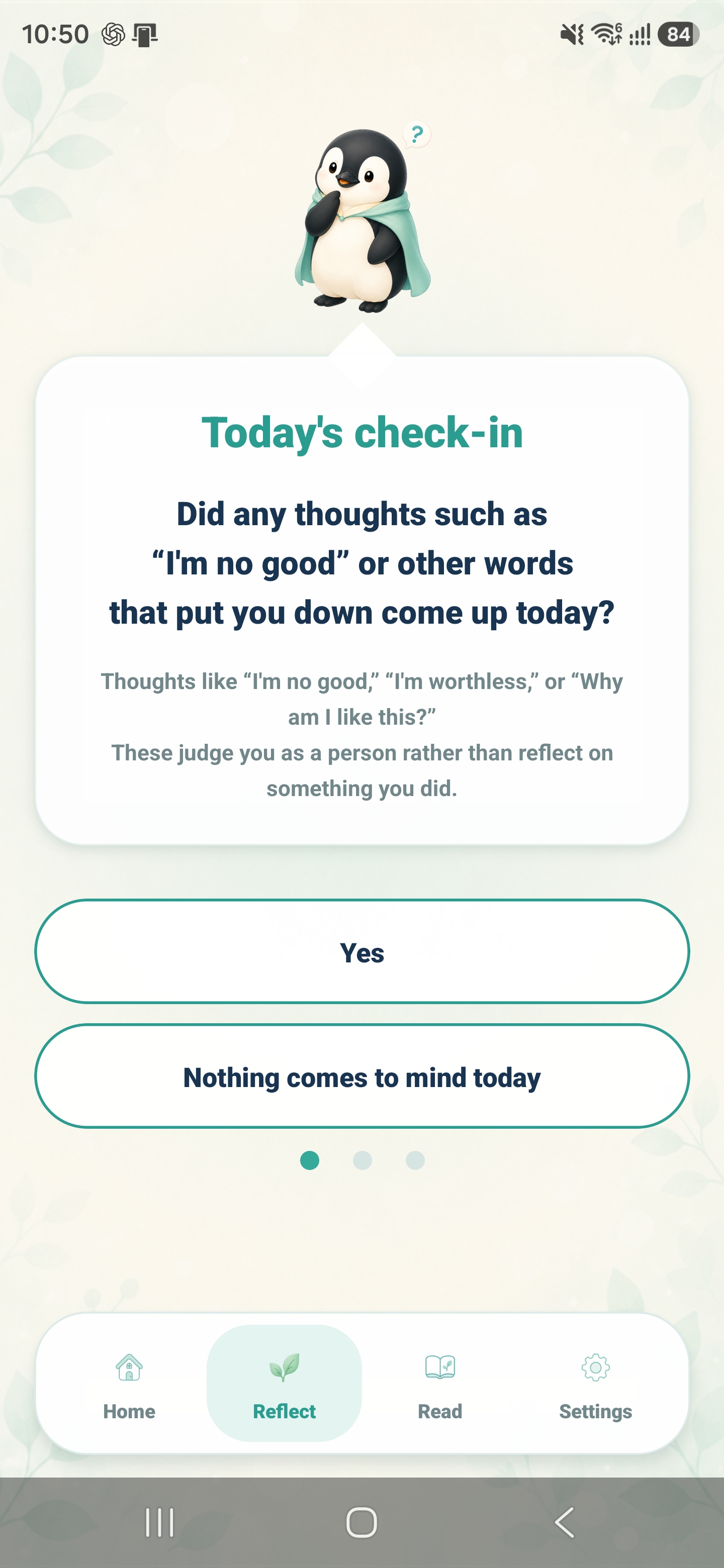
A short daily check-in helps users recognize self-critical thoughts that appeared during the day.
-

The Noticing Lantern uses the user’s own words to practice noticing a thought and watching it move away.
-
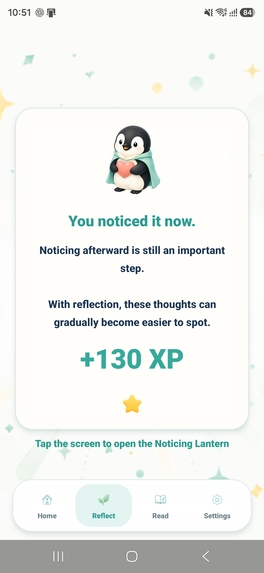
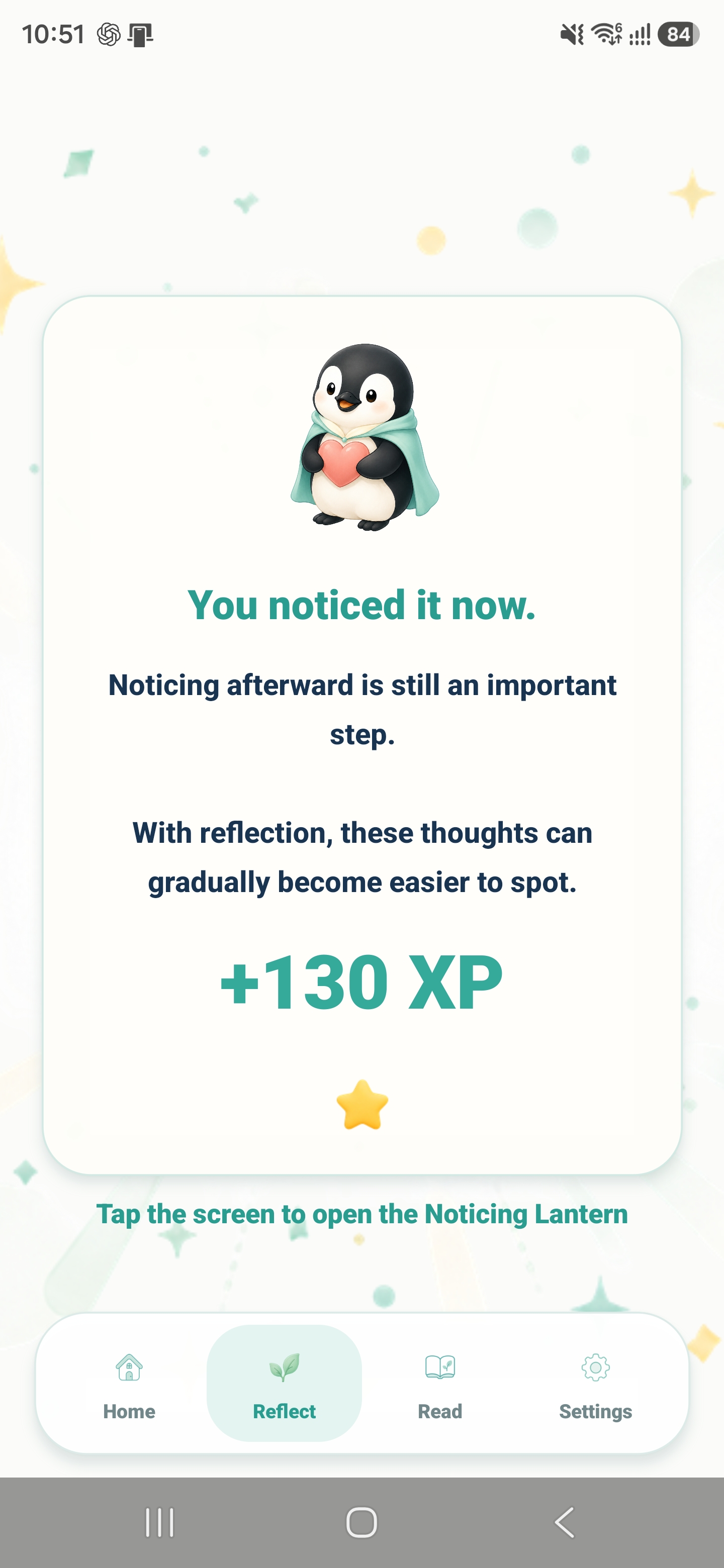
Noticing afterward still matters. The app recognizes each step and rewards the practice with XP.
-
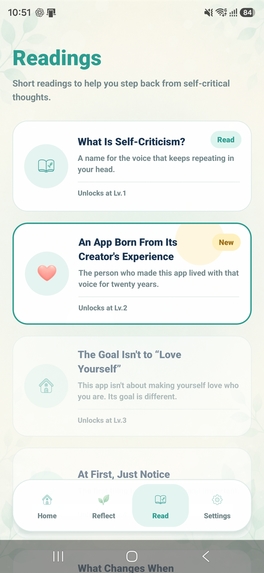
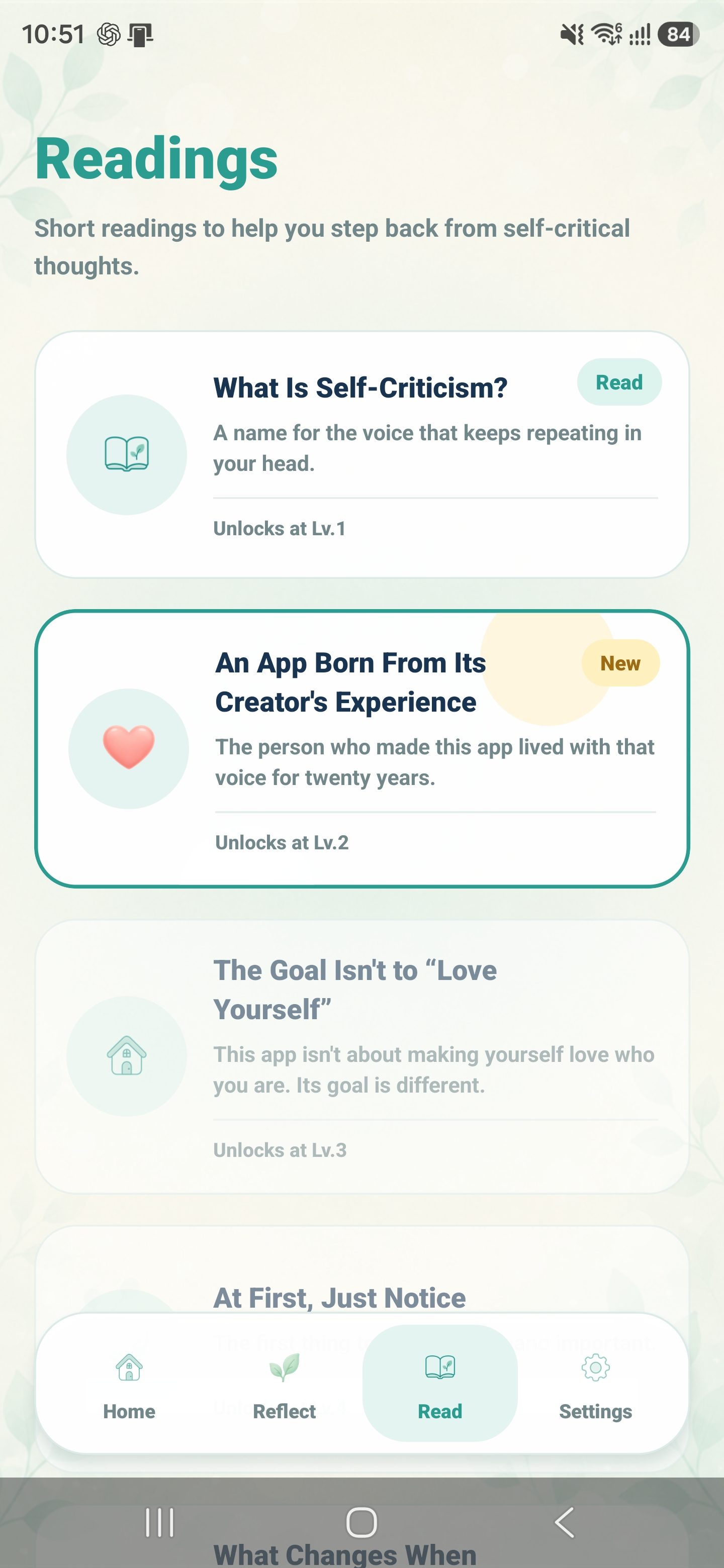
Short readings unlock as users build the habit and deepen their understanding of self-critical thoughts.
-
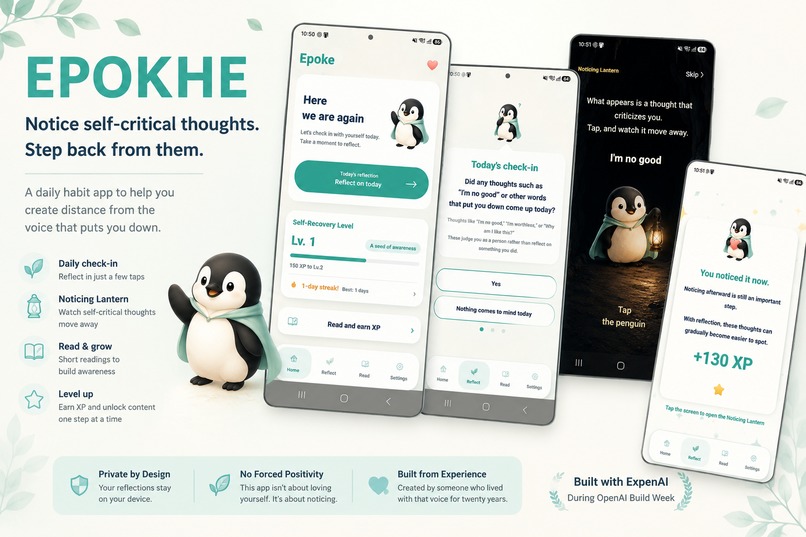
EPOKHE: a daily practice to notice self-critical thoughts and step back from them.

Inspiration
I struggled with recurring self-critical thoughts for around 20 years. Positive affirmations never felt like the right answer. What helped me was a smaller first step: noticing the thought and creating a little distance from it.
I wanted to turn that practice into a quiet daily app that people could use without forcing themselves to feel positive.
What it does
EPOKHE is a daily habit app for people who struggle with low self-esteem and recurring self-critical thoughts.
Users first choose or enter phrases that often appear in their own minds. Each day, they complete a short reflection and practice noticing one of those phrases through a lantern exercise.
The goal is not to replace negative thoughts with positive ones. It is to notice, “This is a self-critical thought,” and step back from it.
Users can earn XP, build a streak, level up, and unlock short readings that explain the practice.
How I built it
EPOKHE is built with React Native, Expo, and TypeScript for iOS and Android.
I am building this app on my own while raising two young children. During Build Week, I even worked on the English version in short moments while making breakfast for them. Codex made it possible to keep developing the app in those small pockets of time.
During OpenAI Build Week, I used Codex with GPT-5.6 to meaningfully extend an existing Japanese prototype.
Challenges
The biggest challenge was turning a psychological practice into a simple interaction without making the app feel clinical, demanding, or falsely positive.
I also needed to preserve carefully chosen wording and animation timing across both iOS and Android, while keeping sensitive user content on the device.
Accomplishments
I built a working mobile app with:
- A complete onboarding experience
- Personalized self-critical phrases
- A short daily reflection
- The lantern practice
- XP, streaks, and levels
- Unlockable readings
- Japanese and English support
- Accessibility and privacy controls
What I learned
Codex was most useful when I gave it clear product intent, exact constraints, and a concrete definition of completion. It allowed me to iterate on a real mobile product much faster while keeping the final decisions under my control.
What’s next
The first public release will be in Japanese. I am currently gathering interest from English-speaking users and will continue improving the English experience based on feedback.
Built With
- build
- codex
- eas
- expo.io
- gpt-5.6
- ios
- native
- posthog
- react
- typescript

Log in or sign up for Devpost to join the conversation.