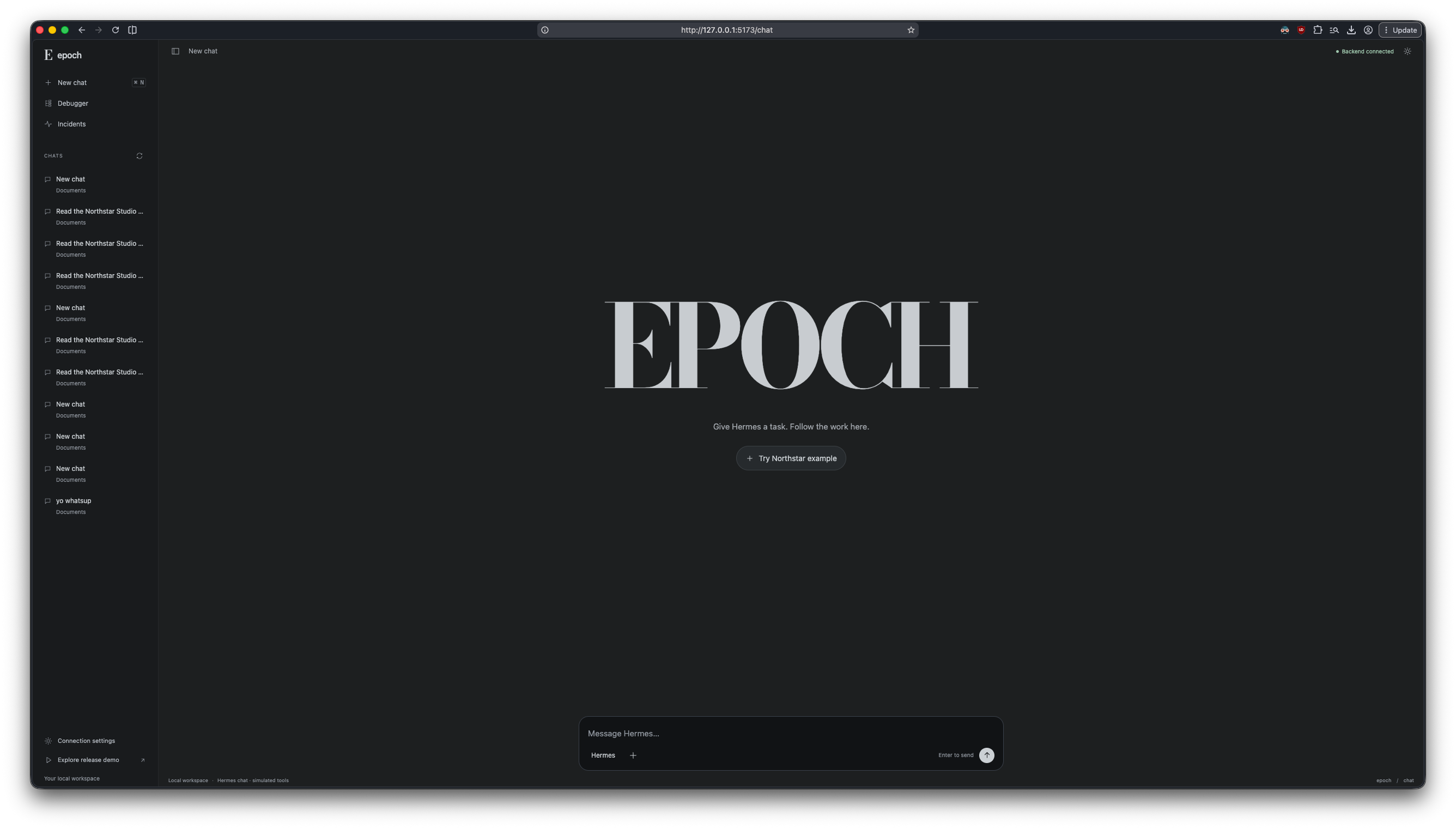
Why we built Epoch
When an AI agent fails, the user often becomes its debugger—explaining the problem, rewriting prompts, and trying again. Yet the same broken tool can fail in the next conversation.
We built Epoch to turn those failures into lasting improvements.
What it does
Epoch pairs a working agent with a debugger that examines the conversation, tool calls, and actual results. It can repair broken tools, improve supporting context, or build missing capabilities. Verified changes remain available for future tasks.
In our demo, an agent creates a PDF with important content cut off. Epoch generates and verifies a pagination repair, then the agent produces the complete document. A fresh chat benefits from the fix. When merging is needed, Epoch builds the missing merge tool and makes it available through normal discovery.
How we built it
We used Python, FastAPI, SQLite, and a JavaScript interface. Hermes executes tasks through MCP, while a Luna-powered debugger generates changes. Restricted Docker containers run candidate code, and independent checks verify the output before publication. Saved versions support reuse and rollback.
Challenges and lessons
The hardest part was proving a genuine repair. Shortening a document could hide the pagination bug, so we tested the exact original input alongside fresh examples. We also kept generated code separate from the checks judging it.
We learned that a successful tool call is not the same as a successful task. Reliable improvement requires inspecting real outputs, preserving evidence, and proving that the next conversation works better.
