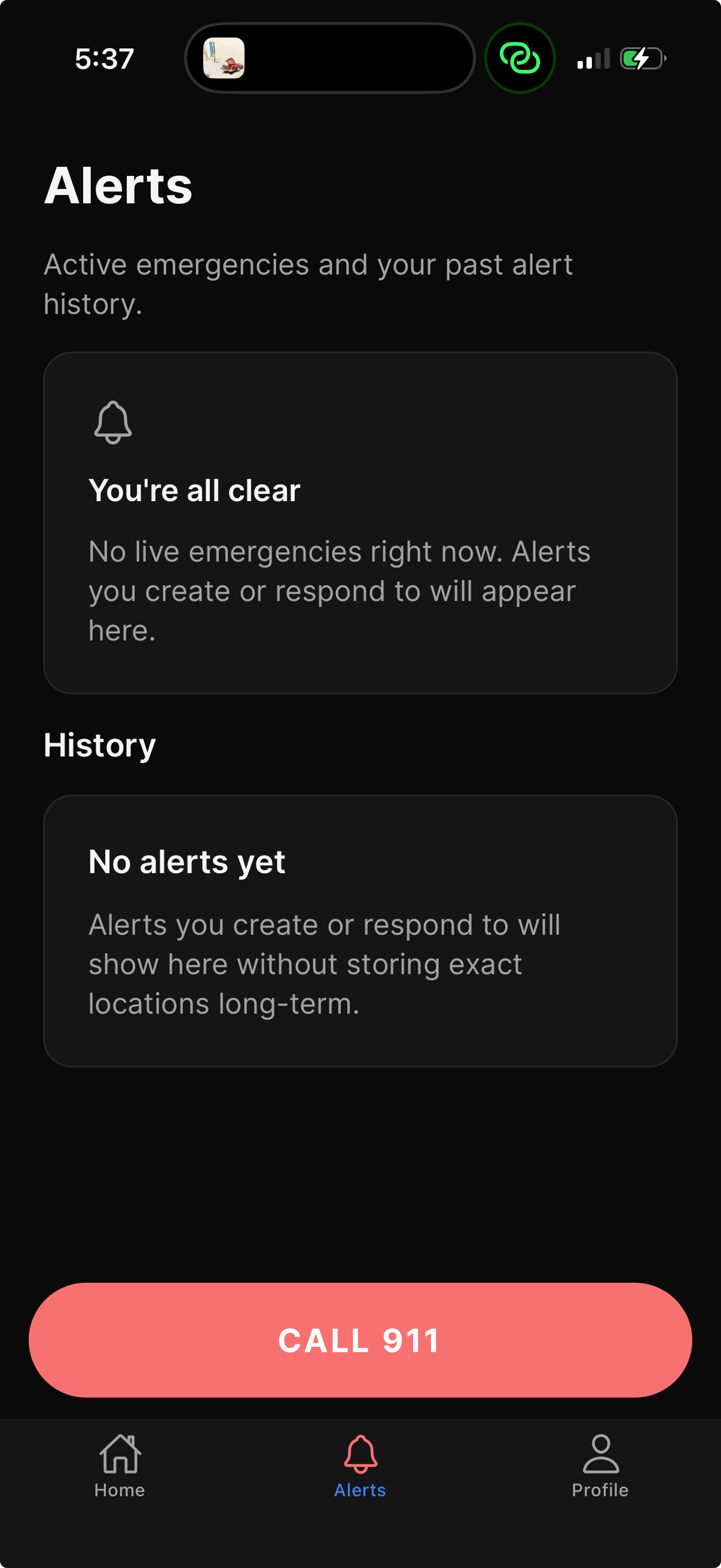
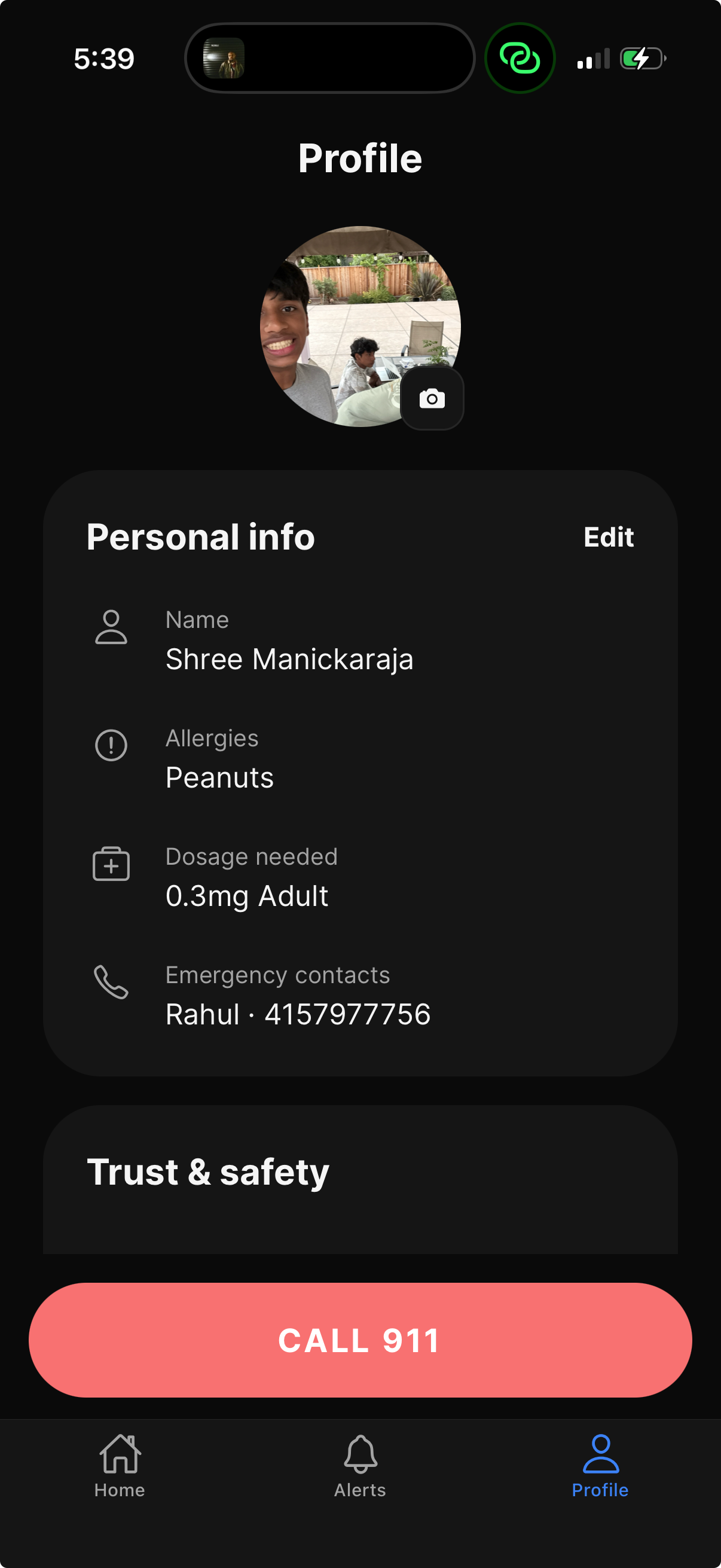
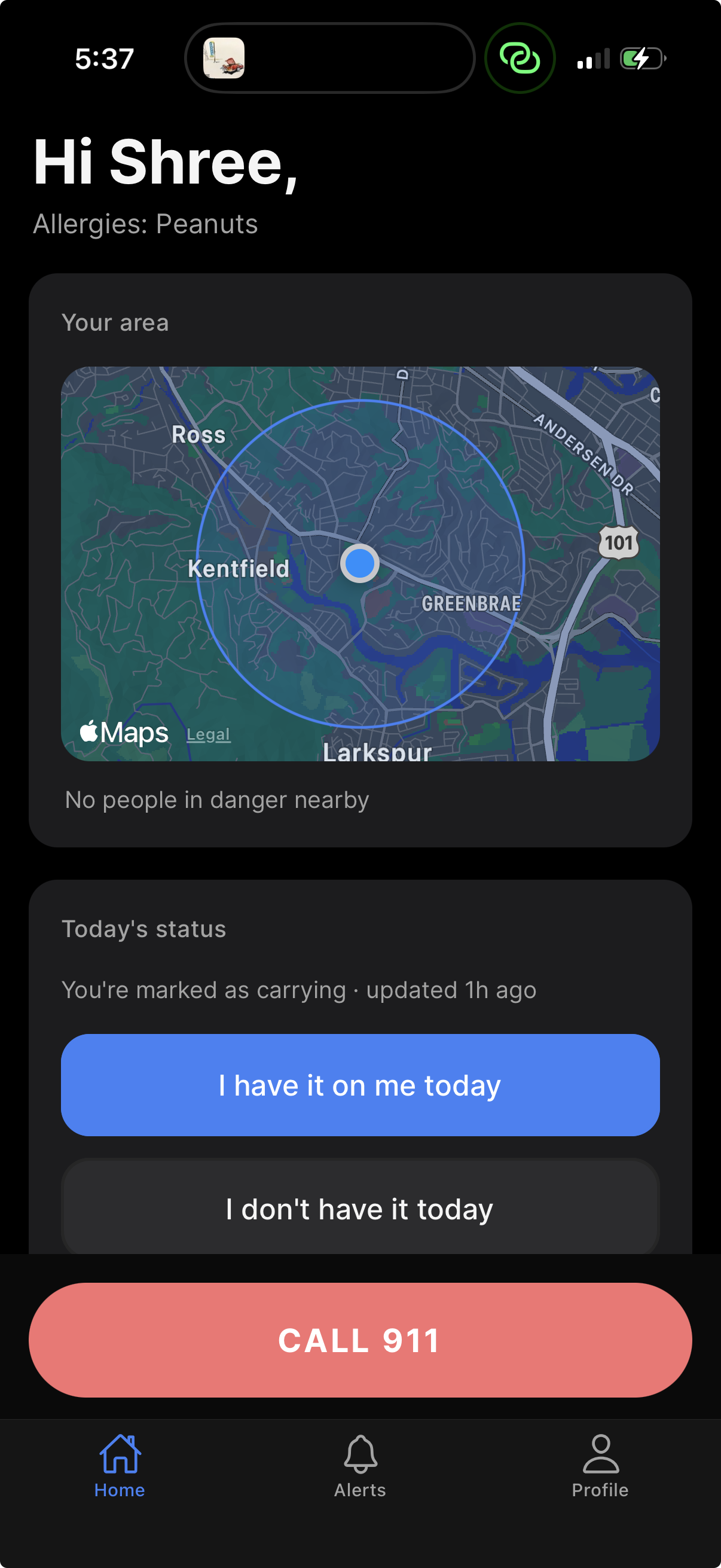
Inspiration: One of the members of our group has a severe peanut allergy that causes anaphylactic reaction. This reaction will cause the throat to swell up and will cut of air supply. He has once experienced an anaphylactic reaction without an EpiPen significantly increasing the risk of death. Since then, he is extremely cautious about what he eats and cross contamination to not risk touching peanuts, however this doesn’t eliminate the risk entirely and leaves him vulnerable to a fatal reaction.
What it does: It creates a network of users who have severe allergies with anaphylactic reactions. This allows people in emergency who lack an EpiPen, or need an additional one to report that they're in an emergency and find the closest EpiPen carriers, as well as alerting the carriers of the victim's location. This will help save them, before an ambulance arrives as the people nearby know what dosage they need and if they are close and able to help. This cuts down response time and increases survival rate. After the emergency has been called, the app will display the emergency card screen allowing passersby to see their name, allergy, and dosage required, as well as automatically notify the emergency services of all these details as well as location. Location is pinged and tracked only in times of emergency for both the victim and carriers nearby.
How we built it:
We built our app by utilizing React Native as our bare bones with Expo for testing. We then used TestFlight for IOS testing as well as Expo Go for Android testing. We built off Supabase since it provided us with a full backend completely built off a simple UI and PostgreSQL database. This is what made it ideal for a hackathon in our view. We utilized AI tools, such as Claude Code and Cursor, to speed up our development. However, we also heavily relied on our own intuition and programming skills to debug and make the UI feel more familiar and friendly.
Challenges we ran into:
The main challenge we ran into was a very buggy UI the first time around. We learnt the hard way that a UI could not be coded in one hour(we were in a little bit of a rush due to the fact that we thought we needed to focus on the backend). However, we decided to take the UI into account since the backend was streamlined thanks to Supabase. The buggy UI was easily fixed and the UX was heavily improved. Additionally, we ran into the problem of having to continuously go through our entire Onboarding and Signup/login flow to access the app. Thanks to a genius idea by one of our teammates, we were able to make it so that we could simply click a button that went past all of that. Another problem was the fact that the user had to click multiple buttons to be able to get an emergency call in. To solve this problem we stripped down all clicks to the bare OS level. This means that the user genuinely only has to click 2 buttons. One on our app and one mandatory OS level confirmation click which any 3rd party app can’t bypass.
Accomplishments that we're proud of: We created a way for victims in need of an EpiPen to be connected and find nearby EpiPen carriers. We also included several useful features such as an alert to 911, and a call to an emergency contact. It also takes into account the required dosage of epinephrine needed to ensure safety.
What we learned: We learned how common anaphylaxis actually is, up to 1 in 20 people may experience it in their lifetime, and it's not some rare freak occurrence, it happens constantly, all around us, which reframed the whole project for us from just an app idea into something that could genuinely help someone like our teammate. We also learned to design for panic instead of convenience, since someone mid-reaction has shaking hands, no time to read instructions, and might have never opened the app before, which is why we stripped the emergency flow down to two taps. On top of that, we learned that privacy can't be an afterthought, a network that shares people's locations could easily be misused, so we had to think through exactly when location should be visible and for how long from the very beginning, not fix it late
What's next for EpiNet: We want marketing to be large, effective, and wide-spread to ensure all EpiPen carriers/users are connected. The larger the network, the more useful and easier it is to find help nearby. We plan to add additional features such as a button that is small, portable, and attachable to jewelry in order for people to press it instead of using their phone in a time of need. We also want to expand it as an app for smartwatches to also work to notify nearby carriers and emergency services. We want to add a feature in the app that notifies users if their EpiPen has expired as well.
Built With
- expo.io
- reactnative
- supabase
- typescript


Log in or sign up for Devpost to join the conversation.