-
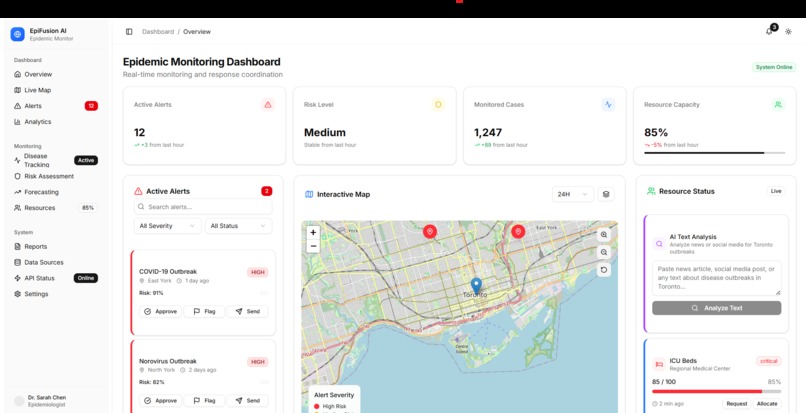
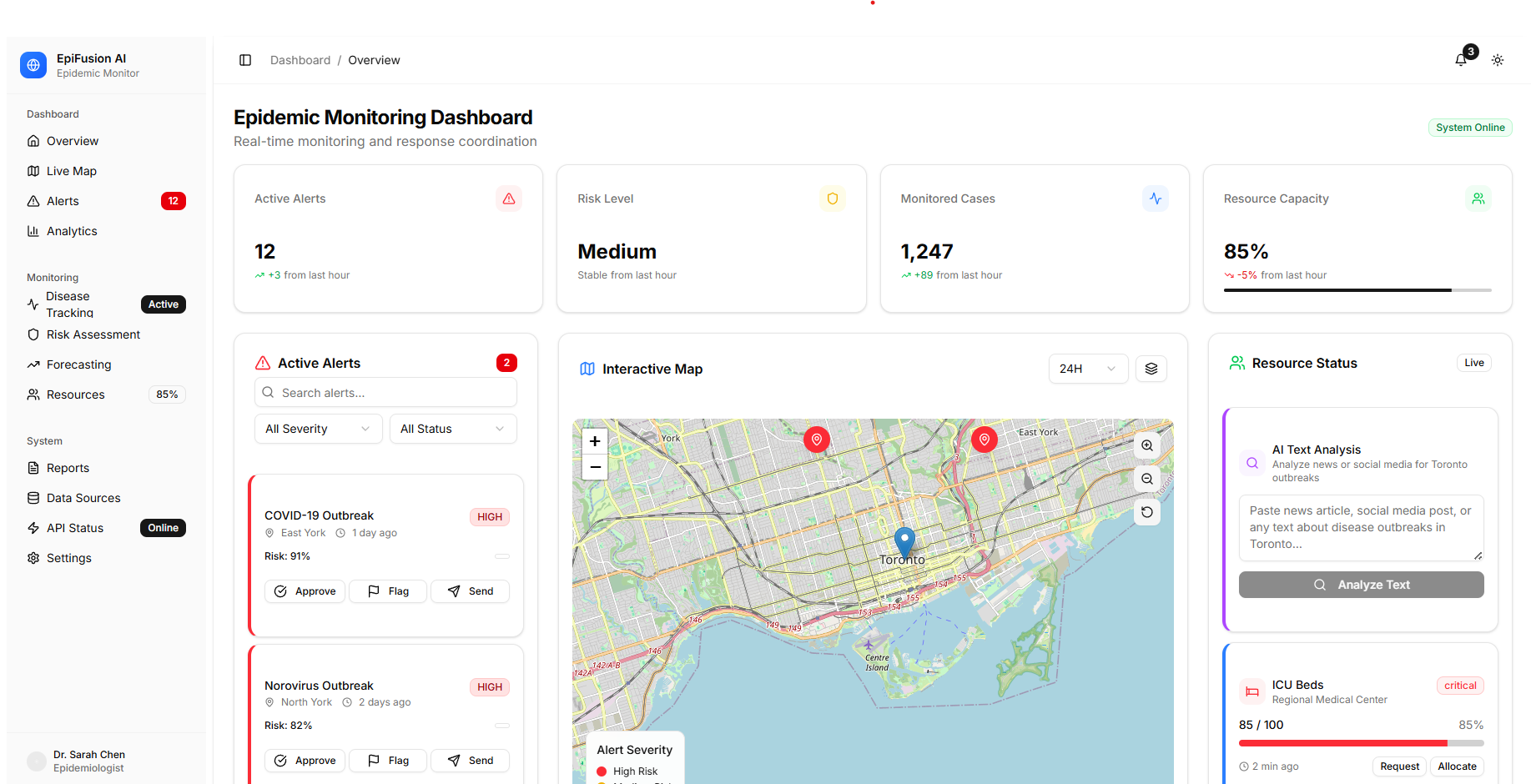
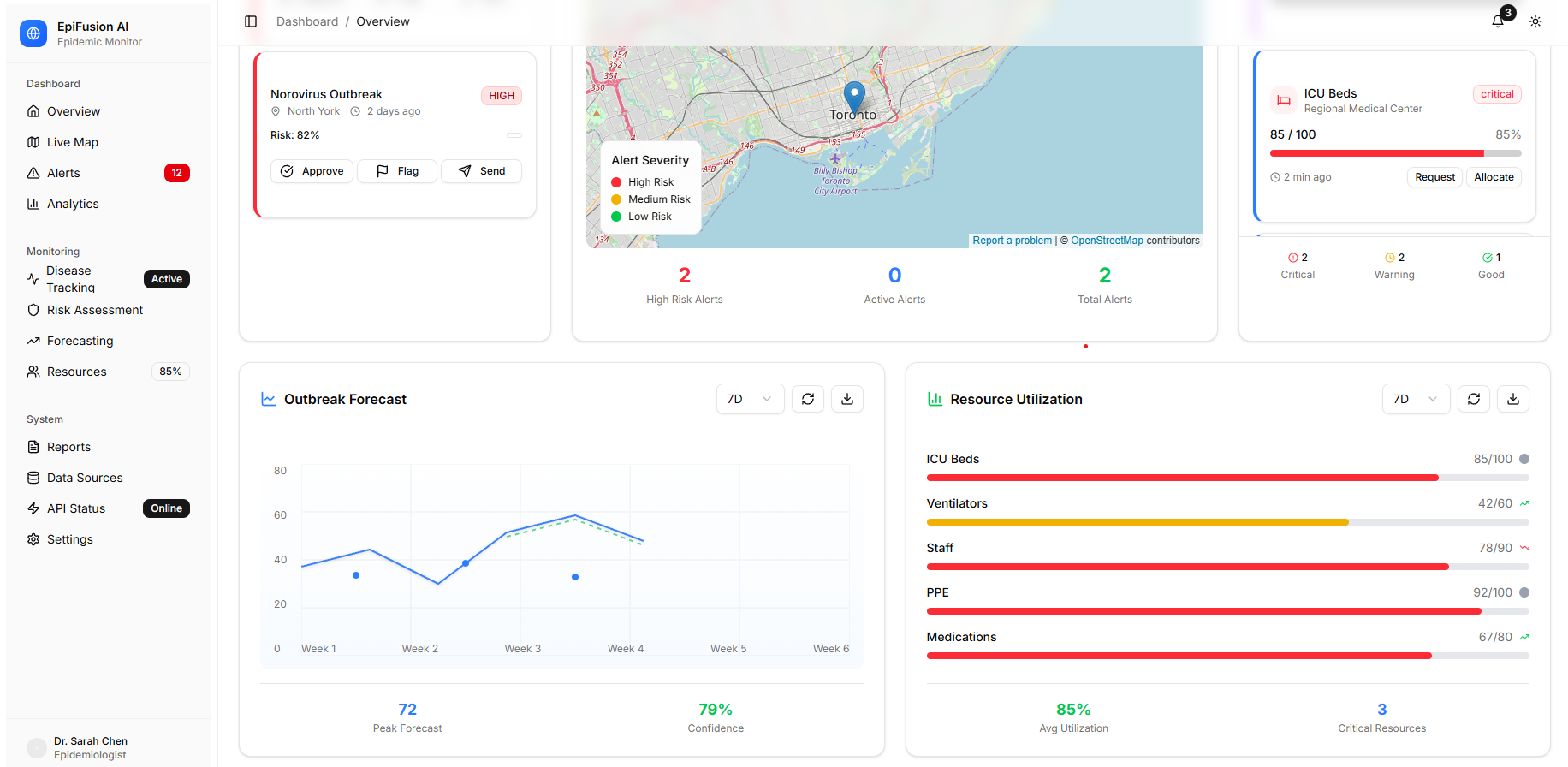
Overview of the application and Dashboard
-
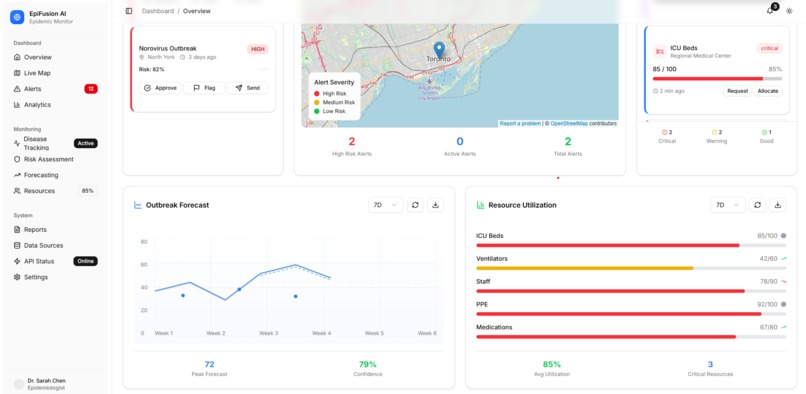
Forecast and resources visualization
-
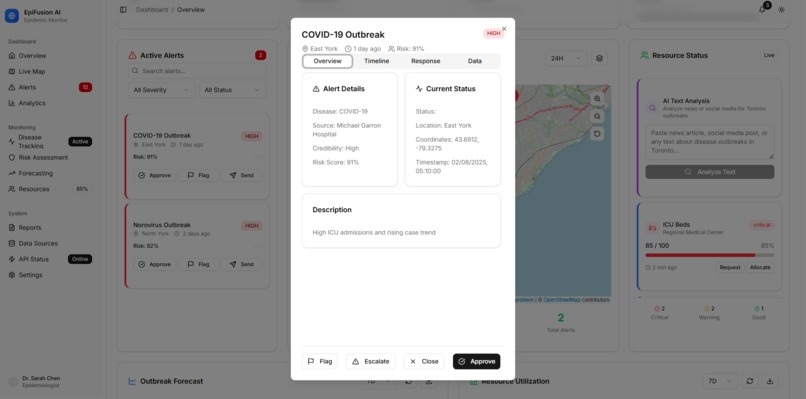
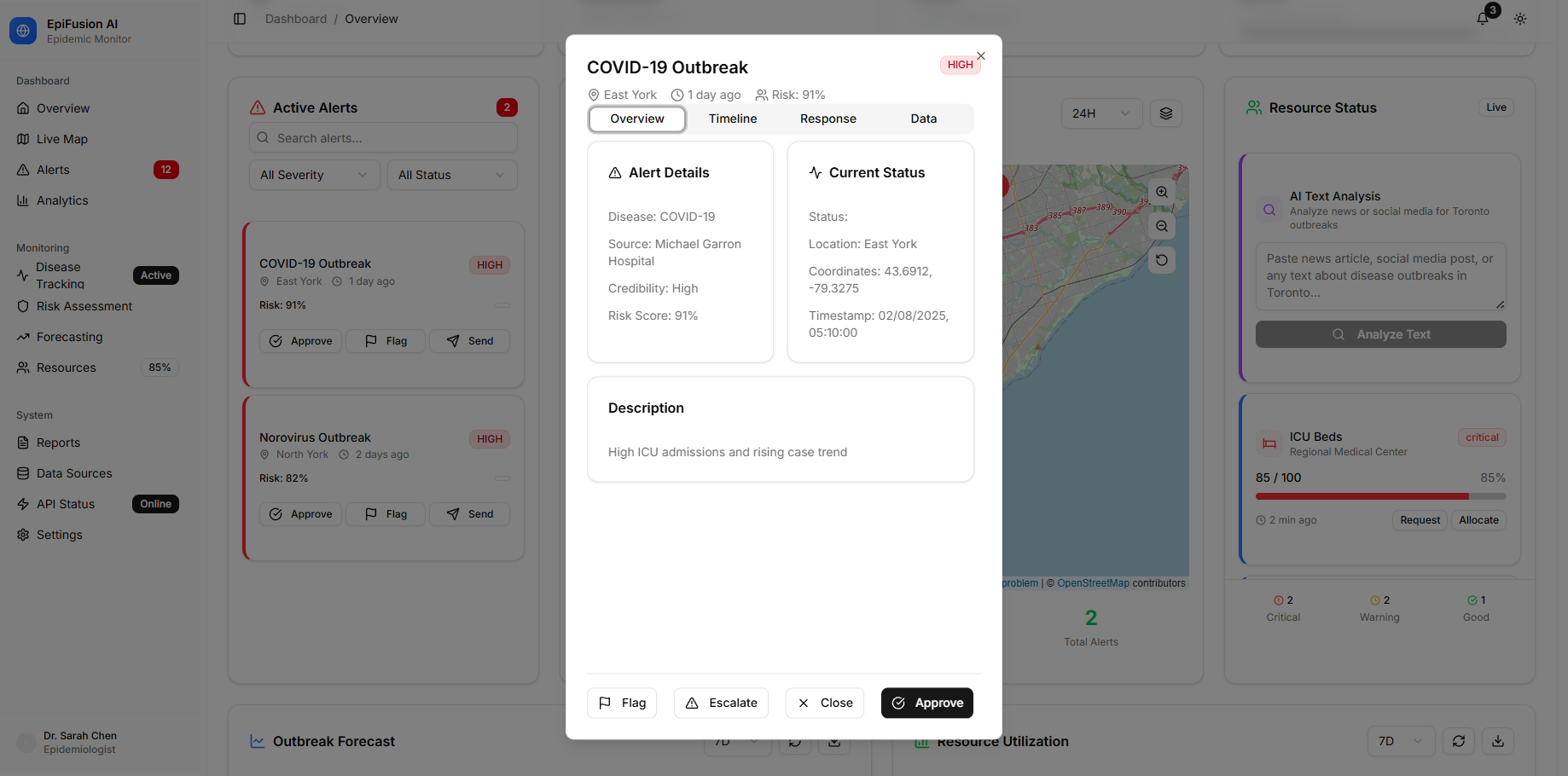
Details about the alerts
Inspiration
The COVID-19 pandemic exposed how slow and siloed outbreak detection can be. We wanted to create a system that leverages AI to detect emerging threats faster and enable proactive response.
What it does
EpiFusion analyzes unstructured data like news and social media using LLMs to detect potential disease outbreaks. It classifies severity with a custom ML model and visualizes active alerts, ICU status, and medical resource availability in real-time.
How we built it
We used the Gemini API for AI-powered text analysis, a custom ML classifier for risk assessment, and MongoDB + Express for backend APIs. The frontend was built with React and Tailwind, with a live dashboard and alert feedback tools.
Challenges we ran into
Fine-tuning LLM prompts. Syncing seed data and avoiding duplicate alerts. Backend connection issues during deployment. Managing contributions across forks and branches.
Accomplishments that we're proud of
Integrated LLMs into a real-time full-stack system. Built a functional end-to-end platform in under 36 hours. Created an intuitive, responsive UI for public health users.
What we learned
Prompt engineering for LLMs in real-world workflows. Structuring and validating AI-generated data. Collaborating efficiently under tight deadlines.
What's next for EpiFusion
We plan to support CSV upload from hospitals for AI classification, add authentication, deduplication, and expand coverage beyond Toronto—including multilingual outbreak analysis.

Log in or sign up for Devpost to join the conversation.