-
-
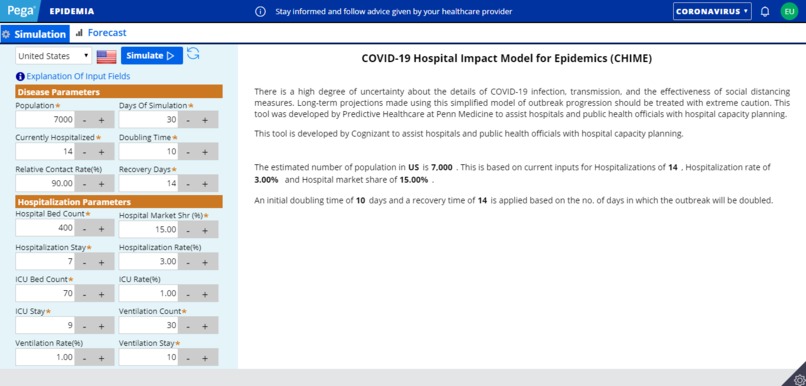
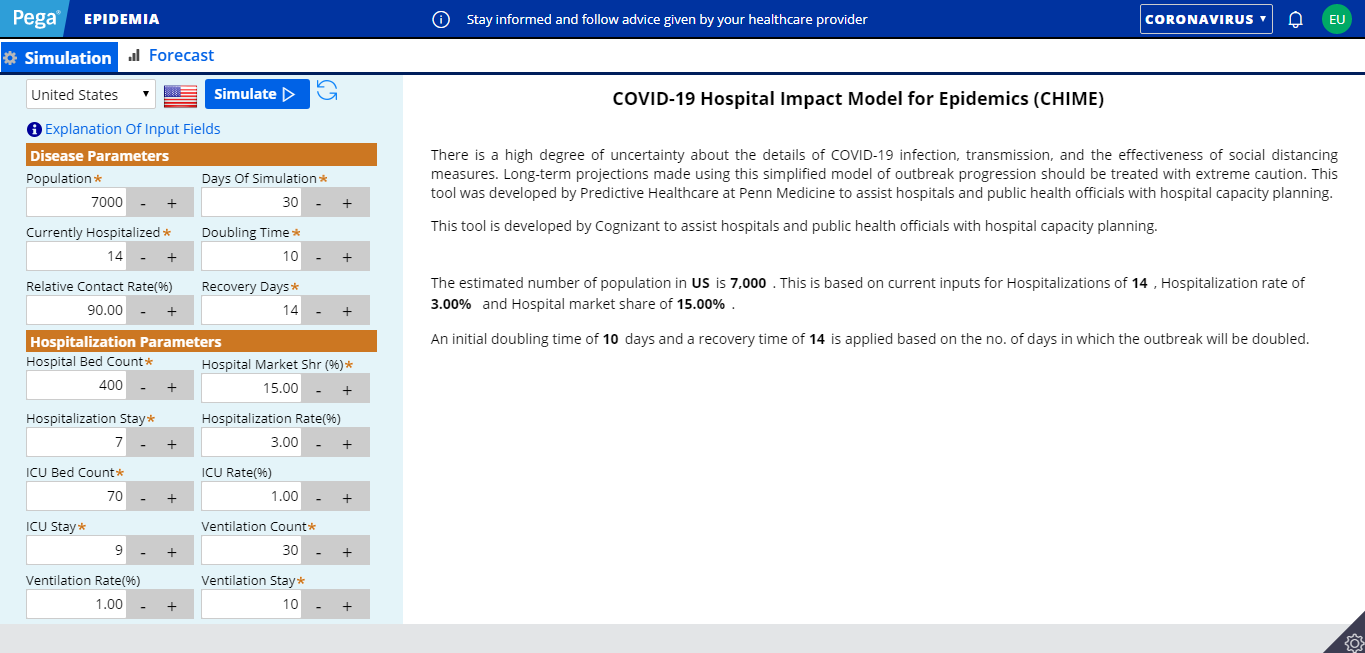
Landing Page Screen
-
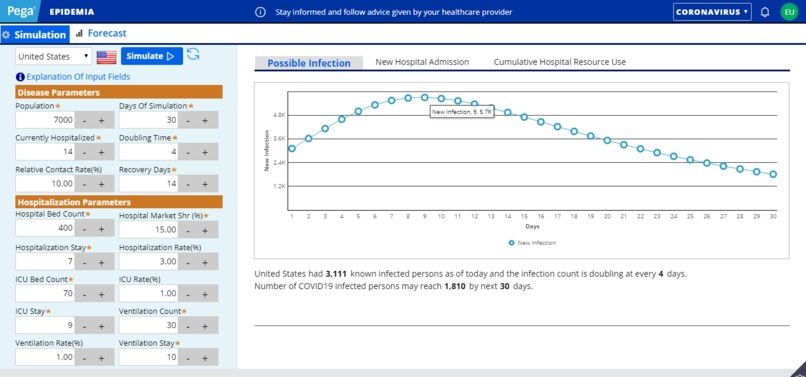
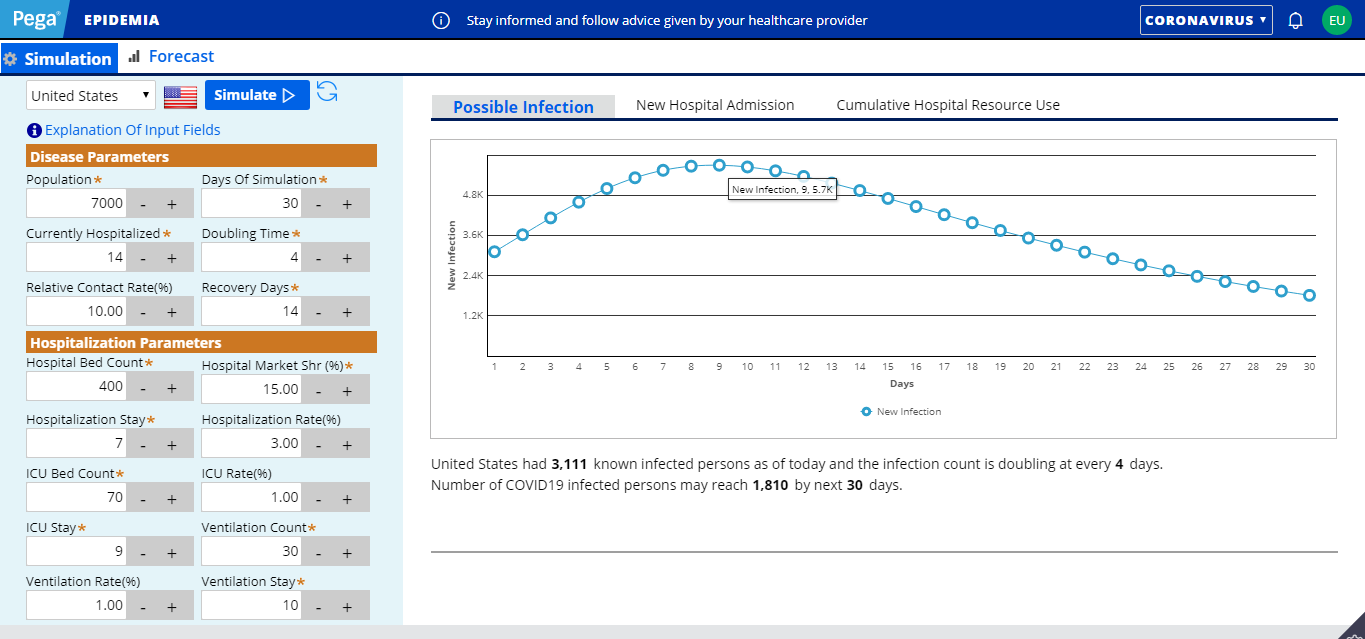
New Infection Simulation
-
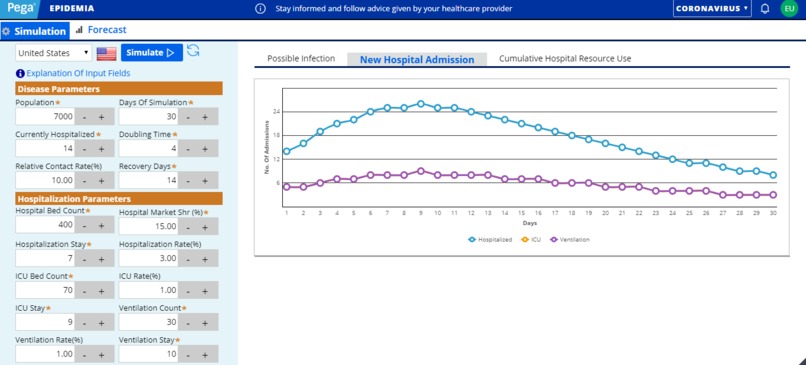
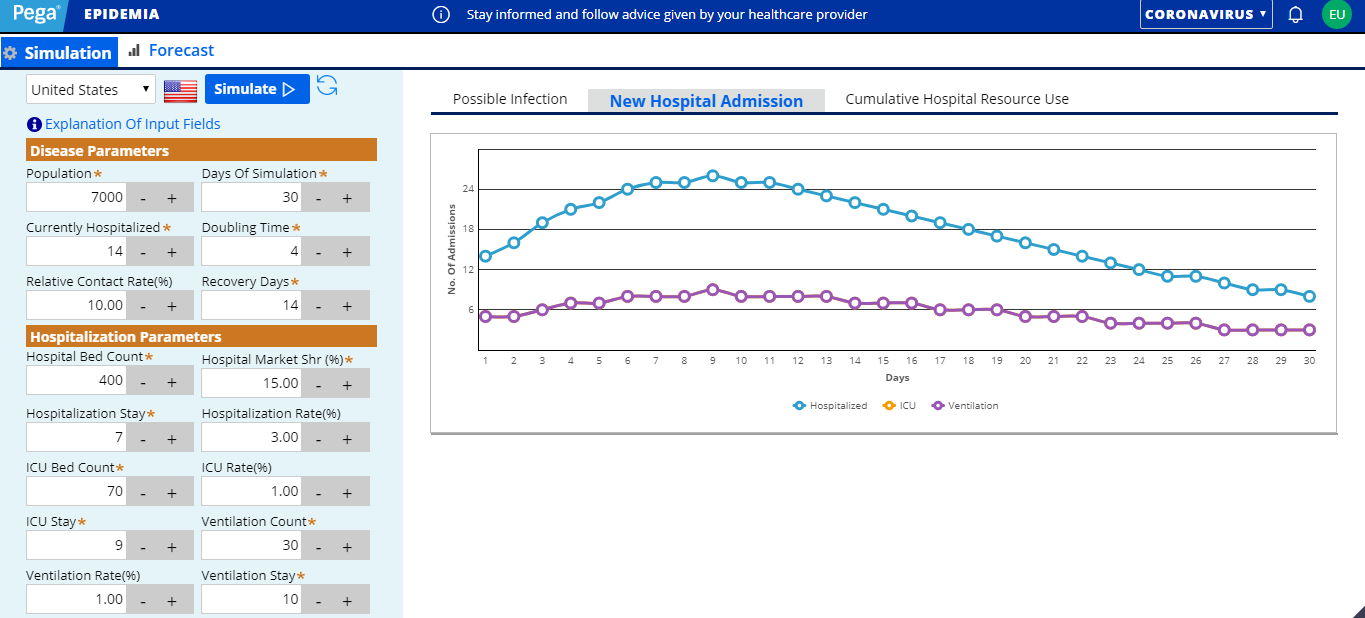
New Hospital Admission Forecast
-
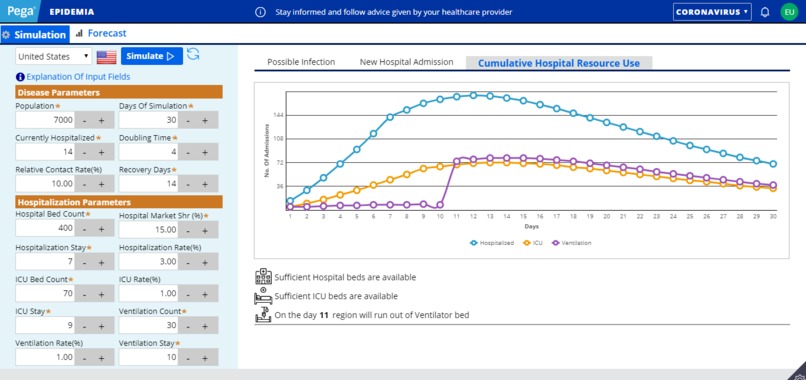
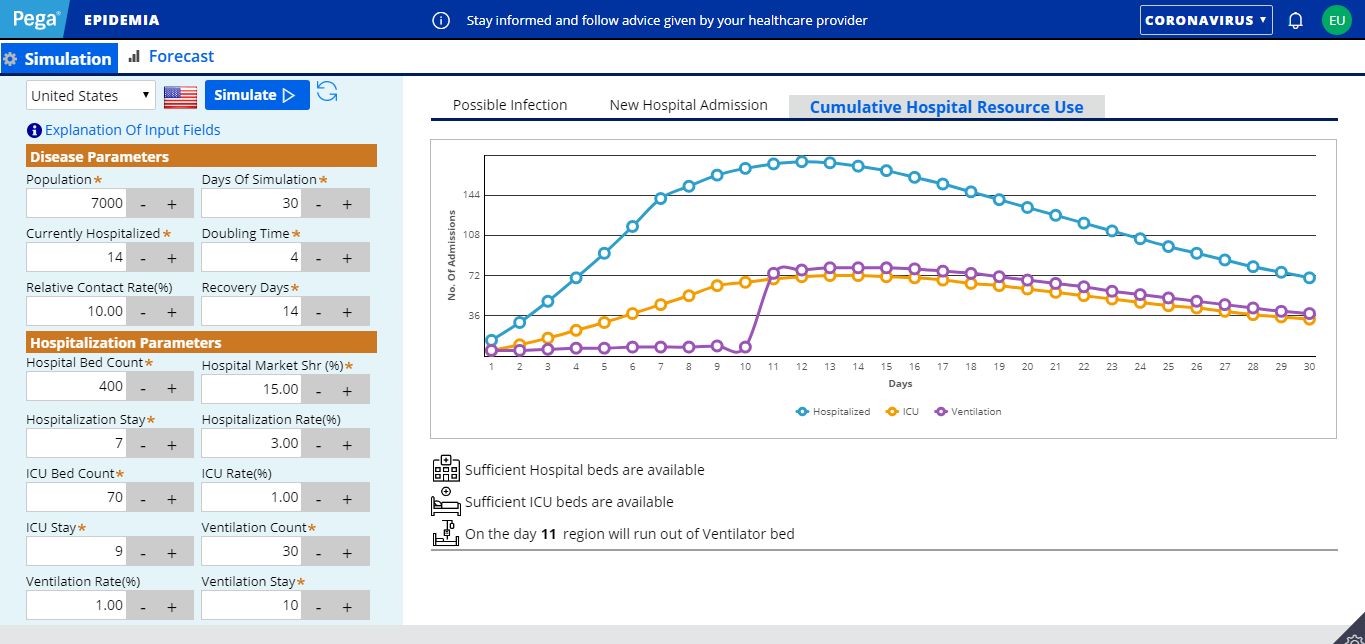
Cumulative Hospital Admission Forecast with Recommendation
-
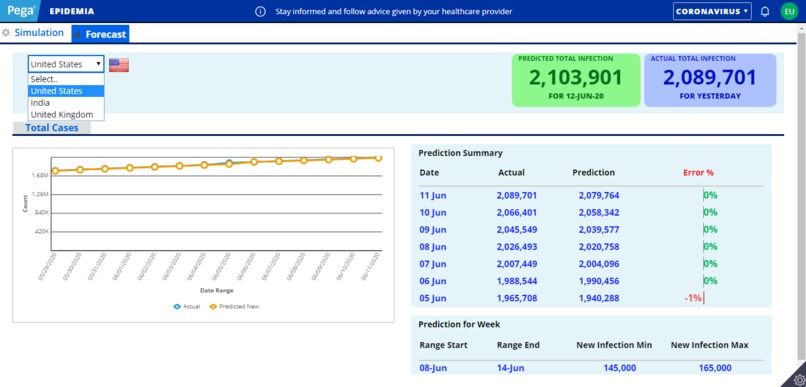
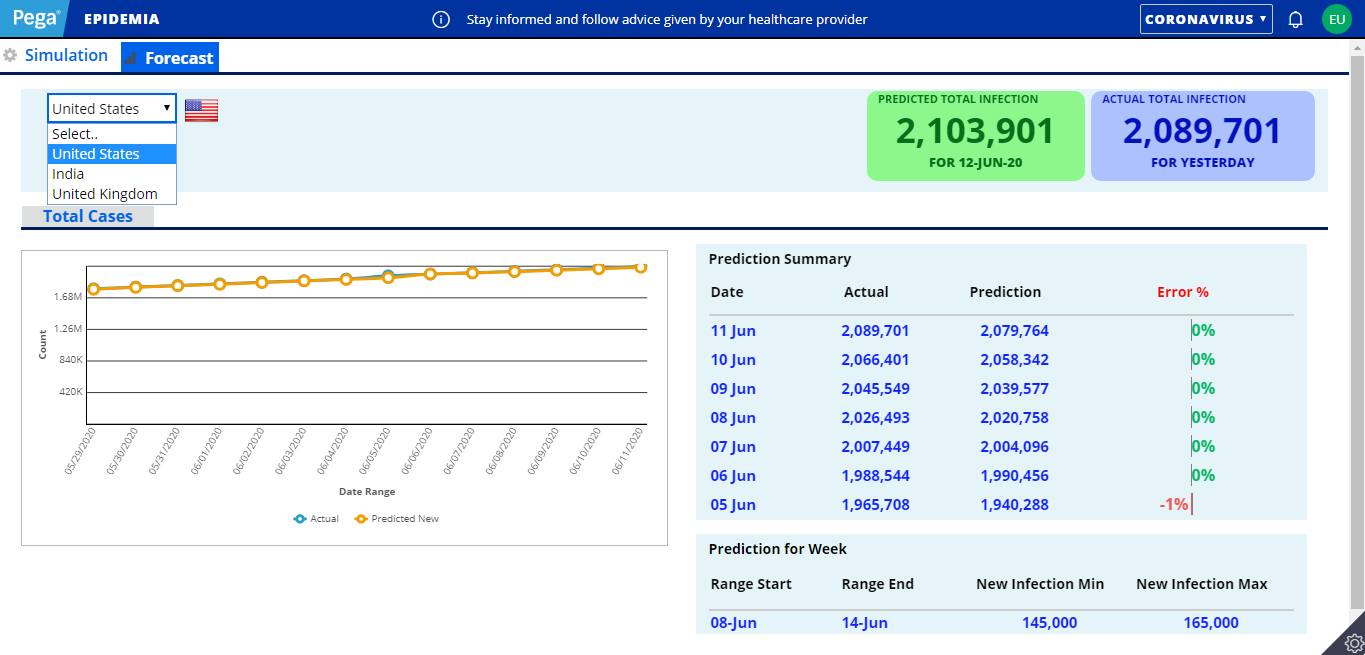
Forecast Modeling- Country Specific Prediction
Access to Content
For accessing the demo URL or Vimeo Link, you would need credentials. The credentials are hosted in the given Github repository and invitation has been sent to [email protected] to access it. Please refer to the **ReadMe* document in GitHub for accessing all contents.*
Inspiration
COVID-19 outbreak has clearly shown how a pandemic can paralyze our modern healthcare system. As the number of infections sky-rocketed, it became a tough job to properly distribute healthcare resources & equipment across geographic areas and hospitals. Authorities didn't have forecast information about upcoming infections and the number of equipment or arrangements needed in a certain city, area, town to tackle that. Specifically, hospitals were struggling to identify the time when they won't be able to serve any new patient, instead re-route the patient to a different hospital.
It was necessary to determine the pattern of infection, and get a forecast of upcoming infection ranges so that healthcare professionals can prepare them with arrangements. Not only COVID-19, but it can happen during any other infectious disease outbreak. Can we develop something which will derive such a pattern and give a forecast? And this question inspired us to leverage Pega for developing this solution.
What it does
Any infectious disease follows a mathematical model called S-I-R. This is a model of Susceptibles, Infected, and Recovered out of a certain population. Epidemia is a simulation tool that can take certain information like total population, statistics about currently infected and hospitalized patients, social distancing effectivity, acceleration of the infection-spread (doubling time), the current capacity of the hospital in terms of beds and equipment, etc. Based on the given inputs it evaluates those parameters through the SIR model and creates forecast information about the disease spread in that geographical location. It can provide an estimate of the number of new infections and patient influx to the hospital. It can also provide suggestions about the time when a certain hospital would run out of its resources. It can also provide a forecast about total infection today, based on the trend of the last week.
This helps the hospital management to do proper capacity planning beforehand.
How we built it
The proof of concept was done by Penn State Data Scientists through Python programming. We had to spend significant time decoding the logic built through various functions and methods spread across a large number of files. The idea was to derive the modified version of the SIR Modeling technique and cross-validate the result. Formulas were prepared in excel and validation was done for accuracy. Then the similar functions and libraries were built inside Pega PRPC 8.4, to leverage this model. Additional data tables were built for generating simulation reports. Finally, ample time was spent on doing UI elevation. The target was to make the UI self-explanatory for any user, without prior knowledge.
Challenges we ran into
It was a complex task to convert complex python functions into Pega-specific functions and utilities. Specifically, it was a bit challenging to build a series of large data analogous to 2 or 3-dimensional statistical data analysis in Python. Also, the precision of data had to be managed to maintain the accuracy of the forecast. For a large data set this precision can make a stark difference in values.
Accomplishments that we're proud of
The basic version of the tool with the end-to-end scenario was prepared in just 2 days. Thanks to Pega's rapid development platform, which allowed us to speed up coding, and integrate java libraries for complex processing.
What we learned
The development of this tool helped us learning the mathematical model and statistics about any epidemic in the world. Any form of infectious disease can be plotted into a mathematical model and can be assessed for its impact on the population. While developing this tool, we were able to establish that in Pega through java functions and activities complex mathematical models can be built for custom requirements.
What's next for Epidemia
This tool is a plug-and-play capability that can be integrated with any healthcare application, which requires similar forecasts for any epidemic/infectious disease. Such a forecast would help in determining upcoming healthcare coverage costs, equipment orders, hospital capacity planning, etc. This tool can be extended as well for any other infectious disease by adding new templates.
The plan is to make this tool available for Healthcare Clients, Government Authorities to help and defeat such pandemics in the future.


Log in or sign up for Devpost to join the conversation.