-
-
Logo
-
Pain points
-
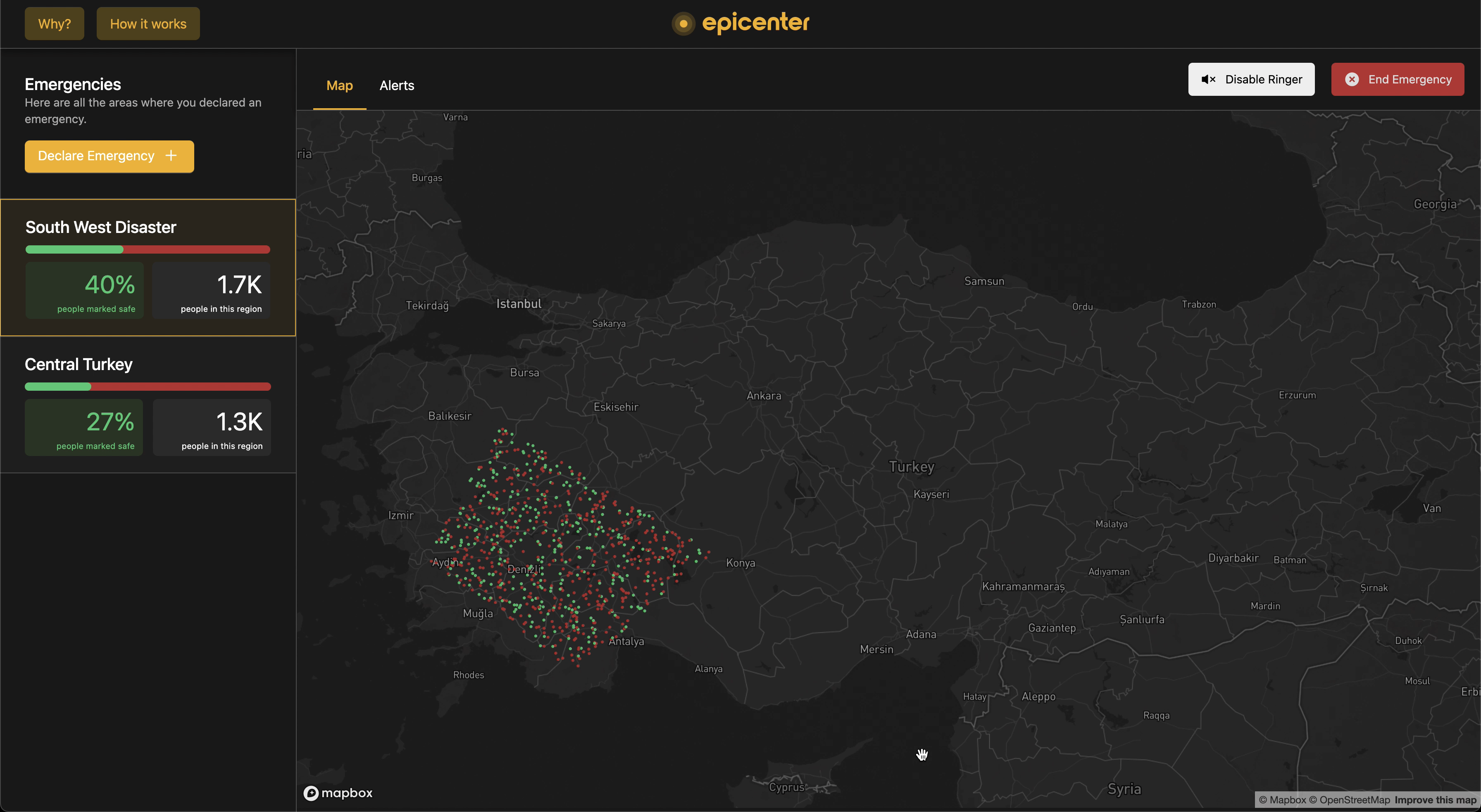
Viewing an emergency response
-
Creating an alert
-
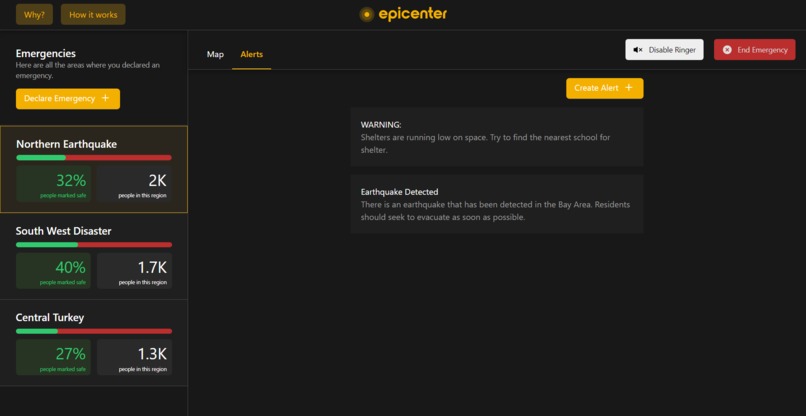
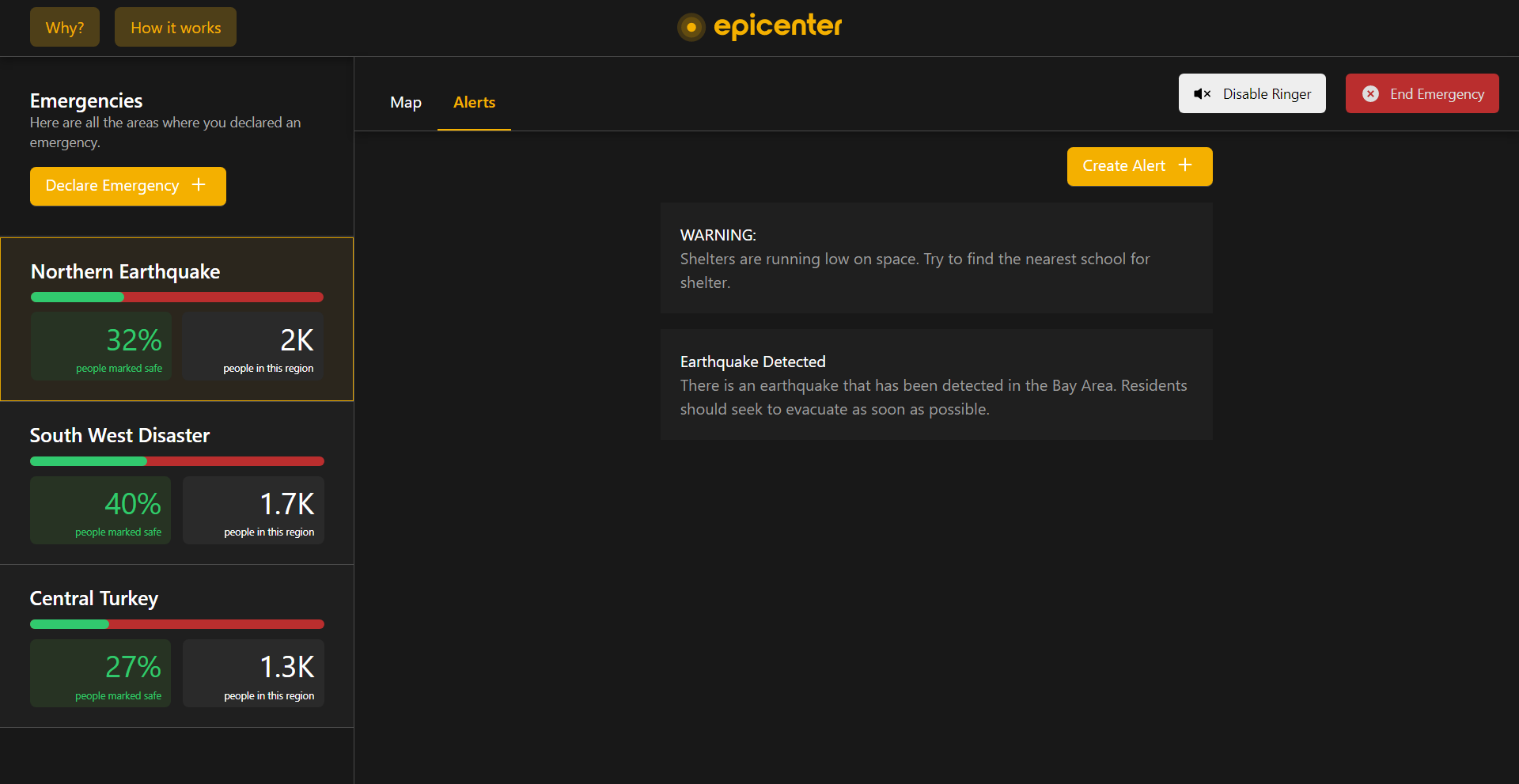
Browsing existing alerts
-
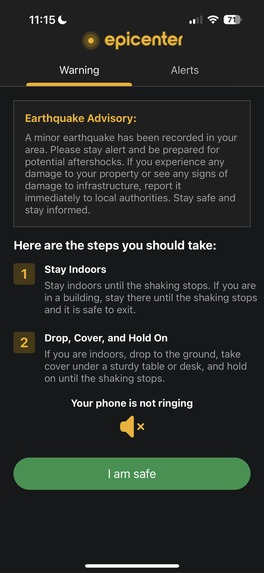
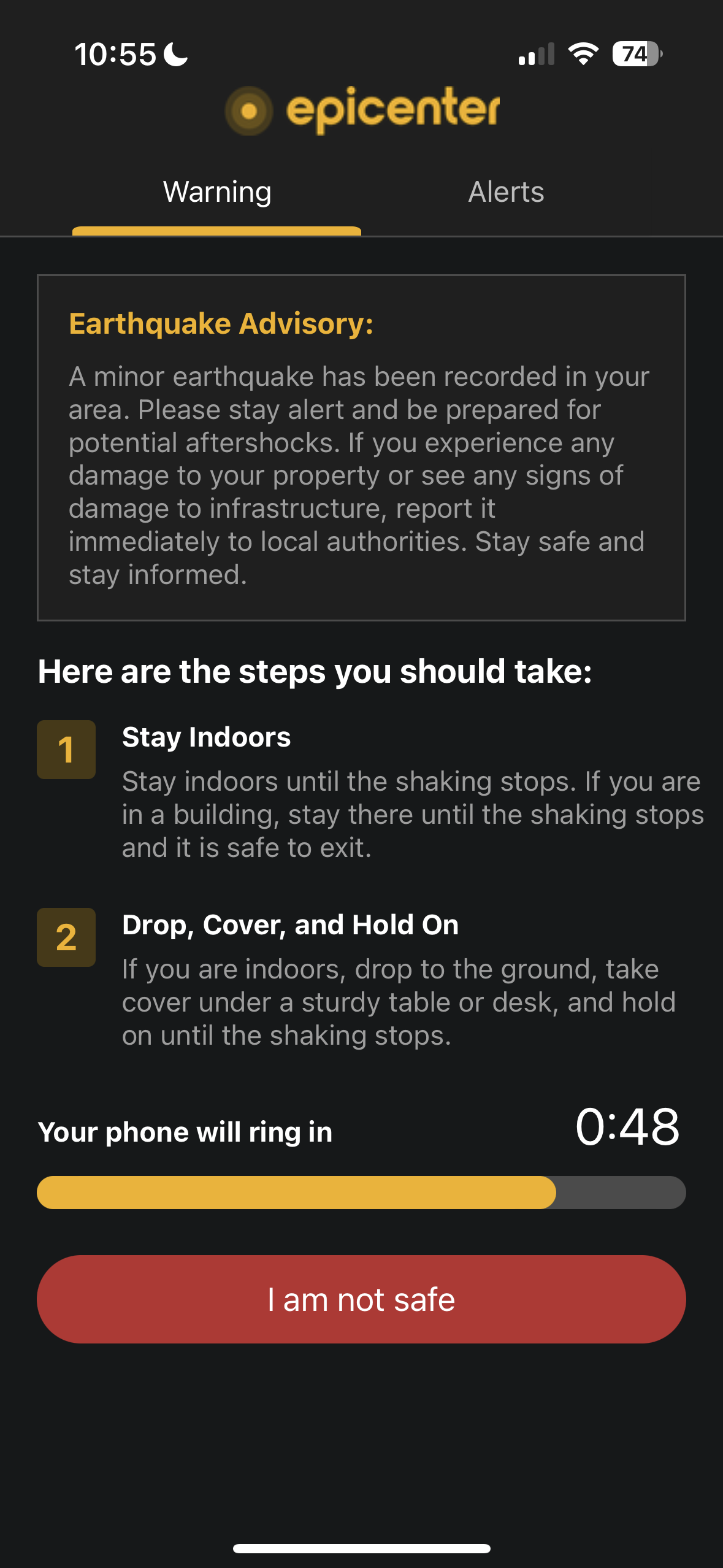
Mobile home page (danger)
-
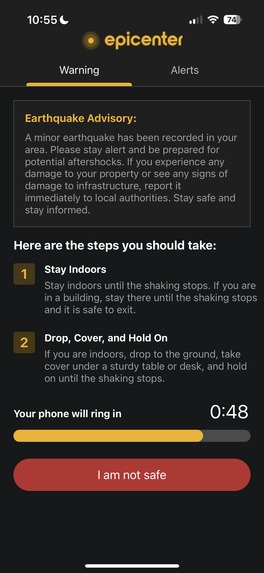
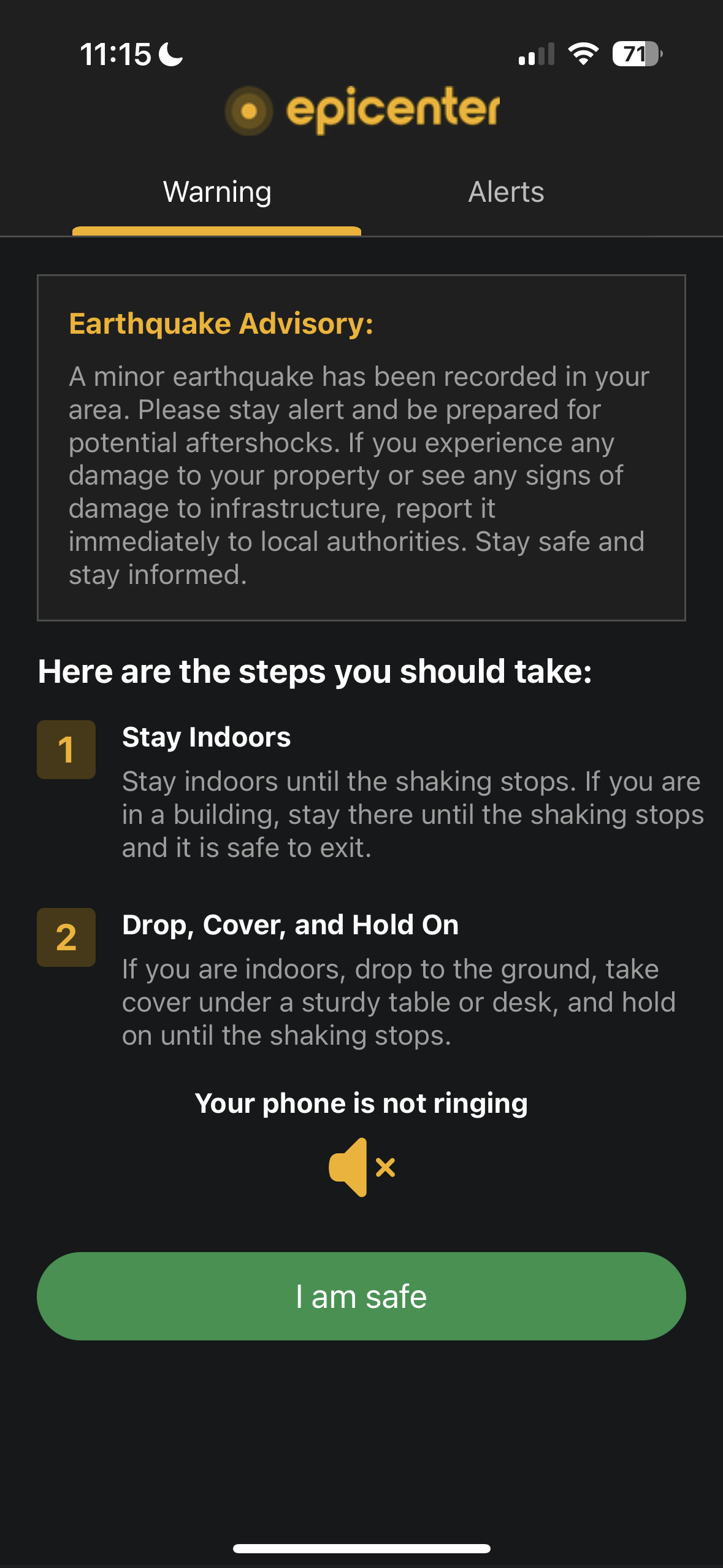
Mobile home page (safety)
-
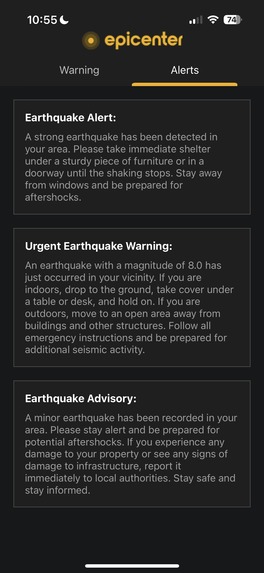
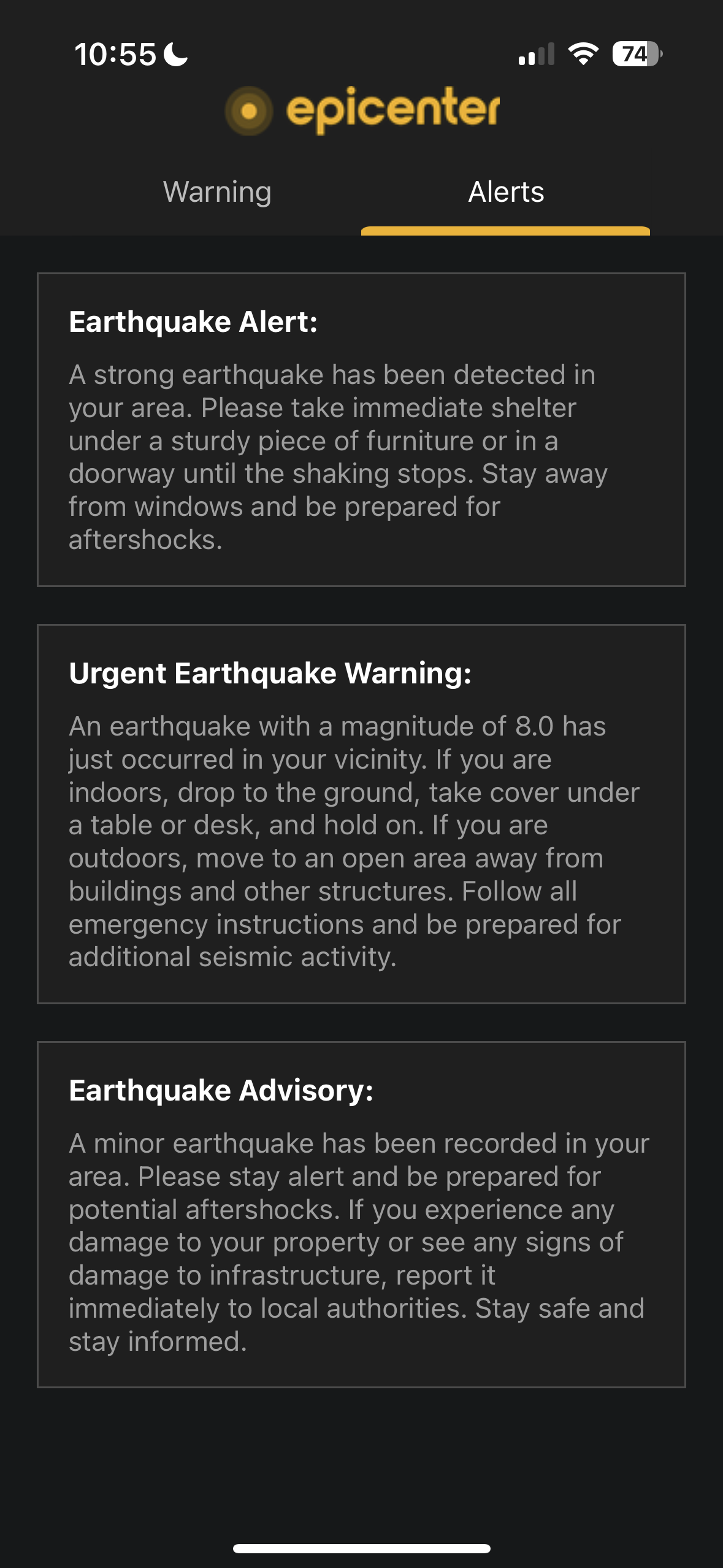
Mobile alerts page



Project Title: Epicenter
TLDR
We recognized that governments are not great at responding to disasters. We created a mobile app for citizens and a web portal for governments better manage emergencies and notify citizens with instructions.
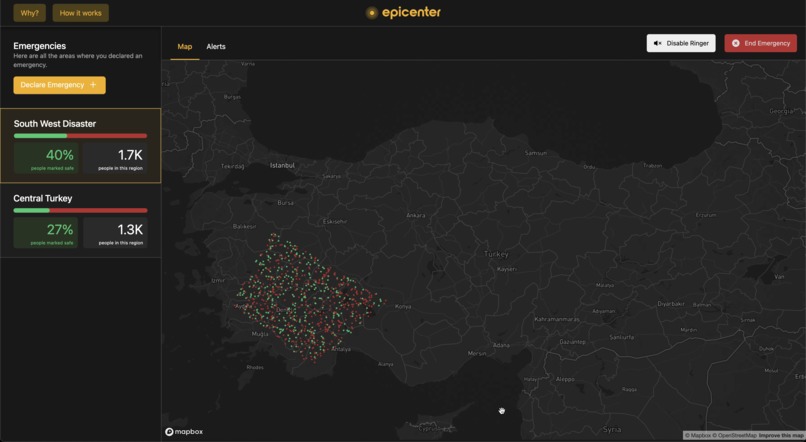
When a government declares an emergency in a region, all citizens in that region are pinged and are given a few minutes to mark themselves safe. If they fail to mark themselves safe, they are assumed unsafe, and an alarm on their phone begins ringing to notify rescuers or first responders of their location.
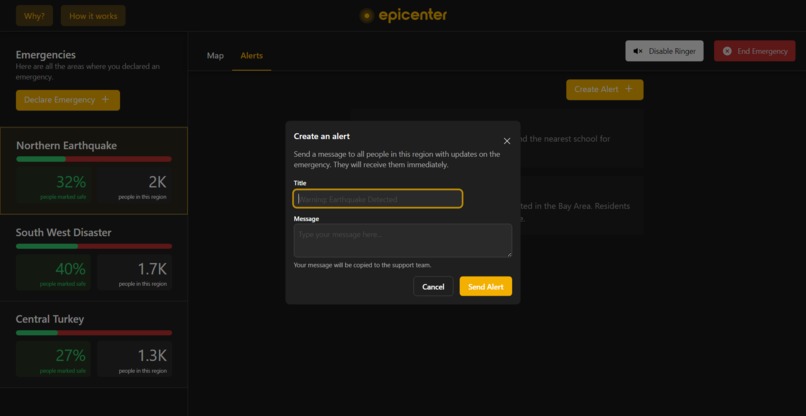
Governments can also send alerts directly to citizens.
Useful Links:
Inspiration
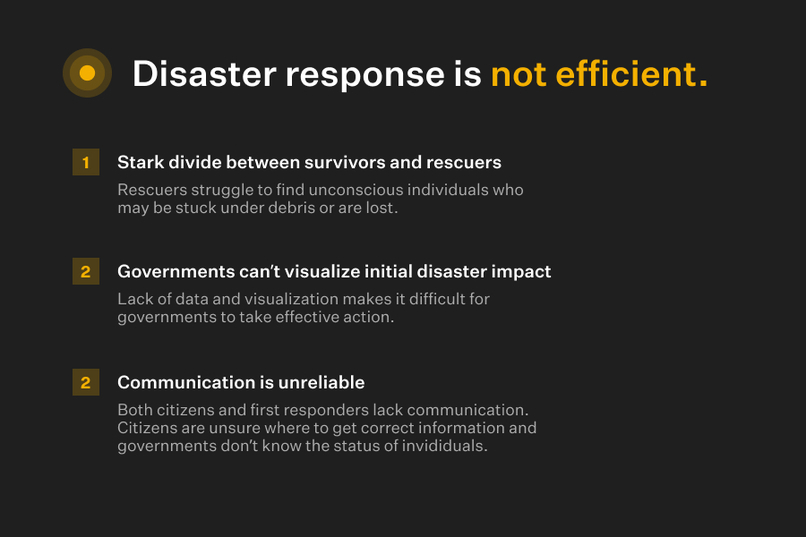
The inspiration for Epicenter came from the devastating earthquakes that occurred in Turkey and Syria, which caused many civilians to be trapped underneath rubble, and rescuers were unable to find them. The lack of a reliable communication system between the survivors and rescuers motivated us to create a platform that would enable people to send alerts during natural disasters, and for rescuers to locate them.
What it does
Epicenter is a mobile and web solution that allows government officials or organizations to send alerts to users when they are experiencing a natural disaster. When a natural disaster occurs, the administrator on the website side can specify the geographical region within which users maybe be in danger, and send push alerts to all users within the region. Users then have a few minutes to mark themselves as safe. If they don't, their phone will begin beeping, so that in case they are unconscious, others nearby can find them. On the organizational website side, the administrator can view which areas have more people marked as unsafe and redirect aid to locations with a high density of unsafe users.
How we built it
Epicenter was built using React.js and Node.js for the web application, React Native for the mobile application, and Firebase for the database. To style the web portal, we used the styled-components and tailwindCSS front-end libraries. We also used the MapBox API to display the locations of the users and the disaster zones. We coordinated our work and individual issues through Github's many collaboration features. We implemented Continuous Integration through Vercel's preview deployments to make sure the application worked for production.
Challenges we ran into
One of the biggest challenges that we faced was that not everyone on the team knew how to use certain technologies and/or software that we wanted to use. To address it, we all decided to take a break at the start and dedicate an hour and a half to learning the new technologies like Firebase, Tailwind, React Native, etc. Some members of our team are more experienced with front-end development and some are more experienced with the back-end, but we wanted to try expanding our skillset, so we switched roles. Still, we would occasionally run into bugs that were hard to debug, so we would consult the experts in each area on our team for help. Overall, GitHub and StackOverflow were very helpful resources in the development process.
Accomplishments that we're proud of
One of our most significant accomplishments was creating a product that could potentially save lives during natural disasters. We are also proud of the user interface, which we believe is intuitive and easy to navigate. We spent several hours working on Figma designs for both the web and mobile app to ensure that interface was visually appealing and easy to use. We don't have very much experience developing applications with so many moving parts, so we were very satisfied when we were finally able to get everything working. Our teamwork was strong throughout the process, which enabled us to create a polished product in a short amount of time.
What we learned
Throughout the development of Epicenter, we learned the importance of user-centered design, and how crucial it is to create a product that meets the needs of the users. We also learned how to integrate various APIs and services, and how to ensure that the platform was secure and protected against cyber-attacks.
What's next for Epicenter
In the future, we plan to expand the platform to include more features, such as live video feeds from disaster zones, and the ability to communicate with rescuers directly. We also plan to market the platform to a wider audience and explore potential partnerships with government agencies and non-profit organizations.
Target Market Identification
When doing our background research for this project, we wanted to make sure that there was an approachable avenue for our Epicenter's adoption into legitimate use. While the inspiration for the functionality began when we read about the earthquakes in Turkey and Syria, we think that it would be easier for Epicenter to be tested in a non-government setting, such as a university. There are several universities in California and Florida that are prone to natural disasters such as earthquakes and hurricanes, so we would look into talking with the administration at those schools who could integrate Epicenter with their own school population. After collecting feedback and improving the application, it could potentially be implemented in larger, more impactful settings.


Log in or sign up for Devpost to join the conversation.