-
-
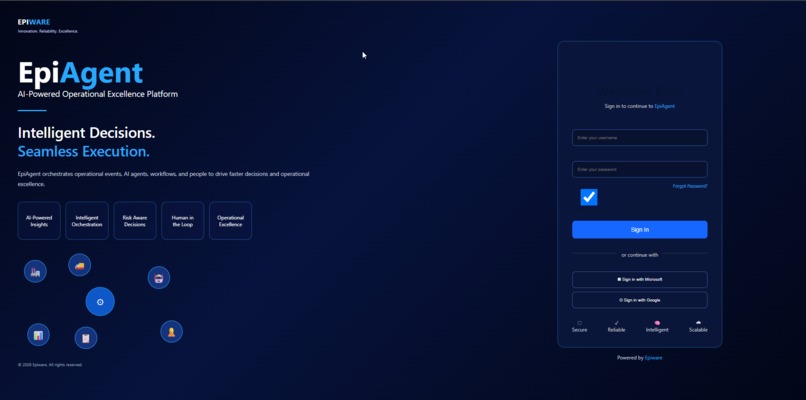
Cover Banner
-
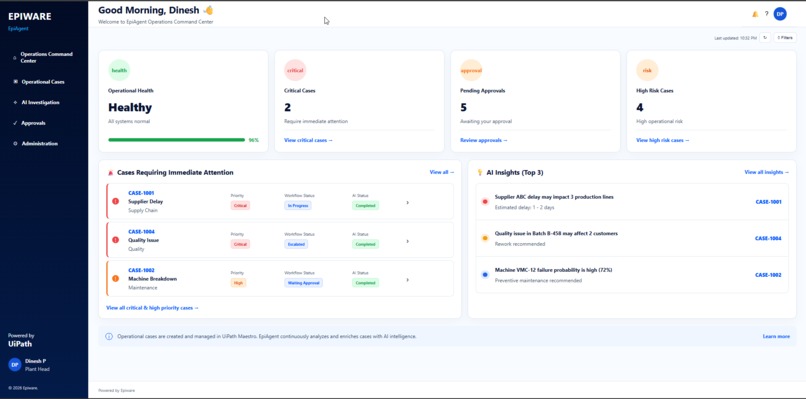
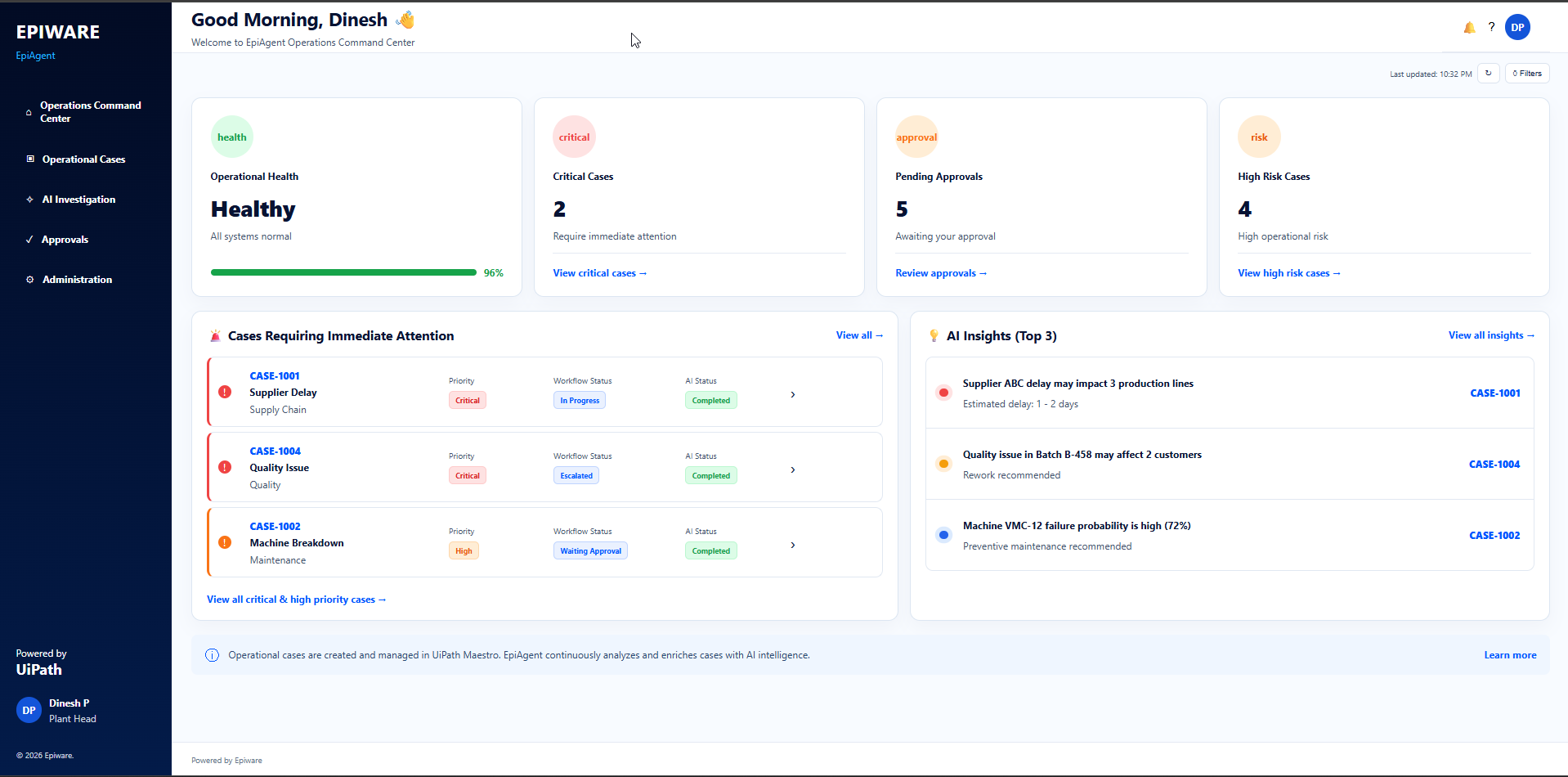
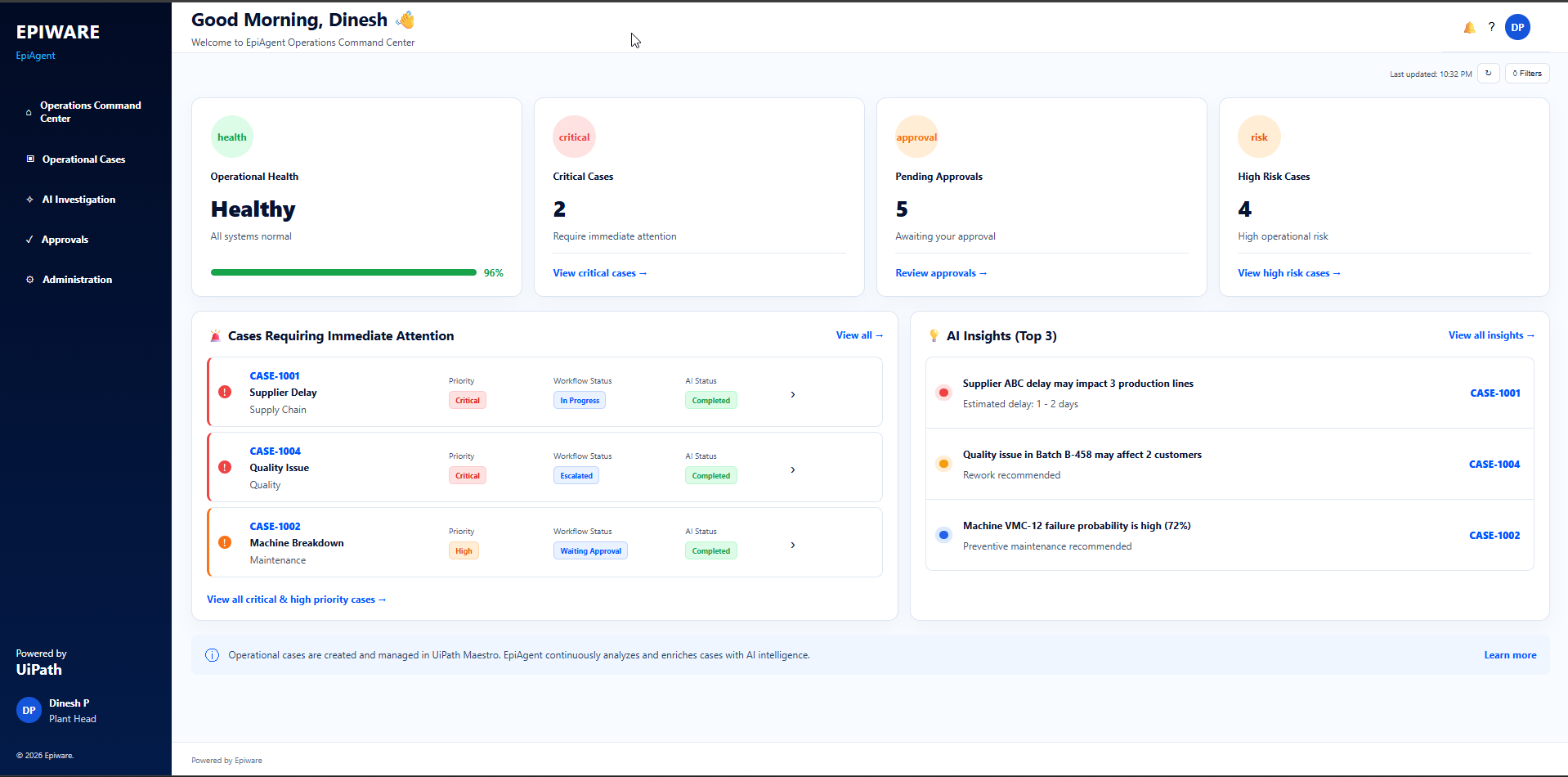
Dashboard
-
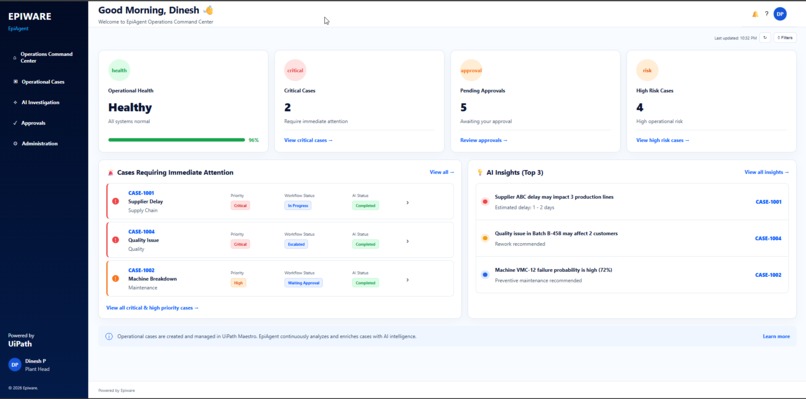
Operations Command Center
-
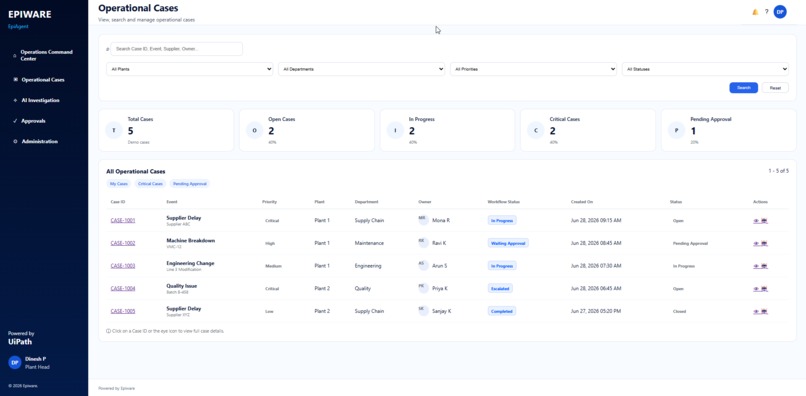
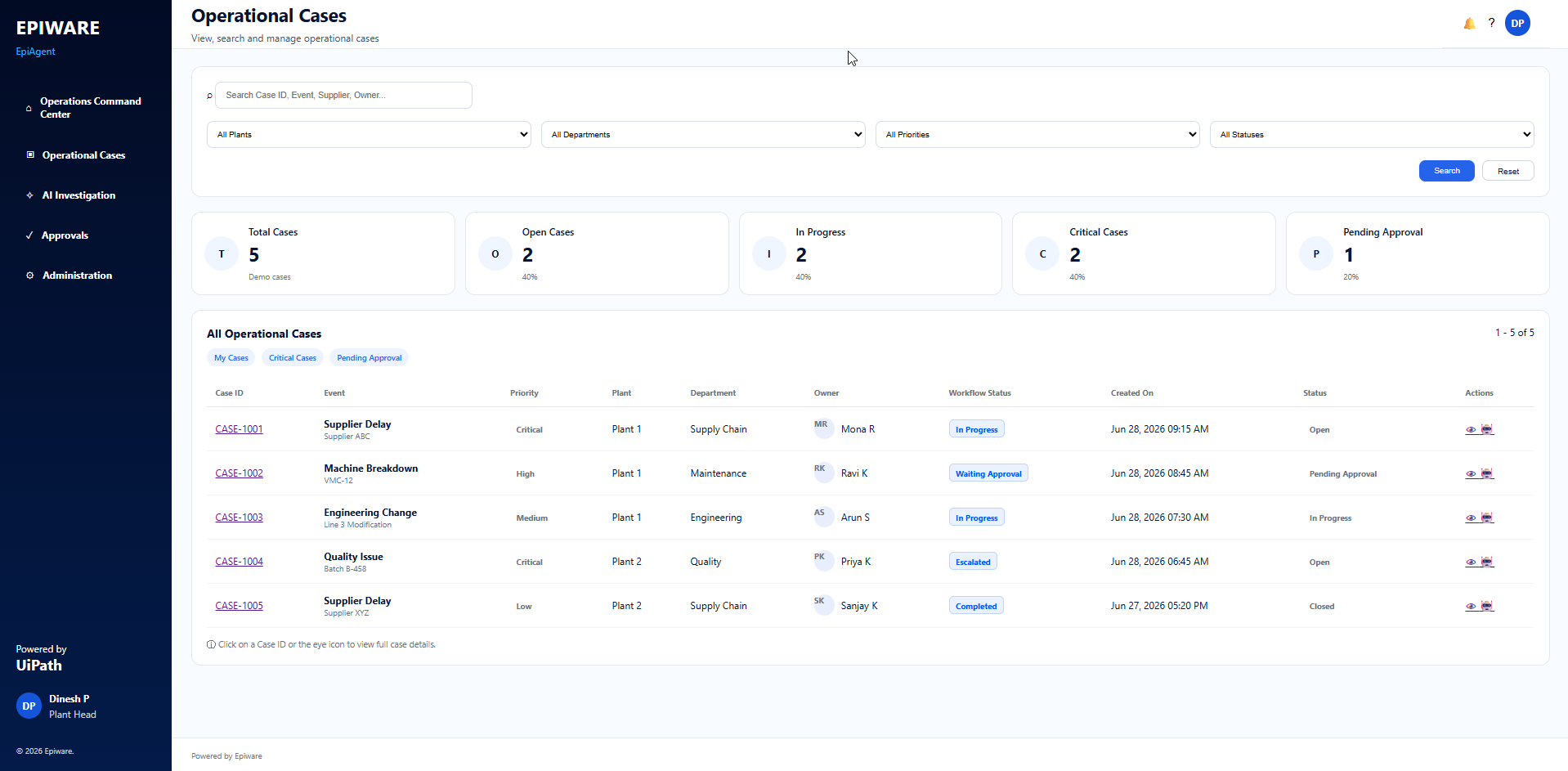
Operational Cases
-
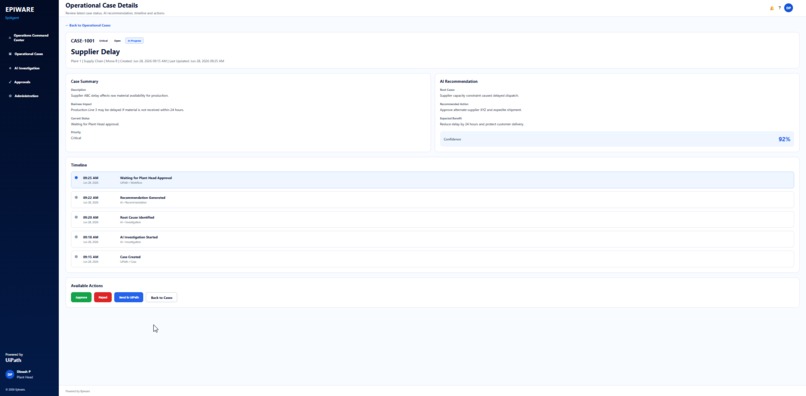
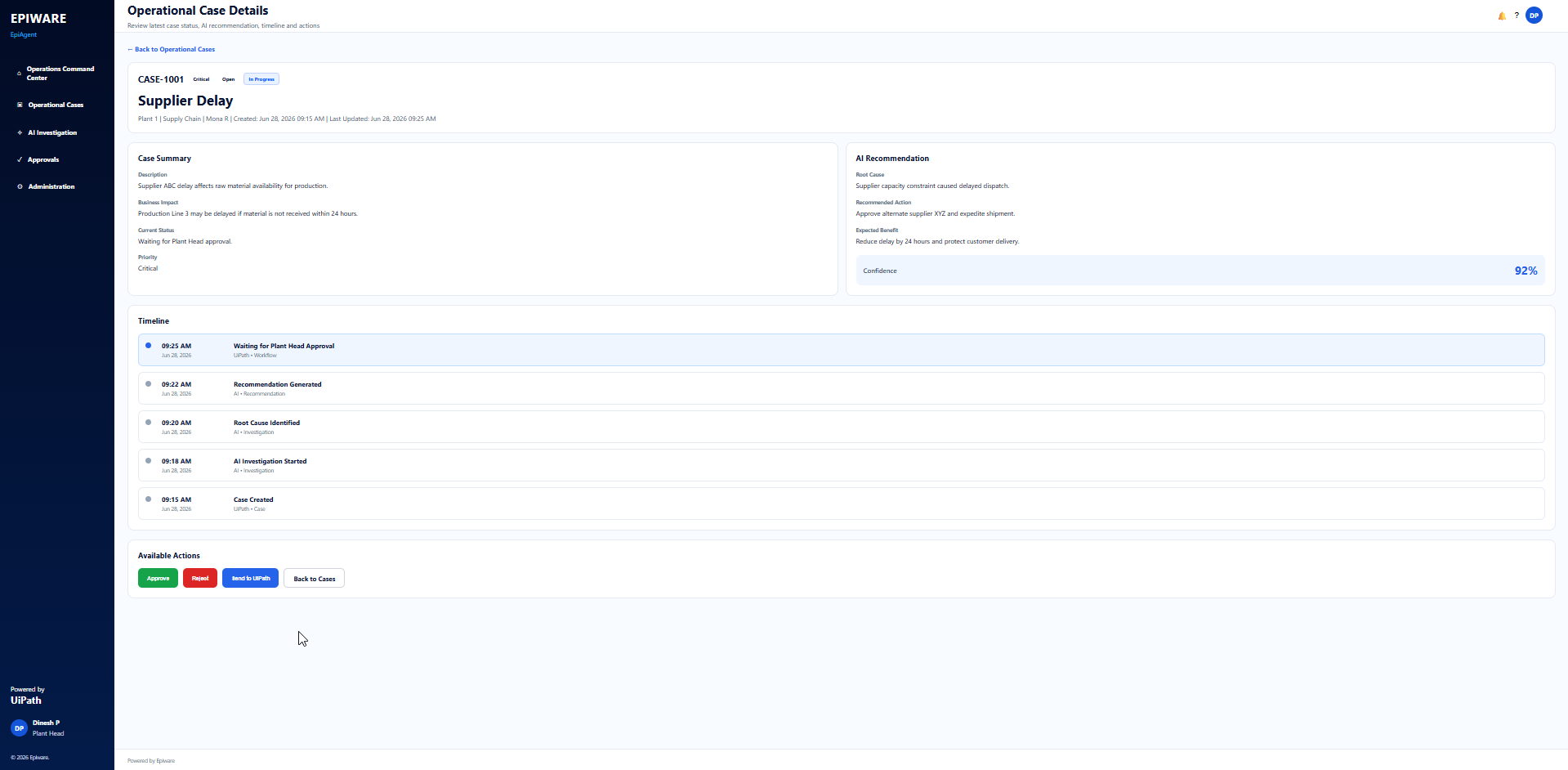
Case Details
-
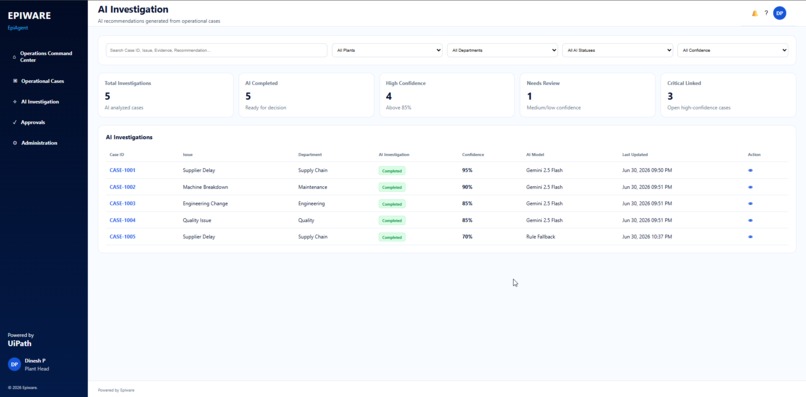
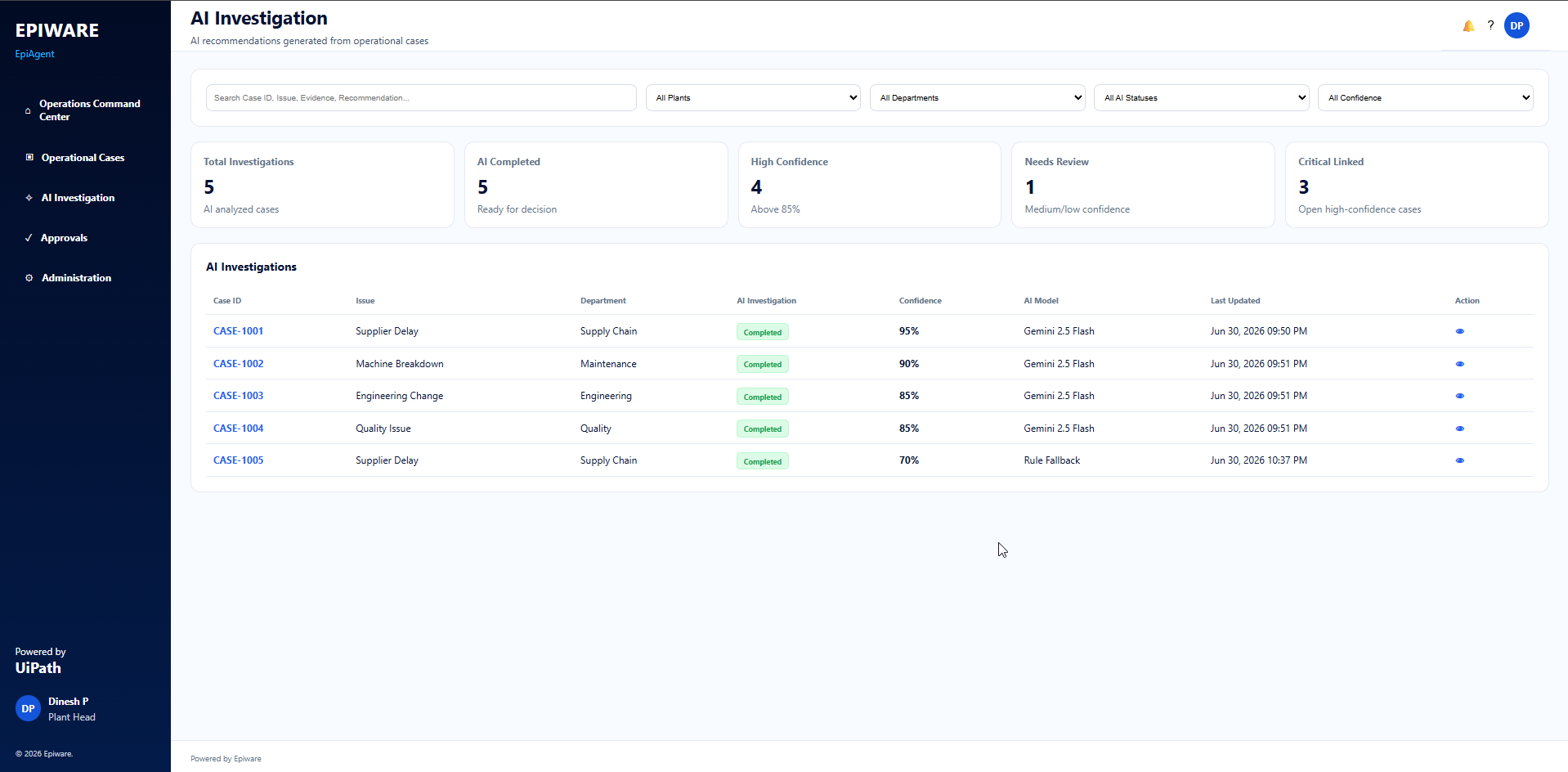
AI Investigation Dashboard
-
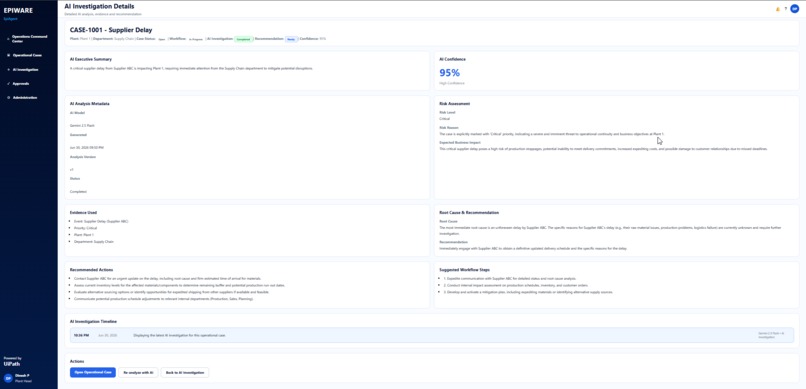
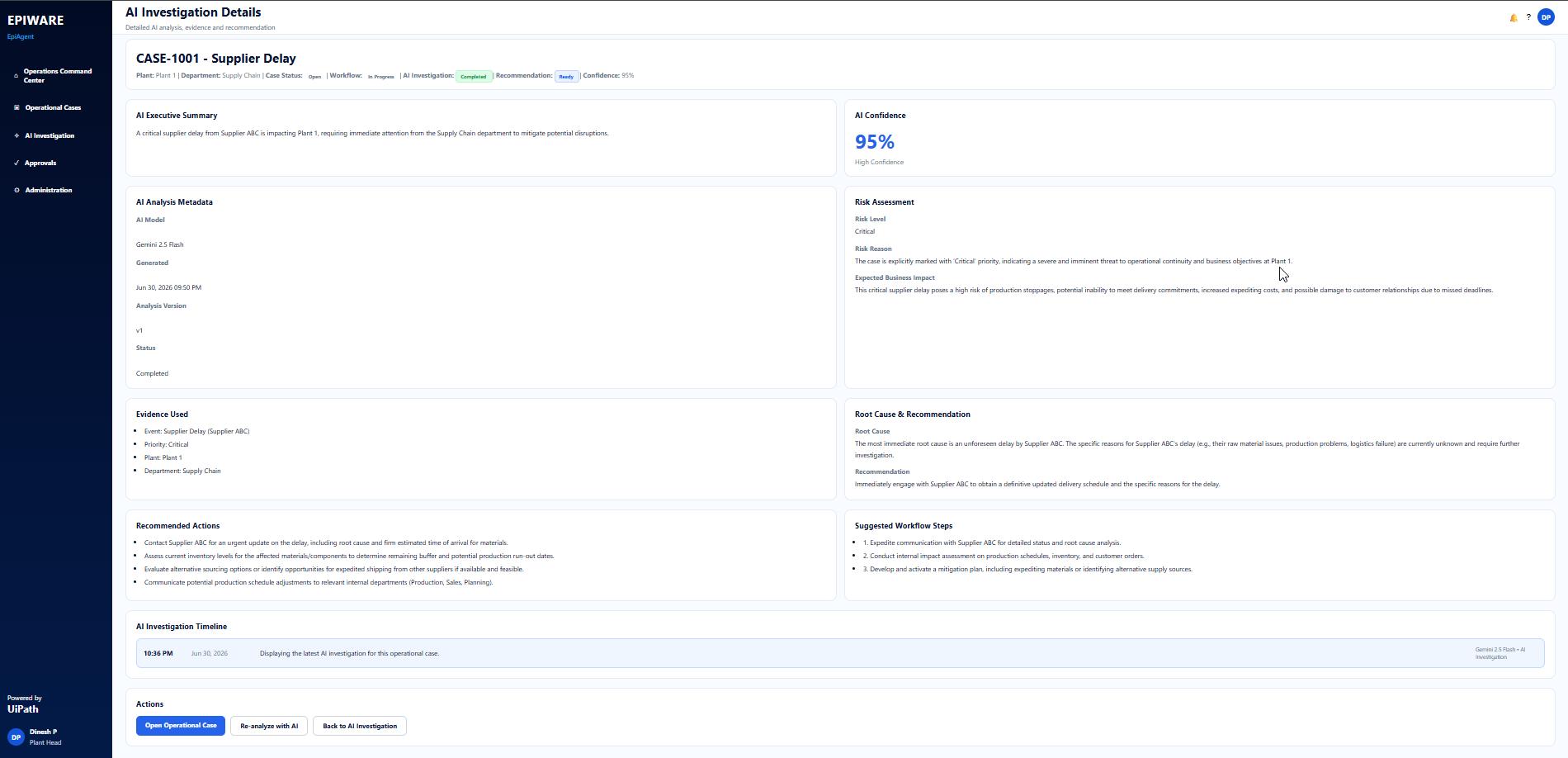
AI Investigation Details
-
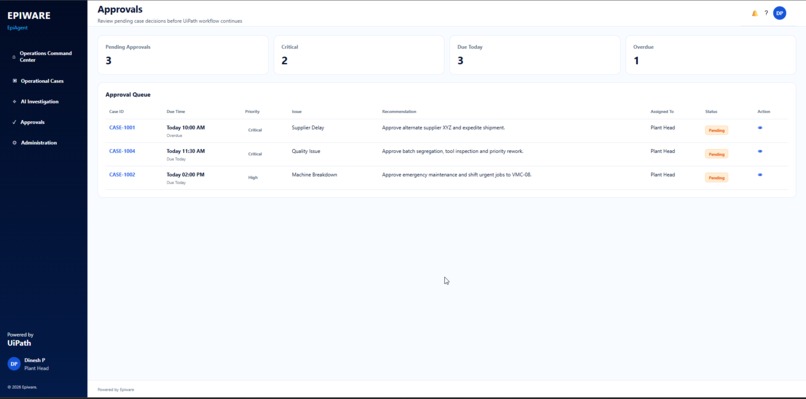
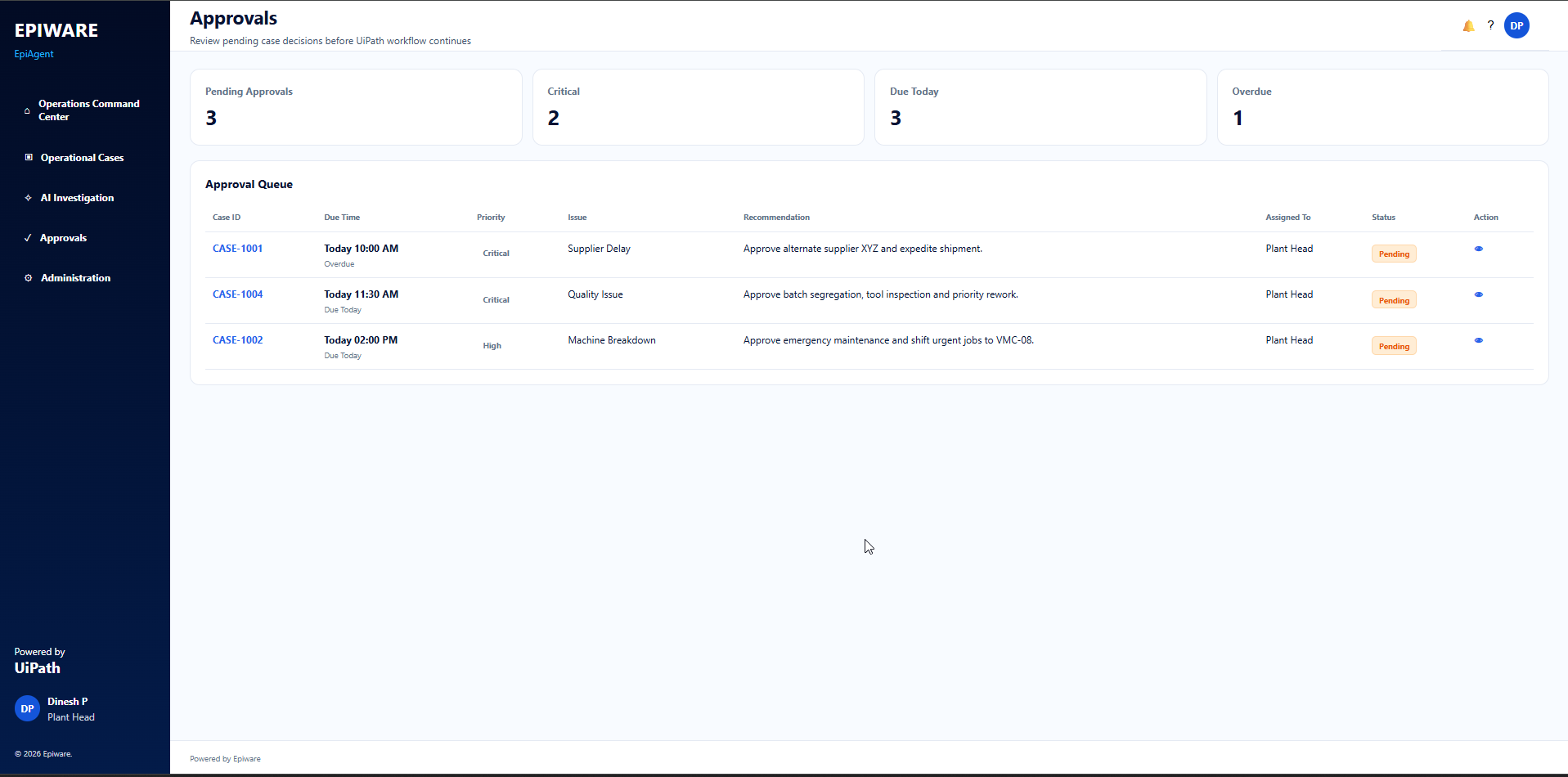
Approvals Dashboard
-
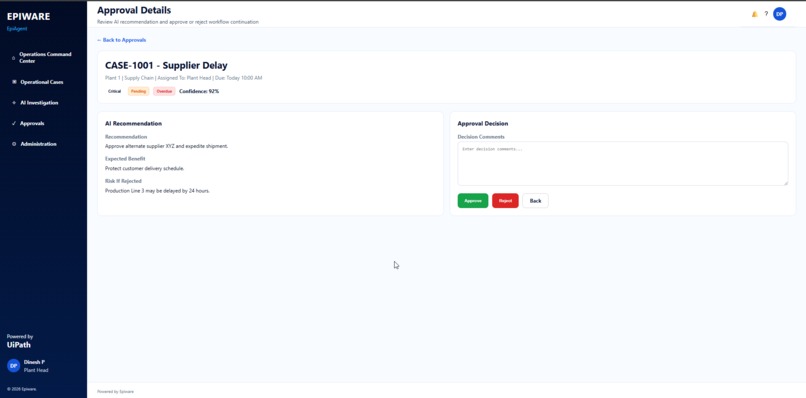
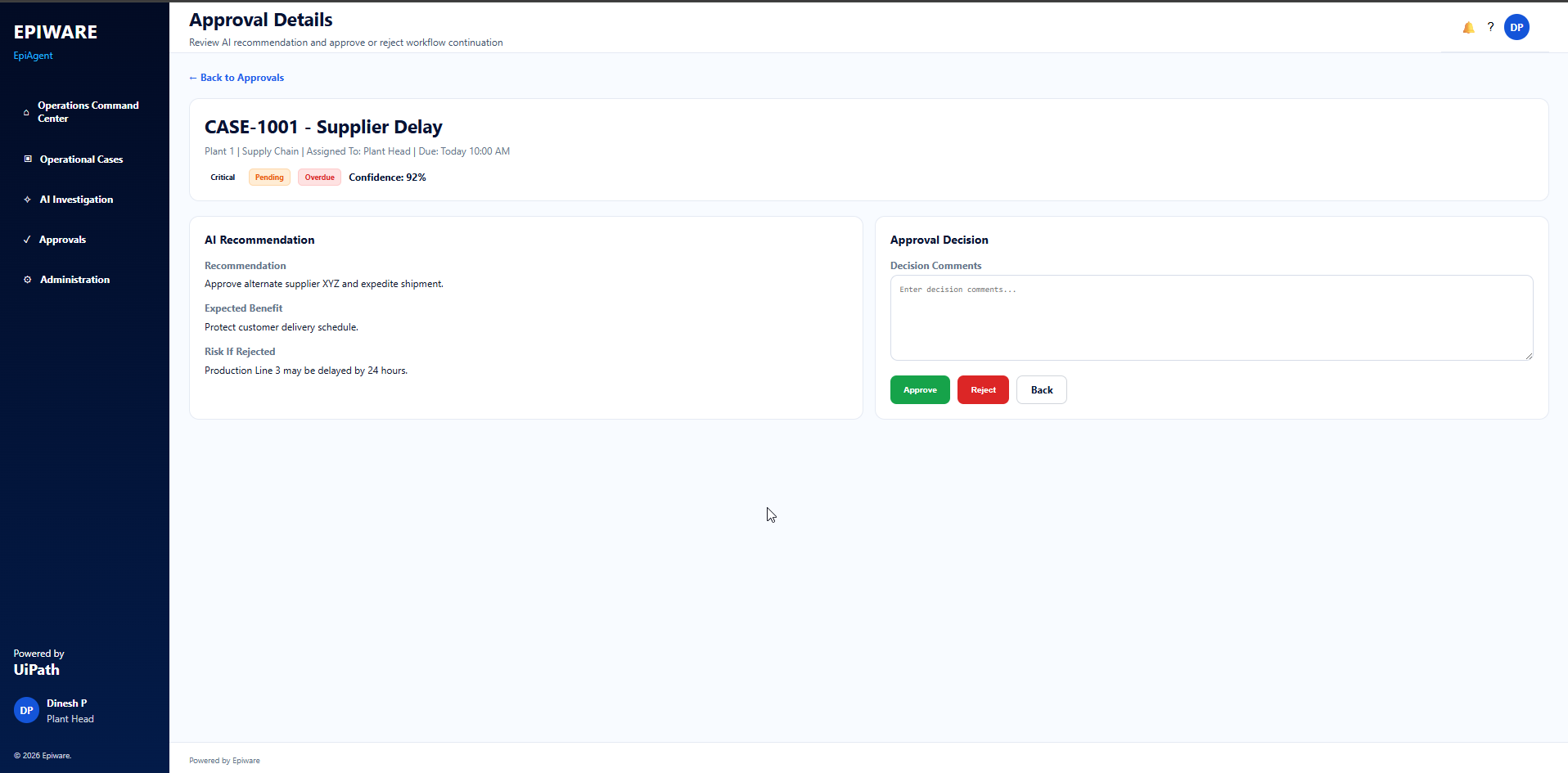
Approvals Details
-
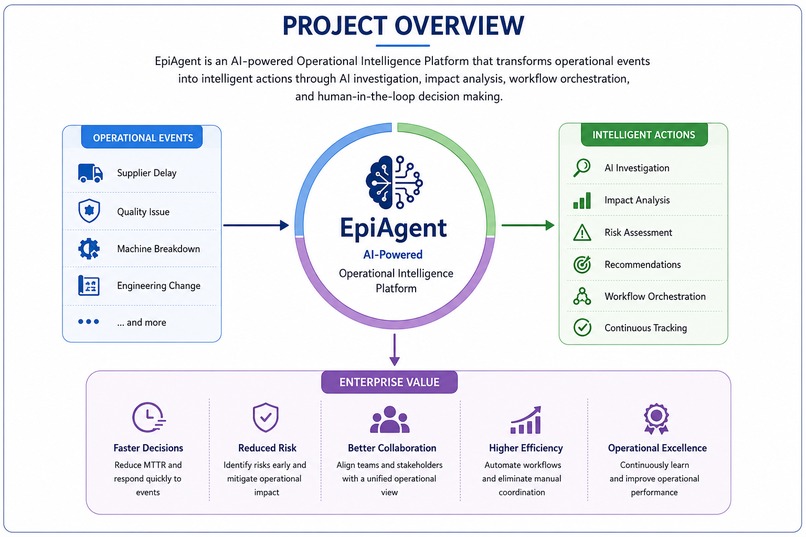
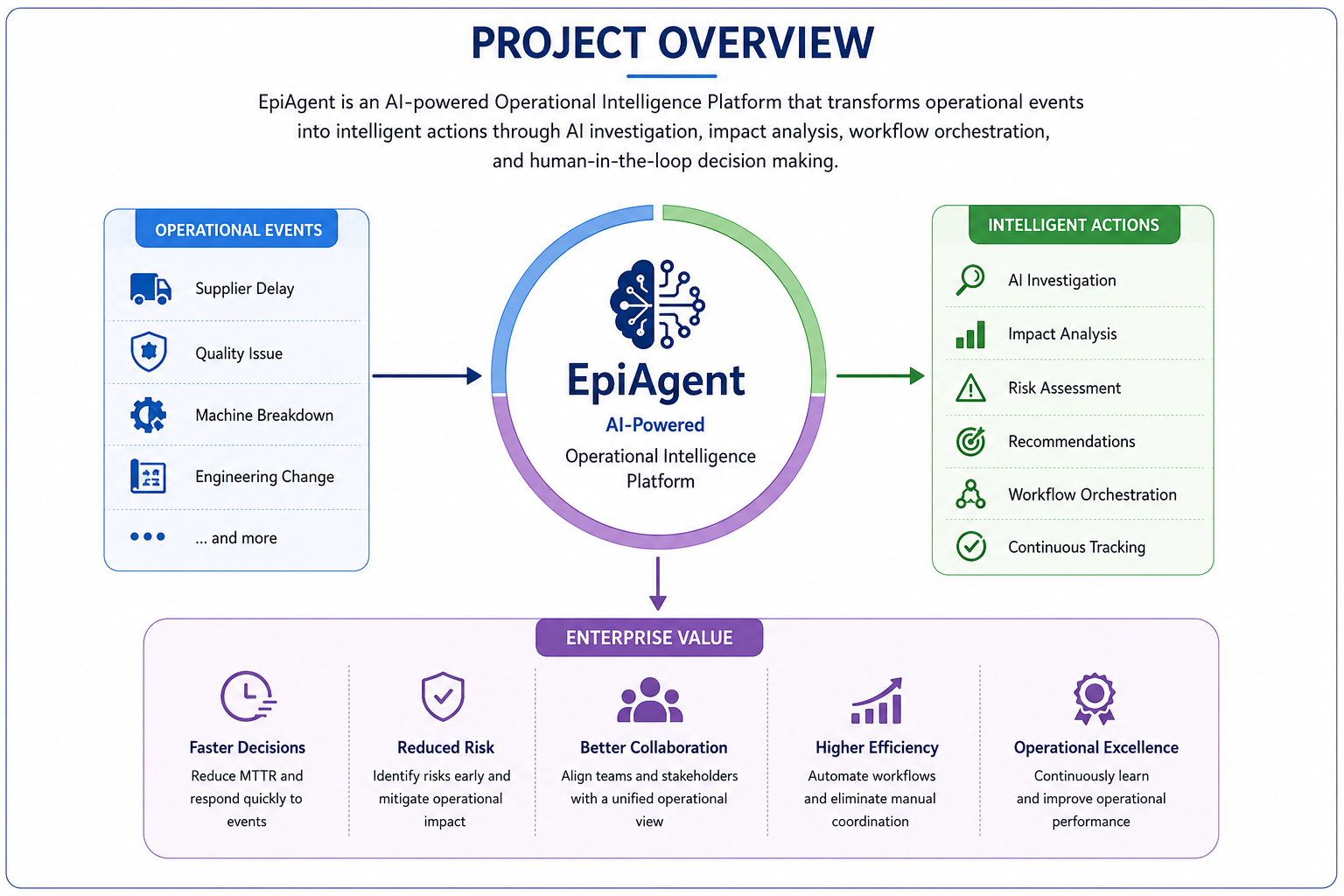
Project Overview
-
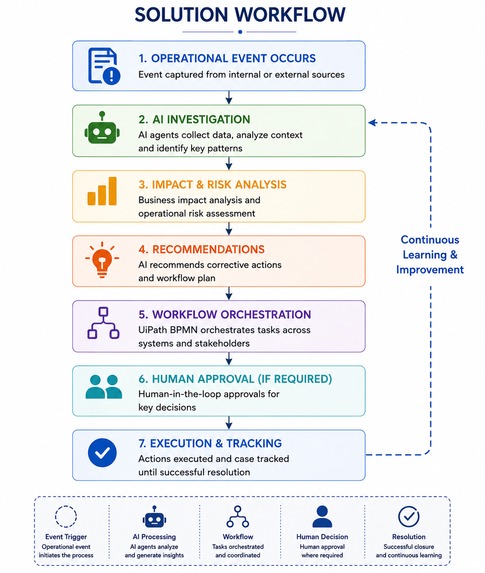
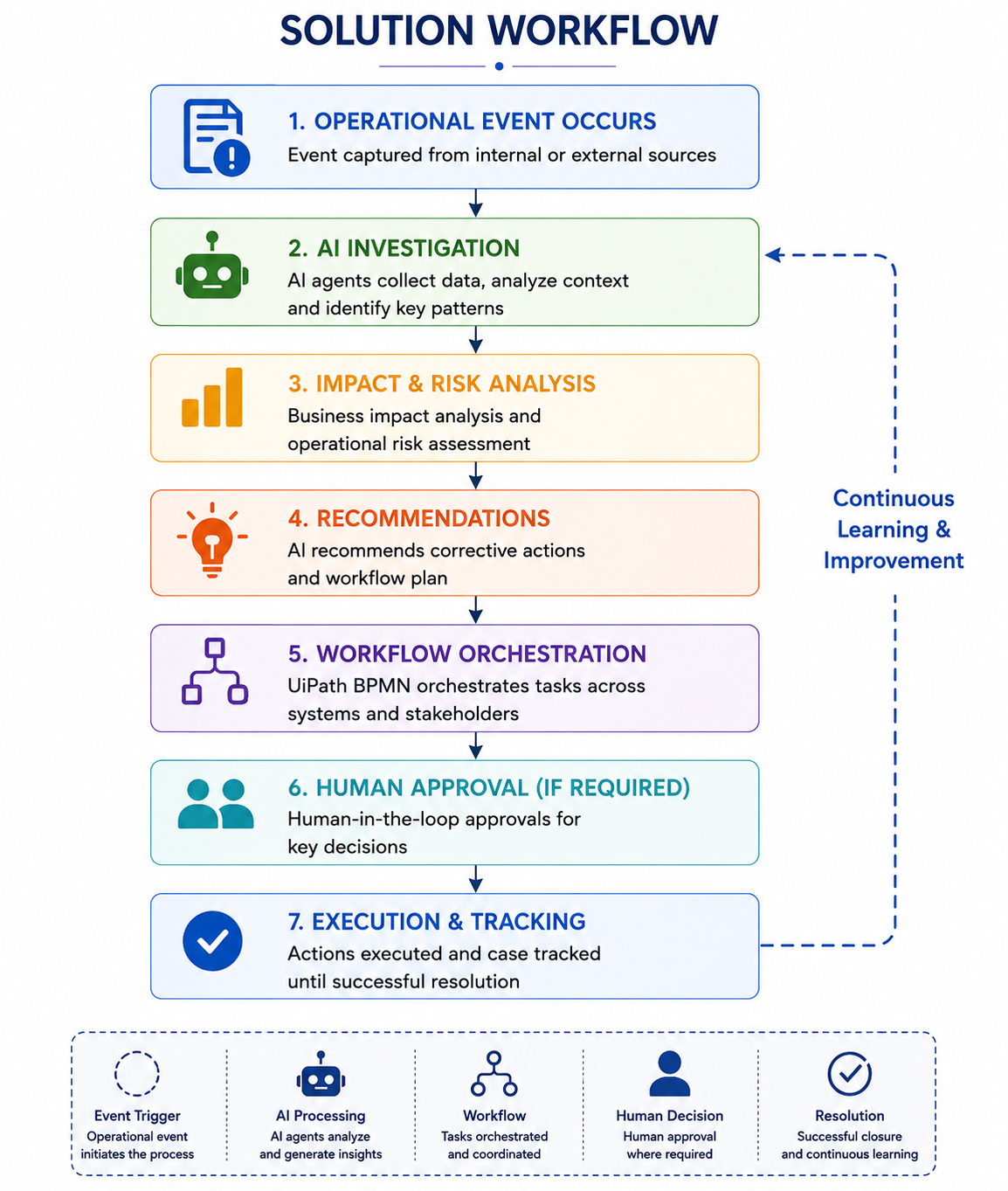
Solution Workflow
Inspiration
Manufacturing organizations rely on multiple enterprise systems such as ERP, MES, QMS, PLM, and CMMS to manage operations. While these systems manage individual business functions effectively, operational events like supplier delays, quality issues, machine breakdowns, and engineering changes still require manual coordination across departments.
These situations often lead to fragmented communication, delayed decision-making, and poor operational visibility.
We wanted to build an AI-powered operational intelligence platform that transforms operational events into intelligent, structured workflows. Instead of replacing enterprise systems, EpiAgent acts as an intelligent orchestration layer that helps organizations investigate operational events, understand business impact, coordinate stakeholders, and execute corrective actions more efficiently.
What it does
EpiAgent is an AI-Powered Operational Excellence Platform for Manufacturing.
The MVP demonstrates four operational scenarios:
- Supplier Delay
- Quality Issue
- Machine Breakdown
- Engineering Change
When an operational event occurs, EpiAgent:
- Creates an operational case
- Performs AI-powered investigation using Google Gemini
- Generates an executive summary
- Analyzes business impact
- Assesses operational risk
- Recommends corrective actions
- Supports Human-in-the-Loop approvals
- Tracks execution until case closure
The platform provides a centralized Operations Command Center where Plant Heads and operational teams can monitor and manage operational events through a single interface.
How we built it
The solution follows a modular AI-first architecture.
Frontend
- HTML
- CSS
- Bootstrap
- JavaScript
- Jinja2
Backend
- Python
- Flask
AI
- Google Gemini API
- Prompt Engineering
- AI Investigation Engine
- Business Impact Analysis
- Risk Assessment
- Recommendation Engine
Workflow
- UiPath-inspired operational workflow architecture
- Human-in-the-loop approval model
- BPMN-ready workflow design
Data
- SQLite (MVP)
The application was designed around reusable AI agents, allowing additional operational events and industries to be supported in future versions.
Challenges we ran into
During development we encountered several technical challenges:
- Designing reusable AI agents instead of event-specific logic.
- Building a scalable operational workflow that can support multiple business scenarios.
- Managing AI API quota limitations while maintaining a responsive user experience.
- Implementing AI result caching so repeated investigations do not trigger unnecessary API calls.
- Creating explainable AI outputs suitable for business users rather than raw LLM responses.
- Designing an enterprise dashboard that remains simple while presenting operational intelligence effectively.
Accomplishments that we're proud of
We successfully built an end-to-end operational intelligence platform that demonstrates:
- AI-powered operational investigation
- Business impact analysis
- Operational risk assessment
- Executive summaries
- Human-in-the-loop decision support
- Modular AI architecture
- Enterprise-style Operations Command Center
- Manufacturing operational workflows
One feature we are particularly proud of is intelligent AI result caching. Once an operational case has been investigated, the analysis is stored and reused, preventing repeated AI calls while improving response time and reducing operational cost.
The project is designed as a platform rather than a single-use demonstration, allowing future expansion into additional industries.
What we learned
This project reinforced several important lessons:
- AI delivers the greatest value when combined with structured business workflows.
- Human expertise remains essential for operational decision-making.
- Explainable AI is critical for enterprise adoption.
- Operational intelligence requires collaboration between AI, workflow orchestration, and business users.
- Building reusable platform architecture is significantly more valuable than creating isolated AI demonstrations.
We also gained practical experience designing modular AI agents, prompt engineering, workflow orchestration concepts, enterprise dashboard design, and scalable software architecture.
What's next for EpiAgent
Our long-term vision is to evolve EpiAgent into a complete Operational Excellence Platform.
Future plans include:
- Native UiPath Maestro integration
- BPMN workflow execution
- Enterprise system integrations (ERP, MES, PLM, QMS, CMMS)
- Knowledge repository from resolved operational cases
- Root Cause Analysis Agent
- Predictive Risk Agent
- Multi-plant support
- Advanced analytics
- Multi-industry solution packs including Healthcare, Banking, Insurance, Retail, Energy, and Logistics.
Our goal is to transform operational events into intelligent actions and help organizations achieve Operational Excellence through AI-powered orchestration.

Log in or sign up for Devpost to join the conversation.