-
-
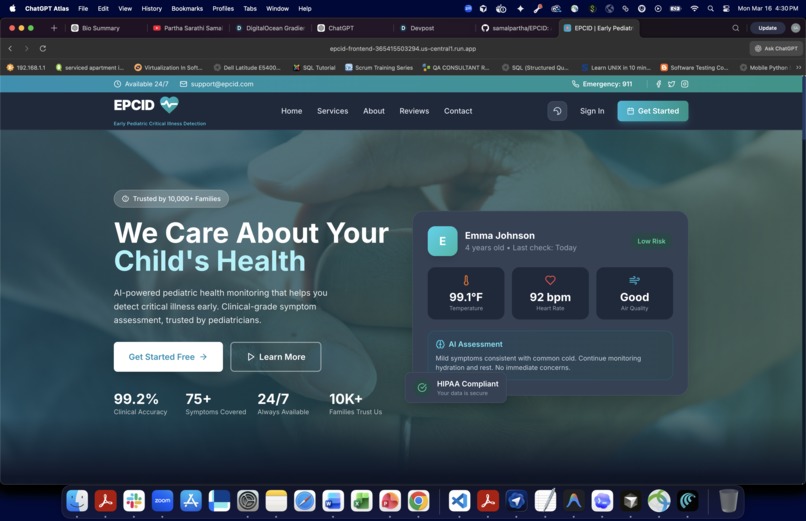
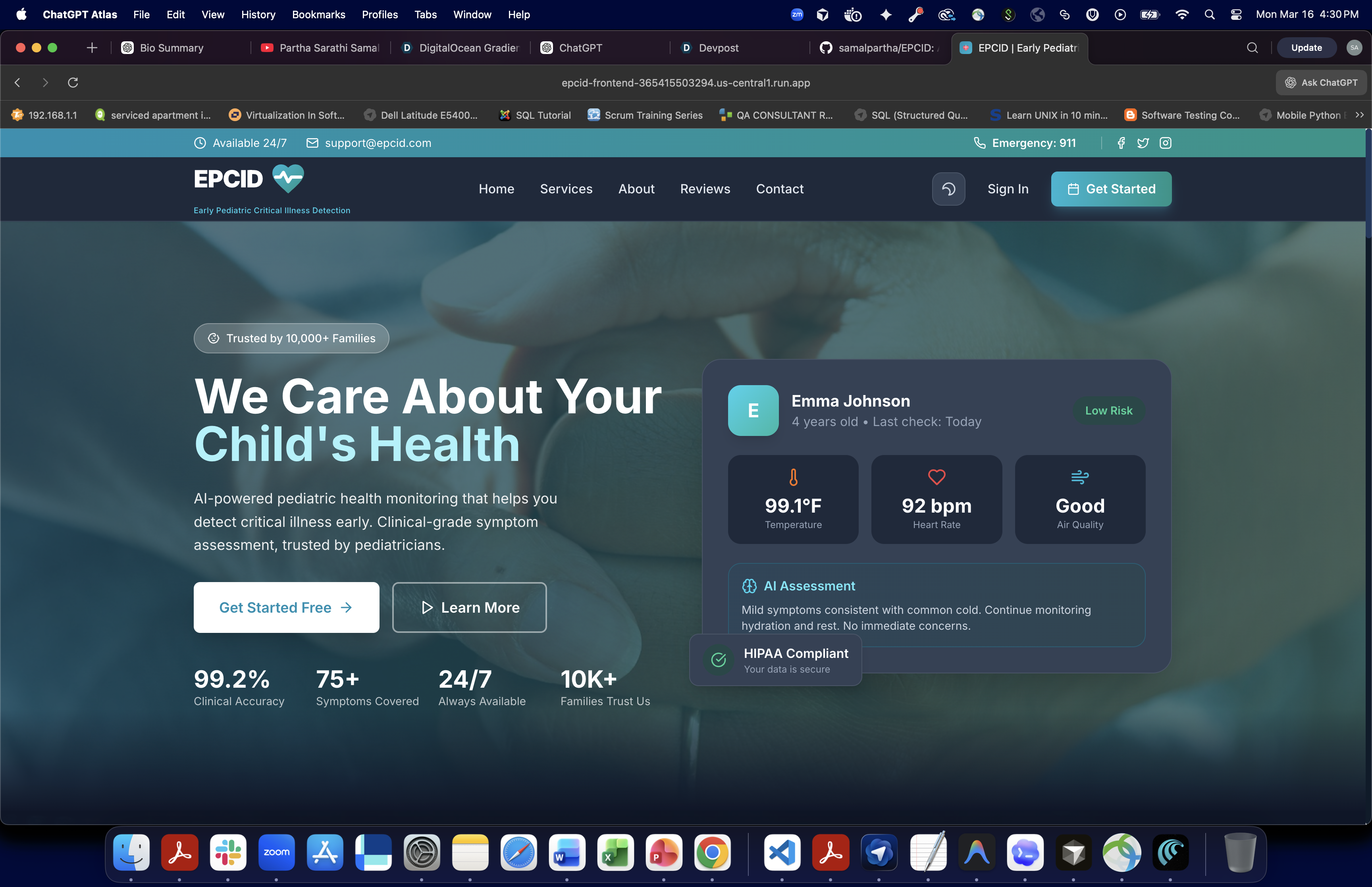
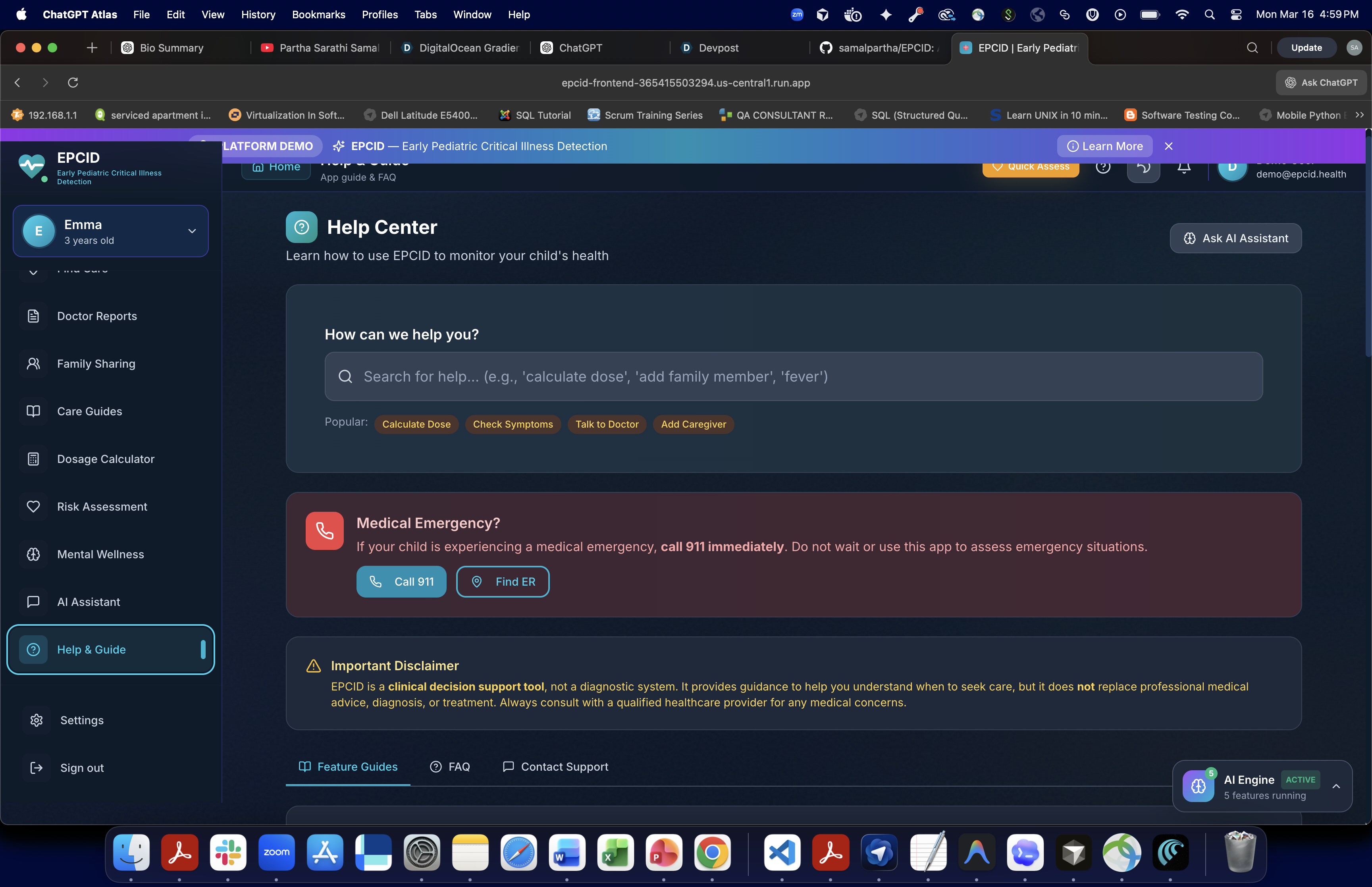
Home Screen
-
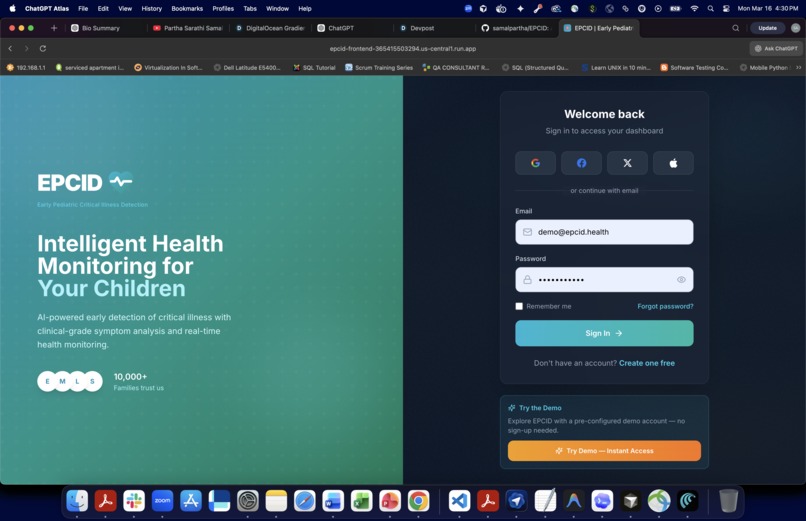
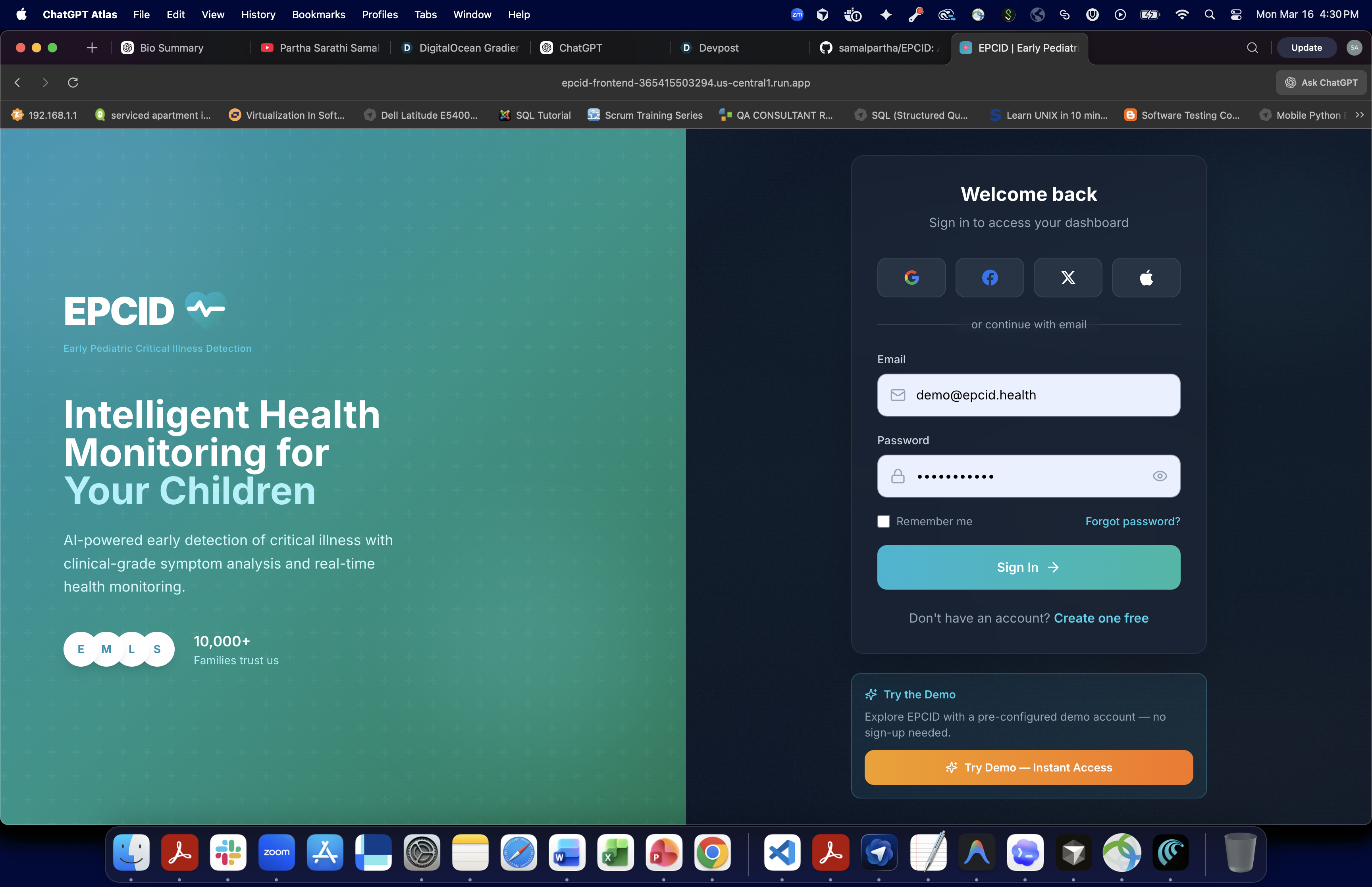
Login Screen
-
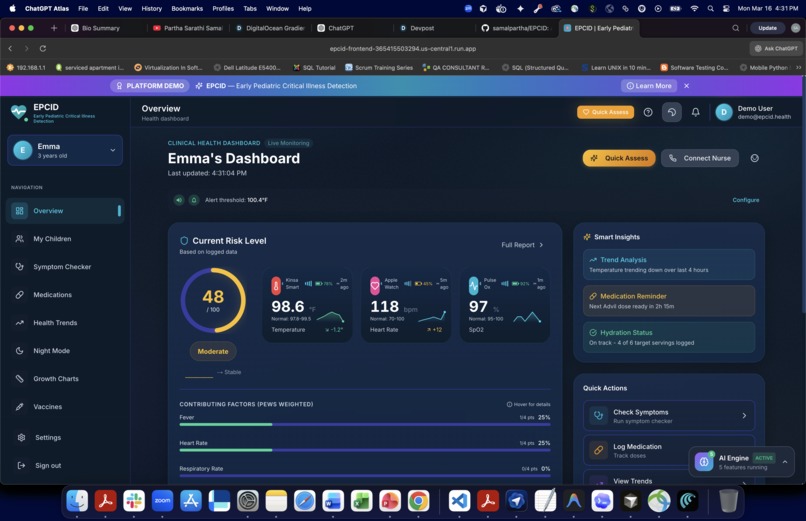
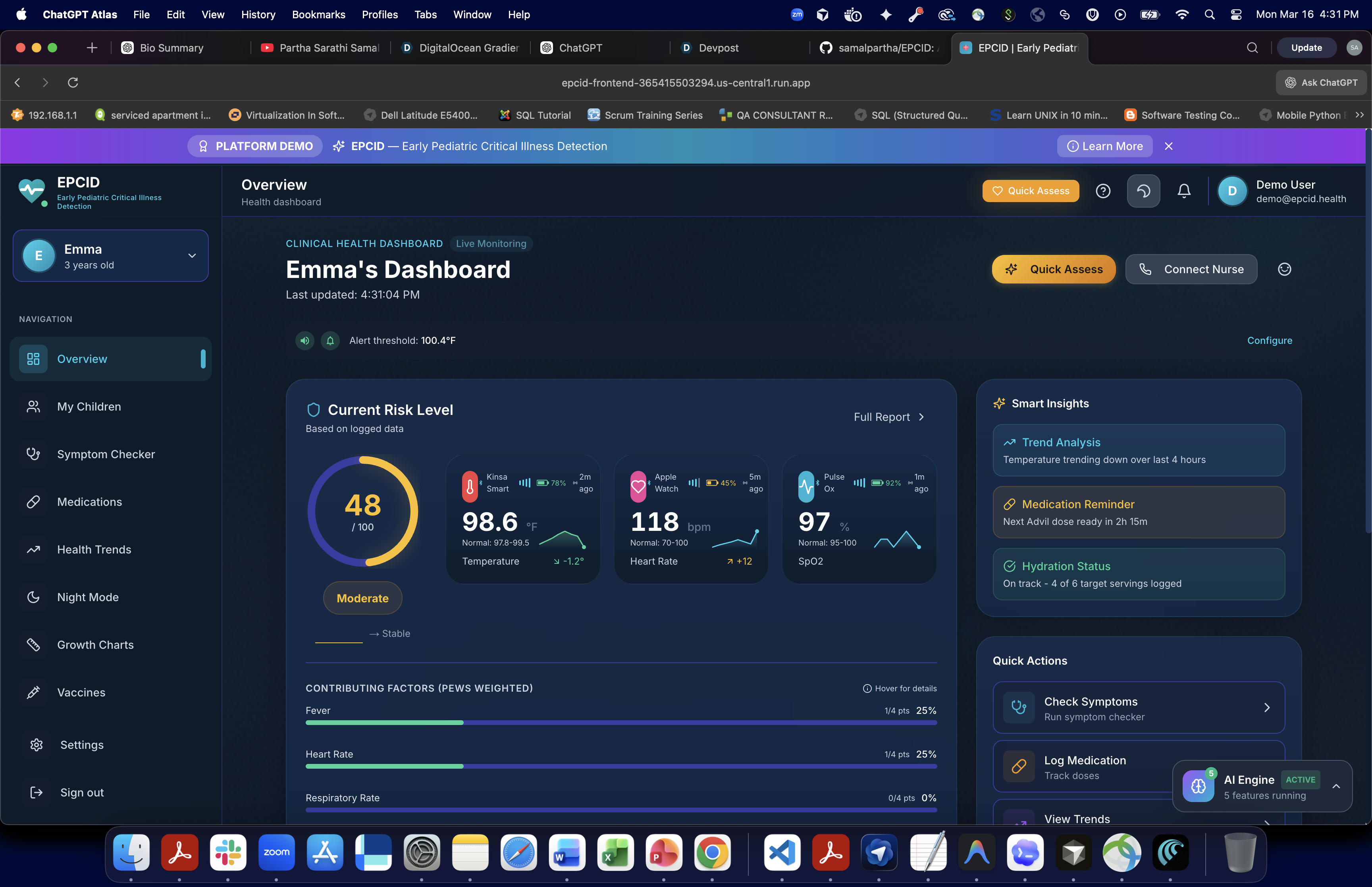
Dashboard
-
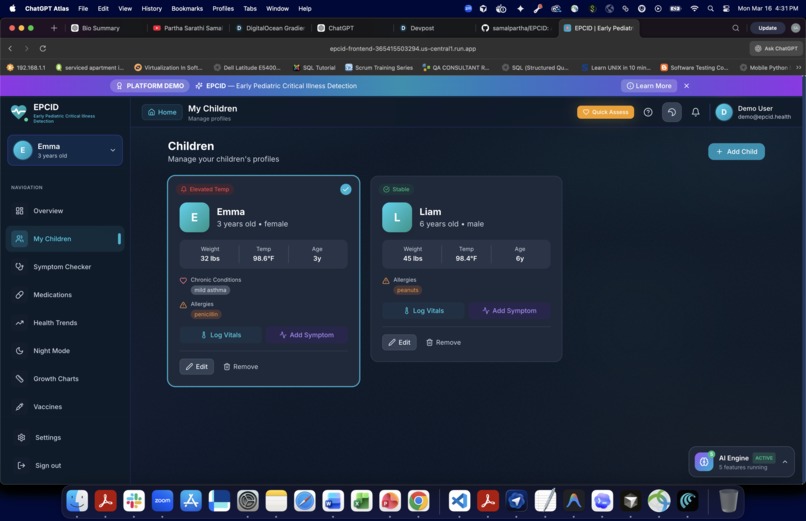
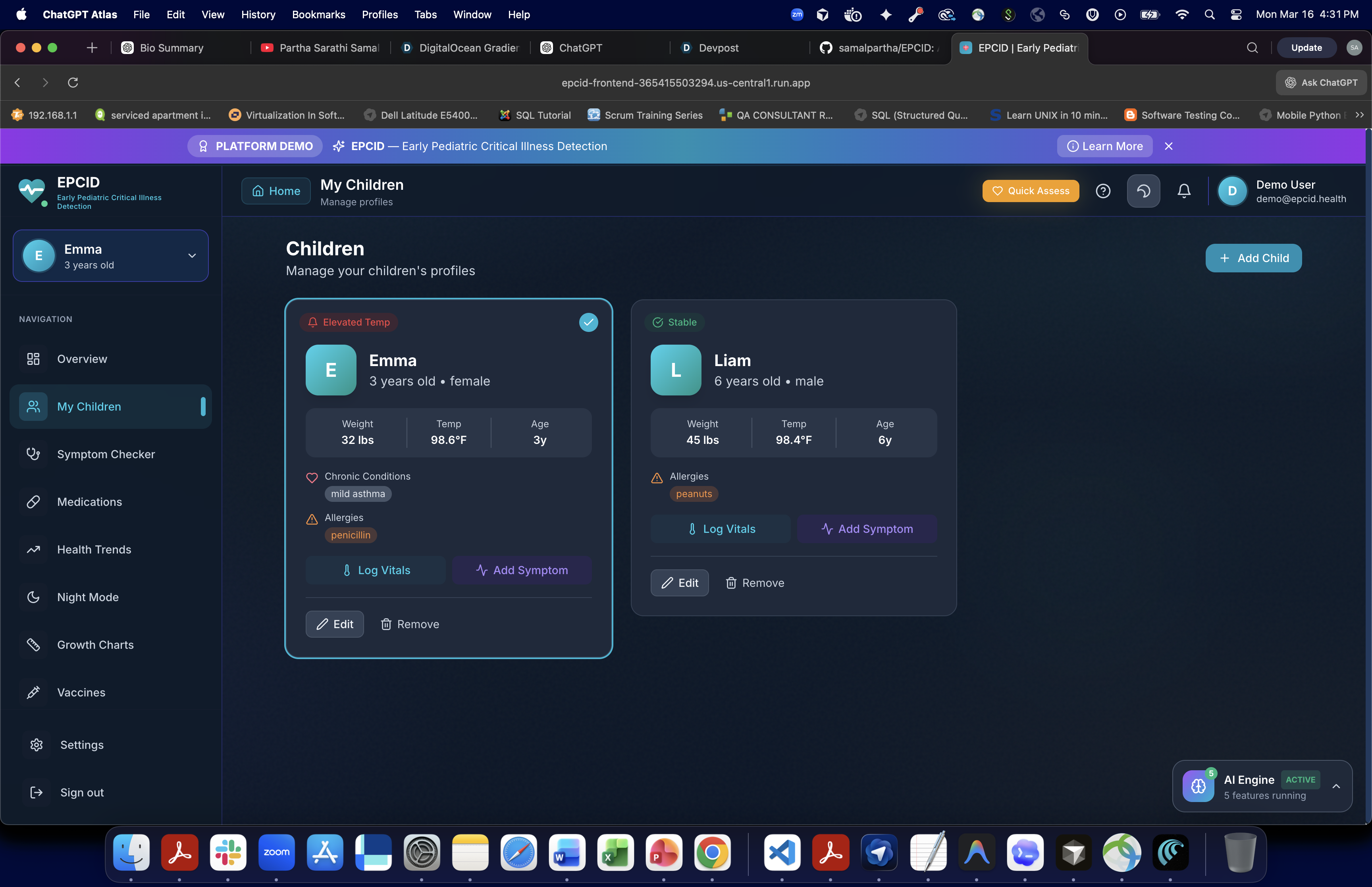
My Children
-
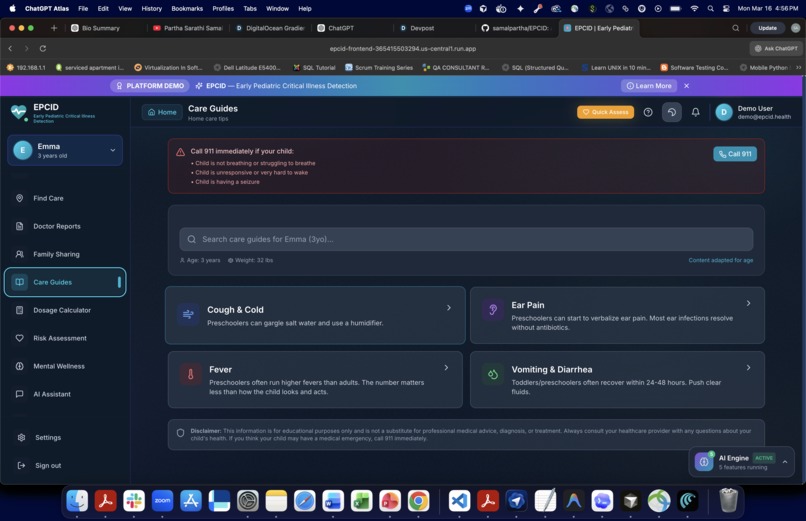
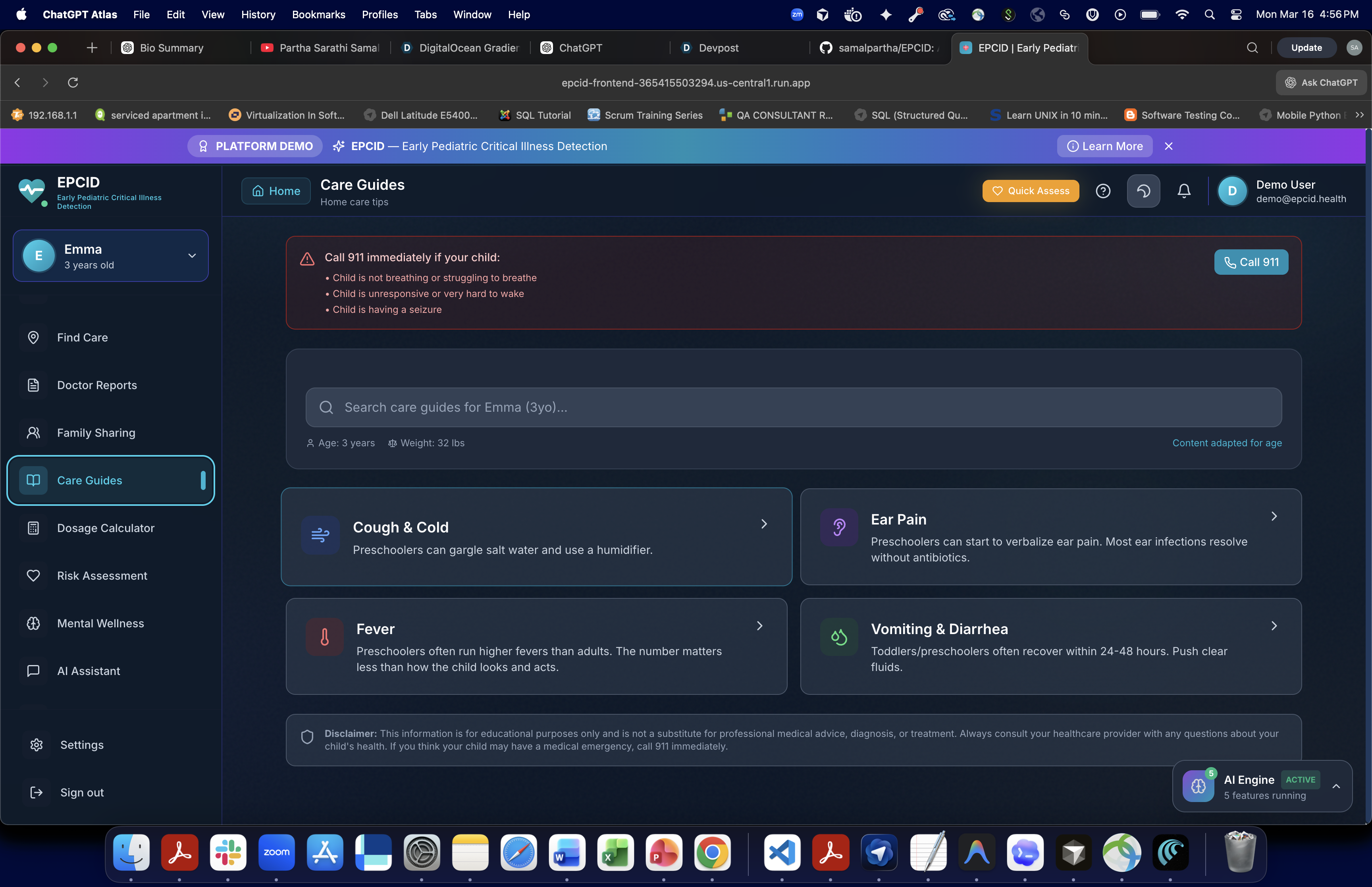
Care guide
-
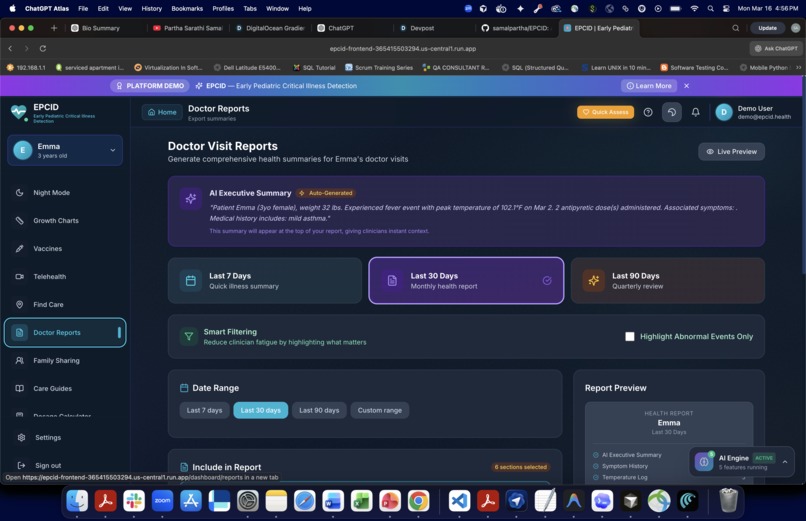
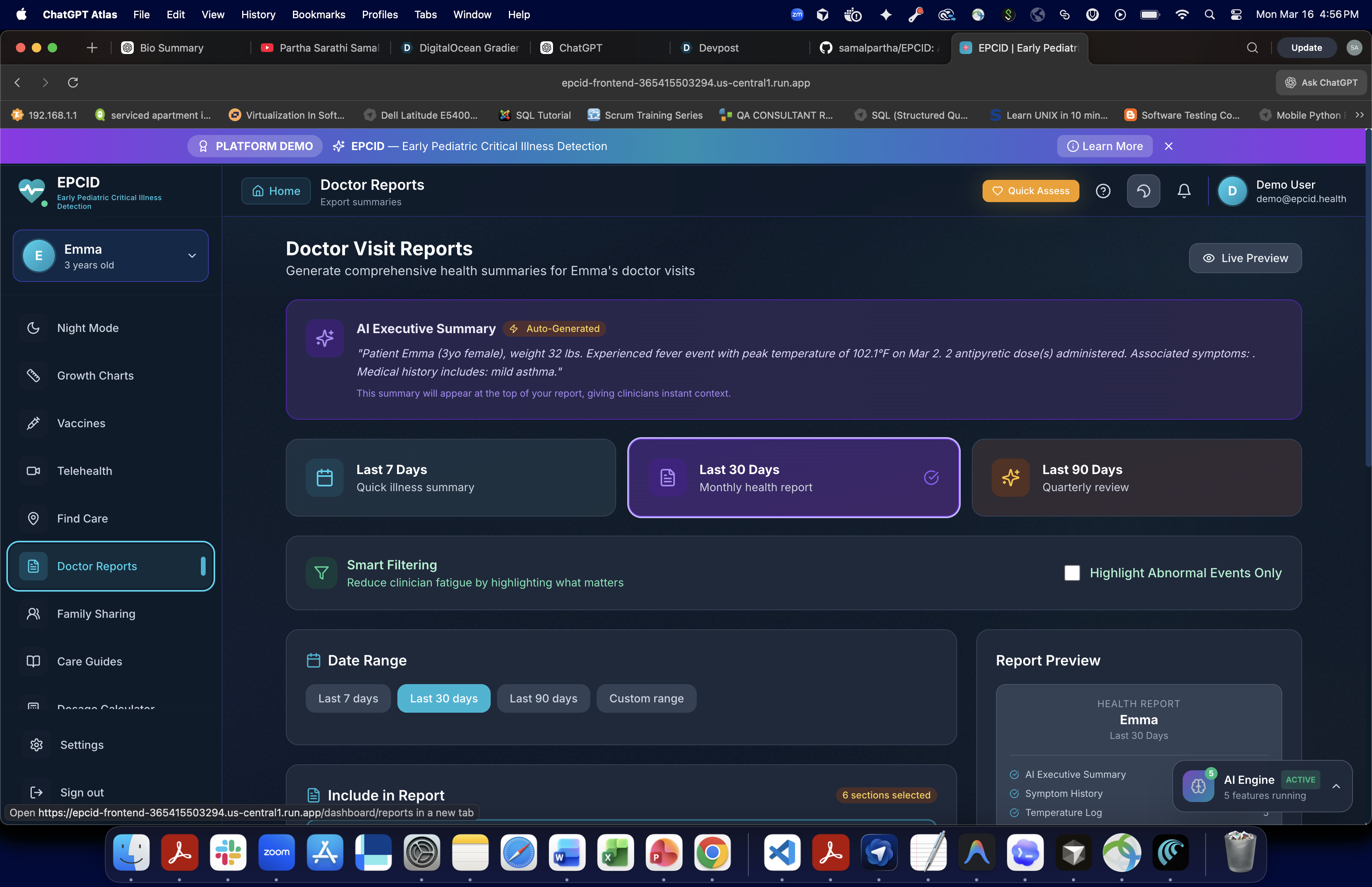
Doctor Reports
-
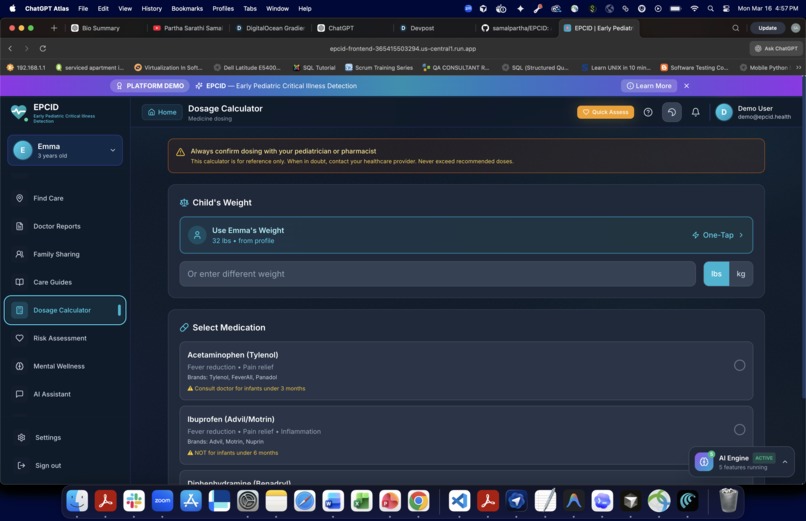
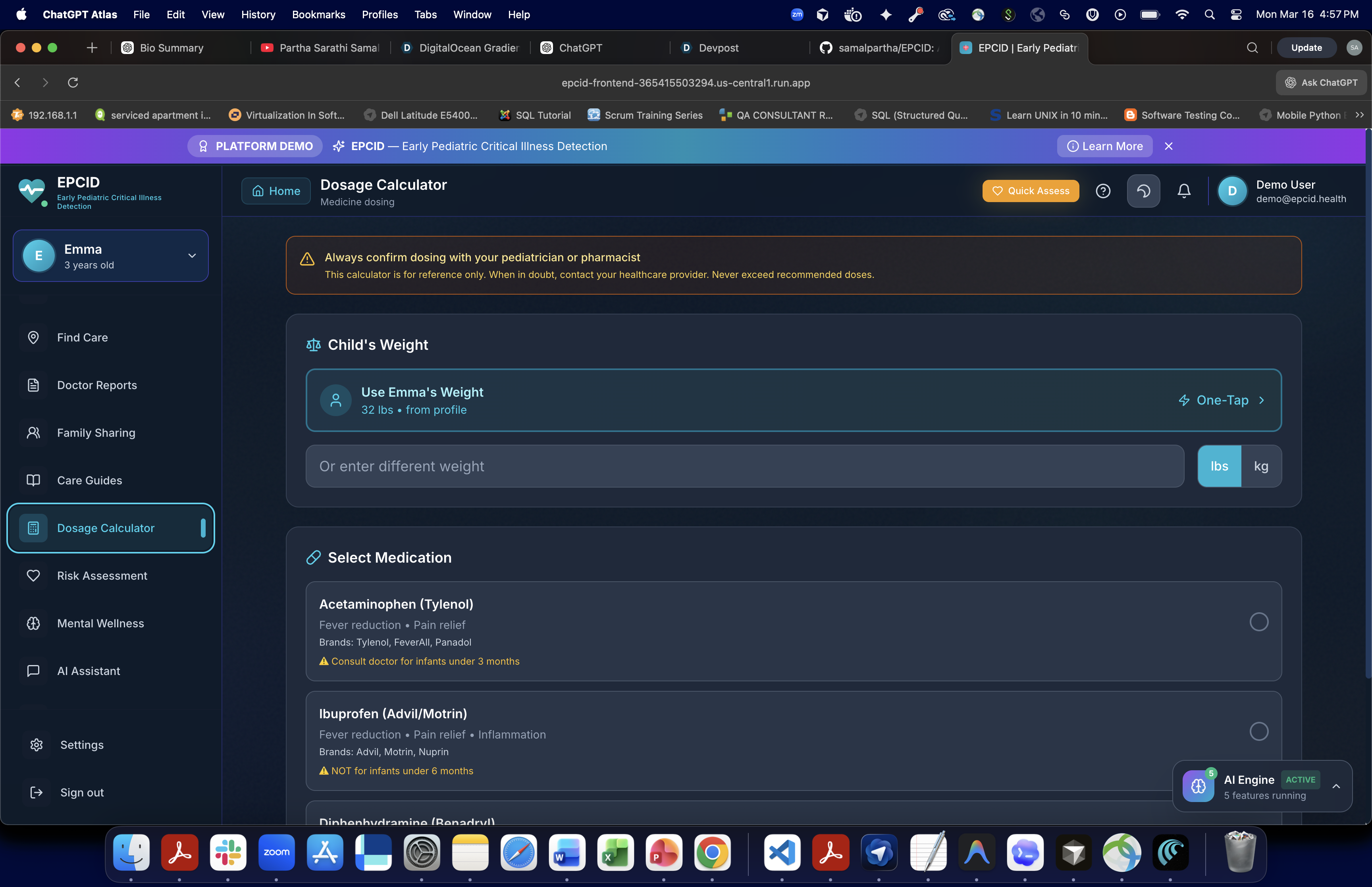
Dosage Calculator
-
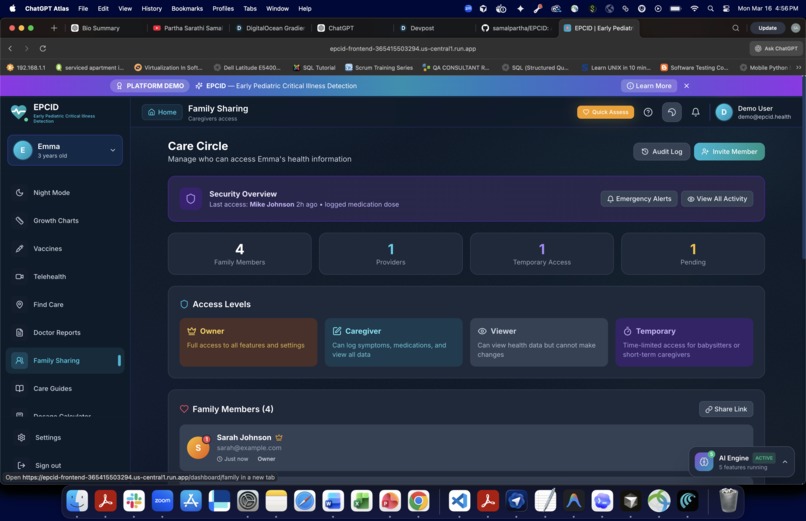
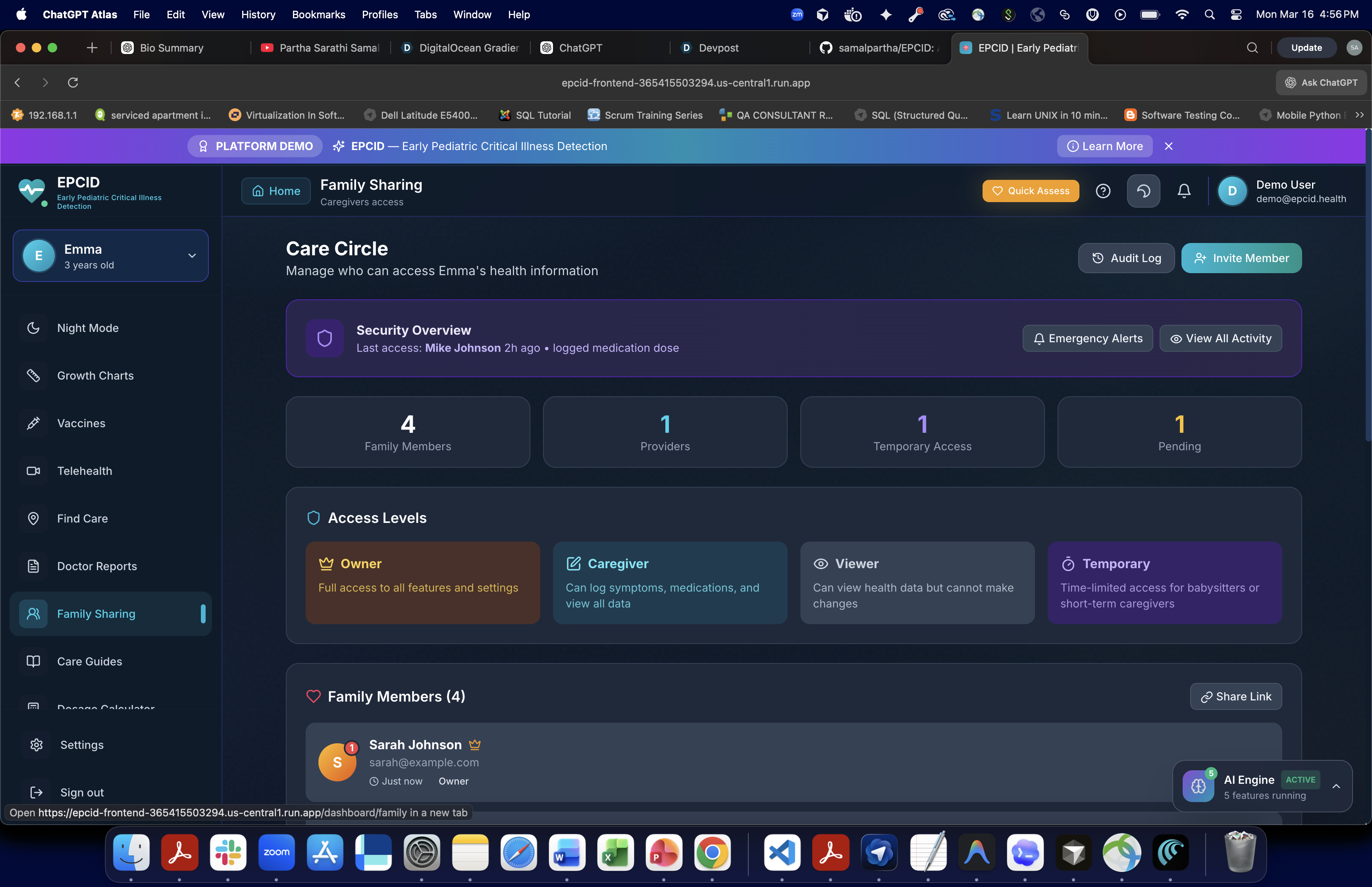
Family Sharing
-
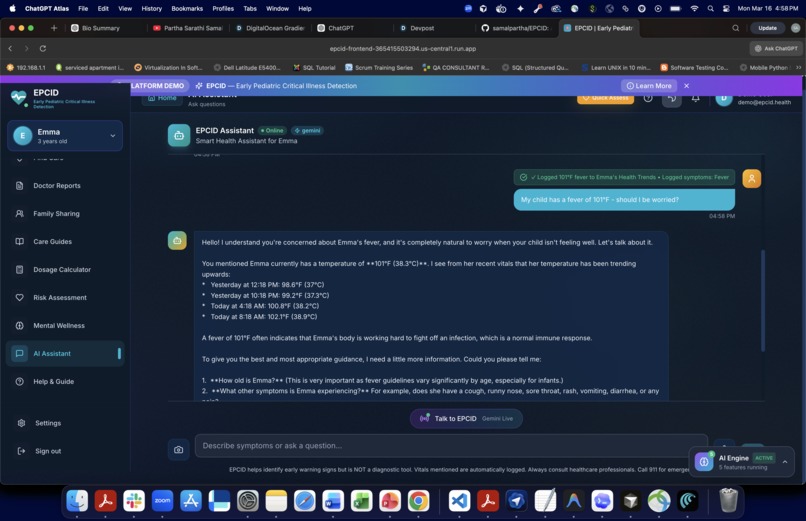
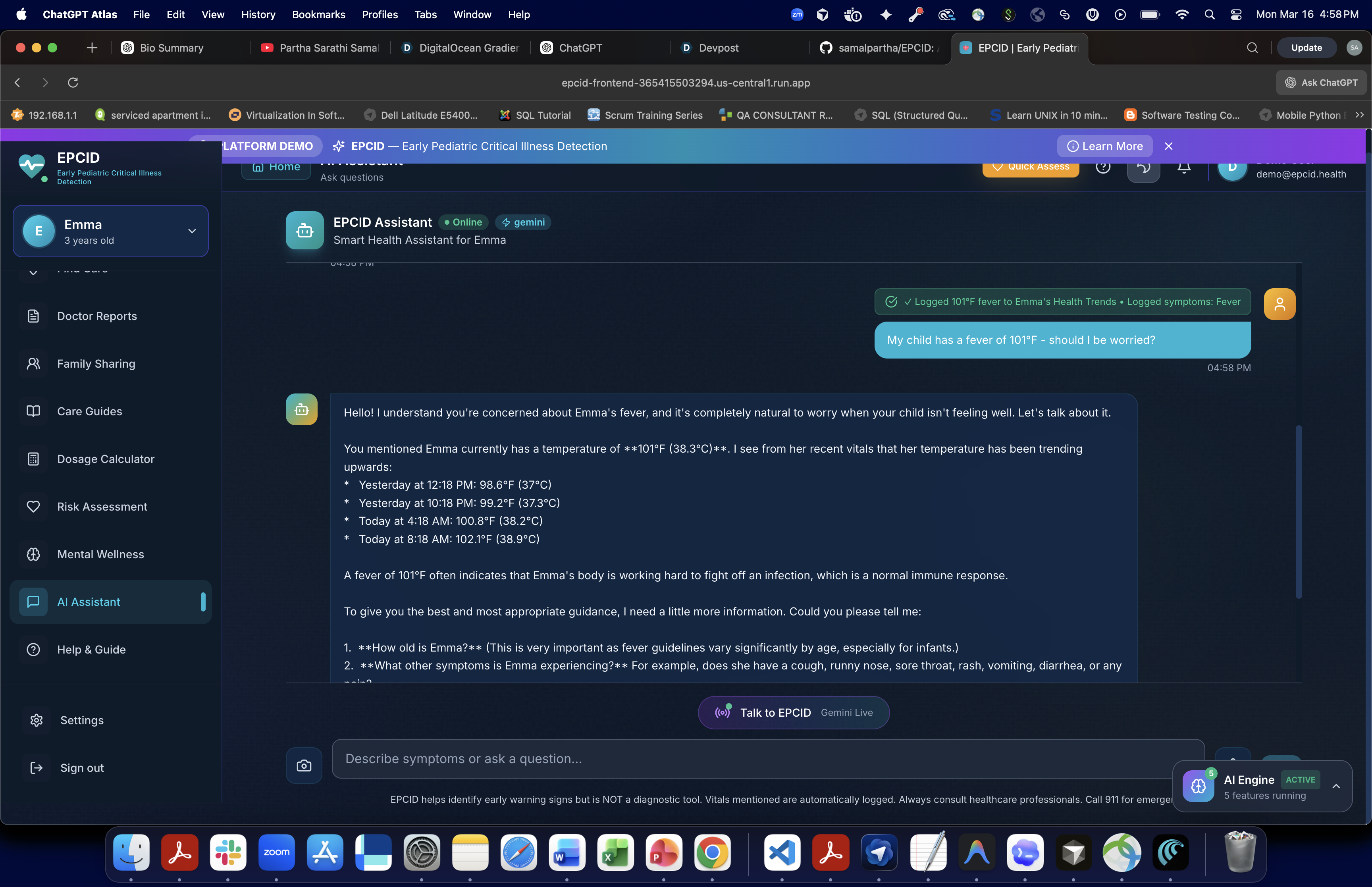
AI Assistant
-
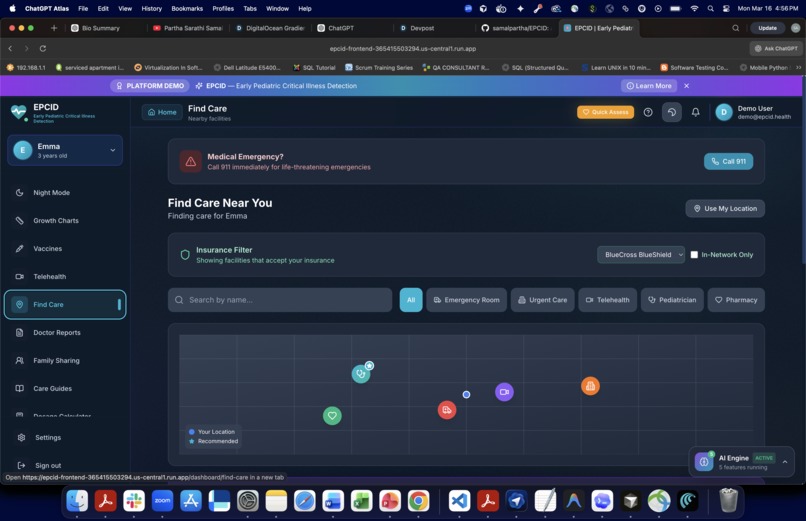
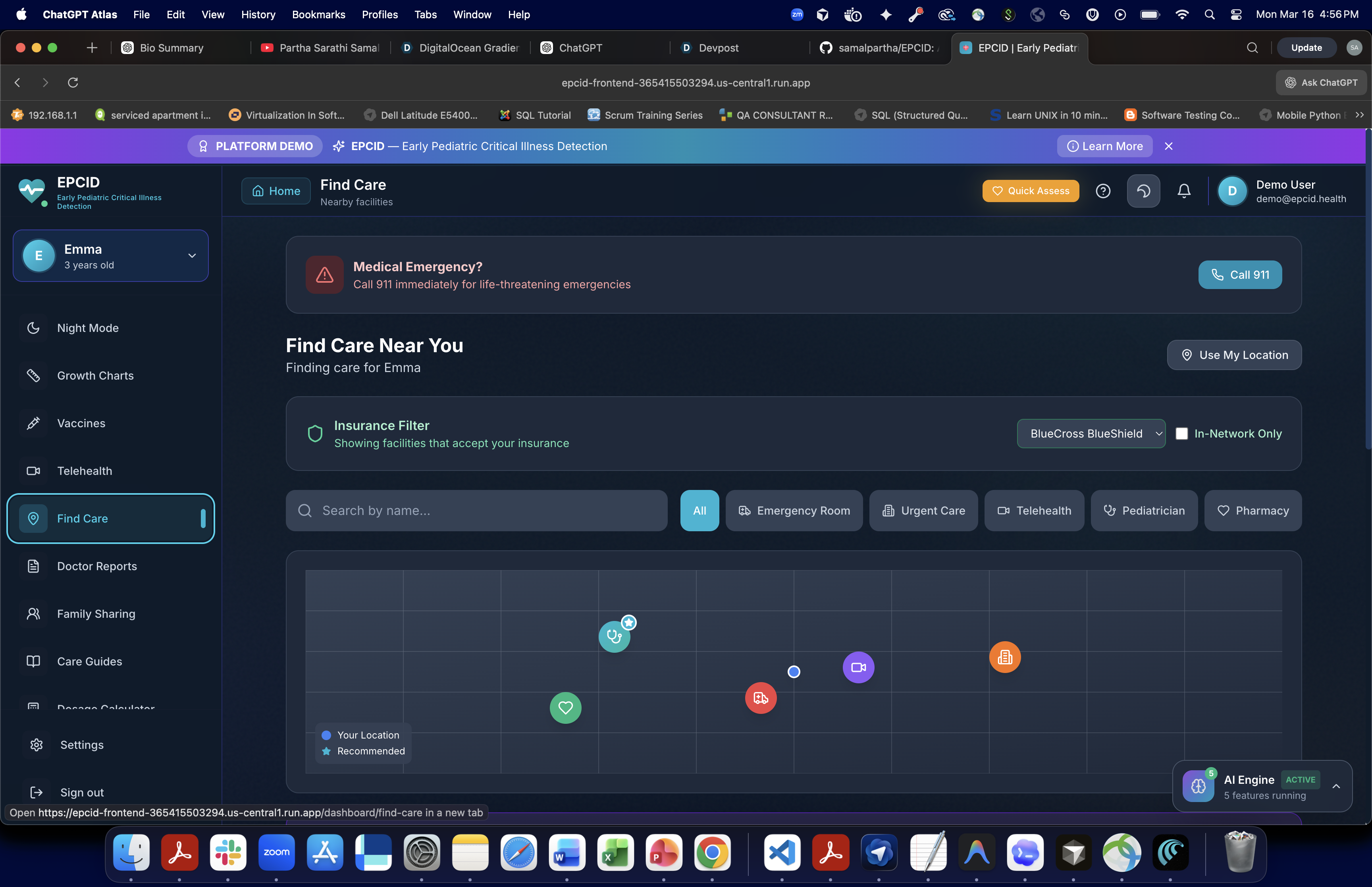
Find Care
-
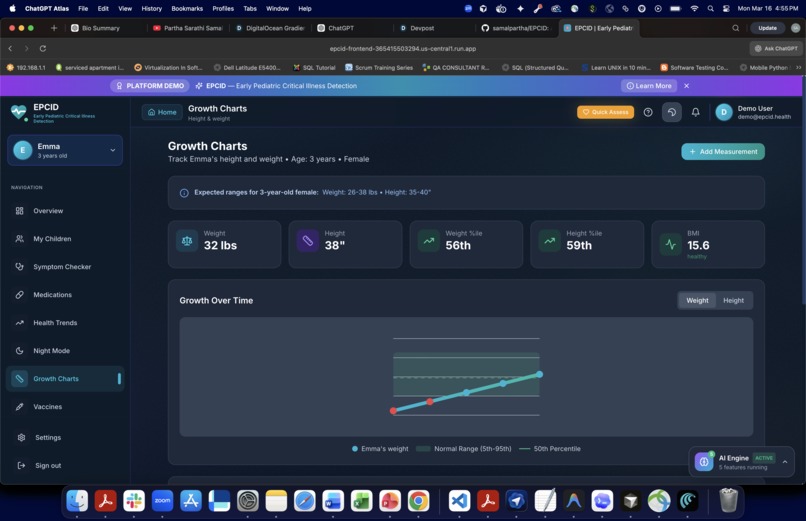
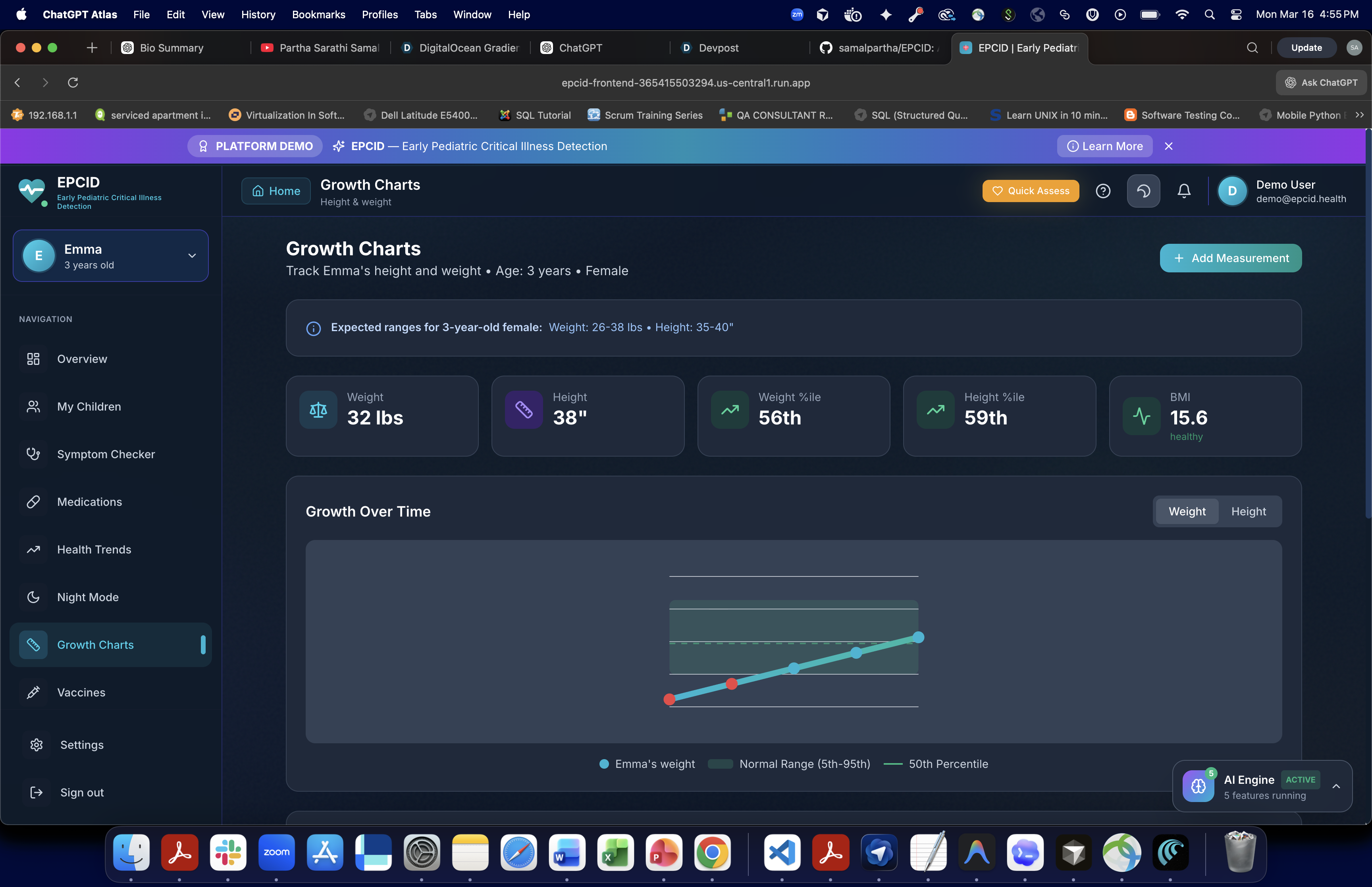
Growth Chart
-
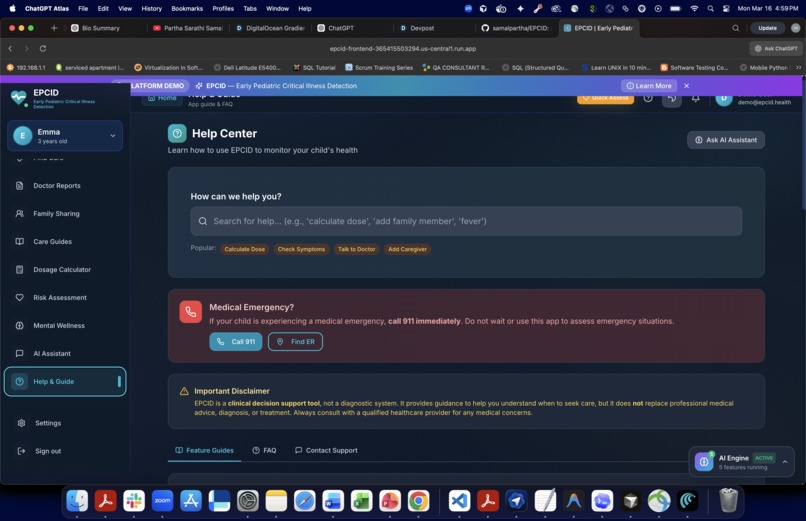
Health and Guide
-
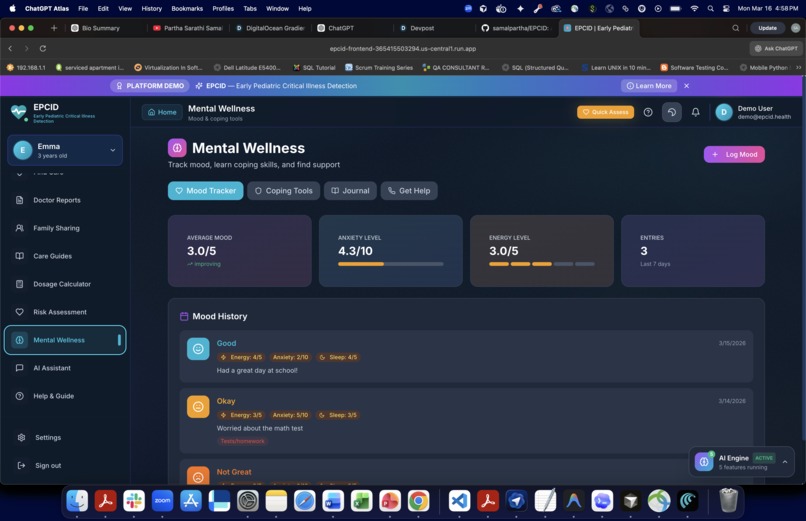
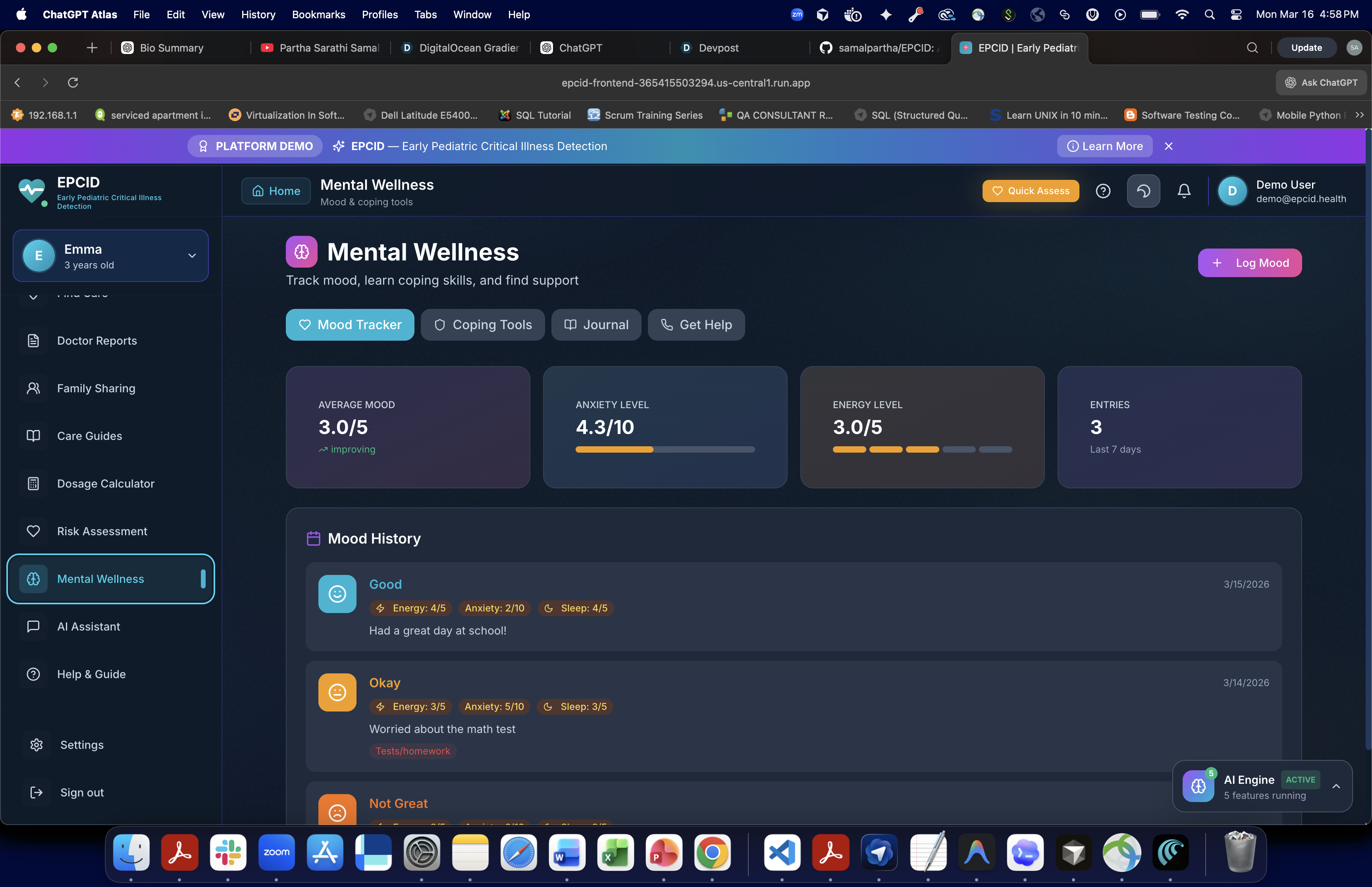
Mental Wellness
-
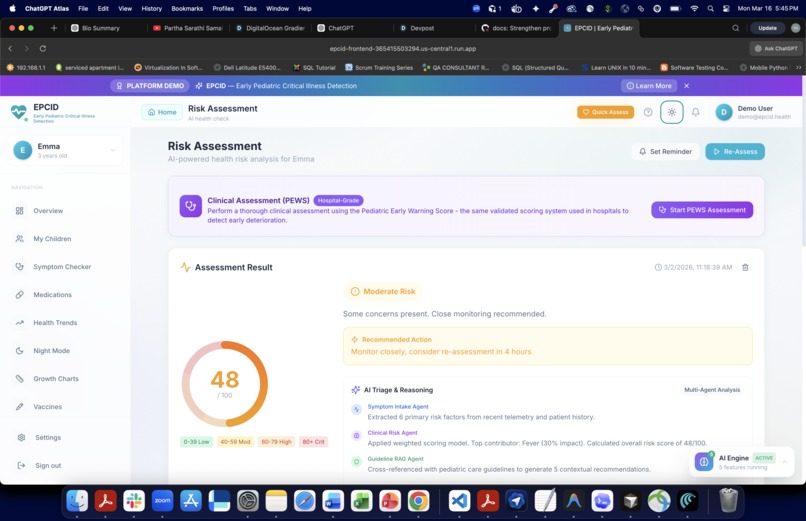
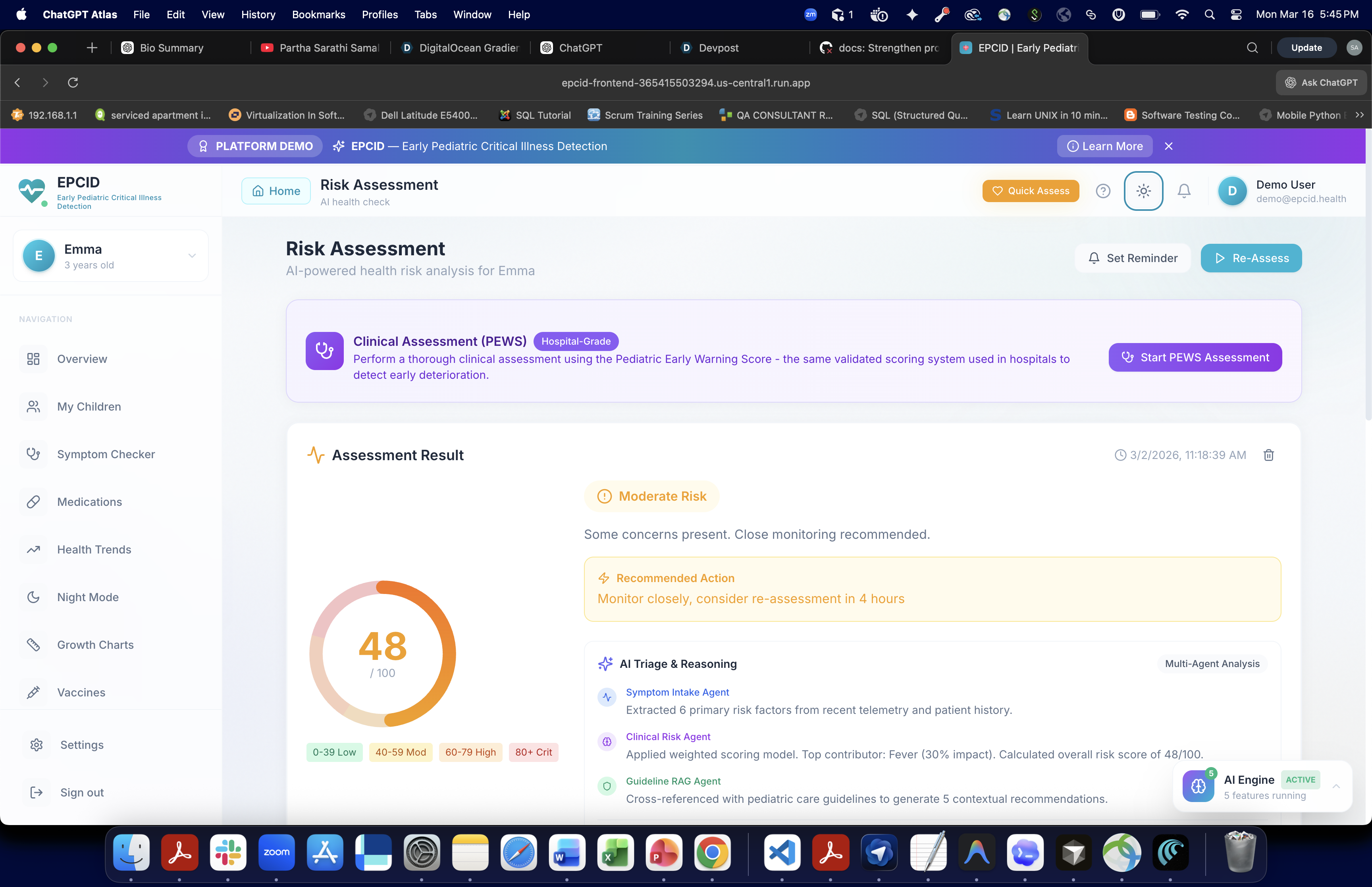
Light Mode
-
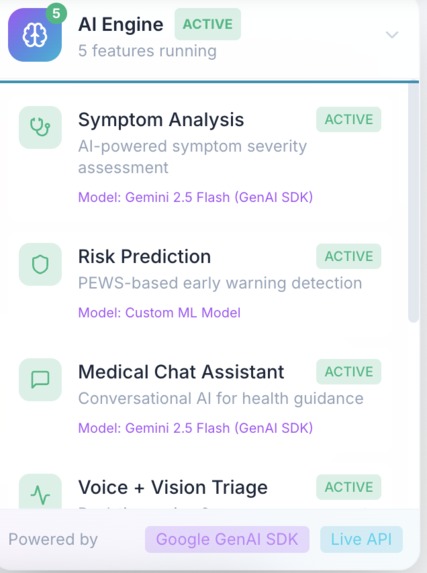
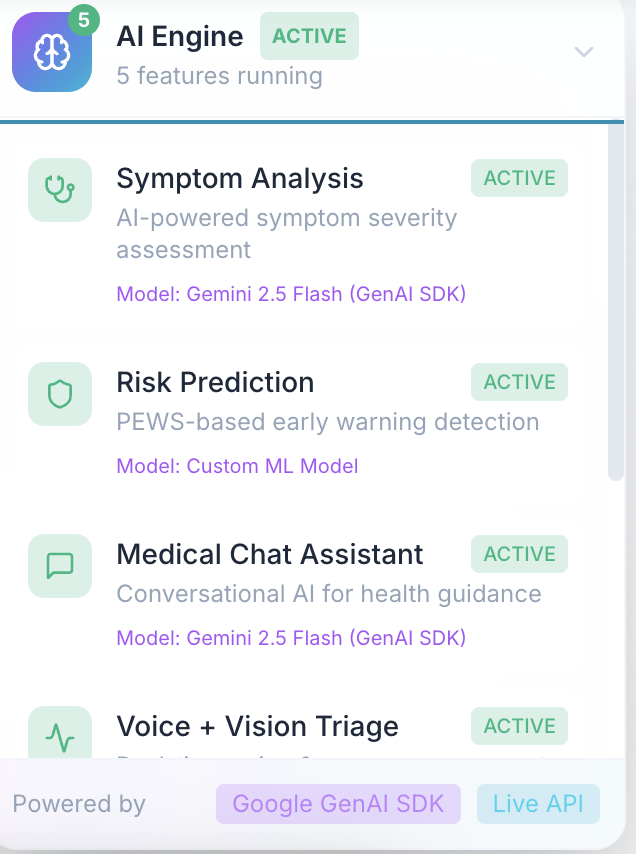
AI Engine
-
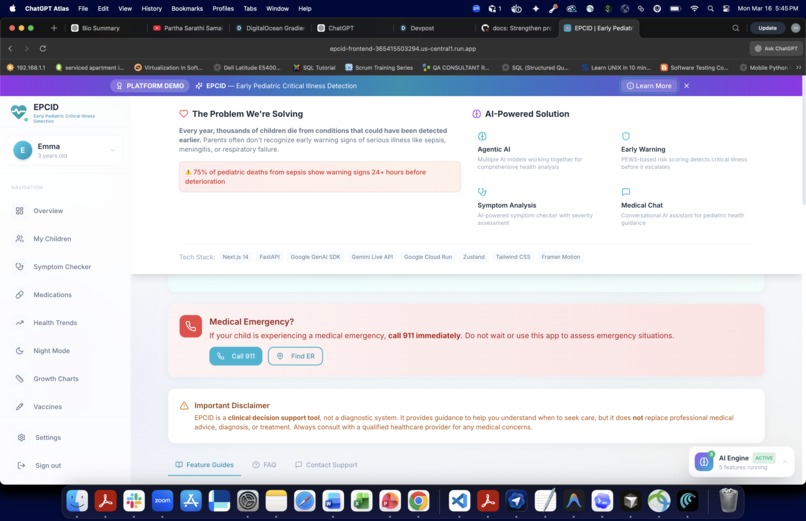
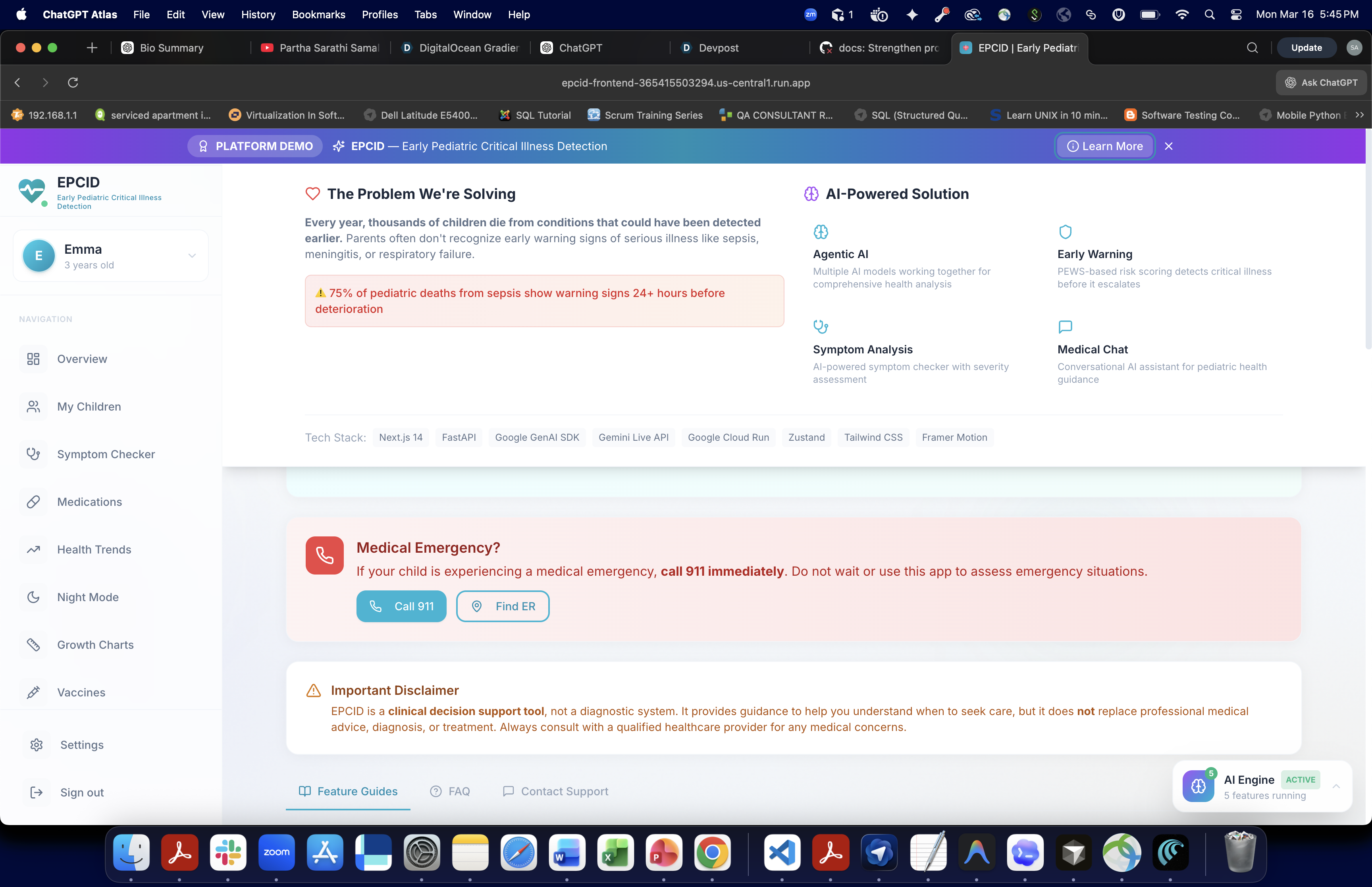
Learn More
-
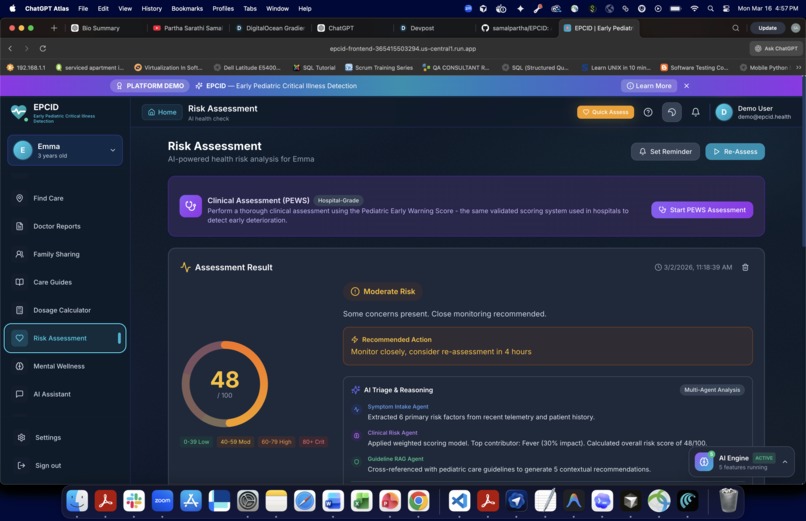
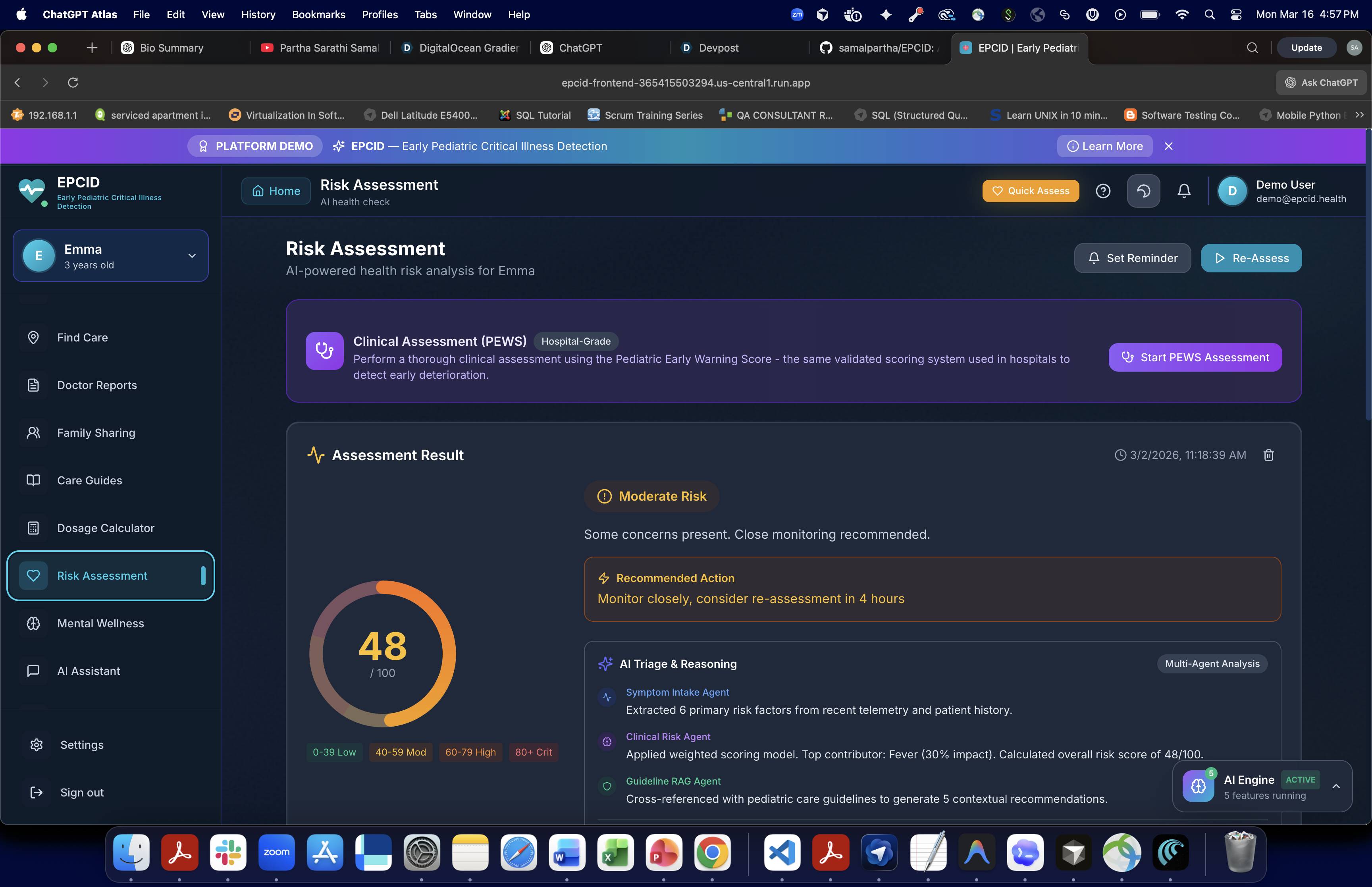
PEWS Assessment
Inspiration
Parents often struggle to decide when a sick child needs urgent care. Pediatric illness can deteriorate quickly because children compensate until they suddenly crash. Warning signs often appear hours before a crisis but go unnoticed or misunderstood.
I built EPCID to act as a real-time pediatric triage assistant. The goal is simple: help parents recognize early warning signals and guide them toward the right care decision using evidence-based clinical logic and multimodal AI.
What it does
EPCID is a real-time pediatric illness detection and triage platform powered by multimodal AI.
Parents describe symptoms through voice or text, enter vital signs, and show visible symptoms through the camera. The system analyzes the information and produces structured clinical guidance.
The platform provides:
- Risk classification from Low → Moderate → High → Critical
- Age-aware interpretation of pediatric vital signs
- Possible clinical causes based on symptom patterns
- Safe care guidance and monitoring instructions
- Clear escalation advice such as home monitoring, pediatric consultation, urgent care, or emergency services
The system combines conversational interaction with structured clinical scoring so parents receive understandable guidance backed by clinical reasoning.
How I built it
EPCID uses a cloud-native architecture designed for real-time medical triage.
Backend
- FastAPI microservices deployed on Google Cloud Run
- OAuth2 authentication and secure API endpoints
- AI orchestration layer with clinical scoring modules
- Structured logging and observability
Frontend
- Next.js progressive web application
- Parent dashboard for symptoms and vital tracking
- Real-time triage results and quick action recommendations
AI
- Gemini 2.5 Flash via Vertex AI
- Structured JSON outputs for reliable clinical analysis
- Safety prompts and guardrails to enforce conservative medical advice
Data Layer
- Streaming ingestion of pediatric vitals:
- Temperature
- Heart rate
- Respiratory rate
- Oxygen saturation
- Explainable symptom knowledge base
Challenges I ran into
- Maintaining low latency when calling cloud AI models
- Ensuring consistent structured JSON responses from the model
- Designing prompts that keep medical advice safe and conservative
- Balancing explainability with real-time responsiveness
Accomplishments
- Built a fully deployed end-to-end prototype
- Delivered real-time pediatric risk scoring
- Implemented structured clinical reasoning outputs
- Designed a cloud-native architecture ready for wearable integrations
- Created a live demo dashboard running on Google Cloud
What I learned
Healthcare AI requires a safety-first engineering mindset.
Models must produce grounded outputs. Systems must log every decision and allow human review. Conservative escalation rules protect users when uncertainty exists.
Reliable medical AI depends on transparency, guardrails, and explainable reasoning.
Risk scoring formula
EPCID computes a weighted clinical risk score using multiple physiological indicators such as fever, heart rate, respiratory rate, and oxygen saturation.
[ Risk = \sum_{i=1}^{n} w_i \cdot s_i ]
Where:
- ( w_i ) = clinical weight for each indicator
- ( s_i ) = normalized severity score for that indicator
Example weighted scoring:
[ Risk = 0.35\,F + 0.25\,HR + 0.20\,RR + 0.20\,SpO_2 ]
Where:
- (F) = fever severity
- (HR) = heart rate deviation
- (RR) = respiratory rate deviation
- (SpO_2) = oxygen saturation abnormality
What's next for EPCID
- Integrate wearable devices for continuous vital monitoring
- Add clinician review and telehealth escalation
- Expand multilingual support
- Improve alerts using geolocation and care availability
- Conduct clinical validation studies with pediatric specialists


Log in or sign up for Devpost to join the conversation.