-
-
Logo: Resona is a wellness interface that interprets the body not as isolated data, but as a relational rhythm shaped by environment.
-
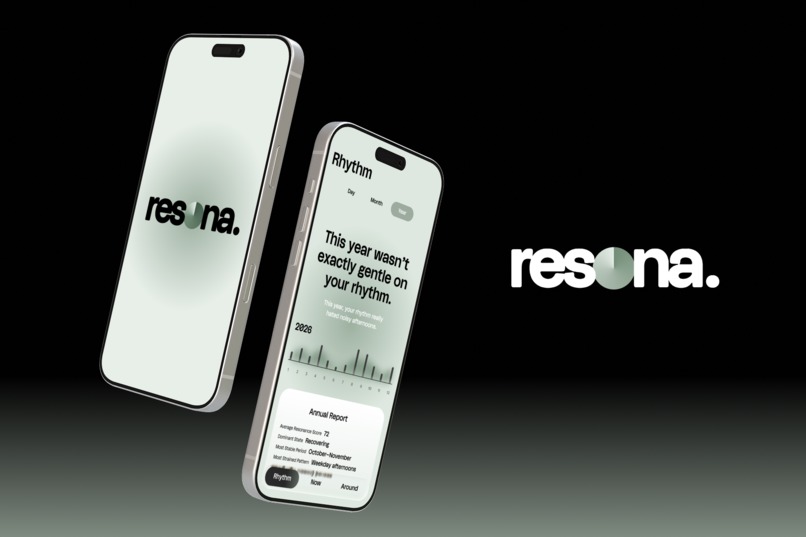
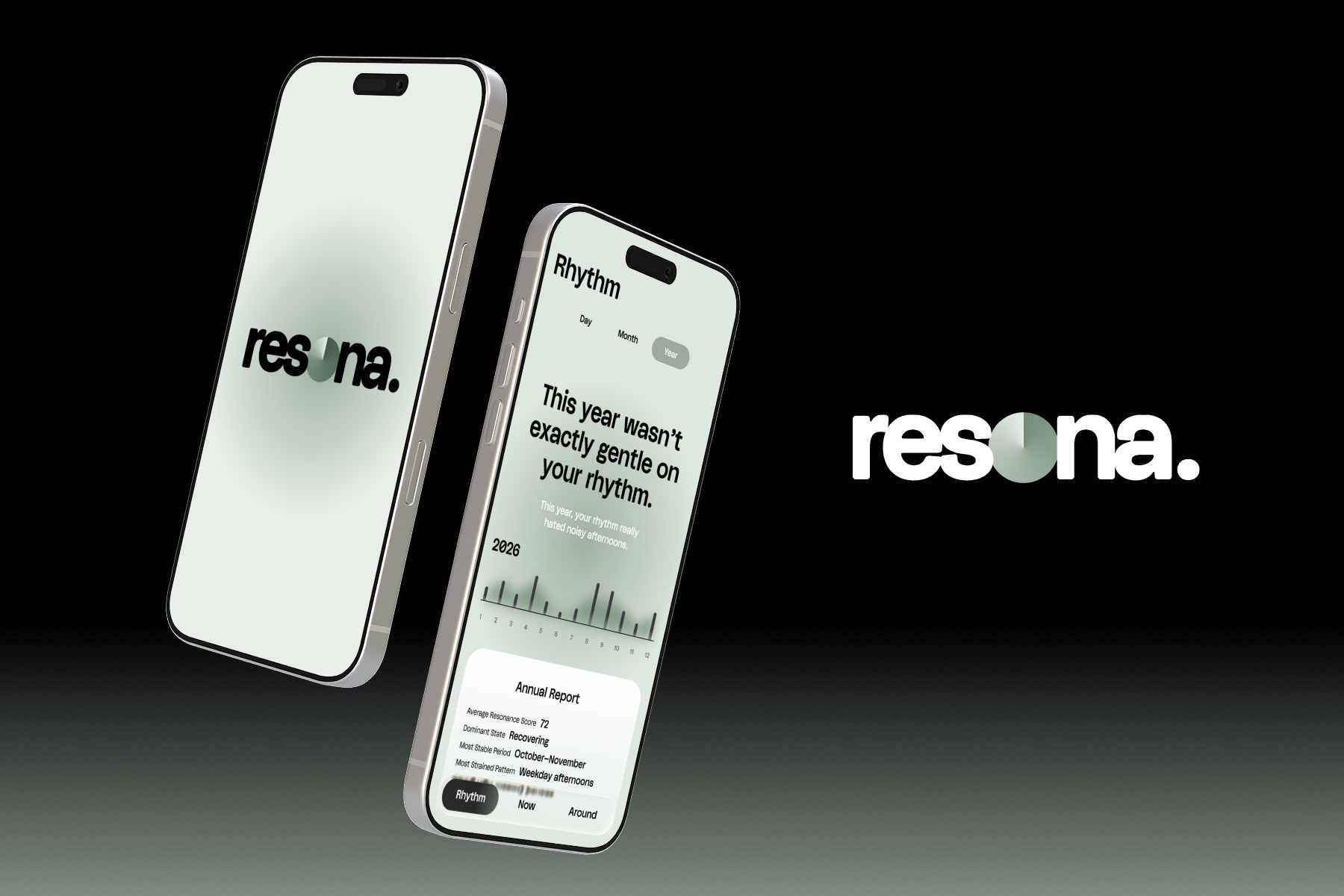
Hero Image: Resona combines sensory and physiological signals to visualize patterns of strain and recovery.
-
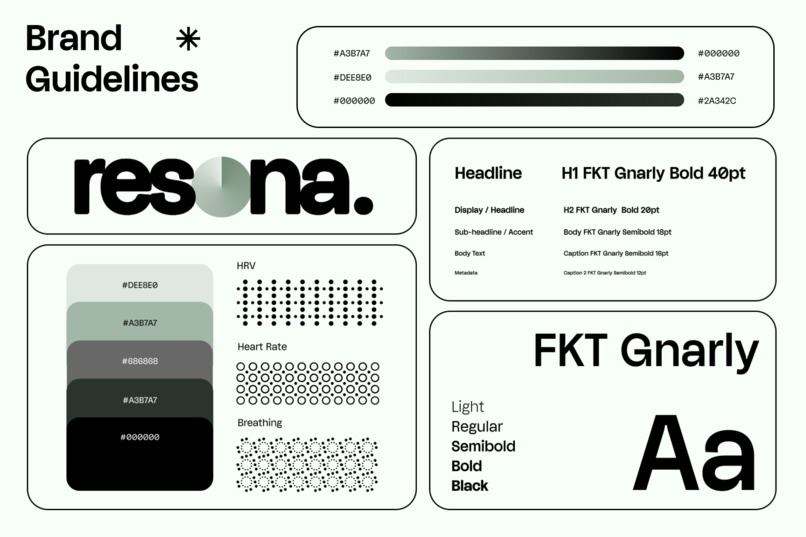
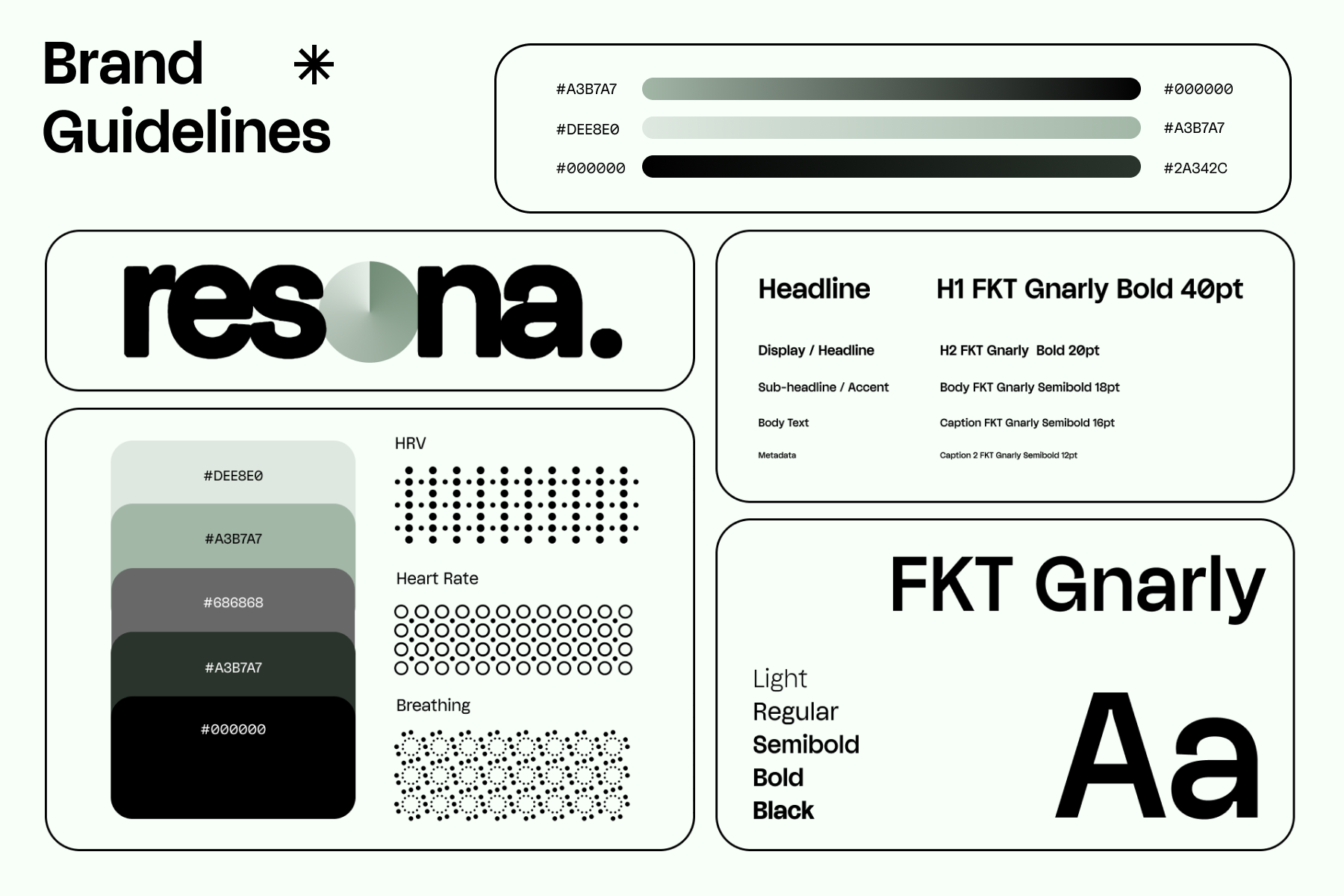
Brand guidelines: Unify color, type, gradients, and biometric patterns into a calm visual language of resonance and balance.
-
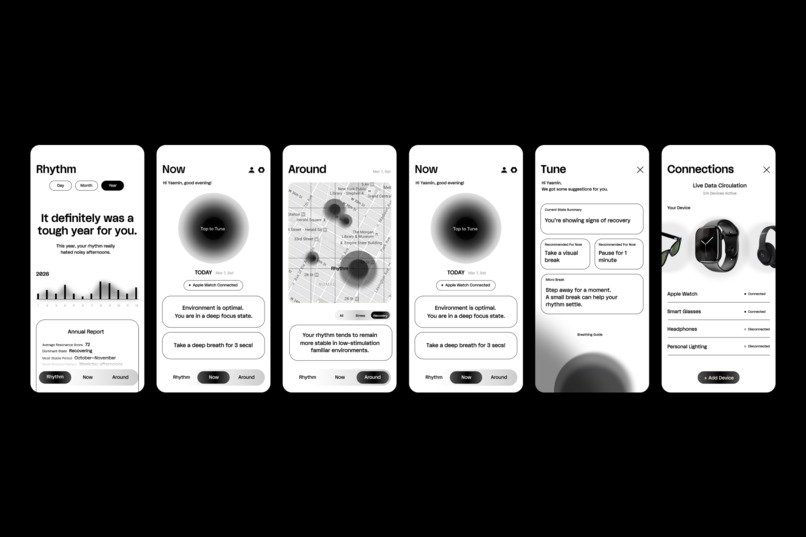
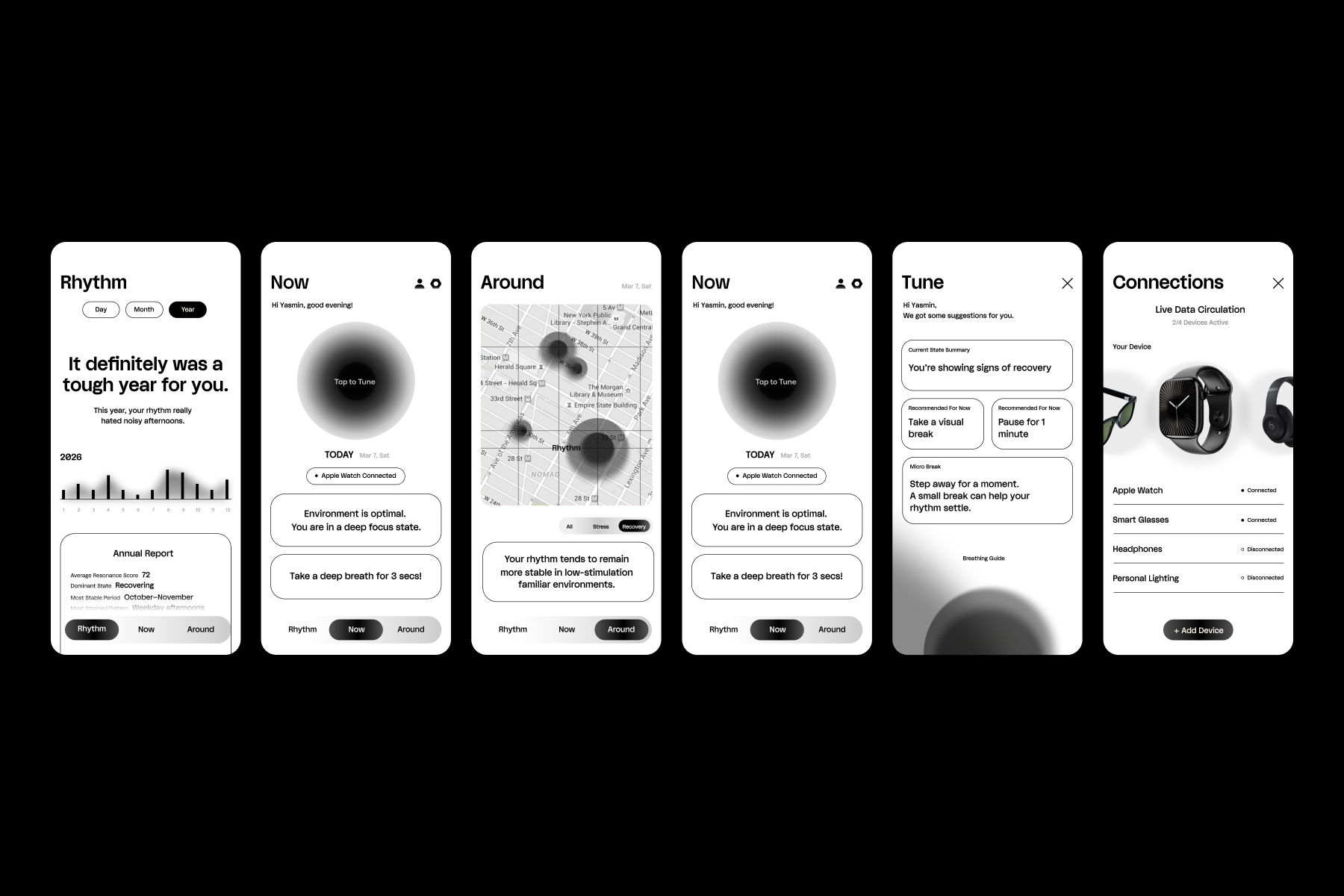
Full Screen Overview: UX connects Now, Rhythm, Around, Tune, and Connections into one system of awareness, pattern reading, and regulation.
-
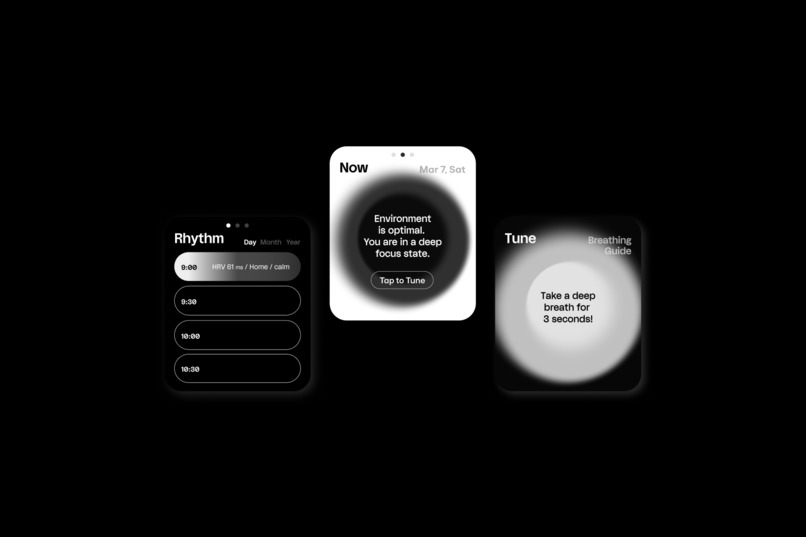
Main Navigation Structure: Centered on Now, Resona links Rhythm for time-based patterns, Around for context, and Tune for regulation.
-
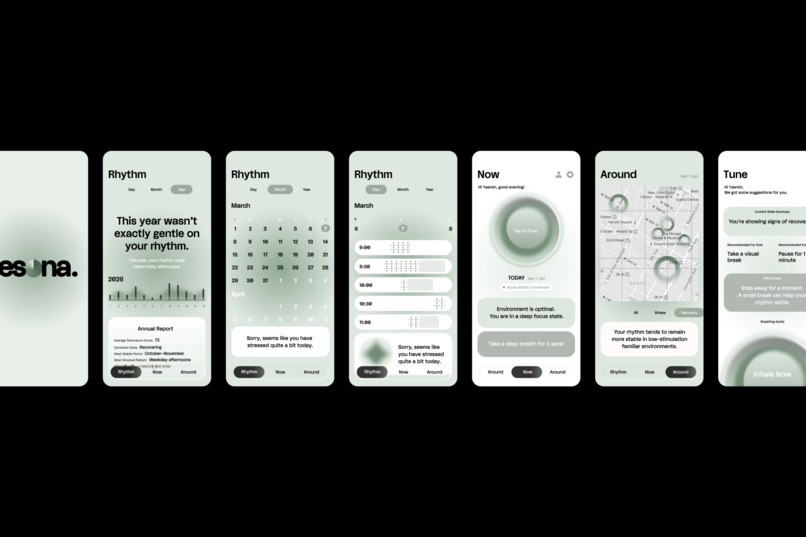
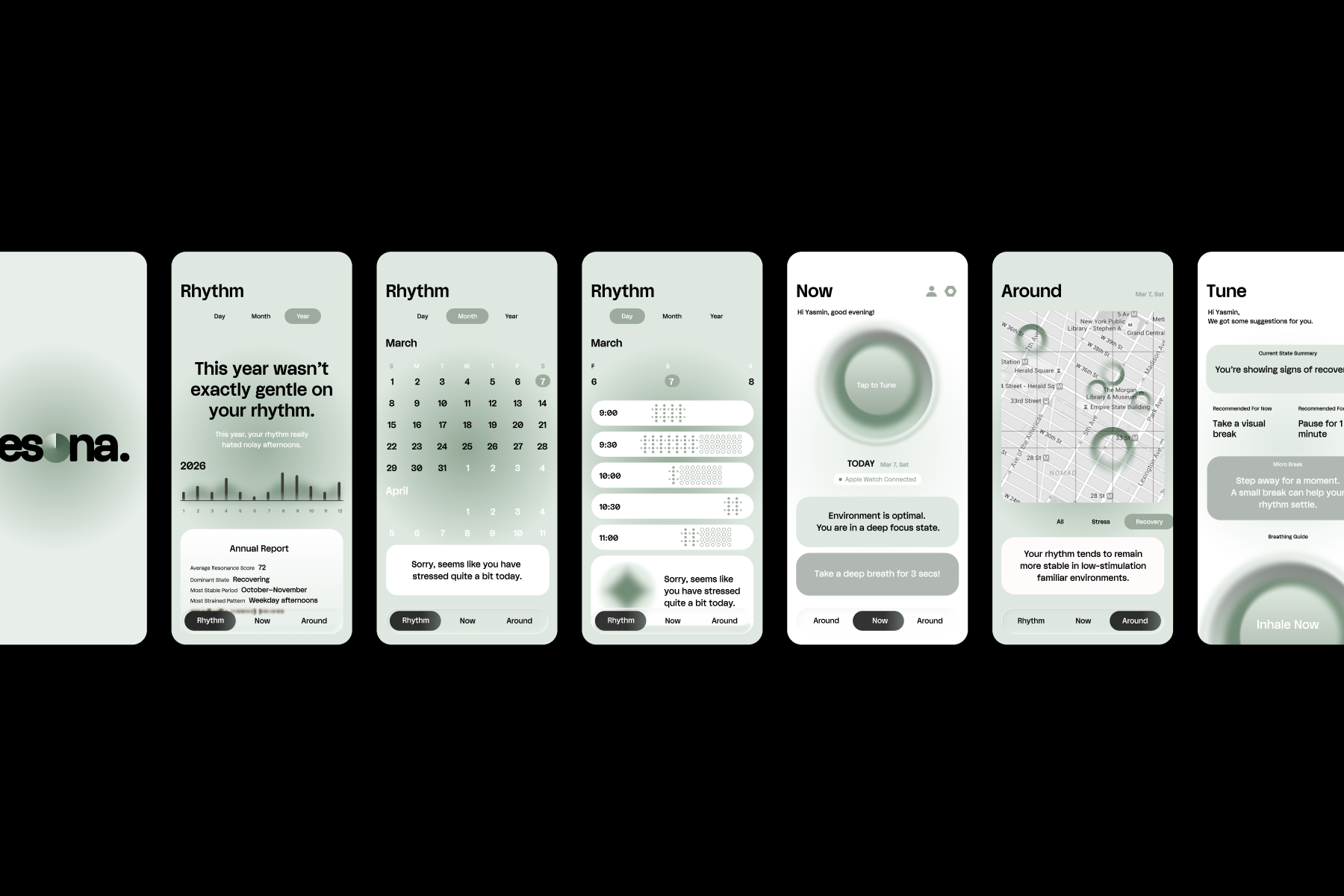
App Screen Overview: Resona’s core screens connect current state, rhythm, environmental context, and tuning into a continuous wellness flow.
-
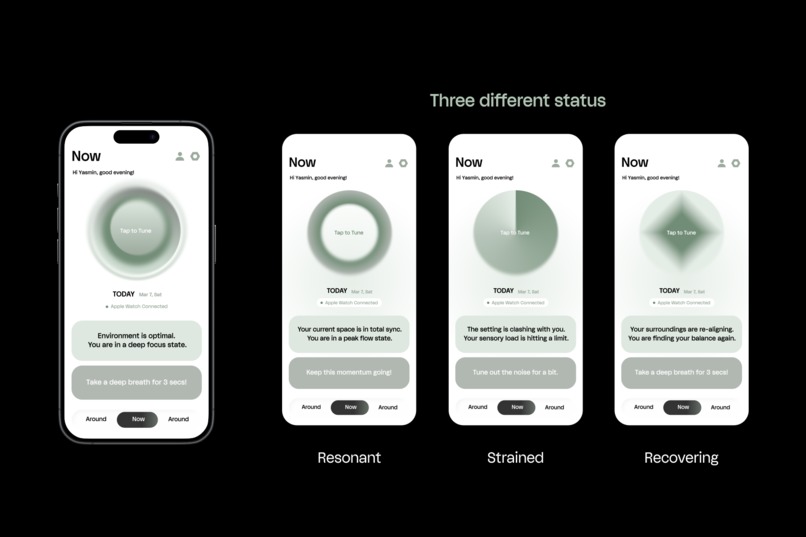
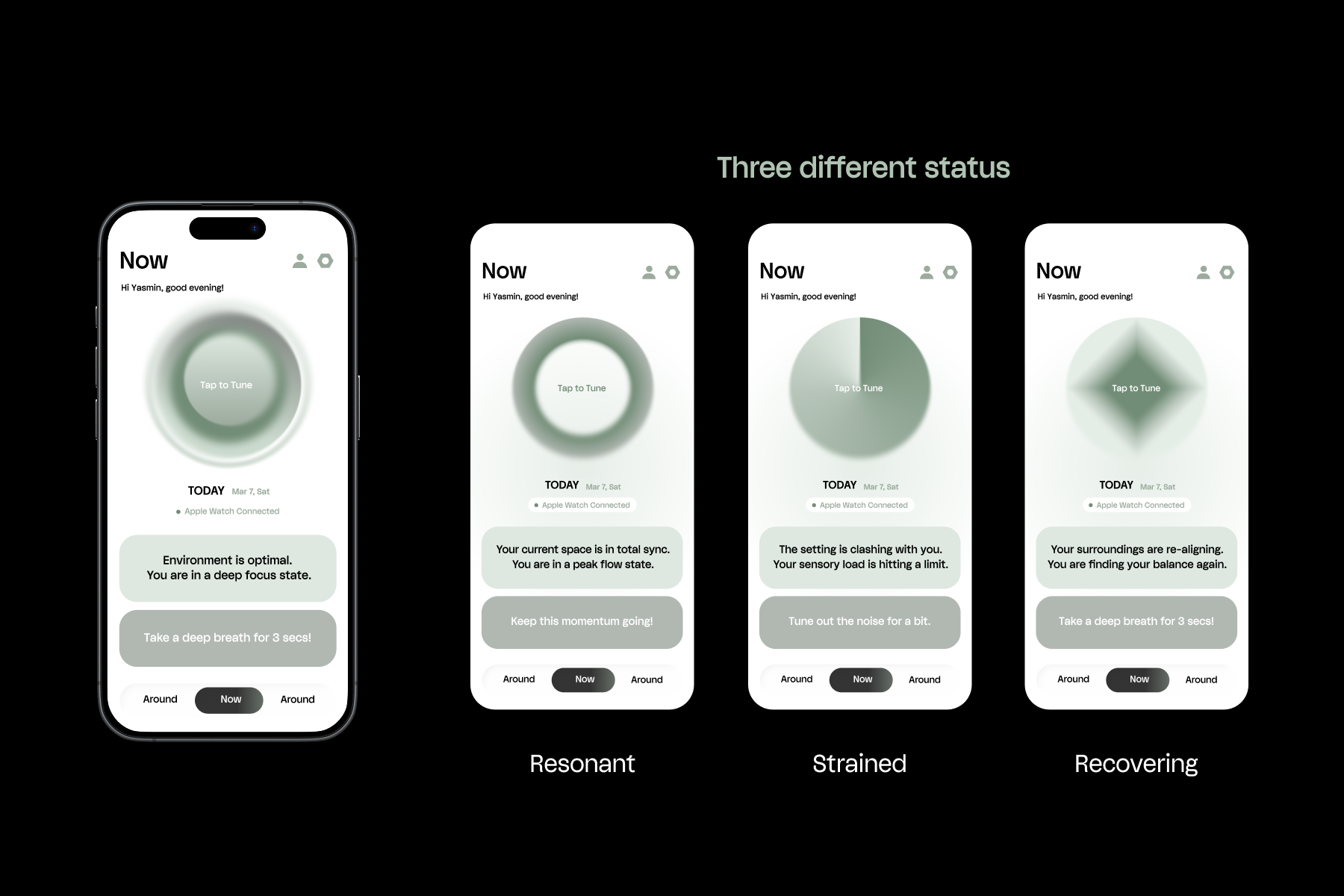
Three State Visualization: Resona reads the user’s condition through three states to make change visible at a glance.
-
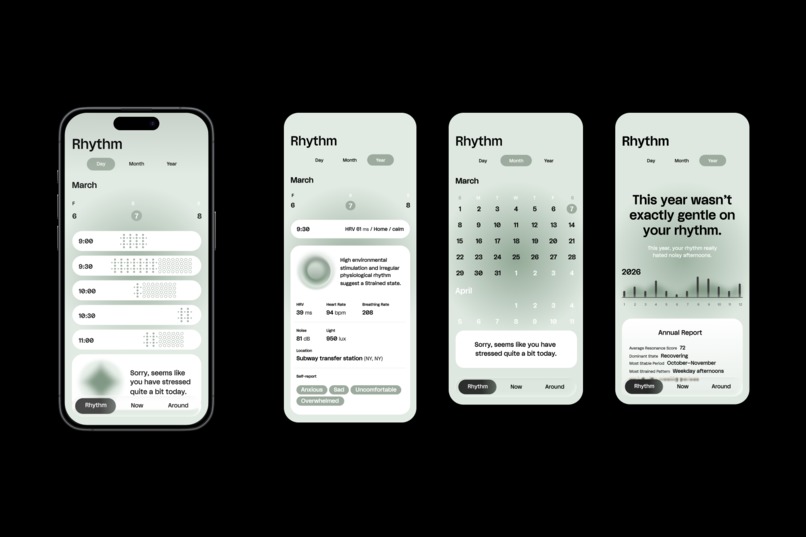
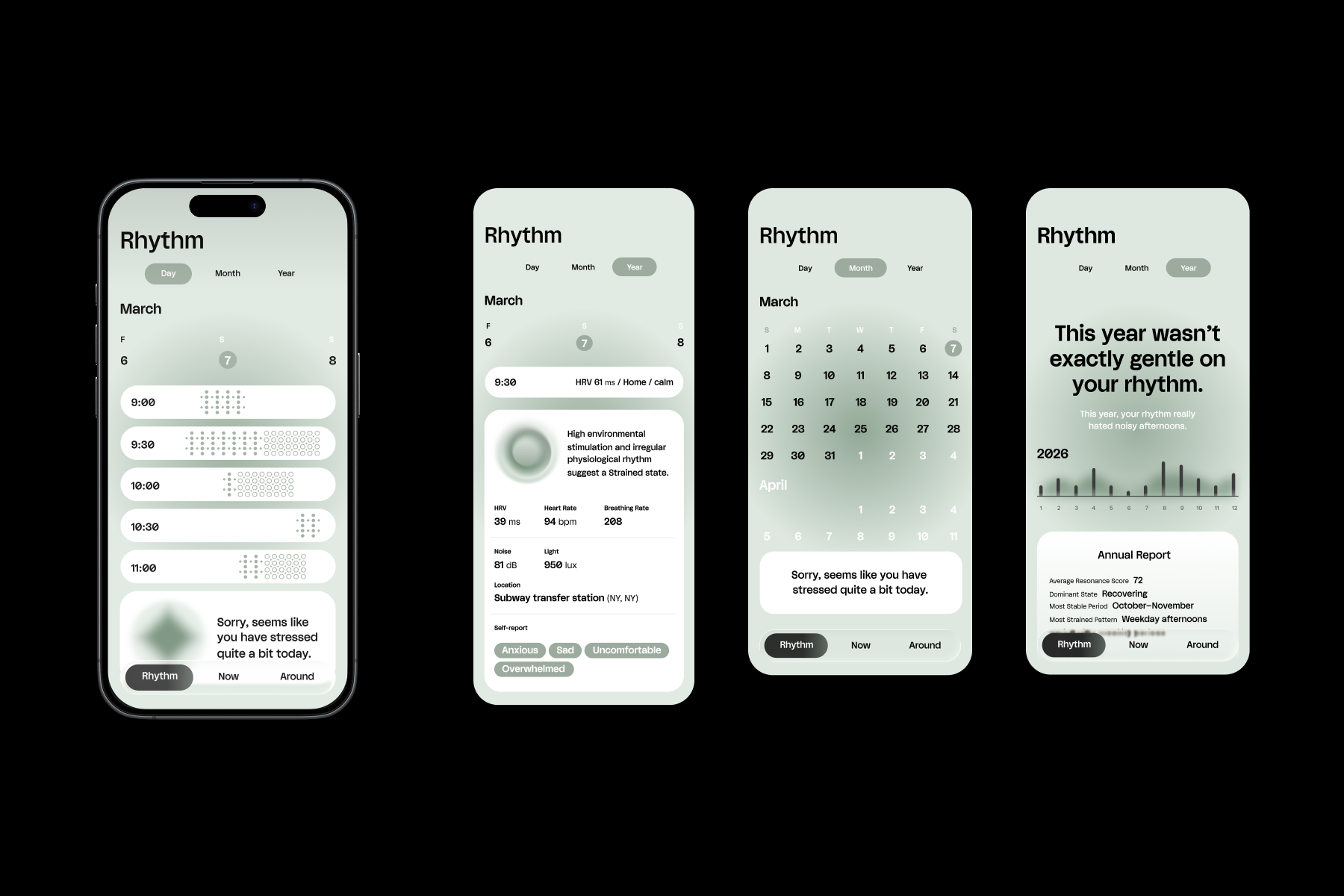
Rhythm Screen: Rhythm tracks physiological shifts across daily, monthly, and yearly views to reveal recurring patterns.
-
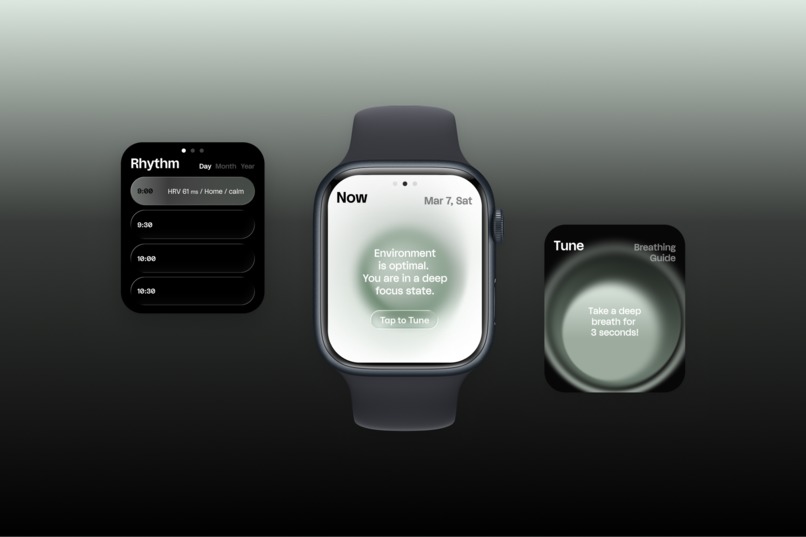
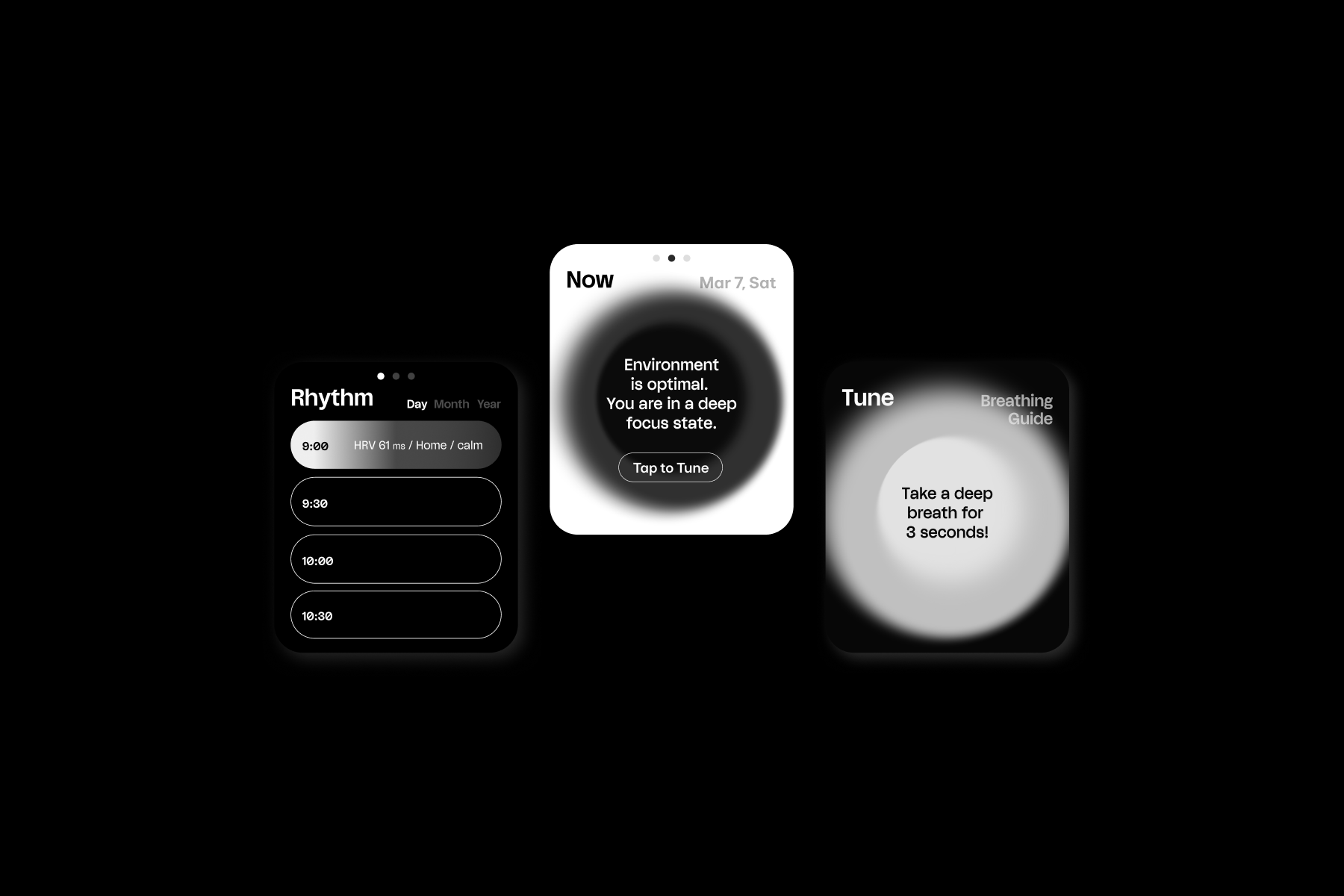
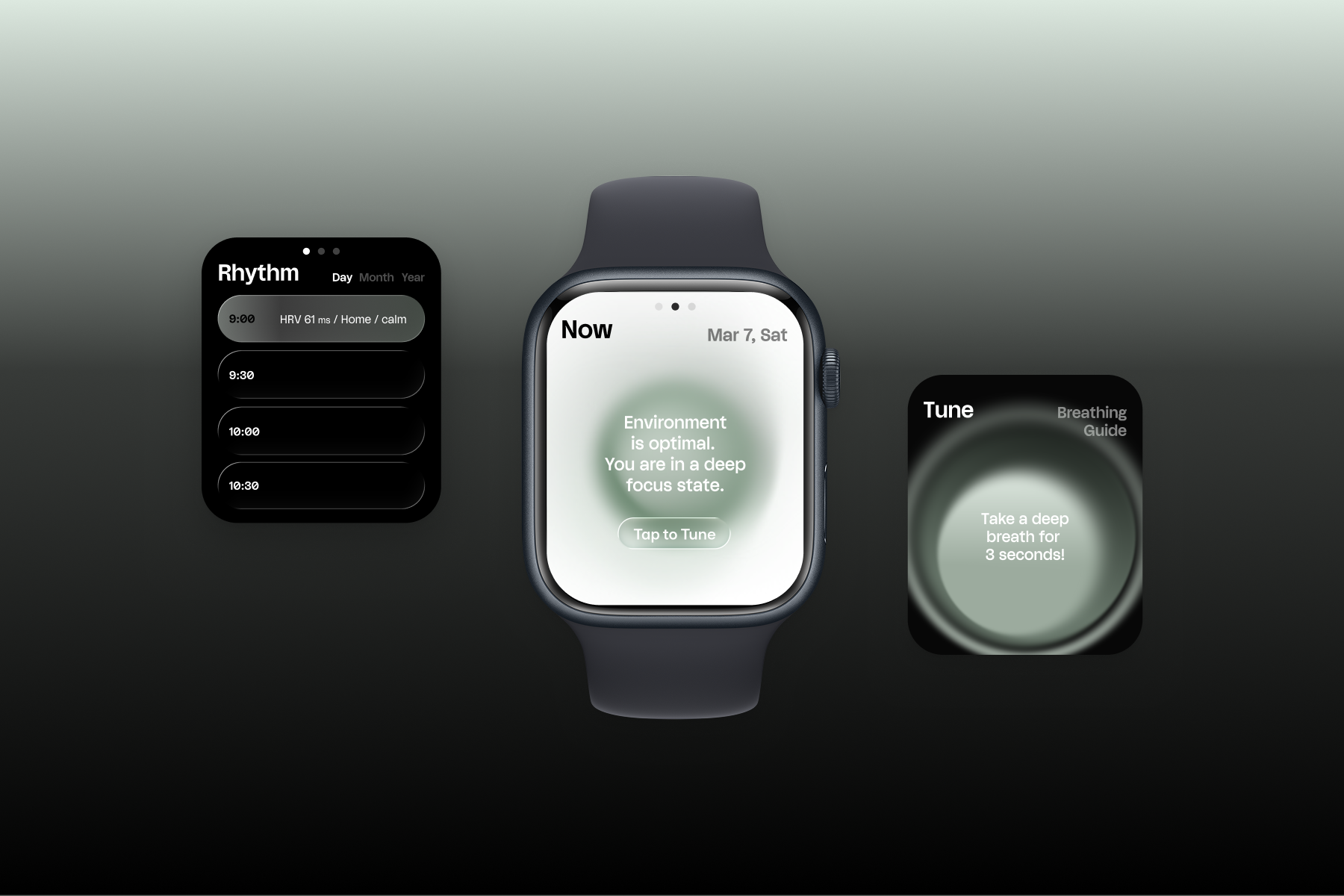
Multi-Device Ecosystem: By connecting phone and smartwatch, Resona becomes a continuous ecosystem of sensing, feedback, and regulation.
Inspiration
The project began with a fundamental question: "What would a wellness tool look like if it treated the body as relational rather than isolated?" Resona is inspired by the East Asian concept of Qi, which views the body not as a closed biological system, but as something that continuously interacts with its surroundings. We wanted to move away from the reductive nature of modern biometrics and reinterpret this ancient philosophy through contemporary data and interface design, treating the body as a "relational rhythm" shaped by time and environment.
What it does
Resona is a wellness interface that shifts the focus from simple body tracking to body-environment awareness. While most apps tell you what your heart rate is, Resona explains why it might be happening by correlating physiological signals with environmental context. The experience is structured through four core views: Now provides a real-time sense of current condition through abstract visual density; Rhythm identifies patterns and trends over time to offer a retrospective narrative of one's year; Around offers the spatial context of those states on a map; and Tune enables immediate regulation actions when the system detects strain or a need for recovery.
How we built it
We translated the conceptual foundation into a rigorous product framework by identifying the lack of environmental context in current wellness tools. We built a system model around three states of Resonant, Strained, and Recovering. We mapped a dual-stream data structure involving both physiological data from wearables and environmental data from the user's surroundings. The final output includes high-fidelity wireframes that use blurred organic forms and empathetic typography to translate complex data into a felt experience rather than just information.
Challenges we ran into
The primary challenge was translating a culturally rooted concept into a contemporary product without falling into mysticism. We addressed this by reframing Qi as a pattern of regulation and imbalance emerging between body and surroundings. Another challenge was avoiding causality bias in data visualization. To prevent users from oversimplifying why they feel stressed in a certain location, we developed pattern-based spatial representations that account for multiple overlapping factors like noise, fatigue, and timing.
Accomplishments that we're proud of
We are most proud of turning an abstract philosophical starting point into a complete UX system. Defining a specific data model and a coherent naming system allowed the project to transcend being just a concept and become a viable product framework. We succeeded in creating a product language that is both functional and philosophically aligned, presenting wellbeing as something that emerges through interaction rather than an isolated personal task.
What we learned
This project taught us that the essence of product design lies in the worldview it embodies. We learned the importance of concept-to-system translation and how meaning must be embedded into hierarchy and interaction. It also reinforced that sensitive, culturally grounded ideas require clear language and realistic logic to be convincing in a contemporary design context. Good wellness design is not only about tracking more data; it’s about making sense of it in a way that feels meaningful to the human experience.
What's next for Resona
The next phase for Resona is to transition from these interface models into a prototype that interacts directly with our physical spaces. We plan to refine the Around view to more deeply visualize the subtle relationship between light, sound, and our internal rhythm. Our goal is to bridge the gap between the digital interface and personal environments, such as smart lighting or acoustics, within the Tune view. Ultimately, we want Resona to serve as a catalyst for a more harmonious relationship between humans and the increasingly complex urban atmospheres we inhabit.
Built With
- api
- chatgpt
- claude
- figma
- figma-make
- gemini
- midjourney



Log in or sign up for Devpost to join the conversation.