Inspiration
We were inspired by the track choices and suggestions from others. I knew about open-meteo's database, and I have had experience using it. This inspired me to use database values to help analyze environments
What it does
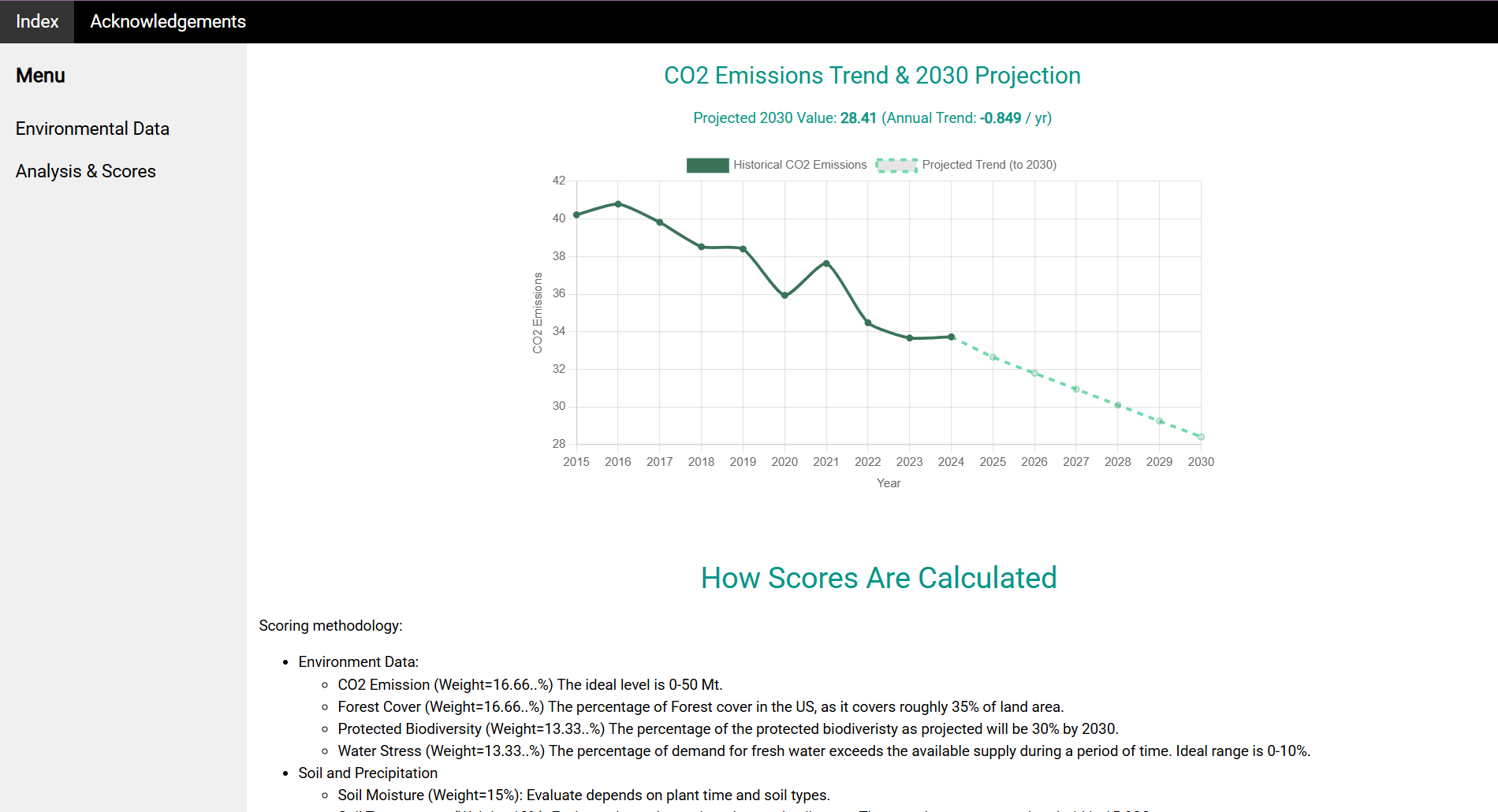
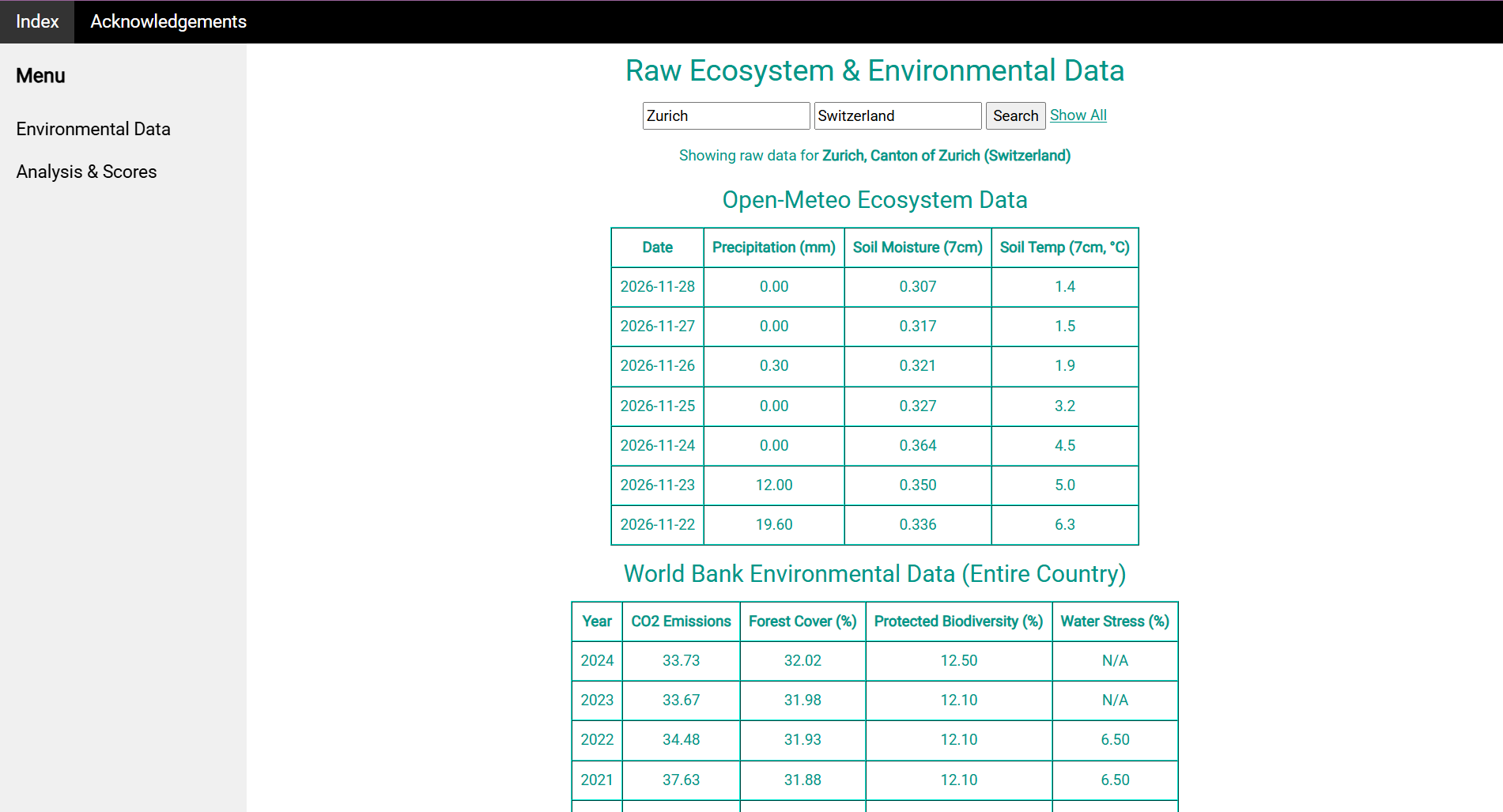
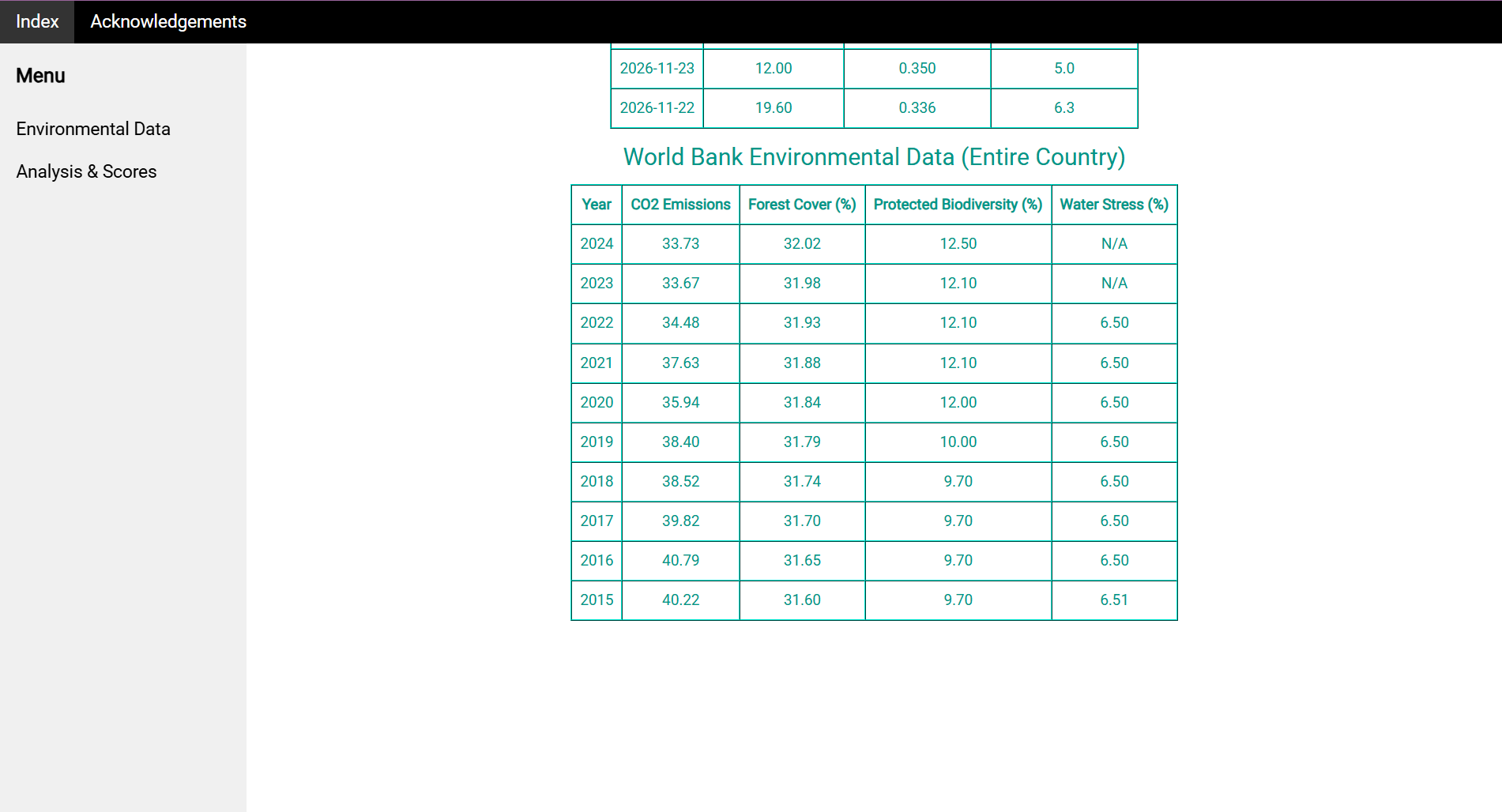
This application fetches key variables that determine an environments health from 2 public databases. The co2 emissions are graphed, and a linear regression model predicts the future co2 emissions until 2030 for any given country and city.
How we built it
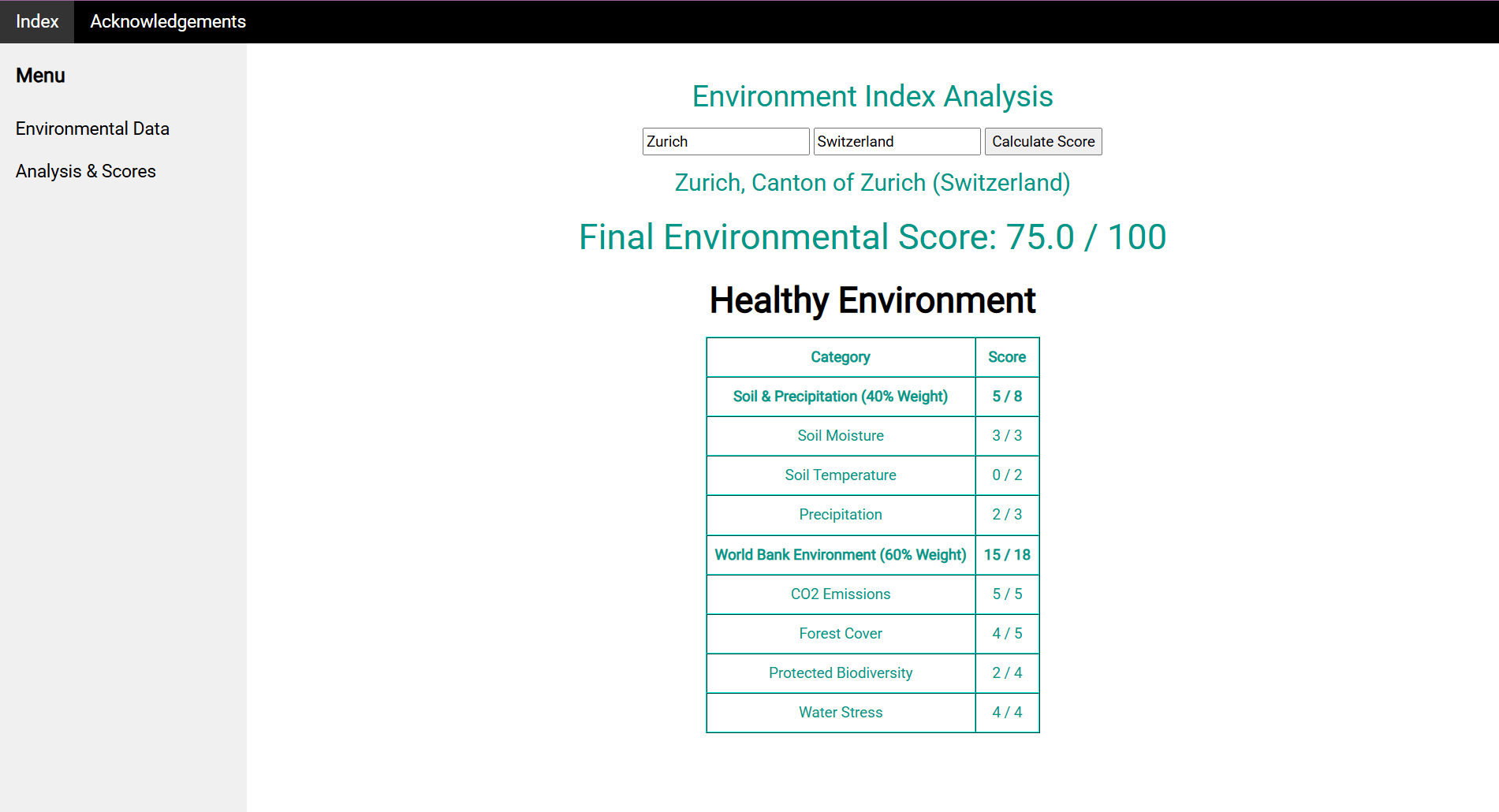
We used the django python framework and the databases Open-Meteo and World Bank Environmental. Currently it has 2 microservices which make a simplified "environment score" and predict co2 emissions.
Challenges we ran into
The format of django was difficult to wrap our heads around at first. The model must "declare" the variables we fetch, and they can only be accessed by the templates via the views and urls. This was a challenge which took quite a while to overcome
Accomplishments that we're proud of
We are proud of making a fully-fledged web application in just one night. Neither of us have very good experience with web applications. We are also proud of how the tables and the graph turned out.
What we learned
We both learned how to coordinate with team members in group coding projects. Conflicting ideas can be a challenge, but we found ways to work around by playing into the benefits of each others ideas. We also gained experience in databases and frameworks.
What's next for Environment Analyzer
In the future, we could implement a more detailed linear regression predictor. Perhaps we could use quadratic or other variables to influence the predictions.
