Inspiration
What it does
- Predicts future temperature trends
- Assigns environmental risk levels
- Visualizes projections using charts
- Provides an easy-to-use web interface
How we built it
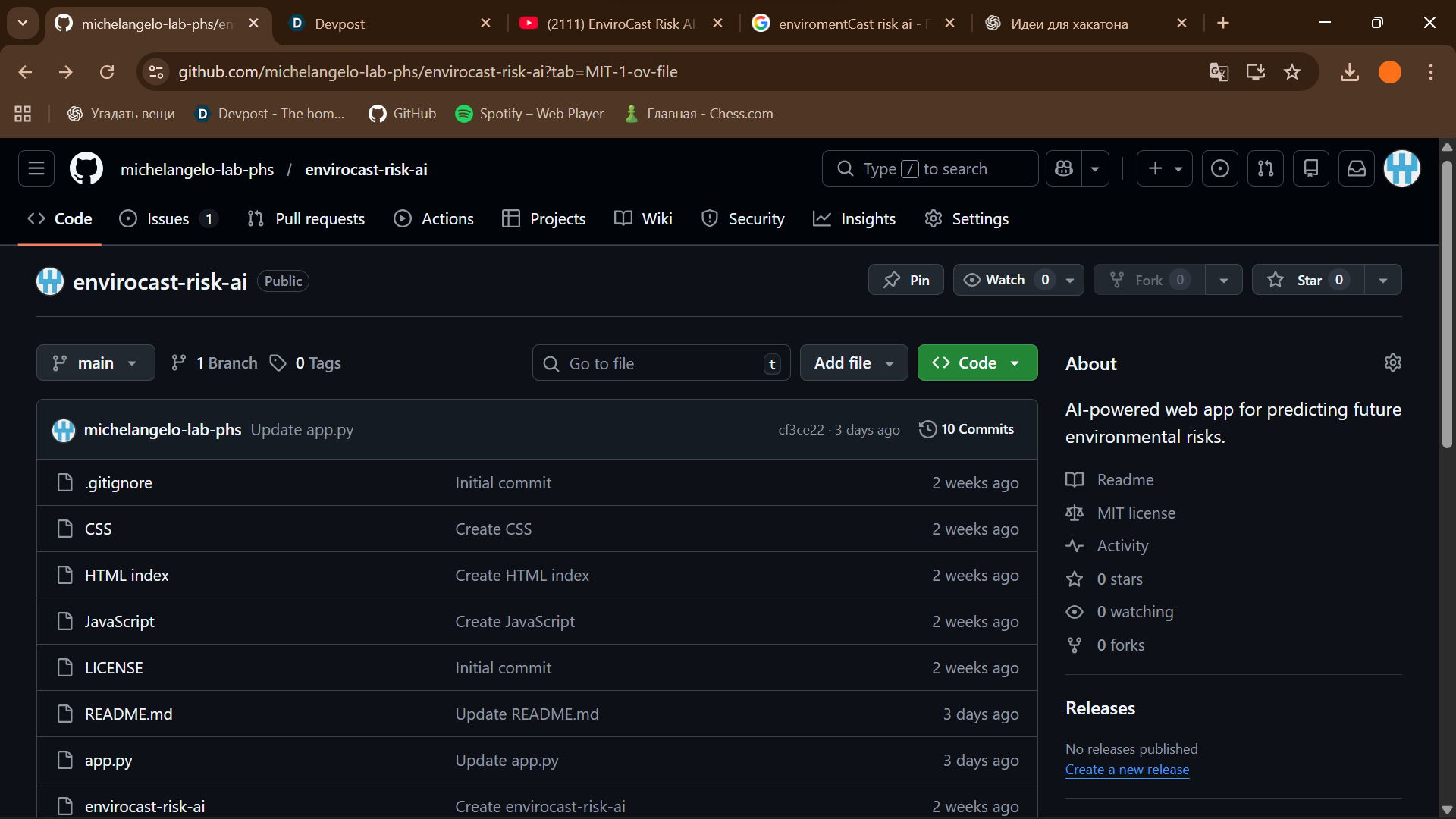
The project was built using Python and Flask for the backend, with a machine learning model trained on historical climate data.
The frontend was developed using HTML, JavaScript, and Chart.js for data visualization. The system communicates via a REST API and runs entirely locally.
Challenges we ran into
- Finding and preparing climate data
- Designing a simple but meaningful prediction model
- Connecting frontend and backend securely
Accomplishments that we're proud of
- Built a working AI-based prediction system
- Successfully integrated real climate data
- Created a clean and functional demo interface
What we learned
- How to apply machine learning to real-world environmental problems
- How to build a full-stack AI project
- How to present technical ideas clearly
What's next for EnviroCast Risk AI
- Add additional environmental risk factors such as air pollution (PM2.5)
- Improve prediction accuracy with more datasets
- Deploy the application online for public use
Built With
- a
- climate
- historical
- learning
- machine
- model
- on
- the-project-was-built-using-python-and-flask-for-the-backend
- trained
- with

Log in or sign up for Devpost to join the conversation.