-
-
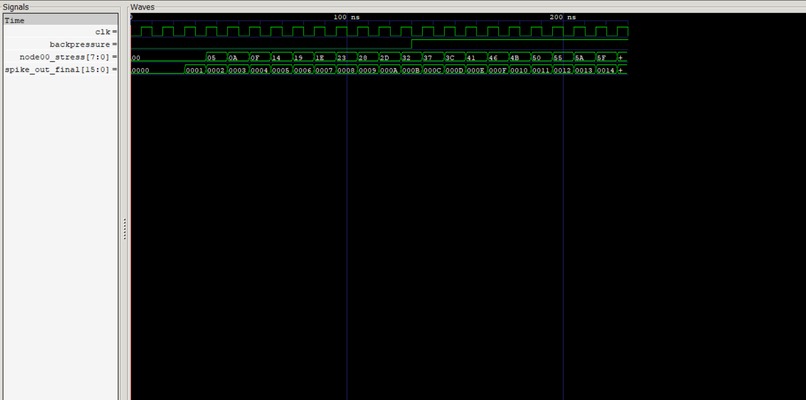
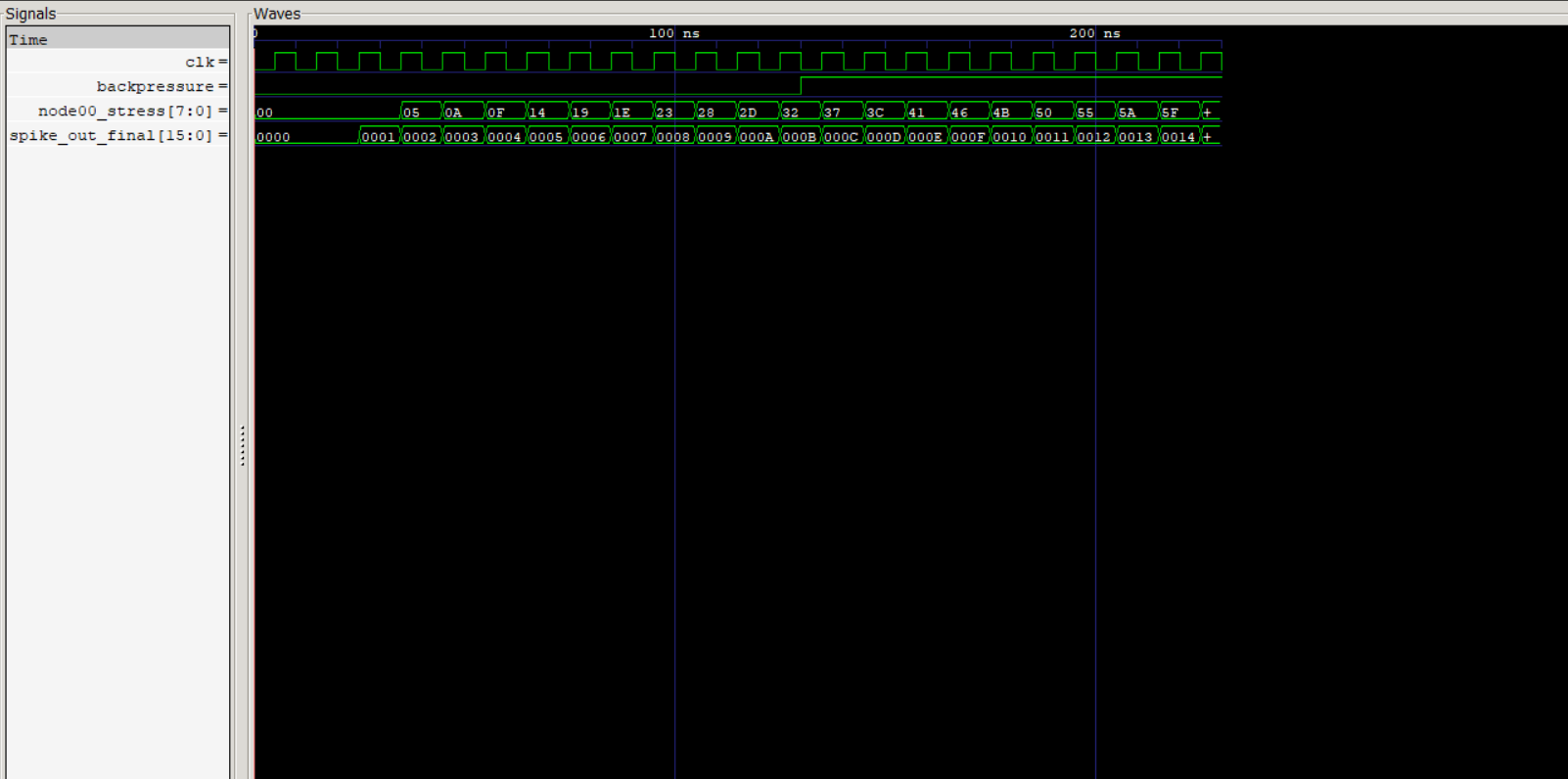
Self-Aware Rerouting: backpressure flips as node00_stress peaks, autonomously steering data to neighbors.
-
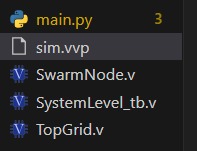
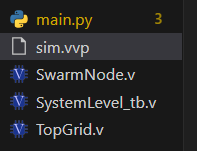
The Fabric: 2x2 Swarm Mesh with modular nodes and verified simulation files.
## Inspiration
The inspiration for Project ENTROPY came from the realization that modern silicon is "brittle." While biological systems can adapt to stress and injury, a standard CPU is rigid; it either calculates perfectly or crashes entirely. I wanted to build a "Living Object"—a processing fabric that could sense its own computational "pain" and autonomously reorganize itself to stay alive and efficient.
## How I Built It
I designed a 2x2 neuromorphic mesh consisting of four interconnected nodes.
- The Architecture: I utilized a Network-on-Chip (NoC) topology where each node functions as an independent agent.
- The Workflow: The project was developed using Verilog for the hardware description, Icarus Verilog for compilation, and GTKWave for signal verification.
- AI Collaboration: I used Gemini 3-pro-preview as a high-reasoning partner to architect the mesh and debug complex asynchronous timing issues in the backpressure logic.
## Key Technical Features
- Stress-Based Homeostasis: Each node contains an internal 8-bit Stress Register. As data "spikes" arrive, stress increments. When it crosses a biological threshold ($>200$), the node enters a "panic state."
- Asynchronous Rerouting: Using a custom routing table, stressed nodes assert a Backpressure signal. This signal acts like a digital synapse, autonomously steering incoming data packets to neighboring nodes with lower stress.
- Approximate Computing: To survive extreme activity without thermal failure, I implemented a power-saving rule. Stressed nodes truncate their 16-bit MAC units to 8-bit precision. This reduces the Switching Activity ($\alpha$) in the following power equation: $$P = \alpha f C V^2$$ By zeroing out the 8 least significant bits, we effectively slash the dynamic power consumption of the output bus by nearly 50%.
## Challenges Faced
The biggest challenge was moving from a single node to a functional swarm. Hardware is unforgiving; a single syntax error or a mismatched port can "break" the entire fabric. I faced significant hurdles with Backpressure loops—situations where nodes would get stuck in a "panic loop"—which I solved by implementing a natural Decay Heuristic that allows nodes to "cool down" over time.
## What I Learned
I learned that in the future of AI and robotics, resilience is more valuable than perfection. By building hardware that "feels" stress, we can create systems that are not only faster but also significantly more durable in unpredictable environments like deep space or autonomous edge devices.

Log in or sign up for Devpost to join the conversation.