-
-
infographic
-
landing-page
-
dashboard1
-
dashboard2
-
dashboard3
-
automation-page
-
action-plan-page
-
esg-report-page
Inspiration
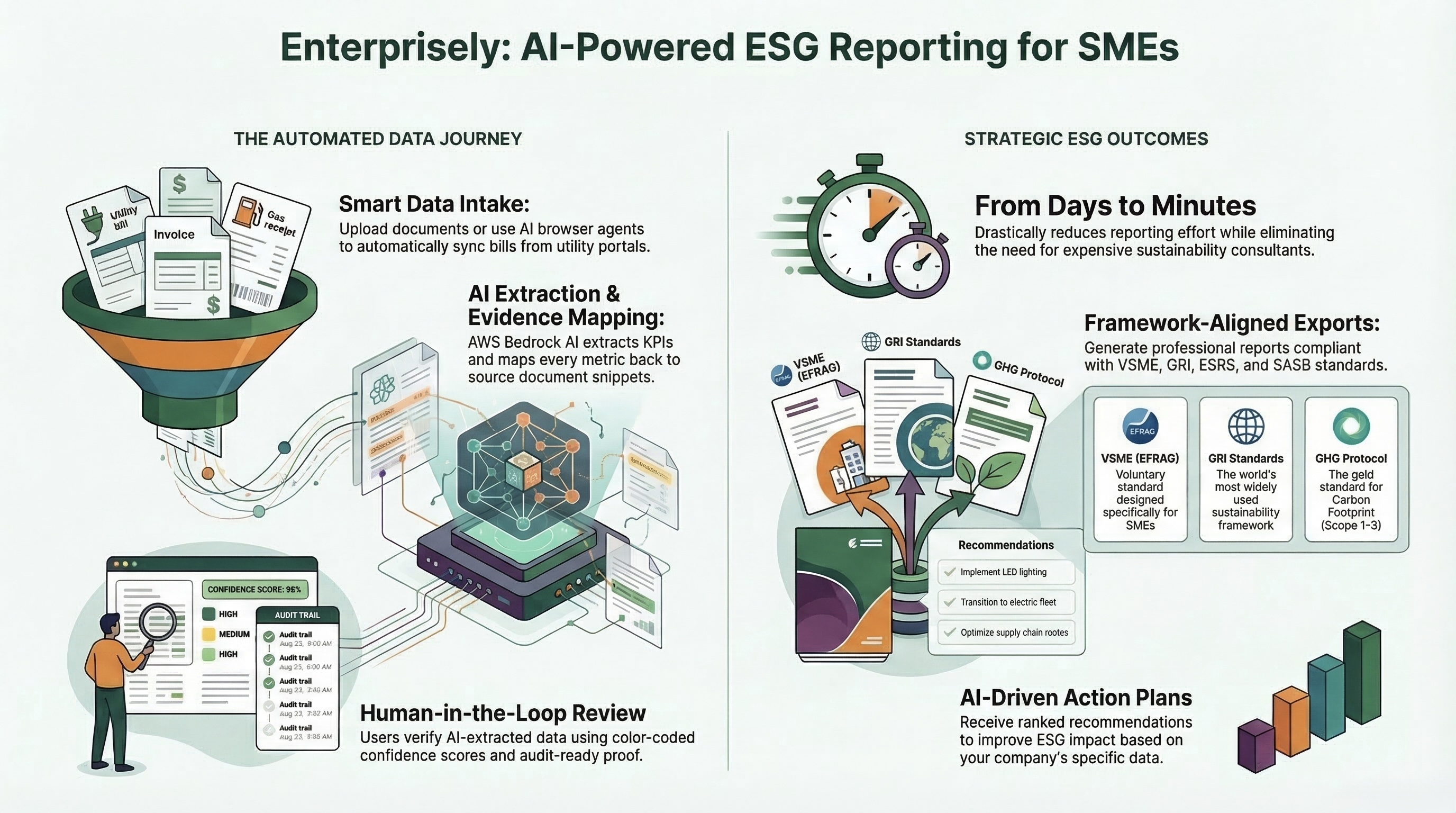
SMEs are increasingly asked for ESG information by customers, investors, and supply-chain partners, but the raw evidence usually lives in scattered utility bills, receipts, spreadsheets, and portal logins. Most smaller companies do not have dedicated sustainability teams or consultants, so even getting started is expensive and manual.
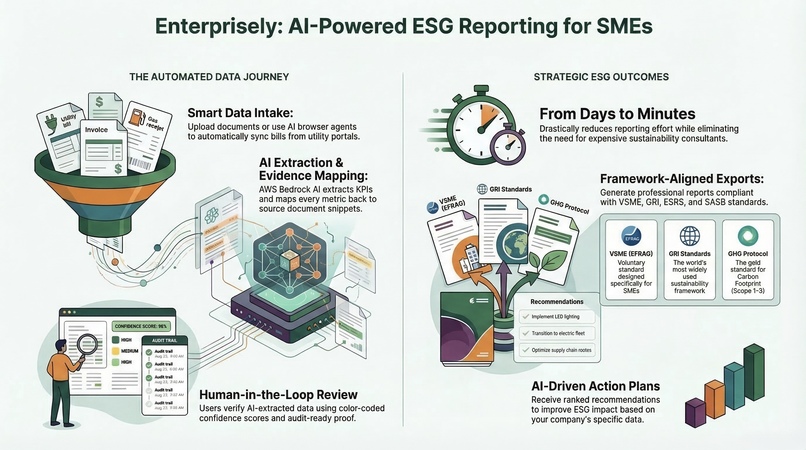
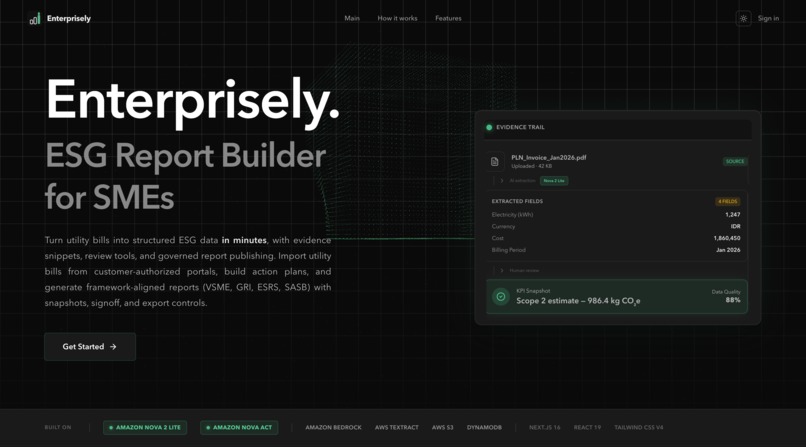
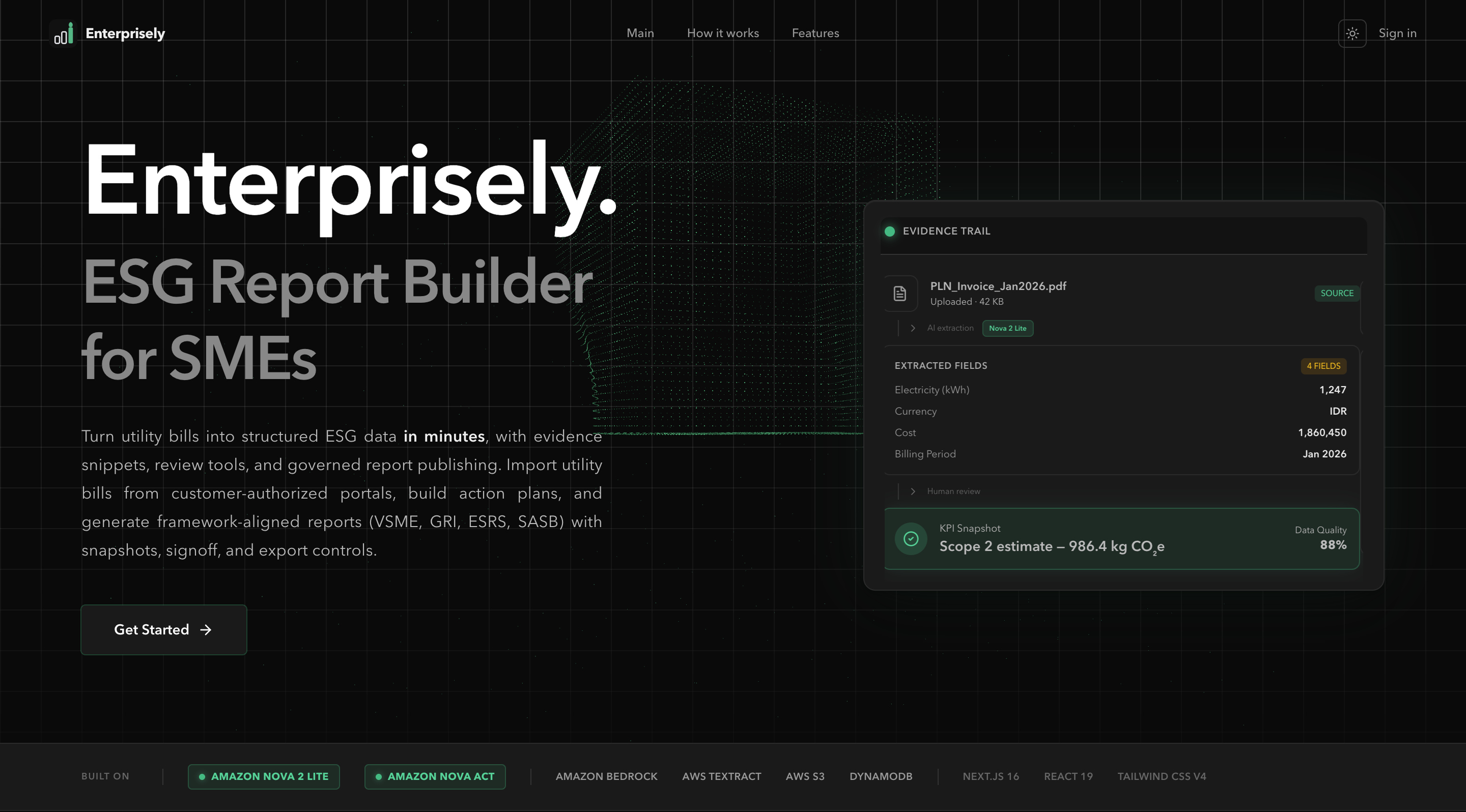
Enterprisely was built to make that first step much easier: collect the source documents, turn them into structured ESG data, show the evidence behind each extracted value, and produce a report draft that a business can actually review, sign off, and improve.
What it does
Enterprisely is an AI-assisted ESG reporting workspace for SMEs.
It supports:
- document upload for files such as PDF, CSV, XLS/XLSX, DOCX, PNG/JPG, and PPTX
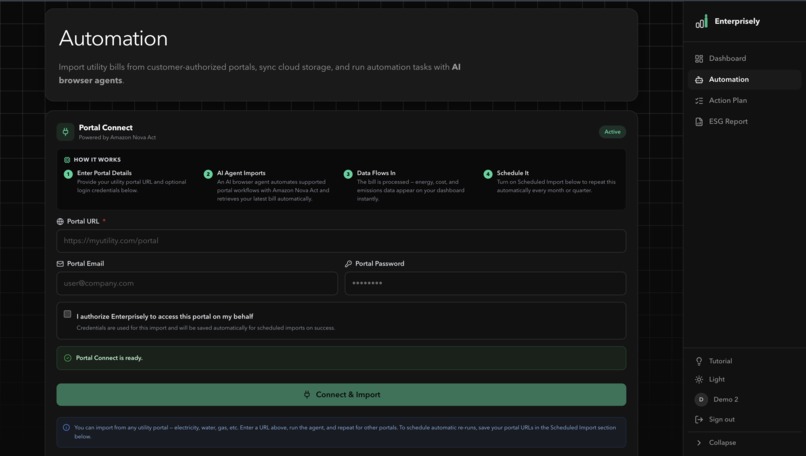
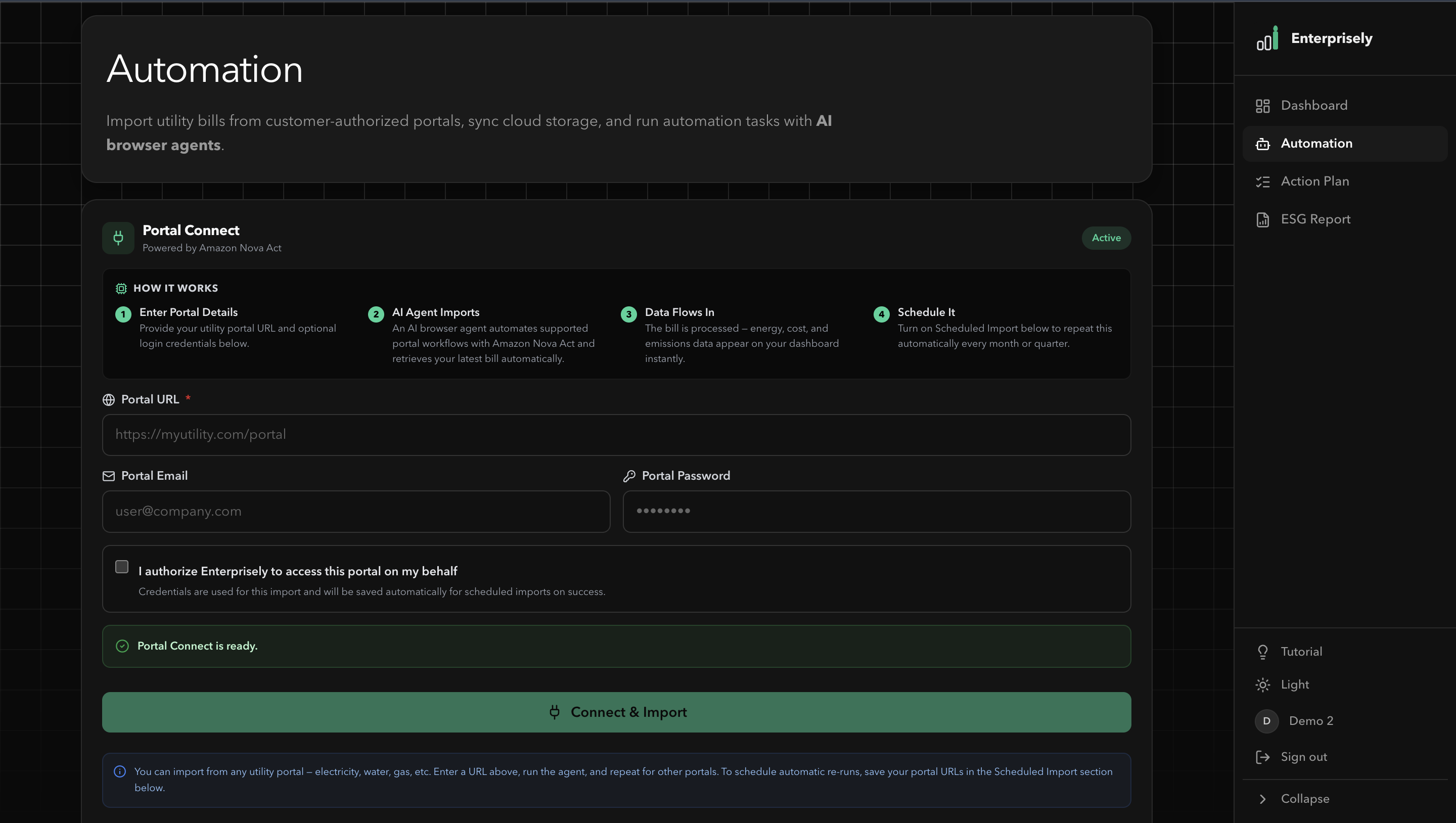
- utility bill imports from customer-authorized portals
- structured extraction of ESG-relevant fields such as vendor, billing period, energy use, cost, and currency
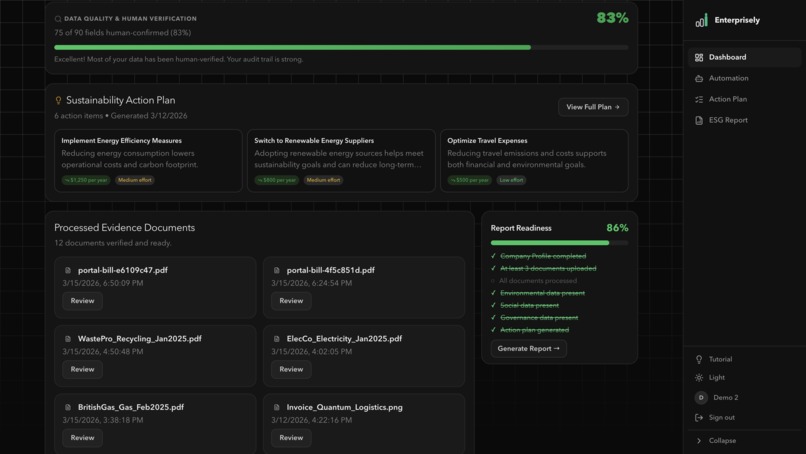
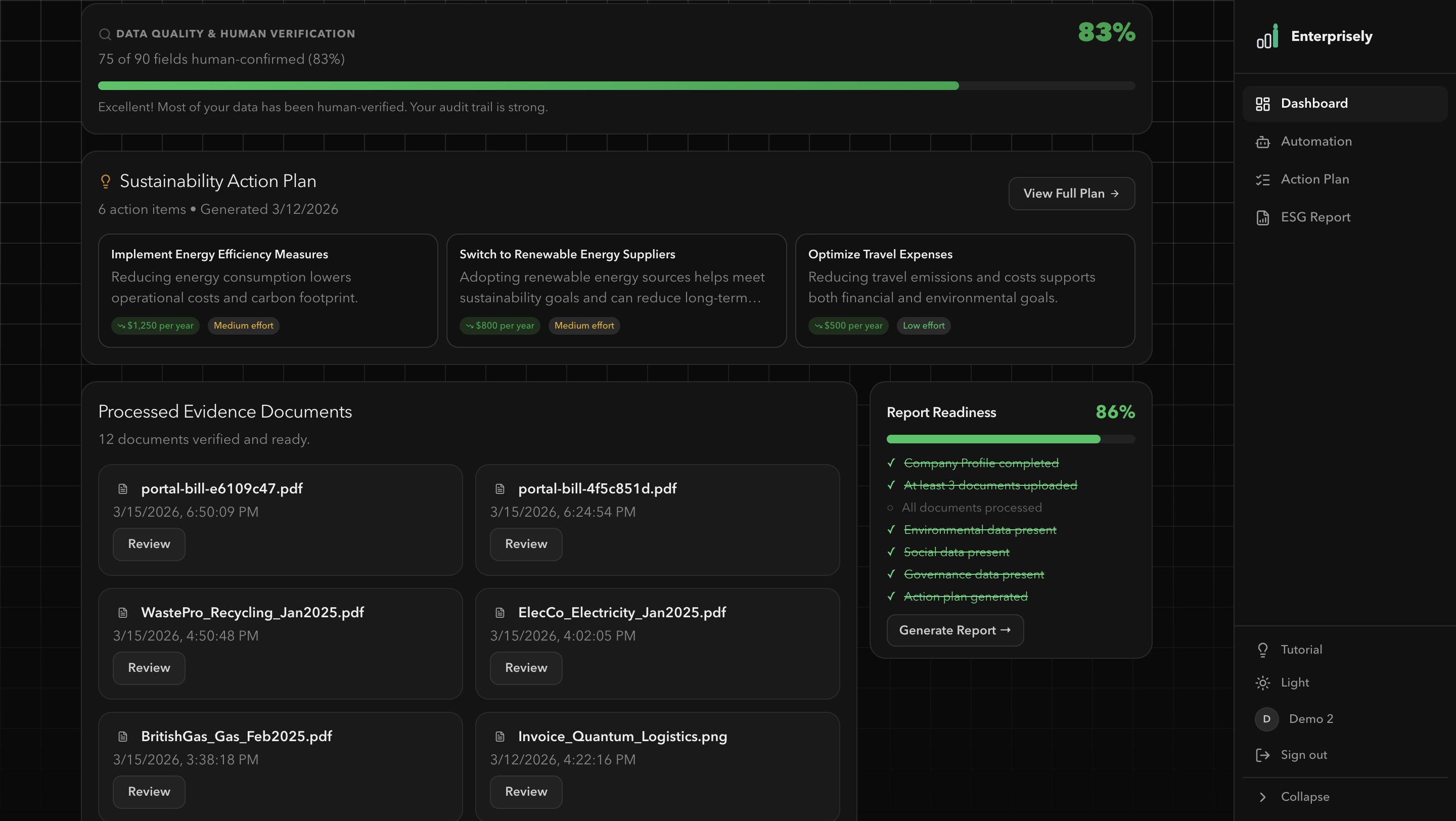
- evidence snippets and confidence indicators for auditability
- human review before extracted values flow into KPIs and report outputs
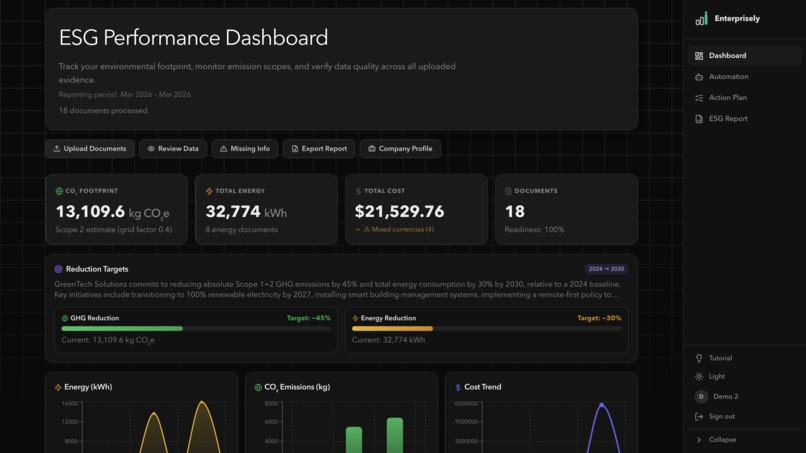
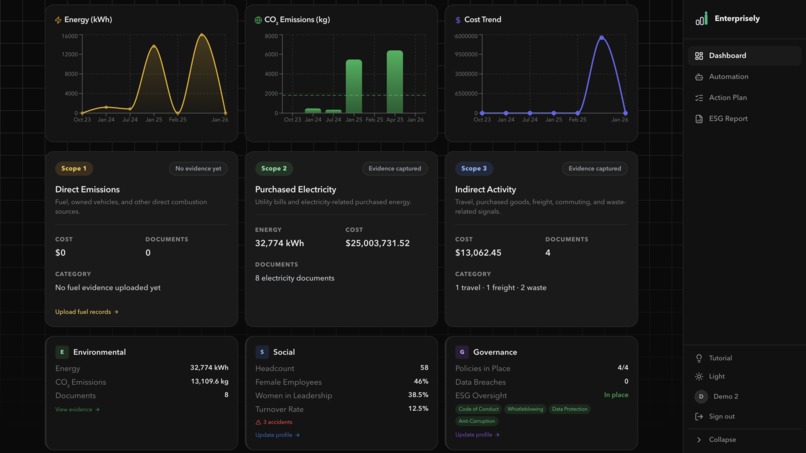
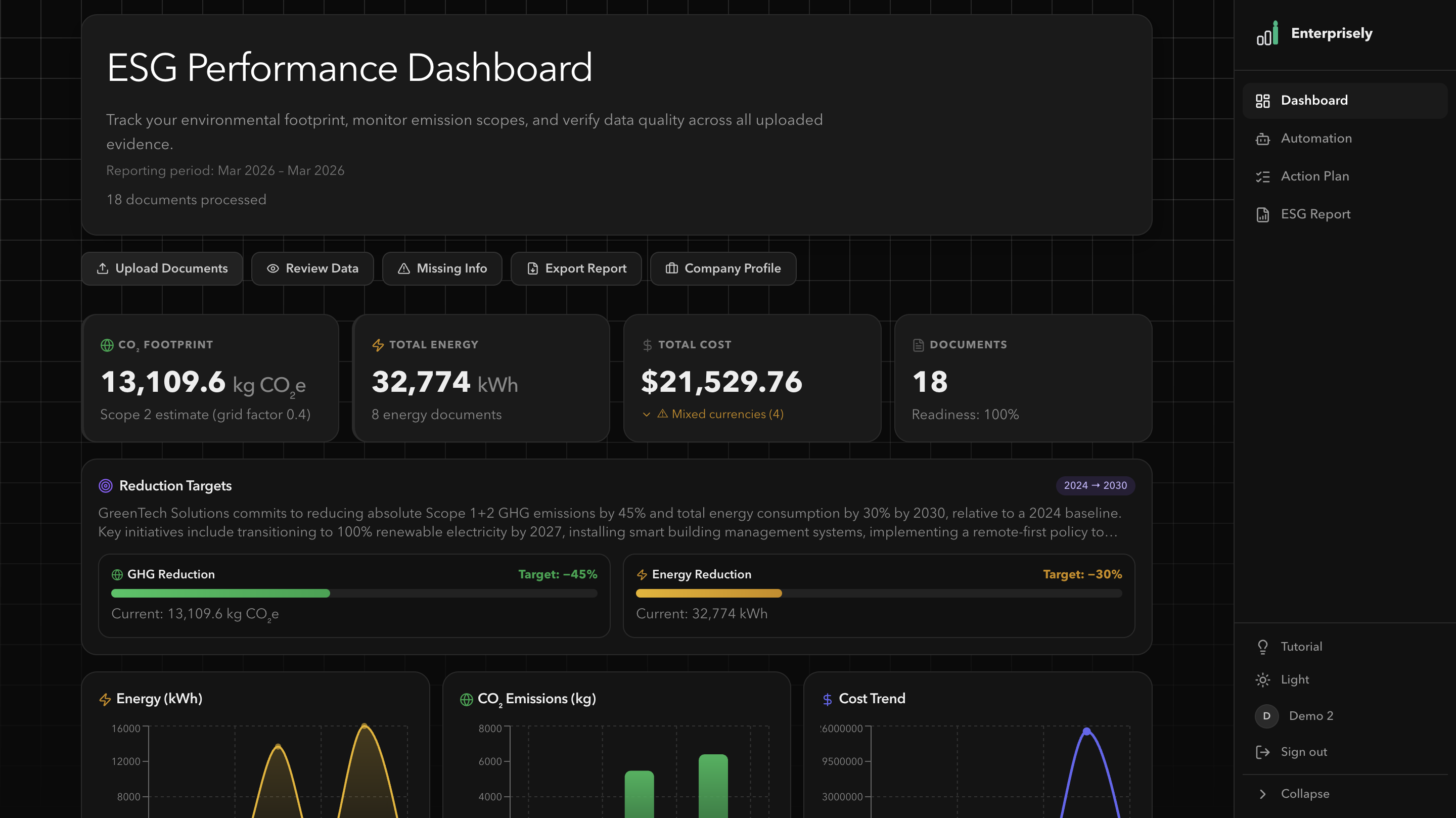
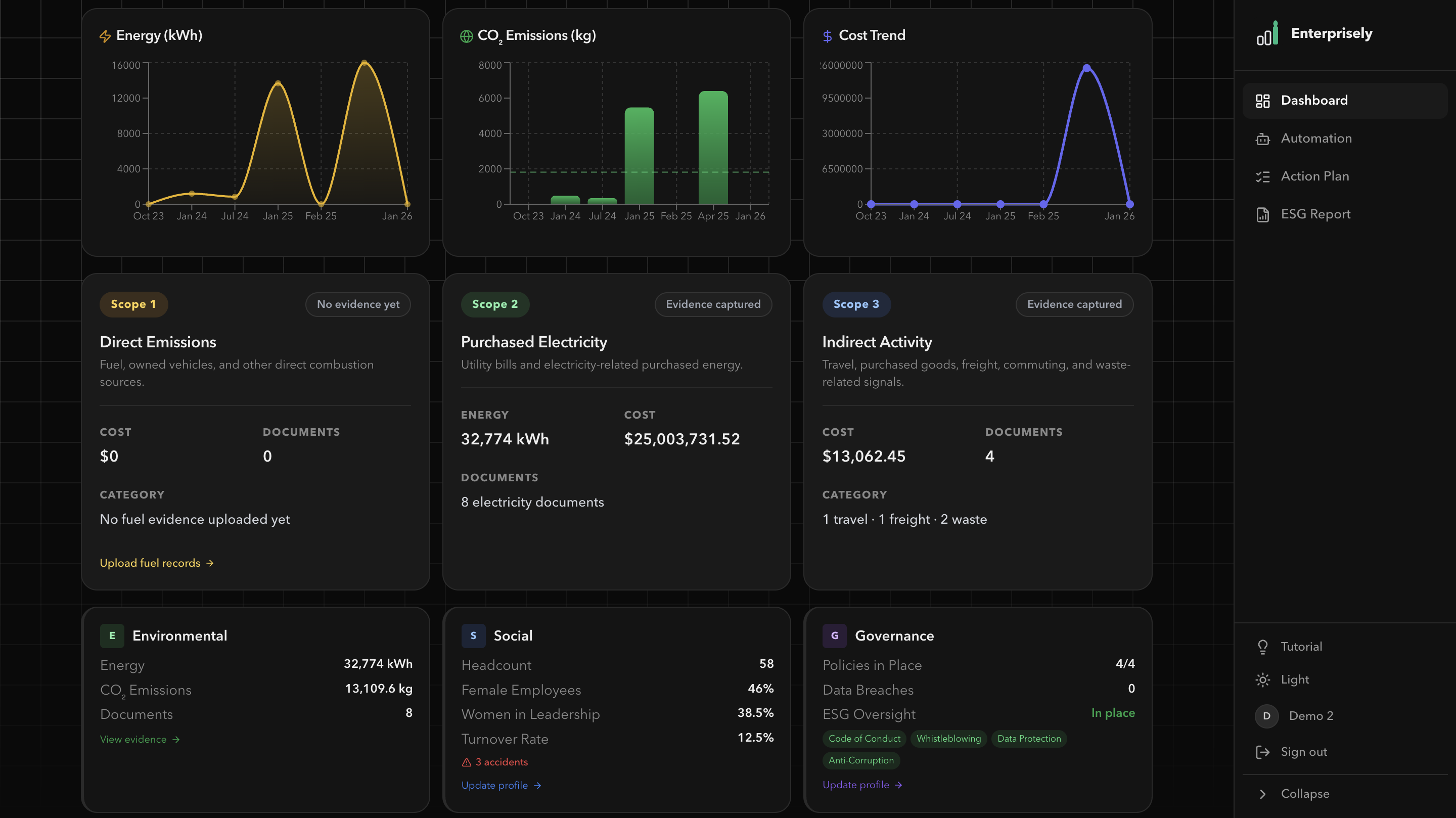
- dashboard and readiness views
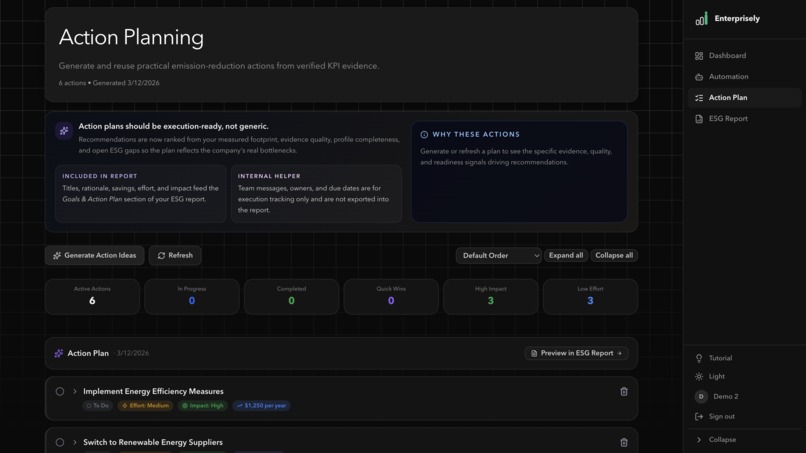
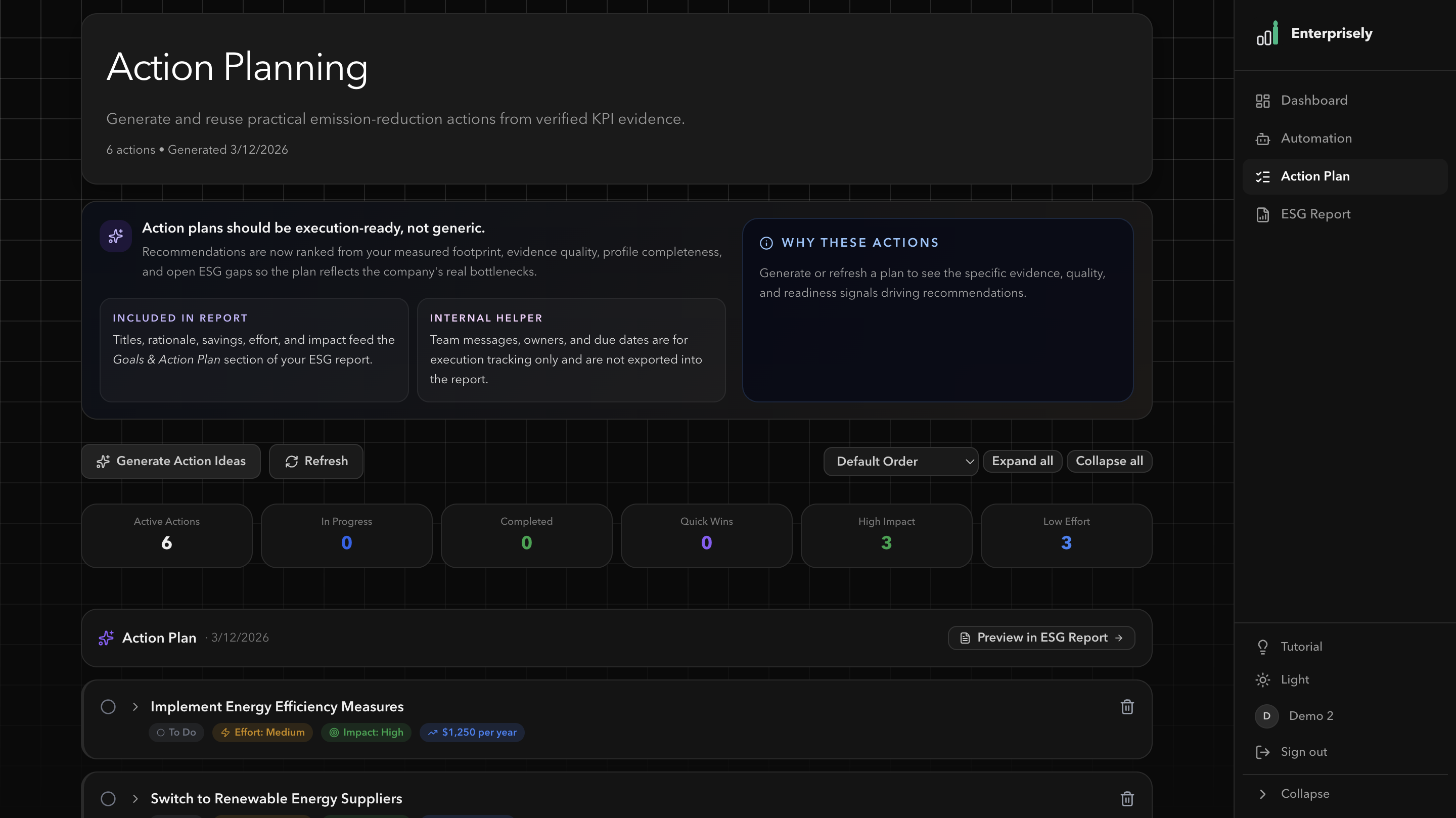
- AI-generated action plans
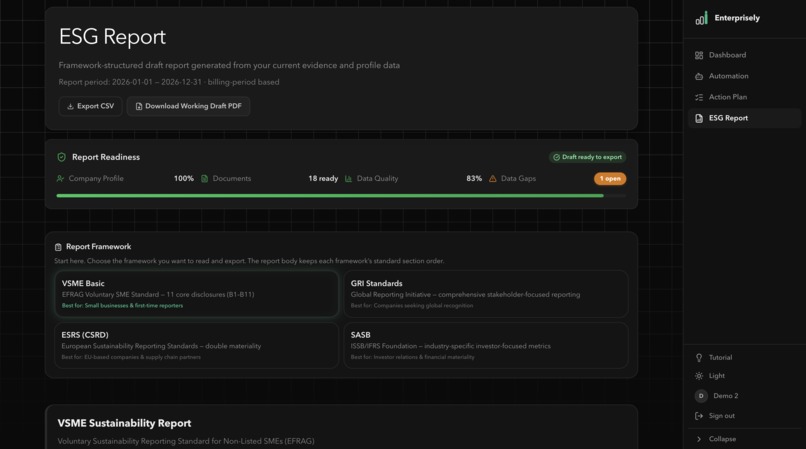
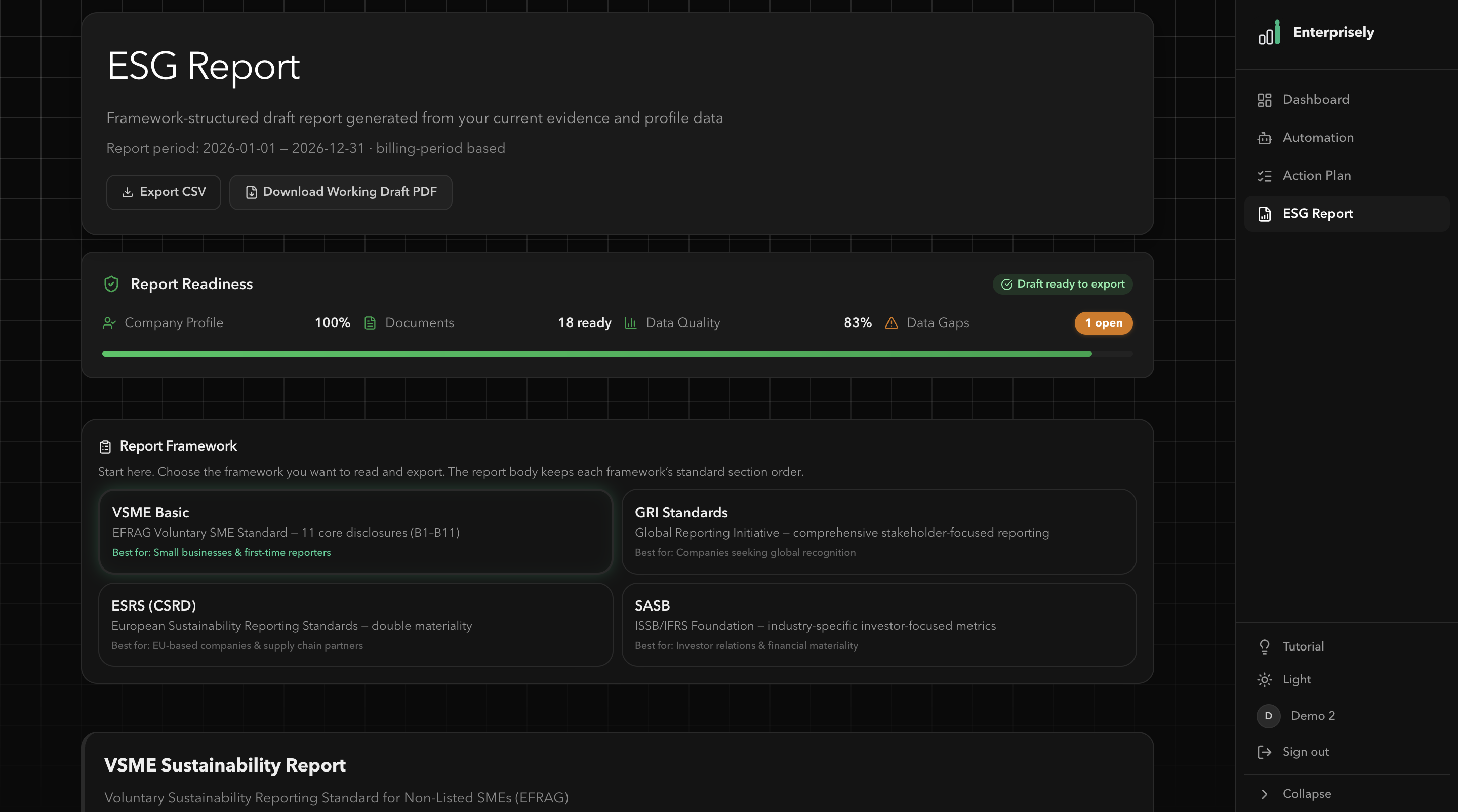
- framework-structured report exports for VSME, GRI, ESRS, and SASB-oriented outputs
- disclosure review coverage, report snapshots, and approved locked PDF export
How we built it
The product is built as a Next.js application with a dedicated Python worker for browser automation.
The AI workflow uses two Amazon Nova capabilities together:
- Amazon Nova Act automates supported portal workflows in the Portal Connect workflow
- Amazon Nova 2 Lite powers extraction, report drafting, review-note generation, and action-plan generation through Amazon Bedrock
Supporting infrastructure includes Amazon S3 for document storage, DynamoDB for application data, NextAuth for authentication, an HTTPS Portal Connect worker, and fallback document-processing paths such as AWS Textract, Tesseract.js, and parser-based extraction for resilience.
Challenges we ran into
The hardest problem was not just extracting values from documents. It was making the workflow trustworthy enough for business reporting.
We had to balance:
- automation versus human review
- flexible document ingestion versus predictable structured output
- stable demo paths versus real-world portal variability
- useful AI outputs versus safe, non-misleading product claims
Another challenge was reliability. We added fallbacks, security hardening, regression tests, CI checks, and smoke-test flows so the product was not just a concept demo, but a working deployed application.
What we learned
We learned that automation is much more valuable when it is connected to evidence and review, not just raw extraction. For ESG workflows, users need to understand where a number came from, how confident the system is, and what still needs human confirmation.
We also learned that Nova Act and Nova 2 Lite complement each other well: one gets the bill, the other turns it into structured, auditable output.
What's next
Next, we want to improve onboarding, expand portal coverage, deepen factor datasets and Scope 3 coverage, and keep tightening the review and signoff workflow so SMEs can move from “we have messy documents” to “we have a credible ESG draft, action plan, and approved report” much faster.
Built With
- actions
- amazon-bedrock
- amazon-dynamodb
- amazon-nova-2-lite
- amazon-nova-act
- amazon-web-services
- aws-textract
- github
- github-actions
- next.js-16
- nextauth
- playwright
- python
- react-19
- tailwind-css-4
- tesseract.js
- typescript


Log in or sign up for Devpost to join the conversation.