Inspiration
Enterprise QA and release teams often have the same problem: the work is not a lack of dashboards, it is the gap between repository changes, CI signal, process ownership, and a clear human decision. UiPath AgentHack is a strong fit because agentic automation should help teams turn release risk into governed action instead of yet another isolated report.
What it does
Enterprise AI Orchestrator turns a release into an operator-style workflow: it summarizes delivery context, highlights risk, proposes generated test coverage, and keeps a human approval step before automation proceeds. For UiPath, the intended path is to connect this workflow to UiPath Test Cloud and agentic automation so release teams can move from risk review to executable validation.
How we built it
The MVP is a React + TypeScript + Vite application with a compact enterprise workflow interface, simulated repository/CI signals, risk scoring, generated test recommendations, and an audit-friendly decision queue. The public demo, source repository, demo video, submission deck, and UiPath Labs environment are available now so the next iteration can connect the workflow to a real UiPath sandbox.
Challenges
The main challenge was keeping the demo honest: the current version shows the orchestration pattern and human-governed workflow, while live UiPath Test Cloud execution is the next integration step. The product is structured so the simulated automation layer can be replaced with UiPath execution once the integration is wired in.
Accomplishments
We shipped a public demo, source repository, submission packet, presentation deck, and demo video in one working session. The project is positioned as a practical bridge between enterprise release governance and agentic process automation.
What we learned
The useful agentic layer is not only test generation; it is the evidence trail around risk, generated actions, and human approval. The interface needs to make automation decisions inspectable before teams trust it in a release workflow.
What's next
Next steps are to connect UiPath Test Cloud, add robot/test execution status, persist audit trails, and package the workflow as a repeatable release-readiness assistant for enterprise engineering teams.
Public proof package
- Live demo proof hub: https://zemeng2015.github.io/enterprise-ai-engineering-orchestrator/
- Machine-readable proof index: https://zemeng2015.github.io/enterprise-ai-engineering-orchestrator/submission-proof-index.json
- Stable source release: https://github.com/zemeng2015/enterprise-ai-engineering-orchestrator/releases/tag/v2026-june-submission
- Verification command:
npm run verify:proofs
UiPath proof
The public demo includes a Submission Proofs panel. The UiPath Labs Test Manager proof is also available directly:
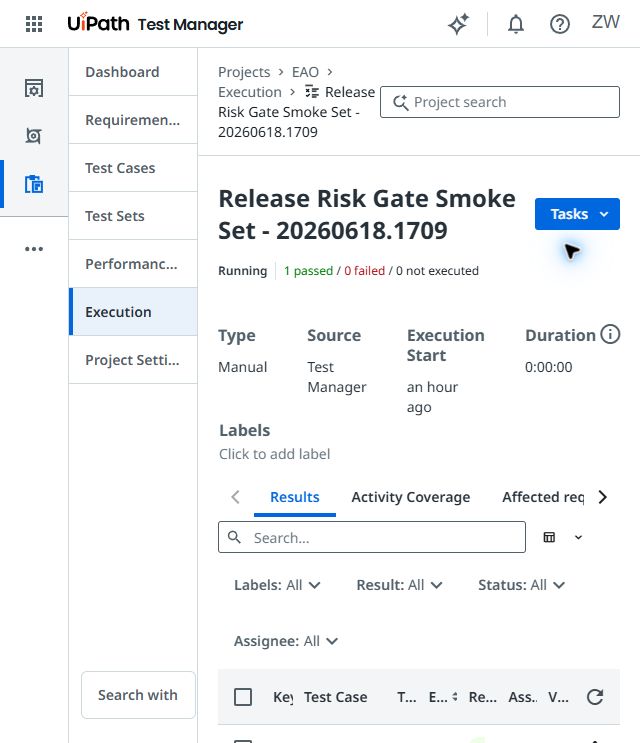
- Passed execution proof: https://raw.githubusercontent.com/zemeng2015/enterprise-ai-engineering-orchestrator/main/docs/uipath-test-manager-execution-passed.png
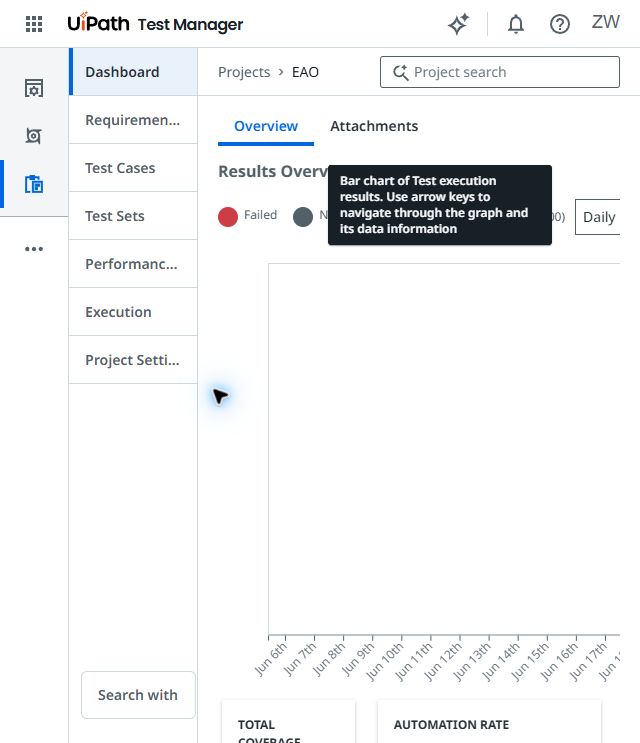
- Test Manager project dashboard: https://raw.githubusercontent.com/zemeng2015/enterprise-ai-engineering-orchestrator/main/docs/uipath-test-manager-project-dashboard-running.png
Boundary: the public web demo uses safe simulated workflow state and does not call live customer systems. The UiPath Labs evidence shows a hackathon Test Manager project and a manual Passed validation result for the release-risk gate.
Built With
- agentic-automation
- enterprise-ai
- qa-automation
- react
- release-risk
- test-cloud
- typescript
- uipath
- vite

Log in or sign up for Devpost to join the conversation.